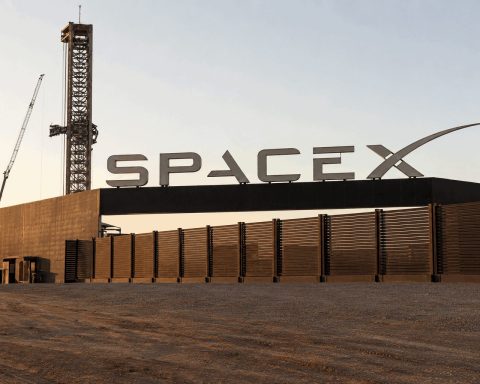

STARBASE, Texas, August 14, 2026, 19:46 CDT — U.S. cash markets closed following the Friday session.
- SpaceX finished Friday at $140.00, slipping 0.9% on the day, yet rising 5.2% over the week.
- Roughly 320 million shares will be available for sale beginning August 20.
- The value of the unlocked stock stands at $44.8 billion, representing 3.3 times Friday’s trading volume.
Space Exploration Technologies Corp. NASDAQ:SPCX will encounter another test of its liquidity on Thursday, as roughly 320 million shares will be available for sale starting August 20. With Friday’s closing price at $140, that stake is valued at $44.8 billion.
The block is 3.3 times larger than Friday’s trading volume of 96.73 million shares. While eligibility does not guarantee all holders will sell, the ratio underscores why supply could outweigh another minor earnings update next week.
SpaceX stock declined 0.9% on Friday to $140.00. Shares rose 5.2% over the past week but are still trading 38% below the peak of $225.64. The price stands 3.7% higher than the $135 offering set in June.
| Market and supply measure | Value | Investor read-through |
|---|---|---|
| Friday close | $140.00 | 3.7% over the $135 IPO price |
| 52-week high | $225.64 | Friday’s close is down 38.0% |
| August 20 eligible shares | 320 million | Friday’s close values that at $44.8 billion |
| Friday trading volume | 96.73 million | Represents $13.54 billion at close |
| Unlock-to-volume ratio | 3.3 times | Indicates potential supply, not what may be sold |
SpaceX shares increased 6% on August 6 and a further 16% on August 7 following their first significant post-IPO offering, according to Business Insider, defying concerns about a major selloff. Despite this, research analyst Ed Elson continues to predict “a lot of selling pressure” with the next scheduled release. Business Insider
The operating results outperformed what the share price movement indicates. Revenue for the second quarter climbed 92% to $7.81 billion, exceeding the $6.82 billion forecast by 14.6%. Adjusted earnings per share showed a nine-cent loss, compared with the forecast loss of 21 cents.
| Second-quarter measure | Q2 2026 | Q2 2025 or estimate | Change or variance |
|---|---|---|---|
| Revenue | $7.81 billion | $4.07 billion | up 92% |
| Revenue estimate | $7.81 billion actual | $6.82 billion estimate | increase of 14.6% |
| EPS | -$0.09 | -$0.21 estimate | $0.12 improvement |
| Net loss | $541 million | $1.01 billion | Loss reduced by 46% |
| R&D | $3.55 billion | $1.96 billion | up 81% |
| EBITDA | $2.78 billion | $837 million | up 232% |
The composition is important. Around 55% of quarterly revenue came from Starlink. Projects involving artificial intelligence accounted for about one-third, with the remainder generated by launch operations and other space-related activity. As a result, subscriber growth stands out as the most visible short-term justification for substantial investment.
| Q2 revenue stream | Revenue | Share of total |
|---|---|---|
| Starlink | $4.30 billion | 55% |
| AI projects | $2.56 billion | 33% |
| Launch and other space activity | $962 million | 12% |
Spending continues to be the more challenging aspect of the situation. Capital expenditure stood at $18.4 billion, with approximately $16 billion allocated to AI infrastructure. This figure makes up about 87% of overall capital spending. In June, the company issued $25 billion in bonds, with coupon rates between 5.35% and 6.65%.
The current valuation allows limited scope for a sluggish rebound. On Friday, the market capitalization stood at $1.85 trillion, which equates to nearly 59 times the annualized sales from the second quarter. This figure is reached by multiplying the most recent quarterly sales by four, and does not represent a prediction.
Analysts continue to have a positive outlook, though their price targets are unusually divided. According to Google Finance, there are 24 buy ratings, six holds, and two sells. The consensus average target is $228.59, suggesting a 63% potential upside, but the range from $75 to $800 is unusually wide, covering a more than tenfold difference.
| Firm or consensus | Recommendation | Price target | Date |
|---|---|---|---|
| Morgan Stanley | Buy | $300 | August 13 |
| Clear Street | Buy | $217 | August 11 |
| Arete Research | Buy | $450 | August 11 |
| Deutsche Bank | Buy | $235 | August 10 |
| Argus Research | Buy | $160 | August 6 |
| 32-analyst consensus | 24 rate buy / 6 recommend hold / 2 advise sell | $228.59 average | Current |
Major shareholders are exposed to significant mark-to-market fluctuations. As of the end of the quarter, Alphabet Inc. NASDAQ:GOOGL held 551.2 million shares of SpaceX, valued near $77.2 billion at Friday’s market close. Alphabet invested $900 million in 2015.
NVIDIA Corporation NASDAQ:NVDA owned close to 123 million shares, valued at approximately $17.2 billion on Friday, down from about $21 billion in June. Elon Musk controlled 6.42 billion shares, giving him over 80% of the voting rights.
| Holder | Reported shares | Value at $140 | Context |
|---|---|---|---|
| Elon Musk | 6.42 billion | $898.8 billion | Over 80% of voting rights |
| Alphabet | 551.2 million | $77.2 billion | Invested $900 million in 2015 |
| NVIDIA | Nearly 123 million | About $17.2 billion | Valued at roughly $21 billion in June |
The coming week presents a straightforward test. If trading volume increases and prices hold steady, it indicates demand is taking in the added supply. However, low volume combined with a steep decline would suggest weaker buying interest. Investors are set to monitor developments on a possible Starship test and the latest filings on institutional ownership.
Risks: The unlock may increase volatility and elevated capital demands persist. Revenue growth could be held back by failed launches, regulatory setbacks and heightened competition from satellite providers. Dual-class stock restricts external shareholder influence, and recent debt adds to fixed liabilities.
Related articles: NASDAQ:SPCX