
New York, February 16, 2026, 10:40 EST — The final bell has sounded; the market is closed.
- AMD and TCS are rolling out the “Helios” rack-scale AI architecture in India, eyeing as much as 200 megawatts of data-center capacity. Advanced Micro Devices, Inc.
- U.S. equity markets are closed for Washington’s Birthday, with trading set to resume Tuesday.
- AMD finished the session 0.7% higher, settling at $207.32.
Advanced Micro Devices on Monday said it’s deepening its partnership with Tata Consultancy Services, rolling out its so-called “Helios” rack-scale AI architecture in India—complete with a blueprint capable of backing up to 200 megawatts of capacity. “AI adoption is accelerating from pilots to large-scale deployments,” AMD CEO Lisa Su said. TCS CEO K. Krithivasan described the move as “the foundation for AMD’s first ‘Helios’ powered AI infrastructure in India.” Advanced Micro Devices, Inc.
U.S. markets are shut for the holiday, so traders won’t see right away if the announcement makes a dent. Chip stocks get their first shot on Tuesday—flows have been anything but steady since early February.
This all lands in a holiday-shortened week that’s heavy on U.S. data and central bank cues—factors that can jolt rate bets and hit growth stocks. Eyes are on Wednesday’s January Fed minutes and Friday’s PCE inflation print, plus a handful of other updates.
AMD shares are still searching for footing after last earnings, as doubts over its pace in catching Nvidia on the AI hardware front flared up again. Back on Feb. 3, the chipmaker put first-quarter revenue at roughly $9.8 billion, give or take $300 million, noting around $100 million should stem from MI308 shipments into China. Export rules there remain unpredictable. “The expectations for large blowout quarters for AI-related hardware companies have skewed what the market is looking for,” TECHnalysis Research president Bob O’Donnell said. Reuters
There’s been some recent caution from the Street, too. D.A. Davidson started coverage with a neutral call in a Feb. 13 note, Nasdaq.com reported, citing Fintel.
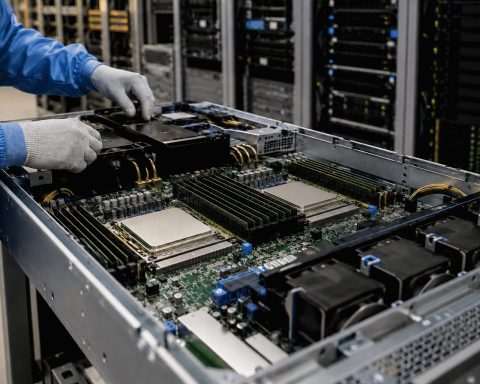
AMD and TCS plan to center the India initiative on Instinct MI455X GPUs, chips designed for large AI model training. Also in the mix: EPYC “Venice” server CPUs, Pensando networking cards, plus AMD’s ROCm software. Their pitch? Faster “training” and “inference”—that’s the lingo for deploying and running AI models in the real world.
The idea is simple: more AI budgets are moving away from just chips toward complete systems, racks, and networking gear, where the economics—margin profiles, customer loyalty—change. The latest catchphrase making the rounds is “sovereign AI factories,” shorthand for government and enterprise computing setups aimed at retaining control and data onshore. India, for one, is pushing for bigger local capacity.
There’s no slam dunk here. Data-center projects move slowly—permits, power, construction, all of it adds up. The result? Revenue doesn’t hit fast; it’s a drawn-out pipeline. On top of that, AMD faces pressure to show it can match the performance, software support, and supply reliability that hyperscalers—the top cloud players—demand right now.
Come Tuesday, eyes will be on AMD to see if the India news keeps buyers interested or quickly gets lost amid ongoing anxiety about rates and the AI cycle. Looking ahead, AMD has its next public event at the Morgan Stanley Technology, Media & Telecom Conference on March 3.
Related articles: NASDAQ:AMD