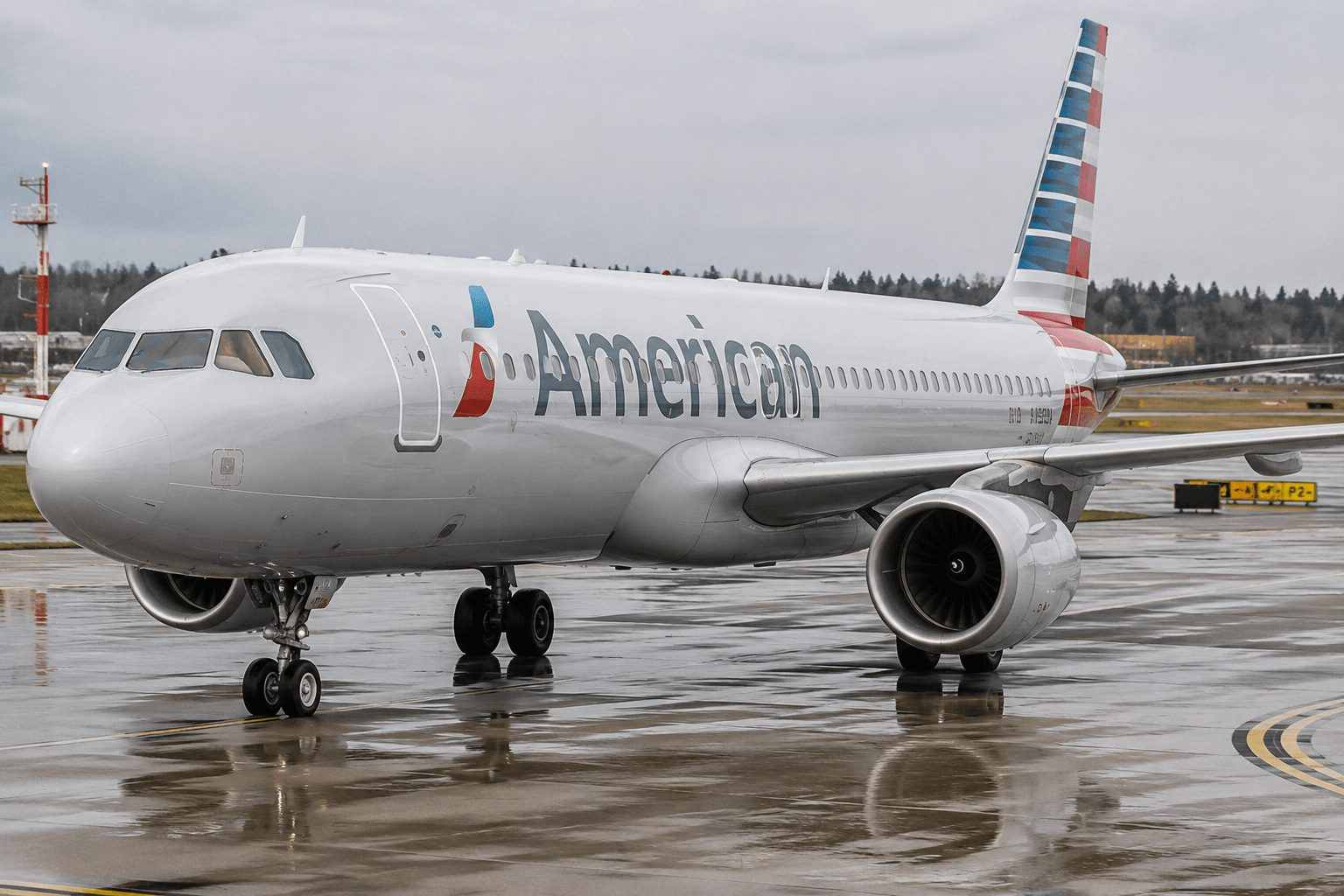

NEW YORK, July 28, 2026, 05:00 EDT – American Airlines NASDAQ:AAL stock staged a recovery as oil prices slid, although concerns about ongoing fuel costs continue to overshadow gains.
- U.S. regular trading did not take place, but Nasdaq premarket trading remained open.
- American closed at $14.95 on Monday, rising 3.3% compared to its finish on Friday.
- An increase of 10 cents in fuel costs amounts to roughly $460 million in yearly spending. According to an initial estimate, this is equivalent to 4.6% of American’s market value.
American Airlines Group Inc. NASDAQ:AAL finished the session on Monday at $14.95, marking a 3.3% rise. The increase came after Brent crude slid about 9%. The move represented relief rather than a full solution.
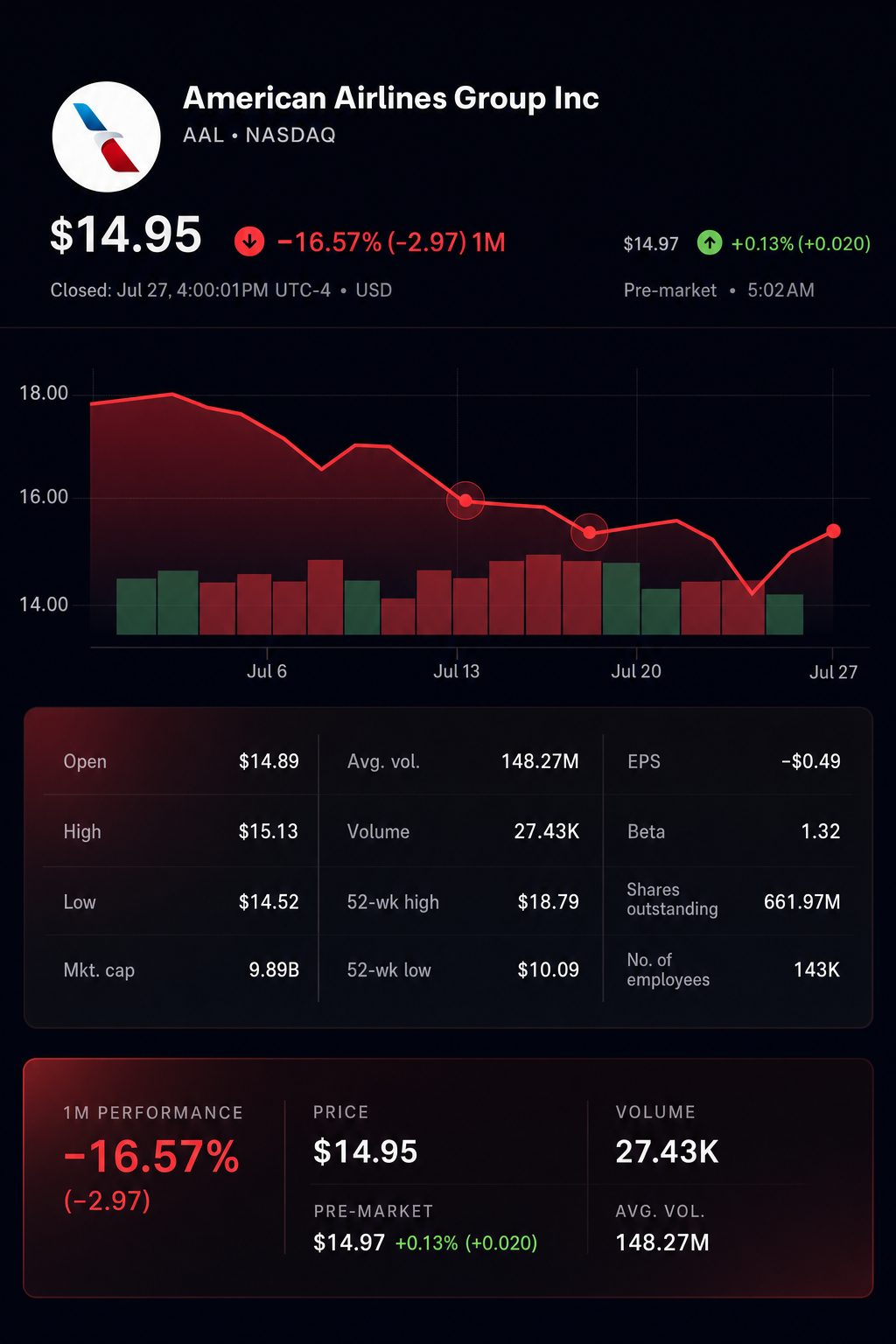
As of June 30, American held no active fuel hedges. A one-cent rise in fuel prices per gallon boosts yearly fuel costs by approximately $46 million. A 10-cent per gallon increase would result in an added $460 million in expenses, equivalent to 4.6% of its $9.9 billion market cap. This figure is an initial estimate.
American’s expected fuel expenses through the end of the year have climbed by almost $1.6 billion since early July. That sum represents 16.2% of its present market capitalization. The initial estimate does not account for ticket pricing adjustments, tax effects or any timing offsets.
The second quarter highlights the strain. Revenue climbed significantly, yet fuel expenses grew at an even quicker pace.
| Metric | Q2 2026 | Q2 2025 | Change |
|---|---|---|---|
| Operating revenue | $16.7 billion | $14.4 billion | up 16.3% |
| Fuel expense | $4.9 billion | $2.7 billion | up 83.3% |
| Fuel as share of revenue | 29.3% | 18.8% | higher by 10.6 points |
| Pretax income | $107 million | $838 million | down $731 million |
| Net income | $71 million | $599 million | lower by $528 million |
Initial estimate based on approximate corporate data.
Fuel expenditures accounted for almost 30% of revenue in the quarter by this estimate. Pretax margin declined to around 0.6% from 5.8%. The rise in revenue was nearly equal to the $2.2 billion rise in fuel costs.
Commercial profit growth was seen across the board. Managed corporate revenue climbed 26%, achieving a fifth consecutive quarter of double-digit growth. Premium unit revenue advanced by over 13%. AAdvantage sign-ups jumped more than 30%, and spending on cards increased by 8%.
The fuel curve wiped out most of those gains. “Just three weeks ago, we were expecting to guide to full-year pre-tax earnings approaching $1.5 billion,” Chief Financial Officer Devon May said.
American forecasts its adjusted full-year outcome to range from a loss of 65 cents per share to a profit of 65 cents, placing the midpoint at zero, compared to its earlier midpoint of 35 cents. For the third quarter, the company projects an adjusted loss between 70 cents and 10 cents per share. Revenue is expected to increase by 16% to 19%.
Delta Air Lines Inc. NYSE:DAL kept its annual profit guidance unchanged. United Airlines Holdings Inc. NASDAQ:UAL increased its minimum forecast. American reduced its projection. Direct comparisons are still limited, since airlines used varying dates for fuel-price calculations.
American dropped 8.4% on its earnings report, finishing at $13.555. Shares then rebounded by 10.3% between Friday and Monday from Thursday’s closing level. Despite this recovery, Monday’s price was still 2.2% under Tuesday’s $15.28.
Looking to the coming week, crude oil by itself does not tell the whole story. According to IATA’s most recent weekly reading, jet fuel is at $160.06 a barrel, a rise of 7.1%. The main question is if the drop in crude seen on Monday will impact airlines’ fuel costs. On July 21, American had projected $3.75 per gallon for the third quarter.
American reduced its third-quarter capacity growth forecast to between 3% and 5%, with the midpoint two percentage points lower than initially planned. Management is evaluating its fourth-quarter operations. At the end of June, the company had $11.3 billion in liquidity.
Risks: Oil prices might recover, and jet-fuel spreads could stay elevated. Demand may soften before increased ticket prices offset the extra costs. Without hedges, American faces both potential gains and losses.
The investor case remains heavily focused. American is seeing better revenue quality, though earnings are still mostly driven by cents per gallon. The upcoming challenge is whether fuel relief will persist.
Related articles: NASDAQ:AAL