

NEW YORK, June 18, 2026, 18:06 (EDT)
- Shares of Bloom Energy finished the day up 15.4% at $328.91, a new closing high, as traders piled into AI power-infrastructure plays.
- FERC is pressing U.S. grid operators to move faster on rules for big energy users like data centers. U.S. cash markets will close Friday for Juneteenth.
- UBS said the FERC data center power update was a positive for Bloom. Bernstein kept a cautious stance following the stock’s run.
Bloom Energy Corp closed up 15.4% at $328.91 on Thursday, hitting a record. Shares touched $329.51 during the session and volume hit 15.7 million shares, according to StockAnalysis. Investors snapped up stocks tied to AI data centers and near-term power supply.
Timing played a role here. The Federal Energy Regulatory Commission told regional grid operators to either defend or change their rules for hooking up big electricity users like data centers. Also, the New York Stock Exchange is shutting down Friday for Juneteenth, so investors won’t get another full cash-market session until Monday.
Large loads, meaning electricity users over 20 megawatts, are where the pressure is. FERC said the docket includes data centers, manufacturers, transmission providers, state regulators, and local communities, and is meant to make interconnection faster, more reliable, and non-discriminatory.
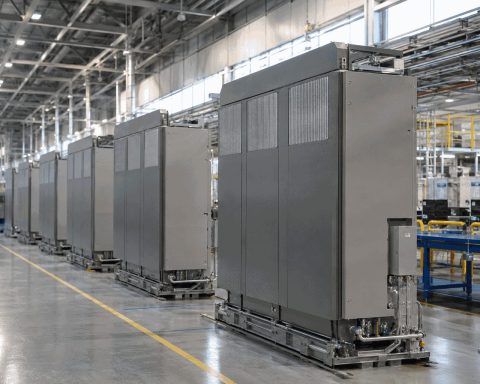
UBS kept its Buy rating on Bloom and held the $322 price target after the FERC move. The broker said this could benefit Bloom as data centers turn to in-house power and utilities consider Bloom’s solid oxide fuel cells. The fuel cells use an electrochemical method for electricity instead of combustion in turbines.
The stock also moved higher as the broader market rallied. The Nasdaq closed up 1.9% and the S&P 500 rose 1.08% on Thursday. U.S. shares bounced, with chip makers advancing and worries about oil fading after a U.S.-Iran interim peace deal, Reuters said.
Bloom is warning that power, not just chips, is the top bottleneck for new AI projects. In a June 15 data-center survey, Bloom said 61% of developers would look to bring their own power if the grid falls short. “Access to power remains the biggest constraint to data center growth,” said Natalie Sunderland, chief marketing officer at Bloom. She said community pushback is also a factor for which data center projects move ahead. Bloom Energy
Stronger financials have driven the trade. Bloom posted first-quarter revenue of $751.1 million, a jump of 130.4% from the prior year, and lifted its 2026 revenue outlook to between $3.4 billion and $3.8 billion. CEO KR Sridhar said in April Bloom is “ushering in the era of digital power for the digital age” and becoming a go-to for on-site power. Bloom Energy
Bloom’s board awarded Sridhar 271,076 performance stock units, or PSUs, according to a June 17 filing. The stock grants vest only if revenue goals are met across the strongest four-quarter stretch from July 2026 through 2029, with a margin kicker and a max payout at 300% of target.
Chief Commercial Officer Aman Joshi sold 3,558 shares at an average price of $289.14 on June 16, according to a Form 4 filing. The sales were to cover tax withholding on RSUs under a Rule 10b5-1 plan, a pre-set insider trading program. After the transaction, Joshi held 172,150 shares, the filing said.
The surge wasn’t limited to Bloom. FuelCell Energy jumped 19.9%, Plug Power was up 7.7%, and GE Vernova added 5.8%. Investors were getting into the wider AI-electricity bottleneck story, not just reacting to one company’s news.
The trade doesn’t have a big cushion for letdowns. Bernstein’s Sunaina Ocalan started coverage at Market Perform, targeting $276. She likes the hardware and called Bloom’s platform “increasingly relevant,” but said she wants a clearer path to free cash flow that isn’t tied to one-off contract timing, and more certainty on production capacity. TipRanks
That’s what traders are weighing after Thursday’s record finish. The market is betting on quick gains: quicker power, fast data-center wiring, utility contracts moving at pace. If project approvals drag, local pushback drives up expenses, or customers move to turbines, batteries, or a different fuel-cell company, Bloom’s multiple could come down sharply.
Related articles: NYSE:BE




![Australia Stock Market Today 28/08/2026 [UPDATE: 13:36 AEST] [Banks and BHP Lift ASX as WAM, PEXA Sink 18%]](https://ts2.tech/wp-content/uploads/2026/08/AU-market-dashboard-2026-08-28-1334-480x384.jpg "Australia Stock Market Today 28/08/2026 [UPDATE: 13:36 AEST] [Banks and BHP Lift ASX as WAM, PEXA Sink 18%]")