Browse Category

Renewable Energy 27 June 2025 - 20 September 2025

Trump’s Shock Attack on Offshore Wind – Permit Reversal Threatens Massive Massachusetts Wind Farm

Trump’s Shock Attack on Offshore Wind – Permit Reversal Threatens Massive Massachusetts Wind Farm

The Trump administration has moved to revoke the federal permit for the SouthCoast Wind project off Massachusetts, halting construction on 141 turbines set to power about 840,000 New England homes. The permit was approved in January 2025 after years of review. The decision has triggered sharp disputes between Trump allies and state officials over energy, jobs, and environmental impacts.
Saltwater Revolution: How Osmotic Power Could Be the Next Big Clean Energy Source

Saltwater Revolution: How Osmotic Power Could Be the Next Big Clean Energy Source

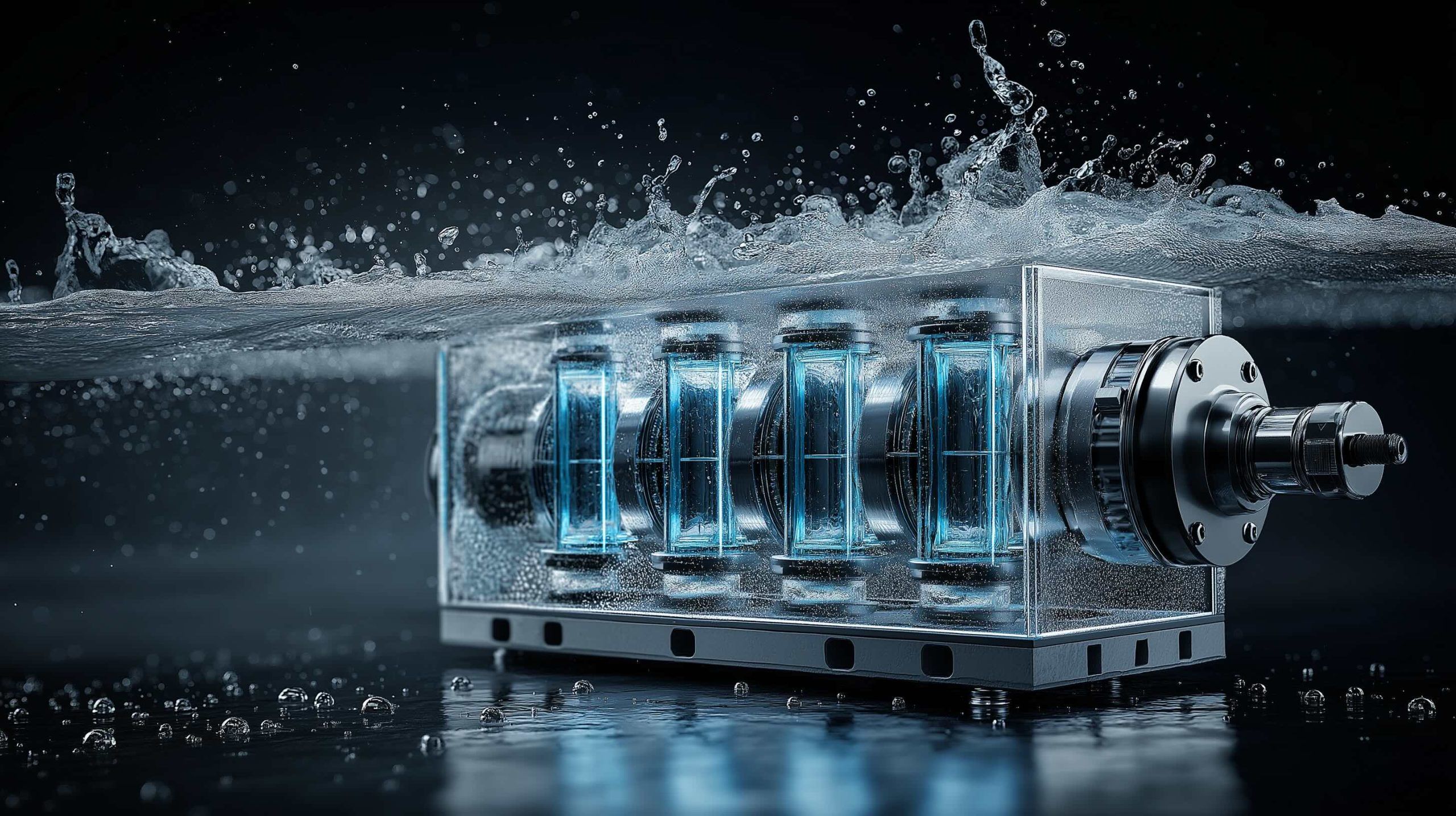
The world’s first commercial osmotic power plants opened in Denmark (2023) and Japan (2025), using salt and fresh water to generate electricity around the clock. Advances in nanomaterial membranes have boosted output to 20–25 W/m² and cut costs sharply. Osmotic power now supplies steady, zero-emission energy for industrial sites and homes. Studies suggest global potential could reach 10–20% of electricity demand.
10 September 2025
Martian Habitats, Chip Shake-Ups, and Solar Speedsters: Tech Roundup (Aug 23–24, 2025)

Martian Habitats, Chip Shake-Ups, and Solar Speedsters: Tech Roundup (Aug 23–24, 2025)

The U.S. government will take a roughly 10% stake in Intel, converting $10 billion in CHIPS Act subsidies into shares, President Trump announced. NASA showed media its 3D-printed Mars simulation habitat in Houston ahead of a new year-long crew mission starting in October. Google unveiled its Pixel 10 phone lineup, with pre-orders open and retail launch set for August 28.
PEM vs Alkaline vs Solid Oxide Electrolyzers: The 2025 Hydrogen Technology Showdown

PEM vs Alkaline vs Solid Oxide Electrolyzers: The 2025 Hydrogen Technology Showdown

Sunfire reported 84% LHV efficiency in a multi-megawatt SOEC unit; NASA ran a 4 MW SOEC in 2023. Alkaline electrolyzers cost $2,000/kW, Chinese units as low as $750/kW; PEM at $2,450/kW; SOEC pilots at $2,000–$3,000/kW. Alkaline and PEM reach 60,000–90,000 hours lifetime, SOEC demos 20,000 hours. Sinopec commissioned a 260 MW alkaline plant in 2023; Shell’s 100 MW PEM project targets 2027.
Solar Tech Showdown 2025: N-Type TOPCon vs HJT vs Perovskite Tandem – Which Will Power the Future?

Solar Tech Showdown 2025: N-Type TOPCon vs HJT vs Perovskite Tandem – Which Will Power the Future?

Commercial N-type TOPCon solar cells reach 23–24% efficiency, with JinkoSolar reporting 26.4% in tests. Heterojunction (HJT) cells regularly top 25% in production, and Longi achieved 27.3% in the lab. Perovskite–silicon tandem cells have surpassed 33% lab efficiency, with Oxford PV selling a 24.5% tandem module in September 2024. TOPCon modules now make up about 80% of new cell production.
Your Next Rooftop Will Be a Power Plant. Rooftop Energy Technologies: Present and Future Innovations.

Your Next Rooftop Will Be a Power Plant. Rooftop Energy Technologies: Present and Future Innovations.

Solar PV costs dropped about 90% in the past decade. Over 4 million US homes had solar panels by early 2024, with California mandating solar on most new homes from 2023. Oxford PV shipped its first commercial perovskite-silicon tandem panels in 2024, reaching 24.5% efficiency. About 28% of new US residential solar installs included battery storage in 2024, up from under 12% in 2023.
This New Solar Panel Tech Works Even at Night

This New Solar Panel Tech Works Even at Night

In 2022, UNSW Sydney generated nanowatt-scale power from a thermoradiative diode using HgCdTe, while Stanford retrofitted solar panels to achieve 50 mW/m² at night. By 2024, new materials pushed lab outputs toward tens of W/m², though real-world field data remain far lower and highly climate-dependent. A U.S. Air Force–funded UNSW project plans to test night-solar diodes in orbit by 2025–26.
Renewable Revolution 2025: Game-Changing Innovations in Solar, Wind, Geothermal, Bioenergy & Hydropower

Renewable Revolution 2025: Game-Changing Innovations in Solar, Wind, Geothermal, Bioenergy & Hydropower

Perovskite-silicon tandem solar cells reached about 29% efficiency on commercial-size panels, surpassing traditional silicon. Floating solar farms can boost output by 15%, and covering 10% of reservoirs could yield around 20 TW—20 times current global solar capacity. Offshore wind turbines now reach 15–18 MW, with floating projects advancing in Europe and Japan. Fervo Energy’s Nevada geothermal project delivered 3.5 MW in 2023.
1MW vs 100kW Solar Power Plants – Cost, ROI & Global Insights (India in Focus)

1MW vs 100kW Solar Power Plants – Cost, ROI & Global Insights (India in Focus)

A 1 MW solar farm uses about 2,500 panels, covers 4–5 acres, and generates 1.6–1.8 million kWh annually, enough for 150–200 homes. In India, a 1 MW system costs ₹4–5 crore, while a 100 kW system costs ₹50–80 lakh and serves 15–30 homes. U.S. costs for 1 MW are $1.0–$1.3 million; Europe sees €0.8–€1.0 million. Payback in India ranges from 4–7 years depending on size and use.
Smart Grid and Energy Management Systems – Latest Developments (June–July 2025)

Smart Grid and Energy Management Systems – Latest Developments (June–July 2025)

Honeywell and Verizon integrated 5G into smart meters, reaching data speeds up to 10 Gbps for near real-time consumption data. Eaton introduced HiZ Protect, an AI wildfire prevention system detecting power line faults with 95% accuracy in under 0.5 seconds. The U.S. DOE announced $7.6 billion for 105 grid projects nationwide. Iberdrola set a record €150 billion investment plan for 2024–2030.
Beaming the Watts Down: NASA × Ascent Solar’s Thin-Film Array Sets the Stage for Space-to-Earth Power Transmission

Beaming the Watts Down: NASA × Ascent Solar’s Thin-Film Array Sets the Stage for Space-to-Earth Power Transmission

Ascent Solar signed a 12-month agreement with NASA in June 2025 to develop thin-film PV arrays for power beaming. Caltech’s SSPD-1 tested orbital power beaming in mid-2023, but end-to-end efficiency remains extremely low. Ascent’s CIGS modules, used on NASA’s Psyche probe, target over 17% efficiency and weigh about 10 grams per panel. Large ground farms and strict beam-control are required for safety and regulation.
1 15 16 17
Go toTop