Today: 2 July 2026
Browse Category

Satellites 2 June 2025 - 15 June 2025

Laser Wars in Orbit: The 2024-2030 Boom in Optical Inter-Satellite Links

Laser Wars in Orbit: The 2024-2030 Boom in Optical Inter-Satellite Links

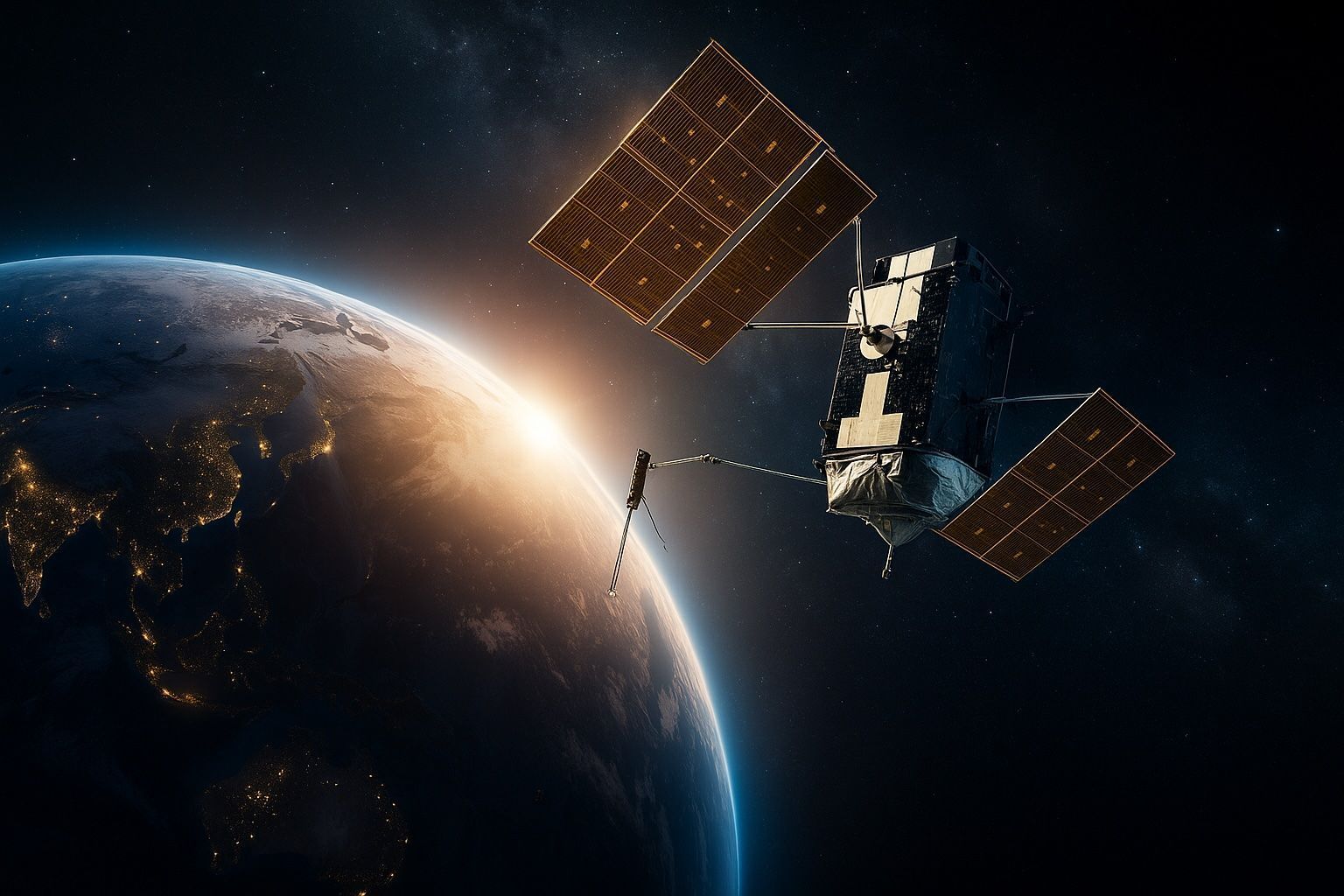
The global market for Optical Inter-Satellite Links – laser-based communication links between satellites – is experiencing explosive growth as space networks transition from radio frequencies to optical connectivity. In 2024, the OISL-related market was estimated around US$402 million, but it is projected to soar to roughly US$2.0 billion by 2030 researchandmarkets.com. This represents a stunning ~30% compound annual growth rate, reflecting how rapidly satellite operators and governments are adopting laser links to meet surging data demands. Second-generation satellite constellations in low Earth orbit are increasingly equipped with laser crosslinks, enabling direct high-speed data transfer between satellites and creating mesh networks in space globenewswire.com. Major LEO “mega-constellations” – such as SpaceX’s Starlink, Amazon’s Project Kuiper, and the planned OneWeb Phase 2 – are integrating optical inter-satellite links from the outset to boost network capacity and reduce latency globenewswire.com. These deployments, alongside advances in photonics and satellite technology, are driving a global boom in OISL adoption. Government and commercial investments in space-based laser communication are accelerating, with the technology poised to revolutionize space-to-space and space-to-ground communications over the next decade researchandmarkets.com globenewswire.com. In short, laser links in orbit are rapidly moving from experimental demos to a critical pillar of satellite infrastructure worldwide.

Satellite-Related Tenders in Ukraine – Overview and Key Examples (14.06.2025)

Satellite-Related Tenders in Ukraine – Overview and Key Examples (14.06.2025)

Ukraine’s public procurement system has facilitated numerous tenders related to satellite technology in recent years. These tenders range from building ground infrastructure for satellite navigation, to purchasing satellite communication equipment, and leasing satellite bandwidth for communications and broadcasting. Below we review a list of notable “satellite” tenders in Ukraine, sorted by budget, and provide a general overview of each. We also discuss the context and implications of these procurements. The biggest satellite-related tender identified is the State Space Agency’s project to develop a nationwide GNSS station network. In June 2025, the State Space Agency of Ukraine announced an open bidding for “Development of the state network of GNSS stations for implementing services of the coordinate-time and navigation support system.” The expected value of this project is UAH 167,130,500 opendatabot.ua. This large-scale tender aims to expand and upgrade Ukraine’s ground infrastructure for satellite navigation, which would improve positioning services. The tender was created on 06 June 2025 and was open for bidding as of mid-June 2025 opendatabot.ua. This investment underscores Ukraine’s commitment to enhancing its satellite navigation capabilities domestically, likely reducing reliance on foreign GNSS augmentation and improving accuracy for users across the country.
14 June 2025
Satellite-Related Tenders in Ukraine – Overview and Analysis (2016–2025)

Satellite-Related Tenders in Ukraine – Overview and Analysis (2016–2025)

Below is a sorted overview of major Ukrainian tenders related to satellite communications and equipment, from highest to lowest budget. Each entry includes the tender’s title, scope, budget, procuring organization, timeline, participants, and the strategic or industrial significance. Each of the above tenders, whether for intelligence-gathering equipment or satellite internet access, demonstrates Ukraine’s strategic prioritization of satellite technologies. These investments have geopolitical significance: they enhance national security, ensure continuity of government and economic functions under duress, and foster a degree of technological self-reliance. Overall, Ukraine’s procurement of satellite-related systems since 2016 reflects an adaptive response to emerging threats and a commitment to modernizing its communications and space capabilities. youcontrol.com.ua prozorro.gov.ua
14 June 2025
Satellites, Sensors, and the Next $4 Billion Boom: Inside the 2025–2031 IoT Space Race

Satellites, Sensors, and the Next $4 Billion Boom: Inside the 2025–2031 IoT Space Race

The Satellite IoT revolution is kicking into high gear, promising to connect millions of devices in the most remote corners of the globe. By leveraging satellite networks for machine-to-machine communication, this burgeoning sector is extending the internet’s reach far beyond terrestrial cell towers. Analysts forecast explosive growth in the coming years – with projections of over 26 million satellite-connected IoT devices and a market value around $4 billion by 2030 abiresearch.com. This represents a dramatic leap from today, signaling that satellite-enabled IoT could be one of the next big tech booms. The push is driven by a perfect storm of factors: rising demand for connectivity in remote areas, plummeting launch costs for satellites, and rapid innovation in low-power networking technology. This report dives deep into the market trends, forecasts, technological advances, industry applications, key players, regional hotspots, policies, challenges, and investment opportunities shaping Satellite IoT from 2025 through 2031. Satellite IoT is on a fast-track growth trajectory, underpinned by powerful market trends and drivers. At its core is the soaring demand for device interconnectivity in remote and underserved areas, from open oceans to rural heartlands. Traditional terrestrial networks often leave these areas dark; satellite IoT steps in to provide coverage
Satellite Bus Showdown: Legacy Titans vs. NewSpace Mavericks (2024–2033)

Satellite Bus Showdown: Legacy Titans vs. NewSpace Mavericks (2024–2033)

The satellite manufacturing industry is entering a boom period from 2024 through 2033, with “bus” platforms – the modular chassis of satellites – at the center of a fierce global competition. Established aerospace giants are vying with agile NewSpace startups to meet surging demand for satellites across Low-Earth Orbit constellations, traditional Geostationary missions, and everything in between. Market forecasts predict robust growth: the global satellite bus market is projected to increase from about $14.1 billion in 2023 to $23.4 billion by 2033, at a moderate ~5.4% annual CAGR openpr.com. By 2030, some analyses even foresee the market roughly doubling from mid-decade levels mordorintelligence.com, reflecting unprecedented investment in space infrastructure worldwide. This report dives into the competitive landscape driving this growth – from the key manufacturers and evolving bus designs to regional market trends, major programs, and cutting-edge technology shaping the next decade. A diverse cast of companies is fueling the satellite bus boom, ranging from legacy aerospace contractors to emerging startups. The market is highly fragmented and competitive, with no single firm dominating globally alliedmarketresearch.com. Instead, a “who’s who” of aerospace is in play:

Space-Weather Satellites: Earth’s Cosmic Early Warning System

Space-Weather Satellites: Earth’s Cosmic Early Warning System

Space weather refers to variations in the space environment between the Sun and Earth that can affect technological systems both in orbit and on the ground swpc.noaa.gov. It is generated by solar phenomena—particularly solar flares, coronal mass ejections, high-speed solar wind streams, and solar energetic particle events—that release bursts of radiation and charged particles into interplanetary space. When these disturbances sweep past Earth, they disturb our planet’s magnetic field and upper atmosphere, potentially triggering geomagnetic storms and radiation storms. These events are not just abstract cosmic curiosities; they can have very tangible consequences for modern society. Major solar eruptions “have the potential to negatively affect numerous sectors, including communications, satellite and airline operations, manned space flights, navigation systems, as well as the electric power grid” swpc.noaa.gov. For example, a strong CME impact can induce currents in power lines, disrupt high-frequency radio and GPS signals, damage satellite electronics, and pose increased radiation risks to astronauts and high-altitude flights swpc.noaa.gov spacedaily.com. In short, extreme space weather can wreak havoc on the technological infrastructure that underpins our everyday life space.com swpc.noaa.gov. This is why monitoring and forecasting space weather has become a critical global concern, giving us a “cosmic early warning system” to
8 June 2025
Internet Access in Comoros: From Island Gaps to Satellite Signals

Internet Access in Comoros: From Island Gaps to Satellite Signals

Comoros is a small archipelago nation in the Indian Ocean, comprised of three main islands – Grande Comore, Anjouan, and Mohéli – along with the neighboring French territory of Mayotte freiheit.org. Its geography poses unique challenges for telecommunications: the islands are separated by ocean channels and are volcanic and mountainous, making infrastructure deployment difficult and costly. For many years, Comoros’ insular landscape led to island gaps in connectivity, with limited inter-island links and reliance on expensive satellite connections for external communication. Today, however, the country is undergoing a digital transformation. Undersea fiber-optic cables now connect the islands to each other and to international networks, mobile broadband is expanding, and new satellite services like Starlink are on the horizon. This report provides an overview of Comoros’ geography and telecom infrastructure, the current state of Internet access, the major service providers, key statistics on usage and speeds, pricing and regulatory context, ongoing initiatives to improve access, the challenges that persist, and future prospects for bridging the digital divide in this small island developing state. Island Topography and Isolation: The Union of the Comoros is an archipelago off Africa’s east coast with a total land area just over 2,000 km² worldatlas.com. The islands
Hyperspectral Eyes in the Sky: How Space-Based Imaging Is Revolutionizing Earth Observation

Hyperspectral Eyes in the Sky: How Space-Based Imaging Is Revolutionizing Earth Observation

Imagine a satellite that not only takes pictures of Earth, but can also identify what materials compose each pixel of the image. This is the promise of hyperspectral imaging – a technology giving satellites “super-vision” across hundreds of colors beyond human sight. Hyperspectral sensors capture detailed spectral fingerprints of objects by measuring reflected light in dozens or even hundreds of narrow, contiguous wavelength bands Satellitetoday. In contrast, conventional color cameras or multispectral sensors see only a few broad bands of light Satellitetoday. By recording a contiguous spectrum for each pixel, hyperspectral imaging allows analysts to detect subtle differences in composition – for instance, distinguishing a healthy plant from a diseased one by its chlorophyll signature, or identifying minerals in soil from their unique spectral absorption features Satellitetoday Techbriefs. This richer spectral detail comes at the cost of more complex data and processing requirements, but it enables a host of new insights into Earth’s surface and atmosphere. To clarify the differences between standard imaging, multispectral, and hyperspectral, consider the number of spectral bands and what they can reveal:
7 June 2025
Sky Scanners: How SAR Imaging Satellites Are Redefining Earth Observation

Sky Scanners: How SAR Imaging Satellites Are Redefining Earth Observation

Imagine peering down at Earth through thick clouds or the dead of night and still seeing clear images of the surface. Traditional optical satellites are blind in such conditions – in fact, at any given moment about 75% of the planet is obscured either by cloud cover or darkness, making it inaccessible to optical imaging mckinsey.com. Enter Synthetic Aperture Radar imaging satellites – the ultimate "sky scanners" that illuminate the Earth with their own radar vision. SAR satellites are redefining Earth observation by providing 24/7, all-weather eyes on the planet capellaspace.com. From tracking storms through cloud cover to monitoring ground shifts in total darkness, SAR technology is unlocking insights impossible for ordinary cameras. In this report, we explore what SAR is and how it works, the advantages of radar imaging over traditional optics, and the myriad applications that benefit from SAR’s unique capabilities. We will also survey key SAR satellite missions, highlight the major players driving SAR innovation, examine current trends like miniaturization and constellations, discuss the challenges of interpreting radar imagery, and peek into the future of SAR – including the rise of smallSAR constellations and AI-powered image analysis. By the end, it will be clear how SAR imaging
Eyes in the Sky: How Satellites Are Revealing Our Changing Climate

Eyes in the Sky: How Satellites Are Revealing Our Changing Climate

Satellites have become our planet’s orbiting guardians, silently circling Earth and gathering data that help scientists unravel the story of climate change. Using advanced sensors, these high-tech observers measure everything from global temperatures and greenhouse gas levels to shrinking ice sheets and disappearing forests. The result is a revolution in climate monitoring – a wealth of information about Earth’s systems that was unimaginable just a few decades ago. This report explores what satellite remote sensing is, how it works, and the key ways satellites are transforming our understanding of climate change. We’ll look at the technologies involved, the breakthroughs enabling ever sharper insights, the benefits for science and society, and also the challenges and limitations of watching the world from space. By the end, you’ll see why agencies like NASA, NOAA, and ESA – and the IPCC itself – view satellites as essential tools in the fight against climate change Esa. Satellite remote sensing is the science of obtaining information about objects or areas from a distance – in this case, using satellites high above Earth Noaa. Instead of physical thermometers or rain gauges on the ground, satellites use sophisticated instruments to detect energy that is reflected or emitted from
6 June 2025
Global Navigation Showdown: How GPS III, Galileo, BeiDou & GLONASS Upgrades Will Change How You Navigate

Global Navigation Showdown: How GPS III, Galileo, BeiDou & GLONASS Upgrades Will Change How You Navigate

Have you ever taken GPS for granted on your phone and wondered if other countries have their own “GPS”? It turns out an intense global navigation space race is underway – and the upgrades are astonishing. The U.S., Europe, China, and Russia are modernizing and expanding their Global Navigation Satellite Systems like never before. From America’s next-gen GPS III satellites to Europe’s cutting-edge Galileo, China’s ambitious BeiDou system, and Russia’s resilient GLONASS, each is adding new technology, signals, and services. These upgrades promise higher accuracy, stronger signals, new augmentation services, and even centimeter-level precision, redefining how we navigate and use timing worldwide. In this report, we’ll explore each system’s historical background, technical specs, modernization efforts, augmentation services, strategic goals, and use cases. We’ll also compare the systems and peek into the future of navigation. Buckle up – your understanding of “GPS” is about to expand globally! Historical Background: The Global Positioning System, operated by the U.S., was the first GNSS and remains the most ubiquitous. Born out of Cold War military needs, GPS launched its first satellite in 1978 and achieved full global coverage by 1993 ndupress.ndu.edu. Originally a military system, GPS was opened to civilian use and became the

The Space Race for the Internet: Inside the Billion-Dollar Satellite Mega-Constellation Boom

The Space Race for the Internet: Inside the Billion-Dollar Satellite Mega-Constellation Boom

Stacks of Starlink satellites awaiting deployment in orbit. A new space race is underway—not for the Moon or Mars, but to blanket Earth in high-speed internet from space. Private companies and governments are launching mega-constellations of satellites by the thousands, aiming to beam broadband connectivity to every corner of the globe. The stakes are enormous: billions of dollars are pouring into these projects, and the outcome could redefine how the world connects and who controls that connectivity. Rocket launches carrying dozens of satellites at a time have become routine, signaling a technological revolution that promises to bridge digital divides and create a truly global internet infrastructure. This report dives into the history, technology, key players, and far-reaching implications of this 21st-century space race. Satellite communications have come a long way since the first communications satellites of the 1960s. Traditional satellite internet relied on a few large geostationary satellites parked 36,000 km above Earth, which provided broad coverage but suffered high latency and limited capacity. Companies like HughesNet and Viasat built GEO-based networks for rural internet, but speeds were slow and lag times of ~600 ms made real-time applications difficult. In the 1990s, pioneers dreamed of low Earth orbit constellations: projects
Mega-Constellations Exposed: How Swarms of Tiny Satellites Are Taking Over Low Earth Orbit

Mega-Constellations Exposed: How Swarms of Tiny Satellites Are Taking Over Low Earth Orbit

Low Earth Orbit generally refers to orbits up to about 2,000 km above Earth’s surface nasa.gov. At these altitudes, satellites circle the globe in ~90–120 minutes, close enough for low-latency communications and high-resolution observations. In recent years, small satellites – typically massing from a few kilograms up to a few hundred kilograms – have revolutionized LEO activities. These minisatellites, microsatellites, and even tiny nanosatellites pack advanced capabilities into compact frames nasa.gov. Smaller size means lower cost: they can be built and launched much more cheaply than traditional one-ton satellites en.wikipedia.org. This cost reduction, combined with improvements in electronics and solar power, has enabled deploying constellations – large networks of small satellites working in concert. In effect, dozens or thousands of satellites working together can provide continuous global coverage or high revisit rates that a single big satellite in LEO could never achieve. Dozens of flat-panel Starlink small satellites stacked for launch on a single rocket. Mass production and compact design allow many satellites to be launched together, dramatically lowering per-satellite launch cost en.wikipedia.org starlink.com.
Why Starlink Keeps Hitting Red Tape Around the World

Why Starlink Keeps Hitting Red Tape Around the World

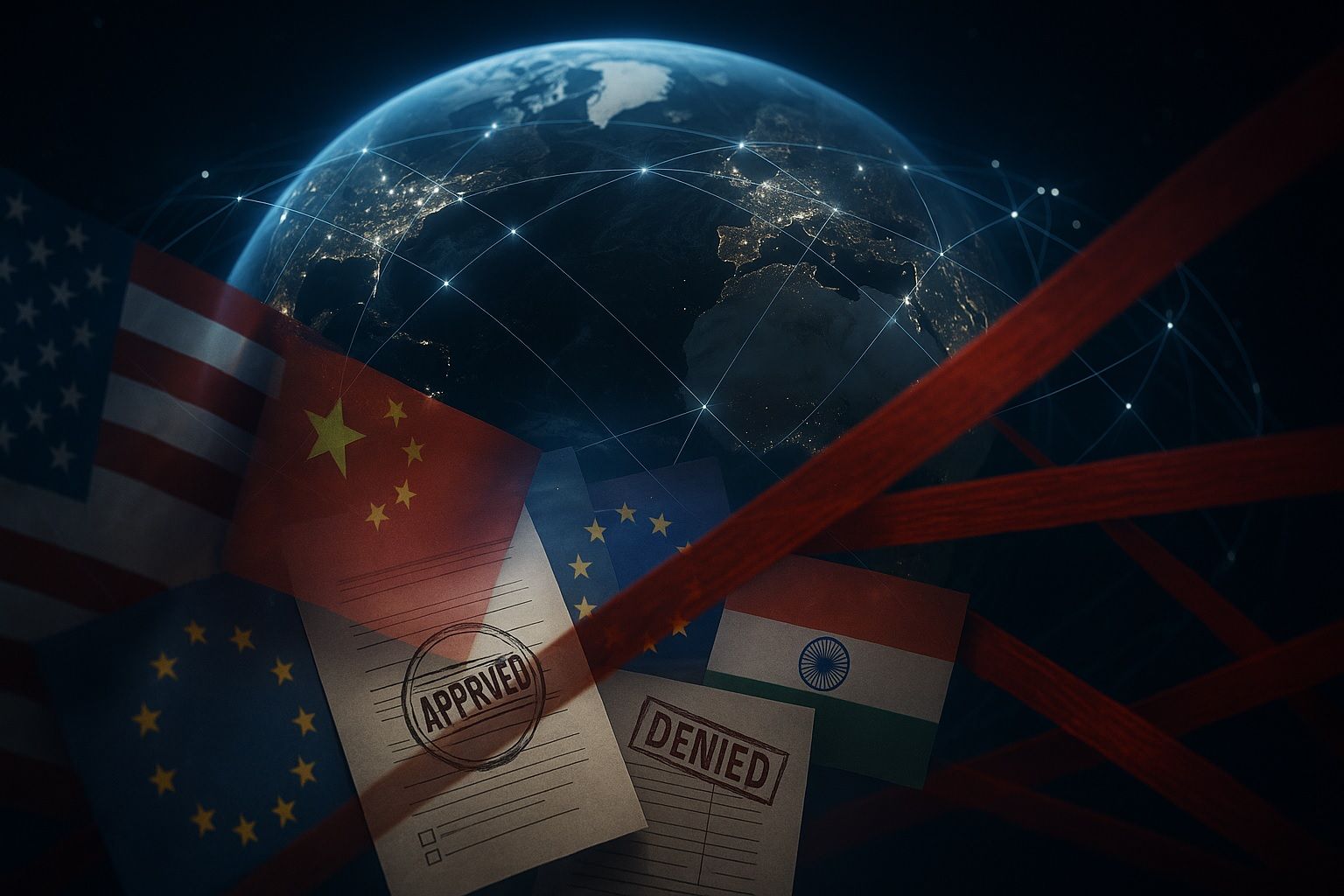
A Starlink user terminal installed on a riverboat in remote Brazil, reflecting the service’s reach into areas underserved by terrestrial internet reuters.com. Despite such promise, Starlink’s global expansion has repeatedly run into regulatory roadblocks in different countries. Starlink, the satellite internet constellation operated by SpaceX, aspires to deliver high-speed broadband worldwide – from megacities to the most remote villages. Its global ambitions to bridge the digital divide come with an inherent challenge: navigating a patchwork of national regulations and red tape. Unlike terrestrial internet services, which operate within national borders, Starlink’s space-based system crosses boundaries, requiring licensing and spectrum approval in each country it serves. Around the world, regulators have responded with varying degrees of caution or enthusiasm. Some nations have eagerly welcomed Starlink to boost connectivity, while others have imposed strict conditions, citing concerns over licensing, spectrum interference, national security, competition, and compliance with local telecom laws. This report provides a country-by-country analysis of the regulatory hurdles Starlink has encountered through 2025, highlighting supportive versus hostile environments, real examples of regulatory actions, and the evolving policy landscape.
No Signal? No Problem – Starlink’s Direct-to-Cell Satellites Are Eliminating Dead Zones

No Signal? No Problem – Starlink’s Direct-to-Cell Satellites Are Eliminating Dead Zones

Imagine sending a text from the middle of the ocean or deep in the mountains with no cell tower in sight. That’s the promise of Starlink’s new Direct-to-Cell technology – a “cell tower in space” that lets ordinary phones connect via satellite when terrestrial coverage is absent. In recent trials, SpaceX’s Starlink satellites have successfully relayed SMS texts and even voice/video calls directly to standard smartphones, showcasing a potential game-changer for mobile connectivity. This report dives into what Starlink Direct-to-Cell is, its key milestones, the partners and timelines involved, and what it all means for the telecom industry and consumers around the world. Starlink Direct-to-Cell is a satellite-based cellular service designed to eliminate mobile dead zones by connecting unmodified 4G LTE phones directly to orbiting satellites starlink.com starlink.com. In essence, each equipped Starlink satellite functions like a floating cell phone tower in space, with an onboard 4G LTE base station that communicates with standard phones on the ground starlink.com. Unlike traditional satellite phones, users do not need any special hardware or apps – any normal smartphone can connect, as long as it supports the frequency band used and has a clear view of the sky starlink.com. The satellites then route
Starlink’s Sky Grab: How SpaceX Is Quietly Rewiring the Global Internet Game

Starlink’s Sky Grab: How SpaceX Is Quietly Rewiring the Global Internet Game

SpaceX’s Starlink has rapidly built a mega-constellation of satellites that is reshaping how the world accesses the internet. Since launching the first batch of 60 satellites in 2019, Starlink has put thousands of satellites into low-Earth orbit to blanket the planet with broadband coverage Telegeography. By late 2024, nearly 7,000 Starlink satellites were in orbit – a constellation dwarfing all others Reuters. This “sky grab” of orbital real estate has enabled Starlink to reach millions of users globally, many in remote areas previously left offline. Starlink’s explosive growth – from 1 million users at end-2022 to over 4.6 million by end-2024 Politico – signals a quiet but profound shift in the global internet game, as satellite broadband emerges as a viable alternative where traditional fiber and cell networks fall short. The following report examines Starlink’s evolution, its expanding coverage and market penetration across regions, competitive and regulatory hurdles, business strategies, and its social-economic impacts on connectivity and the digital divide. Starlink’s journey from concept to global coverage has been remarkably swift. Deployment milestones include the public beta rollout in October 2020, followed by rapid expansion to dozens of countries by 2021-2022 as more satellites launched. SpaceX hit the 1,000-satellite mark
3 June 2025
Inside Burundi’s Digital Struggle: The Truth About Internet Access and the Satellite Solution

Inside Burundi’s Digital Struggle: The Truth About Internet Access and the Satellite Solution

Burundi, a small landlocked nation in East Africa, faces a digital connectivity crisis. Despite modest improvements in recent years, it remains one of the world’s least-connected countries, with only about 11–12% of Burundians using the internet as of 2023–2024 ecofinagency.com datareportal.com. This report dives deep into the current state of internet access in Burundi – from the reach of mobile and broadband networks to the emergence of satellite internet – and examines the players, policies, challenges, and opportunities shaping the country’s digital future. In a region where neighbors like Rwanda and Tanzania are rapidly advancing, Burundi’s struggle to bridge the digital divide is both urgent and instructive. Below, we explore the facts behind the headlines and what solutions might finally connect Burundi’s underserved millions. Burundi’s internet landscape is characterized by extremely low penetration, heavy reliance on mobile networks, and minimal fixed broadband. As of early 2025, only about 1.78 million people out of ~14 million were internet users datareportal.com. In other words, nearly 88–90% of the population remains offline datareportal.com ecofinagency.com. This puts Burundi near the bottom globally in connectivity. Those who are online mostly access the internet via mobile phones: an overwhelming 99.6% of internet subscriptions are mobile broadband
Everything You Need to Know About Internet Access in Bulgaria (Even the Satellites!)

Everything You Need to Know About Internet Access in Bulgaria (Even the Satellites!)

Bulgaria has a well-developed internet infrastructure for a country of its size. In recent years, the nation has invested heavily in high-speed broadband networks, especially fiber-optic lines in urban areas Budde. This has led to excellent cross-platform competition in fixed broadband – customers can access the internet via digital subscriber line, cable, and increasingly fiber-to-the-home networks Budde. By early 2021, about 65% of fixed broadband subscribers were already on fiber connections, as users migrated off older DSL lines Budde. Mobile network infrastructure is also robust: 4G LTE services became widely available in the mid-2010s, and 5G was launched commercially in 2020 Budde. Two of the country’s largest operators turned on 5G networks in 2020, and by the end of 2022 around 70% of the population was expected to be under 5G coverage Budde. International internet connectivity is maintained via high-capacity fiber links to European internet hubs, and there are local internet exchange points that help keep domestic traffic efficient. Overall, Bulgaria’s internet landscape has transformed significantly over the past decade, evolving from legacy copper networks to modern fiber and 5G systems. Despite these improvements, challenges persist. Rural areas still have gaps in infrastructure and service quality, and Bulgaria has historically
2 June 2025
You Won’t Believe Brunei’s Internet: 5G Everywhere, 100 Mbps for All – Even Satellites Are Joining

You Won’t Believe Brunei’s Internet: 5G Everywhere, 100 Mbps for All – Even Satellites Are Joining

Brunei Darussalam, a small but wealthy nation on Borneo, is undergoing an internet revolution that defies its size. With nearly 99% of its people online datareportal.com and a nationwide rollout of 5G mobile and fiber broadband, Brunei’s digital landscape has leapt ahead in recent years. This report dives into Brunei’s surprisingly advanced internet infrastructure, the key players driving connectivity, the mix of technologies keeping everyone connected, and what the future holds – including the prospect of SpaceX’s Starlink beaming internet to remote corners of the Sultanate. Below, we explore Brunei’s internet access story, from urban centers to rural jungles, highlighting speeds, coverage, government initiatives, challenges, and upcoming trends in an engaging, easy-to-scan format. This overview shows a country where virtually everyone is connected and internet speeds & coverage are rapidly catching up with global leaders. Next, we break down how Brunei achieved this – and what’s next.
2 June 2025
Botswana’s Digital Leap: How Satellites and Smartphones Are Redefining Internet Access in the Kalahari

Botswana’s Digital Leap: How Satellites and Smartphones Are Redefining Internet Access in the Kalahari

Botswana is undergoing a digital transformation, dramatically expanding internet connectivity across its population. In the past decade, internet use in Botswana surged from roughly 30% of the population in 2013 to over three-quarters by 2024 en.wikipedia.org techcabal.com. This is notably higher than Africa’s overall internet usage and even above the global average en.wikipedia.org. Driving this “digital leap” are two pivotal technologies – widespread mobile smartphone networks and new satellite broadband services – which together are bridging the connectivity gap even in remote areas of the Kalahari Desert. However, despite these advances, Botswana faces challenges in ensuring reliable, affordable internet for all. This report examines the state of internet access in Botswana: penetration rates and urban–rural divides, key service providers and technologies, the growing role of satellite internet, infrastructure hurdles and recent initiatives, affordability and access issues, and the policy landscape. Regional comparisons are also provided to put Botswana’s progress in context. Internet use in Botswana has grown rapidly and now reaches a large majority of citizens. As of early 2024, an estimated 2.09 million Batswana were internet users, about 77.3% of the population datareportal.com. This marks a huge jump from just a decade ago – for example, in 2013 only
1 4 5 6 7

Stock Market Today

  • ASX Seen Lower as Oil Falls on US-Iran Talks; Northern Star Resources Holds to Gold Sales Goal
    July 1, 2026, 9:04 PM EDT. Australian stocks look set to open down Thursday with oil slipping over 1% to the lowest since March after progress in US-Iran talks eased concerns over supply. Northern Star Resources kept its fiscal 2026 gold sales target, giving the mining sector a steadier footing while the broader market weakens. Investors remain cautious, watching commodity moves as geopolitical headlines hit sentiment.
Go toTop