Today: 1 July 2026
Browse Category

Space Exploration 18 December 2025 - 5 January 2026

Alien-signal hunt finds nothing from interstellar comet 3I/ATLAS after Green Bank scan

Alien-signal hunt finds nothing from interstellar comet 3I/ATLAS after Green Bank scan

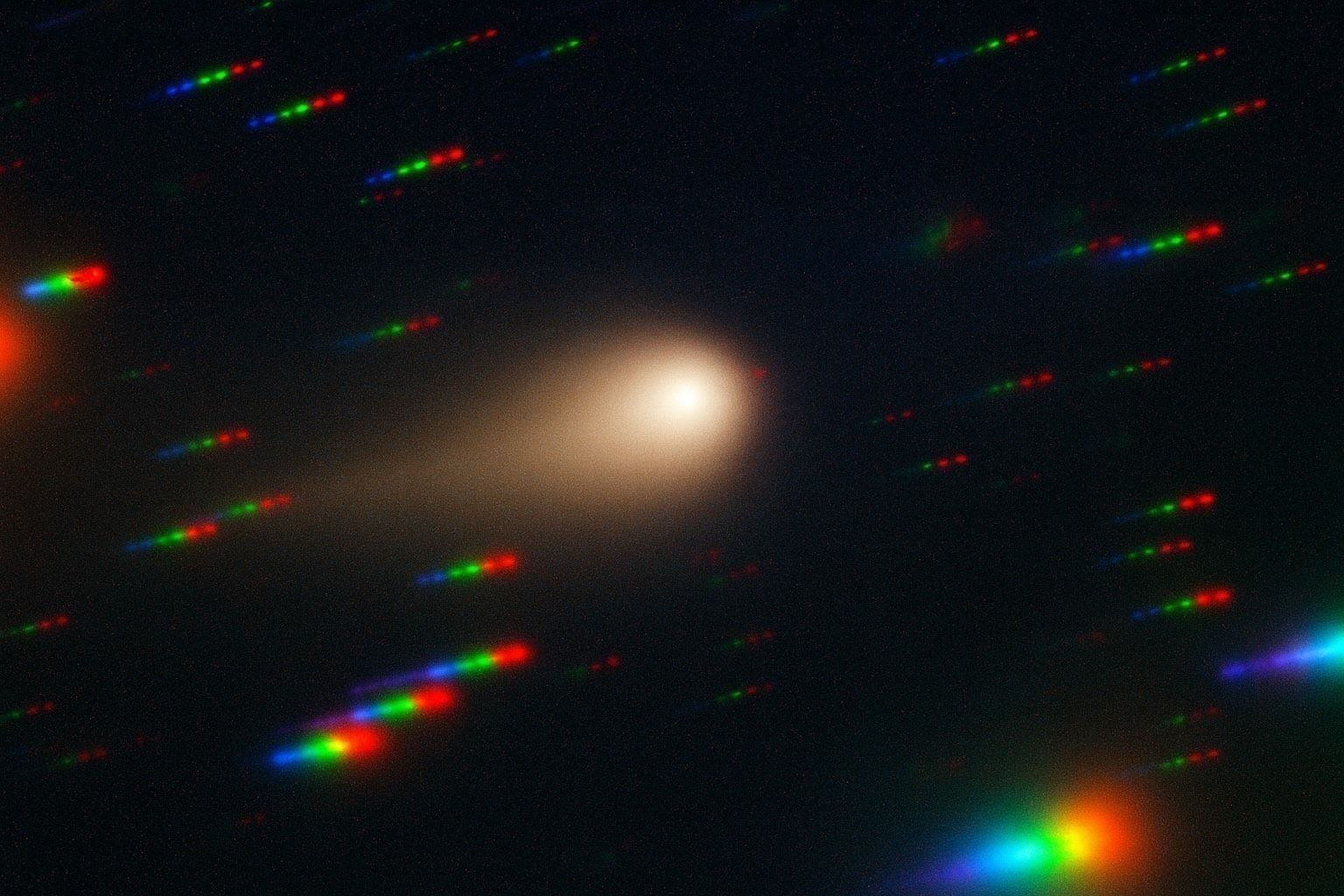
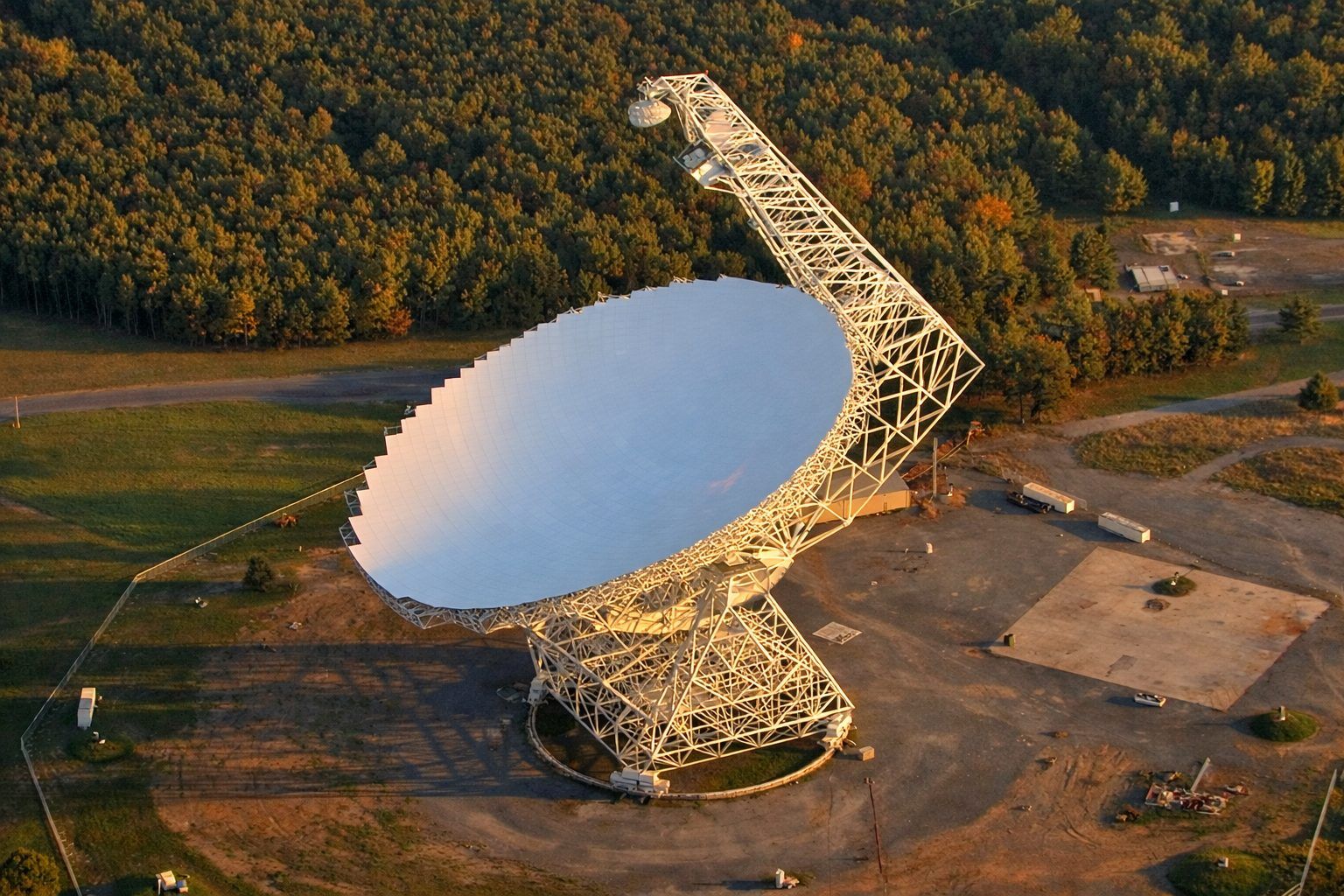
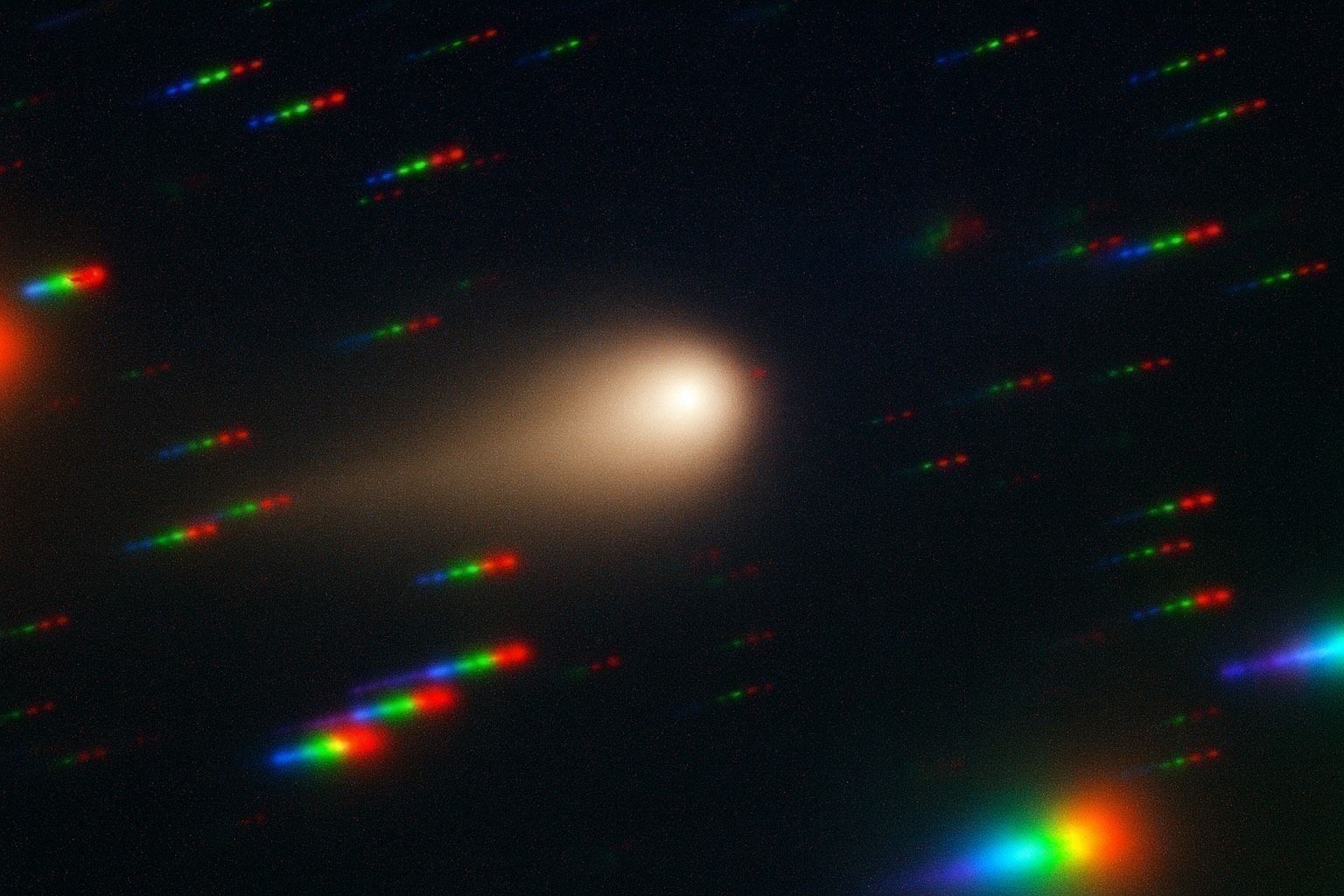
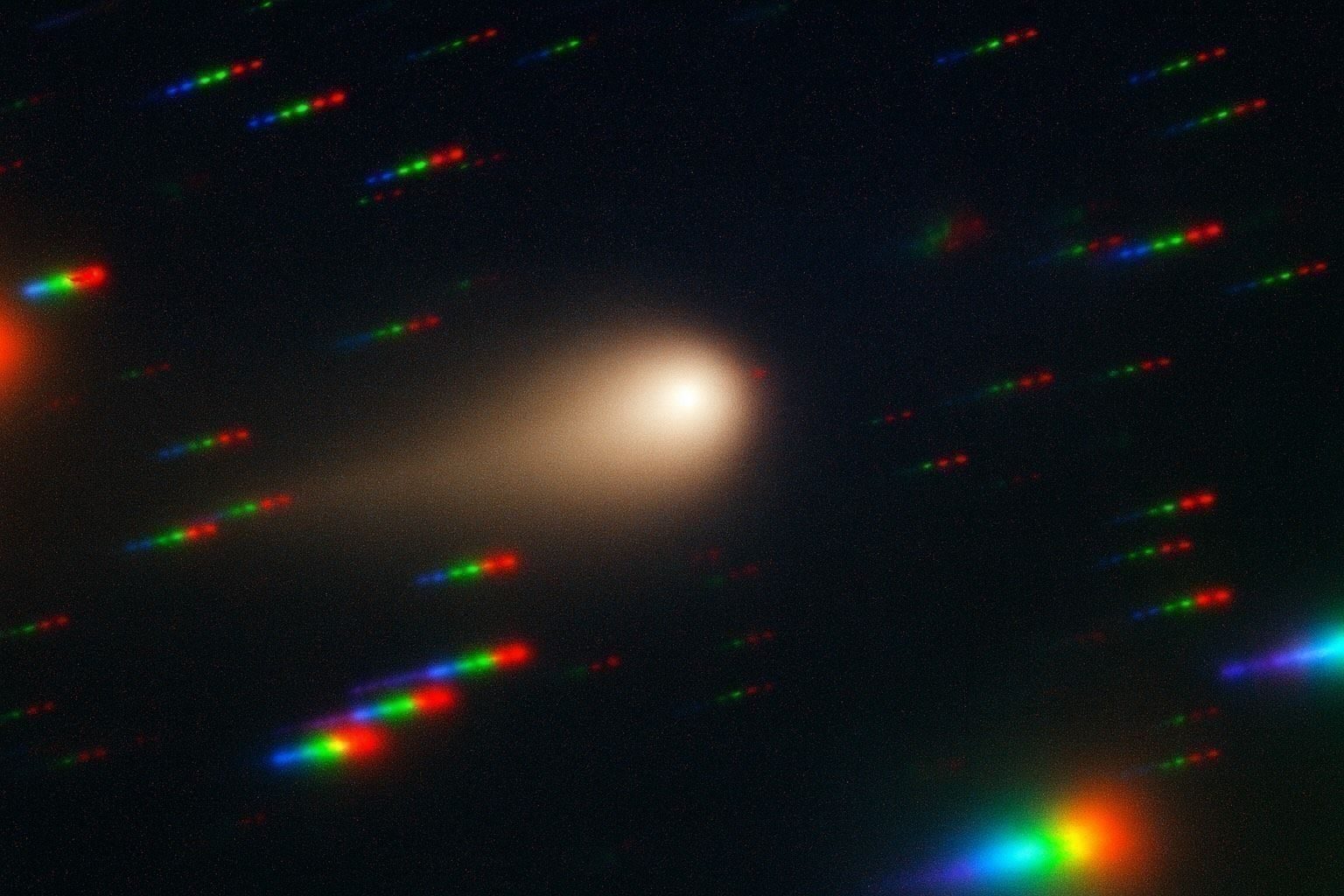
A search for possible technosignatures — potential signs of advanced technology — in the interstellar comet 3I/ATLAS found no credible radio transmissions, Breakthrough Listen researchers reported. The team said its campaign detected no candidate signals down to the 100 milliwatt level. arXiv The finding matters because 3I/ATLAS is a rare visitor from outside the solar system, and scientists had a limited window to scrutinize it as it swept past Earth. NASA says the comet posed no threat and came no closer than about 270 million km, after being reported to the Minor Planet Center on July 1, 2025 by the NASA-funded ATLAS survey in Chile.
5 January 2026
Interstellar comet 3I/ATLAS vents water after Sun swing-by as radio search finds no signals

Interstellar comet 3I/ATLAS vents water after Sun swing-by as radio search finds no signals

Scientists tracking interstellar comet 3I/ATLAS with a Sun-watching spacecraft have estimated how quickly it shed water after its late-October pass around the Sun, before activity eased as it moved outward. A separate radio scan also reported no sign of artificial transmissions from the object. The readings matter because 3I/ATLAS — only the third confirmed interstellar object seen entering the solar system — is a fleeting opportunity to study material formed around another star. The comet is already on its way out, narrowing the window for observations.
5 January 2026
Scientists Scanned Interstellar Comet 3I/ATLAS for Alien Signals — and Found Nothing

Scientists Scanned Interstellar Comet 3I/ATLAS for Alien Signals — and Found Nothing

Scientists hunting for signs of alien technology from interstellar comet 3I/ATLAS reported no radio signals that could be traced to the object, after aiming one of the world’s most sensitive dishes at it during its recent close pass by Earth. ScienceAlert The result matters because 3I/ATLAS is rare — only the third known object confirmed to have come from outside the solar system — and it is already heading back out, shrinking the window for close-up observations.
4 January 2026
Green Bank Telescope schedules fresh scan of interstellar Comet 3I/ATLAS as it heads out

Green Bank Telescope schedules fresh scan of interstellar Comet 3I/ATLAS as it heads out

The Green Bank Telescope in West Virginia scheduled a six-hour “chemical survey” of interstellar comet 3I/ATLAS early on Saturday, according to the facility’s public observing schedule. The slot ran from 01:30 to 07:00 ET and used a high-frequency receiver band commonly used to hunt for molecular fingerprints. The timing matters because 3I/ATLAS — only the third known object confirmed to enter the solar system from interstellar space — is now moving away and steadily fading. NASA says the comet remains observable from the ground in the pre-dawn sky until spring 2026, narrowing the window for high-quality measurements.
3 January 2026
Hubble spots odd triple jets on interstellar comet 3I/ATLAS as radio search finds no alien signal

Hubble spots odd triple jets on interstellar comet 3I/ATLAS as radio search finds no alien signal

Harvard astrophysicist Avi Loeb said newly analyzed Hubble Space Telescope images show three evenly spaced jets on interstellar comet 3I/ATLAS, adding fresh intrigue to a rare visitor now leaving the solar system. The timing matters because 3I/ATLAS is only the third known object from beyond the solar system — after 1I/ʻOumuamua and 2I/Borisov — and it is already receding after its closest approach to Earth on Dec. 19.
2 January 2026
Interstellar comet 3I/ATLAS spills its secrets as scientists clock its water loss and radio silence

Interstellar comet 3I/ATLAS spills its secrets as scientists clock its water loss and radio silence

Astronomers have measured water streaming from interstellar comet 3I/ATLAS after it passed closest to the Sun, using ultraviolet observations that track hydrogen released as water breaks apart, a report published on Friday said. Phys The finding matters because 3I/ATLAS is only the third confirmed object known to have entered the solar system from interstellar space. Scientists treat such visitors as time-limited samples of material formed around another star, and this one is still being followed as it recedes.
Hubble’s new 3I/ATLAS data show twin jets as rare interstellar comet fades

Hubble’s new 3I/ATLAS data show twin jets as rare interstellar comet fades

NASA’s Hubble Space Telescope has carried out a new observation of interstellar comet 3I/ATLAS, with the Space Telescope Science Institute’s status report showing a Dec. 27 visit now archived. stsci.edu The update comes as 3I/ATLAS fades rapidly from view after swinging past Earth this month, while continuing on an outbound path that will next take it past Jupiter in March, NASA officials said in an Associated Press report. AP News
Shannon Airport Was Considered a NASA Space Shuttle Emergency Landing Site, Newly Released Irish State Papers Show

Shannon Airport Was Considered a NASA Space Shuttle Emergency Landing Site, Newly Released Irish State Papers Show

If you’ve ever passed through Shannon Airport, it’s easy to think of it as a gateway for transatlantic travel—a place built for long runways, strong winds, and big aircraft. But newly released Irish State Papers suggest the Co Clare runway once sat inside a far more dramatic contingency plan: a last-resort landing option for NASA’s Space Shuttle, should a launch go catastrophically wrong. Documents reported in Irish media over the weekend indicate U.S. officials asked the Irish Government in 1995 to allow Shannon to be used as an additional emergency landing location. In a worst‑case scenario involving multiple main engine failures, the shuttle crew could have had only seconds to decide whether to divert—potentially toward Ireland. The Irish Times+2TheJournal.ie+2
28 December 2025
Comet 3I/ATLAS Latest Update: Wobbling Jets in a Rare Sun-Facing Tail, NASA’s Multi-Mission Watch, and What Happens Next

Comet 3I/ATLAS Latest Update: Wobbling Jets in a Rare Sun-Facing Tail, NASA’s Multi-Mission Watch, and What Happens Next

The interstellar comet 3I/ATLAS—also known by its comet designation C/2025 N1—is already on its way out of our solar system. But in the final weeks of 2025, it’s still delivering surprises: a rare “anti-tail” that appears to point toward the Sun, jets that wobble with a clock-like rhythm, and a fresh wave of results from some of humanity’s most sensitive searches for unusual signals. 3I/ATLAS is only the third confirmed interstellar object ever observed passing through our celestial neighborhood—after ‘Oumuamua and 2I/Borisov—and it’s giving scientists an unprecedented chance to study material forged around another star. NASA Science+1
28 December 2025
Comet 3I/ATLAS Today (Dec. 26, 2025): Wobbling Jets Detected in a Rare Sun-Facing Tail as the Interstellar Visitor Departs

Comet 3I/ATLAS Today (Dec. 26, 2025): Wobbling Jets Detected in a Rare Sun-Facing Tail as the Interstellar Visitor Departs

Dec. 26, 2025 — Comet 3I/ATLAS is already on its way out of our neighborhood, but it’s still managing to surprise astronomers on the way to the cosmic exit ramp. Today’s coverage centers on a fresh scientific twist: researchers have identified wobbling jet structures inside an even rarer feature—an apparent tail that points toward the Sun, not away from it. The Indian Express If you’ve been following the saga, this is the part where the universe reminds us it has a sense of humor: the comet is leaving, fading, and getting harder to observe from Earth—yet the data it already delivered are still yielding new physics, new debates, and new “wait, comets can do that?” moments. The Indian Express
26 December 2025
Doomed SpaceX Starlink Satellite 35956 Photographed From Orbit After In‑Space Anomaly Spreads Debris

Doomed SpaceX Starlink Satellite 35956 Photographed From Orbit After In‑Space Anomaly Spreads Debris

Dec. 24, 2025 — A rare, close-up orbital photograph has provided a clearer look at a SpaceX Starlink satellite that suffered an in-space anomaly and is now tumbling toward reentry, while a growing debris field underscores how quickly low Earth orbit can become more complicated — and potentially more dangerous — as megaconstellations expand. Space+2Reuters+2 The satellite, identified as Starlink 35956, lost communications after the incident and began an unexpected descent from its operational altitude. SpaceX says the spacecraft and associated debris are expected to burn up in Earth’s atmosphere “within weeks,” and that the satellite’s path remains below the International Space Station’s orbit, posing no risk to the ISS or its crew. Space+2WESH+2
24 December 2025
ISRO’s ‘Baahubali’ LVM3-M6 Launches BlueBird 6 (BlueBird Block-2) for AST SpaceMobile, Setting a New Heaviest-Payload Record — Dec. 24, 2025

ISRO’s ‘Baahubali’ LVM3-M6 Launches BlueBird 6 (BlueBird Block-2) for AST SpaceMobile, Setting a New Heaviest-Payload Record — Dec. 24, 2025

India’s heavy-lift launch vehicle LVM3-M6 — popularly dubbed “Baahubali” — roared off the Second Launch Pad at the Satish Dhawan Space Centre in Sriharikota on December 24, 2025, successfully deploying BlueBird 6, a next-generation communications spacecraft for U.S.-based AST SpaceMobile. The mission, officially described by ISRO as the LVM3-M6 / BlueBird Block-2 commercial launch, is a landmark on two fronts: it is the heaviest payload ever launched by LVM3 into Low Earth Orbit and a high-visibility demonstration of India’s expanding role in global, fee-for-service satellite launches. www.ndtv.com+2ISRO+2 The satellite was inserted into a circular Low Earth Orbit around 520 km altitude, with ISRO’s mission brochure listing an inclination of about 53 degrees — the orbital “tilt” that determines which latitudes the spacecraft passes over. Separation occurred roughly 15–16 minutes after liftoff, consistent with the mission’s published timeline and international reporting. ISRO+1
ISRO LVM3-M6 BlueBird Block-2 Mission: Countdown Begins for “Baahubali” Rocket Launch Carrying AST SpaceMobile’s BlueBird 6

ISRO LVM3-M6 BlueBird Block-2 Mission: Countdown Begins for “Baahubali” Rocket Launch Carrying AST SpaceMobile’s BlueBird 6

On December 23, 2025, the Indian Space Research Organisation entered the final stretch ahead of a headline-making commercial launch: LVM3-M6, a dedicated mission to deploy BlueBird Block-2—also widely referred to as BlueBird 6—a next-generation communications satellite built for direct-to-smartphone cellular broadband from space. ISRO+2ISRO+2 If the mission proceeds as planned, it will set multiple records at once: the heaviest payload ever launched by LVM3 from Indian soil and one of the most closely watched attempts yet to push “space-to-phone” connectivity from tech promise to operational reality. ISRO+2ISRO+2
24 December 2025
Comet 3I/ATLAS Today (Dec. 23, 2025): New Spacecraft Data, X‑Rays, “Radio Signals,” and the Next Big Test at Jupiter

Comet 3I/ATLAS Today (Dec. 23, 2025): New Spacecraft Data, X‑Rays, “Radio Signals,” and the Next Big Test at Jupiter

December 23, 2025 — Comet 3I/ATLAS, the third confirmed interstellar object ever seen passing through our solar system, is already on its way out. But the news cycle around it is still very much inbound. In the days following 3I/ATLAS’ closest approach to Earth on Dec. 19, 2025, space agencies and research teams have been stitching together an unusually rich, multiwavelength “biography” of this visitor from another star system: NASA says it’s a normal active comet, while ESA and Japan’s XRISM mission have revealed something never conclusively seen in an interstellar comet before—an X‑ray glow produced as the comet’s gases collide with the solar wind. European Space Agency+3NASA Science+3European Space Agency+3
23 December 2025
Comet 3I/ATLAS Today (22 December 2025): The Latest Science, Spacecraft Views, and “Radio Signal” Reality Check

Comet 3I/ATLAS Today (22 December 2025): The Latest Science, Spacecraft Views, and “Radio Signal” Reality Check

As of 22.12.2025, the interstellar comet 3I/ATLAS—only the third confirmed object from beyond our solar system—is already on its way out again. Its closest pass by Earth happened just days ago, and while the comet never came anywhere near “close” in a human sense, the flyby has triggered a wave of fresh data releases, rapid-response observations, and some internet-fueled mythology. Here’s what’s new right now: what scientists have actually seen, what they haven’t seen, and what comes next as 3I/ATLAS heads toward the outer solar system. NASA Science+1
Comet 3I/ATLAS Today (Dec. 20, 2025): Europa Clipper’s UV Surprise, Parker Solar Probe Images, and the Latest Forecast

Comet 3I/ATLAS Today (Dec. 20, 2025): Europa Clipper’s UV Surprise, Parker Solar Probe Images, and the Latest Forecast

December 20, 2025 — The rare interstellar visitor known as Comet 3I/ATLAS is now past its closest approach to Earth and heading back out toward the outer solar system. But “past” doesn’t mean “gone.” Today’s updates include a new research release describing ultraviolet measurements from NASA’s Europa Clipper that captured the comet when Earth- and Mars-based observers had limited views, plus fresh details on how NASA’s Parker Solar Probe tracked the comet near the Sun—right through the glare that normally hides objects like this from ground-based telescopes. ScienceDaily+2NASA Science+2 For skywatchers, 3I/ATLAS remains a telescope target rather than a naked-eye spectacle. For scientists, it’s something far bigger: a fast-moving, chemically revealing sample of comet material formed around another star—delivered straight through our celestial neighborhood for a limited time. NASA Science+1
20 December 2025
The Role of Starlink in Scientific Research: How SpaceX’s Satellite Internet Is Transforming Field Science, Earth Observation, and Space Missions—While Challenging Astronomy

The Role of Starlink in Scientific Research: How SpaceX’s Satellite Internet Is Transforming Field Science, Earth Observation, and Space Missions—While Challenging Astronomy

Starlink—the low Earth orbit satellite internet network built by SpaceX—was designed to solve a commercial problem: fast, low-latency connectivity anywhere on Earth. But as the constellation has scaled into the thousands of satellites and millions of users, it has quietly become something else, too: a new layer of scientific infrastructure. For researchers, Starlink is increasingly the difference between collecting data and acting on data—in real time, from places that used to be disconnected by default. From volcanic and seismic monitoring in Yellowstone, to university research vessels at sea, to Antarctic field camps, Starlink’s bandwidth and latency are changing how science is done on the edges of the map. usgs.gov+2otago.ac.nz+2
18 December 2025

Stock Market Today

  • Nike (NKE) tops Q4 EPS but revenue comes in just shy of last year
    June 30, 2026, 7:35 PM EDT. Nike (NKE) posted Q4 earnings of $0.20 per share, beating the Zacks estimate of $0.11. That's an 82% surprise. Revenue was $10.97 billion, off slightly from $11.1 billion a year ago, but still 1.13% above forecasts. The company has now beaten both earnings and revenue estimates four quarters in a row. Still, Nike stock is down 34.9% for the year, while the S&P 500 is up 8.7%. Nike carries a Zacks Rank #4 (Sell) as negative earnings estimate revisions point to weaker performance. Wall Street is looking for $0.46 EPS on $11.42 billion in revenue next quarter. Industry trends and management comments on the call will be watched for guidance on the stock.
Go toTop