Today: 11 June 2026
Browse Category

Space Exploration 3 December 2025 - 13 December 2025

NASA Loses Contact With Critical MAVEN Mars Orbiter: What the Sudden Silence Means for Future Missions

NASA Loses Contact With Critical MAVEN Mars Orbiter: What the Sudden Silence Means for Future Missions

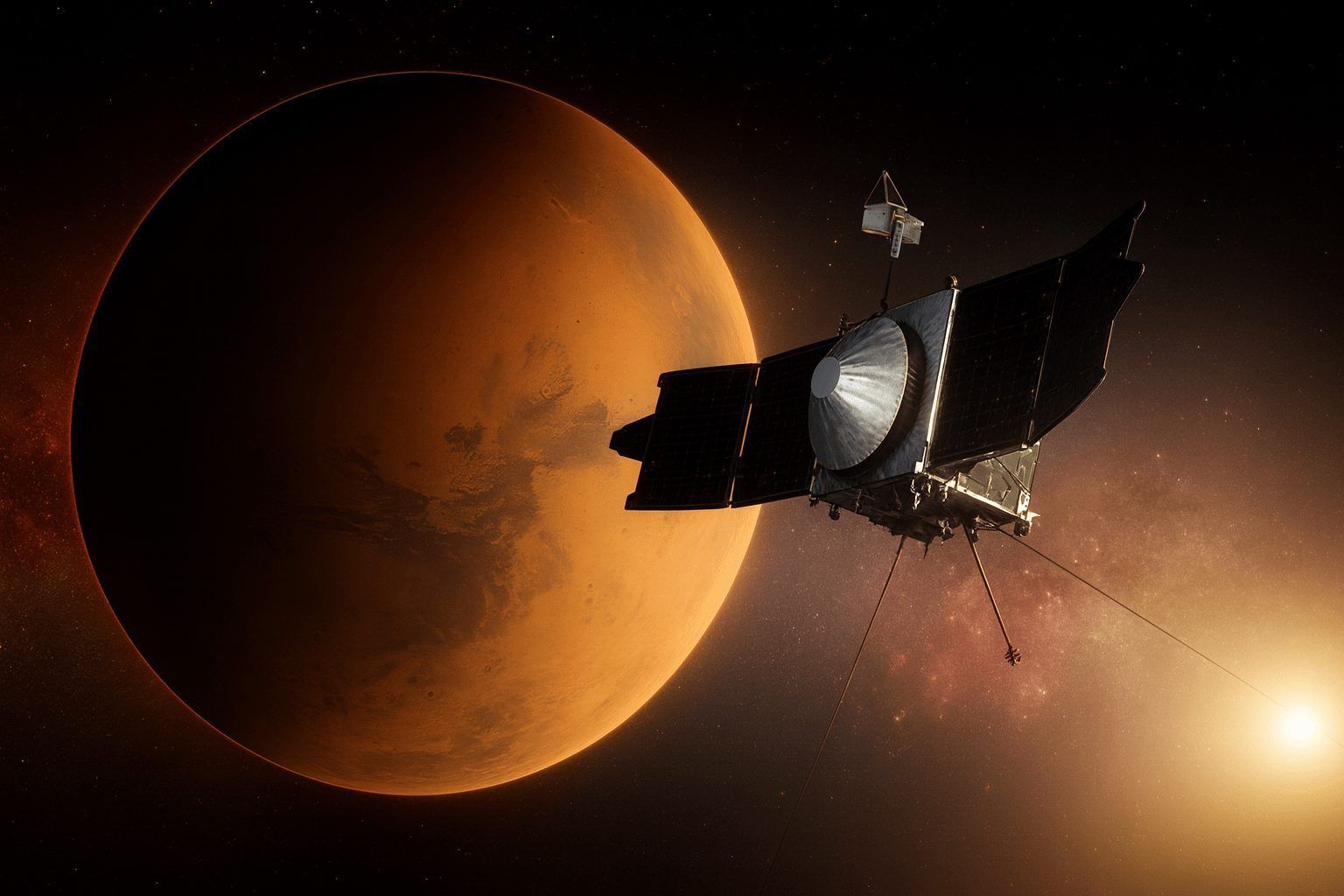
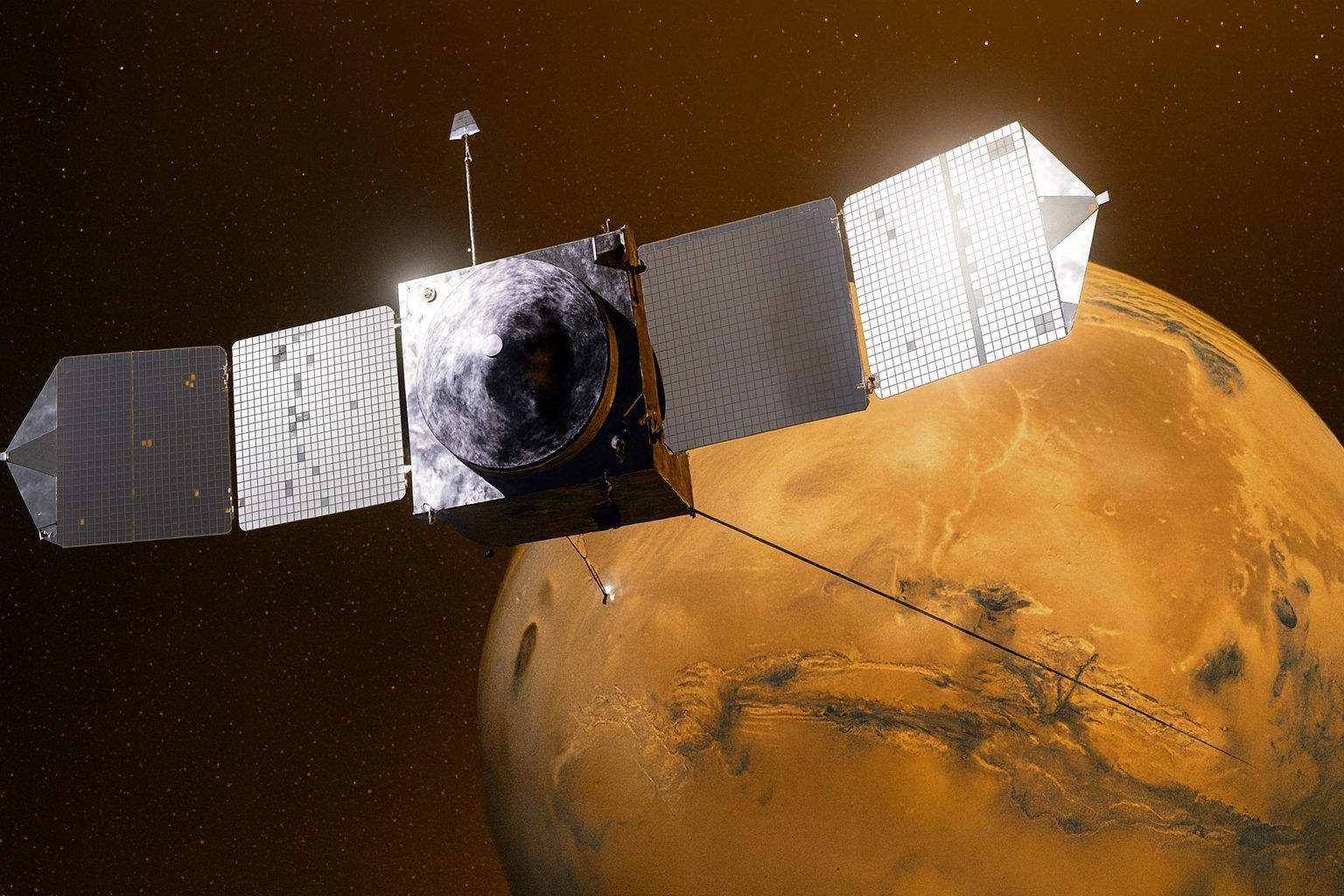
NASA lost contact with the MAVEN Mars orbiter on December 6, 2025, after it slipped behind the planet during a routine orbit. The spacecraft, in service since 2014, has not responded to repeated attempts to re-establish communication. As of December 11, engineers are still investigating the cause and have not regained contact. MAVEN remains officially classed as lost-signal.
11 December 2025
Interstellar Comet 3I/ATLAS Lights Up December Skies: X‑Ray Glow, Life‑Building Molecules and How to Watch the December 19 Flyby

Interstellar Comet 3I/ATLAS Lights Up December Skies: X‑Ray Glow, Life‑Building Molecules and How to Watch the December 19 Flyby

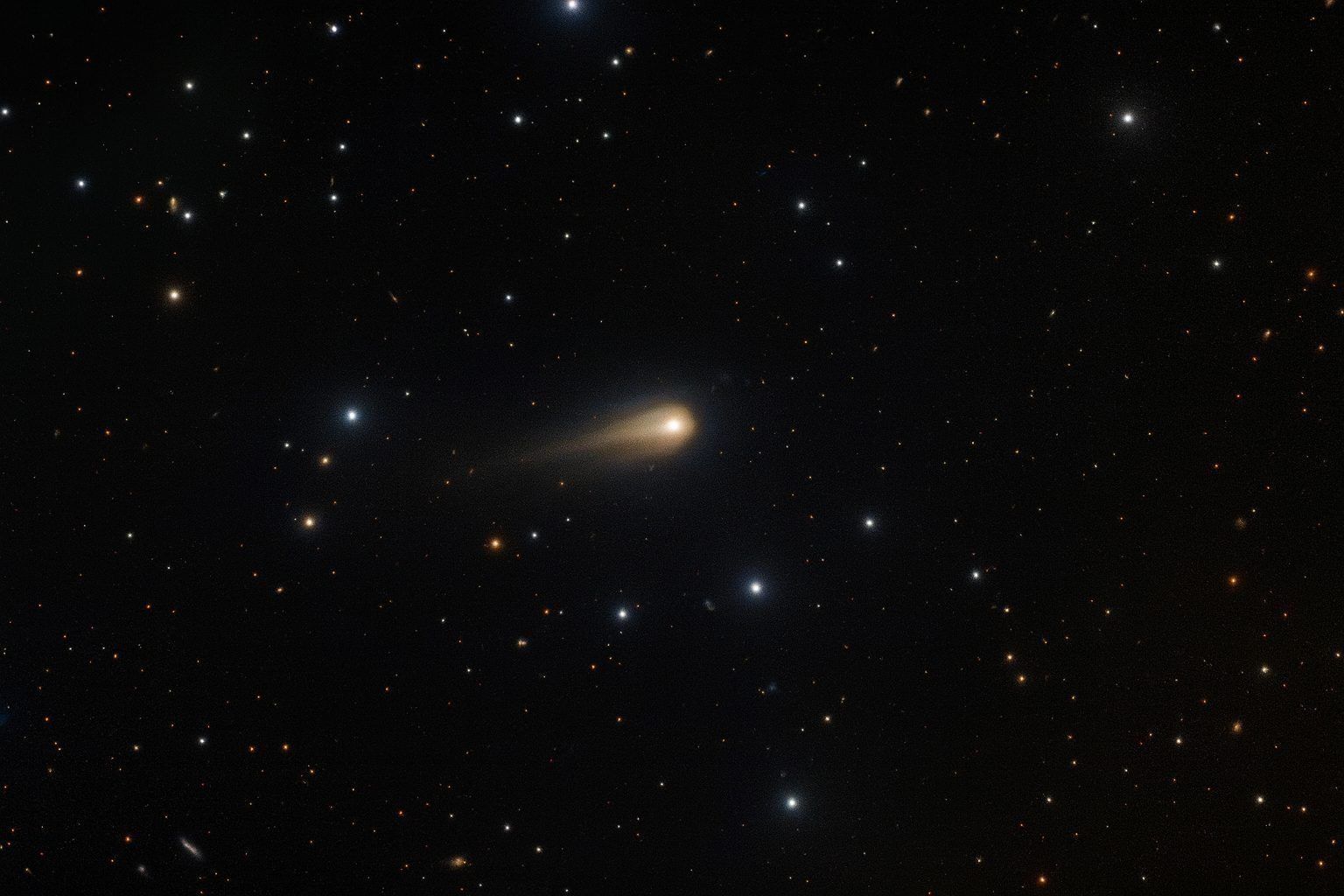
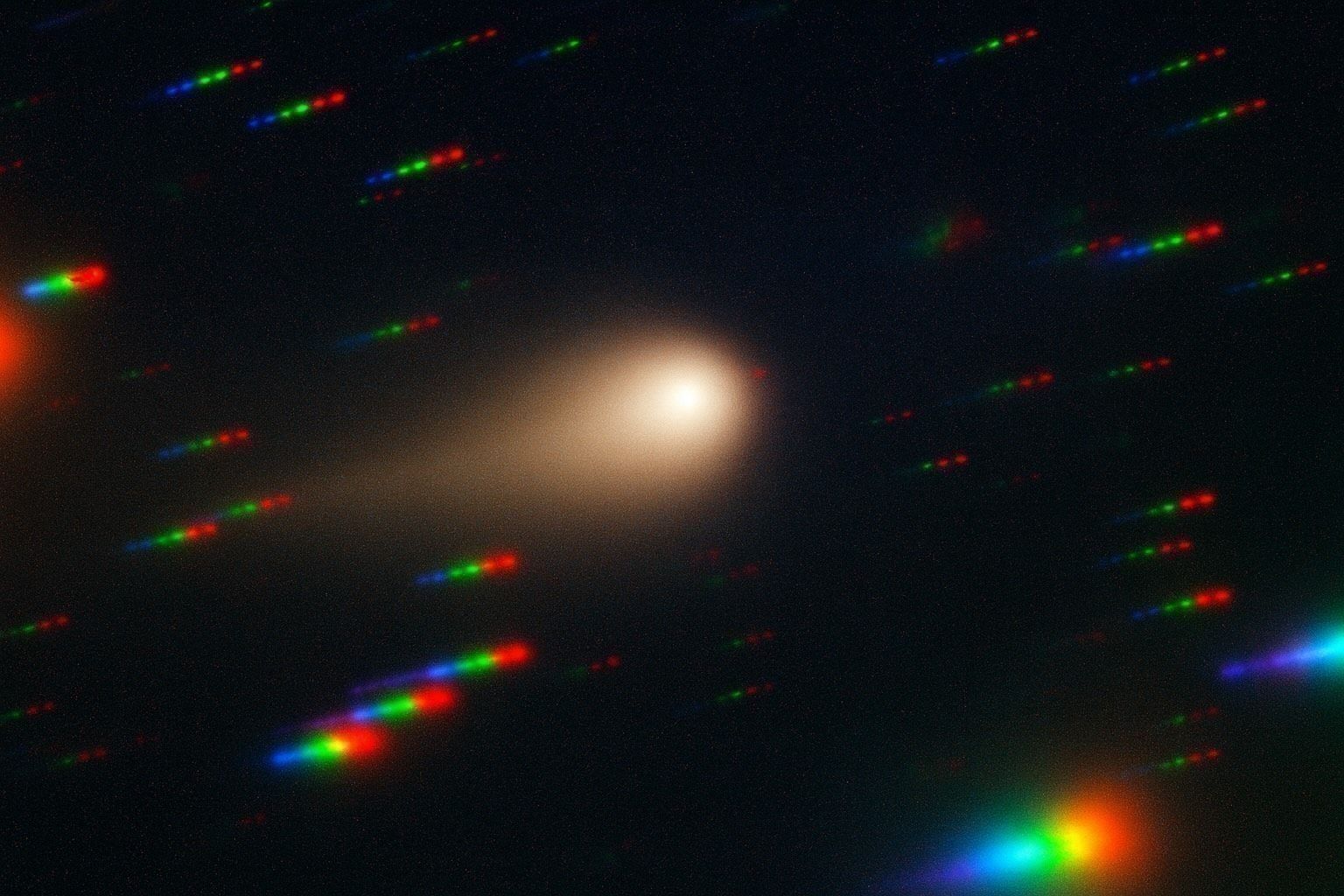
Astronomers have detected X-rays from interstellar comet 3I/ATLAS for the first time, days before its closest approach to Earth on December 19 at 1.8 AU. Hubble and ESA JUICE captured images showing twin tails, while Mars-based observatories joined the campaign. Chemical analysis revealed organic molecules. Headlines speculating about chemical weapons and alien probes have circulated alongside scientific reports.
11 December 2025
Interstellar Comet 3I/ATLAS Glows in X-Rays and Life‑Building Molecules as Earth Flyby Nearby

Interstellar Comet 3I/ATLAS Glows in X-Rays and Life‑Building Molecules as Earth Flyby Nearby

Interstellar comet 3I/ATLAS, discovered July 1, 2025, is making its closest approach to Earth on December 19 at about 1.8 AU, posing no threat, NASA says. Hubble imaged the comet on November 30, revealing a bright blue-green coma and signs of jets and tail formation. The comet remains faint, visible only with telescopes. It is the third confirmed interstellar object to pass through the solar system.
10 December 2025
Interstellar Comet 3I/ATLAS Nears December 19 Flyby: New Hubble Photos, First X‑Rays and How to See It Today

Interstellar Comet 3I/ATLAS Nears December 19 Flyby: New Hubble Photos, First X‑Rays and How to See It Today

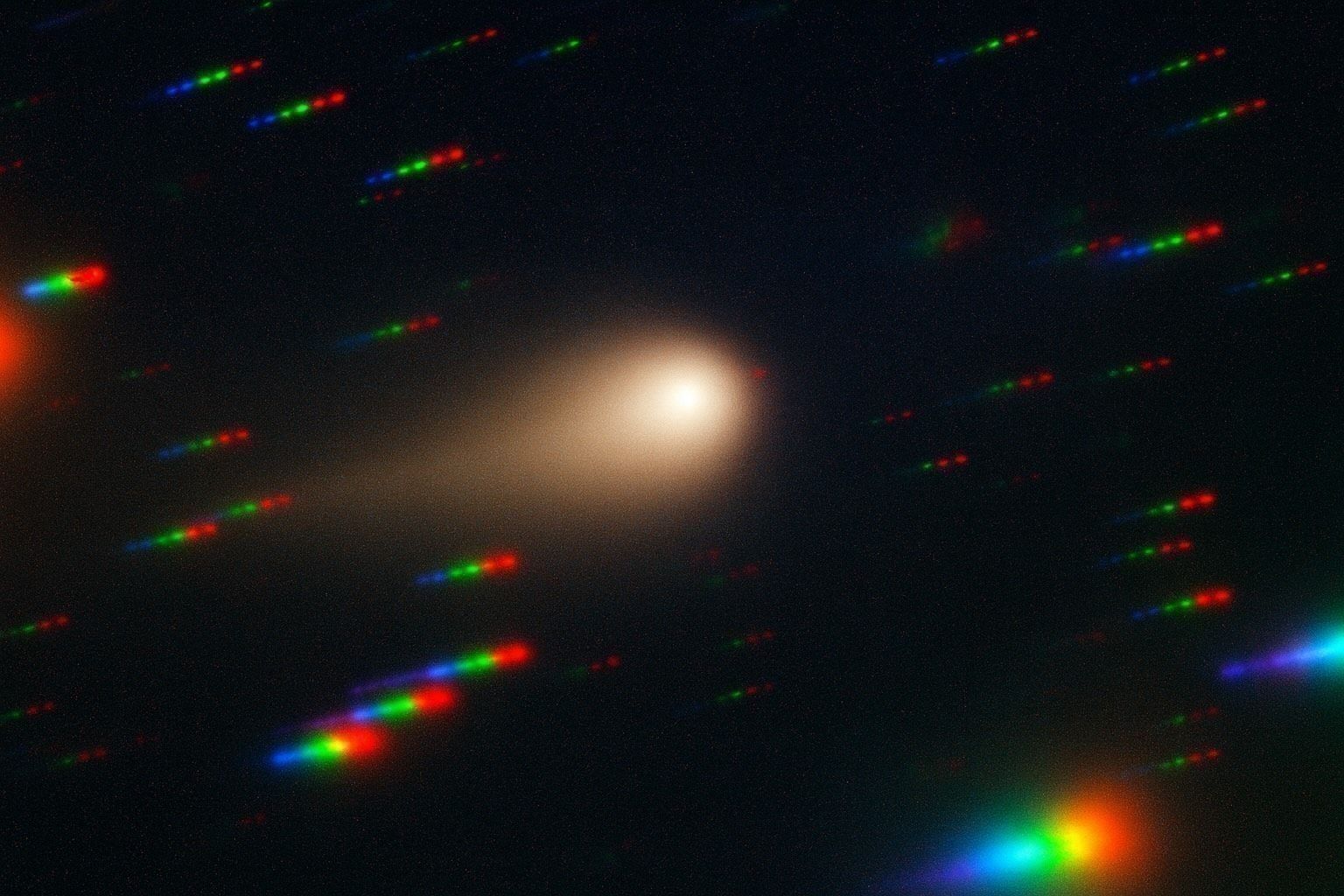
Japan’s XRISM satellite has captured the first X-ray image of interstellar comet 3I/ATLAS, now 278 million km from Earth and moving at 60 km/s. Hubble, ESA’s JUICE, and amateur astronomers released new images showing a bright coma and multiple tails. The comet will pass 1.8 AU from Earth on December 19, with no impact risk. 3I/ATLAS remains too faint for the naked eye.
9 December 2025
Interstellar Comet 3I/ATLAS Today (December 8, 2025): Latest NASA Images, ‘Serial Killer’ Debate and How to See the Visitor from Another Star

Interstellar Comet 3I/ATLAS Today (December 8, 2025): Latest NASA Images, ‘Serial Killer’ Debate and How to See the Visitor from Another Star

Interstellar comet 3I/ATLAS will pass Earth on December 19, 2025, after racing through the inner solar system at 58 km/s. New Hubble images, Mars orbiter data, and a Harvard analysis have renewed scientific attention in the last two days. NASA’s PUNCH mission tracked the comet behind the Sun, while early estimates suggest a nucleus up to 6 km wide.
9 December 2025
Interstellar Comet 3I/ATLAS Erupts with Activity in New NASA and ESA Images Ahead of December 19 Earth Approach

Interstellar Comet 3I/ATLAS Erupts with Activity in New NASA and ESA Images Ahead of December 19 Earth Approach

NASA’s Hubble, ESA’s Juice, and ALMA observatories are tracking interstellar comet 3I/ATLAS, which is showing dramatic jets, twin tails, and high levels of organic molecules. The comet made its closest approach to the Sun in late October and will pass Earth at a safe distance of about 170 million miles on December 19, 2025. 3I/ATLAS is only the second known interstellar comet.
8 December 2025
Interstellar Comet 3I/ATLAS: Ice Volcanoes, Life’s Building Blocks and the December 19 Flyby — Latest Updates as of December 8, 2025

Interstellar Comet 3I/ATLAS: Ice Volcanoes, Life’s Building Blocks and the December 19 Flyby — Latest Updates as of December 8, 2025

Interstellar comet 3I/ATLAS is showing cryovolcano-like eruptions and an atmosphere rich in prebiotic molecules, according to new observations released ahead of its December 19, 2025, close approach to Earth. NASA and ESA images reveal active jets and high levels of methanol and hydrogen cyanide. The comet will remain at least 1.8 AU from Earth and poses no impact threat. Online rumors about aliens and health effects have circulated.
Interstellar Comet 3I/ATLAS Lights Up December Skies: New Images, ‘Ice Volcanoes’ and Life‑Linked Molecules

Interstellar Comet 3I/ATLAS Lights Up December Skies: New Images, ‘Ice Volcanoes’ and Life‑Linked Molecules

Interstellar comet 3I/ATLAS is brightening after passing behind the Sun, with Hubble and ESA’s Juice spacecraft capturing new images and radio telescopes detecting its first radio signal. Chemistry data show large amounts of methanol and hydrogen cyanide. NASA and astronomers dismiss online speculation of alien origin, citing natural explanations. The comet will make its closest approach to Earth on December 19, 2025, at about 1.8 AU.
Interstellar Comet 3I/ATLAS Lights Up the Solar System: New Hubble and Juice Images Reveal Jets, Dual Tails and a Puzzling ‘Heartbeat’

Interstellar Comet 3I/ATLAS Lights Up the Solar System: New Hubble and Juice Images Reveal Jets, Dual Tails and a Puzzling ‘Heartbeat’

Interstellar comet 3I/ATLAS, only the third of its kind detected, is approaching its closest pass to Earth on December 19 at 1.8 AU. NASA and ESA released new images and data, including a Hubble photo showing a teardrop-shaped coma and a rare sunward anti-tail. The comet, discovered in July 2025, is faint and moving at 58 km/s. It will not return after leaving the Solar System.
7 December 2025
Interstellar Comet 3I/ATLAS: Hubble, ESA’s Juice and ‘Ice Volcanoes’ Transform Our View of a Wild Interstellar Visitor

Interstellar Comet 3I/ATLAS: Hubble, ESA’s Juice and ‘Ice Volcanoes’ Transform Our View of a Wild Interstellar Visitor

Astronomers are tracking interstellar comet 3I/ATLAS, discovered July 1, 2025, as it speeds through the solar system at up to 153,000 mph. The comet passed perihelion on October 30 and will make its closest approach to Earth on December 19 at 270 million km. NASA confirms no impact risk. 3I/ATLAS will pass Jupiter in March 2026 before leaving the solar system.
6 December 2025
Interstellar Comet 3I/ATLAS: New Hubble Image, JUICE Flyby and ‘Ice Volcanoes’ Reveal a Peculiar Alien World

Interstellar Comet 3I/ATLAS: New Hubble Image, JUICE Flyby and ‘Ice Volcanoes’ Reveal a Peculiar Alien World

NASA’s Hubble Space Telescope captured a new high-resolution image of interstellar comet 3I/ATLAS in late November. ESA’s JUICE spacecraft also recorded multiple tails, while European scientists posted a preprint suggesting possible cryovolcano eruptions. Harvard’s Avi Loeb called for caution in interpreting the data and warned about AI-generated deepfakes. 3I/ATLAS will pass Earth at 1.8 AU on December 19.
5 December 2025
Interstellar Comet 3I/ATLAS: Hubble’s New Image, Psyche’s Data and ‘Ice Volcano’ Hints as of December 5, 2025

Interstellar Comet 3I/ATLAS: Hubble’s New Image, Psyche’s Data and ‘Ice Volcano’ Hints as of December 5, 2025

Astronomers worldwide are tracking interstellar comet 3I/ATLAS, the third known object of its kind, as new Hubble images and spacecraft data emerge. First detected July 1, 2025, in Chile, the comet passed perihelion on October 29 and will make its closest approach to Earth on December 19 at 1.8 AU. NASA confirms no threat to Earth. Recent studies suggest the comet could be older than the Sun.
5 December 2025
NASA Warns Starlink-Style Satellite Megaconstellations Could Contaminate Nearly All Future Space Telescope Images

NASA Warns Starlink-Style Satellite Megaconstellations Could Contaminate Nearly All Future Space Telescope Images

A peer-reviewed Nature study led by NASA warns that satellite megaconstellations could contaminate nearly all images from upcoming space telescopes and about 40% of Hubble’s images by the late 2030s. The forecast assumes up to 560,000 satellites in low-Earth orbit, with some missions expected to see over 96% of exposures affected by satellite trails.
5 December 2025
Interstellar Comet 3I/ATLAS: December 2025 Close Approach, New Hubble Images and ‘Ice Volcano’ Surprises

Interstellar Comet 3I/ATLAS: December 2025 Close Approach, New Hubble Images and ‘Ice Volcano’ Surprises

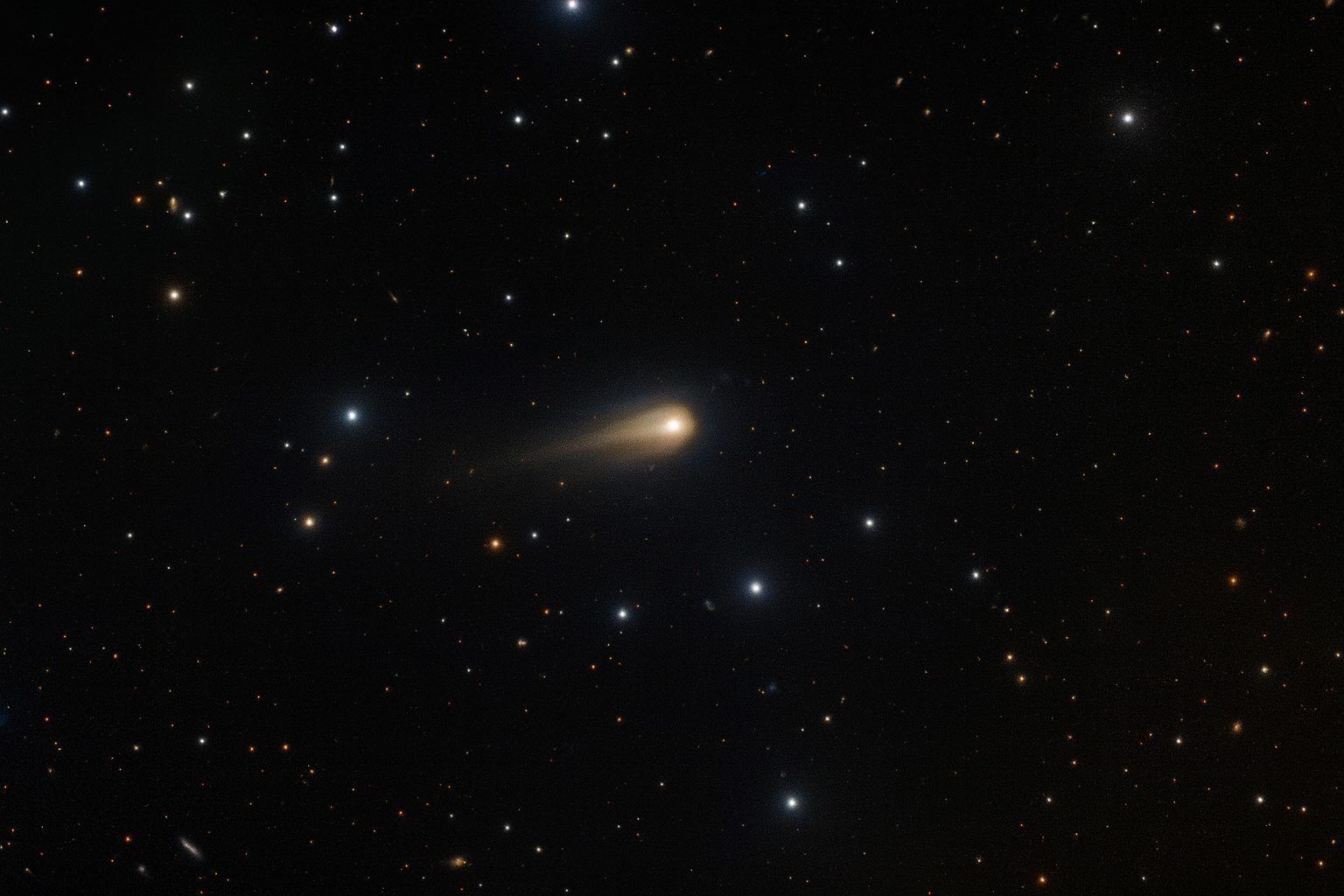
NASA and ESA released new images and data on interstellar comet 3I/ATLAS, showing unexpected activity as it nears its closest approach to Earth later this month. Hubble captured the comet’s bright core and dust halo from 178 million miles away, while ESA’s Juice spacecraft also recorded fresh images. Scientists say 3I/ATLAS is only the third confirmed interstellar object and is older than the Solar System.
Interstellar Comet 3I/ATLAS: Ice Volcanoes, Radio ‘Signals’ and a Planetary‑Defense Drill as It Skims Past Earth This Month

Interstellar Comet 3I/ATLAS: Ice Volcanoes, Radio ‘Signals’ and a Planetary‑Defense Drill as It Skims Past Earth This Month

Comet 3I/ATLAS, the third known interstellar object, is erupting with ice volcanoes and emitting the first radio signal detected from such a visitor, scientists reported this week. NASA’s Psyche spacecraft is tracking the comet, which will pass 270 million km from Earth on December 19. The object is also the focus of a United Nations–linked planetary-defense drill. No impact risk has been identified.
4 December 2025
NASA’s Psyche Spacecraft Locks Onto Interstellar Comet 3I/ATLAS as Global Planetary‑Defense Drill Begins

NASA’s Psyche Spacecraft Locks Onto Interstellar Comet 3I/ATLAS as Global Planetary‑Defense Drill Begins

NASA said its Psyche spacecraft captured detailed images of interstellar comet 3I/ATLAS in September from 33 million miles away, refining its trajectory. The comet, discovered in July 2025, is erupting “ice volcanoes” and emitting unique radio signals. Mars-orbiting probes have narrowed its path by a factor of ten. A UN-backed planetary-defense exercise now includes 3I/ATLAS.
3 December 2025
1 2 3 4 5 11

Stock Market Today

  • Viking Therapeutics (VKTX) Stock Drops More Than Market Ahead of Earnings Report
    June 10, 2026, 7:34 PM EDT. Viking Therapeutics (VKTX) shares fell 1.03% to $61.68, underperforming the S&P 500's 0.13% decline. Over the past month, VKTX dropped 0.53%, outperforming the Medical sector's 2.05% loss but lagging the S&P 500's 2.43% gain. The company is expected to report earnings per share (EPS) of -$0.24, a 4.35% decrease from last year. Analyst EPS estimates have declined 0.99% recently, reflecting cautious sentiment. VKTX holds a Zacks Rank #3 (Hold), indicating neutral outlook. The Medical - Biomedical and Genetics industry ranks in the top 35% of 250+ industries, signaling sector strength. Investors should monitor upcoming earnings and analyst revisions as key drivers of stock performance.

Latest articles

Lloyds stock drifts lower as FCA car finance hold clouds buyback hopes

Lloyds stock drifts lower as FCA car finance hold clouds buyback hopes

11 June 2026
Lloyds shares fell 0.98% as the FCA told Parliament that motor-finance compensation payments are now unlikely before 2027 due to legal challenges, prolonging uncertainty over redress costs and capital returns; investors must wait for clarity, with the next key update due July 30.
Nokia Slides, Nvidia AI-RAN Trade Cools Ahead of Key Test

Nokia Slides, Nvidia AI-RAN Trade Cools Ahead of Key Test

11 June 2026
Nokia’s U.S. ADR plunged 3.25% to $13.40, extending losses after a 5.07% drop, as investors reacted to risks from Nvidia’s push into mobile-network tech, raising doubts about Nokia’s role in AI infrastructure and overshadowing new 5G and AI product launches; shares now sit 23% below last week’s high.
Go toTop