Today: 1 July 2026
Browse Category

Space Exploration 8 June 2025 - 16 June 2025

ISRO’s Lunar Success (Chandrayaan-3) and Momentum for Mars Exploration

ISRO’s Lunar Success (Chandrayaan-3) and Momentum for Mars Exploration

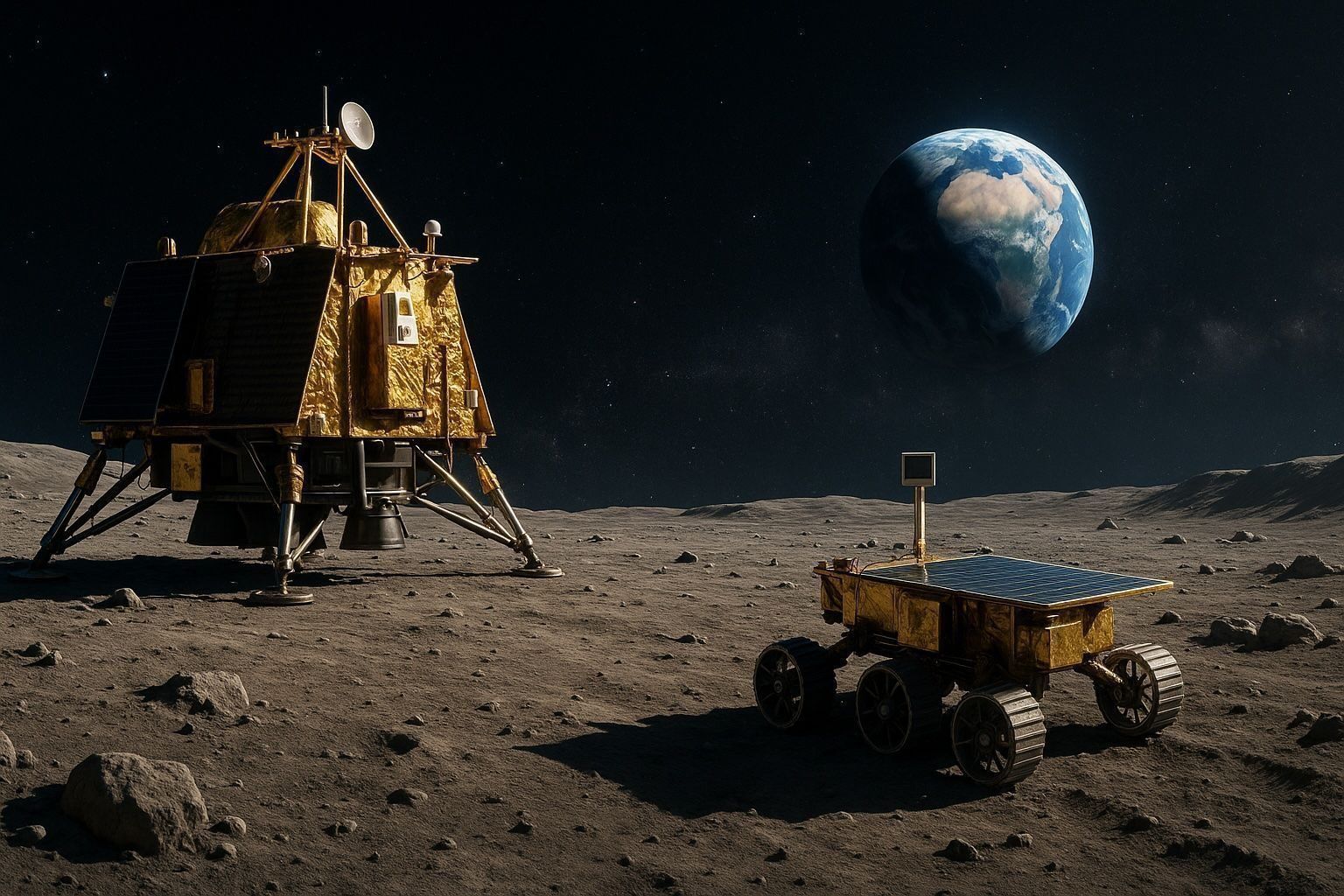
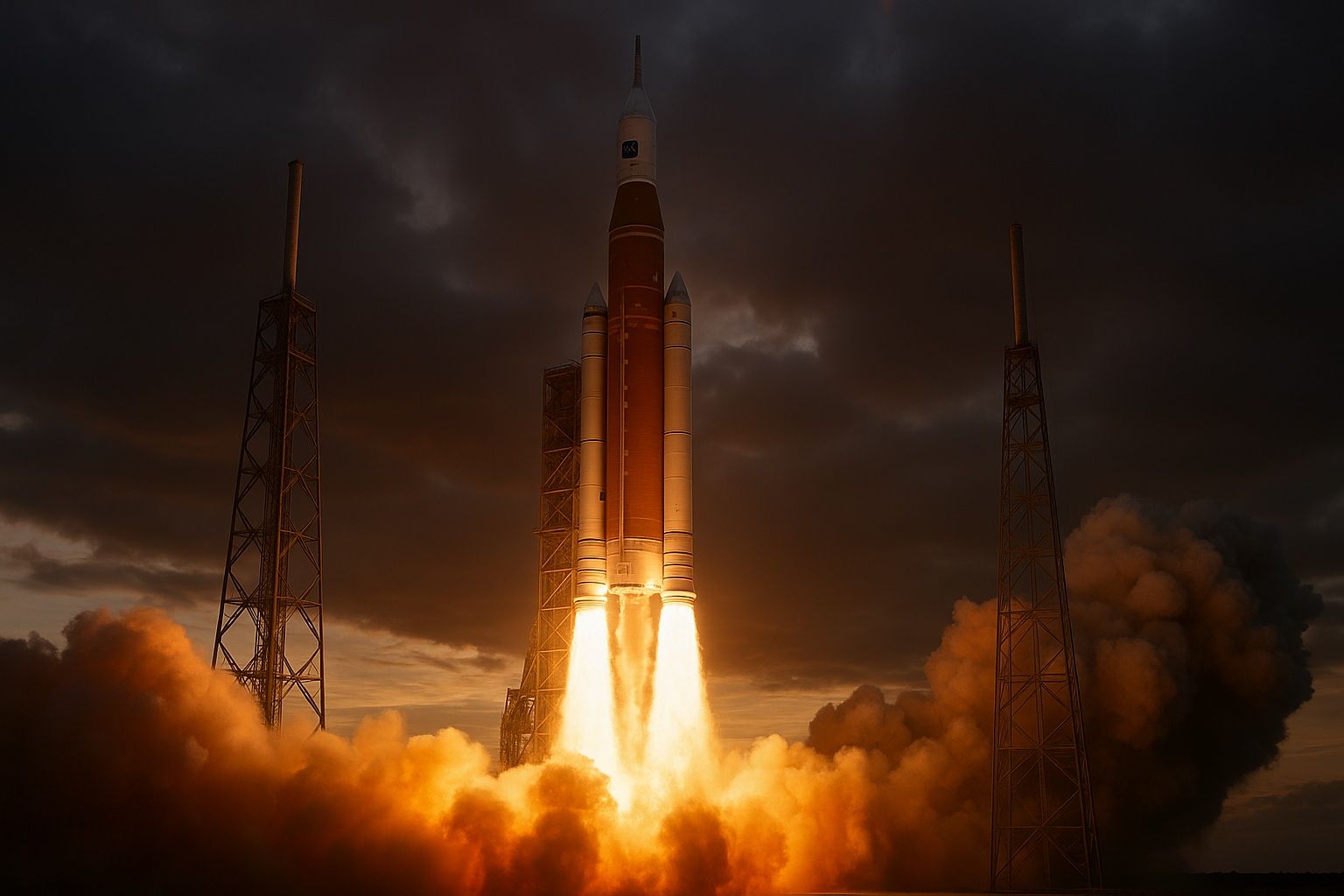
India’s Chandrayaan-3 mission achieved a historic soft landing near the Moon’s south pole on August 23, 2023 Space. Its primary objectives were to demonstrate safe, precise landing and a mobile rover to conduct in‑situ science on the lunar surface Gov. The mission carried a lander and a six-wheeled rover equipped with instruments to analyze soil composition and surface properties Gov Indianexpress. Nearly two hours after touchdown, ISRO announced “We have achieved soft landing on the moon! India is on the moon!” Space, making India the fourth country ever to soft-land on the Moon and the first to reach the south polar region Space. Launched on Nov 5, 2013 atop a PSLV-XL rocket, India’s Mars Orbiter Mission was a technology-demonstration orbiter weighing ~1,350 kg dry with ~852 kg fuel Nasa Nasa. Its science payloads included the Mars Colour Camera, Lyman-Alpha Photometer, Thermal Imaging Spectrometer, Mars Exospheric Neutral Composition Analyser, and a Methane Sensor Nasa. MOM used a fuel-efficient, multi-burn trajectory and arrived in Martian orbit on Sept 24, 2014 – a first successful orbit insertion on ISRO’s first try.
16 June 2025
The GEO Reboot: How 2040 Will Look from 36,000 km Up

The GEO Reboot: How 2040 Will Look from 36,000 km Up

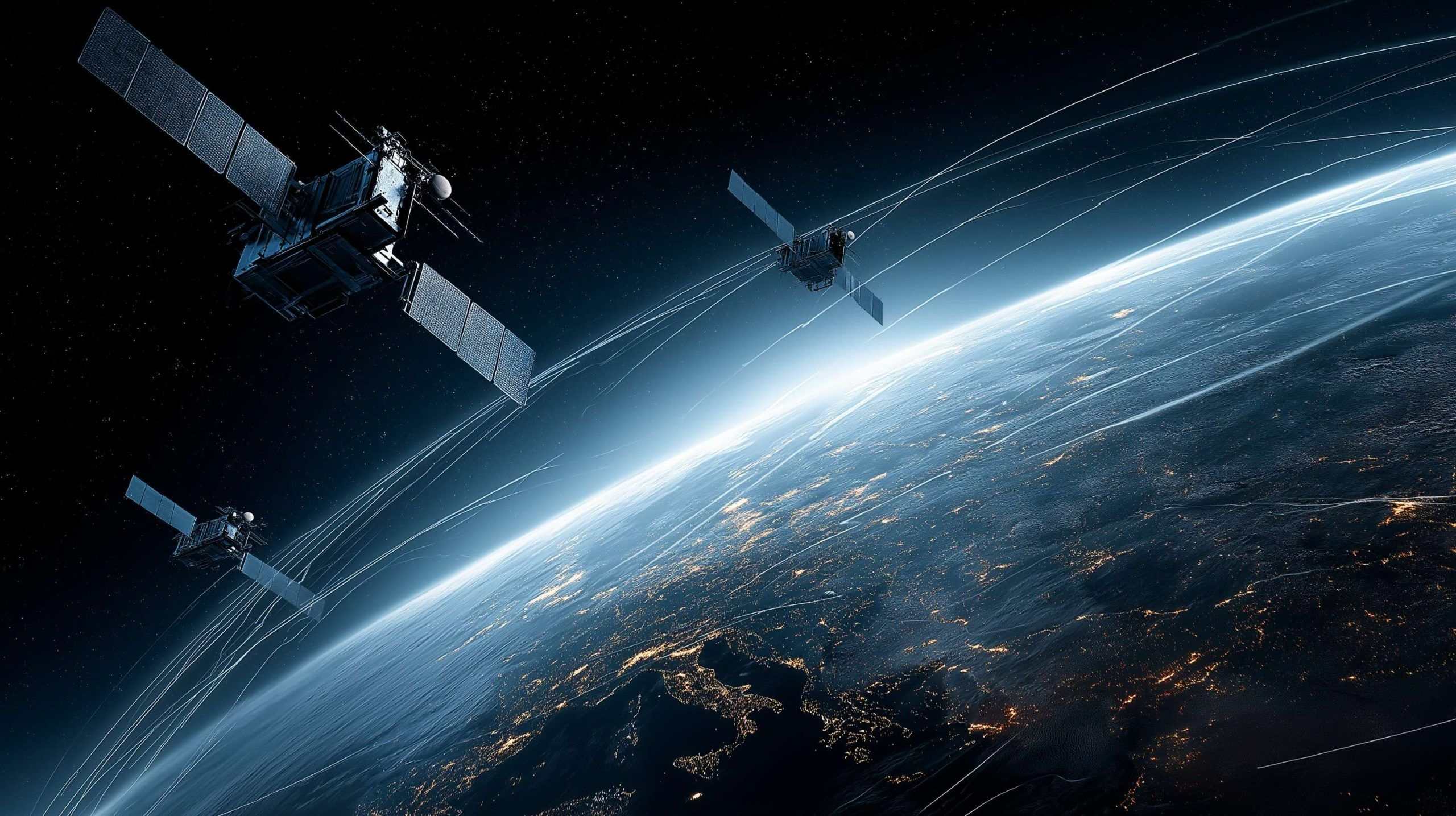
Geostationary satellites – perched 36,000 km above Earth in the coveted orbit where they match Earth’s rotation – are entering a new era of renewal and reinvention. After decades of steady service, many of the world’s GEO satellites are aging beyond their planned lifespans, and a wave of replacements and upgrades is on the horizon. Between now and 2040, both government space agencies and commercial operators are preparing for a “GEO reboot” that will transform the orbital lineup. This report dives into global trends driving the geostationary replacement cycle, from the typical 15-year satellite lifespan and what ends a mission, to the technological leaps extending or shortening those cycles. We’ll look at historical patterns up to 2024 and use industry forecasts to predict how the GEO belt will evolve through 2040. Along the way, data visualizations – launch timelines, fleet age distributions, replacement forecasts – will illuminate the coming changes. Finally, we examine the key forces at play: policy shifts, cost pressures, debris mitigation, and surging demand for services. By the end, one thing will be clear – the geostationary orbit of 2040 will be a very different, more dynamic place than it is today, as a new generation of
Unlocking the Sun: Inside NASA and ESA’s Daring Missions to Touch the Solar Inferno

Unlocking the Sun: Inside NASA and ESA’s Daring Missions to Touch the Solar Inferno

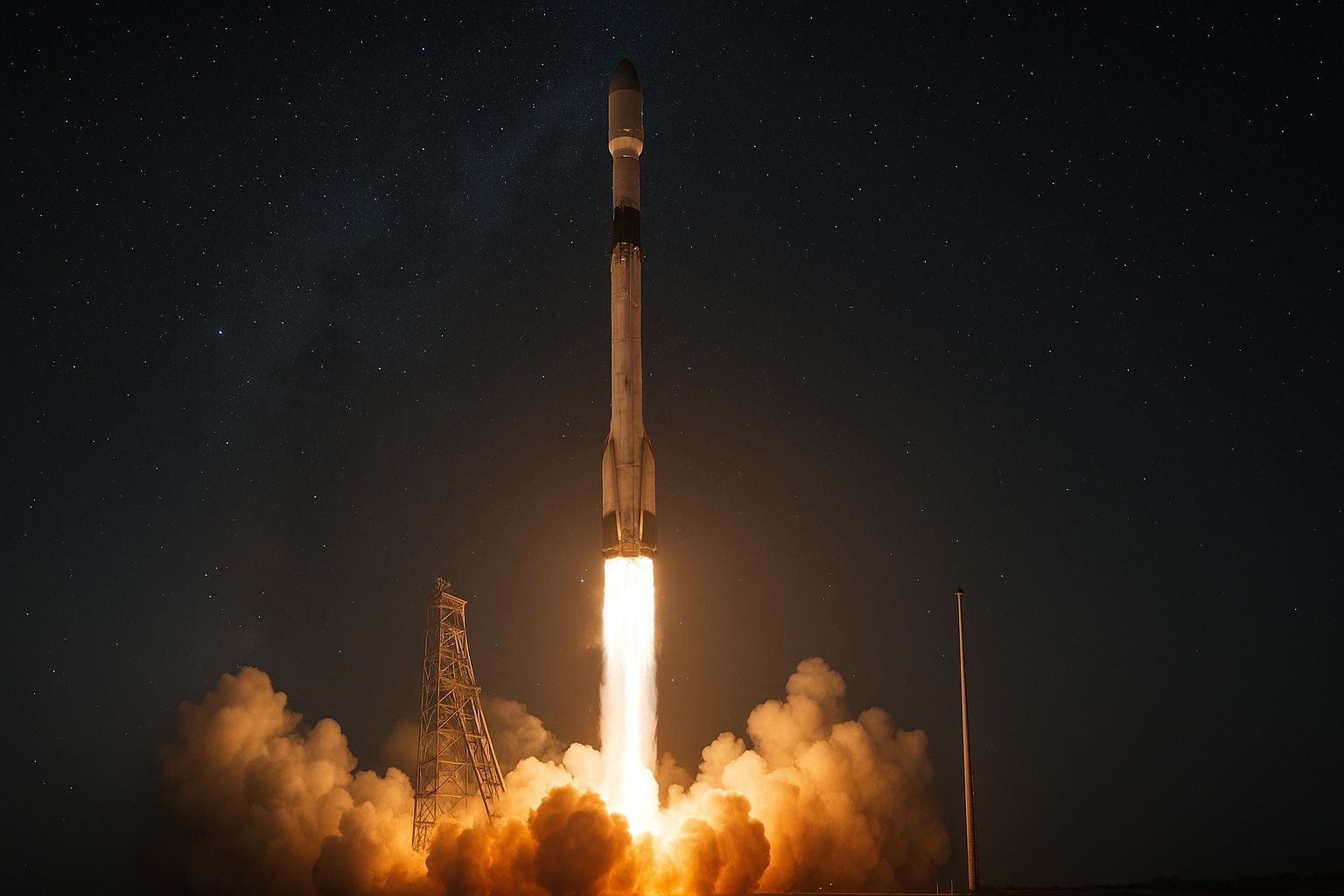
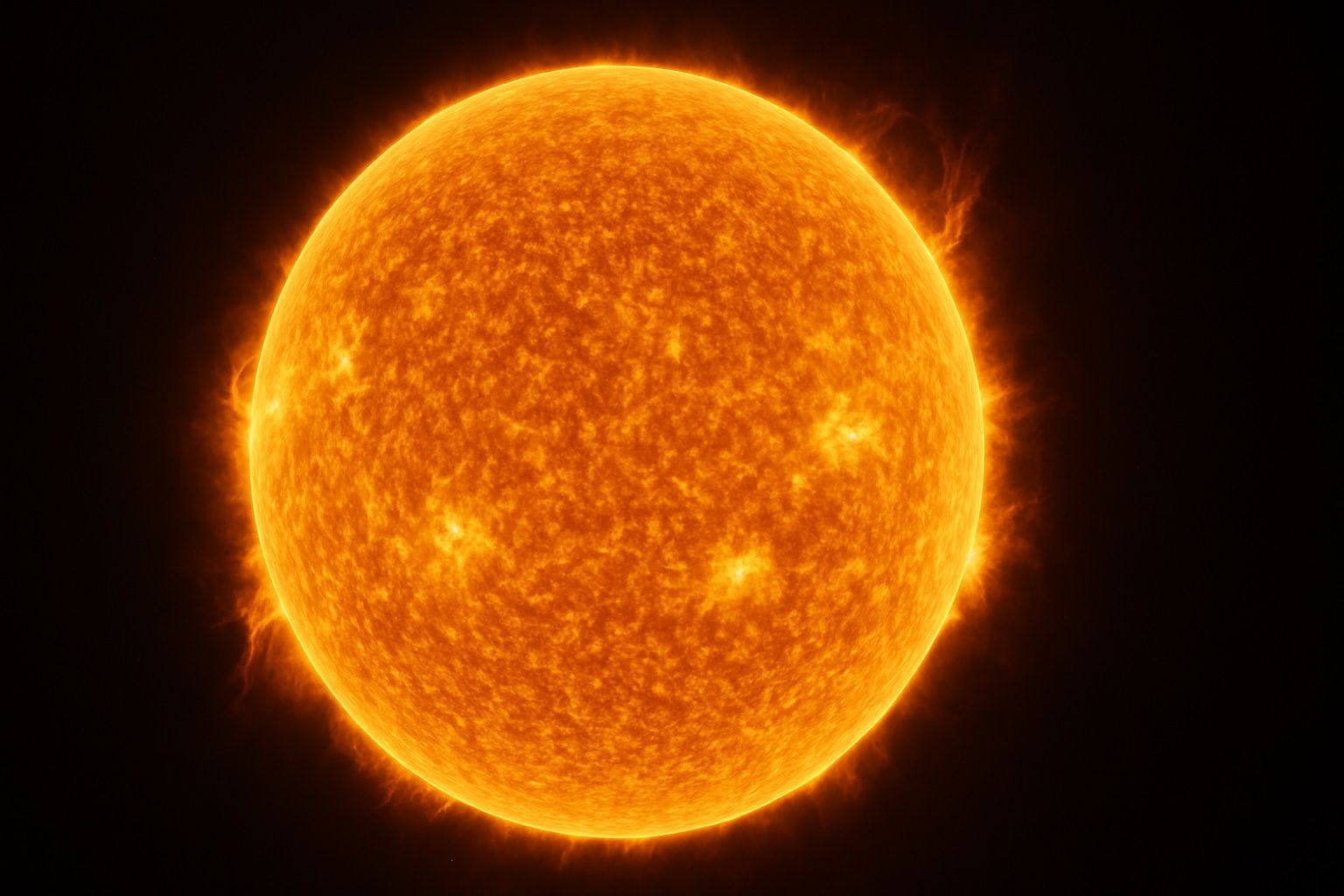
The Sun is our life-giving star – a 4.6-billion-year-old solar inferno that governs Earth’s climate and space environment. Understanding the Sun is not only vital for fundamental science, but also for protecting modern technology and astronauts from space weather nasa.gov nasa.gov. Yet many solar mysteries endure, such as why the Sun’s outer atmosphere blazes hundreds of times hotter than its surface, or how the solar wind – a stream of charged particles flowing outward – is accelerated to high speeds. In the past, scientists could only observe the Sun from afar. Now, two bold spacecraft are “touching” the Sun up close: NASA’s Parker Solar Probe and the ESA/NASA Solar Orbiter. These missions are venturing closer to our star than ever before, braving intense heat and radiation to unlock the Sun’s deepest secrets science.nasa.gov esa.int. This report delves into these daring missions – their objectives, designs, key discoveries, and how together they are revolutionizing solar physics. Launched by NASA in August 2018, the Parker Solar Probe is humanity’s first mission to fly through the Sun’s corona – literally touching the Sun nasa.gov. It is named after solar physicist Eugene Parker, who first predicted the solar wind in 1958 cosmos.esa.int. Parker Solar
1 10 11 12

Stock Market Today

  • Nike (NKE) tops Q4 EPS but revenue comes in just shy of last year
    June 30, 2026, 7:35 PM EDT. Nike (NKE) posted Q4 earnings of $0.20 per share, beating the Zacks estimate of $0.11. That's an 82% surprise. Revenue was $10.97 billion, off slightly from $11.1 billion a year ago, but still 1.13% above forecasts. The company has now beaten both earnings and revenue estimates four quarters in a row. Still, Nike stock is down 34.9% for the year, while the S&P 500 is up 8.7%. Nike carries a Zacks Rank #4 (Sell) as negative earnings estimate revisions point to weaker performance. Wall Street is looking for $0.46 EPS on $11.42 billion in revenue next quarter. Industry trends and management comments on the call will be watched for guidance on the stock.
Go toTop