
Today: 1 July 2026
Browse Category

Space Exploration 16 June 2025 - 9 August 2025

Historic Splashdowns, Lunar Leaps & Billion-Dollar Space Deals (Aug 8–9, 2025)

Historic Splashdowns, Lunar Leaps & Billion-Dollar Space Deals (Aug 8–9, 2025)

NASA’s SpaceX Crew-10 astronauts are back on Earth after undocking from the International Space Station on Friday, Aug. 8, and splashing down off California on Saturday morning nasa.gov ts2.tech. This marks the first-ever crewed splashdown off the U.S. West Coast under NASA’s Commercial Crew Program ts2.tech. Commander Anne McClain, pilot Nichole Ayers, JAXA astronaut Takuya Onishi, and Roscosmos cosmonaut Kirill Peskov wrapped up a 146-day science mission in orbit and returned with “important and time-sensitive research” conducted in microgravity reuters.com. “NASA and SpaceX are proceeding toward return of the agency’s Crew-10 mission… targeting undocking no earlier than 6:05 p.m. EDT, Friday, Aug. 8,” NASA confirmed ahead of the departure nasa.gov. Splashdown occurred at 11:33 a.m. ET on Aug. 9 off the California coast, after which recovery teams swiftly secured the Dragon capsule. Mission managers had closely watched weather and sea states; conditions proved favorable for a safe homecoming ts2.tech. NASA on research return: The crew came back with a trove of experiments, “returning to Earth with important and time-sensitive research” from the space station reuters.com. This included biological samples and materials science investigations requiring quick handover to scientists on the ground.
Apollo 13’s “Successful Failure”: The Epic Journey of Jim Lovell, NASA’s Legendary Commander

Apollo 13’s “Successful Failure”: The Epic Journey of Jim Lovell, NASA’s Legendary Commander

In April 1970, Apollo 13 was poised to be NASA’s third Moon landing — until an explosion turned it into one of history’s most dramatic space rescues. At the center of this crisis was Jim Lovell, the mission’s commander, whose steady leadership helped transform imminent disaster into what he famously called a “successful failure.” Millions worldwide held their breath as Lovell and his crew fought to survive, a saga later immortalized in books and Hollywood film. Now, over half a century later, Lovell’s extraordinary life – from naval aviator to Apollo astronaut, to pop-culture icon – continues to inspire. This in-depth report explores Lovell’s biography, his career highlights and leadership at NASA, the Apollo 13 mission’s technical background and harrowing rescue, and the cultural legacy of a man and mission that captivated the world. James “Jim” Lovell Jr. was born March 25, 1928, in Cleveland, Ohio erienewsnow.com. Fascinated by rocketry as a boy, Lovell went on to attend the U.S. Naval Academy, graduating in 1952 with a Bachelor of Science nasa.gov erienewsnow.com. He served as a naval aviator and test pilot, logging thousands of hours in high-performance jets nasa.gov nasa.gov. In September 1962, Lovell was selected in NASA’s second group
8 August 2025
Space Race Heats Up – Major Launches, Lunar Breakthroughs, and Billion-Dollar Deals (7–8 Aug 2025)

Space Race Heats Up – Major Launches, Lunar Breakthroughs, and Billion-Dollar Deals (7–8 Aug 2025)

From astronaut splashdowns to Moon lander trials and multi-billion dollar investments, the space sector saw a flurry of major developments on August 7–8, 2025. Here’s a roundup of the top satellite and space news from around the world: NASA and SpaceX are targeting Friday, Aug. 8 for the undocking of the Crew-10 mission from the International Space Station, with splashdown expected on Saturday, Aug. 9 nasa.gov. This return will mark the first-ever crewed splashdown off the California coast under NASA’s Commercial Crew Program nasa.gov. The Crew-10 team – NASA astronauts Anne McClain and Nichole Ayers, JAXA’s Takuya Onishi, and Roscosmos cosmonaut Kirill Peskov – is wrapping up a five-month science mission in orbit and will bring back time-sensitive research to Earth nasa.gov. Mission managers are monitoring weather and sea conditions closely, but if all goes to plan, Crew-10 will make spaceflight history with its West Coast landing.
Space Race Shake-Up: NASA Kills Moon Probe, Record Launches & Billion-Dollar Deals (Aug 4–5, 2025 Roundup)

Space Race Shake-Up: NASA Kills Moon Probe, Record Launches & Billion-Dollar Deals (Aug 4–5, 2025 Roundup)

Lunar Trailblazer Lost: NASA confirmed it has formally ended the Lunar Trailblazer mission after months of silence from the small lunar orbiter nasa.gov. Launched as a low-cost attempt to map water on the Moon, the cubesat fell mute a day after its Feb. 26 liftoff and drifted off-course. “Despite extensive efforts, mission operators were unable to establish two-way communications after losing contact with the spacecraft the day following its launch,” NASA stated nasa.gov. Lacking telemetry, the team couldn’t fire thrusters to keep the craft on track nasa.gov. The mission, officially declared lost on July 31, dealt another blow to NASA’s high-risk, low-cost planetary program. Nicky Fox, NASA’s science chief, defended the effort as a valuable learning experience: “At NASA, we undertake high-risk, high-reward missions like Lunar Trailblazer to find revolutionary ways of doing new science…While it was not the outcome we had hoped for, mission experiences like Lunar Trailblazer help us to learn and reduce the risk for future low-cost small satellites…Thank you to the Lunar Trailblazer team for their dedication…through to the end” nasa.gov. The ~$94 million mission was meant to map lunar ice with two novel instruments, which scientists hope to repurpose for future orbiters nasa.gov nasa.gov. JPL
3I/ATLAS: The Fastest Interstellar Comet Ever—Here’s What Scientists Are Saying

Interstellar Comet 3I/ATLAS – Third Cosmic Visitor Unveiled, Fast and Enormous

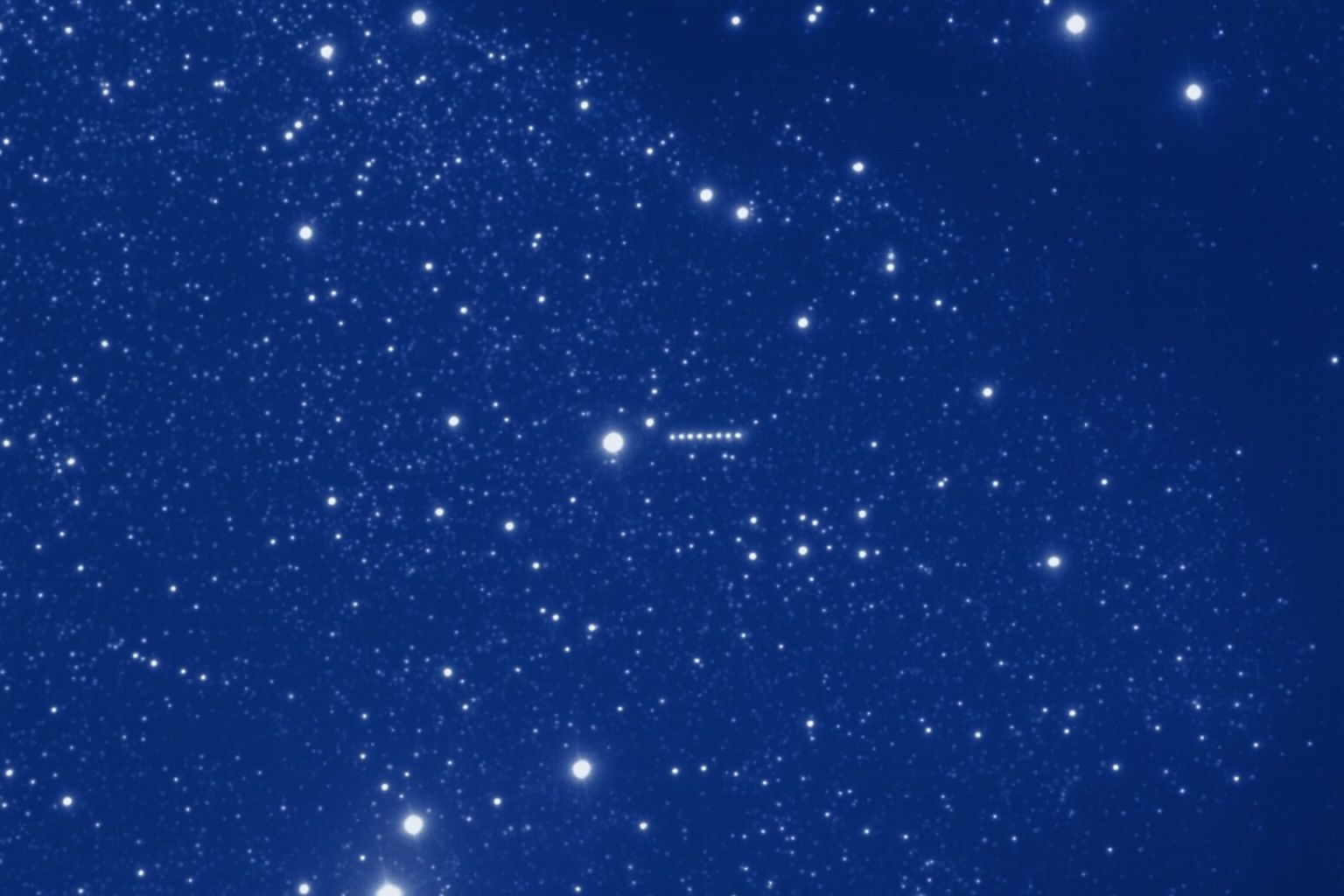
Astronomers have confirmed a rare cosmic interloper entering our solar system – a comet from another star. The object, officially designated 3I/ATLAS, was first spotted on July 1, 2025 by the NASA-funded ATLAS survey telescope in Río Hurtado, Chile science.nasa.gov esa.int. The discovery team, led by Larry Denneau at the University of Hawai‘i, noticed the comet’s highly unusual trajectory, which immediately raised suspicions that it came from interstellar space esa.int. Follow-up calculations soon confirmed that the object is unbound by the Sun’s gravity – meaning it is not a long-period Oort Cloud comet, but truly an interstellar visitor. It was promptly given the formal name 3I/ATLAS, where “3I” denotes the third interstellar object ever recorded esa.int. “If confirmed, it will be the third known interstellar object from outside our solar system that we have discovered, providing more evidence that such interstellar wanderers are relatively common in our galaxy,” said astronomer Mark Norris space.com.
2 August 2025
Space Race Heats Up: Big Launches, Bold Missions & Surprising Discoveries (July 30–31, 2025)

Space Race Heats Up: Big Launches, Bold Missions & Surprising Discoveries (July 30–31, 2025)

India and NASA Launch Climate-Tracking Satellite: In a landmark collaboration, India’s space agency ISRO and NASA launched the $1.5 billion NISAR Earth-observation satellite on July 30. A Geosynchronous Satellite Launch Vehicle rocket lifted off from Satish Dhawan Space Centre at 5:40 p.m. IST, carrying the first joint NASA-ISRO radar imaging mission nasa.gov reuters.com. NISAR will map the entire planet every 12 days with dual L-band and S-band radars, detecting land and ice movements as small as a centimeter reuters.com. ISRO Chairman V. Narayanan hailed the mission’s global benefits, saying “the entire globe is going to benefit from this great accomplishment,” and noting that NISAR’s freely available data will aid worldwide climate and disaster monitoring reuters.com. NASA officials called NISAR a “pathfinder” for U.S.-India cooperation in space reuters.com. This success comes amid India’s broader space ambitions – fresh off the Chandrayaan-3 Moon landing, India is preparing its first crewed Gaganyaan mission and even planning to build a national space station by 2035 reuters.com. China’s Busy Launch Week: China bolstered its growing satellite constellations with multiple launches. On July 30, a Long March 8A rocket from the new Hainan commercial spaceport orbited the sixth batch of “Guowang” low-Earth broadband satellites, part of
From Foldable Phones to Moon Missions: The Biggest Tech News Roundup (July 29–30, 2025)

From Foldable Phones to Moon Missions: The Biggest Tech News Roundup (July 29–30, 2025)

Samsung Unveils Thinner Foldables: Samsung launched its latest foldable smartphones – the Galaxy Z Fold7 and Galaxy Z Flip7 – touting them as the thinnest, lightest iterations yet. The premium Galaxy Z Fold7 now starts at $1,999, while a new cheaper Flip7 FE comes in at $899 reuters.com. Both devices sport slimmer profiles to address past bulkiness reuters.com. Analysts say the refinements help Samsung fend off growing competition from Chinese rivals in the niche foldables market reuters.com. The company is even teasing a tri-foldable phone by year’s end reuters.com, signaling Samsung’s aggressive roadmap for foldable consumer electronics innovation. Opera’s Antitrust Complaint: In software news, Norwegian browser-maker Opera escalated its rivalry with Microsoft by filing an antitrust complaint in Brazil. Opera alleges Microsoft gives its Edge browser an unfair edge by pre-installing it as the default on Windows, hindering competition reuters.com reuters.com. “Microsoft thwarts browser competition on Windows at every turn… and then frustrates users’ ability to download and use alternative browsers,” Opera’s general counsel Aaron McParlan said in a statement reuters.com. Microsoft had no immediate comment on the complaint.
SpaceX Launch, Artemis Accords & a ‘5-Hour Year’ Planet: Space Roundup (July 23–24, 2025)

SpaceX Launch, Artemis Accords & a ‘5-Hour Year’ Planet: Space Roundup (July 23–24, 2025)

In the past 48 hours, the space sector has seen a flurry of activity – from a Falcon 9 roaring to orbit with science satellites to policymakers charting new courses for exploration. Major space agencies and private firms notched successes, announced plans, and even spotted extreme new worlds. Here’s your comprehensive roundup of the latest satellite launches, mission milestones, commercial ventures, astronomical discoveries, and policy moves from July 23–24, 2025. Vandenberg Space Force Base, California – SpaceX’s Falcon 9 rocket successfully launched NASA’s TRACERS mission, deploying twin satellites that will probe how the Sun’s solar wind interacts with Earth’s magnetic field spaceflightnow.com. Liftoff came at 2:13 p.m. EDT after a one-day delay caused by a regional FAA power outage that halted the initial attempt spaceflightnow.com. In a testament to reusable rocketry, the Falcon 9’s first-stage booster returned for a pinpoint landing at Vandenberg, marking SpaceX’s 479th booster recovery spaceflightnow.com. Riding along with the TRACERS pair were five small rideshare satellites carrying experiments ranging from next-gen communication terminals to sensors studying Earth’s radiation budget spaceflightnow.com spaceflightnow.com.
Space Race Frenzy: Starlink Soars, New Missions Ignite & Solar Storms Flicker (July 17-18, 2025)

Space Race Frenzy: Starlink Soars, New Missions Ignite & Solar Storms Flicker (July 17-18, 2025)

Space fans, strap in! In a whirlwind 48 hours, the global space sector saw rocket launches, mission unveilings, policy shake-ups, and even aurora alerts. Here’s your comprehensive roundup of all major satellite and space developments from July 17 and 18, 2025 – spanning NASA’s latest science missions, SpaceX’s breakneck launch pace, China’s space station deliveries, industry mega-deals, and more. Even space weather made news during this period. A gaping coronal hole on the Sun’s southern hemisphere sent high-speed solar wind streaming toward Earth, producing gorgeous auroral displays at high latitudes earlier in the week earthsky.org. By Thursday, July 17, geomagnetic conditions reached “active” levels as the Earth’s magnetic field grappled with the rapid solar wind space.com space.com. Space weather forecasters had warned of a minor G1-class geomagnetic storm risk that night space.com, and indeed skywatchers in far-northern locales caught brief sightings of the Northern Lights dancing low on the horizon space.com.
Space News Roundup: July 2025 / Updated: 2025, July 9th, 12:02 CET

Space News Roundup: July 2025 / Updated: 2025, July 9th, 12:02 CET

SpaceX operates over 7,000 satellites and posted $4.2 billion in revenue for 2024, with a target valuation of $400 billion to $4 trillion in upcoming funding rounds. Starlink aims for 22,000 satellites by 2030 and could capture 15% of global communications spending. Ovzon secured a SEK 72 million order from Sweden’s FMV for mobile satellite terminals, with deliveries starting in Q3 2025. MEASAT received IN-SPACe approval to provide satellite services in India, expanding access to over 600 TV channels and 11 million DTH customers. EarthDaily Analytics launched the first of its ten-satellite EarthDaily Constellation, delivering daily AI-ready, scientifically calibrated global
Interstellar Comet 3I/ATLAS: Origin, Trajectory and Scientific Stakes In 2025’s Third‑Ever Extrasolar Visitor

Interstellar Comet 3I/ATLAS: Origin, Trajectory and Scientific Stakes In 2025’s Third‑Ever Extrasolar Visitor

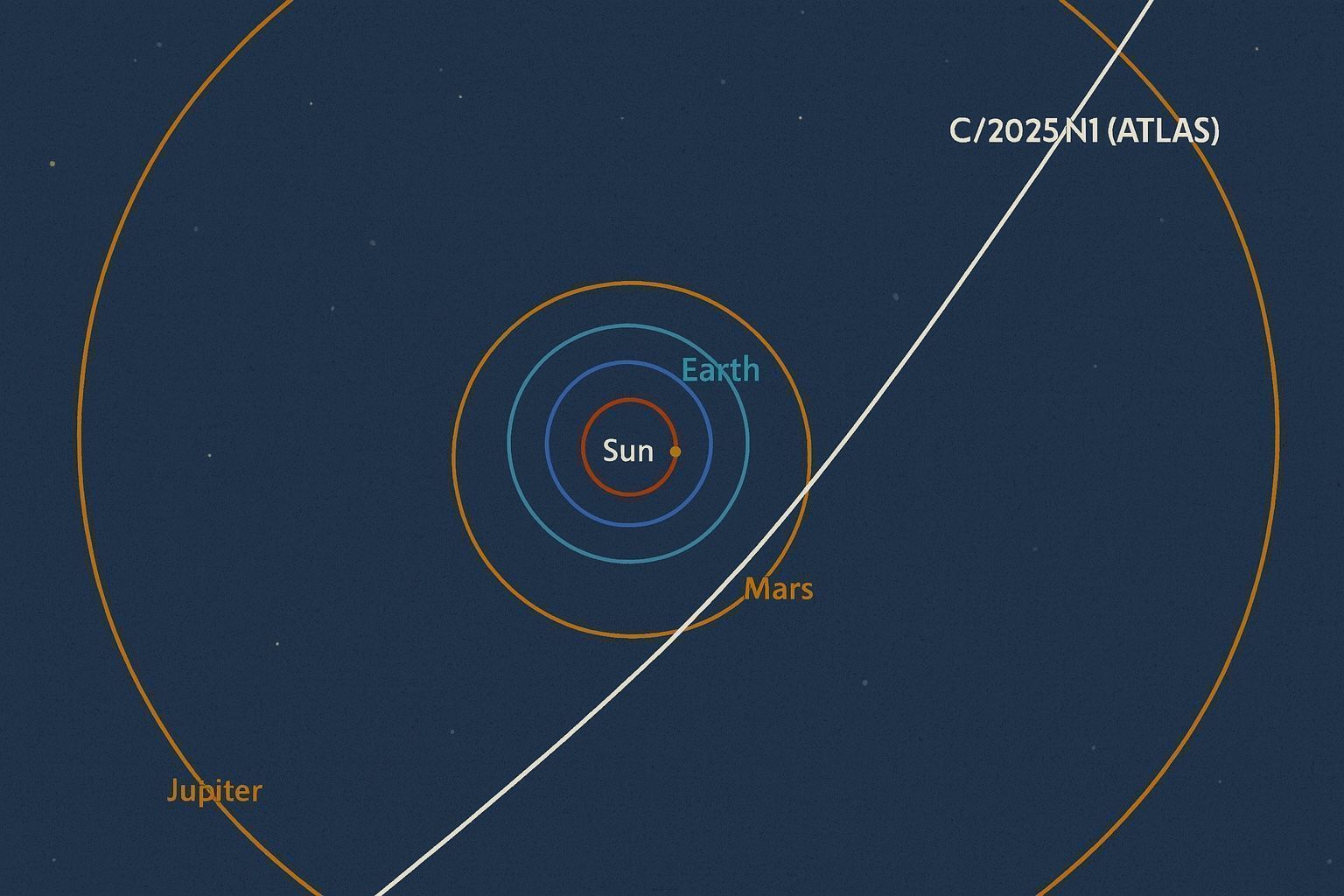
In early July 2025 astronomers using the NASA‑funded ATLAS telescope in Chile discovered a hyper‑fast object now designated 3I/ATLAS—only the third confirmed interstellar body to enter our Solar System after ’Oumuamua and Borisov. Follow‑up astrometry shows an inbound velocity of ≈58 km s⁻¹ and an orbital eccentricity of ≈6.1, values far in excess of anything gravitationally bound to the Sun, proving an extrasolar origin. First photometric estimates put the nucleus at 9‑20 km—an order of magnitude larger than Borisov—and early images already reveal a developing coma and tail. Dynamical modelling by Oxford–Canterbury researchers traces its trajectory back to the Milky Way’s thick disc, implying the ice‑rich body may be ≥7 billion years old—much older than the Solar System itself. Although 3I/ATLAS will dive just inside Mars’ orbit on 30 October, it never comes closer than 1.6 au to Earth and poses no hazard. Instead it offers an unprecedented laboratory for studying planet formation chemistry beyond our neighbourhood, and it is galvanising plans for rapid‑response spacecraft such as ESA’s 2029 Comet Interceptor. “3I/ATLAS is much larger … and vastly more hyperbolic than either predecessor,” notes ESO comet specialist Olivier Hainaut space.com.
Space News Today: Global Advances, Challenges, and New Frontiers / Updated: 2025, July 7th, 12:00 CET

Space News Today: Global Advances, Challenges, and New Frontiers / Updated: 2025, July 7th, 12:00 CET

Boeing secured a $2.8 billion contract to develop next‑generation nuclear communications satellites for the U.S. military. Spanish operator Hisdesat completed two satellites in orbit and signed for two more in 2025, backed by Indra, targeting €1 billion in space revenue by 2030. SpainSat NG II, developed by Hisdesat and Airbus, is set to launch October 22–29 with NATO as its first client for both military and civil applications. SpaceX’s Starlink now accounts for more than 60% of all active satellites, following launches including Starlink 10-28 from Cape Canaveral and a Vandenberg mission delivering 70 small satellites. SpaceX plans a 40-antenna
Space Science in July 2025: Breakthroughs, Setbacks, and the Expanding Frontier / Updated: 2025, July 4th, 00:00 CET

Space Science in July 2025: Breakthroughs, Setbacks, and the Expanding Frontier / Updated: 2025, July 4th, 00:00 CET

Astronomers confirmed 3I/ATLAS (C/2025 N1) as the third confirmed interstellar object to visit our solar system, about 20 km wide, detected by NASA’s ATLAS survey, and it will pass inside Mars’ orbit in October 2025 at a minimum distance of 1.6 AU. NASA’s James Webb Space Telescope directly imaged exoplanet TWA 7 b, a Saturn-mass world 34 light-years away, making it the lightest planet ever directly imaged and potentially habitable. MethaneSAT, an $88 million methane-emissions satellite backed by Jeff Bezos, Google, and the Environmental Defense Fund, launched in March 2024 and lost contact after just over a year, deemed unlikely
3I/ATLAS: The Fastest Interstellar Comet Ever—Here’s What Scientists Are Saying

3I/ATLAS: The Fastest Interstellar Comet Ever—Here’s What Scientists Are Saying

The newly confirmed comet 3I/ATLAS is the third identified interstellar object after 1I/ʻOumuamua and 2I/Borisov. Discovered on 1 July 2025 by the NASA‑funded ATLAS telescope in Chile, it is racing through the solar system on an extremely hyperbolic path at ∼68 km s⁻¹, will reach perihelion just inside Mars’s orbit on 29 October 2025, and poses no threat to Earth. Early images reveal a faint coma and short tail, confirming cometary activity. Because 3I/ATLAS was detected far from the Sun and months before perihelion, astronomers have an unprecedented window to characterise an interstellar comet’s composition, rotation, and size. Experts say the find heralds a coming flood of interstellar detections as next‑generation surveys like the Vera C. Rubin Observatory come fully online. “Spotting a possible interstellar object is incredibly rare, and it’s exciting that our UH‑operated system caught it.” — John Tonry, University of Hawaiʻi Institute for Astronomy hawaii.edu
3 July 2025
Space News Roundup: July 2025 / Updated: 2025, July 3rd, 00:00 CET

Space News Roundup: July 2025 / Updated: 2025, July 3rd, 00:00 CET

SpaceX marked its 500th Falcon 9 launch with the deployment of 27 Starlink satellites and the 29th booster reuse. MTG-S1, Europe’s first geostationary hyperspectral infrared atmospheric sounder, launched July 1, 2025 on a SpaceX Falcon 9 alongside the Sentinel-4 instrument for hourly air-quality data over Europe and North Africa. MethaneSAT, an $88 million climate satellite funded by Jeff Bezos and EDF and launched in March 2024, was declared lost after losing contact on June 20, 2025. James Webb Space Telescope directly imaged TWA 7b, a Saturn-mass exoplanet about 110 light-years away, with a surface temperature around 120°F. James Webb mapped
Major Astronomy News in June 2025: Webb’s Exoplanet Discovery, Rubin’s First Images, Space Missions & More

Major Astronomy News in June 2025: Webb’s Exoplanet Discovery, Rubin’s First Images, Space Missions & More

Webb Directly Images a Saturn-Mass Exoplanet: For the first time, the James Webb Space Telescope has discovered an exoplanet previously unknown – a young gas giant roughly the mass of Saturn orbiting the star TWA 7 science.nasa.gov reuters.com. This object, dubbed TWA 7 b, is about 50 AU from its star and is the lightest planet ever captured in a direct image science.nasa.gov reuters.com. It lies in a gap of TWA 7’s debris disk, matching predictions that a planet of this mass was sculpting the disk’s structure science.nasa.gov science.nasa.gov. “Our observations reveal a strong candidate for a planet shaping the structure of the TWA 7 debris disk, and its position is exactly where we expected,” said lead author Anne-Marie Lagrange science.nasa.gov. This marks Webb’s first direct exoplanet discovery – previously the telescope had studied known exoplanets, but not found new ones reuters.com reuters.com. Only
28 June 2025
SpaceX: Mid-2025 Comprehensive Report (June 27th, 2025)

SpaceX: Mid-2025 Comprehensive Report (June 27th, 2025)

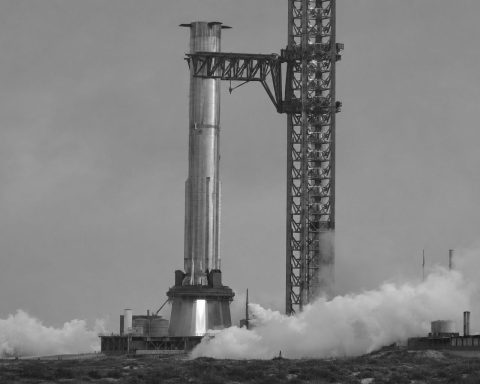
SpaceX’s Starship vehicle lifting off on its ninth test flight from Starbase, Texas in May 2025. Starship is the company’s next-generation, fully-reusable rocket system under development. In summary, by mid-2025 SpaceX is breaking launch records, advancing Starship’s development amid regulatory hurdles, expanding its Starlink network, and securing a growing share of civil and commercial space contracts. The following sections provide an in-depth analysis of the company’s history, technology, strategy, competition, and outlook.
Global Technology Trends in June-2025: AI, Quantum, EVs, Space & Beyond

Global Technology Trends in June-2025: AI, Quantum, EVs, Space & Beyond

June 2025 marks a pivotal moment in the tech world, with transformative innovations unfolding across industries. From the AI boom supercharging software and chips, to EVs hitting record sales, to breakthroughs in biotech and space, the global technology landscape is evolving at an unprecedented pace. In this report, we delve into the latest developments and expert insights across key sectors – Artificial Intelligence, Consumer Electronics, Quantum Computing, Blockchain/Web3, Biotechnology, Semiconductors, Renewable Energy/EVs, and Space – to paint a comprehensive picture of tech trends as of June 2025. Artificial Intelligence continues to dominate tech headlines in 2025, accelerating innovation and economic growth. The global AI market is valued around $758 billion in 2025, with forecasts projecting a surge to $3.68 trillion by 2034 ahrefs.com ahrefs.com. Analysts compare AI’s impact to the Industrial Revolution – PwC estimates AI could boost global GDP by 15+% by 2035, reshaping the economy on a similar scale to 19th-century industrialization ahrefs.com. Crucially, generative AI and large language models exploded into the mainstream over the past two years, driving a 76% jump in generative AI spending in 2025 alone ahrefs.com. AI adoption is now widespread: 78% of companies use AI in at least one function globenewswire.com, and
Satellite Definition: Ultimate Guide from Sputnik to SpaceX and Beyond

Satellite Definition: Ultimate Guide from Sputnik to SpaceX and Beyond

Satellites are the unseen workhorses of modern life. Every time you check the weather, follow GPS directions, or watch live international events, you’re benefiting from satellites orbiting high above. But what exactly are satellites, and how did we go from the humble beginnings of Sputnik in 1957 to today’s SpaceX Starlink mega-constellations? This comprehensive guide will explore what satellites are, retrace the rich history of satellite technology, break down the different kinds of satellites and their uses, explain how these orbiting machines work, and dive into current trends shaping the future of satellites. Along the way, we’ll include insights from space agencies and experts to illuminate the past, present, and future of these “eyes in the sky.” In the broadest sense, a satellite is any object that orbits around a larger object. By that definition, natural satellitesinclude celestial bodies like moons and even planets – for example, Earth is a satellite of the Sun, and the Moon is a satellite of Earth Nasa. Typically, though, when we talk about satellites today, we mean artificial satellites: human-made machines launched into space to orbit Earth or another celestial body Nasa. These artificial satellites come in all shapes and sizes and serve a
AstroForge Brokkr‑2 (Odin) Mission Overview and Objectives

AstroForge Brokkr‑2 (Odin) Mission Overview and Objectives

Figure 1: Intuitive Machines’ Athena lunar lander and its rideshare payloads are shown inside a SpaceX Falcon 9 fairing prior to launch Spaceflightnow. AstroForge’s Brokkr‑2 spacecraft was attached beneath Athena for this flight. Odin’s mission was to fly by a near-Earth asteroid to scout its composition, specifically to confirm whether the rock is metal-rich. The objective was to prove core technologies for eventual asteroid mining. In particular, AstroForge aims to extract platinum-group metals from small, metal‑rich near-Earth asteroids Wikipedia. Odin was designed to gather imagery and sensor data of its target asteroid to determine its metal content, thereby paving the way for a follow-up Vestri mission that would attempt to land on and begin extraction from the same asteroid Space Wikipedia. AstroForge’s strategy is stepwise:
1 9 10 11 12

Stock Market Today

  • Air Canada (TSX:AC) slips 52%, long-term investors eye value
    July 1, 2026, 12:29 AM EDT. Air Canada (TSX:AC) stock has lost more than half its value, down 52%, but is still trading at a trailing P/E of 10.1. The airline has made cuts and boosted operational efficiency, keeping its balance sheet stable. Jet fuel prices have dropped as U.S.-Iran tensions ease, while bookings for summer travel look strong. Air Canada has added free WiFi and more Aeroplan perks to try to gain share. The sector is still volatile, and investors looking to buy on weakness need patience and regular reviews. The recent drop could give long-term investors a shot at a better entry.
Go toTop