
Today: 1 July 2026
Browse Category

Space Exploration 9 August 2025 - 6 September 2025

48 Years in Space: Inside NASA’s Voyager 1 & 2’s Epic Journey Beyond the Solar System (2025 Update)

48 Years in Space: Inside NASA’s Voyager 1 & 2’s Epic Journey Beyond the Solar System (2025 Update)

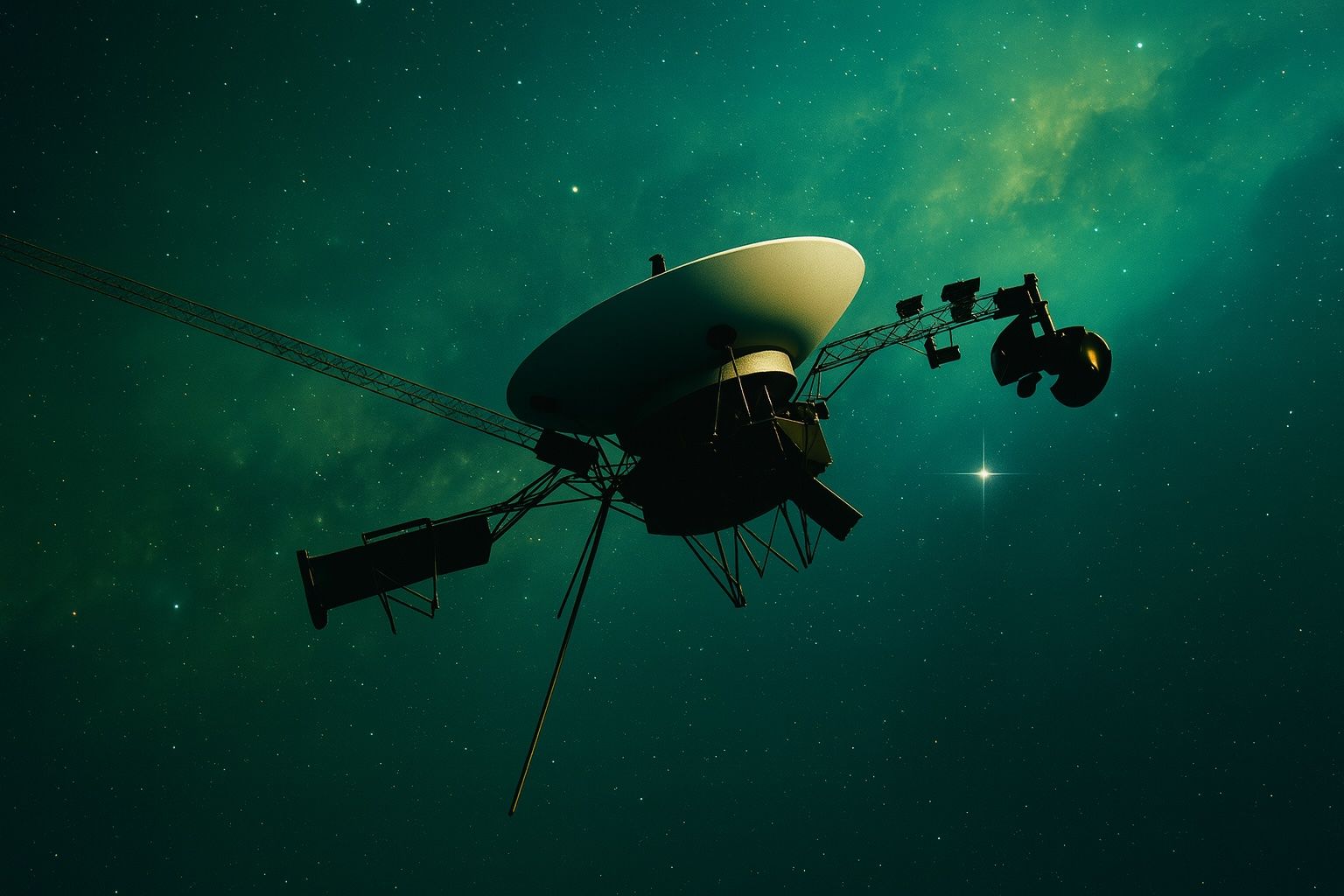
In the early 1970s, NASA conceived the Voyagers as part of a once-in-176-year alignment allowing a “Grand Tour” of the outer planets. Budget constraints scaled the plan down from four probes to two spacecraft launched in 1977, each initially tasked to explore Jupiter and Saturn science.nasa.gov. The mission plan cleverly allowed for an extended journey: if Voyager 1 successfully completed its Saturn flyby, Voyager 2 would be directed onward to Uranus and Neptune using gravity assists science.nasa.gov. The twin probes – originally called Mariner 11 and Mariner 12 – were rechristened “Voyager” just before launch, reflecting their ambitious trek into the unknown science.nasa.gov. Voyager 2 lifted off first, followed by Voyager 1 science.nasa.gov. Despite its later launch, Voyager 1 was put on a faster trajectory and reached Jupiter first, hence its designation as “1.” Both Voyagers had the primary objective of conducting close-up studies of the giant planets, their moons, rings, and magnetic environments, greatly expanding on observations made by the earlier Pioneer 10 and 11 missions science.nasa.gov. After the planetary tour, a new goal emerged: push onward to explore the limits of the Sun’s influence and venture into interstellar space – a mission extension now called the Voyager Interstellar
6 September 2025
Starlink Blitz, Spy Sat Scare & Mission Milestones: Space News Roundup (Sept 4–5, 2025)

Starlink Blitz, Spy Sat Scare & Mission Milestones: Space News Roundup (Sept 4–5, 2025)

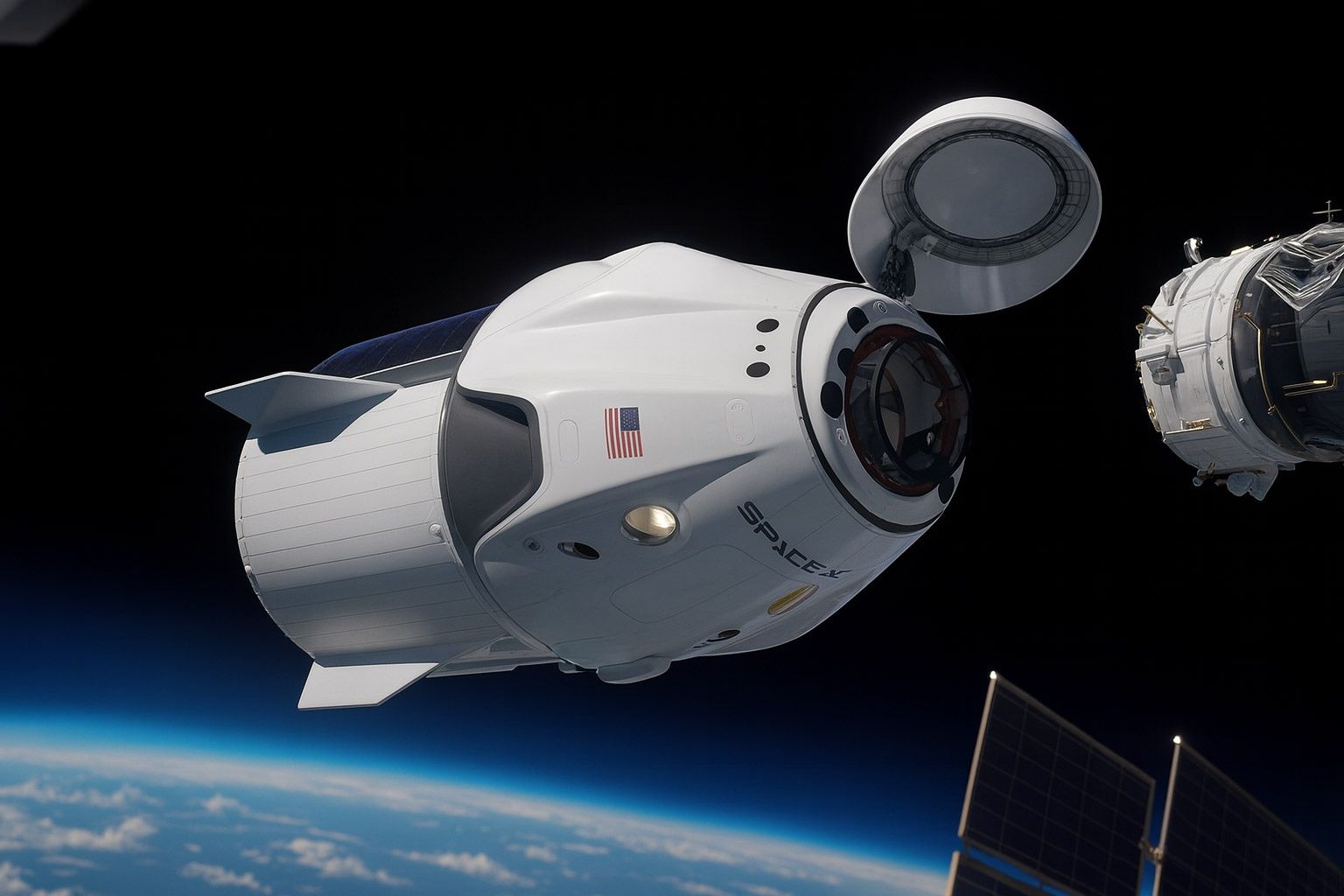
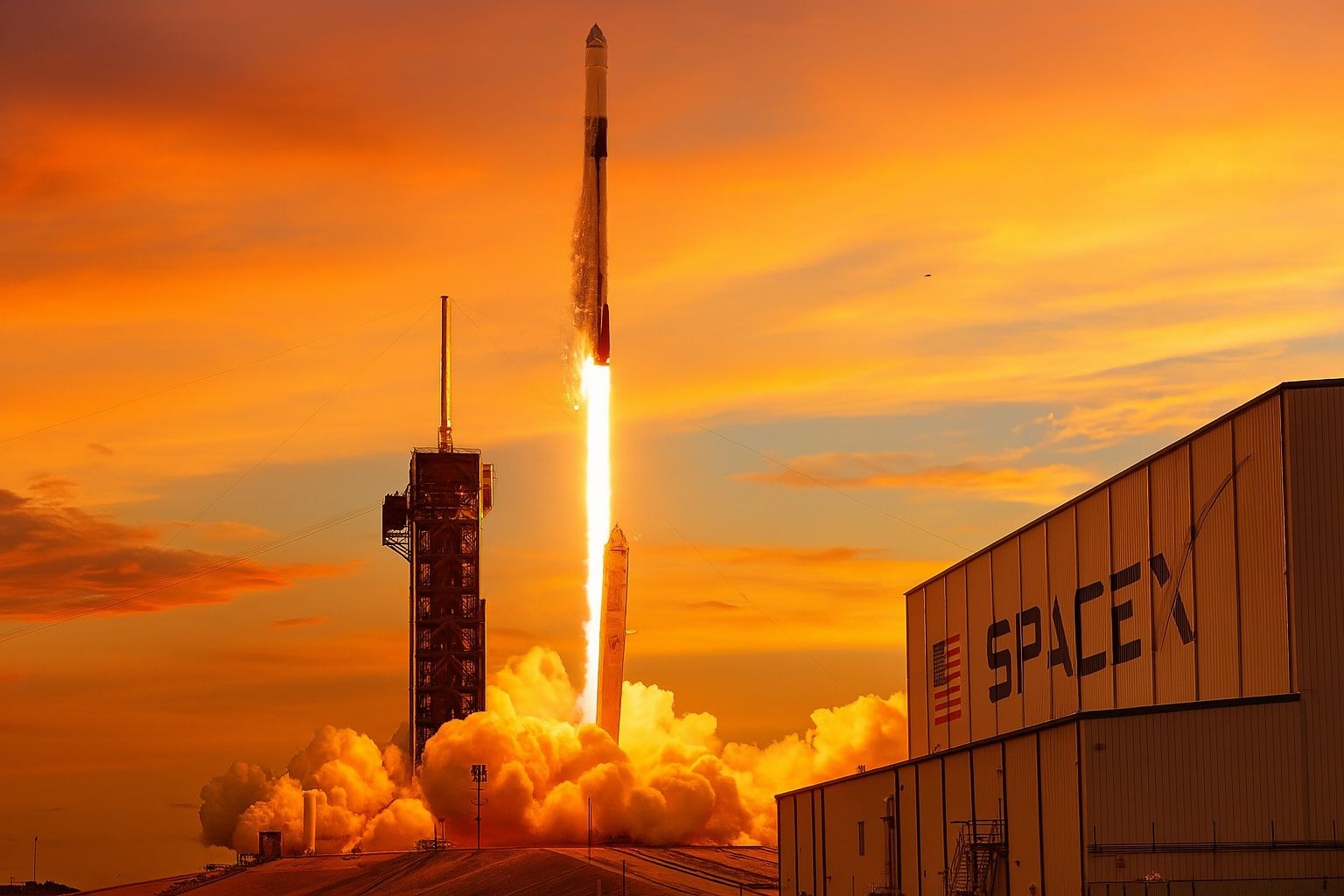
NASA & SpaceX – New Boosts and Milestones: In a notable first for ISS operations, SpaceX’s CRS-33 Dragon cargo ship successfully executed a reboost of the International Space Station on Sept. 3 nasa.gov. Firing new thrusters in its trunk for over five minutes, the uncrewed Dragon raised the ISS orbit by about a mile – inaugurating a capability that will be used periodically through fall 2025 to help maintain the station’s altitude nasa.gov nasa.gov. This test comes as NASA seeks alternatives to rely less on Russia’s Progress vehicles for station-keeping. Meanwhile, SpaceX is poised for a landmark booster recovery: the company’s next Starlink mission is set to achieve the 500th landing of a Falcon first stage if successful spaceflightnow.com. The Starlink 10-57 launch from Kennedy Space Center, scheduled for early Sept. 5, will mark SpaceX’s 111th flight of the year – keeping the company on pace for a record ~170 launches in 2025 spaceflightnow.com. The veteran Falcon 9 booster flying this mission is on its 27th reuse, underscoring SpaceX’s aggressive turnaround and reusability practices spaceflightnow.com. Weather was 70% favorable for the sunrise liftoff, with Space Force meteorologists monitoring coastal showers but expecting no organized storms during the launch window spaceflightnow.com.
Space Race Heats Up: Starlink Milestone, Venus Flyby & Solar Storms Mark a Stellar Weekend

Space Race Heats Up: Starlink Milestone, Venus Flyby & Solar Storms Mark a Stellar Weekend

Starlink Launch Surge: SpaceX punctuated the end of August with a sunrise Falcon 9 launch on Aug. 31, carrying 28 Starlink V2 Mini satellites to low Earth orbit spaceflightnow.com. Liftoff occurred at 7:49 a.m. EDT from Cape Canaveral’s SLC-40, and about 8½ minutes later the veteran booster nailed a landing on the Just Read the Instructions droneship spaceflightnow.com spaceflightnow.com. This mission – Starlink Group 10-14 – was SpaceX’s 9th Starlink launch of the month and 108th flight of 2025, extending the company’s record-breaking cadence spaceflightnow.com spaceflightnow.com. All told, over 1,900 Starlink satellites have been deployed in 2025, helping push SpaceX’s share of active satellites to roughly two-thirds of all in orbit spaceflightnow.com. Notably, SpaceX announced its Starlink internet service has grown to 7 million subscribers worldwide across 150+ countries spaceflightnow.com. To sustain demand, Starlink production is churning out satellites at an unprecedented clip. “Generally satellite manufacturing is a very slow process… At SpaceX, we iterate very fast and we have learned how to build satellites at a 70 sats per week rate,” said Cornelia Rosu, SpaceX’s senior director of Starlink production spaceflightnow.com. The Aug. 31 mission capped a month that also saw SpaceX achieve its 400th Falcon booster landing and
1 September 2025
Space Weekend Thrills: Starship’s Historic Flight, Secret Spaceplane Soars & Cosmic Breakthroughs

Space Weekend Thrills: Starship’s Historic Flight, Secret Spaceplane Soars & Cosmic Breakthroughs

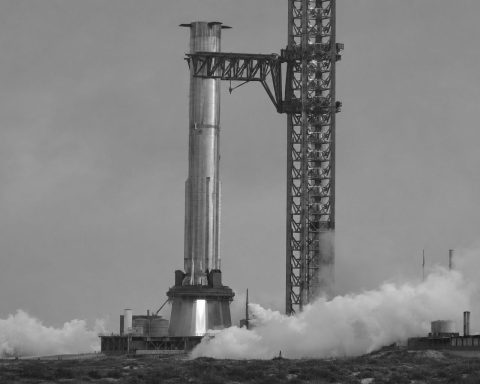
Starship’s First Orbital Success: SpaceX’s Starship finally broke its streak of test failures in spectacular fashion. On Aug. 26, the 403-foot reusable rocket system completed its tenth test flight and achieved several firsts. After launching from Starbase, Texas, the Starship upper stage reached space and successfully deployed payloads – ejecting 8 dummy Starlink satellites about 30 minutes into flight from its innovative internal dispenser reuters.com. This marked the first-ever satellite deployment by Starship, turning the page on a series of early-flight mishaps that had plagued the program. The mission then put Starship’s redesigned heat shield through a trial-by-fire: the vehicle endured a blazing reentry over the Indian Ocean, testing new hexagonal thermal tiles needed for full reusability reuters.com. Finally, the Starship executed a controlled engine-guided descent into the ocean west of Australia, touching down vertically on the water’s surface reuters.com reuters.com. As expected, the 171-foot ship toppled over and was destroyed after splashdown, but by that point it had met all major objectives reuters.com. This mission demonstrated crucial capabilities – orbital staging, payload deployment, and high-speed reentry – that SpaceX needs to eventually recover Starships intact. SpaceX founder Elon Musk emphasized that developing a robust, rapidly reusable heat shield remains
From Space Triumphs to Medical Milestones: Biggest Science News (Aug 28–29, 2025)

From Space Triumphs to Medical Milestones: Biggest Science News (Aug 28–29, 2025)

A Planet Is Born: In a feat long thought nearly impossible, astronomers have directly imaged a planet in the act of forming. Using the ESO’s Very Large Telescope in Chile, a team snapped a clear picture of WISPIT 2b, a gas giant about five times Jupiter’s mass, carving out a gap in the multi-ringed disk of a young Sun-like star ts2.tech ts2.tech. The baby planet glows red-hot as it accumulates gas. “Discovering this planet… was an amazing experience — we were incredibly lucky,” said Dr. Richelle van Capelleveen of Leiden Observatory, a co-leader of the discovery ts2.tech. WISPIT 2b’s host star is only ~5 million years old and part of an unexpected stellar group, making its spectacular concentric disk a surprise find ts2.tech. Once the team spotted the disk’s rings, they quickly followed up and found the planet nestled in one of the gaps, confirming the planet’s orbit around the star ts2.tech. This marks the first unambiguous image of a protoplanet in a multi-ring disk – offering a unique “lab” for studying how newborn planets interact with their birth disks. As one co-author put it, “WISPIT 2b… is a remarkable discovery” that will serve as a benchmark for planet-formation theories
Space Drama Unfolds: Starship Scrubs, ISS Boosts & Cosmic Breakthroughs (Aug 25–26, 2025)

Space Drama Unfolds: Starship Scrubs, ISS Boosts & Cosmic Breakthroughs (Aug 25–26, 2025)

Sources: Spaceflight Now spaceflightnow.com spaceflightnow.com spaceflightnow.com; Space.com space.com space.com space.com space.com; NASA/Wallops abc11.com abc11.com; ISRO isro.gov.in isro.gov.in; Copernical/SpaceNews copernical.com copernical.com; The Moscow Times themoscowtimes.com; EurekAlert eurekalert.org eurekalert.org; RTL Today Luxembourg today.rtl.lu today.rtl.lu.
26 August 2025
Space Race Heats Up: ISS Gets a Boost, Starship Scrubs & New Cosmic Ambitions (Aug 24–25, 2025)

Space Race Heats Up: ISS Gets a Boost, Starship Scrubs & New Cosmic Ambitions (Aug 24–25, 2025)

SpaceX Reboosts the ISS: In the early hours of Aug. 24, SpaceX’s 33rd Cargo Dragon mission blasted off from Cape Canaveral carrying over 5,000 pounds of supplies – and a special new “boost” module to raise the International Space Station’s orbit ts2.tech ts2.tech. The uncrewed Dragon lifted off at 2:45 a.m. EDT Sunday atop a Falcon 9, beginning a day-long journey to the ISS nasa.gov. “Commercial resupply missions to the International Space Station deliver science that helps prove technologies for Artemis lunar missions and beyond,” said acting NASA Administrator Sean Duffy, noting this flight will test “3D printing metal parts and bioprinting tissue in microgravity” to aid future Moon and Mars crews nasa.gov. The Dragon is packed with dozens of experiments and general cargo for the station’s Expedition 73 crew nasa.gov spaceflightnow.com. First ISS Reboost by a US Vehicle: This mission carries a propulsion kit mounted in Dragon’s trunk designed to periodically boost the ISS’s orbit, reducing reliance on Russia’s Progress freighters ts2.tech spaceflightnow.com. “The hardware located inside the trunk of Dragon contains an independent propellant system… to fuel two Draco engines,” explained Bill Spetch, operations integration manager for NASA’s ISS Program spaceflightnow.com. Starting in September, the Dragon will perform
From Space Shuttle to SpaceX Dragon: How a Reusable Capsule Became the ISS’s Lifeline

From Space Shuttle to SpaceX Dragon: How a Reusable Capsule Became the ISS’s Lifeline

In 2011, NASA’s Space Shuttle fleet retired, leaving the International Space Station without its primary American supply line. A bold replacement emerged from the private sector: SpaceX’s Dragon spacecraft. Fast forward to 2025, and the SpaceX Dragon – a reusable orbital capsule – has become a critical lifeline for the ISS, ferrying tons of cargo to and from the station on a routine basis. This comprehensive report explores Dragon’s journey from concept to workhorse, how it superseded earlier spacecraft like the Shuttle and Progress, its technical prowess, the evolution of NASA’s Commercial Resupply Services contracts, major mission milestones, and the wide-ranging impact on ISS operations and international cooperation. Along the way, we’ll hear expert commentary from NASA officials, SpaceX leaders, astronauts, and analysts on why Dragon’s success is revolutionizing space station resupply. SpaceX’s Dragon had humble beginnings but an ambitious goal: to become the first privately-developed spacecraft to service the ISS. In 2006–2010, NASA’s Commercial Orbital Transportation Services program provided seed funding and expertise for companies to develop cargo vehicles after the Shuttle’s retirement space.com. SpaceX built Dragon and its Falcon 9 rocket “from a blank sheet” in just a few years spaceflightnow.com. In December 2010, an unmanned Dragon test
24 August 2025
Secret Spaceplane Launch, 75 Mice in Orbit, and Uranus’ New Moon – Space Highlights (Aug 20–21, 2025)

Secret Spaceplane Launch, 75 Mice in Orbit, and Uranus’ New Moon – Space Highlights (Aug 20–21, 2025)

will give press briefings on their training and mission plans. These steps highlight NASA’s ongoing push toward returning humans to the Moon – and eventually Mars – in international partnership.) Aside: Another private launch to watch is Blue Origin’s New Shepard suborbital flight, which was targeting Aug. 23. The NS-23 mission will carry over 40 research payloads to the edge of space and back blueorigin.com blueorigin.com. This would be Blue Origin’s 35th New Shepard launch, flying a suite of microgravity experiments for a few minutes of weightlessness. The launch was set to lift off from West Texas on Saturday morning, pending final checks blueorigin.com. Successful completion will mark over 200 total payloads flown on New Shepard to date blueorigin.com, as Blue Origin continues catering to the suborbital research and tourism market.
21 August 2025
SpaceX Wins $81.6 Million U.S. Space Force Deal to Launch WSF-M2 Weather Satellite in 2027

SpaceX Rocket Showdown: Falcon 9 vs Falcon Heavy vs Starship – Which Rocket Rules 2025?

SpaceX has revolutionized spaceflight with three generations of rockets – the trusty Falcon 9, its beefy sibling Falcon Heavy, and the next-gen Starship super-rocket. Each vehicle pushes the envelope in reusability, power, and cost, reshaping the launch market and capturing public imagination. In this ultimate comparison, we’ll break down technical specs, launch costs, mission records, clients, and the latest 2025 updates for SpaceX’s trio, complete with expert insights and a look at upcoming rivals. Read on to find out which SpaceX rocket comes out on top – and how they’re collectively leaving competitors in the dust. To start, here’s a quick comparison of key specs for Falcon 9, Falcon Heavy, and Starship:
Interstellar Comet 3I/ATLAS: A Visitor from Beyond the Solar System

Interstellar Comet 3I/ATLAS: A Visitor from Beyond the Solar System

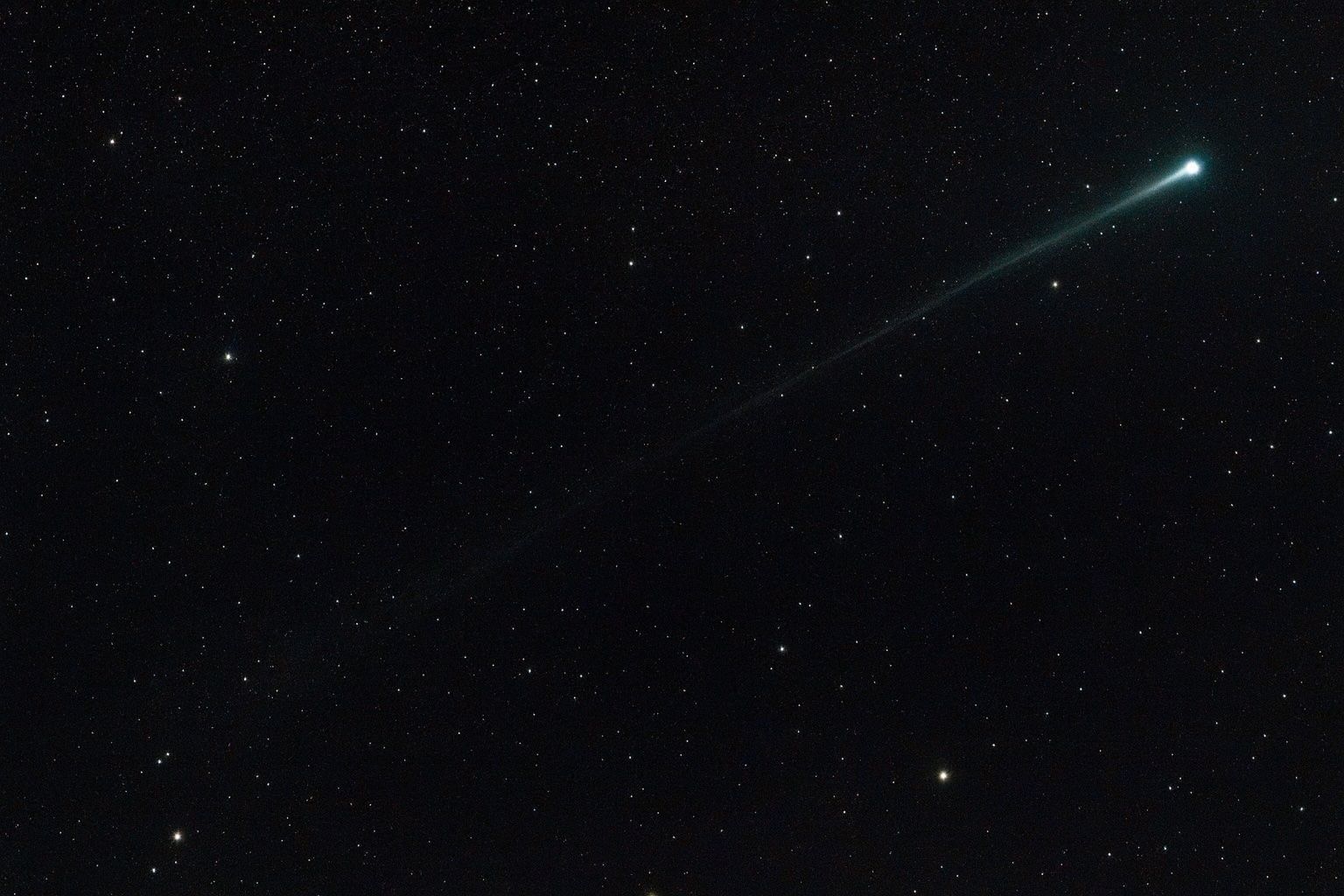
Hubble Space Telescope image of interstellar comet 3I/ATLAS on July 21, 2025. The comet appears as a teardrop-shaped, bluish cocoon of dust around its solid icy nucleus, with a faint tail. Streaks in the image are background stars blurred by Hubble tracking the fast-moving comet science.nasa.gov science.nasa.gov. The comet 3I/ATLAS – officially designated 3I/2025 A1 – was first spotted on July 1, 2025, by the Asteroid Terrestrial-Impact Last Alert System telescope in Río Hurtado, Chile esa.int scientificamerican.com. ATLAS is a NASA-funded survey designed to catch incoming asteroids, and on that night ATLAS team member Larry Denneau noticed a new moving dot beyond Jupiter’s orbit scientificamerican.com. At first it seemed like a routine find, but follow-up observations quickly revealed the object was on a highly unusual path. Within a day, astronomers confirmed the object was not bound to our Sun, meaning it came from interstellar space esa.int scientificamerican.com. It is only the third interstellar object ever observed, after 1I/‘Oumuamua in 2017 and 2I/Borisov in 2019 theguardian.com esa.int.
19 August 2025
Moon Rocket Breakthroughs, Starship’s Comeback & Cosmic Surprises: Space News Roundup (Aug 16–17, 2025)

Moon Rocket Breakthroughs, Starship’s Comeback & Cosmic Surprises: Space News Roundup (Aug 16–17, 2025)

In summary, the period of August 16–17, 2025 was packed with noteworthy space events across the board. From rocket launches to pioneering science findings and significant policy moves, the global space community had a busy weekend. New rockets roared to life – or were grounded for another day – and spacefarers in orbit ventured outside their vehicles. Astronomers extended our cosmic horizon with record-breaking discoveries, even as Earthbound engineers planted the seeds for sustaining life on future missions. Commercial space firms chased bigger funding and bigger constellations, while regulators and leaders raced to keep rules up to speed with innovation. It’s a vivid reminder that the modern space age is firing on all cylinders. As one official quipped this week, the goal is to “enable American space competitiveness and superiority for decades to come” nasa.gov – but as the news from around the world shows, the race to space is now a truly multinational endeavor. Each development from this weekend – whether a small step like a seedling in microgravity or a giant leap like a Moon rocket test – is another chapter in humanity’s push onward and upward to the final frontier. Sources:
17 August 2025
Techquake Weekend: Tariffs, Rocket Failures & a 1,000-Mile EV – Global Tech News Roundup (Aug 15–16, 2025)

Techquake Weekend: Tariffs, Rocket Failures & a 1,000-Mile EV – Global Tech News Roundup (Aug 15–16, 2025)

Sources: Reuters, TechCrunch, FDA, FierceBiotech, company press releases, and other reputable outlets as cited above techcrunch.com reuters.com reuters.com reuters.com. This report covers major tech developments around the world from August 15–16, 2025, spanning consumer gadgets, enterprise IT, telecom, cybersecurity, automotive, space, semiconductor policy, fintech, biotech, and more – everything except AI.
Space Showdown: Starlink Doubleheader, Vulcan’s Debut, Ariane 6 Triumph & Cosmic Discoveries (Aug 14–15, 2025)

Space Showdown: Starlink Doubleheader, Vulcan’s Debut, Ariane 6 Triumph & Cosmic Discoveries (Aug 14–15, 2025)

SpaceX demonstrated its unprecedented launch cadence on Aug. 14 by launching two Falcon 9 missions just half a day apart space.com. In the early morning hours, a Falcon 9 lifted off from Vandenberg Space Force Base in California carrying 24 Starlink internet satellites; by 8:29 a.m. EDT the same day, another Falcon 9 roared from Cape Canaveral, Florida with 28 Starlink satellites space.com. SpaceX confirmed successful deployment of all satellites space.com. Both missions saw veteran first-stage boosters safely recovered at sea, one marking its 10th flight space.com. These back-to-back launches brought SpaceX’s 2025 launch count to 99 Falcon 9 flights, with over 8,100 active Starlink satellites now in orbit space.com – a staggering expansion of the Starlink megaconstellation. However, even as SpaceX pushes boundaries in launch frequency, it faces headwinds on the regulatory front. On Aug. 14, California’s Coastal Commission unanimously vetoed SpaceX’s proposal to nearly double its allowed annual Falcon 9 launches from Vandenberg reuters.com. The state regulators previously opposed a smaller expansion last year, citing environmental oversight concerns. The U.S. Space Force – which operates Vandenberg – has signaled it may override the state, asserting federal primacy in launch operations reuters.com. SpaceX, for its part, has sued the
All the Ways You Can Go to Space: Commercial, Government, and Emerging Opportunities

All the Ways You Can Go to Space: Commercial, Government, and Emerging Opportunities

Spaceflight is no longer reserved for a select few government-trained astronauts. In 2025, a new era of space travel is unfolding, offering multiple pathways for ordinary people – not just career astronauts – to reach the stars. Fewer than 700 humans have ever traveled to space in the past six decades press.virgingalactic.com, but that number is poised to grow rapidly as commercial space tourism, private astronaut missions, and international programs open the final frontier to more participants than ever before. “We’re here to make space more accessible to all. Welcome to the dawn of a new space age,” announced Virgin Galactic founder Richard Branson after flying to space himself thehansindia.com. From suborbital joyrides that give you a few minutes of weightlessness, to orbital excursions lasting days or weeks, all the way to upcoming lunar trips, here’s an in-depth guide to every way you can go to space – including how to qualify, how much it costs, and what to expect on your journey. One of the most exciting developments is commercial space tourism – in which private companies fly paying customers on rockets or spaceplanes. Several firms have now demonstrated the capability to take civilians above the atmosphere for an
Space Race Heats Up: Epic Launches, Lunar Showdowns & Breakthrough Tech (Aug 12–13, 2025 Roundup)

Space Race Heats Up: Epic Launches, Lunar Showdowns & Breakthrough Tech (Aug 12–13, 2025 Roundup)

Sources: Spaceflight Now spaceflightnow.com spaceflightnow.com spaceflightnow.com; Space.com space.com space.com; Space & Defense spaceanddefense.io; Reuters reuters.com reuters.com; Space.com space.com space.com; Space.com advanced-television.com advanced-television.com; Spaceflight Now spaceflightnow.com; Reuters reuters.com reuters.com; Aerospace Corp. aerospace.org aerospace.org; Via Satellite satellitetoday.com; Keeptrack Brief keeptrack.space keeptrack.space; Slashdot/Reuters science.slashdot.org science.slashdot.org.
Tech Shockers: Space Force Rocket Triumph, Massive Data Leaks & Gadget Surprises (Aug 12–13, 2025)

Tech Shockers: Space Force Rocket Triumph, Massive Data Leaks & Gadget Surprises (Aug 12–13, 2025)

United Launch Alliance successfully launched its first operational Vulcan rocket, carrying two satellites on a U.S. Space Force mission Spaceflightnow. This USSF-106 flight marks the Vulcan’s debut as a fully certified national security launcher, slated to replace ULA’s Atlas V and Delta IV rockets Spaceflightnow. The 198-foot Vulcan, boosted by four solid boosters and Blue Origin’s BE-4 engines, thundered off the pad at Cape Canaveral, reaching geosynchronous transfer orbit. “This mission is headed directly to geosynchronous orbit and will be one of our longest missions to date,” said ULA VP Gary Wentz, noting Vulcan was “purposely designed to support these [direct-to-geo] missions” for the Space Force Spaceflightnow. The successful launch is a major milestone for ULA as it pivots to an all-Vulcan fleet in competition with SpaceX’s Falcon rockets Spaceflightnow. Google offered an early peek at its next flagship foldable. In a surprise move, Google released a teaser video for the Pixel 10 Pro Fold, a week ahead of its official launch event Theverge. The brief clip shows a device resembling the Pixel 9 Fold with a large inner display and triple-camera bar, coming in a sleek gray finish Theverge. While specs remain under wraps, the teaser confirms Google’s foldable
Space Marvels, Climate Alarms & Medical Milestones: Major Science News (Aug 11–12, 2025)

Space Marvels, Climate Alarms & Medical Milestones: Major Science News (Aug 11–12, 2025)

Sources: This report is based on science news and press releases from Aug. 11–12, 2025 by reputable outlets and institutions, including Nature nature.com unr.edu, Scientific American scientificamerican.com, ScienceDaily sciencedaily.com sciencedaily.com, NASA science.nasa.gov, Reuters reuters.com, Euronews/AP euronews.com, university press releases unr.edu psu.edu, and others. Each story’s details and expert quotes are drawn from the primary sources cited above. All facts are verified and presented as reported in those sources, covering major scientific developments announced on the given dates.
From “Smart” Healing Gel to Alpha Centauri’s New Planet: Science Breakthroughs You Can’t Miss (Aug 8–9, 2025)

From “Smart” Healing Gel to Alpha Centauri’s New Planet: Science Breakthroughs You Can’t Miss (Aug 8–9, 2025)

In the last 48 hours, researchers and agencies worldwide have unveiled breakthroughs across multiple scientific fields. Here’s a roundup of the top global science news from August 8–9, 2025, spanning health, space, environment, physics, technology, and biology. Medical researchers in China have developed a hydrogel-based “smart” wound dressing that dramatically accelerates the healing of diabetic ulcers sciencedaily.com sciencedaily.com. In preclinical tests on diabetic mice, a single application of the gel achieved 90% wound closure in just 12 days, far faster than untreated wounds sciencedaily.com. The gel works by restoring blood flow: it contains tiny extracellular vesicles loaded with microRNA that silence thrombospondin-1 – a protein which normally stalls new blood vessel growth in diabetic tissue sciencedaily.com. With TSP-1 suppressed and a supportive gel matrix in place, the treated wounds rapidly sprout new capillaries and tissue. “Our results demonstrate the power of combining advanced tissue engineering with molecular biology… This breakthrough could revolutionize how we approach diabetic wound care,” said Dr. Chuan’an Shen, a senior author of the study sciencedaily.com. The team notes this bioengineered dressing might be adapted to heal other chronic wounds or even to aid tissue regeneration in bone and cartilage sciencedaily.com. The advance offers hope for millions
9 August 2025
1 8 9 10 11 12

Stock Market Today

  • ASX Seen Higher on US-Iran Talks; South32 Sells Aluminum Unit to Alcoa for $5.6B
    June 30, 2026, 8:36 PM EDT. ASX is set to open higher, with oil prices holding steady and investors watching US-Iran talks in Doha. Wall Street rallied overnight, with the S&P 500 up 0.8%, Nasdaq climbing 1.5%, and the Dow rising 0.3%. Manufacturing in Australia picked up a bit in June, but supply chain snags and local instability remain. Home prices posted their steepest fall since December 2022. South32 has agreed to sell its aluminum operations to Alcoa in a deal worth up to $5.6 billion. The ACCC raised concerns over Coles Group's planned new supermarket lease in WA. On Tuesday, the ASX finished 0.5% lower at 8,778.70.
Go toTop