
Today: 1 July 2026
Browse Category

Space Exploration 9 September 2025 - 20 September 2025

SpaceX’s Next California Rocket Blast: Falcon 9 Spy-Sat Launch – When and How to Watch

SpaceX’s Next California Rocket Blast: Falcon 9 Spy-Sat Launch – When and How to Watch

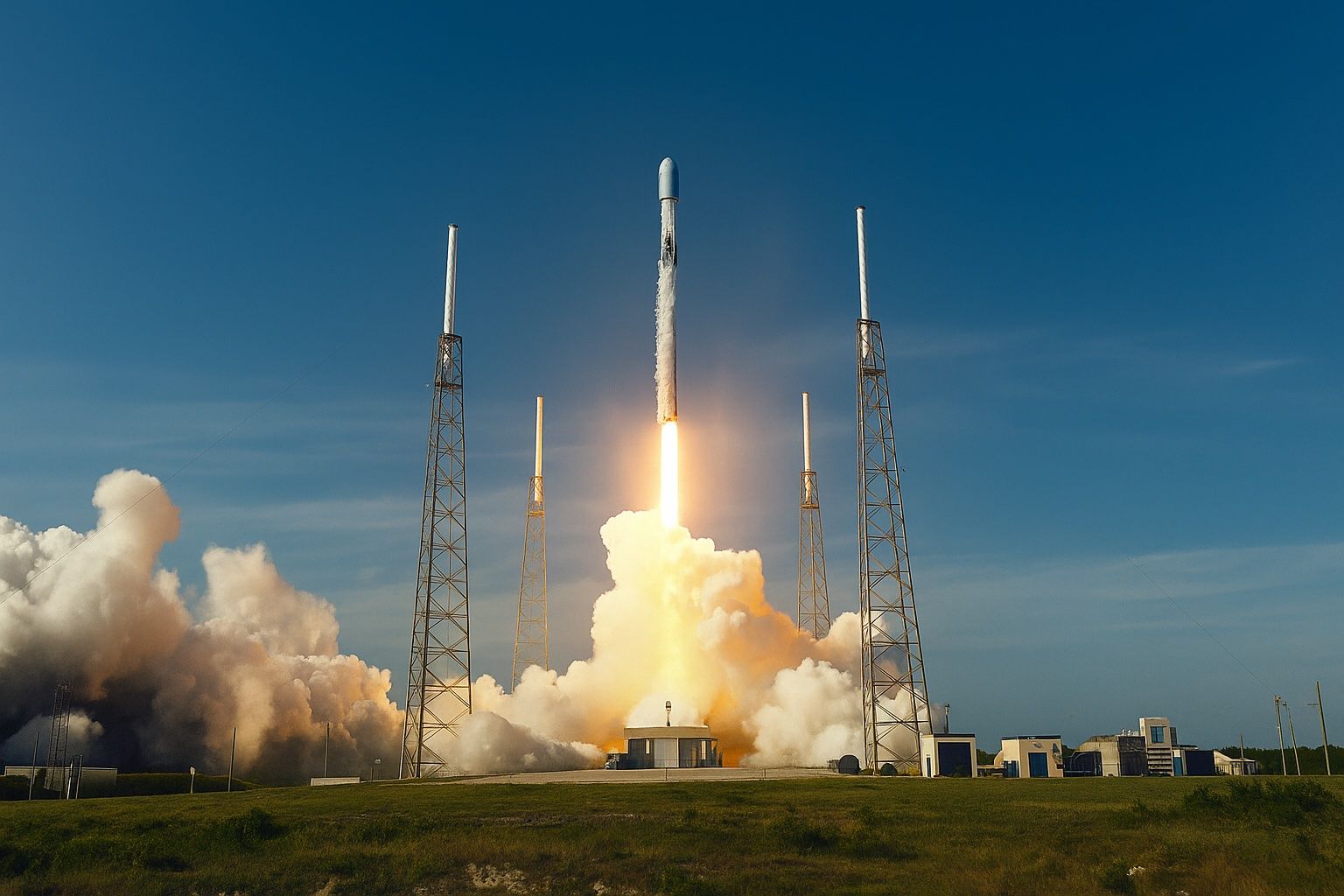
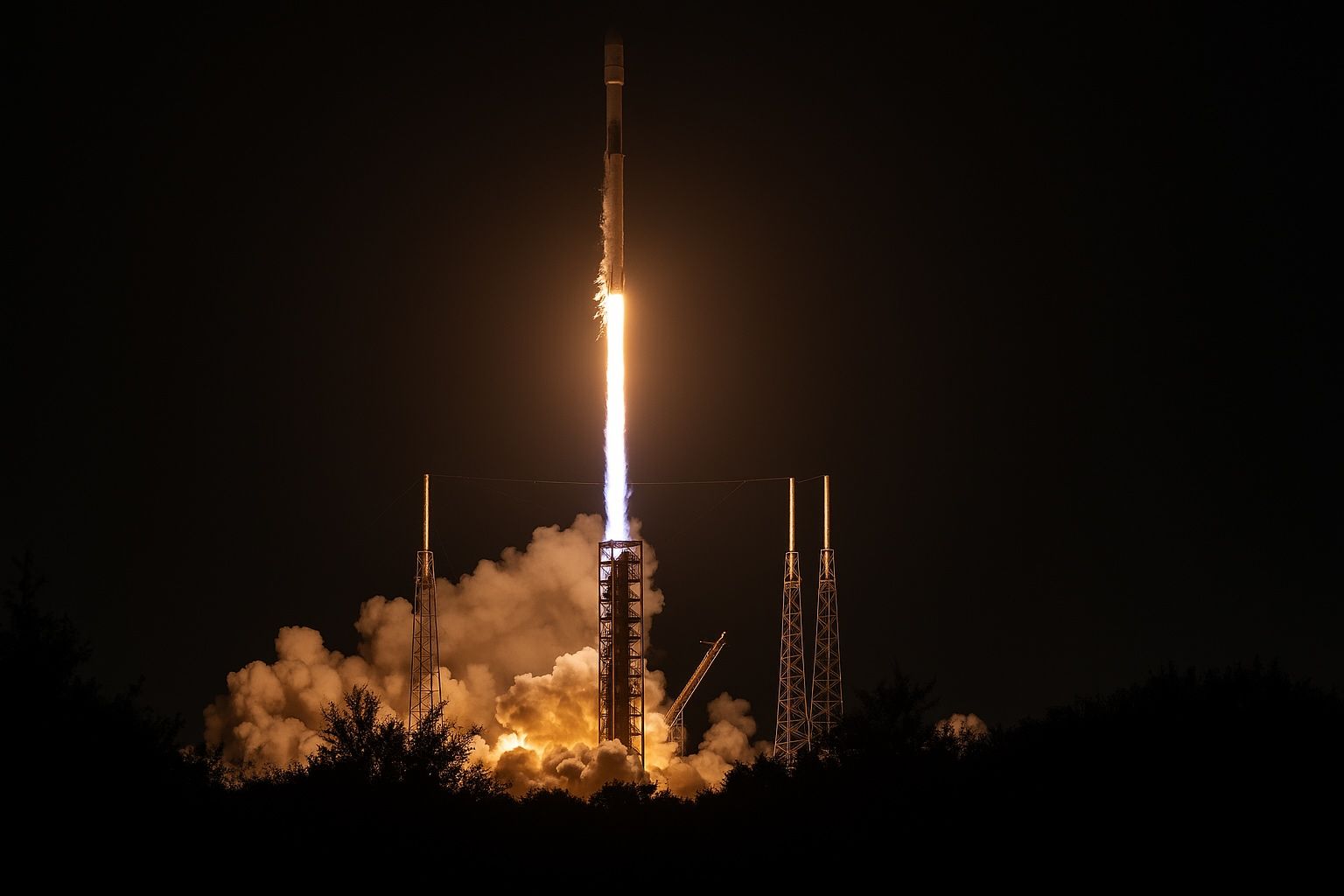
September 2025 has been especially busy for SpaceX in California. Earlier in the month, a Falcon 9 from Vandenberg successfully lofted 21 military satellites for the Space Development Agency – part of a new Pentagon communications network in low orbit spaceflightnow.com spaceflightnow.com. Just days later, another Falcon 9 from Vandenberg carried a batch of Starlink internet satellites to orbit spaceflightnow.com. Now SpaceX is turning around for yet another mission from Vandenberg: the NROL-48 reconnaissance satellite launch for the NRO. For casual spectators, the rapid cadence might blur the differences between missions. Whether the payload is commercial, civil, or military, the sight for onlookers is the same – a bright Falcon 9 roaring to life and slicing into the sky. “I always find it amazing that this cadence has become somewhat normal,” said Anne Mason, SpaceX’s director of National Security Space Launch space.com. Just five years ago, SpaceX launched about 25 times a year, “and now [we’re] launching on average every two to three days,” Mason noted, crediting Falcon 9’s reusability and reliability for making such a tempo possible space.com. In fact, SpaceX is on pace for a record-breaking launch year – aiming for up to 170 orbital missions in 2025,
20 September 2025
Science Shockers: AI-Created Viruses, “Water Worlds” Debunked & More (Sept 19–20, 2025)

Science Shockers: AI-Created Viruses, “Water Worlds” Debunked & More (Sept 19–20, 2025)

AI Designs New Viruses: In a stunning demonstration of AI’s creative power, scientists announced they have used artificial intelligence to design the first-ever viruses from scratch. The AI wrote complete viral genomes for bacteriophages which were then synthesized in the lab nature.com. Several of these AI-generated phages successfully infected and killed E. coli bacteria that natural phages couldn’t attack nature.com. “This is the first time AI systems are able to write coherent genome-scale sequences,” said Stanford computational biologist Brian Hie, calling it a step toward “AI-generated life” nature.com. While still in preprint and not yet peer-reviewed, the breakthrough suggests AI could become a powerful tool for engineering new biomedical therapies nature.com nature.com. Researchers hope AI-designed phages might one day help fight antibiotic-resistant superbugs nature.com nature.com – showcasing a real-world payoff for AI in medicine. The work also raises biosafety questions, as wholly novel organisms can now be created digitally, underscoring the need for oversight as “the next step is AI-generated life,” in Hie’s words nature.com. AI in Healthcare at Scale: China has taken a leap in applying AI to public health management. A tech firm in Guangdong unveiled a vast AI-driven platform called “XingShi” to manage chronic diseases for millions
Space Race Heats Up: Major Launches, Moon Missions & Policy Showdowns (Sept. 19–20, 2025)

Space Race Heats Up: Major Launches, Moon Missions & Policy Showdowns (Sept. 19–20, 2025)

SpaceX continued its rapid launch cadence with yet another Starlink deployment on Sept. 19. After two days of bad weather delays, a Falcon 9 rocket roared off the pad at Vandenberg Space Force Base at 9:31 a.m. local time, carrying 24 Starlink V2 Mini satellites into polar orbit spaceflightnow.com. This mission – dubbed Starlink 17-12 – was SpaceX’s 84th Starlink launch of the year, underscoring the company’s breakneck pace in 2025 spaceflightnow.com. It also brings the total Starlink satellites launched in 2025 to over 2,000 as SpaceX builds out its massive internet constellation spaceflightnow.com. Notably, the booster reuse milestone reached double digits: the first-stage booster was flying its 10th mission spaceflightnow.com. About 8½ minutes after liftoff, it nailed the landing on the droneship Of Course I Still Love You stationed off California’s coast spaceflightnow.com. That marks SpaceX’s 507th successful booster recovery overall spaceflightnow.com – a routine feat now, but one that has dramatically lowered launch costs. SpaceX’s ability to refly rockets is fueling this year’s record launch rate.
‘God of Chaos’ Asteroid Apophis to Skim Earth in 2029 – Inside the Historic Flyby and the 3 Probes Racing to Study It

‘God of Chaos’ Asteroid Apophis to Skim Earth in 2029 – Inside the Historic Flyby and the 3 Probes Racing to Study It

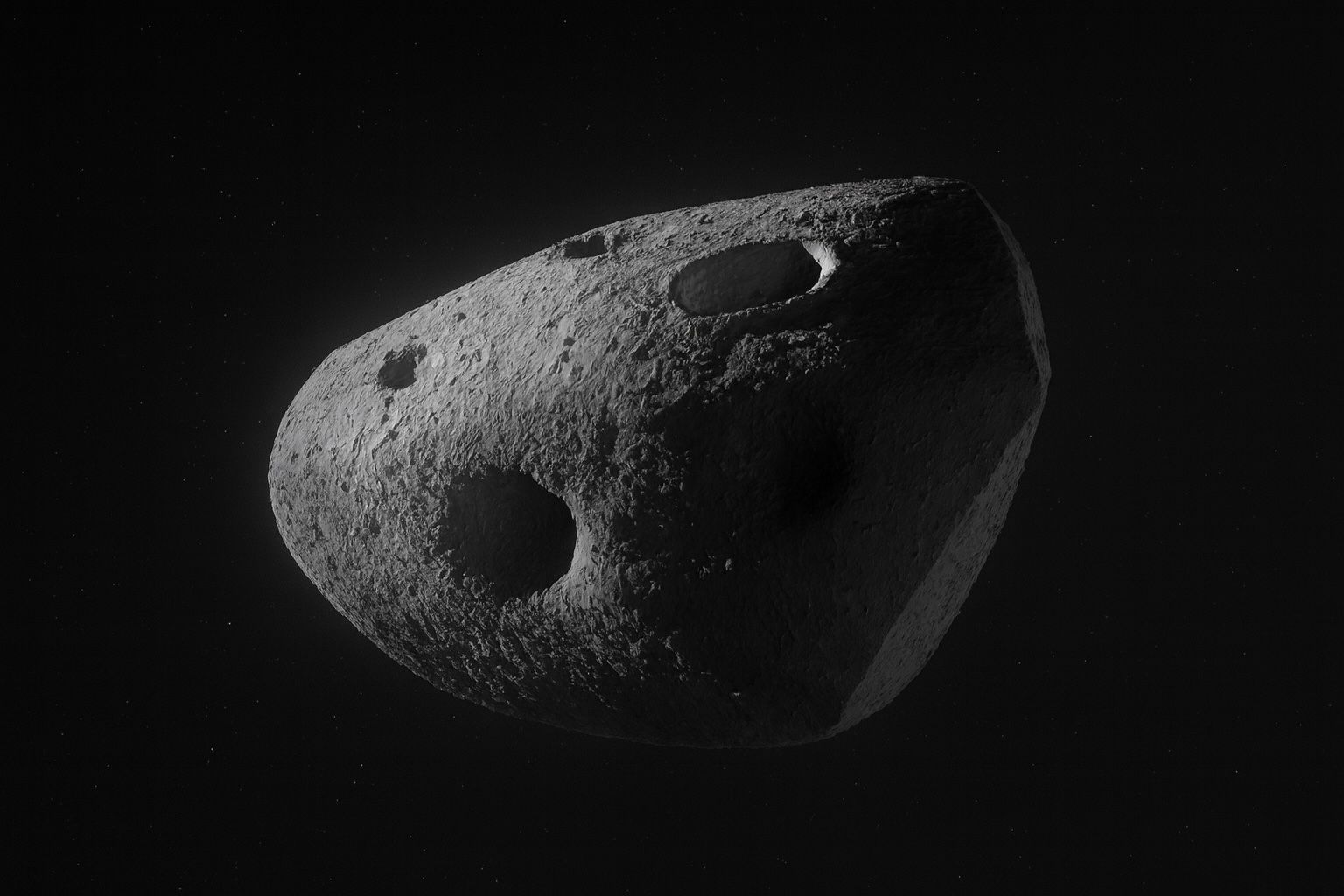
99942 Apophis is a near-Earth asteroid that shot to notoriety soon after its discovery in 2004. On June 19, 2004, astronomers Roy Tucker, David Tholen, and Fabrizio Bernardi at Kitt Peak Observatory first spotted this 340-meter space rock science.nasa.gov. Early orbit calculations startled scientists – there appeared to be a 2.7% chance that Apophis could hit Earth on April 13, 2029, an unprecedented level of risk that briefly ranked Level 4 on the Torino impact hazard scale, the highest rating ever assigned to a near-Earth object livescience.com. In light of this potential danger, the asteroid was given the formal name Apophis after an ancient Egyptian deity of chaos and darkness, earning it the popular nickname “God of Chaos” livescience.com space.com. Despite the ominous moniker, Apophis is now understood to be far more friend than foe. Years of observations, including precise radar ranging, steadily refined Apophis’s orbit and erased the early uncertainty. By 2021, NASA was “confident that there is no risk of Apophis impacting our planet for at least 100 years.” science.nasa.gov livescience.com. The asteroid was formally removed from risk watchlists after astronomers narrowed its trajectory down to within just a few miles of uncertainty. Today Apophis is classified as
20 September 2025
SpaceX Falcon 9 to Launch Triple “Space Weather” Mission Guarding Earth

SpaceX Falcon 9 to Launch Triple “Space Weather” Mission Guarding Earth

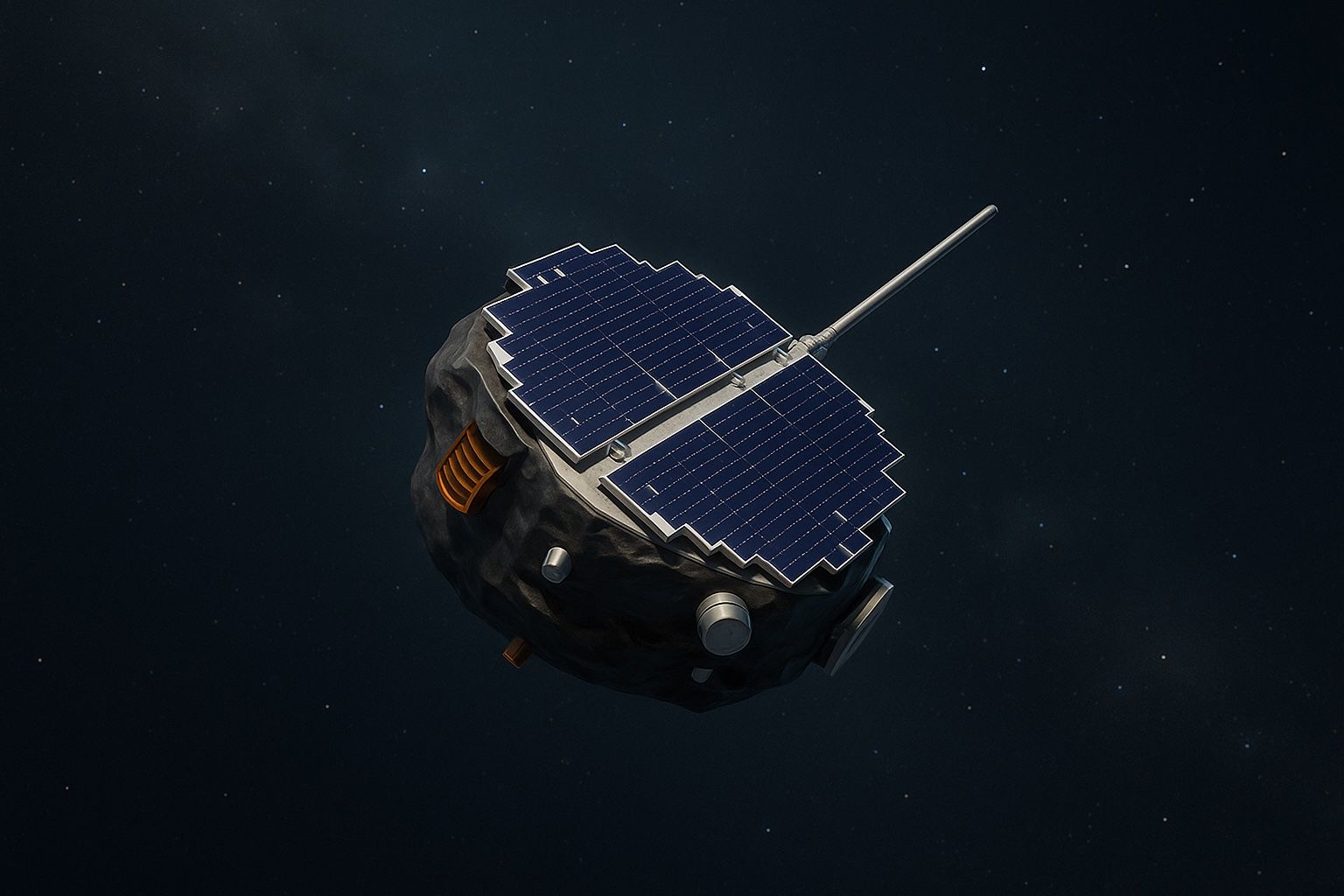
In a single launch, SpaceX’s Falcon 9 will boost a trio of missions that promise to illuminate how the Sun influences our cosmic neighborhood – and help protect Earth from the Sun’s outbursts. NASA’s IMAP, NOAA’s SWFO-L1, and NASA’s Carruthers Geocorona Observatory will all ride into space together, bound for a point about one million miles from Earth in the direction of the Sun science.nasa.gov. There, at the Sun-Earth L1 Lagrange point, the three spacecraft can maintain a stable position and continuously face the Sun, an ideal vantage to monitor solar emissions and their impact on the space around Earth science.nasa.gov. This launch marks one of the most multifaceted science missions yet on a single Falcon 9, combining pure research with operational forecasting to guard our planet nasa.gov sciencesprings.wordpress.com. Space weather refers to the variable conditions on the Sun and in the space environment that can impact Earth and human technologies. Sudden eruptions like solar flares or coronal mass ejections can hurl intense radiation and charged particles toward Earth, potentially knocking out satellites, disrupting communications and navigation, damaging power grids, and endangering astronauts outside Earth’s protective magnetic field sciencesprings.wordpress.com nesdis.noaa.gov. “Space weather is one of the largest threats to modern
19 September 2025
Solar System’s Hidden Edge: NASA’s Bold Quest to Map the Invisible Cosmic Boundary

Solar System’s Hidden Edge: NASA’s Bold Quest to Map the Invisible Cosmic Boundary

When we gaze up at the night sky, it’s easy to imagine the solar system simply fading into the depths of space. In reality, our solar system ends at a distinct, albeit invisible, boundary. This boundary is not marked by a wall or a halo of light, but by a balance of forces: it’s where the Sun’s influence ends and interstellar space begins indiatoday.in. Scientists call this frontier the heliopause, and understanding it is key to answering the age-old question: Where does the solar system end? At the heart of this concept is the heliosphere – the vast bubble inflated by the Sun. The Sun continuously blows out a solar wind of charged particles in all directions. This outflow creates a magnetic bubble around the Sun that envelopes all the planets, extending far beyond Pluto’s orbit indiatoday.in. The heliosphere can be thought of as a gigantic cocoon or bubble carved out of the galaxy by the Sun’s presence. Inside, the environment is dominated by solar particles and magnetic fields; outside lies the rest of the galaxy, filled with what scientists call the interstellar medium – a very diffuse soup of gas, dust, and cosmic rays from other stars indiatoday.in.
19 September 2025
SpaceX Rocket to Launch NASA’s Triple Solar Mission to L1 – Unveiling Sun Secrets from Earth’s “Halo” to the Solar System’s Edge

SpaceX Rocket to Launch NASA’s Triple Solar Mission to L1 – Unveiling Sun Secrets from Earth’s “Halo” to the Solar System’s Edge

NASA and NOAA are launching three complementary missions on one rocket – a rare rideshare that underscores how interconnected Sun-Earth science has become nasa.gov space.com. Liftoff is scheduled for 7:32 a.m. EDT on Sept. 23, 2025, from Launch Complex 39A at Kennedy Space Center nasa.gov. SpaceX’s Falcon 9 will boost the trio into an Earth-escape trajectory toward the L1 Lagrange point, about 1.5 million km from Earth toward the Sun space.com. At L1, the gravitational pull of Earth and Sun balances enough to let a spacecraft “hover” relative to Earth science.nasa.gov. It’s a prized spot for solar observatories – satellites there enjoy continuous sunlight and an uninterrupted view of the Sun, without Earth ever eclipsing their sight science.nasa.gov. For decades, L1 has hosted solar monitoring probes and observatories. What’s new on Sept. 23 is that three spacecraft will arrive at L1 together, each focusing on a different piece of the Sun-Earth puzzle space.com science.nasa.gov:
19 September 2025
SpaceX Starship’s Epic Test Flight Stuns the World – What It Means for Moon, Mars, and Beyond

SpaceX Starship’s Epic Test Flight Stuns the World – What It Means for Moon, Mars, and Beyond

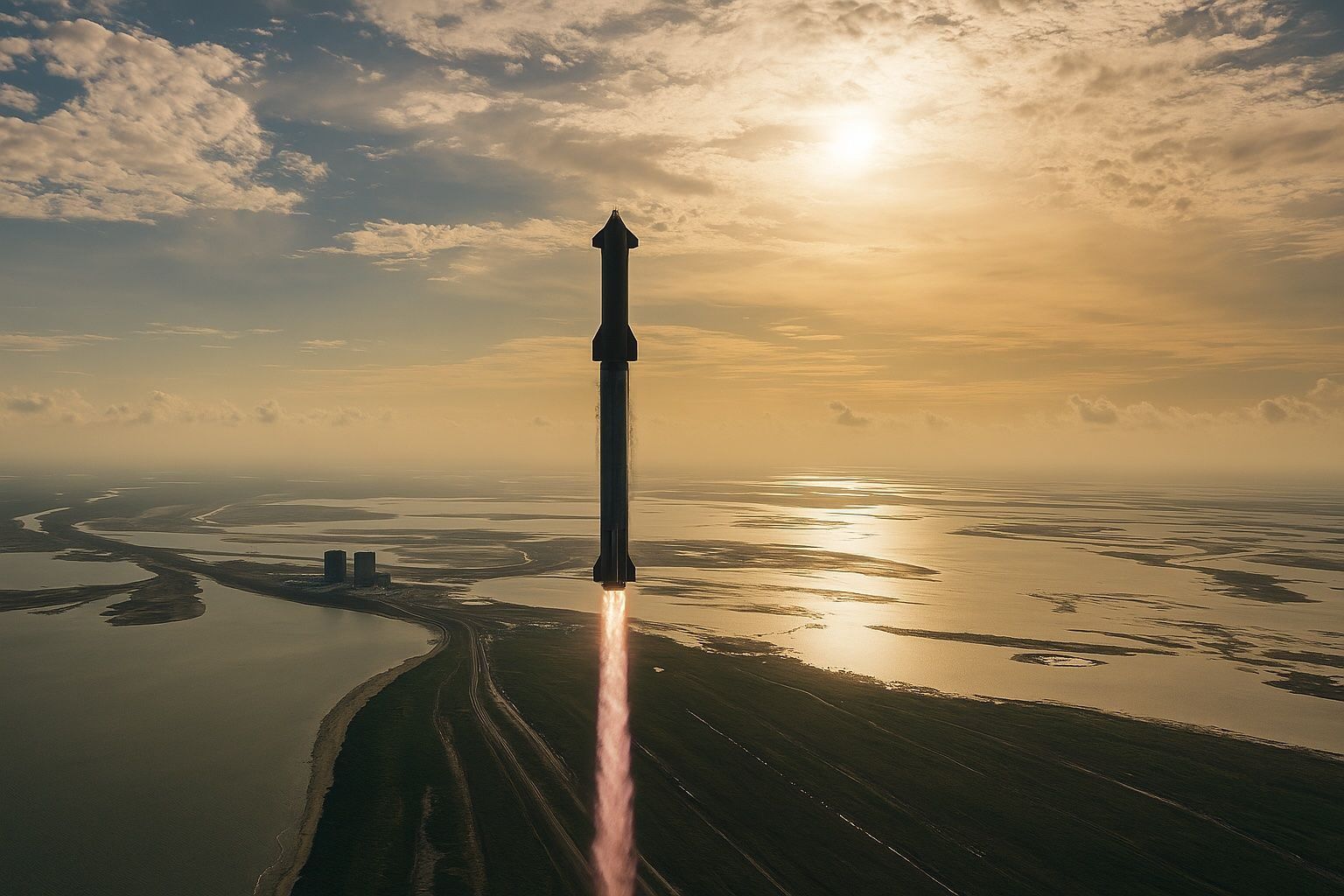
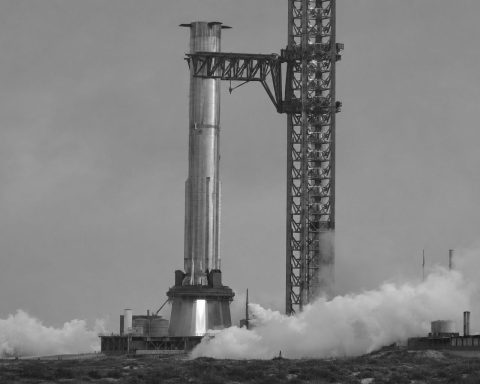
SpaceX’s Starship program notched a dramatic success on August 26, 2025, when the giant Starship rocket aced its 10th flight test from the company’s Starbase facility in Boca Chica, Texas Space. At 7:30 p.m. ET that day, the 40-story vehicle thundered off the pad on 33 Raptor engines, delivering a ground-shaking 16 million pounds of thrust – more than twice the power of NASA’s Saturn V or SLS moon rockets Spaceflightnow. SpaceX employees cheered as the booster propelled the Starship upper stage toward space, marking the first time in over a year of testing that every major objective was met Space. “Splashdown confirmed! Congratulations to the entire SpaceX team on an exciting tenth flight test of Starship!” the company announced moments after both stages had completed their missions Spaceflightnow. During the flight – dubbed Starship Flight 10 – the Super Heavy first stage executed a flawless ascent and separated from the Ship in mid-air. In a first for SpaceX, the vehicle performed a “hot staging” separation, igniting the Starship’s upper-stage engines while still attached to the booster to improve efficiency Space. The 230-foot booster then flipped and descended tail-first. SpaceX even intentionally shut down one of the booster’s landing engines
19 September 2025
SpaceX Launches 28 Starlink Satellites at Dawn – Boosts World’s Largest Satellite Fleet Toward Global Internet

SpaceX Launches 28 Starlink Satellites at Dawn – Boosts World’s Largest Satellite Fleet Toward Global Internet

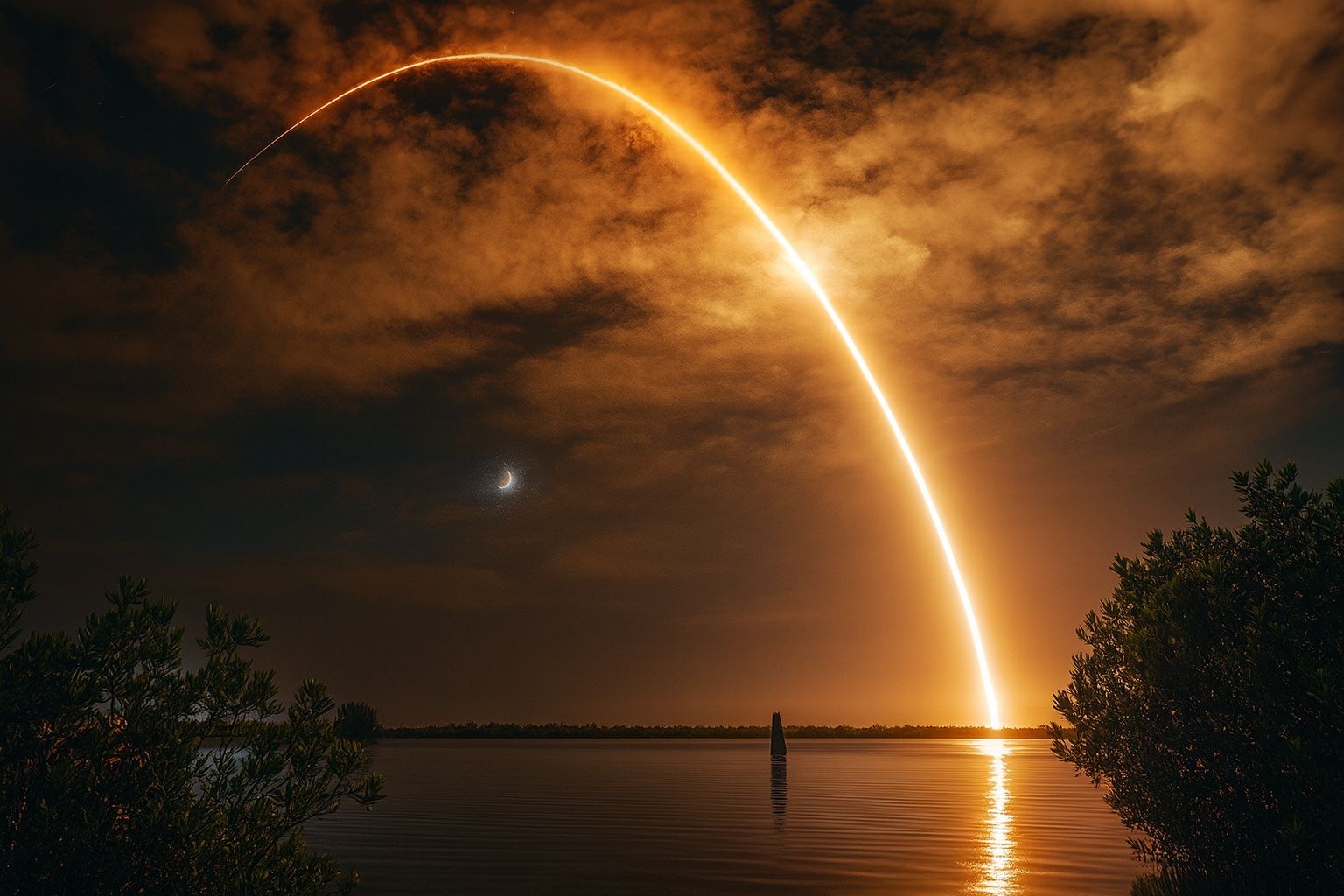
SpaceX notched another predawn launch on Florida’s Space Coast, sending 28 fresh Starlink satellites into orbit as part of its ongoing mission to blanket the globe in internet coverage. The Falcon 9 rocket lit up the early morning sky at approximately 5:30 a.m. Eastern Time on Sept. 18, 2025, lifting off from Cape Canaveral’s SLC-40 pad space.com. The mission – designated Starlink Group 10-61 – marked yet another routine flight for SpaceX but one that continues to build an unprecedented satellite network overhead. According to SpaceX, the launch window opened at 5:20 a.m. EDT and extended to 9:20 a.m. that morning clickorlando.com, giving the team flexibility to find an optimal launch moment amid weather considerations. In the end, liftoff occurred near the opening of the window, with mostly favorable conditions spaceflightnow.com. The Falcon 9 ascended on a southeasterly trajectory, targeting a low Earth orbit for deployment of the Starlink batch roughly one hour after launch space.com space.com.
Blue Origin’s New Shepard Roars Back: 40+ Experiments Soar on NS-35 After Delay

Blue Origin’s New Shepard Roars Back: 40+ Experiments Soar on NS-35 After Delay

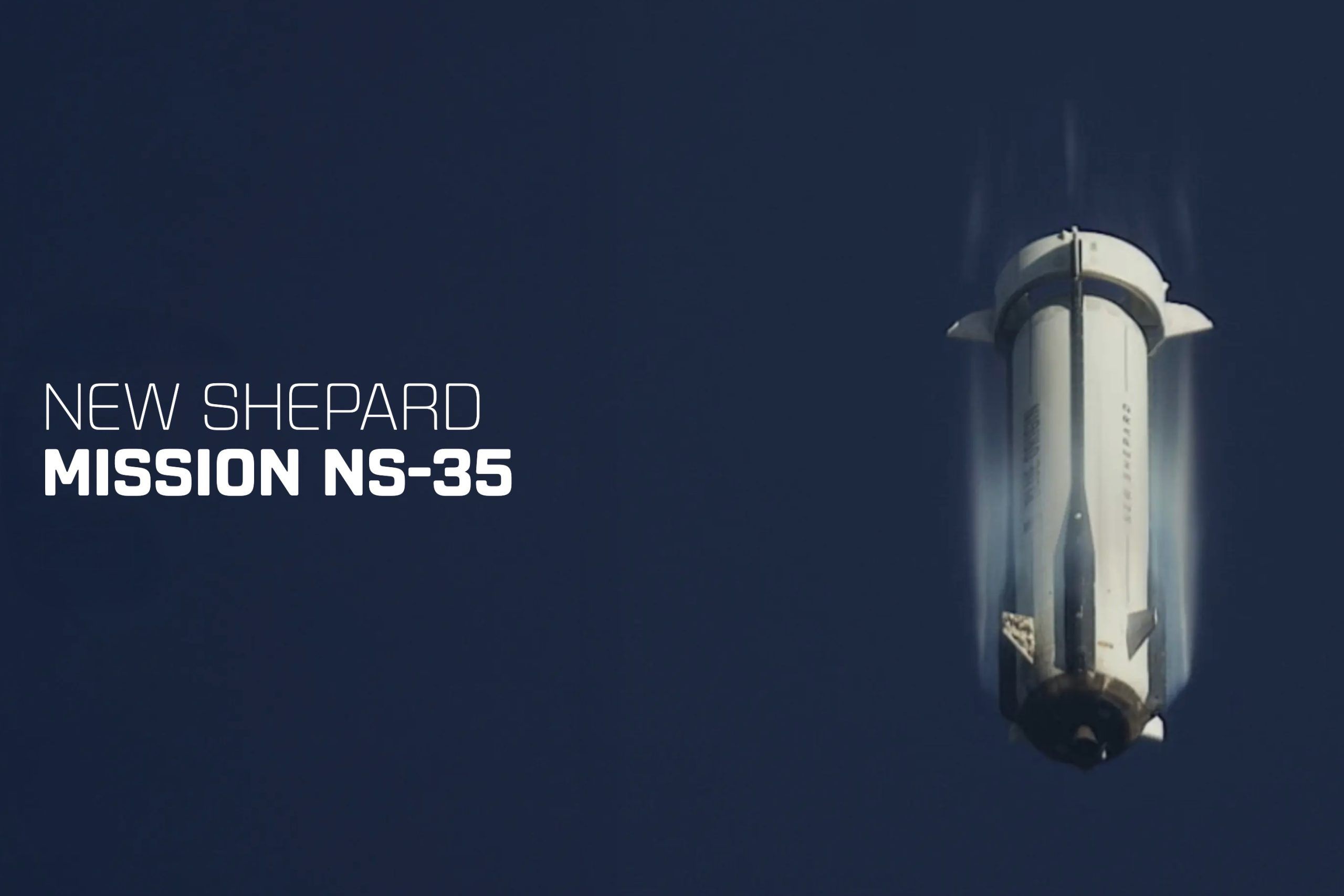
Blue Origin’s NS-35 mission finally blasted off on September 18, 2025, after weeks of anticipation and troubleshooting. The New Shepard suborbital rocket lifted off from Launch Site One in West Texas at 9:01 a.m. Eastern Daylight Time space.com. This launch came after a “stand down” period of nearly four weeks – the company had attempted to fly the mission in late August but scrubbed the Aug. 23 and Aug. 26 launch attempts when an issue arose with the booster’s avionics system space.com. Engineers worked to resolve the technical glitch, and the third scheduled date proved the charm. By mid-September, all systems were go, clearing the way for New Shepard’s return to the skies. The flight, dubbed NS-35, was uncrewed, focusing purely on research payloads rather than space tourists. At launch, the reusable first-stage booster thundered skyward carrying a capsule full of experiments. Roughly 2½ minutes into flight, the single BE-3 engine shut off and the capsule separated to coast to its apogee above the Kármán Line – the internationally recognized boundary of space space.com. The suborbital trajectory gave the payloads a few minutes in microgravity environment before gravity pulled the capsule back down. The NS-35 mission profile was typical for
19 September 2025
Sweden’s Space Odyssey: From Arctic Rockets to Europe’s Satellite Powerhouse

Sweden’s Space Odyssey: From Arctic Rockets to Europe’s Satellite Powerhouse

Sweden’s involvement in space stretches back over six decades. In 1961, Swedish engineers launched the country’s first sounding rocket from a remote site in northern Sweden Sscspace. This pioneering step was followed by the construction of Esrange Space Center above the Arctic Circle, which saw its first rocket launch in November 1966 Sscspace. Operated initially by the European Space Research Organisation and transferred to Swedish ownership in 1972, Esrange became the heart of Sweden’s early space activities Sscspace Sscspace. Throughout the 1970s and 1980s, Sweden built expertise in suborbital rockets and balloon flights for scientific research, carving out a reputation in high-latitude atmospheric and auroral studies. By the 1980s, Sweden moved from sounding rockets to satellites. The country’s first satellite, Viking, was launched in 1986 as a scientific mission to study the magnetosphere Irf. Viking was developed with Swedish industry under the management of SSC, demonstrating Sweden’s growing capabilities in spacecraft engineering Irf. This success kicked off a series of Swedish satellites over the next decade: Freja examined Earth’s aurora, Astrid-1 and Astrid-2 were microsatellites for space physics, and Odin became a trailblazing astronomy and atmospheric research satellite Wikipedia. Notably, Sweden also contributed to ESA missions – for example, Swedish
19 September 2025
Space Race Heats Up: Starlink Soars, New Shepard Returns & Mars Plans Unveiled – Sept 18–19, 2025 Space News

Space Race Heats Up: Starlink Soars, New Shepard Returns & Mars Plans Unveiled – Sept 18–19, 2025 Space News

SpaceX notched yet another Starlink mission on Sept. 18, flying 28 more Starlink satellites into orbit atop a Falcon 9 rocket from Cape Canaveral at 5:30 a.m. EDT space.com. The veteran first-stage booster – on its seventh flight – successfully landed on the droneship Just Read the Instructions downrange in the Atlantic, marking SpaceX’s 117th Falcon 9 launch of 2025 space.com. This cadence sets a blistering pace; over 70% of SpaceX’s flights this year have been dedicated to their Starlink internet constellation space.com. The mission highlights SpaceX’s routine of rapid reusability and high launch frequency, as the company continues to grow its broadband network in orbit. space.com space.com After a prolonged pause in suborbital launches, Blue Origin resumed New Shepard flights on Sept. 18 with a flawless morning liftoff from Launch Site One in West Texas space.com. Dubbed NS-35, this mission was uncrewed – instead of space tourists, the capsule was packed with over 40 research payloads ranging from student science experiments to technology demos space.com. Launching at 9:01 a.m. EDT, the booster propelled the capsule past the Kármán line, giving the experiments a few minutes of microgravity exposure space.com space.com. About 7½ minutes after liftoff, the reusable booster nailed
6,000 Alien Planets & a Healing Ozone Layer: Biggest Science News (Sept 17-18, 2025)

6,000 Alien Planets & a Healing Ozone Layer: Biggest Science News (Sept 17-18, 2025)

In a milestone for astronomy, NASA confirmed the 6,000th exoplanet – planets orbiting other stars – in its records this week. The official tally of alien worlds crossed the 6k mark after only ~30 years of exoplanet hunting, reflecting an exponential discovery rate space.com. “We’re entering the next great chapter of exploration – worlds beyond our imagination,” a NASA video proclaimed space.com. NASA noted that because new planets are added on a rolling basis by scientists worldwide, “no single planet is considered the 6,000th entry… There are more than 8,000 additional candidate planets awaiting confirmation” space.com. The diversity of these worlds – from lava-covered orbs to gas giants – is helping scientists understand how common Earth-like planets might be. “Each of the different types of planets we discover gives us information about the conditions under which planets can form and, ultimately, how common planets like Earth might be, and where we should be looking for them,” said Dr. Dawn Gelino, head of NASA’s Exoplanet Exploration Program at JPL space.com. “If we want to find out if we’re alone in the universe, all of this knowledge is essential,” she added space.com. This announcement comes almost exactly 30 years after astronomers discovered
18 September 2025
Cosmic Revelations: Space Launch Frenzy, Mars Life Hints & Asteroid Near-Miss – This Week’s Space Highlights

Cosmic Revelations: Space Launch Frenzy, Mars Life Hints & Asteroid Near-Miss – This Week’s Space Highlights

First “Cygnus XL” arrives after scare: A tense 48 hours at the ISS ended in relief as Northrop Grumman’s upsized Cygnus XL freighter resolved its in-orbit propulsion glitch and received a “go” for final approach nasa.gov. The cargo ship’s main engine had shut off early during two orbit-raising burns on Sept. 16, delaying an arrival originally set for Sept. 17 space.com. Engineers quickly developed alternate maneuvers, and NASA astronaut Jonny Kim captured Cygnus with Canadarm2 early on Sept. 18, allowing the spacecraft to be installed on the station as planned nasa.gov. NASA noted all other systems performed normally and emphasized the mission’s significance – NG-23 is the first flight of the larger-capacity Cygnus XL, designed to deliver more science payloads per trip space.com. Station managers hailed the recovery as a testament to robust safety software: “data confirmed…an early warning system initiated a shutdown…as a conservative safeguard,” NASA reported nasa.gov. The Cygnus XL will remain attached to ISS until March 2026, supporting Expedition 73 research before disposal. Russia and international partners: While U.S. commercial resupply took center stage, Russia’s space program quietly stayed on track. Just prior to these events, a Soyuz-2.1a rocket launched the Progress 93 cargo ship on Sept.
18 September 2025
Tech Shockwaves: Gadgets, Breaches, and a New Space Race Unfold

Tech Shockwaves: Gadgets, Breaches, and a New Space Race Unfold

Apple’s iPhone 17 Launch: Apple’s latest iPhones officially hit shelves on Friday, and the tech giant is smoothing out last-minute wrinkles. Reviewers discovered a camera flaw in the iPhone 17 Pro and new iPhone Air – in rare cases, photos taken under intense LED concert lighting showed black boxes and squiggly artifacts macrumors.com macrumors.com. Apple acknowledged the issue and confirmed it has a fix underway in an upcoming iOS update macrumors.com macrumors.com. Despite this quirk, early reception of the iPhone 17 lineup has been positive: CNN’s Henry Casey praised the 17 Pro’s extended battery life and vibrant new colors, while highlighting the iPhone Air’s impressively slim design appleinsider.com appleinsider.com. With pre-orders strong, Apple is likely to push a day-one software patch so that buyers never encounter the glitch – demonstrating its commitment to a smooth rollout as these models begin shipping worldwide. Meta’s AR Glasses Aim for Mainstream: Meta Platforms made waves by launching its first consumer smart glasses with an integrated display, part of CEO Mark Zuckerberg’s bet on wearable AR. Priced around $799, the Meta Ray-Ban “Display” glasses build on Meta’s earlier camera-equipped eyewear, but now can visually overlay info in the user’s field of view reuters.com reuters.com.
Mysterious Comet SWAN R2: New Interstellar Visitor or Oort Cloud Wanderer?

Mysterious Comet SWAN R2: New Interstellar Visitor or Oort Cloud Wanderer?

Comet C/2025 R2 was spotted in early September 2025 in a rather unconventional way – by searching for faint glows in SOHO satellite images. The SOHO spacecraft’s SWAN instrument scans the entire sky in ultraviolet light, primarily to track solar wind interaction with hydrogen. Astrophotographers and amateur astronomers often comb through these SWAN images for telltale moving smudges that betray new comets. On 11 September 2025, Ukrainian amateur Vladimir Bezugly noticed such a moving fuzzball in SWAN’s data Universetoday. Within hours it was confirmed by others and reported, earning the provisional label “SWAN25B” Universetoday. “This is a milestone, the 20th official SWAN comet so far,” Bezugly noted, highlighting the instrument’s unique contribution to comet-hunting Universetoday. SWAN’s advantage is its sensitivity to Lyman-alpha ultraviolet emission from hydrogen, which is abundant in cometary water vapor. As comets approach the Sun and their ices sublimate, SWAN can detect the resulting hydrogen glow even when the comet itself is too close to the Sun for ground-based telescopes to see Universetoday. In SWAN R2’s case, the comet was coming from the direction of the Sun relative to Earth, lurking in twilight. It remained hidden until just before discovery because for over a month it stayed
17 September 2025
NASA’s “Astronaut Avatars” – Tiny Organ Chips Poised to Protect Artemis II Crew’s Health

NASA’s “Astronaut Avatars” – Tiny Organ Chips Poised to Protect Artemis II Crew’s Health

NASA’s “Avatars for Astronaut Health” is a bold initiative to send small living models of astronauts’ organs into deep space. These “avatars” aren’t robots or holograms – they are organ-on-a-chip devices containing real human cells, designed to mimic the functions of human tissues Nasa. For Artemis II, NASA will load chips with cells donated by the four crew members themselves, essentially creating miniaturized versions of their organ tissue that can be studied in parallel with the crew Nasa Nasa. The goal is to see how these cells respond to deep space conditions – such as heightened cosmic radiation and microgravity – without risking the astronauts’ own bodies Nasa. In essence, the AVATAR project lets NASA “test drive” each astronaut’s biology in lunar orbit, gathering data to help keep the crew safe when they venture farther. It’s part of NASA’s broader strategy to “know before we go” – to anticipate health issues before sending humans back to the Moon and on to Mars Nasa Nasa. This experiment represents a new frontier in space medicine. While astronauts on the International Space Station have long been monitored with wearables and medical tests, Artemis II is the first mission to carry personalized organ analogs
16 September 2025
Space Race Showdown, Mars Surprises & a New ‘Mini-Moon’ – Global Space News (Sept 15–16, 2025)

Space Race Showdown, Mars Surprises & a New ‘Mini-Moon’ – Global Space News (Sept 15–16, 2025)

China’s latest launch: On Sept. 16, China launched a test satellite for its planned satellite-internet network, using a Long March 2C rocket with a Yuanzheng-1S upper stage english.news.cn. Liftoff from Jiuquan at 9:06 a.m. Beijing time was successful, inserting the tech demo satellite into orbit to advance China’s broadband megaconstellation plans. This marked the 595th flight of China’s Long March rocket family english.news.cn, underscoring China’s rapid launch cadence. The mission highlights Beijing’s push into satellite internet – an area of growing strategic importance as China races to build its own Starlink-like network. SpaceX boosts ISS resupply: Over the weekend, SpaceX carried out a notable launch – flying Northrop Grumman’s brand-new Cygnus XL cargo craft to the International Space Station. The NG-23 mission lifted off on a Falcon 9 from Cape Canaveral, debuting the “Cygnus XL” design that can carry 33% more cargo than prior Cygnus vehicles spaceflightnow.com spaceflightnow.com. SpaceX’s rocket successfully deployed the Cygnus XL on Sept. 14, and the freighter was set to rendezvous and berth with the ISS by Sept. 17. This mission is part of NASA’s commercial resupply program, and the upgraded Cygnus increases scientific and supply delivery to the station. The larger Cygnus also requires some
Mars Rock Sparks Life Clue, Back‑to‑Back Rocket Launches & Space Policy Shakeups – This Week in Space (Sept 9–10, 2025)

Mars Rock Sparks Life Clue, Back‑to‑Back Rocket Launches & Space Policy Shakeups – This Week in Space (Sept 9–10, 2025)

Key Facts: SpaceX’s 24-Hour Launch Blitz – and a Scrub: SpaceX lined up two Falcon 9 launches on back-to-back days, showcasing the company’s rapid cadence. In Florida, a Falcon 9 was slated to carry Nusantara Lima, a 4.5-ton Indonesian telecom satellite, to orbit. After stormy weather caused two last-minute scrubs on Sept. 8–9 nasaspaceflight.com, teams targeted a Wednesday night launch from Cape Canaveral. The mission aims to deploy Nusantara Lima to a geostationary orbit, replacing a satellite lost in 2020 due to a launch failure nasaspaceflight.com. The well-traveled booster is scheduled to land on the droneship A Shortfall of Gravitas downrange nasaspaceflight.com. If successful, Nusantara Lima will significantly expand broadband coverage for Indonesia and Southeast Asia.
10 September 2025
Space Sector Frenzy: Launch Scrubs, Surprise Liftoffs & Bold Cosmic Moves Rock Sept 8–9, 2025

Space Sector Frenzy: Launch Scrubs, Surprise Liftoffs & Bold Cosmic Moves Rock Sept 8–9, 2025

SpaceX’s busy week. Elon Musk’s SpaceX saw a flurry of launch activity and a bit of suspense. On Monday Sept. 8, Falcon 9 was minutes from launching the Nusantara Lima satellite when storms violated weather rules, forcing a scrub spaceflightnow.com. SpaceX reset for the next evening, and by Sept. 9 conditions improved enough to send Nusantara Lima toward geostationary orbit. The Falcon 9 lifted off from Cape Canaveral at 8:01 p.m. EDT on Tuesday, successfully deploying the satellite after a 27-minute ascent spaceflightnow.com spaceflightnow.com. Boeing Satellite Systems president Ryan Reid applauded the partnership with Indonesia’s PSN company on this state-of-the-art high-throughput satellite, stating “we’re proud to continue that legacy” of serving the Asia-Pacific region’s connectivity needs spaceflightnow.com. The mission used a veteran booster on its 23rd flight, which landed on the drone ship A Shortfall of Gravitas – marking SpaceX’s 502nd booster landing to date spaceflightnow.com. In fact, just a few days earlier SpaceX celebrated its 500th booster landing milestone during a Starlink launch spaceflightnow.com. That Starlink mission, launched Sept. 6 from California, added 24 new broadband satellites to SpaceX’s orbiting internet mega-constellation ts2.tech. It pushed the company’s 2025 Starlink deployments past 2,000 satellites in a single year, an unprecedented

Stock Market Today

Go toTop