Today: 2 July 2026
Browse Category

Space Industry 3 September 2025 - 1 October 2025

Breaking Space News (Sept 30 – Oct 1, 2025): Record Launches, Bold Contracts, and Stunning Milestones

Breaking Space News (Sept 30 – Oct 1, 2025): Record Launches, Bold Contracts, and Stunning Milestones

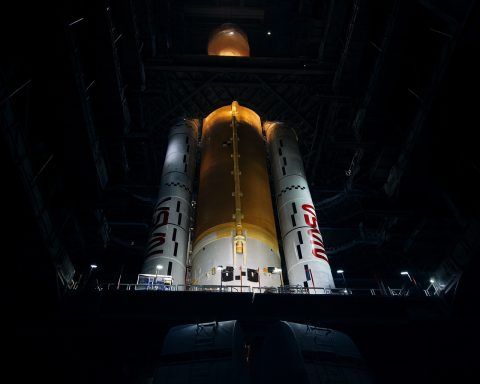
NASA focused on its Artemis lunar program. On Sept. 30, NASA announced that the Orion Stage Adapter was installed for Artemis II nasa.gov. This brings the integrated SLS–Orion stack closer to its no-later-than April 2026 launch. NASA explains that “in the coming weeks” engineers will mate the Orion crew capsule to the rocket nasa.gov. This Artemis II mission will be the first crewed flight of SLS/Orion, carrying astronauts around the Moon. Meanwhile, NASA is also finalizing Europe’s Sentinel-6B satellite at its processing facility. Sentinel-6B “will extend the gold‑standard sea level record into its fourth decade” and is targeting launch on a SpaceX Falcon 9 this fall science.nasa.gov. At the International Astronautical Congress in Sydney, NASA’s top brass joined global counterparts in emphasizing partnerships. NASA also announced an Oct. 1 news conference for astronaut Chris Williams’ Soyuz mission to the ISS. Williams will spend eight months aboard the ISS, marking the continued US–Russia cooperation on station missions nasa.gov. Notably, NASA’s ISS program celebrated 25 years of continuous crewed operations this fall nasa.gov, underscoring the lab’s role in preparing for future Moon and Mars missions.
Turkey’s Space and Satellite Industry: 2025 Market Report and 2030 Outlook

Turkey’s Space and Satellite Industry: 2025 Market Report and 2030 Outlook

Turkey’s foray into space began with modest steps in the late 20th century and has since picked up remarkable speed. The country’s early efforts were focused on satellite communications as Turkey sought to improve telecommunications and broadcast infrastructure for its growing economy. 1994 – First Turkish Satellite: After joining the international Intelsat consortium in the 1980s uydu.turksat.com.tr, Turkey launched its first communications satellite, Türksat 1B, in August 1994 on an Ariane rocket uydu.turksat.com.tr. Türksat 1B’s successful deployment to geostationary orbit at 42°E marked Turkey’s debut in space uydu.turksat.com.tr. A second satellite, Türksat 1C, followed in 1996 to expand coverage uydu.turksat.com.tr. These satellites were built in collaboration with French company Aerospatiale uydu.turksat.com.tr, reflecting Turkey’s initial reliance on foreign technology.
24 September 2025
Rocket Lab Stock Skyrockets 700% – Is RKLB Ready for Its Next Giant Leap?

Rocket Lab Stock Skyrockets 700% – Is RKLB Ready for Its Next Giant Leap?

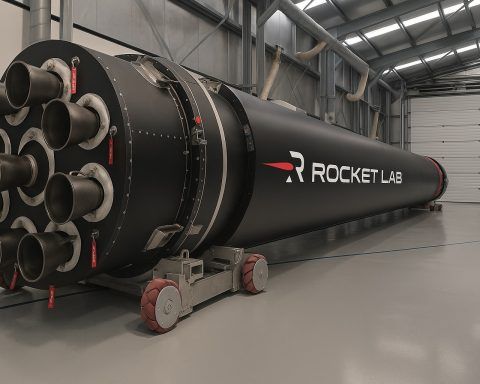
Rocket Lab’s Electron rocket launching a mission. The company’s frequent small-satellite launches have powered its stock’s meteoric rise. Rocket Lab’s stock has been on a tear in 2025, massively outperforming the market. As of late September 2025, RKLB shares hover near $50 – a price level roughly 730% higher than a year ago ainvest.com. This meteoric rise reflects surging investor enthusiasm around Rocket Lab’s growth in launch services and space systems. Year-to-date, the stock was up about 75% by Q2 ainvest.com, and at one point in mid-September it had gained over 550% in 12 months tipranks.com.
Mexico’s Space Industry Is Taking Off: 2025 Market Report & Future Outlook

Mexico’s Space Industry Is Taking Off: 2025 Market Report & Future Outlook

Overall, Mexico’s space and satellite industry in 2025 is at an inflection point. After decades of gradual groundwork – from the first experimental rockets in the 1950s room.eu.com, to launching communications satellites in the 1980s, to establishing AEM in 2010 – the country is now leaping forward with a coordinated national strategy. Government programs are aligning with private innovation and academic talent, creating an ecosystem primed for takeoff. The historical constraints are giving way to new momentum fueled by ambitious policies and global partnerships. Challenges remain – funding needs to scale up from the modest ~$3 million AEM annual budget of the early 2020s en.wikipedia.org, and the country must continue building technical infrastructure and a regulatory framework that encourages investment. But the trajectory is unmistakably upward. As one industry leader put it, Mexico has a five-year window to join the top tier of the space industry, and the nation is determined not to miss this opportunity mexicobusiness.news mexicobusiness.news. If current trends continue, by the early 2030s Mexico will be not just a consumer of space services, but a significant regional provider – launching its own satellites, training a new generation of aerospace engineers, and contributing to humanity’s ventures in space.
Argentina’s Space Industry Is Taking Off: Inside the Satellite Boom and What’s Next

Argentina’s Space Industry Is Taking Off: Inside the Satellite Boom and What’s Next

Argentina’s journey into space began remarkably early. In the 1940s, visionary engineer Teófilo Tabanera formed the Sociedad Argentina Interplanetaria, making Argentina the first Latin American country with a spaceflight organization en.wikipedia.org. By 1960 – nearly a year before humans reached space – Argentina established the National Commission for Space Research with Tabanera at the helm en.wikipedia.org. Throughout the 1960s, CNIE and the Air Force’s research institute launched a series of indigenous multistage high-altitude rockets, successfully sending scientific payloads to the upper atmosphere en.wikipedia.org. In fact, Argentina became the first country in Latin America to send an object into space on a homegrown rocket, a point of immense national pride en.wikipedia.org. However, the early space efforts intersected with military ambitions. In the 1980s, Argentina developed the Condor medium-range ballistic missile program. Under international pressure, the Condor missile was canceled in 1991 en.wikipedia.org. That same year proved a turning point: President Carlos Menem’s administration dissolved CNIE and created a new civil National Space Activities Commission to refocus all space activities on peaceful, scientific, and commercial goals en.wikipedia.org. CONAE inherited the infrastructure and some personnel from the Condor program, repurposing rocket labs for civilian use and marking a clear demilitarization of Argentina’s space
Norway’s Space Industry Is Skyrocketing – Inside the High North’s Satellite Boom

Norway’s Space Industry Is Skyrocketing – Inside the High North’s Satellite Boom

In conclusion, Norway’s space and satellite industry has quietly grown into a dynamic, multi-faceted sector that touches many aspects of modern life – from the TV we stream, to the ships monitored off the coast, to scientific discoveries in the aurora. Long overshadowed by bigger spacefaring nations, Norway is now stepping into the limelight with new infrastructure and bold projects. “Our commercial space activities will put Norway on the map as a strategic, European asset in the space sector,” says NOSA Director Christian Hauglie-Hanssen businessnorway.com. The recent flurry of activity – a new spaceport, new satellites, new partnerships – suggests this once “best-kept secret” is out. As Norway harnesses its geographic advantages and high-tech expertise, it is carving out a crucial niche in the burgeoning global space economy. In the next 5–10 years, when rockets are launching from Arctic Norway and twice as many Norwegian satellites orbit above, no one will be surprised to hear that this Nordic nation has become a key space powerhouse in its own right. Sources: Norwegian Space Agency spaceagency.no spaceagency.no; Business Norway/Innovation Norway businessnorway.com businessnorway.com; High North News highnorthnews.com; Spaceflight Now spaceflightnow.com; Broadband TV News broadbandtvnews.com; Regjeringen.no regjeringen.no highnorthnews.com; Space Norway AS spacenorway.com; ESA esa.int;
The Netherlands’ Space Industry Is Booming: Inside the Dutch Satellite Sector and 2030 Outlook

The Netherlands’ Space Industry Is Booming: Inside the Dutch Satellite Sector and 2030 Outlook

The Netherlands has a rich space heritage dating back to the dawn of the space age. It was an early participant in European space efforts – by 1968, ESA’s ESTEC technical center was established in Noordwijk, inaugurated by Dutch royalty to spearhead Europe’s space research esa.int. The country joined the newly formed European Space Agency in 1975 as a founding member, embedding itself in collaborative programs from the start. The Netherlands launched its first satellite in 1974: the Astronomical Netherlands Satellite was built in partnership with NASA and marked the country’s first independent satellite mission heasarc.gsfc.nasa.gov. This was followed by the Infrared Astronomical Satellite in 1983 – the world’s first infrared space telescope, a joint venture with the US and UK nlr.org. Dutch engineers and scientists contributed key instruments, laying groundwork for expertise in satellite technology.
Swiss Space Industry Soars: Inside Switzerland’s Satellite & NewSpace Revolution

Swiss Space Industry Soars: Inside Switzerland’s Satellite & NewSpace Revolution

Switzerland may be known for its precision watches and banks, but it’s also quietly becoming a powerhouse in the space and satellite industry. With a dynamic ecosystem that blends academic excellence, deep-tech entrepreneurship, and strong public support, the Alpine nation is making its mark beyond Earth’s atmosphere. Renato Krpoun, head of the Swiss Space Office, attributes this success to Switzerland’s unique environment: “Switzerland’s stable political environment, neutrality and high standard of living are fundamental pillars for the success of the Swiss space ecosystem.” globalairspaceradar.com. In recent years, the Swiss space sector has seen record investments, pioneering start-ups, and major international partnerships, all accelerating its growth. This report provides an in-depth look at Switzerland’s space and satellite industry – from its early historical milestones to the current landscape across public agencies, private companies, research institutions, and emerging niches. We’ll also examine how Switzerland compares with other European space players and what’s on the horizon through 2030 and beyond. Switzerland’s engagement with space dates back to the dawn of the space age. In July 1969, as Neil Armstrong took that one small step, Buzz Aldrin unfurled a Swiss experiment on the Moon – a solar wind collector developed by the University of
18 September 2025
Brazil’s Space Industry Is Taking Off: New Players, Big Plans, and a Sky-High 2040 Outlook

Brazil’s Space Industry Is Taking Off: New Players, Big Plans, and a Sky-High 2040 Outlook

Brazil’s space journey began in the early 1960s amid the space race era. In 1961, the government formed its first space research group and by 1964 started launching home-grown Sonda sounding rockets for high-atmosphere research en.wikipedia.org. Over the next two decades, Brazil methodically built up expertise in rocketry and satellite technology, albeit under military oversight during the Cold War. A milestone plan, the Missão Espacial Completa Brasileira launched in 1980, aimed to make Brazil self-sufficient in space tech – including developing launch vehicles, a launch site, and a series of indigenous satellites en.wikipedia.org. To support these ambitions, Brazil constructed the Alcântara Launch Center on its northern coast in the 1980s. The site was inaugurated in February 1990 with sounding rocket launches en.wikipedia.org. Alcântara’s location near the equator immediately drew attention for its orbital launch potential en.wikipedia.org en.wikipedia.org. However, throughout the 1980s and early 90s, Brazil’s space program faced external headwinds. Because the program was under military control, technology transfer was restricted – the United States and other nations, concerned about missile proliferation, blocked exports that could aid Brazil’s rocket development en.wikipedia.org en.wikipedia.org. This forced Brazil to seek alternate partners and pursue more indigenous solutions for critical technologies en.wikipedia.org.
16 September 2025
Luxembourg’s Space Boom: How a Tiny Country Became a Satellite Powerhouse

Luxembourg’s Space Boom: How a Tiny Country Became a Satellite Powerhouse

Key Facts: Luxembourg’s space ambitions began in the mid-1980s. In 1985 the government launched SES, Europe’s first private satellite operator ses.com. SES’s inaugural Astra 1A satellite was launched in 1988, opening up direct-to-home TV across Europe ses.com. Throughout the 1990s and 2000s SES expanded globally, acquiring U.S. satellites and building a fleet that today covers most of the Earth ses.com ses.com.
Spain’s Stellar Ascent: Inside the Boom of Its Space and Satellite Industry

Spain’s Stellar Ascent: Inside the Boom of Its Space and Satellite Industry

Spain’s space journey began in the dawn of the Space Age. In the 1960s, Spain partnered with NASA to host critical tracking stations – Maspalomas in the Canary Islands and Robledo de Chavela near Madrid – which relayed signals for NASA’s Mercury, Gemini, and Apollo missions ibanet.org. In 1966, Spain built the El Arenosillo launch site in Huelva for suborbital sounding rockets surinenglish.com, marking its first steps toward launch capability. By 1974, Spain achieved a major milestone: the launch of Intasat, its first domestically built satellite. Intasat was a 25 kg scientific satellite launched for free by NASA on a Delta rocket in November 1974 esa.int. This success was coordinated by the National Commission for Space Research and INTA. INTA – founded in 1942 – became Spain’s lead aerospace R&D arm room.eu.com, developing sounding rockets like INTA-255 and INTA-300 in the 1960s–70s esa.int.
From Startup Nation to Space Nation: Inside Israel’s Booming Satellite Industry

From Startup Nation to Space Nation: Inside Israel’s Booming Satellite Industry

Israel’s space journey began modestly but ambitiously. In the 1960s, academia and defense researchers laid the groundwork for a national space program en.wikipedia.org. The Israeli Space Agency was established in 1983 under the Ministry of Science to coordinate space activities en.wikipedia.org. Just five years later, in September 1988, Israel launched Ofeq-1, its first satellite, using a domestically developed Shavit rocket from Palmachim Airbase en.wikipedia.org. This successful launch made Israel one of only 8 countries at the time capable of launching satellites into orbit, a remarkable feat for such a small nation en.wikipedia.org. Throughout the 1990s and 2000s, Israel notched a series of space milestones. It deployed the Ofeq series of reconnaissance satellites for defense jewishvirtuallibrary.org. In 1995, Ofeq-3 became Israel’s first operational imaging satellite, marking the start of a permanent Israeli presence in orbit israelbonds.com. On the commercial side, Israel introduced the AMOS series of communications satellites in 1996, beginning with AMOS-1 en.wikipedia.org. These satellites, built by Israel Aerospace Industries and operated by private company Spacecom, have delivered TV broadcasting and broadband services across Europe, Africa, and the Middle East. A setback occurred in 2016 when AMOS-6 was lost in a launch-pad explosion, prompting a national re-think of space strategy
12 September 2025
Space Race Frenzy: Satellite Triumphs, Cosmic Surprises & Billion-Dollar Bets Galvanize Space Industry

Space Race Frenzy: Satellite Triumphs, Cosmic Surprises & Billion-Dollar Bets Galvanize Space Industry

NASA & ESA – Ocean Satellite and Artemis Research: On Sept. 11, NASA and the European Space Agency spotlighted their upcoming Sentinel-6B oceanography satellite, due to launch in November. Sentinel-6B will succeed the current Sentinel-6 Michael Freilich in tracking sea-level rise and ocean conditions. Its altimeter radar will monitor sea surface height, wave heights and wind speeds – data vital for marine weather forecasts that warn ships of storms and high seas nasa.gov. “Sentinel-6B will soon take on the vital task of improving ocean and weather forecasts to help keep ships, their crews, and cargo safe,” noted Dr. Nadya Vinogradova Shiffer, NASA’s lead ocean altimetry scientist nasa.gov. The satellite, a US-EU partnership, launches from California in a few weeks and will ensure continuity of the decades-long sea level record. NASA also released an in-depth Artemis update: the Artemis II lunar flyby crew will perform over a dozen biomedical experiments during their circa-10-day Moon mission. As both test subjects and operators, the crew will wear smart monitors to log sleep and cognition changes, give saliva and blood samples to track immune function, and even fly “organ-on-a-chip” microfluidic devices to study how deep-space radiation affects human cells nasa.gov nasa.gov. This research –
South Korea’s Space Revolution: From Late Bloomer to Satellite Powerhouse by 2030

South Korea’s Space Revolution: From Late Bloomer to Satellite Powerhouse by 2030

Sources: South Korean news agencies and official statements were used to ensure up-to-date information and quotes. Key references include Yonhap News Agency reports on KASA’s establishment and budget en.yna.co.kr en.yna.co.kr, the Hanwha-KARI Nuri rocket transfer koreajoongangdaily.joins.com koreajoongangdaily.joins.com, and startup launch successes en.yna.co.kr, as well as JoongAng Daily and Korea Times features on industry trends koreajoongangdaily.joins.com koreajoongangdaily.joins.com. These sources provide a factual basis for the history, current developments, and future outlook discussed. All citations are preserved in the format provided.
Italy’s Space Industry Skyrockets: Inside the Satellite Boom and Race to 2030

Italy’s Space Industry Skyrockets: Inside the Satellite Boom and Race to 2030

Italy’s engagement with space stretches back to the dawn of the Space Age. In the 1950s, visionaries like aerospace engineer Luigi Broglio and physicist Edoardo Amaldi laid the groundwork for Italy’s space program Wetheitalians Wetheitalians. Their efforts led to the San Marco project, a collaboration with NASA that saw Italy design and build its own satellites while the U.S. provided launch vehicles. On December 15, 1964, Italy’s first satellite, San Marco 1, was successfully launched – making Italy the fifth country to put a satellite in orbit Wetheitalians Wikipedia. This early achievement is commemorated in Italy every year as the National Space Day on December 16th Wetheitalians. Throughout the 1960s and 1970s, Italy remained at the forefront of European space efforts. It was a founding member of the European Space Agency in 1975, partnering with other European nations to pool resources for space science, applications, and launch vehicles. Italy contributed to pioneering European rockets and satellites during this era. In 1988, the Italian government created the Agenzia Spaziale Italiana – the Italian Space Agency – to unify and coordinate all national space activities Wikipedia. ASI’s formation professionalized Italy’s space program and allowed Italy to take on larger roles in international
Britain’s New Space Race: Inside the UK’s Booming Space & Satellite Industry

Britain’s New Space Race: Inside the UK’s Booming Space & Satellite Industry

The UK has a long if understated space heritage, with several pivotal milestones over the past decades: In summary, the UK space sector’s history is one of early scientific achievements, a long period of reliance on partners, and a recent renaissance focusing on commercialization. From building satellites that connect the world to laying the groundwork for launching them, Britain’s space journey has set the stage for a new chapter of growth.
8 September 2025
India’s Space Industry Skyrockets: From ISRO’s Legacy to a $77 Billion Future

India’s Space Industry Skyrockets: From ISRO’s Legacy to a $77 Billion Future

Key Facts: India’s space and satellite industry is undergoing a transformative boom, turning the country into one of the hottest “new space” markets to watch. Long synonymous with ISRO’s thrifty but trailblazing missions – such as the Mars Orbiter Mission that reached the red planet in 2014 for just $74 M reuters.com – India is now leveraging that legacy to build a vibrant commercial space ecosystem. In recent years, a series of government reforms, startup successes, and high-profile missions have dramatically changed the landscape. The once entirely state-driven program is opening up to private enterprise and investment on an unprecedented scale.
7 September 2025
Japan’s Space and Satellite Industry: A Comprehensive 2025 Market Report

Japan’s Space and Satellite Industry: A Comprehensive 2025 Market Report

Japan’s journey in space began in the 1950s and has grown from university research rockets to a major national endeavor. In 1955, Professor Hideo Itokawa’s team launched the first pencil rocket as a rudimentary experiment en.wikipedia.org. By the 1960s, Japan developed larger sounding rockets leading up to its first satellite launch. In February 1970, Japan successfully launched the Ohsumi satellite on a Lambda-4S rocket, making Japan the world’s fourth spacefaring nation to launch an indigenous satellite into orbit u-tokyo.ac.jp. Throughout the 1970s and 1980s, Japan built out its launch sites at Tanegashima and Uchinoura, and developed new rockets often with technology licensed or adapted from the U.S. nasaspaceflight.com. In the 1990s, Japan progressed to the H-II rocket – its first fully home-grown liquid-fuel launcher nasaspaceflight.com. The H-II’s early flights faced some costly failures, exposing the need for greater reliability and cost-efficiency nasaspaceflight.com. This led to the H-IIA rocket which became a workhorse with a 98% success rate over 50 launches nasaspaceflight.com. Notable scientific missions in this era included Kaguya, Hayabusa, and Akatsuki. Japan also sent its first astronauts into space: beginning with payload specialist Toyohiro Akiyama in 1990 and multiple JAXA astronauts on NASA Space Shuttles through the 1990s–2000s. In
Space Industry Blastoff: Top Satellite & Space Developments (Sept. 2–3, 2025)

Space Industry Blastoff: Top Satellite & Space Developments (Sept. 2–3, 2025)

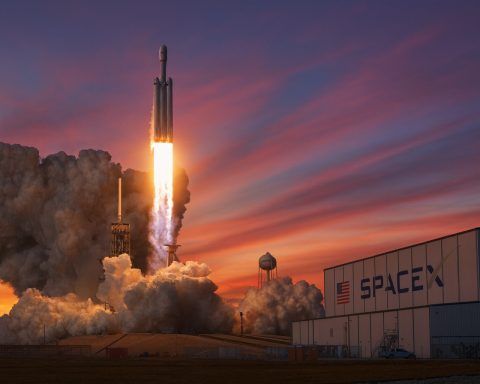
Starlink Surge: SpaceX kicked off September with back-to-back Starlink launches. On Sept. 2 at 8:51 p.m. Pacific, a Falcon 9 lifted off from Vandenberg SFB in California carrying 24 Starlink internet satellites to polar orbit spaceflightnow.com space.com. Notably, this mission flew a brand-new first stage booster, a rarity for SpaceX’s now highly reflown fleet space.com. The booster – only the 7th new Falcon 9 introduced in over 100 launches this year spaceflightnow.com – successfully touched down on the Of Course I Still Love You droneship ~8½ minutes after liftoff spaceflightnow.com. “Reusability has fueled the growth for human spaceflight, for commercial launch and for government launch. And it’s also made a more reliable system,” SpaceX VP Kiko Dontchev said recently, adding “Falcon 9…has become the most reliable rocket in the history of the world” spaceflightnow.com spaceflightnow.com. The Vandenberg launch was SpaceX’s 109th Falcon 9 flight of 2025 and marked the 498th overall booster landing, underscoring that reliability and cadence spaceflightnow.com spaceflightnow.com. Just hours later, SpaceX launched another Falcon 9 from Florida’s Cape Canaveral at 7:56 a.m. EDT on Sept. 3, lofting 28 Starlink V2 Mini satellites into low Earth orbit spaceflightnow.com spaceflightnow.com. This mission featured booster B1083 on its 14th reuse,
Rocketing Ambitions: Inside France’s Booming Space & Satellite Industry in 2025

Rocketing Ambitions: Inside France’s Booming Space & Satellite Industry in 2025

France’s space journey began in the Cold War era with a quest for strategic independence. General de Gaulle established CNES in 1961 to make France an autonomous space power cnes.fr. This goal was dramatically realized on 26 November 1965, when France’s Diamant rocket launched the Astérix satellite into orbit from Algerian soil – making France the third country to launch its own satellite cnes.fr cnes.fr. This early success kick-started a proud legacy of French “firsts,” including the opening of the Guiana Space Centre in Kourou in 1965 and the development of French satellite series like FR-1/FR-2 and scientific payloads through the 1960s. By the 1970s, France championed European collaboration to pool resources and talent. In 1973, CNES led the push for a European launcher – the Ariane program – to guarantee independent access to space cnes.fr. France was instrumental in forming the European Space Agency in 1975 and emerged as its top contributor and strategic leader cnes.fr cnes.fr. On 24 December 1979, the Ariane 1 rocket thundered off from Kourou on its maiden flight, heralding Europe’s entry into the commercial launch market cnes.fr. Arianespace, a French-led consortium, was created in 1980 to commercialize Ariane launches – a visionary move that

Stock Market Today

  • Marvell Technology (MRVL) Up 154% in 3 Months as AI Demand Lifts Shares
    July 2, 2026, 12:38 PM EDT. Shares of Marvell Technology (MRVL) have surged 154% over the past three months, far ahead of the sector and chip industry indexes. The rally is being driven by heavy demand for AI data center products, especially around networking and optics. MRVL is now projecting its interconnect unit to climb more than 70% year-over-year in fiscal 2027, with products like TIAs, drivers and scale-out switches seen hitting billion-dollar revenue levels. Shares now trade at a forward 12-month price-to-sales ratio of 17.42, topping the semiconductor industry's average of 10.12, raising some valuation questions. Marvell posted record operating cash flow of $638.8 million in Q1 fiscal 2027, showing better margins. Analysts now look for 42.3% earnings growth in fiscal 2027 following upward estimate moves.
Go toTop