Today: 2 July 2026
Browse Category

Space Industry 21 June 2025 - 2 September 2025

Global Space Industry Soars to New Heights: Inside the $500+ Billion Space Boom (2025 Report)

Global Space Industry Soars to New Heights: Inside the $500+ Billion Space Boom (2025 Report)

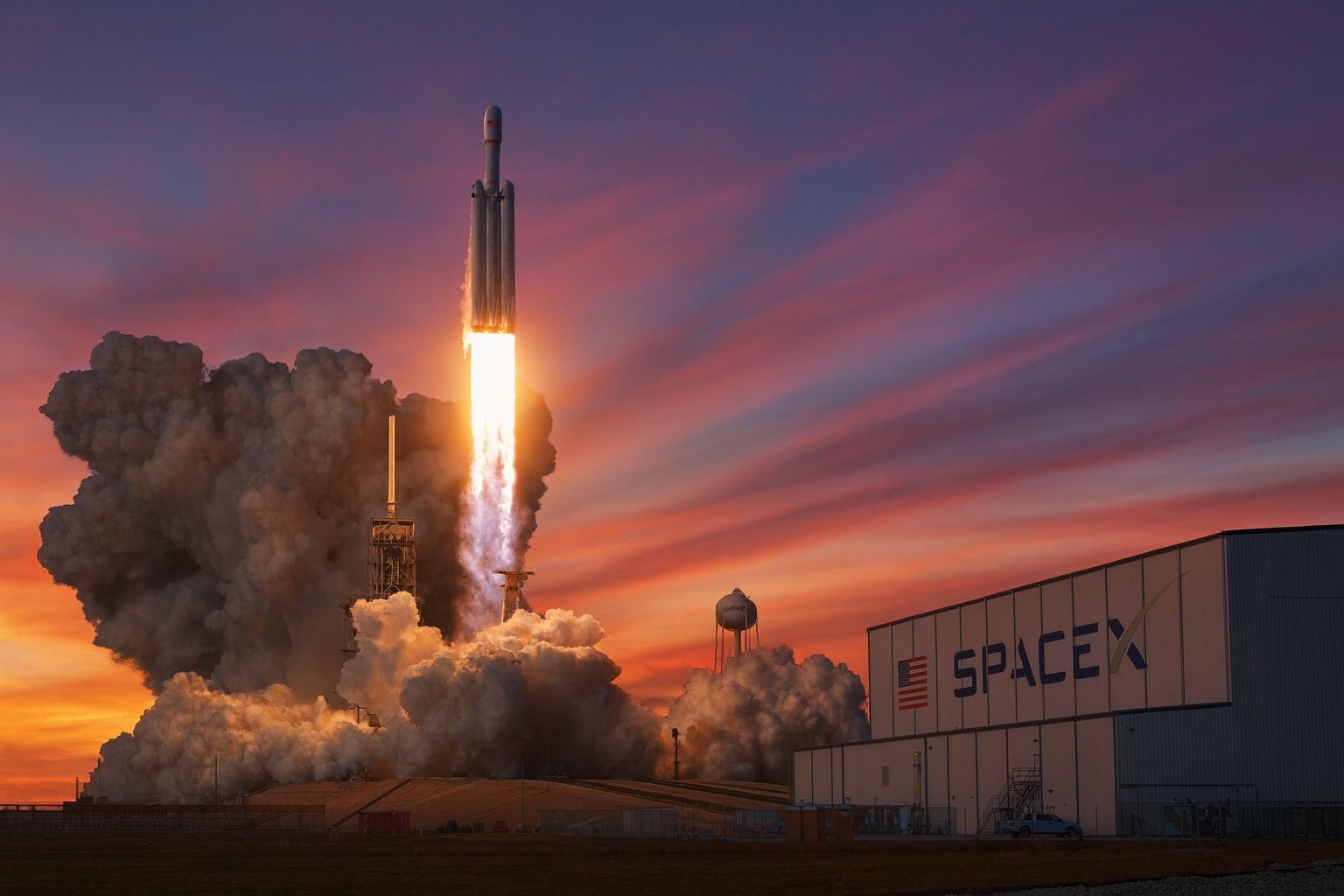
In the mid-20th century, government programs completely dominated space exploration. The Cold War space race saw the Soviet Union and United States achieve seminal milestones – from Sputnik and Yuri Gagarin’s first orbit to the U.S. Apollo 11 Moon landing in 1969. Over the following decades, government-led endeavors built the foundations of today’s industry: satellites for communications and GPS, the Space Shuttle program, and the International Space Station. Private companies played a supporting role as contractors to NASA, the Soviet space program, etc., but had little independent presence. Space activities were expensive, high-risk undertakings that only superpower governments could afford, often for prestige and national security rather than profit. By the 1990s and 2000s, however, a paradigm shift began. Post-Cold War policies encouraged commercial involvement, and entrepreneurial firms emerged to challenge the status quo. Notably, SpaceX proved that a startup could develop orbital rockets; it achieved the first private liquid-fueled orbital launch in 2008 and later dramatically lowered costs with reusable Falcon 9 rockets. Visionary billionaires like Jeff Bezos and Richard Branson entered the fray. This “NewSpace” movement, alongside deregulation of satellite telecom markets, spurred a wave of private investment. By the 2010s, commercial satellite operators and launch providers were
2 September 2025
U.S. Space Industry Blast-Off: Inside America’s $600B Space Boom and the Race to a $1 Trillion Future

U.S. Space Industry Blast-Off: Inside America’s $600B Space Boom and the Race to a $1 Trillion Future

Space is no longer just about astronauts and moonwalks – it’s big business and a pillar of the U.S. economy. In 2024, the global space economy reached an all-time high of $613 billion, reflecting 7.8% year-over-year growth spacefoundation.org. The United States is at the forefront of this boom, accounting for roughly 37% of worldwide space revenues ts2.tech ts2.tech. “Space is not just a frontier for exploration; it is a cornerstone of our economy and security,” says Space Foundation CEO Heather Pringle spacefoundation.org. From government rocket programs to billionaire-led rocket companies, America’s space sector has transformed into a fast-growing industry – one poised to top $1 trillion within the next decade spacefoundation.org. This report explores the U.S. space and satellite industries’ evolution, the key players driving it, emerging technologies and trends, recent news shaping the sector as of September 2025, and expert insight on where the next 5–10 years could take us. The United States entered the Space Age in the late 1950s amid a superpower rivalry. After the Soviet Union’s surprise launch of Sputnik 1 in 1957, the U.S. responded by establishing NASA in 1958 and launching its first satellite, Explorer 1, on January 31, 1958 aerospace.org aerospace.org. The 1960s
Poland’s Space Industry Is Taking Off: Inside the Rapid Rise of a New European Space Power

Poland’s Space Industry Is Taking Off: Inside the Rapid Rise of a New European Space Power

Poland’s engagement with space dates back to the Cold War era. As a Soviet-aligned nation, Poland participated in the Interkosmos program, which involved Eastern Bloc scientists in Soviet-led space missions en.wikipedia.org. During this time, Polish researchers built instruments for international missions – over the decades, 80+ Polish-made instruments have flown on various Soviet, ESA, and NASA spacecraft fac.org.uk. The pinnacle of this early period was in 1978, when Mirosław Hermaszewski became the first Pole to travel to space, spending 8 days aboard the Soviet Salyut 6 station as a cosmonaut en.wikipedia.org. This achievement made headlines and inspired Poland’s future generations of engineers. After the fall of communism in 1989, Poland sought to integrate with Western institutions and develop an independent space capability. It signed cooperation agreements with ESA in 1994 and 2002, laying the groundwork for fuller participation en.wikipedia.org. Polish universities also began small-scale space projects: students at Warsaw University of Technology built Poland’s first satellite, PW-Sat, which launched in 2012 to test a de-orbit sail en.wikipedia.org. In the early 2010s, the Polish Academy of Sciences led the construction of Lem and Heweliusz nanosatellites as part of an international astronomy mission en.wikipedia.org. These successes demonstrated Poland’s growing technical prowess.
China’s Space Boom: 2025 Market Report Reveals a $350 Billion Space & Satellite Superpower

China’s Space Boom: 2025 Market Report Reveals a $350 Billion Space & Satellite Superpower

China’s journey to the stars began during the Cold War. In 1958, Mao Zedong’s government launched the “Two Bombs, One Satellite” program to develop nuclear bombs, missiles, and satellites indigenously warontherocks.com. This led to China’s first satellite – Dong Fang Hong 1 – successfully launched into orbit in 1970, making China the world’s fifth spacefaring nation warontherocks.com. The early decades of China’s space effort were entirely state-run, focused on national security and basic communications. From 1970 through the 2000s, state-owned enterprises steadily put dozens of satellites into orbit for remote sensing, telecom, and scientific purposes warontherocks.com. By 2003, China achieved human spaceflight and later launched two small space labs as testbeds for a future station. Despite these milestones, China remained a “second-tier” space power by 2010, far behind the U.S. in capabilities warontherocks.com. A pivotal shift came in 2014, when Beijing opened segments of its space sector to private capital for the first time warontherocks.com. This policy reform ended the monopoly of giant state enterprises – chiefly the China Aerospace Science and Technology Corporation and China Aerospace Science & Industry Corporation – and allowed commercial startups to enter areas like launch services and satellite applications interactive.satellitetoday.com. Follow-on policies in 2015,
2 September 2025
Space IPOs, Mega-Hacks, and Tariff Twists: Non‑AI Tech News Roundup (Aug 8–9, 2025)

Space IPOs, Mega-Hacks, and Tariff Twists: Non‑AI Tech News Roundup (Aug 8–9, 2025)

Sony surprised investors by raising its annual profit forecast 4% to ¥1.33 trillion, crediting a smaller-than-feared hit from U.S. tariffs reuters.com. New trade deals slashed Sony’s expected tariff impact to ¥70 billion reuters.com. The Japanese giant’s PlayStation division also beat expectations: 2.5 million PS5 consoles sold in Q1, a 4% rise, helped double gaming profits on booming software and network services sales reuters.com. “Sony is further cementing its dominance in high fidelity gaming,” said industry analyst Serkan Toto, who noted Sony now competes “with the PC more than the Xbox” in the high-end market reuters.com. Shares jumped 4% on the upbeat outlook reuters.com, underscoring Sony’s resilience as it navigates geopolitical headwinds and strong consumer demand. China’s top chip foundry SMIC reported that U.S. tariffs have not caused the “hard landing” once expected, thanks to contingency plans and surging domestic demand manufacturing.economictimes.indiatimes.com. Co-CEO Zhao Haijun said many clients stockpiled chips or found new suppliers after the April tariff hike, reducing the impact: “everyone has either stocked up enough inventory for this year and next year, or found other suppliers… So I think the impact will become even smaller” manufacturing.economictimes.indiatimes.com. In fact, SMIC’s second-quarter revenue rose 16% to $2.2 billion even as
Space Race Heats Up: Satellite Launch Blitz, Lunar Power Plays & Billion-Dollar Space Deals (Aug 5–6, 2025 Roundup)

Space Race Heats Up: Satellite Launch Blitz, Lunar Power Plays & Billion-Dollar Space Deals (Aug 5–6, 2025 Roundup)

Sources: Space.com; SpaceNews; NASA Press Releases and Blogs; Reuters; Associated Press; ESA; TS2 Space Roundup; SatNews; Advanced Television; Qazinform space.com news.satnews.com ts2.tech abcnews.go.com ts2.tech nasa.gov science.nasa.gov ts2.tech cfpublic.org ts2.tech esa.int electronicspecifier.com ts2.tech advanced-television.com ts2.tech spacepolicyonline.com spacepolicyonline.com.
Galactic Gold Rush: Global Satellite & Space Industry Soars Toward $1 Trillion

Galactic Gold Rush: Global Satellite & Space Industry Soars Toward $1 Trillion

The global satellite and space industry is experiencing skyrocketing growth, evolving into a cornerstone of the world economy. In 2024, the space economy – encompassing everything from satellite manufacturing and launches to services like communications and navigation – is valued at roughly $550–600 billion, nearly double its size a decade ago spacefoundation.org spacenews.com. Industry analysts forecast steady expansion of around 4–8% annually, putting the sector on track to approach $1 trillion within the next 10–15 years reuters.com spacenews.com. As Morgan Stanley famously noted, the ~$350 billion space sector of the late 2010s could surge past $1 trillion by 2040 reuters.com. This boom is fueled by private investment, falling launch costs, and surging demand for satellite-enabled data and services across industries. According to Novaspace’s latest report, downstream applications are the main drivers of a projected $348 billion growth this decade spacenews.com. “Satellite-enabled services, such as navigation, Earth observation, and communications, are becoming increasingly integral across diverse industries, including agriculture, logistics, and urban planning,” observes Lucas Pleney, Novaspace Senior Consultant spacenews.com. At the same time, upstream segments are adapting to challenges like inflation and supply chain disruptions through consolidation and innovation spacenews.com. In this comprehensive market research report, we examine all major
Space Race Heats Up: Europe’s Bid for Autonomy, Starlink’s Global Surge, and the New Era of Satellite Power / Updated: 2025, July 11th, 00:31 CET

Space Race Heats Up: Europe’s Bid for Autonomy, Starlink’s Global Surge, and the New Era of Satellite Power / Updated: 2025, July 11th, 00:31 CET

In 2024 the US conducted 154 orbital launches, while Europe managed only three, underscoring Europe’s push to establish launch facilities in Sweden and Norway for continental autonomy. Starlink now has over 7,500 satellites in orbit and 5 million users, and operates on 1,000 aircraft, including 54 Qatar Airways Boeing 777s. France and the UK each invested over €163 million in Eutelsat, making France the largest shareholder and the UK holding a 10.9% stake, to expand Eutelsat’s LEO fleet and support Europe’s IRIS² project. Amazon’s Kuiper project is projected to generate $7.1 billion in consumer revenue by 2032, with about $23
Space News Today: Global Advances, Challenges, and New Frontiers / Updated: 2025, July 7th, 12:00 CET

Space News Today: Global Advances, Challenges, and New Frontiers / Updated: 2025, July 7th, 12:00 CET

Boeing secured a $2.8 billion contract to develop next‑generation nuclear communications satellites for the U.S. military. Spanish operator Hisdesat completed two satellites in orbit and signed for two more in 2025, backed by Indra, targeting €1 billion in space revenue by 2030. SpainSat NG II, developed by Hisdesat and Airbus, is set to launch October 22–29 with NATO as its first client for both military and civil applications. SpaceX’s Starlink now accounts for more than 60% of all active satellites, following launches including Starlink 10-28 from Cape Canaveral and a Vandenberg mission delivering 70 small satellites. SpaceX plans a 40-antenna
SpaceX’s Wild Week: Double Launches, Debris Controversy & a Crane Collapse Rock the Space Giant (28-30, June, 2025)

SpaceX’s Wild Week: Double Launches, Debris Controversy & a Crane Collapse Rock the Space Giant (28-30, June, 2025)

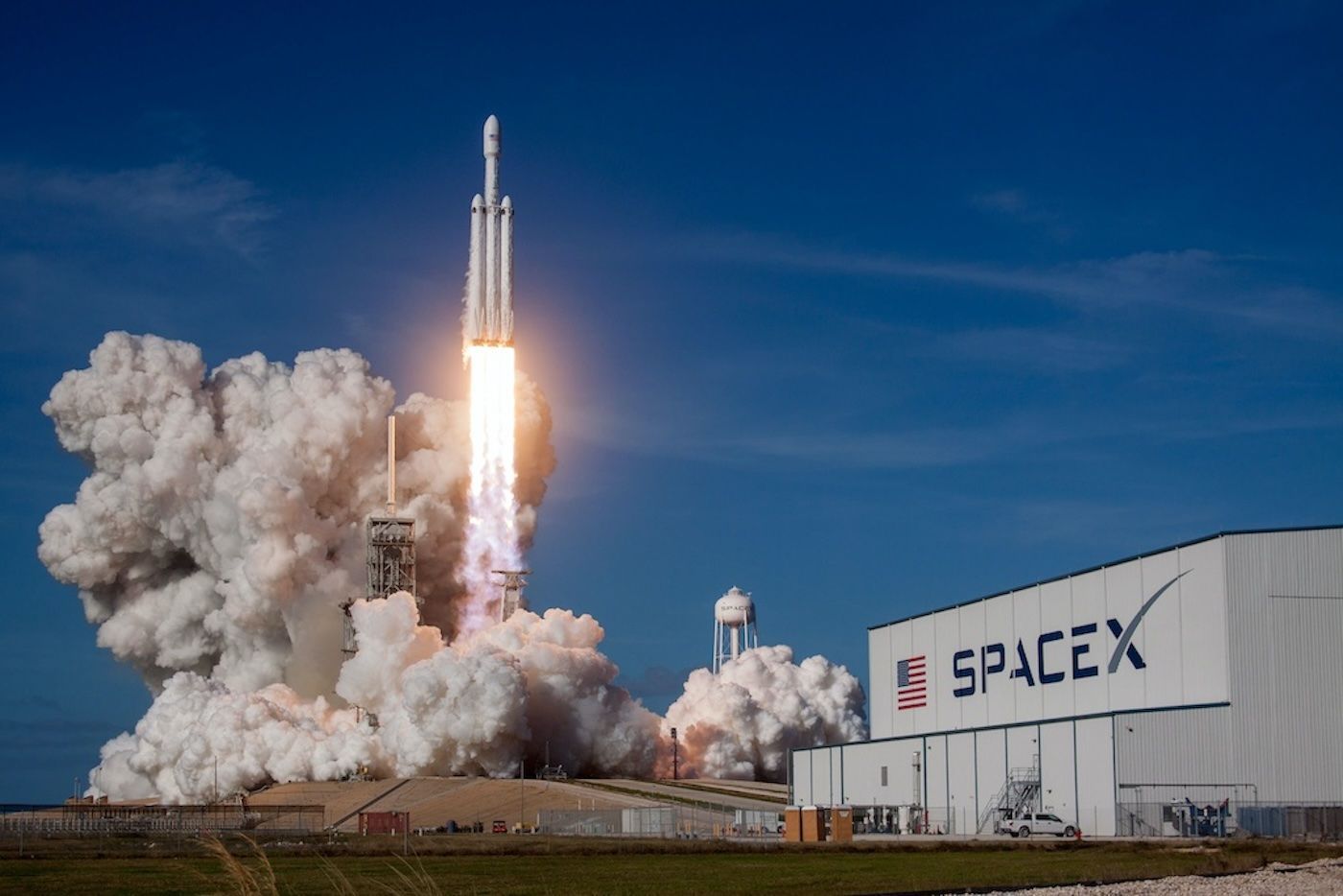
SpaceX’s launch tempo shows no sign of slowing. In one day, the company pulled off back-to-back Falcon 9 launches from opposite U.S. coasts space.com. In the early hours of June 28, a Falcon 9 lifted off from Cape Canaveral, Florida with 27 Starlink internet satellites, followed by another Falcon 9 launch that afternoon from foggy Vandenberg Space Force Base in California carrying 26 more space.com. Both missions were successful, with each rocket’s first-stage booster executing pinpoint landings on ocean droneships – one returning to “A Shortfall of Gravitas” in the Atlantic, the other touching down on “Of Course I Still Love You” in the Pacific space.com. These two Starlink launches in a single day expanded SpaceX’s ever-growing broadband constellation to over 7,900 active satellites in orbit space.com, underscoring the firm’s unprecedented launch cadence. SpaceX has made such frequent launches almost routine, leveraging reusable boosters that have flown as many as 5–8 times each space.com. The first stage of a SpaceX Falcon 9 stands safely on a droneship after a Starlink launch, exemplifying the company’s rapid cadence of reusable rocket missions space.com.
30 June 2025
SpaceX: Mid-2025 Comprehensive Report (June 27th, 2025)

SpaceX: Mid-2025 Comprehensive Report (June 27th, 2025)

SpaceX’s Starship vehicle lifting off on its ninth test flight from Starbase, Texas in May 2025. Starship is the company’s next-generation, fully-reusable rocket system under development. In summary, by mid-2025 SpaceX is breaking launch records, advancing Starship’s development amid regulatory hurdles, expanding its Starlink network, and securing a growing share of civil and commercial space contracts. The following sections provide an in-depth analysis of the company’s history, technology, strategy, competition, and outlook.
Eyes in the Sky, Data in the Cloud – Satellite Downlink & Cloud Integration Market Skyrockets by 2032

Eyes in the Sky, Data in the Cloud – Satellite Downlink & Cloud Integration Market Skyrockets by 2032

The Satellite Data Downlink & Cloud Integration market is experiencing a boom, driven by surging demand for geospatial data and real-time insights across sectors. Marrying satellites with cloud computing infrastructure has unlocked unprecedented scalability and accessibility for space-derived data. Key highlights of this market outlook include: In summary, the Satellite Data Downlink & Cloud Integration market is on a skyward trajectory, fueled by technological innovation and the insatiable demand for timely, cloud-delivered insights from space. The following report provides a comprehensive analysis of this market’s definition, drivers and restraints, latest trends, segmentation, regional dynamics, competitive landscape, and a forecast through 2032.
Jeff Bezos vs. Elon Musk: How Amazon’s New Kuiper Satellites Could Disrupt a $100 Billion Space‑Internet Gold Rush

Space Race Frenzy: Exploding Starships, Quantum‑Proof Satellites & Europe’s Billion‑Dollar Constellation Shake‑Up — Everything That Hit Orbit TODAY (24 June 2025)

The past 24 hours delivered a blizzard of space headlines: an explosive Starship test darkened Elon Musk’s Mars timeline; Europe’s “Project Bromo” megaconstellation stalled amid board‑room drama; the U.S. Space Development Agency surprised the Pentagon by lofting a prototype SATCOM bird four months early; T‑Mobile promised Starlink‑powered mobile data for every U.S. dead‑zone; and a shoebox‑sized CubeSat beamed the world’s first post‑quantum–encrypted message from orbit. Below is a curated briefing on the stories that actually matter, why experts say they are consequential, and what to watch next. Airbus, Leonardo and Thales are still wrangling over a joint LEO‑satellite champion:
Quantum Leap: Satellite QKD’s Race to Secure the Global Data Economy (2024–2031)

Quantum Leap: Satellite QKD’s Race to Secure the Global Data Economy (2024–2031)

Quantum Key Distribution via satellite is poised to become a cornerstone of cybersecurity in the coming decade, addressing the looming threat that quantum computers pose to today’s encryption. Between 2024 and 2031, this nascent sector is expected to transition from experimental pilots to early commercial services, driven by an urgent need for quantum-safe communications. Governments and industry are investing heavily: the global QKD market is projected to grow from about $480 million in 2024 to $2.6 billion by 2030. Space-based QKD – leveraging satellites to extend quantum-secure links worldwide – is a key subset, anticipated to reach roughly $1.1 billion by 2030. Major powers such as China, Europe, and the US have launched ambitious programs to develop quantum-secure satellite networks, viewing them as strategic assets for national security and data sovereignty. Commercial players, from established tech firms to startups, are also entering the fray with innovative partnerships and planned satellite deployments. Yet, despite rapid progress, significant challenges temper short-term commercial adoption. High deployment costs, technical hurdles, and immature technology readiness levels mean widespread private-sector use of satellite QKD may not materialize until the latter part of the 2020s or beyond. In the interim, government and defense applications will dominate demand
Latest Satellite News & Insights 24.06.2025

Latest Satellite News & Insights 24.06.2025

Vodafone becomes the first operator to commercially deploy satellite-guided GPS sensors in 4G/5G antennas, starting in Albania to improve alignment and signal quality. Axiom Mission 4 (Ax-4) will launch to the International Space Station on June 25, 2025 aboard a SpaceX Falcon 9, carrying ISRO’s Shubhanshu Shukla as the first ISRO astronaut on a commercial ISS flight. ESA will launch MTG-S1 on July 1, 2025, the first European geostationary satellite capable of atmospheric sounding, enabling extreme weather prediction with Sentinel-4 data. NASA’s Relay-2, inactive since 1967, emitted a powerful radio signal detected in June 2024, highlighting ongoing concerns about space
Jeff Bezos vs. Elon Musk: How Amazon’s New Kuiper Satellites Could Disrupt a $100 Billion Space‑Internet Gold Rush

Jeff Bezos vs. Elon Musk: How Amazon’s New Kuiper Satellites Could Disrupt a $100 Billion Space‑Internet Gold Rush

Amazon’s second batch of Project Kuiper satellites roared into orbit on 23 June 2025, moving Jeff Bezos one giant step closer to challenging Elon Musk’s Starlink dominance. The launch doubles Kuiper’s on‑orbit fleet to 54 craft, jump‑starts an aggressive cadence of more than 80 contracted launches, and starts a 12‑month sprint toward limited customer service by year‑end 2025—just in time to meet a looming U.S.‑regulatory deadline. Meanwhile, Starlink has crossed five million users and is racing toward $12 billion in annual revenue, but faces valuation doubts, spectrum fights and rising geopolitical push‑back. Below is a deep dive into the facts, the numbers, and what experts say comes next. Yet critics question whether that valuation is sustainable:
Fueling the Future: Inside the $8 Billion In-Orbit Satellite Servicing Boom by 2034

Fueling the Future: Inside the $8 Billion In-Orbit Satellite Servicing Boom by 2034

The In-Orbit Servicing market – focused on extending satellite life and refueling spacecraft – is poised for explosive growth over the next decade. Valued at roughly $2.7 billion in 2024, this market is projected to triple to around $8 billion by 2034, reflecting a robust CAGR of ~11–12% Gminsights. Driving this boom is the surging demand to prolong the lifespan of costly satellites and to manage the NewSpace surge of thousands of satellites with on-orbit maintenance, refueling, and debris mitigation services. Governments and commercial operators alike are investing heavily: the U.S. Department of Defense and NASA are funding refueling and servicing demos, while companies like Northrop Grumman, Astroscale, and Orbit Fab have proven technologies that literally give satellites a new lease on life Globenewswire. Key industry players have raised hundreds of millions in capital to build “space gas stations” and robotic servicing vehicles, reflecting strong investor confidence Techcrunch. Despite technical and regulatory challenges, in-orbit servicing is rapidly transitioning from experimental missions to a viable sector of the space economy. By 2025–2034, in-orbit life extension and refueling services are expected to move from niche proof-of-concepts to routine operational services, unlocking cost savings, new revenue streams, and improved sustainability for satellite operators.
Global Space Launch Roundup (June 2025): SpaceX, ULA, Blue Origin, Rocket Lab, Honda, CNSA and More

Global Space Launch Roundup (June 2025): SpaceX, ULA, Blue Origin, Rocket Lab, Honda, CNSA and More

Recent policy changes in Texas are shaping SpaceX’s launch operations at Starbase. In June 2025, Texas lawmakers approved measures giving the newly incorporated city of Starbase – effectively a SpaceX company town – authority to close public roads and beaches for rocket activity texastribune.org texastribune.org. This allows Starbase officials to shut down State Highway 4 and Boca Chica Beach during launches or tests, shifting that power away from county authorities to city commissioners closely tied to SpaceX texastribune.org texastribune.org. Local activists and indigenous groups opposed the bill, arguing it would curtail public beach access and benefit “the people in the company town” over the general public texastribune.org texastribune.org. Despite objections, the provision passed as part of a broader Texas Space Commission bill, marking a win for SpaceX’s operations. The FAA has already increased SpaceX’s permitted launches at Starbase from 5 to 25 per year texastribune.org, and with the new law, SpaceX’s Starbase launches can proceed with fewer local hurdles – a development to watch as the company ramps up Starship test flights. SpaceX continues its rapid launch cadence in 2025, frequently launching Falcon 9 rockets from both coasts. Multiple Starlink missions are deploying dozens of internet satellites at a time,
Latest Satellite News & Insights 23.06.2025

Latest Satellite News & Insights 23.06.2025

On June 23, 2025, ULA’s Atlas V launched 27 Amazon Project Kuiper satellites, bringing the constellation to 54 in Low-Earth Orbit and targeting a 3,232-satellite network. Spain’s INFOCA expanded wildfire response by integrating SPOT satellite devices with Globalstar and Technosylva wildfire modelling for real-time location tracking, with a webinar scheduled for June 30, 2025. A new batch of Starlink v2 mini satellites, Starlink 10-18, launched June 18, 2025 and will be visible over Ukraine in a 280 km orbit, with each satellite visible for 3–4 minutes and a 30-second interval between appearances, while Starlink operates about 7,000 satellites. NASA’s Perseverance
Rocketing Satellite Stocks: Global Space Industry Performance & Bold 2025 Forecasts

Rocketing Satellite Stocks: Global Space Industry Performance & Bold 2025 Forecasts

The space industry is experiencing a new wave of growth and investor excitement. From satellite communications providers to rocket launch startups, companies around the world have seen stock prices soar over the past year, followed by a period of consolidation. This report dives into the current stock market performance of publicly traded satellite and space-related companies globally, highlights major private space firms and their funding, and examines the market trends, technological developments, and geopolitical factors shaping the industry’s future. All regions – North America, Europe, Asia, and beyond – are contributing to the accelerating “new space” economy, which some analysts project to reach $1 trillion by 2040 entrepreneur.com. Below, we break down the latest financial results, forecasts, and strategic outlooks across the global space sector. Publicly traded satellite and space companies have delivered mixed performance recently, with spectacular gains in 2024 giving way to volatility in early 2025. In 2024, a number of small-cap “pure play” space stocks saw explosive rallies: for example, Rocket Lab surged over 360% thanks to record launch rates, Intuitive Machines jumped 720% amid lunar mission contracts, and Redwire climbed 436% on high-profile space infrastructure projects entrepreneur.com. This reflected strong investor enthusiasm for the expanding space

Stock Market Today

  • Marvell Technology (MRVL) Up 154% in 3 Months as AI Demand Lifts Shares
    July 2, 2026, 12:38 PM EDT. Shares of Marvell Technology (MRVL) have surged 154% over the past three months, far ahead of the sector and chip industry indexes. The rally is being driven by heavy demand for AI data center products, especially around networking and optics. MRVL is now projecting its interconnect unit to climb more than 70% year-over-year in fiscal 2027, with products like TIAs, drivers and scale-out switches seen hitting billion-dollar revenue levels. Shares now trade at a forward 12-month price-to-sales ratio of 17.42, topping the semiconductor industry's average of 10.12, raising some valuation questions. Marvell posted record operating cash flow of $638.8 million in Q1 fiscal 2027, showing better margins. Analysts now look for 42.3% earnings growth in fiscal 2027 following upward estimate moves.
Go toTop