Browse Category

Space News 1 June 2025 - 5 June 2025

Inside America’s Silent Sentinels: The Untold Story of GSSAP in Space Surveillance

Inside America’s Silent Sentinels: The Untold Story of GSSAP in Space Surveillance

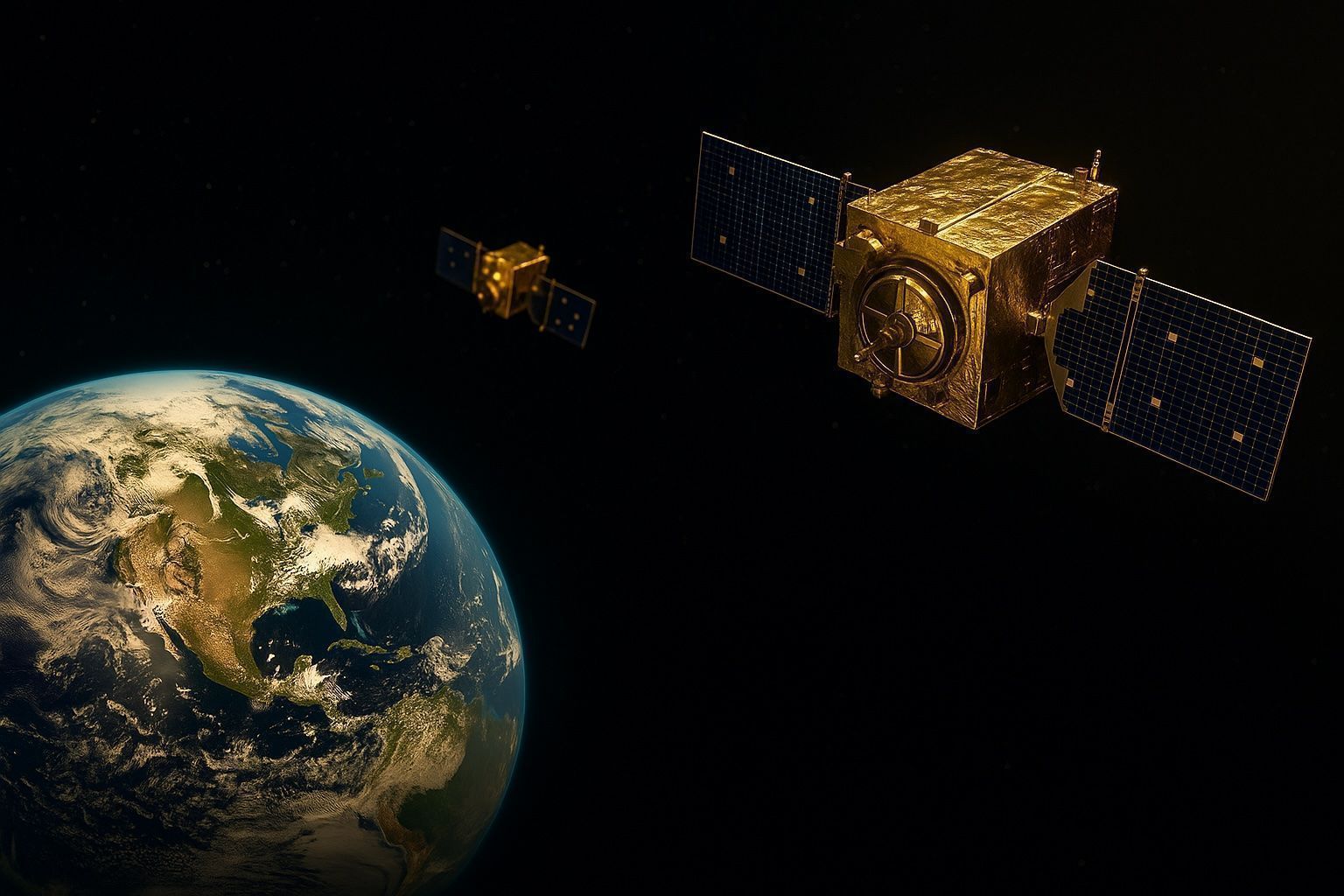
GSSAP-1 and GSSAP-2 were launched on July 28, 2014 aboard a Delta IV M+(4,2) from Cape Canaveral, accompanied by the ANGELS experimental satellite. The GSSAP satellites operate in near-geosynchronous orbit roughly 35,900 km (22,300 miles) above Earth and function as a “neighborhood watch” for the GEO belt, providing space situational awareness to USSPACECOM. Built by Northrop Grumman on the GeoStar-1 bus, GSSAP satellites are three-axis stabilized and carry high-resolution optical sensors capable of rendezvous and proximity operations with other GEO objects. Each GSSAP spacecraft carries limited onboard propellant, meaning its maneuvering life spans only a few years before it must
5 June 2025
Orbiting at Zero Speed: How Geostationary Satellites Rule Global Communications

Orbiting at Zero Speed: How Geostationary Satellites Rule Global Communications

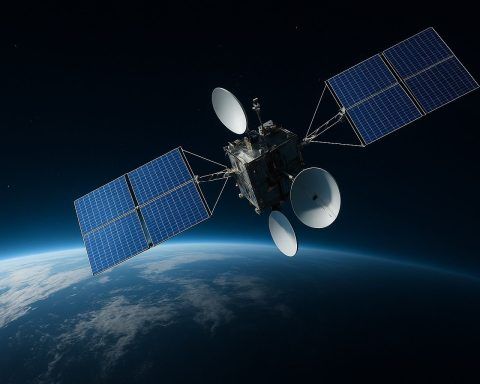
Geostationary orbit sits at about 35,786 km above the equator and completes a sidereal day (~23h56m), so satellites appear fixed over one longitude; Arthur C. Clarke popularized it in 1945, giving the region the nickname the Clarke Belt. A GEO satellite remains stationary relative to the ground, allowing ground antennas to point at a fixed spot without tracking. Three GEO satellites spaced roughly 120° apart can provide near-global coverage, excluding polar regions. Syncom 2, launched in 1963, reached a geosynchronous orbit with a slight inclination, while Syncom 3, launched in 1964, was placed over the equator with zero inclination and
5 June 2025
Mega-Constellations Exposed: How Swarms of Tiny Satellites Are Taking Over Low Earth Orbit

Mega-Constellations Exposed: How Swarms of Tiny Satellites Are Taking Over Low Earth Orbit

By 2024, small satellites accounted for over 95% of all satellites launched annually. SpaceX’s Starlink operates the world’s largest constellation with over 7,000 active satellites in orbit as of late 2024. Starlink’s initial shell consisted of about 4,400 satellites at roughly 550 km altitude and 53° inclination, with FCC approval for about 12,000 satellites and potential expansion to 42,000. Iridium uses 86.4° near-polar orbits in six planes at ~780 km to achieve global coverage including polar regions. OneWeb’s Gen1 network aimed for ~1,200 km orbit with ~86–87° inclination and had deployed 618 satellites by March 2023, before merging with Eutelsat
Global Satellite and Space Industry Report 2025: Market Overview and Outlook to 2030

Global Satellite and Space Industry Report 2025: Market Overview and Outlook to 2030

In 2024, the global space economy reached $415 billion in revenue, up 4% from 2023. Commercial satellite activities totaled about $293 billion in 2024, representing 71% of the global space economy. The number of operational satellites rose from roughly 3,371 in 2020 to 11,539 by the end of 2024, a more than threefold increase. SpaceX dominated US launches in 2024, conducting 138 of 145 orbital launches with Falcon 9/Heavy rockets and Starship test flights. In 2024, the United States accounted for about 65% of global launch revenue; China performed 68 orbital launches, and Europe conducted 3. Global government space spending
1 18 19 20

Stock Market Today

Xero share price (ASX:XRO) ends lower as tech rout grinds on; what investors watch next week

Xero share price (ASX:XRO) ends lower as tech rout grinds on; what investors watch next week

8 February 2026
Xero closed Friday down 0.4% at A$81.76, near last week’s low, as software stocks slumped. The S&P/ASX 200 Tech Index was set to end the week down about 12%, hitting levels last seen in December 2023. Global tech shares also fell, with nearly $1 trillion in value erased from U.S. software stocks since Jan. 28. Investors await fresh rate and inflation signals next week.
Huntington Bank taps ex-BNY risk boss Senthil Kumar as new chief risk officer

Huntington Bank taps ex-BNY risk boss Senthil Kumar as new chief risk officer

8 February 2026
Huntington Bank named Senthil Kumar chief risk officer, effective Feb. 16, as it enters a stricter regulatory category after closing its Cadence Bank merger on Feb. 2. Kumar replaces Helga Houston, who becomes senior executive adviser March 1. The merger brings Huntington’s assets to about $279 billion, triggering tougher oversight. No branch closures are planned before a mid-2026 systems conversion.
Go toTop