Today: 6 July 2026
Browse Category

Stock Market 15 March 2025 - 12 June 2025

Generative AI Ethics Unveiled: Global Challenges, Case Studies, and the Race for Responsible AI

Generative AI Ethics Unveiled: Global Challenges, Case Studies, and the Race for Responsible AI

Generative AI refers to algorithms that can produce new content – text, images, audio, and more – in response to prompts. These systems “fundamentally [transform] how businesses operate” by creating novel outputs from complex data techtarget.com. Generative ethics is the field of understanding and guiding the ethical use of these creative AI systems, ensuring their outputs and impacts align with societal values. In practice, this means grappling with issues like whether AI-generated content is truthful and fair, who is accountable for it, and how to prevent harm. Responsible AI, on the other hand, is a broad framework for developing and deploying any AI system in a safe, trustworthy, and ethical way builtin.com. It is grounded in core principles that many organizations and experts agree on builtin.com:

Eritrea’s Digital Desert: Inside the World’s Most Isolated Internet – and the Satellite Lifeline on the Horizon

Eritrea’s Digital Desert: Inside the World’s Most Isolated Internet – and the Satellite Lifeline on the Horizon

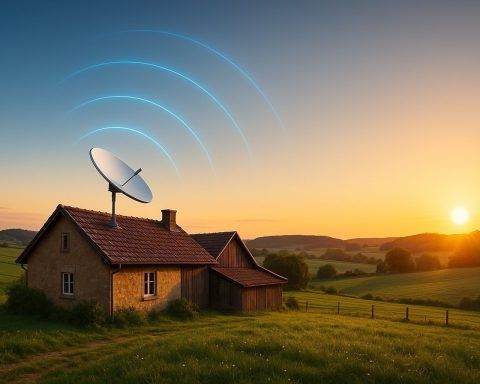
Eritrea is notorious for its exceptionally limited internet connectivity – often likened to a “digital desert” or even called the “North Korea of Africa” in terms of information isolation. Despite being a coastal nation in the Horn of Africa, Eritrea has eschewed modern internet infrastructure and access for decades. Fewer than 1 in 4 Eritreans use the internet, and until very recently it was the only country on the continent without any public mobile data network mereja.forum. Those who do get online face sluggish speeds, exorbitant costs, and heavy government censorship. Meanwhile, new technologies like satellite internet offer a tantalizing hope of bridging the connectivity gap – but only if Eritrea’s authoritarian regime permits it. This report provides a comprehensive, up-to-date look at internet access in Eritrea, covering the infrastructure, availability to ordinary people, the regulatory and censorship environment, comparisons with neighboring countries, and how satellite broadband could upend the status quo. State Monopoly and Minimal Infrastructure: Eritrea’s telecom sector is entirely state-owned and monopolized by Eritrean Telecommunication Services Corporation frequencycheck.com. EriTel is the sole provider of fixed telephone lines, mobile services, and internet in the country, effectively controlling the only gateway to the global internet cpj.org. Unlike most countries,
12 June 2025
The Digital Divide and Skyborne Signals: Internet Access in El Salvador

The Digital Divide and Skyborne Signals: Internet Access in El Salvador

El Salvador has dramatically expanded internet access over the past decade, with roughly 4.88 million people online as of early 2025 datareportal.com. The telecom sector was privatized in 1997 to encourage competition trade.gov, resulting in robust mobile growth. Today mobile networks cover ~93% of the territory, and 92% of Salvadorans have at least 3G coverage trade.gov. Mobile phone subscriptions even exceed the population trade.gov – a penetration of ~160% datareportal.com – as many people carry multiple SIMs. In contrast, fixed telephone lines and legacy DSL networks have stagnated due to the mobile preference trade.gov. Internet user penetration jumped from ~30% in 2016 to about 63% in 2022 statista.com, and continued to rise rapidly during the pandemic and beyond, up to ~77% by 2025. Still, roughly 1.5 million Salvadorans remain offline datareportal.com, highlighting a persistent digital divide between connected urban centers and underserved rural areas. International connectivity has historically relied on a few submarine cable links via neighboring countries. To improve resilience, a new submarine fiber optic cable project is in the works that will directly connect El Salvador through Panama and other countries. This project aims to address El Salvador’s lack of independent international bandwidth and ensure high-speed connectivity for
11 June 2025
High Seas Broadband Boom: Maritime VSAT & L-Band Services Market Set to Soar by 2032

High Seas Broadband Boom: Maritime VSAT & L-Band Services Market Set to Soar by 2032

The maritime satellite communications market is entering a dynamic growth phase, buoyed by surging demand for connectivity at sea. In the coming years, services delivered via Very Small Aperture Terminal and L-band satellite links are expected to expand rapidly, transforming how ships stay connected on the open oceans. Industry forecasts project robust growth through 2032 – with the total maritime satellite communication market anticipated to reach roughly $12.4 billion by 2032 globenewswire.com. This report provides a deep dive into global trends for maritime VSAT and L-band services from 2025 to 2032, including market forecasts, key drivers, competitive landscape, technological innovations, and challenges shaping this critical connectivity sector. Maritime operators are riding a wave of digitalization, upgrading from legacy narrowband links to high-speed broadband at sea, all while maintaining reliable L-band backups for safety. The result is a “best of both worlds” approach – VSAT delivers unprecedented data speeds for crew and business use, and L-band ensures resilient coverage for critical communications. In the sections below, we chart the course of this market’s evolution, breaking down growth projections, segment trends, major players, and the innovations enabling a high-speed, always-connected future on the high seas. Strong Growth Forecast: The maritime VSAT and
11 June 2025
In-Flight Wi-Fi Takes Off: The Sky-High Race for Satellite Connectivity 2024–2030

In-Flight Wi-Fi Takes Off: The Sky-High Race for Satellite Connectivity 2024–2030

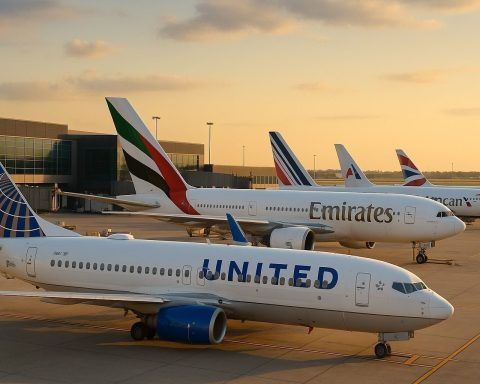
In-flight connectivity via satellite has shifted from a luxury novelty to an expected amenity in air travel. As airlines emerge from the pandemic, they are accelerating investments in high-speed Wi-Fi to meet passenger demand and gain competitive edge. Recent surveys show that 83% of passengers are more likely to rebook with an airline that offers quality onboard Wi-Fi, and free connectivity is now the most influential factor when choosing an airline Inmarsat Inmarsat. This report provides a comprehensive roadmap of IFC adoption from 2024 through 2030, examining global and regional trends, airline strategies, and the evolving satellite technologies enabling the next generation of in-flight Wi-Fi. It also explores market dynamics driving IFC expansion, including passenger expectations for home-like internet speeds aloft, competitive differentiation through free Wi-Fi offerings, and new revenue streams for airlines. Key technical and regulatory considerations – from antenna innovations and bandwidth scalability to spectrum policy and cybersecurity – are analyzed. A year-by-year deployment timeline is outlined, and a comparative table of major IFC providers highlights their coverage, technology, partnerships, bandwidth, and airline clients. In short, in-flight Wi-Fi is truly taking off in the latter 2020s. By 2030, connectivity is expected to be ubiquitous on commercial flights worldwide,
Telecommunications Infrastructure in Ukraine (2022–2025): Destruction and Resilience

Telecommunications Infrastructure in Ukraine (2022–2025): Destruction and Resilience

Ukraine’s telecommunications network encompasses a wide range of critical infrastructure that has come under attack since 2022. These include: Together, these attacks have aimed to sever Ukraine’s connectivity – both civilian communications and military command links – by dismantling the physical pillars of the internet, phone, and broadcast systems. The following sections detail the timeline of destruction, the regional impacts, and how Ukraine has kept communications running against the odds.
10 June 2025
Dominica: Internet Infrastructure and Access Technologies

Dominica: Internet Infrastructure and Access Technologies

Dominica’s connectivity is carried by undersea cables and local networks. The island is a landing point on the Southern Caribbean Fiber ring, a 3,000-km submarine cable linking 15 Eastern Caribbean islands with high-capacity fiber southerncaribbeanfiber.com. On-island, the former Cable & Wireless network provides fixed DSL and coaxial/cable service, while Digicel offers cable/FTTP service over an upgraded HFC network ectel.int. Fiber-to-the-home is gradually expanding, and fixed-wireless links cover select areas. Mobile broadband is widespread through Digicel and Flow; neither operator has yet deployed 5G. Satellite solutions are used for remote sites: traditional VSAT connect very isolated locations, and starting in June 2025 Dominica gained SpaceX’s Starlink LEO service caribjournal.com. Starlink now advertises “high-speed, low-latency internet” across Dominica caribjournal.com, offering a resilient broadband option in mountainous or underserved zones. Dominica’s market is dominated by two telecom groups: Flow and Digicel. Flow offers fixed-line and mobile telephony, cable TV, and Internet services. Digicel provides mobile voice/data and, via its acquisition of SAT Telecom, cable/FTTP broadband and TV ectel.int. No other ISPs have significant market presence. According to ECTEL, at end‐2020 these two were the only active telecom operators: “FLOW continues to provide … fixed line, mobile, internet services and subscriber television, while Digicel
10 June 2025
Rural Broadband Revolution: Satellite Internet’s Sky-High Growth (2024–2030)

Rural Broadband Revolution: Satellite Internet’s Sky-High Growth (2024–2030)

The global satellite broadband market is exploding – set to soar from just a few billion dollars today into the tens of billions by 2030. Market analyses report a global industry size of roughly $5–9 billion in 2023, with estimates ranging up to $24–23 billion by 2030. This surge is driven by an insatiable demand for connectivity in remote and underserved areas worldwide globenewswire.com nam.org. North America currently leads the market, but high growth rates are forecast in Asia-Pacific, Europe, Latin America, and even the Middle East & Africa grandviewresearch.com grandviewresearch.com grandviewresearch.com. By 2030, North America, Europe and Asia-Pacific markets are each projected in the $6–7+ billion range grandviewresearch.com grandviewresearch.com grandviewresearch.com, with Latin America and MEA contributing several hundred million each. These trends underscore a massive addressable market for satellite connectivity solutions reaching beyond traditional urban areas. Figure: Regional satellite broadband market sizes, 2023 vs 2030 grandviewresearch.com grandviewresearch.com.
Internet Access in Czechia: From Prague to the Sky

Internet Access in Czechia: From Prague to the Sky

Czechia boasts a highly penetrated and diversified internet infrastructure, with about 91.6% of its population online as of 2023 datareportal.com. This translates to roughly 9.6 million internet users in a country of 10.5 million. Fixed broadband connections reached 4.1 million in 2023 ctu.gov.cz, meaning roughly 38–40 subscriptions per 100 people. At the same time, mobile connectivity is ubiquitous – there are 15.5 million mobile SIM cards in use, including 11.5 million active mobile internet subscriptions ctu.gov.cz. In other words, mobile broadband subscriptions are nearly three times the number of fixed broadband subscriptions in Czechia csu.gov.cz. The extensive use of both fixed and mobile internet, along with emerging satellite services, underscores Czechia’s multi-faceted approach to connectivity. Internet usage is robust: the average household in Czechia consumes large amounts of data. In 2023, an average fixed broadband line used about 332 GB of data per month ctu.gov.cz, reflecting the popularity of video streaming, online gaming, and other data-heavy applications. Mobile users, too, are consuming more data than ever – the average mobile data usage is about 9.7 GB per SIM per month in 2023 ctu.gov.cz, a figure that has been rising rapidly. This surge is enabled by widespread 4G coverage and growing
The State of Internet Access in Denmark: From Fiber to Satellite in 2025

The State of Internet Access in Denmark: From Fiber to Satellite in 2025

Denmark in 2025 stands as one of the world’s most digitally connected countries, with near-universal internet access and high performance networks spanning from urban centers to rural villages. Thanks to extensive investments in broadband infrastructure and progressive digital policies, virtually every household can get high-speed connectivity techblog.comsoc.org trade.gov. Danish consumers enjoy some of the fastest internet speeds globally, and the country consistently ranks at the forefront of European connectivity indices dst.dk datareportal.com. This report provides a comprehensive overview of internet access in Denmark – covering the infrastructure, geographic coverage, residential and business connectivity, major ISPs, government initiatives, network performance, digital inclusion, and how Denmark compares with its Nordic and EU peers in 2025. Denmark’s fixed broadband infrastructure has undergone a rapid transition from legacy copper networks to modern fiber optics. Fiber broadband now reaches the vast majority of Danes – as of early 2024 about 88% of households have access to fiber-to-the-premises omdia.tech.informa.com, a figure that has climbed from just over 84% in mid-2023 point-topic.com. Fiber deployment accelerated over the past decade through both the incumbent operator and a consortium of energy companies, bringing gigabit-capable connections to cities and countryside alike. Meanwhile, traditional DSL over copper telephone lines is being
9 June 2025
Austria’s Digital Autobahn: The State of Internet Access in 2025 (Including Satellite!)

Austria’s Digital Autobahn: The State of Internet Access in 2025 (Including Satellite!)

Austria’s internet infrastructure blends legacy copper lines with modern fiber optics, delivering broadband across the nation. Austria has made significant strides in digital connectivity, building a “digital Autobahn” of high-speed internet links across urban centers and alpine valleys. By 2025, Austrians enjoy internet access through a mix of technologies – from fiber-optic cables and upgraded DSL lines to cable broadband, widespread 4G/5G mobile networks, and even satellite services beaming internet from the sky. This report provides a comprehensive overview of Austria’s internet access landscape in 2025, covering the available access technologies, their coverage in urban and rural regions, key service providers and market share, typical performance, pricing models, government initiatives driving expansion, and emerging technologies like LEO satellite broadband. We also compare satellite internet to terrestrial options in terms of speed, reliability, latency, cost, and use cases. The goal is to paint a clear picture of how Austria is closing digital gaps and accelerating into the gigabit era on its path to nationwide connectivity. Austria’s fixed broadband market is evolving from legacy copper to ultra-fast fiber. DSL over traditional telephone lines remains available virtually everywhere, often enhanced with VDSL2 vectoring to deliver up to ~100 Mbps in many areas omdia.tech.informa.com.
State of Internet Access in Armenia: From Fiber to the Final Frontier

State of Internet Access in Armenia: From Fiber to the Final Frontier

Armenia’s journey to modern internet connectivity began in the 1990s with a single dominant telecom operator. After independence in 1991, the national operator ArmenTel held a legal monopoly over telephony and internet services. This monopoly, granted in 1998, hindered early internet growth, as competitors were barred and infrastructure investments lagged hetq.am azatutyun.am. By the mid-2000s, however, reforms were underway. ArmenTel’s exclusive rights were effectively ended around 2005–2007, opening the market to new internet service providers and mobile operators azatutyun.am. The sector “saw rapid growth” once the monopoly was broken, with new players spurring competition and network expansion azatutyun.am. Key policy milestones accompanied this liberalization. A national telecom regulator, the Public Services Regulatory Commission, was established to oversee the growing market. In 2013, amendments to the Law on Electronic Communication removed the old licensing regime for ISPs, allowing any company to provide internet services after simply notifying the PSRC freedomhouse.org. This pro-competition policy dramatically lowered barriers to entry – by 2022, over 200 ISPs were officially registered in Armenia freedomhouse.org. The government’s commitment to ICT development has been evident in strategic plans like the Digital Transformation Agenda 2018–2030 and initiatives to promote Armenia as a regional tech hub budde.com.au. Throughout the
Internet Access in Kiribati: Bridging the Digital Divide Across Remote Pacific Islands

Internet Access in Kiribati: Bridging the Digital Divide Across Remote Pacific Islands

Kiribati is a remote Pacific nation of 33 atolls spread over 3.5 million km² of ocean​ Esa. This extreme geographic dispersion makes internet access both crucial for development and challenging to achieve. Improved connectivity is vital for Kiribati’s economic and social progress – enabling better education, healthcare, e-commerce, and communication services in an otherwise isolated setting​ Gov. Over the past decade, the country has made strides in expanding internet access, but significant gaps remain due to its unique insular environment. Internet access in Kiribati plays a pivotal role in overcoming the country’s isolation and driving development. As a small island developing state, Kiribati’s connectivity is a lifeline for education, healthcare, government services, and participation in the global economy​ Gov​ Gov. For instance, digital communication can connect remote outer island communities with teachers or doctors in the capital, improving quality of life. The government recognizes that affordable and reliable internet is essential to economic growth and social inclusion, especially for Kiribati’s far‑flung atolls​ Gov. However, delivering broad internet coverage across Kiribati’s widely scattered islands has been a persistent challenge, requiring innovative solutions and strong investment.
22 March 2025
Internet Access in Niger: Broadband, Mobile, and Satellite Overview

Internet Access in Niger: Broadband, Mobile, and Satellite Overview

Internet access in Niger is increasingly recognized as vital for socio-economic development in one of the world’s poorest countries. Niger has a fast-growing population of over 26 million people, the majority of whom live in rural areas​ datareportal.com. However, internet usage remains very low by global standards – only around 17% of the population was online as of 2022​ pulse.internetsociety.org. This places Niger among the countries with the lowest internet penetration in Africa. The government has acknowledged the importance of digital connectivity for achieving development goals and is working on a long-term digital agenda to improve access for all citizens​ wearetech.africa​ wearetech.africa. In this context, it is crucial to examine Niger’s current internet landscape, the challenges it faces, and the initiatives underway to expand broadband, mobile, and satellite internet access. Internet Penetration and Usage: Internet usage in Niger, while growing, remains limited. As of early 2025, about 6.37 million individuals were using the internet – roughly 23.2% of the population​ datareportal.com. This marks an increase from January 2024 when roughly 4.7 million users were recorded​ connectingafrica.com, indicating gradual growth. For comparison, the average internet penetration across Africa is around 42%, underscoring Niger’s lag behind regional peers​ pulse.internetsociety.org​ pulse.internetsociety.org. Most internet
17 March 2025
Egypt’s Internet Revolution: Fiber Frenzy, 5G Dreams, and a Satellite Showdown

Egypt’s Internet Revolution: Fiber Frenzy, 5G Dreams, and a Satellite Showdown

Egypt’s internet landscape is undergoing a rapid transformation. With over 100 million people and internet penetration above 70%, the country has seen surging demand for broadband and mobile data​ en.wikipedia.org. Major investments in fiber optics and mobile networks are boosting speeds to record highs – Egypt even boasted the fastest internet in Africa in 2022​ en.wikipedia.org. At the same time, stark urban-rural divides persist, and government policies heavily influence who gets online and how. This report dives into Egypt’s internet access services – from dominant ISPs and network coverage to pricing, regulations, and the future of 5G and satellite internet. Egypt’s fixed broadband market is dominated by a handful of providers. Telecom Egypt’s ISP arm, known as WE Data, leads by a wide margin – holding about 80% of the country’s internet subscriptions​ businesstodayegypt.com. WE Data is the incumbent provider, benefiting from Telecom Egypt’s nationwide infrastructure. The remaining fixed-line market is shared by ISPs affiliated with the other telecom operators: Orange, Vodafone, and Etisalat Egypt​ en.wikipedia.org​ en.wikipedia.org. These competitors each have single-digit to low-teens market shares, with Orange and Vodafone roughly in the 10–15% range. On the mobile side, Vodafone Egypt is the largest operator​ connectingafrica.com, followed by Orange Egypt
15 March 2025
1 1,622 1,623 1,624

Stock Market Today

  • BONK hit by $20M governance exploit while HMSTR and PEPE show split performance
    July 6, 2026, 5:08 PM EDT. BONK dropped 7.8% after a $20 million treasury exploit using a governance attack, raising issues around liquidity limits in the meme-coin trade. The coin had bounced over the weekend but now has a $384.5 million market cap and $108.3 million in daily volume. The hack puts stress on the ecosystem's balance sheet. HMSTR jumped 27.2% in the past 24 hours with volume running nearly four times its market cap, suggesting quick trading turnover and light capital base. PEPE holds a bigger $1.15 billion cap and 13.8% gain for the week but trades roughly 90% off its peak, showing more stable but slower market action. The moves show how liquidity and governance trouble meme coins in different ways.
Go toTop