Today: 20 July 2026
Browse Category

Stock Market 17 June 2025 - 24 June 2025

Sky‑Spectacle Alert: 15 U.S. States Could See the Northern Lights Tonight—Everything You Must Know Before You Look Up

Sky‑Spectacle Alert: 15 U.S. States Could See the Northern Lights Tonight—Everything You Must Know Before You Look Up

A rare alignment of space‑weather ingredients is expected to push shimmering curtains of green, pink and violet as far south as the lower Great Lakes and Pacific Northwest overnight on 24–25 June 2025. NOAA has issued a G1–G2 geomagnetic‑storm watch with the Kp index forecast to peak at 5.67, enough to expand the auroral oval into at least 15 states. Below is a deep‑dive into the science, the forecast maps, expert advice and the potential technological side‑effects of this solar storm.
24 June 2025
Trump’s High‑Wire Act: NATO Shockwaves, Middle‑East Firestorm, and a Congress on Edge—What the June 24, 2025 Frenzy Really Means for America and the World

Trump’s High‑Wire Act: NATO Shockwaves, Middle‑East Firestorm, and a Congress on Edge—What the June 24, 2025 Frenzy Really Means for America and the World

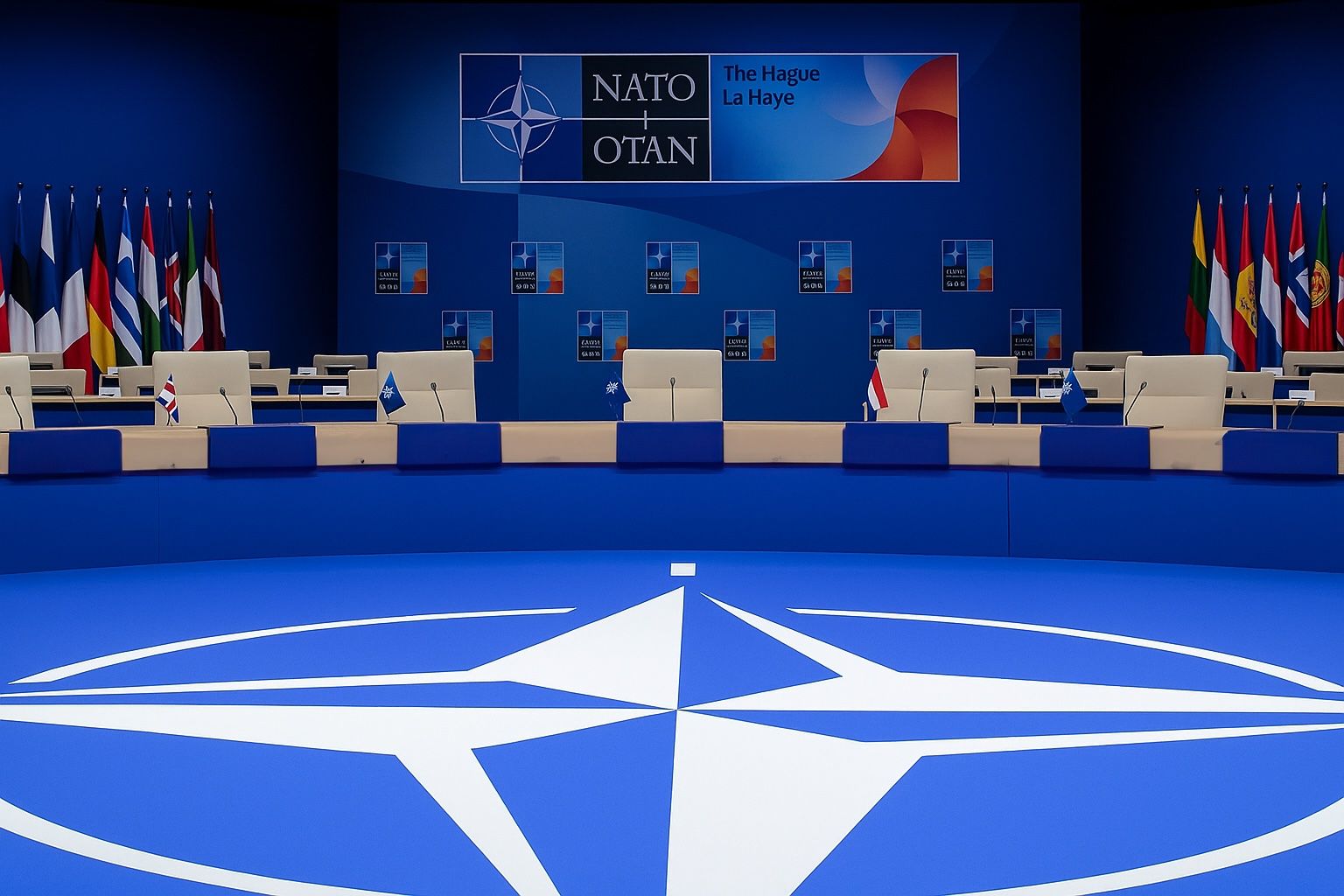
At lightning speed on 24 June 2025, President Donald Trump upended foreign and domestic politics: he jetted into The Hague demanding a historic 5 %‑of‑GDP defense pledge from NATO, proclaimed a shaky Israel‑Iran cease‑fire hours after ordering U.S. B‑2 strikes on Iranian nuclear sites, and watched Congress shelve an impeachment bid even as lawmakers advanced War‑Powers curbs. Oil prices whipsawed nearly 6 %, consumer confidence slid, immigration policy lurched after a Supreme Court ruling—and allies openly wondered whether Washington would still honor NATO’s Article 5. This report pieces together the day’s flood of developments and adds fresh reporting and expert insight to explain how a single news cycle put America’s alliances, the Middle East, and U.S. constitutional balance on a knife‑edge.
24 June 2025
Missiles, Markets, and Regime-Change Rumors: 11 Jaw-Dropping Revelations From the Israel-Iran Showdown (LIVE UPDATE)

Missiles, Markets, and Regime-Change Rumors: 11 Jaw-Dropping Revelations From the Israel-Iran Showdown (LIVE UPDATE)

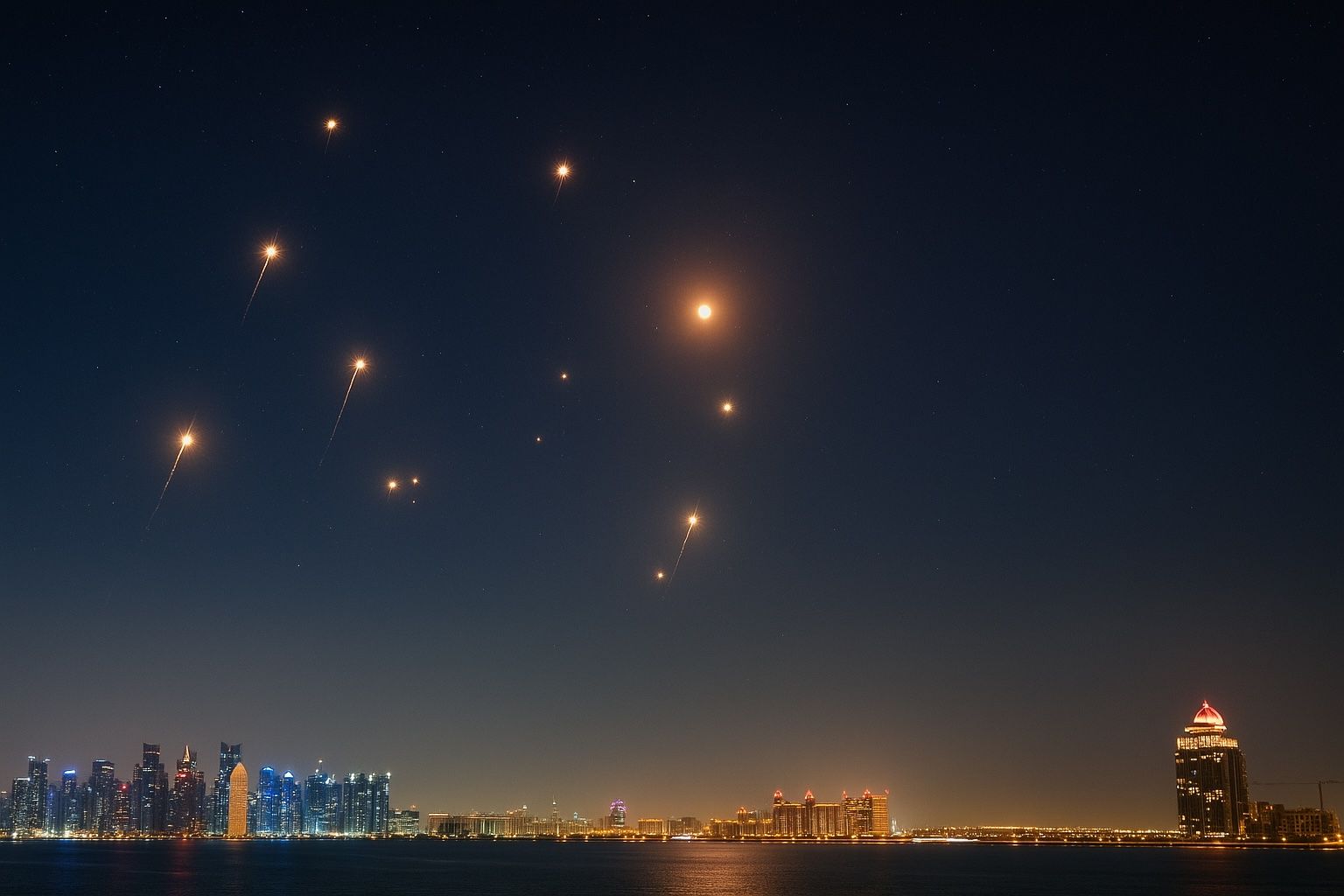
A dramatic 24-hour burst of missile fire, bunker-buster strikes, and dizzying political messaging has pushed the Iran-Israel war to its most perilous point yet. Iran’s “symbolic” barrage on America’s Al Udeid air base in Qatar came only a day after U.S. B-2 bombers flattened three Iranian nuclear sites, while Israel kept pounding targets in Tehran. The fighting has already killed nearly a thousand Iranians, at least two dozen Israelis, and triggered region-wide air-space closures, gyrating oil prices, and an unprecedented public hint from Donald Trump that “maybe” it really is time for regime change in Tehran. Below is a deep-dive report that pieces together the key facts, fresh expert voices, and the open questions still hanging over the Middle East tonight.
23 June 2025
Bunker‑Buster Earthquake: New Satellite Images Expose Fordow’s Ruin—What the Bombs Hit, What Survived, and Why It Matters

Bunker‑Buster Earthquake: New Satellite Images Expose Fordow’s Ruin—What the Bombs Hit, What Survived, and Why It Matters

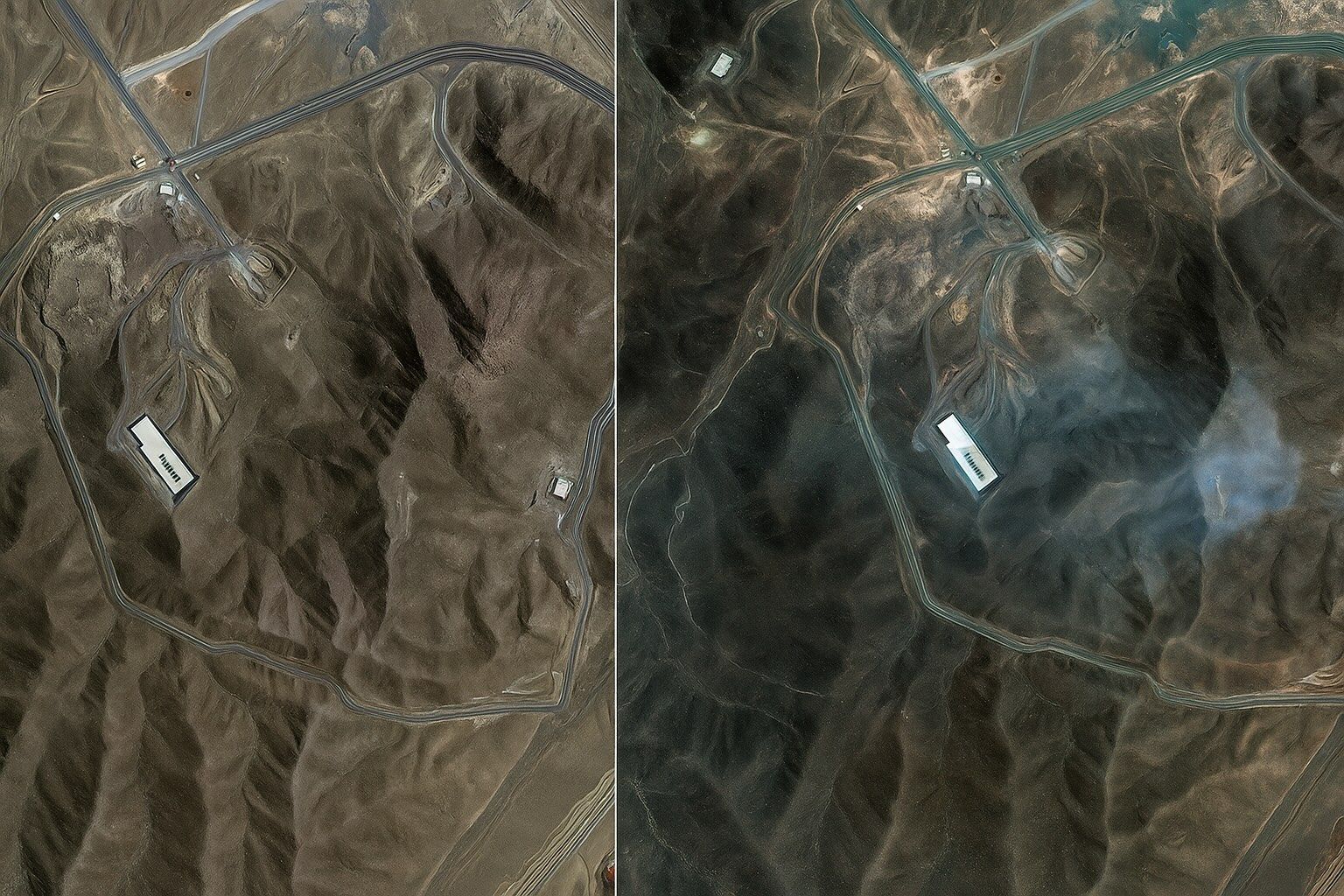
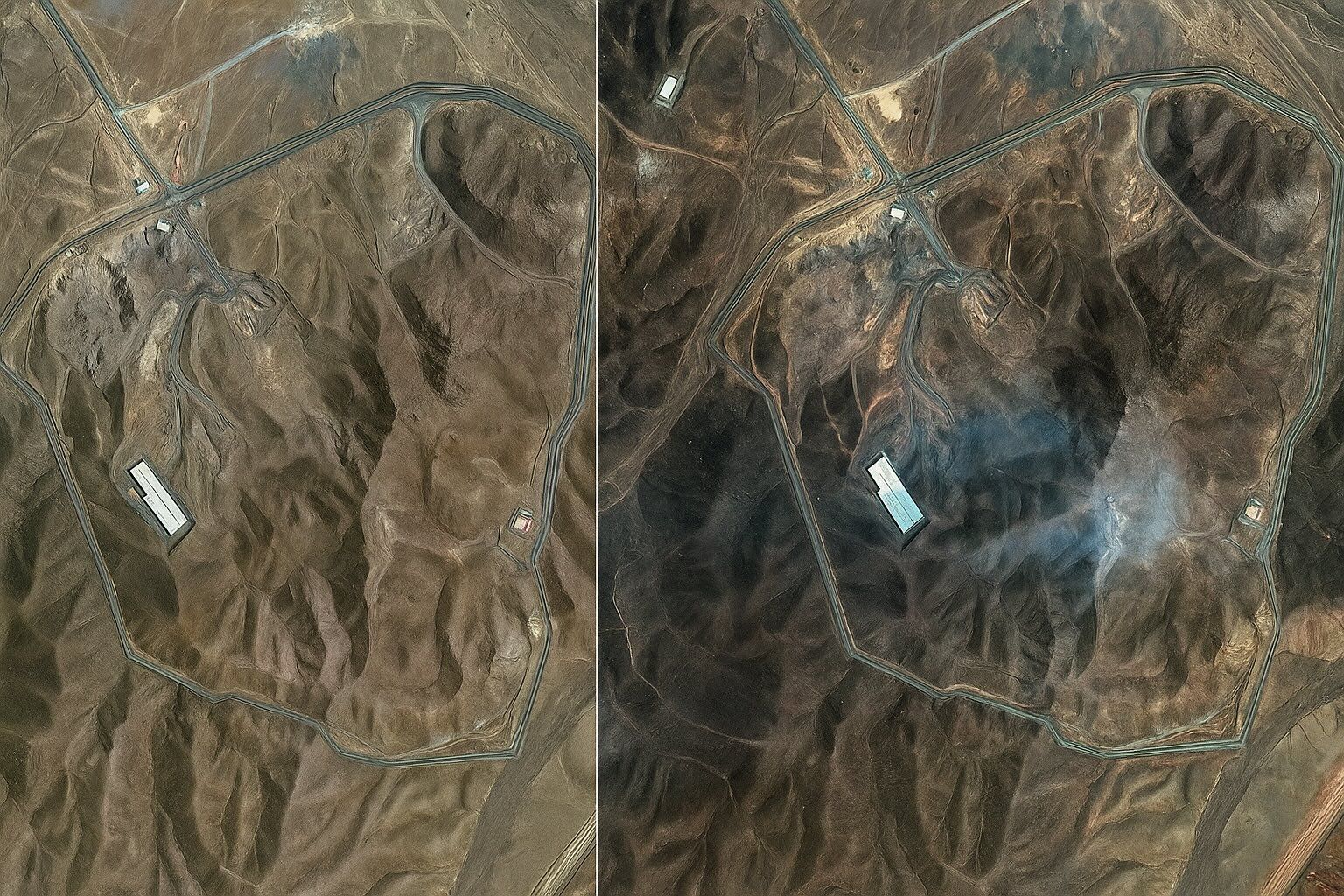
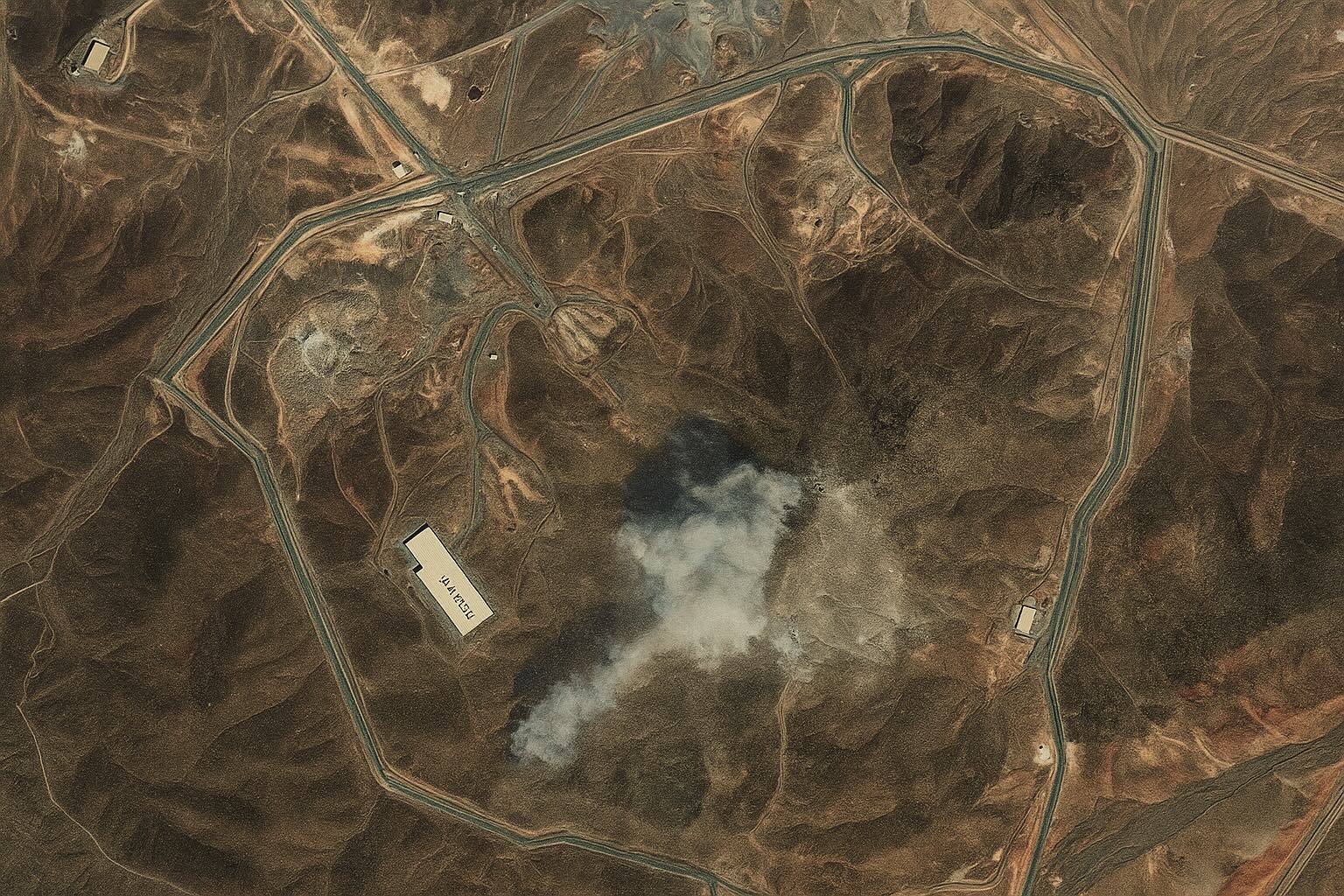
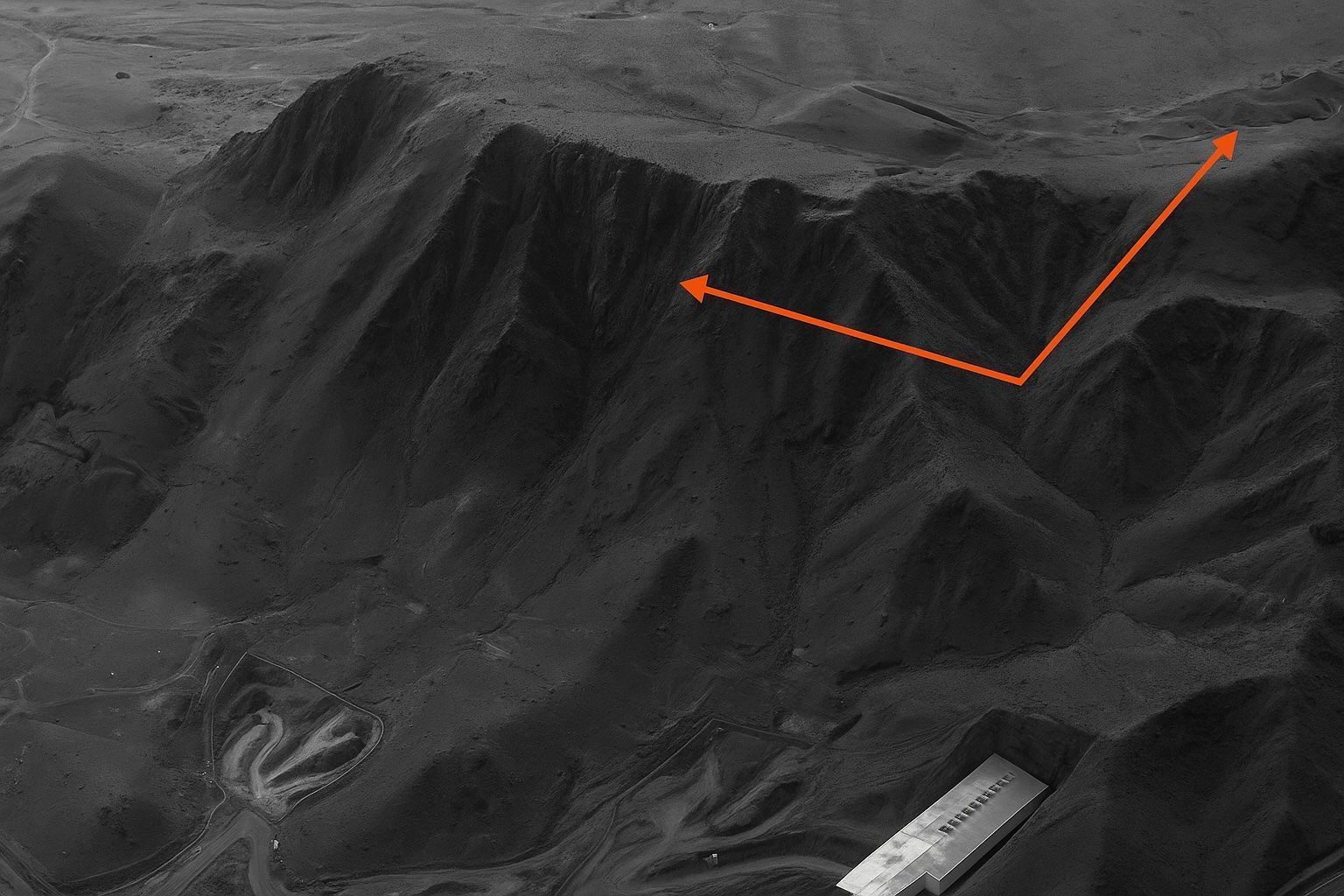
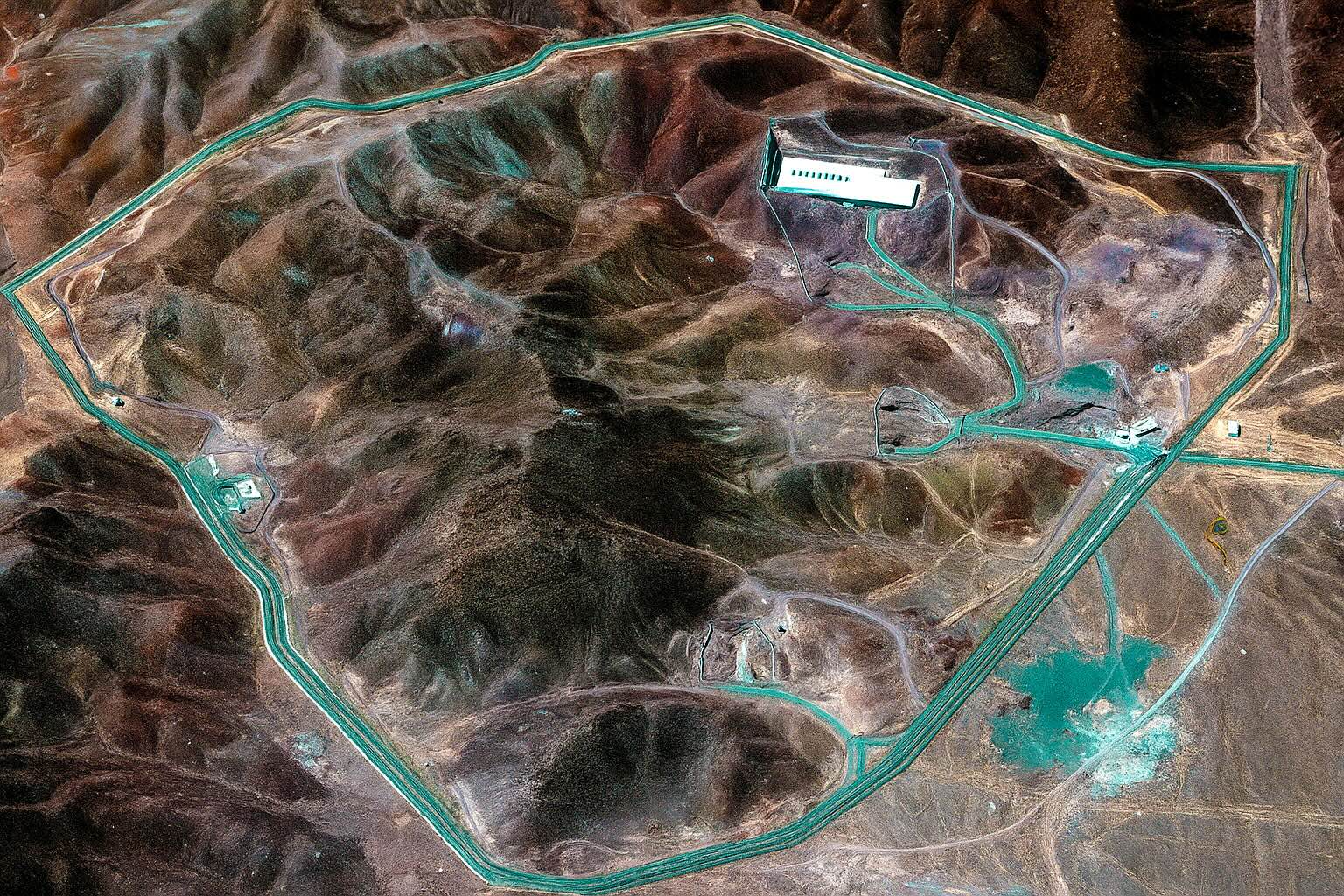
Recent commercial satellite photographs released by Maxar Technologies, Planet Labs and multiple newsrooms confirm that the Fordow Fuel Enrichment Plant outside Qom—the deepest, most heavily‑fortified node in Iran’s nuclear network—absorbed direct hits from U.S. Massive Ordnance Penetrator bombs during the 22 June allied air‑raid. High‑resolution before‑and‑after imagery shows at least six fresh penetrator holes in the limestone ridge above the centrifuge halls, collapsed tunnel portals, landslide debris and scorched support buildings, leading independent analysts and even the U.N. nuclear‑watchdog chief to conclude that “very significant damage” has almost certainly incapacitated the site. Yet Tehran’s denial of catastrophic loss, evidence of last‑minute truck convoys, and the unresolved question of where 408 kg of 60 % enriched uranium went leave the international community guessing whether Fordow’s destruction is a decisive setback or merely a costly pause in Iran’s march toward a bomb. omni.se reuters.com wsj.com ft.com
Fordow Exposed: Jaw‑Dropping Satellite Images Reveal the Mountain‑Shaking U.S. Strike on Iran’s Deepest Nuclear Stronghold

Fordow Exposed: Jaw‑Dropping Satellite Images Reveal the Mountain‑Shaking U.S. Strike on Iran’s Deepest Nuclear Stronghold

In the space of a single June weekend, the Fordow Fuel Enrichment Plant—long considered Iran’s most impregnable atomic fortress—went from hidden menace to smoking headline. Newly released commercial satellite photos reveal at least six cavernous craters in the rocky ridge protecting the underground centrifuge halls, evidence that the United States unleashed a dozen 30‑thousand‑pound Massive Ordnance Penetrators during “Operation Midnight Hammer.” While Tehran insists the facility is merely “scratched,” independent analysts, the UN nuclear watchdog and even some Iranian insiders now concede that Fordow’s enrichment halls may be “structurally crippled,” setting off an urgent debate over what Iran moved out, what survived below, and what comes next. reuters.com reuters.com reuters.com
23 June 2025
Strait of Hormuz Crisis: World’s Critical Oil Chokepoint at the Center of a Geopolitical Storm

Strait of Hormuz Crisis: World’s Critical Oil Chokepoint at the Center of a Geopolitical Storm

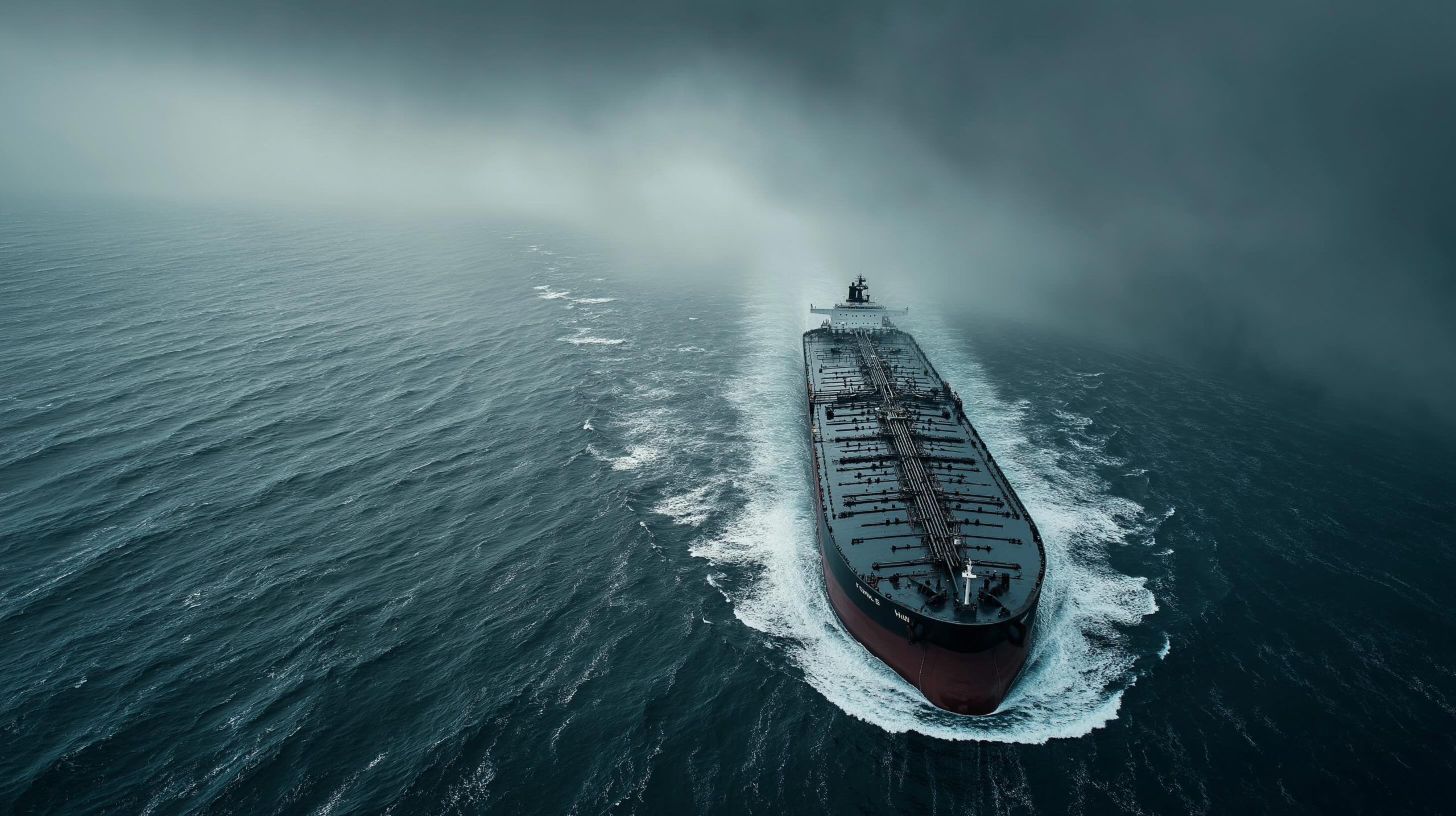
In the past 48 hours, the Strait of Hormuz has become the flashpoint of a sudden international crisis. Iran’s parliament voted to close the Strait of Hormuz in retaliation for U.S. airstrikes on Iranian nuclear facilities politico.eu. This move came after a dramatic escalation: on June 22, 2025, the United States launched “Operation Midnight Hammer,” bombing key Iranian nuclear sites in coordination with Israel politico.eu. Tehran’s response was swift – lawmakers backed shutting the strait, a vital oil artery that carries roughly 20% of the world’s oil and gas flows reuters.com. Global markets recoiled at the news, with Brent crude prices spiking about 10% within days reuters.com. The U.S. has warned Iran that attempting to choke off Hormuz would be “economic suicide” and vowed swift action to keep it open reuters.com. Washington even urged China, a major buyer of Gulf oil, to press Tehran to stand down from closing the strait reuters.com. As military tensions flare and oil prices jump, all eyes are on the Strait of Hormuz – the world’s most important energy chokepoint – and the potential fallout of this high-stakes showdown.
22 June 2025
Operation Midnight Hammer: How Stealth Bombers, Fighters, and Bunker Busters Obliterated Iran’s Nuclear Sites

Operation Midnight Hammer: How Stealth Bombers, Fighters, and Bunker Busters Obliterated Iran’s Nuclear Sites

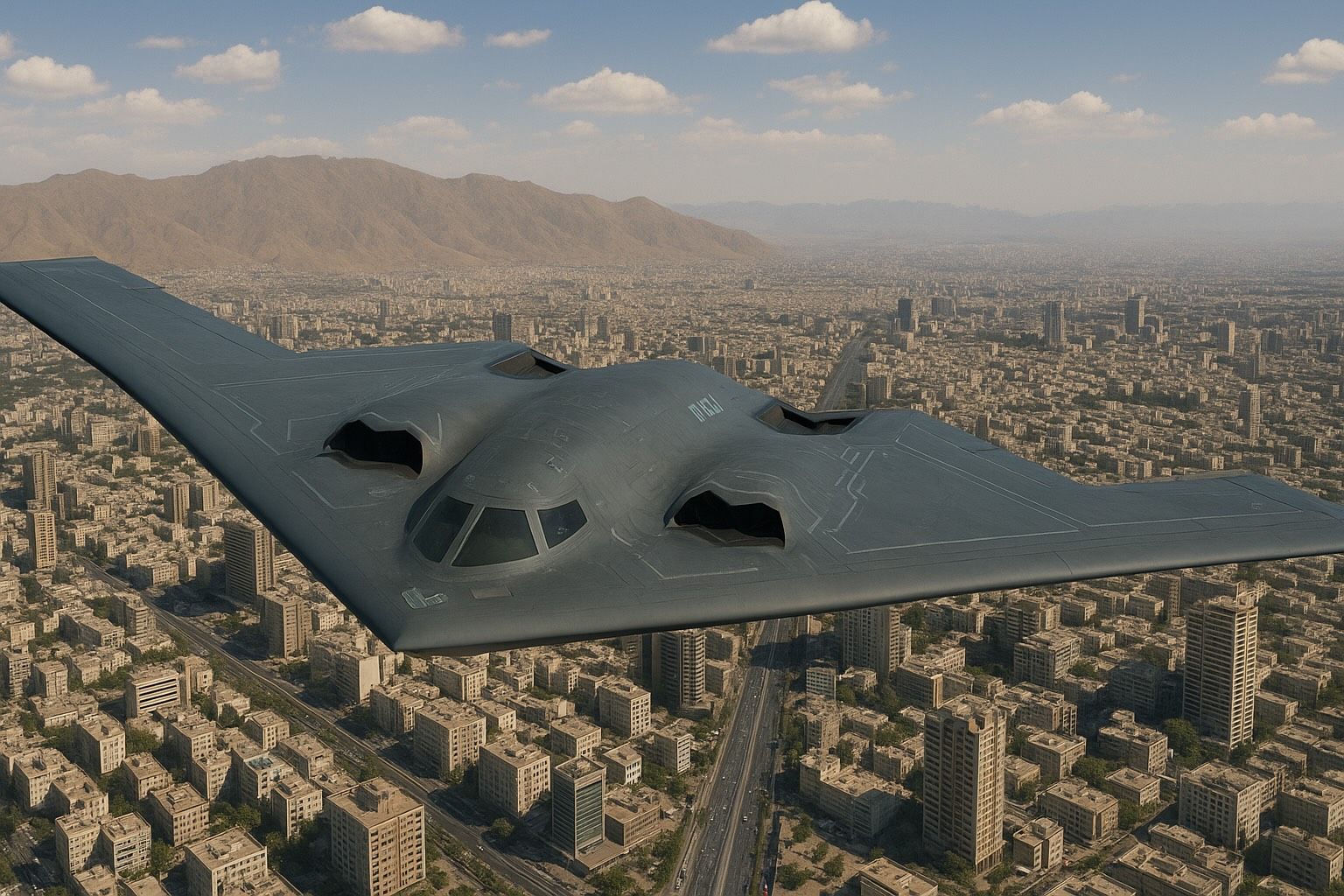
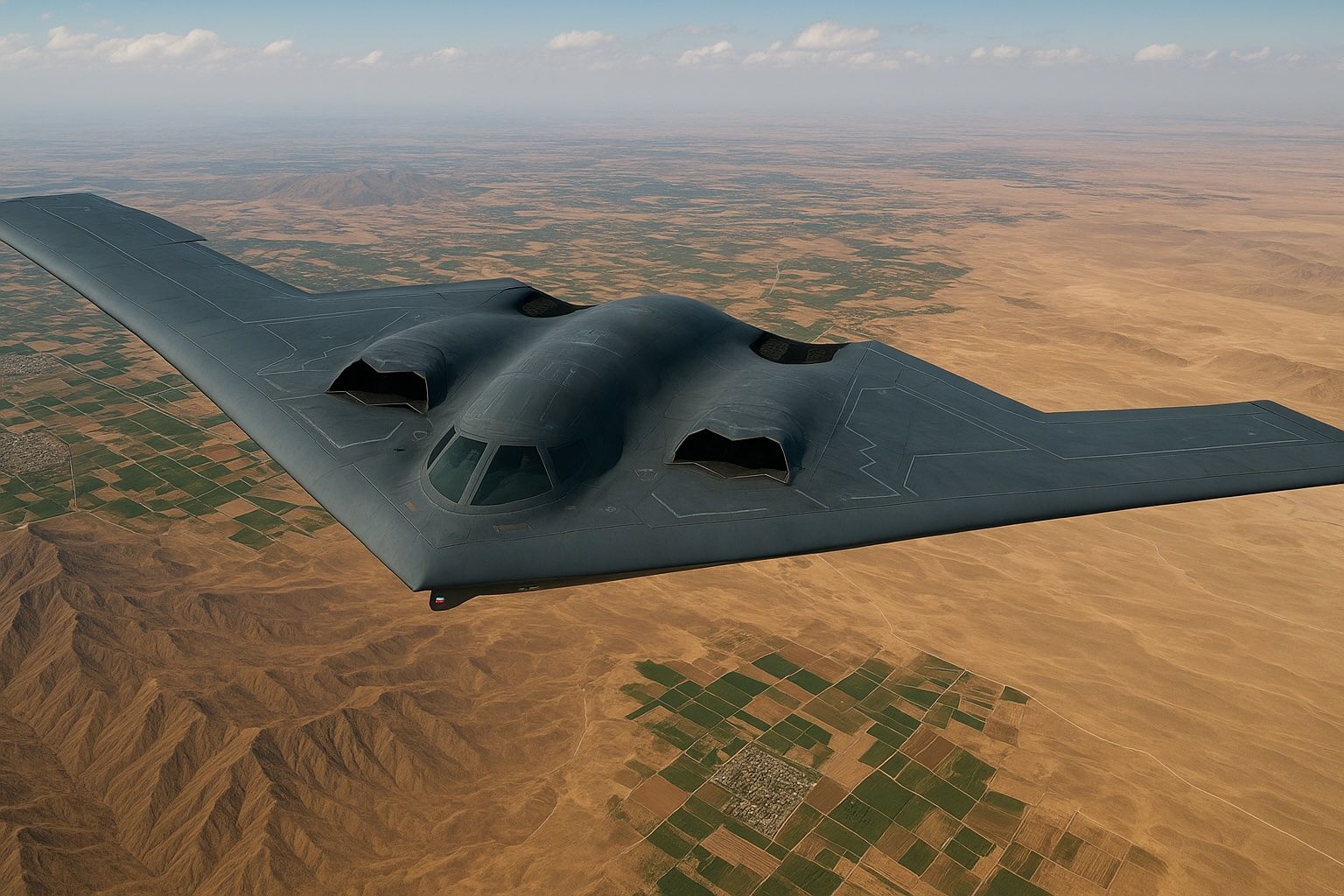
June 21–22, 2025 – In a massive overnight strike, the United States unleashed a coordinated assault on Iran’s most fortified nuclear facilities – Fordow, Natanz, and Isfahan – under the code name Operation Midnight Hammer. This unprecedented attack, conducted in the early hours of June 22 local time, brought together America’s most advanced stealth bombers, fighter escorts, naval firepower, and specialized munitions in a highly choreographed operation airandspaceforces.com twz.com. U.S. officials confirmed that the strikes “obliterated” Iran’s nuclear ambitions twz.com by devastating critical enrichment sites buried deep underground. President Donald Trump announced that “a full payload of bombs was dropped on the primary site, Fordow,” and declared “all planes are safely on their way home”, lauding that “there is not another military in the world that could have done this” en.wikipedia.org. This report examines every platform and unit involved – from B-2 Spirit stealth bombers and F-22/F-35 fighters to Tomahawk cruise missiles and cyber units – and how they combined to deliver a historic blow to Iran’s nuclear program.
Midnight Hammer: How U.S. Stealth Bombers Obliterated Iran’s Nuclear Sites and Shook the World

Midnight Hammer: How U.S. Stealth Bombers Obliterated Iran’s Nuclear Sites and Shook the World

For months, tensions between Iran and its adversaries had been building toward a breaking point. In mid-June 2025, Israel launched a daring military campaign against Iran’s nuclear program, saying it “wanted to remove any chance of Tehran developing nuclear weapons” theguardian.com. Israeli airstrikes beginning on June 13 systematically targeted Iran’s air defenses and enrichment facilities, “killing several senior leaders” and sparking Iranian missile reprisals washingtonpost.com theguardian.com. Iran, which insists its nuclear ambitions are peaceful, responded defiantly. By late June, the two countries were effectively at war, trading blows across the region.
22 June 2025
Stunning Satellite Images Reveal Fordow Nuclear Facility Cratered by U.S. Airstrike

Stunning Satellite Images Reveal Fordow Nuclear Facility Cratered by U.S. Airstrike

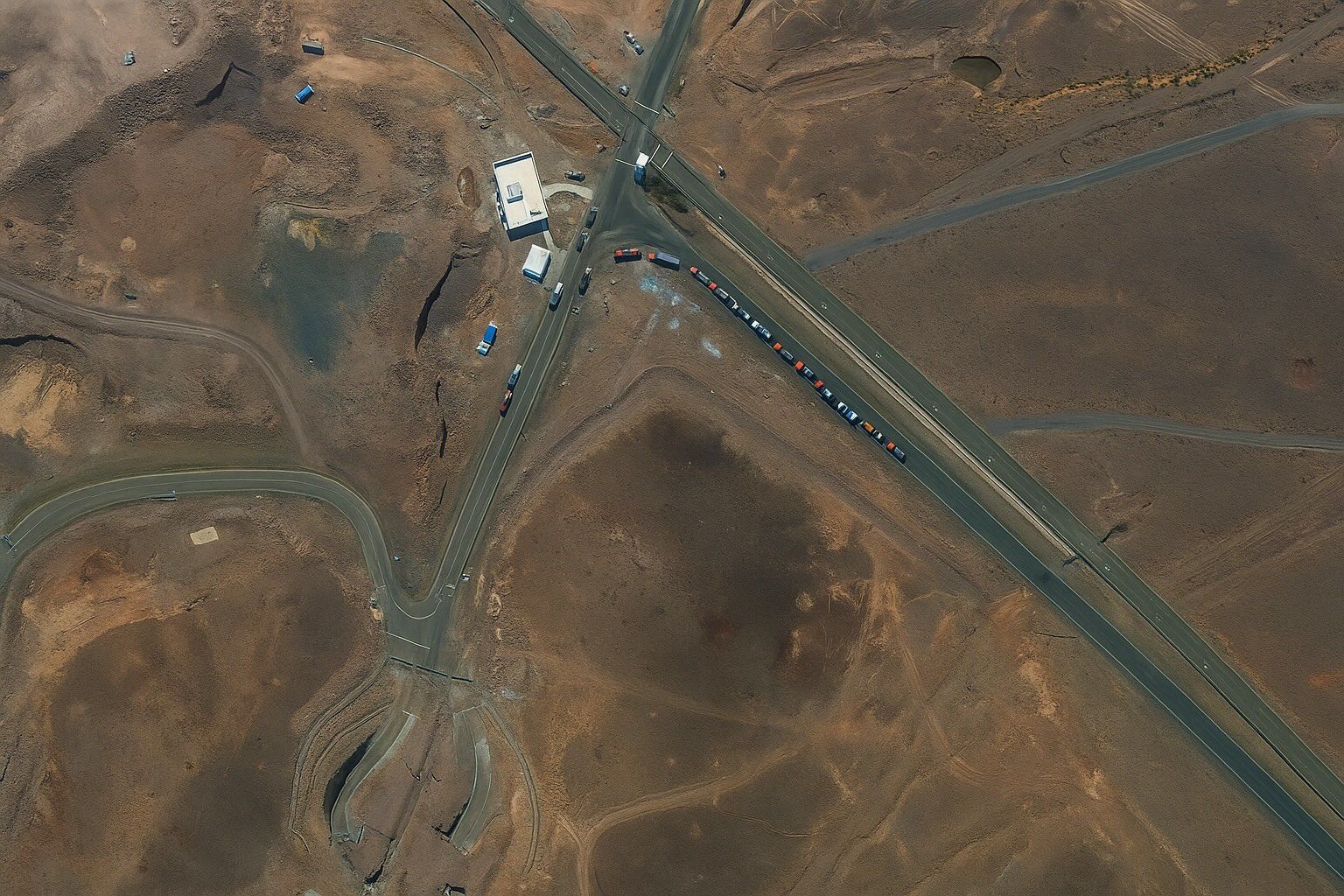
Satellite surveillance captured telltale signs of Iranian preparations at Fordow. On June 19, 2025 a Maxar satellite image shows cargo trucks parked outside the underground entrance of the Fordow complex foxnews.com. The next day another image reveals bulldozers and heavy vehicles moving toward the tunnel entrance foxnews.com. These vehicles were clearly visible in the raw imagery – Fox News reports that “trucks and vehicles can be seen at the Fordow site” in pre-strike pictures foxnews.com foxnews.com. Open-source analysts say this “unusual activity” likely indicates that Iran was shuffling equipment or shielding the facility just before the U.S. raid.
22 June 2025
Mind‑Blowing Satellite Images Reveal Fordow’s Cavernous Crater: Inside the High‑Resolution Photo Forensics that Exposed the Collapse of Iran’s Underground Nuclear Fortress

Mind‑Blowing Satellite Images Reveal Fordow’s Cavernous Crater: Inside the High‑Resolution Photo Forensics that Exposed the Collapse of Iran’s Underground Nuclear Fortress

A cascade of newly released commercial‑satellite photographs confirms that last weekend’s U.S. bunker‑buster raid on Iran’s Fordow enrichment plant gouged fresh holes into the mountain and triggered a landslide of rock and debris that experts say may have entombed the centrifuge halls. The imagery—captured by Maxar, Planet Labs and others—has become the centerpiece of a fast‑moving open‑source intelligence effort that is mapping the strike’s true impact long before inspectors set foot on site. Below is an in‑depth report that pieces together what the pixels show, what analysts and officials are saying, and what it means for the future of Iran’s nuclear program.
Explosive Satellite Images Reveal Fordow’s Secret Moves Before U.S. Strike—Inside the High‑Stakes Showdown Over Iran’s Nuclear Future

Explosive Satellite Images Reveal Fordow’s Secret Moves Before U.S. Strike—Inside the High‑Stakes Showdown Over Iran’s Nuclear Future

In the 48 hours before U.S. B‑2 bombers punched bunker‑busting holes into Iran’s Fordow, Natanz and Isfahan complexes, a burst of commercial‑satellite photos captured trucks, bulldozers and security convoys swarming Fordow’s tunnel mouths. Analysts read the pictures as a frantic effort to shift centrifuges or shielding materials—clues that helped tip Washington’s calculus toward a lightning strike. What follows is an in‑depth reconstruction of those decisive days, the imagery behind the decision, and what experts say the post‑strike pictures reveal about Iran’s remaining nuclear potential.
Stunning Satellite Images Expose the Full Impact of U.S. Airstrikes on Iran’s Fordow, Natanz and Isfahan Nuclear Sites — What the Pictures Reveal, Why They Matter, and What Happens Next

Stunning Satellite Images Expose the Full Impact of U.S. Airstrikes on Iran’s Fordow, Natanz and Isfahan Nuclear Sites — What the Pictures Reveal, Why They Matter, and What Happens Next

A wave of newly released commercial‐satellite photographs confirms that the 21 June 2025 U.S. strike package—which used B‑2‑launched GBU‑57 “bunker‑busters” and sea‑launched Tomahawks—badly damaged key above‑ground infrastructure at Iran’s Natanz and Isfahan complexes and cut external power to the otherwise deeply buried Fordow enrichment halls. Taken together with on‑the‑record assessments from the International Atomic Energy Agency and leading non‑proliferation analysts, the imagery suggests Iran’s centrifuge capacity has been set back by years, even if the subterranean core of the program survives. This report pieces together what happened, site by site, shows how satellite imagery made it possible to verify battlefield claims within hours, and explains the strategic stakes that now hang on what Iran, the United States and Israel do next.
Jaw‑Dropping Satellite Photos Expose Israel’s Covert Blows to Iran—What the Images Reveal, Why the Targets Mattered, and What Comes Next

Jaw‑Dropping Satellite Photos Expose Israel’s Covert Blows to Iran—What the Images Reveal, Why the Targets Mattered, and What Comes Next

A new tranche of commercial satellite shots has torn the secrecy veil from Israel’s eight‑day air war inside Iran, confirming crippling damage to nuclear, missile and command sites. Independent analysts say Tehran’s premier heavy‑water reactor complex, multiple centrifuge workshops and at least two hardened missile bases have been “neutralised,” while Iranian retaliation has peppered Israeli cities with more than 450 rockets. Below is a deep‑dive that stitches the imagery to on‑the‑ground reporting, expert testimony and UN nuclear‑safety warnings to show how the campaign is reshaping the Middle East chessboard.
21 June 2025
Rocketing Satellite Stocks: Global Space Industry Performance & Bold 2025 Forecasts

Rocketing Satellite Stocks: Global Space Industry Performance & Bold 2025 Forecasts

The space industry is experiencing a new wave of growth and investor excitement. From satellite communications providers to rocket launch startups, companies around the world have seen stock prices soar over the past year, followed by a period of consolidation. This report dives into the current stock market performance of publicly traded satellite and space-related companies globally, highlights major private space firms and their funding, and examines the market trends, technological developments, and geopolitical factors shaping the industry’s future. All regions – North America, Europe, Asia, and beyond – are contributing to the accelerating “new space” economy, which some analysts project to reach $1 trillion by 2040 entrepreneur.com. Below, we break down the latest financial results, forecasts, and strategic outlooks across the global space sector.
Top 10 AI Voice and Speech Technologies Dominating 2025 (TTS, STT, Voice Cloning)

Top 10 AI Voice and Speech Technologies Dominating 2025 (TTS, STT, Voice Cloning)

Voice AI technology in 2025 is marked by remarkable advancements in Text-to-Speech, Speech-to-Text, and Voice Cloning. Industry-leading platforms provide increasingly natural speech synthesis and highly accurate speech recognition, enabling use cases from virtual assistants and real-time transcription to lifelike voiceovers and multilingual dubbing. This report profiles the top 10 voice AI platforms that dominate 2025, excelling in one or more of these areas. Each entry includes an overview of capabilities, key features, supported languages, underlying tech, use cases, pricing, strengths/weaknesses, recent innovations, and a link to the official product page. A summary comparison table is provided for a quick overview of their highlights.
The Ultimate Global Missile Guide: Secret Weapons and Strategic Arsenals Revealed

The Ultimate Global Missile Guide: Secret Weapons and Strategic Arsenals Revealed

Missile technology forms the backbone of modern military power, from intercontinental nuclear-tipped rockets to precision-guided tactical weapons. This comprehensive country-by-country guide details the world’s missile systems – ballistic missiles, cruise missiles, anti-ship and air-defense missiles, air-to-air weapons, and more – including those in service, in development, or recently retired. For each nation, we outline key missile systems with technical specifications, their origin, and intended roles. Read on to discover the secret arsenals and cutting-edge missiles that shape global security.
F-22 Raptor: America’s Unmatched Stealth Air Superiority Fighter

F-22 Raptor: America’s Unmatched Stealth Air Superiority Fighter

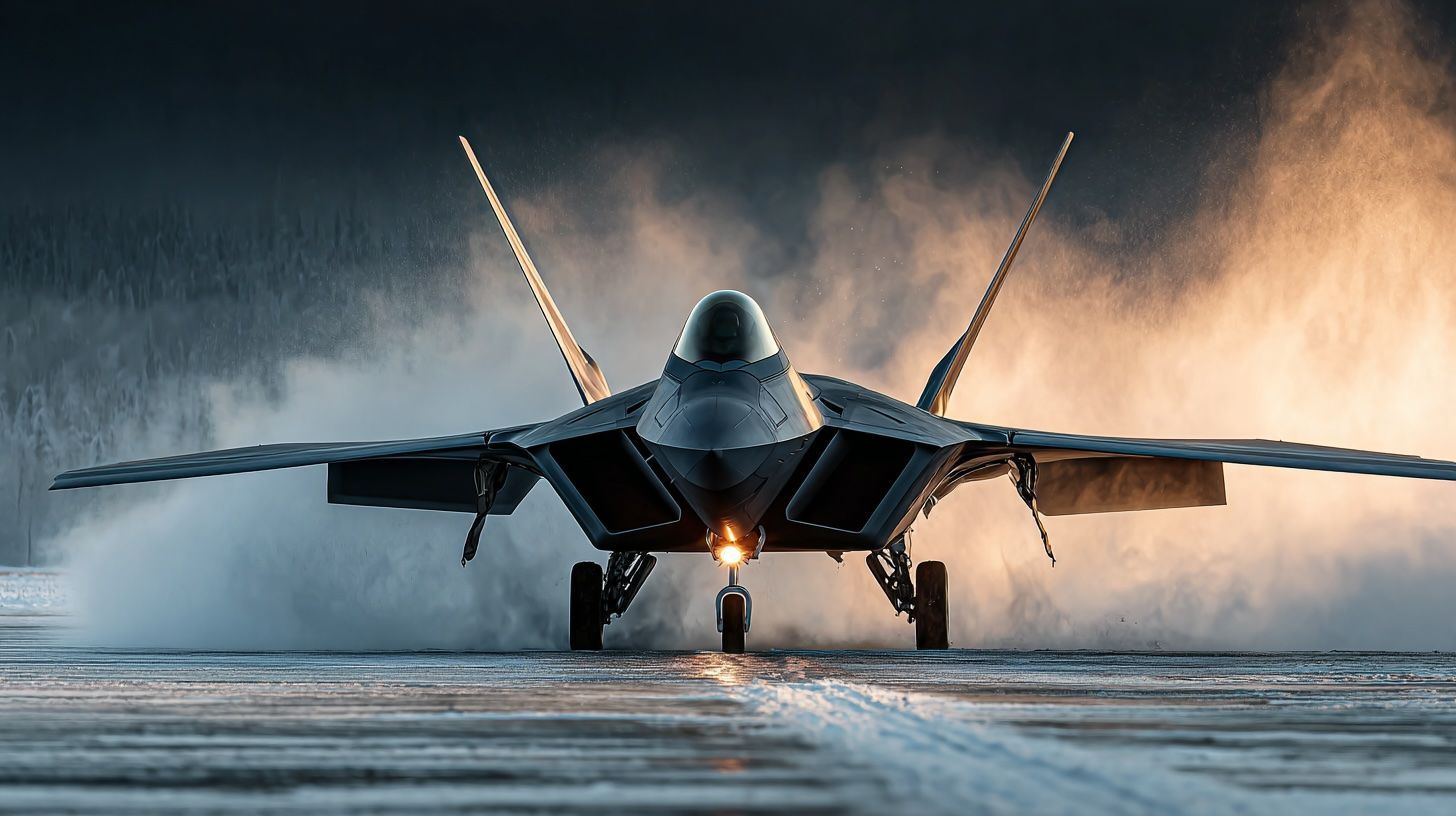
The Lockheed Martin F-22 Raptor is a fifth-generation stealth fighter jet renowned as one of the most formidable air superiority fighters ever built. Developed for the United States Air Force as a successor to the F-15 Eagle, the F-22 pioneered new levels of stealth, speed, and maneuverability when it entered service in the mid-2000s. Its combination of stealth technology, supercruise, and advanced avionics represented an “exponential leap in warfighting capabilities,” according to the USAF af.mil. The Raptor’s significance lies in its ability to secure air dominance – it was designed to defeat any known or projected enemy fighter and protect allied forces by denying opponents control of the skies af.mil. Even decades after its introduction, the F-22 remains a critical asset for the U.S. military and a benchmark against which other nations’ fighters are measured.
17 June 2025
Space-Based 5G Backhaul: The Billion-Dollar Race to Orbit 5G (2024–2031)

Space-Based 5G Backhaul: The Billion-Dollar Race to Orbit 5G (2024–2031)

The convergence of satellite communications with 5G networks is accelerating, launching a new space race to provide broadband backhaul from orbit. In the period 2024–2031, companies are investing billions of dollars into constellations of Low Earth Orbit, Medium Earth Orbit, and Geostationary Orbit satellites to extend 5G coverage to every corner of the globe. This report explores the deployment economics of these space-based 5G backhaul systems – from massive up-front capital expenditures to ongoing operational costs – and examines the business models aiming to monetize these networks over time. We also analyze global market demand, the evolving regulatory environment, and how satellite backhaul stacks up against terrestrial alternatives like fiber and microwave links. Key use cases such as rural connectivity, disaster recovery, defense communications, Internet of Things, and maritime/aviation broadband are driving adoption and shaping requirements. Finally, we profile the competitive landscape of leading players – including SpaceX Starlink, OneWeb, Amazon’s Project Kuiper, SES, and Telesat – and highlight technological innovations that are rapidly reducing the cost per Mbps, while improving latency and reliability. The stage is set for a billion-dollar race to orbit 5G, as satellite backhaul moves from niche solution to an integral part of 5G infrastructure by

Go toTop