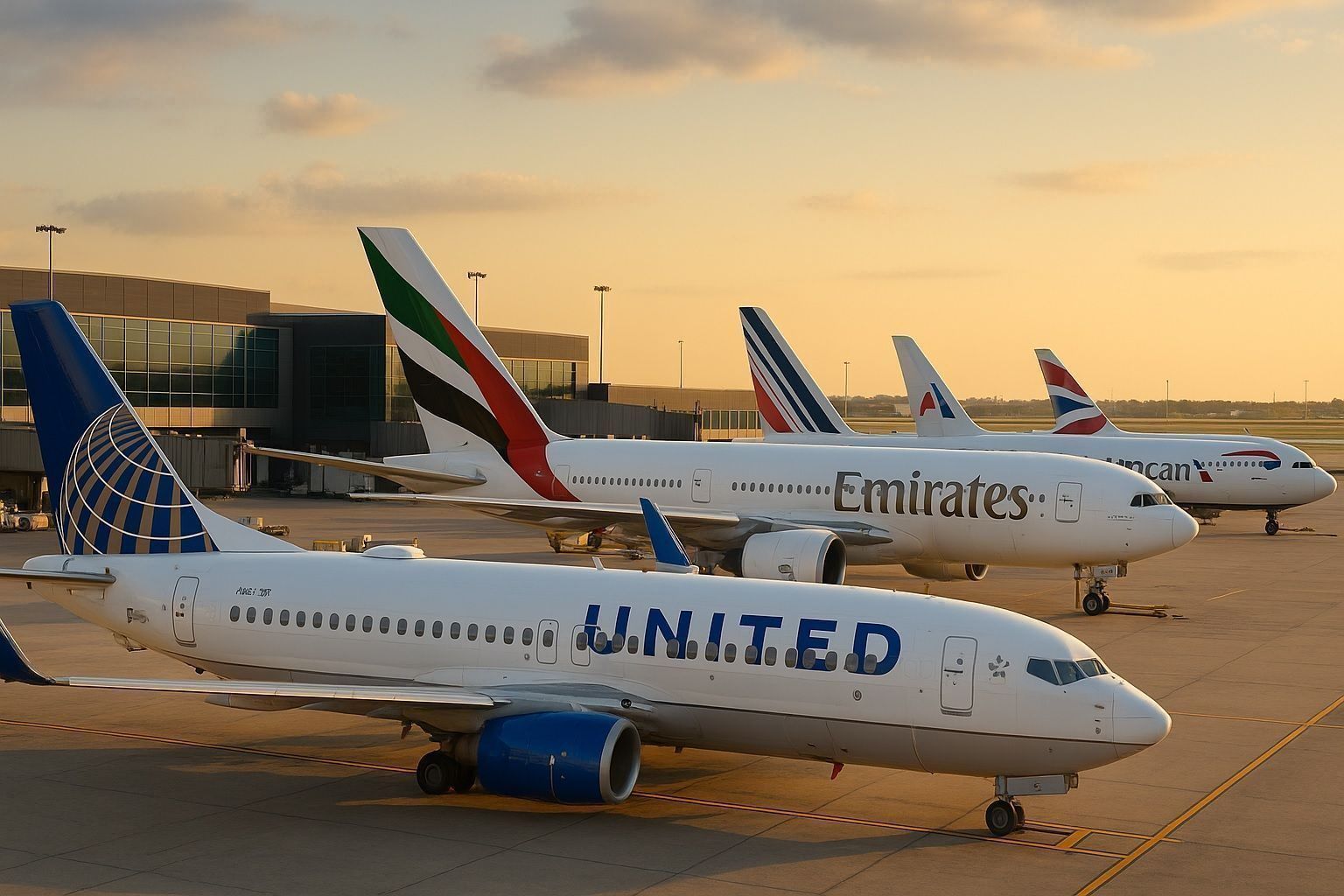
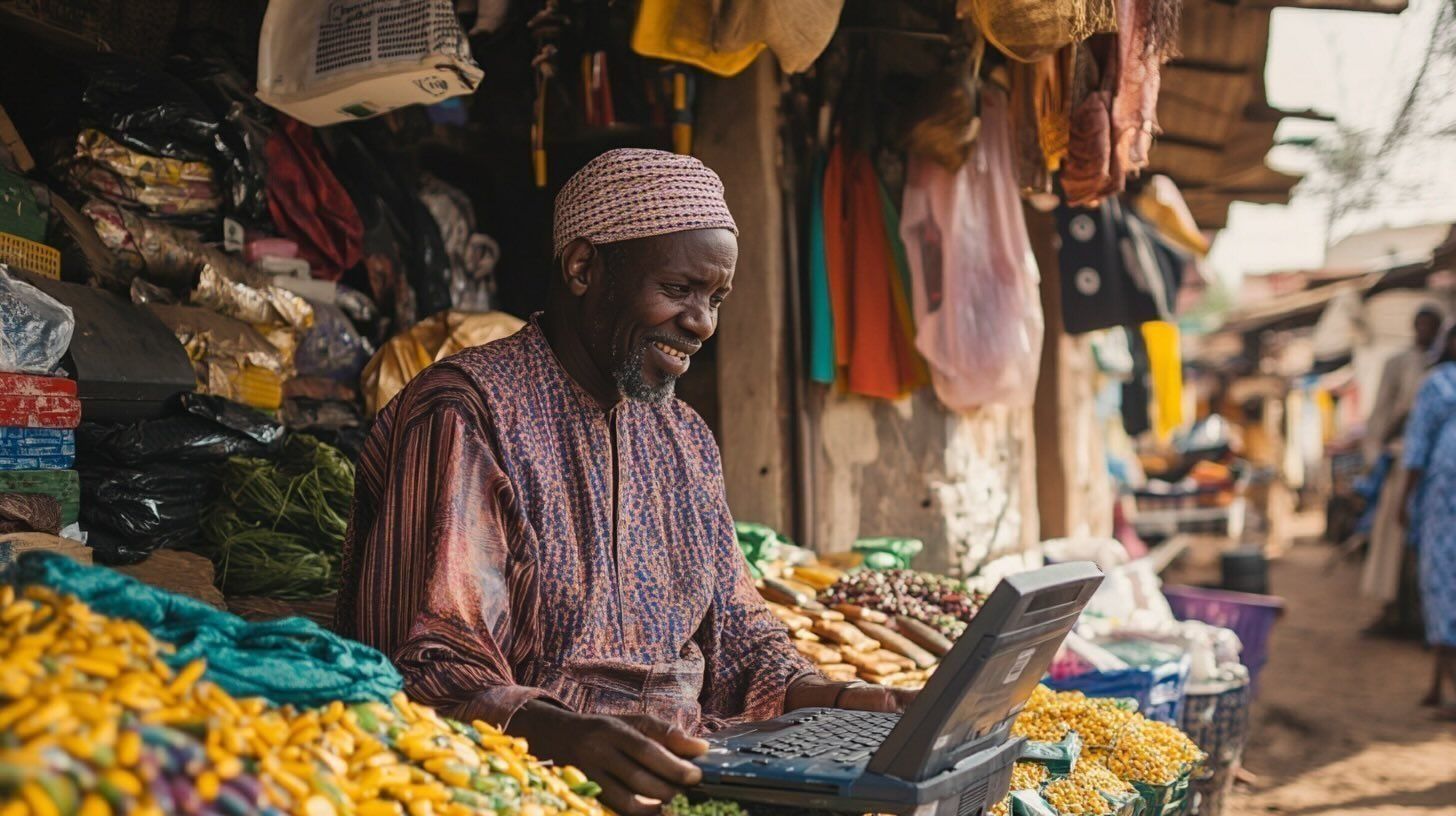
In-flight connectivity via satellite has shifted from a luxury novelty to an expected amenity in air travel. As airlines emerge from the pandemic, they are accelerating investments in high-speed Wi-Fi to meet passenger demand and gain competitive edge. Recent surveys show that 83% of passengers are more likely to rebook with an airline that offers quality onboard Wi-Fi, and free connectivity is now the most influential factor when choosing an airline Inmarsat Inmarsat. This report provides a comprehensive roadmap of IFC adoption from 2024 through 2030, examining global and regional trends, airline strategies, and the evolving satellite technologies enabling the next generation of in-flight Wi-Fi. It also explores market dynamics driving IFC expansion, including passenger expectations for home-like internet speeds aloft, competitive differentiation through free Wi-Fi offerings, and new revenue streams for airlines. Key technical and regulatory considerations – from antenna innovations and bandwidth scalability to spectrum policy and cybersecurity – are analyzed. A year-by-year deployment timeline is outlined, and a comparative table of major IFC providers highlights their coverage, technology, partnerships, bandwidth, and airline clients.
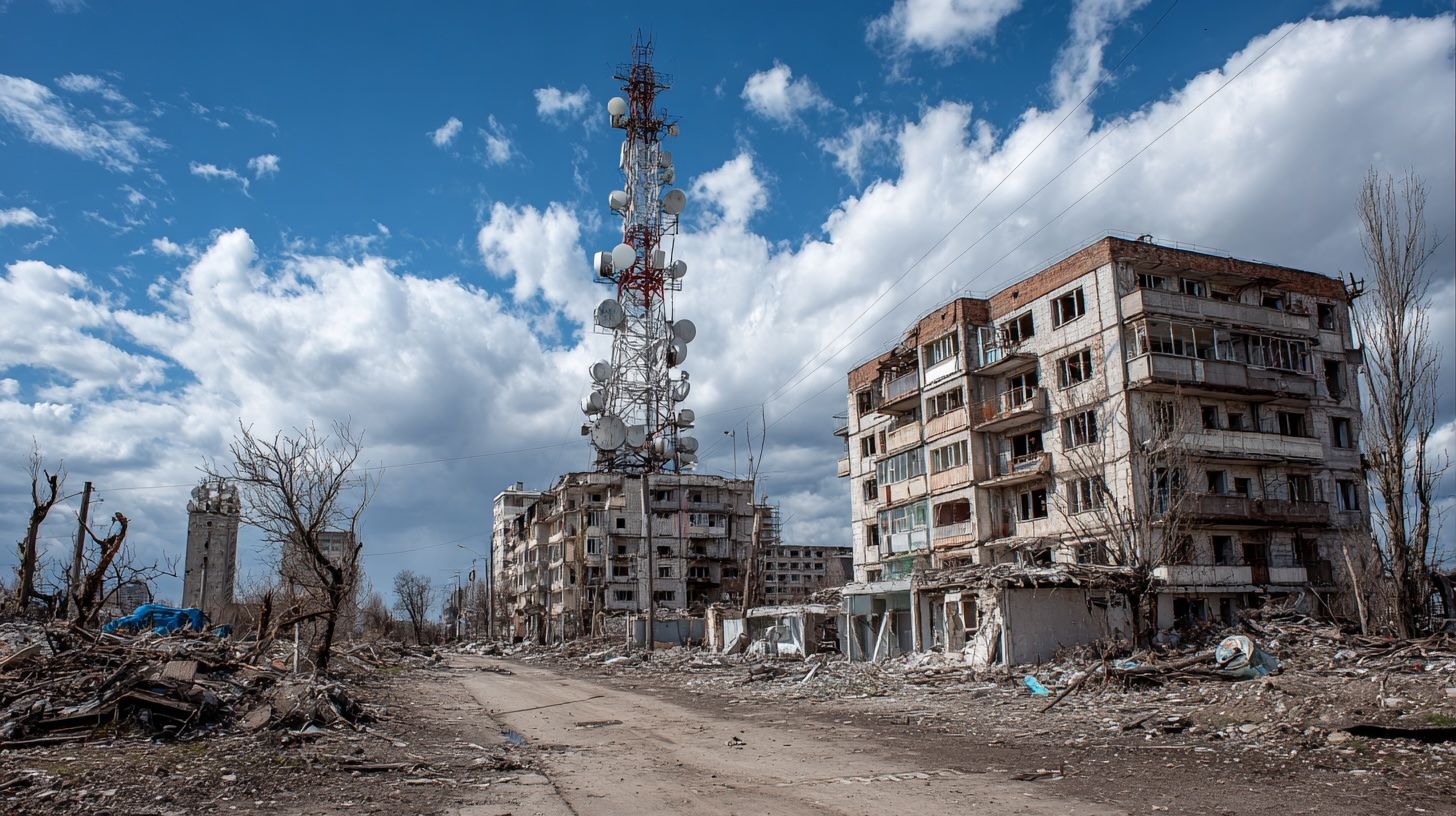
Together, these attacks have aimed to sever Ukraine’s connectivity – both civilian communications and military command links – by dismantling the physical pillars of the internet, phone, and broadcast systems. The following sections detail the timeline of destruction, the regional impacts, and how Ukraine has kept communications running against the odds.
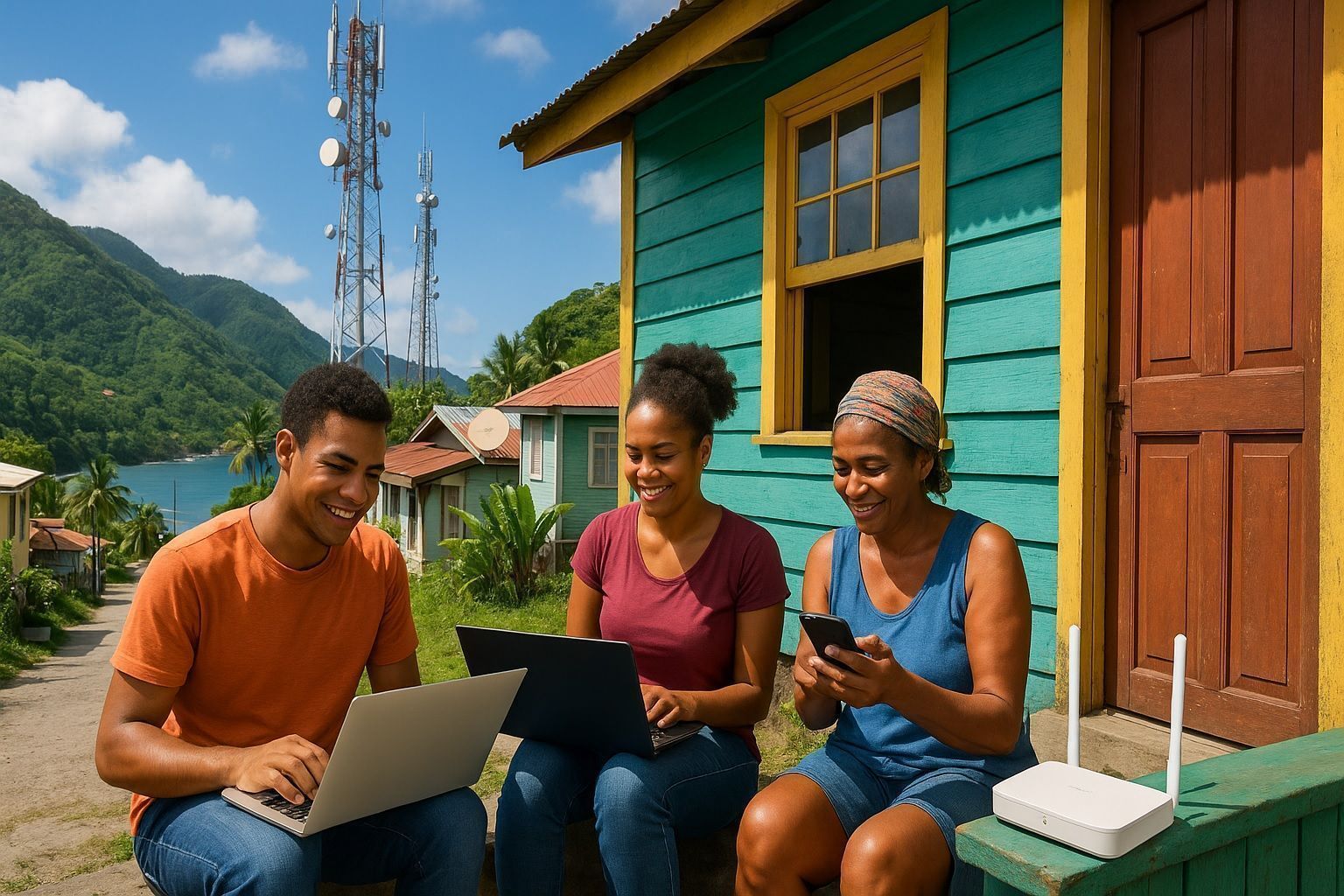
Dominica’s connectivity is carried by undersea cables and local networks. The island is a landing point on the Southern Caribbean Fiber ring, a 3,000-km submarine cable linking 15 Eastern Caribbean islands with high-capacity fiber southerncaribbeanfiber.com. On-island, the former Cable & Wireless network provides fixed DSL and coaxial/cable service, while Digicel offers cable/FTTP service over an upgraded HFC network ectel.int. Fiber-to-the-home is gradually expanding, and fixed-wireless links cover select areas. Mobile broadband is widespread through Digicel and Flow; neither operator has yet deployed 5G. Satellite solutions are used for remote sites: traditional VSAT connect very isolated locations, and starting in June 2025 Dominica gained SpaceX’s Starlink LEO service caribjournal.com. Starlink now advertises “high-speed, low-latency internet” across Dominica caribjournal.com, offering a resilient broadband option in mountainous or underserved zones.
The global satellite broadband market is exploding – set to soar from just a few billion dollars today into the tens of billions by 2030. Market analyses report a global industry size of roughly $5–9 billion in 2023, with estimates ranging up to $24–23 billion by 2030. This surge is driven by an insatiable demand for connectivity in remote and underserved areas worldwide globenewswire.com nam.org. North America currently leads the market, but high growth rates are forecast in Asia-Pacific, Europe, Latin America, and even the Middle East & Africa grandviewresearch.com grandviewresearch.com grandviewresearch.com. By 2030, North America, Europe and Asia-Pacific markets are each projected in the $6–7+ billion range grandviewresearch.com grandviewresearch.com grandviewresearch.com, with Latin America and MEA contributing several hundred million each. These trends underscore a massive addressable market for satellite connectivity solutions reaching beyond traditional urban areas.
Czechia boasts a highly penetrated and diversified internet infrastructure, with about 91.6% of its population online as of 2023 datareportal.com. This translates to roughly 9.6 million internet users in a country of 10.5 million. Fixed broadband connections reached 4.1 million in 2023 ctu.gov.cz, meaning roughly 38–40 subscriptions per 100 people. At the same time, mobile connectivity is ubiquitous – there are 15.5 million mobile SIM cards in use, including 11.5 million active mobile internet subscriptions ctu.gov.cz. In other words, mobile broadband subscriptions are nearly three times the number of fixed broadband subscriptions in Czechia csu.gov.cz. The extensive use of both fixed and mobile internet, along with emerging satellite services, underscores Czechia’s multi-faceted approach to connectivity.
Denmark in 2025 stands as one of the world’s most digitally connected countries, with near-universal internet access and high performance networks spanning from urban centers to rural villages. Thanks to extensive investments in broadband infrastructure and progressive digital policies, virtually every household can get high-speed connectivity techblog.comsoc.org trade.gov. Danish consumers enjoy some of the fastest internet speeds globally, and the country consistently ranks at the forefront of European connectivity indices dst.dk datareportal.com. This report provides a comprehensive overview of internet access in Denmark – covering the infrastructure, geographic coverage, residential and business connectivity, major ISPs, government initiatives, network performance, digital inclusion, and how Denmark compares with its Nordic and EU peers in 2025.
Austria’s internet infrastructure blends legacy copper lines with modern fiber optics, delivering broadband across the nation. Austria has made significant strides in digital connectivity, building a “digital Autobahn” of high-speed internet links across urban centers and alpine valleys. By 2025, Austrians enjoy internet access through a mix of technologies – from fiber-optic cables and upgraded DSL lines to cable broadband, widespread 4G/5G mobile networks, and even satellite services beaming internet from the sky. This report provides a comprehensive overview of Austria’s internet access landscape in 2025, covering the available access technologies, their coverage in urban and rural regions, key service providers and market share, typical performance, pricing models, government initiatives driving expansion, and emerging technologies like LEO satellite broadband. We also compare satellite internet to terrestrial options in terms of speed, reliability, latency, cost, and use cases. The goal is to paint a clear picture of how Austria is closing digital gaps and accelerating into the gigabit era on its path to nationwide connectivity.
Armenia’s journey to modern internet connectivity began in the 1990s with a single dominant telecom operator. After independence in 1991, the national operator ArmenTel held a legal monopoly over telephony and internet services. This monopoly, granted in 1998, hindered early internet growth, as competitors were barred and infrastructure investments lagged hetq.am azatutyun.am. By the mid-2000s, however, reforms were underway. ArmenTel’s exclusive rights were effectively ended around 2005–2007, opening the market to new internet service providers and mobile operators azatutyun.am. The sector “saw rapid growth” once the monopoly was broken, with new players spurring competition and network expansion azatutyun.am.
Kiribati is a remote Pacific nation of 33 atolls spread over 3.5 million km² of ocean Esa. This extreme geographic dispersion makes internet access both crucial for development and challenging to achieve. Improved connectivity is vital for Kiribati’s economic and social progress – enabling better education, healthcare, e-commerce, and communication services in an otherwise isolated setting Gov. Over the past decade, the country has made strides in expanding internet access, but significant gaps remain due to its unique insular environment.
Internet access in Niger is increasingly recognized as vital for socio-economic development in one of the world’s poorest countries. Niger has a fast-growing population of over 26 million people, the majority of whom live in rural areas datareportal.com. However, internet usage remains very low by global standards – only around 17% of the population was online as of 2022 pulse.internetsociety.org. This places Niger among the countries with the lowest internet penetration in Africa. The government has acknowledged the importance of digital connectivity for achieving development goals and is working on a long-term digital agenda to improve access for all citizens wearetech.africa wearetech.africa. In this context, it is crucial to examine Niger’s current internet landscape, the challenges it faces, and the initiatives underway to expand broadband, mobile, and satellite internet access.
Egypt’s internet landscape is undergoing a rapid transformation. With over 100 million people and internet penetration above 70%, the country has seen surging demand for broadband and mobile data en.wikipedia.org. Major investments in fiber optics and mobile networks are boosting speeds to record highs – Egypt even boasted the fastest internet in Africa in 2022 en.wikipedia.org. At the same time, stark urban-rural divides persist, and government policies heavily influence who gets online and how. This report dives into Egypt’s internet access services – from dominant ISPs and network coverage to pricing, regulations, and the future of 5G and satellite internet.