Browse Category

Technology News 17 June 2025 - 20 June 2025

Solar Tempests & Orbital Guardians: The Secret Life of Space-Weather Satellites

Solar Tempests & Orbital Guardians: The Secret Life of Space-Weather Satellites

1859: British astronomer Richard Carrington observed a powerful solar flare, and within a day telegraph systems worldwide went haywire while auroras appeared near the equator—the Carrington Event, the largest geomagnetic storm on record. During the 1957–58 International Geophysical Year, Explorer-1 became the first U.S. satellite to discover the Van Allen radiation belts encircling Earth. SOHO, launched in 1995, sits at the Sun–Earth L1 point and uses the LASCO coronagraph to image CMEs, providing continuous data for 1–3 day storm forecasts and imaging the Sun for over 25 years. ACE (launched 1997) and DSCOVR (launched 2015) operate upstream solar-wind monitors at
20 June 2025
Iranian Satellites and Space Agency: Capabilities, Missions, and Strategic Vision

Iranian Satellites and Space Agency: Capabilities, Missions, and Strategic Vision

February 2009: Iran becomes the ninth country to launch an indigenous satellite with its own rocket, sending Omid into orbit on the Safir launcher. Khayyam (2022) is a 600 kg Earth-observation satellite with 1-meter resolution, built with Russian collaboration and launched by a Russian Soyuz to a ~500 km orbit. Noor-1, Iran’s first military satellite, was launched in April 2020 on the Qased rocket into a ~425 km orbit and weighed about 25 kg. Noor-2 (2022) followed Noor-1, about 27 kg, placed in a ~500 km LEO using the Qased launcher and remains in orbit. Noor-3 (2023) is the third
20 June 2025
Satellite Definition: Ultimate Guide from Sputnik to SpaceX and Beyond

Satellite Definition: Ultimate Guide from Sputnik to SpaceX and Beyond

Sputnik 1, launched on October 4, 1957, was the world’s first artificial satellite. Sputnik 2, launched in 1957, carried Laika the dog into orbit, the first living creature in space. Explorer 1, launched January 31, 1958, discovered Earth’s Van Allen radiation belts, proving satellites could do serious science. TIROS-1, launched in 1960, was the first weather satellite, demonstrating that orbiting cameras could observe cloud patterns and improve forecasting. Telstar 1, launched in July 1962, became the first active communications satellite and relayed the first live television signals across the Atlantic. Geostationary orbit at about 35,786 km above the equator allows
Connecting the Peaks: Internet Access in Kyrgyzstan’s Digital Landscape

Connecting the Peaks: Internet Access in Kyrgyzstan’s Digital Landscape

The World Bank–funded Digital CASA project is deploying over 2,500 km of fiber, establishing 30 backbone nodes and 200 local access points, and will connect about 4,000 public facilities nationwide to high-speed broadband. As of late 2023, 4G/LTE mobile networks cover 98.8% of Kyrgyzstan’s inhabited localities. Internet penetration reached about 79.8% of the population by early 2024, amounting to roughly 5.41 million internet users in a country of 6.8 million people. Urban areas account for about 38% of the population with dense coverage, while rural areas, home to about 62%, have slower connectivity. Kyrgyzstan’s mobile market is dominated by MegaCom
Live Satellite Images and Real-Time Maps: Top Platforms for Web & Mobile

Live Satellite Images and Real-Time Maps: Top Platforms for Web & Mobile

NOAA Earth in Real-Time offers an interactive, real-time global weather map with live imagery from GOES geostationary satellites, updated continuously and accessible free via nesdis.noaa.gov. NASA Worldview provides more than 1,000 global image layers (MODIS, VIIRS, Sentinel-2, etc.) with many layers updated within three hours of observation, plus animation, date comparison, and data download, all in a free web app. Zoom Earth aggregates imagery from NOAA GOES-East/West, EUMETSAT Meteosat, JMA Himawari, and NASA Terra/Aqua MODIS, updating as frequently as every 10–15 minutes and offering a free web and mobile app service. Google Earth provides high-resolution imagery from Landsat-8 and aerial
Internet Access in Peru: A Comprehensive Overview

Internet Access in Peru: A Comprehensive Overview

As of the end of 2024, Peru had over 4.06 million fixed internet connections, with fiber-optic accounts exceeding 3 million and about 73.8% of all fixed lines. Peru’s National Fiber Optic Backbone, Red Dorsal, is being expanded by Pronatel, with 11 regional fiber networks in operation and 8 under execution as of 2025–26, to connect about 3,070 villages and 5,171 public institutions. By late 2024, 4G LTE covered 93.85% of Peru’s population, with roughly 56,000 population centers served and about 3.7% of people (around 40,500 villages) still without 4G. 5G rollout is in early stages, reaching only about 15.5% of
Midjourney Video V1 Just Dropped: Turn Any Photo into a 21-Second AI Movie—See the Jaw-Dropping Demos and Secret Settings You Need to Try Today

Midjourney Video V1 Just Dropped: Turn Any Photo into a 21-Second AI Movie—See the Jaw-Dropping Demos and Secret Settings You Need to Try Today

Midjourney released Video V1 to all subscribers on June 18–19, 2025. Video V1 turns any image into four five-second clips, extendable to 21 seconds, at roughly eight image-credits per job. It offers two motion presets, Low and High, plus an optional manual prompt to control camera flow and subject animation. Video V1 enforces hard caps of 480–1080p resolution, 24–30 fps, with no audio. The model sits on Midjourney’s V7 image pipeline; you upload or generate a still, press Animate, and motion is interpolated across 120–630 frames depending on clip length. The tool runs on the web (Discord remains image-only for
20 June 2025
From Field Phones to 5G: The Evolution of Military Radio and Telecommunications

From Field Phones to 5G: The Evolution of Military Radio and Telecommunications

Field telephones were standard on the battlefield from the 1910s through the 1980s, with the EE-8 field telephone (1930s–Vietnam) offering a 7-mile range. The SCR-300 Walkie-Talkie, developed by Galvin Manufacturing (Motorola) in 1940, was the first backpack FM radio with about a 3-mile range. SINCGARS, fielded by the U.S. Army in the late 1980s, has 2320 channels in the 30–87.975 MHz range and introduced frequency hopping to defeat jammers. The AN/PRC-148 MBITR multiband SDR is a widely deployed handheld radio, covering 30–512 MHz and with over 22,000 units deployed since 2009. The Mobile Subscriber Equipment (MSE) system, deployed in the
20 June 2025
Satellite Radio Revolution: 14 Things You Need to Know About Its History, Technology, and Future

Satellite Radio Revolution: 14 Things You Need to Know About Its History, Technology, and Future

WorldSpace, founded in 1990, launched the first satellite radio broadcasts in October 1999 over Africa and the Middle East, with India accounting for 90% of its subscribers before filing for bankruptcy in 2008 and ceasing broadcasts in 2009. XM Satellite Radio launched its first satellite in March 2001 and began broadcasting to U.S. customers on September 25, 2001. Sirius Satellite Radio rolled out in February 2002 in select U.S. cities and reached nationwide service by July 2002. Sirius signed Howard Stern in 2004 in what it described as “the most important deal in radio history.” XM secured a $650 million
Beyond Cell Coverage: The Ultimate 2025 Guide to Satellite Texting Services

Beyond Cell Coverage: The Ultimate 2025 Guide to Satellite Texting Services

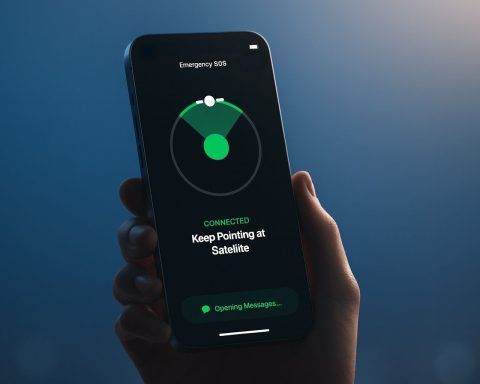
In late 2022, Apple launched Emergency SOS via satellite on the iPhone 14 series, enabling two-way emergency texting via Globalstar satellites. As of iOS 17 and later, iPhone 14/15 users in supported regions can share their location and send basic non-emergency texts via satellite, with two years of free service after activation before a paid plan. Garmin’s inReach Mini 2 provides global two-way texting via the Iridium network, with plans from about $15/month to $65/month and devices typically priced around $350–$450. ZOLEO uses the Iridium network for global messaging, costs about $200 for the device, offers plans from roughly $20
Satellite TV Secrets Unveiled: From Space-Age Origins to the Future of Television

Satellite TV Secrets Unveiled: From Space-Age Origins to the Future of Television

Telstar 1 (NASA) transmitted the first live television signals via satellite in 1962, linking Europe and North America. Syncom 2 became the first geosynchronous satellite in 1963, and Syncom 3 in 1964 broadcast the Tokyo Olympics to the United States. Intelsat I (Early Bird) was launched in 1965 as the world’s first commercial communications satellite carrying regular transoceanic TV service. Astra 1A, launched in 1988, used Ku-band to enable small 90 cm dishes and sparked a European satellite TV boom. In 1979 the FCC ruled that anyone could install a home satellite earth station without a federal license, accelerating consumer
Sky Spies: The Ultimate Guide to Weather Satellites Tracking Storms, Saving Lives, and Monitoring Climate

Sky Spies: The Ultimate Guide to Weather Satellites Tracking Storms, Saving Lives, and Monitoring Climate

TIROS-1, launched by NASA on April 1, 1960, weighed about 120 kg and transmitted over 19,000 cloud images in 78 days, proving the concept of space-based weather observation. GOES-16 (GOES-East), launched in 2016 as part of the GOES-R series, delivers 0.5 km resolution imagery across 16 spectral bands and can scan as often as 30 seconds, and it carries the Geostationary Lightning Mapper. Meteosat-1, launched in 1977, was Europe’s first geostationary meteorological satellite at 0° longitude and introduced a water vapor channel for moisture tracking. Japan’s Himawari-8 (2014) and Himawari-9 (2016) operate at 140°E, providing high-resolution full-disk imagery every 10
19 June 2025
Spies in the Sky: The Ultimate Guide to Spy Satellites and Their Secrets

Spies in the Sky: The Ultimate Guide to Spy Satellites and Their Secrets

The CORONA (Discoverer) program operated from 1959 to 1972 as the United States’ first photo-reconnaissance satellite program, with Discoverer XIV achieving the first mid-air film recovery in August 1960. KH-11 KENNEN (CRYSTAL), first launched in 1976, introduced electro-optical digital imaging with about 15 cm per-pixel resolution, and a 2019 declassified image from USA-224 reportedly achieved around 10 cm resolution. Lacrosse/Onyx, the US SAR reconnaissance program begun in 1988, used large radar antennas for all-weather imaging and was succeeded by the smaller Topaz (FIA Radar) satellites in the 2010s. The USSR’s Zenit series began in 1961 with over 500 launches using
China’s 2025 Drone Law Shockers: Strict Rules, No-Fly Zones & Big Penalties

China’s 2025 Drone Law Shockers: Strict Rules, No-Fly Zones & Big Penalties

Starting January 1, 2024, all drones in China must be registered under the owner’s real name with the CAAC on shine.cn, and a QR code sticker is issued after registration. Foreign tourists must register their drones before flying, with registration tied to a Chinese phone number, and an English portal was reportedly launched in 2025. Recreational pilots of small drones do not need a formal license, but drones over 7 kg require a CAAC drone pilot license and drones over 116 kg require a full pilot’s license. The 120 m altitude limit applies nationwide, with airspace above it classified as
19 June 2025
Ireland’s Internet Revolution: From Rural Blackspots to Blazing Broadband in 2025

Ireland’s Internet Revolution: From Rural Blackspots to Blazing Broadband in 2025

As of early 2025, about 98–99% of Ireland’s population is online and roughly 94% of households have internet access. In 2025 the median fixed broadband speed was about 146 Mbps, with the 2024 average around 103 Mbps and Ireland ranking around 40th globally. Gigabit-capable broadband is available to about 86% of premises nationwide in 2025, and pure fiber FTTP coverage is roughly 76% of premises as of Q1 2025. Two-thirds of rural homes and businesses can access high-speed internet thanks to fiber rollouts between 2023 and 2025. Starlink entered Ireland in 2021 and by 2025 is widely used in rural
State of Internet Access in Guatemala: From City Wi-Fi to Satellite Lifelines

State of Internet Access in Guatemala: From City Wi-Fi to Satellite Lifelines

4G LTE coverage is extensive, reaching about 91% of the population in 2024, while 3G coverage reaches about 95%. In 2023, SIT held spectrum auctions that raised about $176 million in total: 126 MHz in the 2.5 GHz band brought in about $49 million (with Tigo $32 million and Claro $17 million) and a later 700 MHz tender raised about $127 million. Starlink officially launched in Guatemala in June 2024 with the Starlink Mini kit priced around Q1,600 ($200) and monthly plans of Q510–560 ($65–72), delivering speeds of 100–200 Mbps with latency of 20–50 ms. As of early 2024, about
18 June 2025
13 AI Tools Revolutionizing Personal Life and Professional Productivity (2024–2025)

13 AI Tools Revolutionizing Personal Life and Professional Productivity (2024–2025)

ChatGPT (OpenAI) uses GPT-4 and Gemini models and reached about 200 million users by late 2024. Claude (Anthropic) offers a context window up to 100,000 tokens in Claude 2 to analyze long texts and source code. Google Bard (Gemini) and Duet AI bring Gemini-powered productivity to Google Workspace, with Bard free for general users and Duet AI priced from $30 per user/month. Microsoft 365 Copilot is embedded across Word, Excel, PowerPoint, Outlook, and Teams, uses GPT-4, and enterprise pricing starts around $30 per user/month. Notion AI launched in 2023 and Notion reached over 20 million users by early 2024. GrammarlyGO
State of Internet Access in Vietnam: From Fiber to Satellite Skies

State of Internet Access in Vietnam: From Fiber to Satellite Skies

As of mid-2024, 82.2% of fixed broadband households in Vietnam were connected via fiber-optic FTTH, with universal fiber access targeted by 2025 under the Digital Infrastructure Strategy. 4G LTE coverage reaches 99.8% of the territory, with about 168.5 million mobile subscriptions (roughly 170% of the population) and 91.9 mobile broadband subscriptions per 100 people by mid-2024. Commercial 5G service launched in October 2024, with 5G base stations in all 63 provinces by late 2024 and targets of over 50% of the population by 2025 and 99% by 2030. International connectivity has been fragile due to undersea cables, with 4 of
18 June 2025
Kwangmyong: Inside North Korea’s National Intranet Service

Kwangmyong: Inside North Korea’s National Intranet Service

Kwangmyong is North Korea’s national intranet launched in the early 2000s, a closed network that provides email, websites, and digital resources only within North Korea to isolate citizens from the global Internet. <li North Korea's first internal email service, Sili Bank, was established in 2001 to enable internal electronic correspondence on Kwangmyong. The first intranet “internet café” opened in Pyongyang in 2002 with about 100 computers, marking the start of public access to Kwangmyong. Kwangmyong uses .kp domain names and private IP ranges such as 10.x.x.x, is not routable on the global Internet, and most access is via IP addresses
18 June 2025
Insane Internet Speeds: The Fastest Connections on Earth and What’s Coming Next

Insane Internet Speeds: The Fastest Connections on Earth and What’s Coming Next

In June 2024, a team led by Japan’s NICT and Aston University achieved 402 Tbps over a single standard optical fiber using six wavelength bands (O, E, S, C, L, and U). In March 2024, the same international team reached 301 Tbps by extending into E-band and S-band with a custom amplifier for those bands. In July 2021, NICT researchers transmitted 319 Tbps over 3,001 km using a 4-core optical fiber with 552 channels across a 120 nm spectrum. In August 2020, University College London set a then-record of 178 Tbps using geometric shaping constellations. In April 2025, NICT with
1 167 168 169 170 171 175

Stock Market Today

Linde stock price falls as LIN heads into weekend; JPMorgan downgrade and guidance in focus

Linde stock price falls as LIN heads into weekend; JPMorgan downgrade and guidance in focus

7 February 2026
Linde plc shares fell 2.5% to $448.24 Friday after reporting Q4 sales up 6% to $8.76 billion and adjusted EPS of $4.20. The company guided 2026 adjusted EPS to $17.40–$17.90, below analyst consensus. JPMorgan downgraded the stock, while Morgan Stanley and UBS raised price targets. Linde repurchased $1.4 billion in shares in Q4 and returned $7.4 billion to shareholders in 2025.
GE Vernova stock closes up nearly 6% — what to watch before Monday’s trade

GE Vernova stock closes up nearly 6% — what to watch before Monday’s trade

7 February 2026
GE Vernova shares jumped 5.6% to $779.35 Friday as Wall Street rallied and the company reported 1.1 GW of U.S. wind repower orders for 2025. The company also closed its $5.3 billion purchase of the remaining Prolec GE stake and completed a $2.6 billion senior notes offering. Investors await next week’s U.S. jobs and inflation data.
Citi stock jumps 6% as consent-order exit talk builds — what to watch next week

Citi stock jumps 6% as consent-order exit talk builds — what to watch next week

7 February 2026
Citigroup shares rose 6% to $122.69 at Friday’s close after a Reuters report said executives are more optimistic about completing key consent orders this year. Citi also announced a $2.3 billion preferred stock redemption and a matching program for employee “Trump Accounts.” Investors await next week’s U.S. economic data and Citi conference appearances.
Go toTop