
NEW YORK, June 22, 2026, 17:01 (EDT)
- Joby Aviation NYSE:JOBY ended the day off 1.4% to $9.86. Trading volume reached 166% of the 65-day average.
- Joby, Archer and Vertical lawsuits got new focus after a weekend report. No U.S. air-taxi maker has won full FAA commercial aircraft certification.
- Another factor is the Russell index reconstitution set for Friday. Passive funds that follow indexes, not individual stocks, often have to make moves when this happens.
Joby Aviation Inc. NYSE:JOBY shares slipped 1.4% to finish at $9.86 Monday, caught up in renewed legal headwinds for electric air-taxi names. The stock swung between $9.59 and $10.30 during regular hours, with 47.66 million shares traded — about 166% of its 65-day average, according to MarketWatch.
Joby Aviation NYSE:JOBY is in a tight spot right now, with its first commercial routes still coming and U.S. regulators still evaluating rules for electric vertical takeoff and landing aircraft. Index funds are also getting ready for the Russell U.S. benchmark changes after the close on Friday. FTSE Russell called June’s reconstitution one of the year’s highest-volume trading days, as about $12.2 trillion is tied to Russell U.S. indexes.
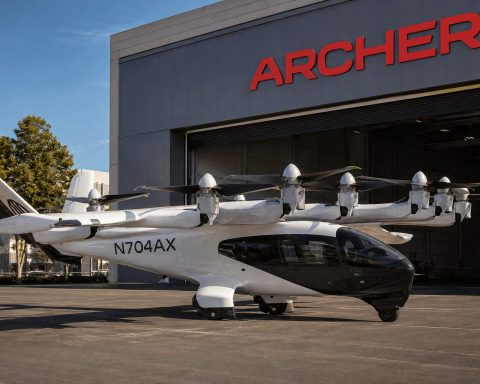
Legal fights among Joby, Archer Aviation and Vertical Aerospace are weighing on the group, according to The Verge on Sunday. As these names look to ramp up from test flights to actual service, the report said Joby and Archer are clashing over trade secrets and claims about links to China. Archer has also taken Vertical to court, accusing it of copying aircraft designs.
Archer hit Joby with a countersuit in federal court, saying Joby defrauded the U.S. government and concealed China connections, Reuters said in March. Joby’s attorney Alex Spiro dismissed the claims as “nonsense.” Archer’s Eric Lentell told Reuters then that the suit aimed to “ensure accountability, restore fair competition, and safeguard the strategic future of American advanced aviation.” Reuters
Shares of Archer NYSE:ACHR dropped roughly 2.8%. BETA Technologies NYSE:BETA closed down about 2.2%, while Vertical Aerospace NYSE:EVTL slipped 2.8% as well. The moves suggest electric aircraft stocks were under pressure, not just Joby.
Index mechanics got little attention Monday. Joby finished with a market cap near $9.3 billion, topping FTSE Russell’s posted $5.7 billion line that splits the Russell 1000 and Russell 2000, though the true index math has its own timing and quirks. That’s key for event-driven trading—Russell changes drive moves near the close, and the big volume in Joby may point to more than just the legal news reaction.
“US equity markets broadened over the past year,” Catherine Yoshimoto, director of product management for the Russell U.S. indexes at FTSE Russell, said in the index provider’s reconstitution update. Tech and industrials pulled more names into the Russell 1000 as other stocks moved into the Russell 2000. The language is dry, but these index tweaks can spark real moves on the close. LSEG
One detail in Joby’s filings isn’t getting the kind of attention the aircraft videos do. Joby is past being only a pre-revenue certification play: first-quarter revenue came in at $24.2 million. Of that, $21.8 million was passenger revenue, mostly from Blade helicopter and fixed-wing bookings. The rest came from government flight services and some engineering work.
The Blade deal gives Joby access to real routes and customers while it waits for its own aircraft to enter commercial service. Joby said in its New York demos it used Manhattan heliports that handled over 90,000 Blade passengers in 2025. That’s a number investors are watching as they weigh whether eVTOL demand is still a theory or already turning up in higher-end airport rides.
Joby is pushing its certification story. In May, the company said its first FAA-conforming aircraft for Type Inspection Authorization had flown. That lets regulators start formal certification testing. Joby also wrapped its SR3 audit, which is the third of four main FAA certification reviews. Founder and CEO JoeBen Bevirt called it “the clearest path we’ve ever had to beginning passenger operations.” Joby Aero, Inc.
The risk remains clear. Joby burned through $144.4 million of operating cash in the first quarter, with research and development spending up 32% to $177.5 million. It warned that if it can’t get new funding on the right terms, it might have to cut production, vertiport projects or R&D. FAA certification delays, negative legal or trade decisions, or selling after the Russell rebalance could flip Monday’s strong volume from demand into supply.
Related articles: NYSE:ACHR