
NEW YORK, June 1, 2026, 15:02 EDT
Meta Platforms Inc (META.O) shares fell 4.3% to $605.45 in Monday afternoon trading, putting the Facebook parent near its session low even as the broader technology trade held up. The stock opened at $629.29, hit an intraday high of $637.21 and last traded close to its $605.17 low, with volume at about 18.2 million shares.
The move stood out because it was not a simple tech selloff. Reuters reported the S&P 500 and Nasdaq were higher, helped by a 2.6% gain in technology shares and a rally in Nvidia after a new AI chip launch.
That is why Meta matters today. It has become one of the cleanest tests of the artificial intelligence, or AI, trade: investors still see strength in its advertising engine, but they are again asking how much cash the company must spend before those AI bets show up clearly in profit.
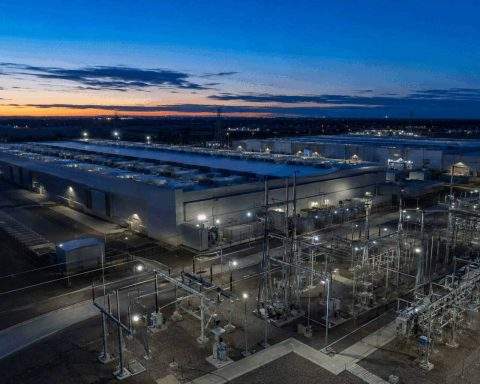
Bank of America’s chief U.S. stock strategist, Savita Subramanian, sharpened that debate on Monday. Her team told investors to “own capex takers” such as chip and hardware companies, while avoiding “crowded AI spenders” with higher macro risk. Capex means capital expenditure, or money spent on long-lived assets such as data centers, servers and chips. BofA said Alphabet, Meta, Oracle, Amazon and Microsoft had revealed plans to spend $725 billion this year as they build AI capacity. Business Insider
Meta’s own numbers explain why the argument is not one-way. The company reported first-quarter revenue of $56.31 billion, up 33%, while ad impressions rose 19% and average price per ad rose 12%. Mark Zuckerberg called it a “milestone quarter” with “strong momentum across our apps.” But the same release lifted Meta’s 2026 capital-spending forecast to $125 billion to $145 billion, from $115 billion to $135 billion. Meta
The stock is therefore trading less like a plain advertising company and more like a large AI infrastructure builder. That creates a harder market story. Strong ad sales can support the spend, but investors want proof that AI tools will keep lifting prices, engagement and advertiser returns fast enough to justify the bill.
Competitive context cut both ways. Nvidia, a supplier to the AI buildout, rose 6.4%, while Amazon fell 3.0% and Alphabet slipped 0.7%. Alphabet and Amazon are not Meta’s social-media peers, but they sit in the same investor bucket when the market debates which companies benefit from AI spending and which ones fund it.
Meta also has a small capital-return marker ahead. The company declared a quarterly cash dividend of $0.525 a share last week, payable June 25 to shareholders of record at the close of business on June 15. That helps underline its cash generation, though it is not large enough to change the spending debate by itself.
Regulation remains the other drag. Reuters reported Friday that Meta’s employee computer-usage tool, called Model Capability Initiative, can capture communications involving non-U.S. staff, raising questions under European privacy rules. Meta spokesperson Dave Arnold said the company had mitigated privacy risks and was “committed to complying” with applicable laws, while Kleanthi Sardeli of privacy group NOYB said using work chats for an AI model looked “incompatible with that initial purpose.” Reuters
But the downside case is plain. If Meta keeps raising infrastructure outlays, if ad growth slows, or if regulators force changes to how the company collects and uses data, investors could demand a lower valuation even without a collapse in the core business. The stock’s Monday drop says some already are.
For now, the market is drawing a sharper line inside Big Tech. AI remains the reason to own many of these shares. It is also becoming the reason some investors sell first and wait for the return on investment later.
Related articles: NASDAQ:META