
New York, June 23, 2026, 11:07 (EDT)
- In delayed LSEG data, the S&P 500 slipped around 1% and the Nasdaq dropped 1.4%. The Dow inched up just 0.02%.
- Chip stocks and AI names fell hardest as traders questioned valuations and the risk of more Fed rate increases.
- Thursday brings the PCE inflation report, which is the Federal Reserve’s main price measure.
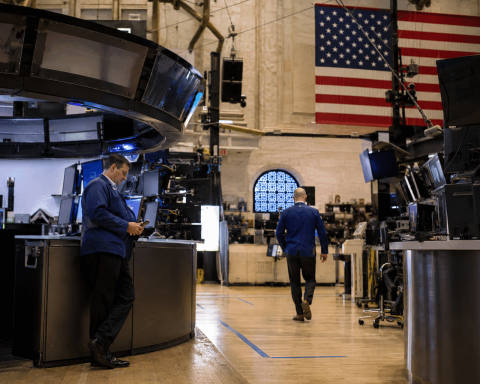
Tech and chip losses pressed down on the Nasdaq and S&P 500 early Tuesday, though the Dow Jones Industrial Average managed to stay just above flat.
The Dow edged up 0.02% to 51,720.88. The Nasdaq Composite dropped 1.42% to 25,795.92, and the S&P 500 slipped 0.94% to 7,402.42, LSEG data showed with at least a 15-minute delay. Brent crude was down. The U.S. 10-year Treasury yield held close to 4.489%.
The move is important for Wall Street since AI stocks have driven most of the market this year. If the biggest growth names drop at the same time, that can wipe out gains in cheaper or defensive shares.
Chip stocks slid hard. Reuters said Nvidia dropped around 3%, while Intel, Marvell and AMD all lost between 6.2% and 8.7%. The Philadelphia SE Semiconductor Index slumped 7.3%. Nigel Green, CEO of deVere Group, called the AI trade crowded, saying “the exit door becomes very small very quickly.” Reuters
AI capex is drawing pushback from investors, as they question spending on data centers, chips, and other major assets. Goldman Sachs strategist Rich Privorotsky said in a note that the market spent the last several weeks “ignoring almost every negative development” in the AI capex trade. MarketWatch
SpaceX is back in the headlines after dropping further, following three days that already wiped out over $600 billion in value. Swissquote Bank analyst Ipek Ozkardeskaya said the firm’s decision to sell bonds has renewed investor jitters about large techs relying on debt to build out AI infrastructure.
The Federal Reserve is still a key worry for markets. Reuters said last week the Fed kept its rate target at 3.50%-3.75%. But nine out of 19 policymakers see a rate hike happening by the end of 2026. Higher rates usually weigh on growth stocks, since they lower the present value of future profits investors expect.
PCE data in focus as inflation debate heats up. The Bureau of Economic Analysis reported the Personal Consumption Expenditures price index rose 3.8% year-over-year in April. Next update comes June 25.
Support under the market hasn’t vanished. Barclays and Stifel both lifted their year-end S&P 500 target to 7,800. Barclays analysts led by Venu Krishna wrote “the equity bull case remains intact” but said earnings and AI capex visibility need to do more as Fed support fades. Reuters
Oil prices eased. Brent slipped roughly $1 to $76.72 a barrel at 10:06 a.m. ET, with traders following updates on crude traffic through the Strait of Hormuz. The move followed some signals of progress in U.S.-Iran talks. But PVM Oil Associates analyst Tamas Varga said ship owners want “assurances” that mines are cleared before shipping returns to normal. Reuters
Risk now is the selloff could widen beyond the handful of pricey AI stocks and start to hit earnings quality. A stronger inflation number, talk of more Fed hikes, or new doubts about whether AI spending is driving revenue could draw money out of semis and big tech again. That could happen even if oil falls and the Dow, with fewer tech names, keeps holding up the headline index.
Wall Street is not dumping everything right now. Investors are getting out of the part of the market with the biggest runs, the simplest story, and, on Tuesday, the tightest margin for error.
Related articles: NASDAQ:MRVL