
SEOUL, July 8, 2026, 22:07 (KST)
- KOSPI closed 5.35% lower and is now 20.5% below its June 22 record close.
- Samsung Electronics and SK Hynix led the fall as memory-price and AI-spending doubts hit chip shares.
- Single-stock leveraged ETFs tied to the two chipmakers have become a second source of volatility.
- SK Hynix’s U.S. ADR sale may support the won, but it adds another flow risk.
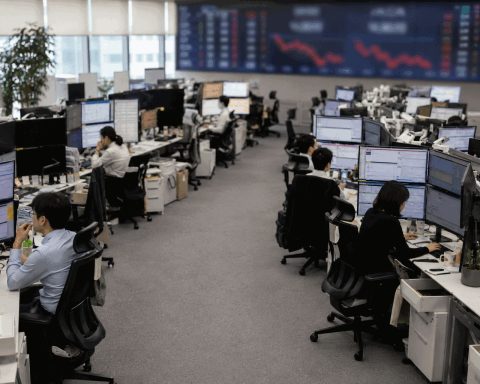
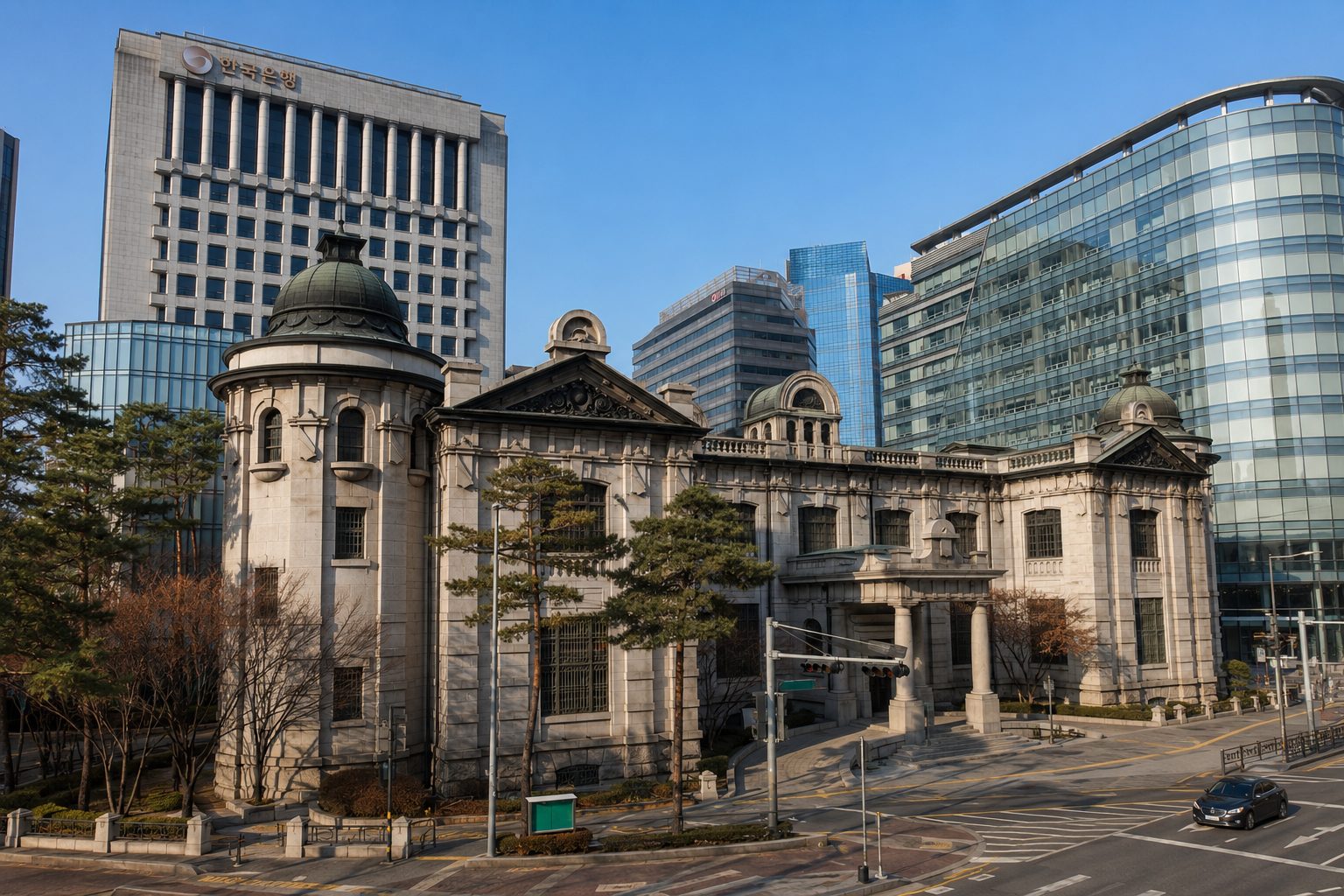
South Korea’s bear-market fall is exposing a leverage loop built on two chipmakers, not just a shift in views on artificial intelligence. The KOSPI closed down 409.52 points, or 5.35%, at 7,246.79 on Wednesday, 20.5% below its June 22 record close of 9,114.55. Samsung Electronics KRX:005930 fell 6.3% and SK Hynix KRX:000660 lost 5.7%; Han Ji-young, an analyst at Kiwoom Securities, said there were “worries about a slowdown in memory price growth” and uncertainty over whether earnings have peaked. Reuters
The investor risk is that the selling is running through the same two stocks that anchor the index and a new retail product class. In May, the Korea Exchange introduced single-stock leveraged ETFs tracking Samsung Electronics or SK Hynix, which together account for roughly half of KOSPI market value, Yonhap reported. The exchange has triggered six circuit breakers this year, matching the total number before 2026, and 32 sidecars, above the 2008 record of 26.
| Gauge | Latest move | Investor read |
|---|---|---|
| KOSPI | 7,246.79, down 5.35% | Bear-market threshold reached |
| KOSPI vs June 22 record close | down 20.5% | Momentum break after record run |
| Samsung Electronics | down 6.3% | Earnings strength did not stop selling |
| SK Hynix | down 5.7% | ADR demand has not shielded Seoul shares |
| Philadelphia Semiconductor Index | down 4.7% overnight | Korea selloff followed U.S. chip pressure |
The reversal in chip shares was fast enough to erase early bargain buying. Reuters reported Samsung fell as much as 7.6% after being up 1.4%, while SK Hynix dropped as much as 5.2% after rising 5.8%. Park Yuak, an analyst at Kiwoom Securities, cut his Samsung target price by about 9% to 390,000 won, citing higher component costs and more cautious memory customers.
The size of the ETF trade is the part investors cannot treat as noise. Maeil Business said 16 single-stock leveraged and inverse ETFs traded 13.113 trillion won on July 7, equal to 35.9% of total ETF trading based on the reported total of 36.481 trillion won. Net assets in those products fell by 2.69 trillion won from their June 25 peak, though inflows kept coming.
| Leveraged ETF gauge | Latest reading | Comparison |
|---|---|---|
| Leveraged products cited by lawmakers | 14 | Tied to Samsung and SK Hynix |
| Combined market cap at Tuesday close | 12.7 trillion won | About $8.2 billion |
| Buying and selling cited by Rep. Ahn Cheol-soo | 212 trillion won | Tied to the two chipmakers |
| July 7 turnover in 16 leveraged/inverse products | 13.113 trillion won | 35.9% of all ETF trading |
| 2026 sidecars | 32 | Previous annual high was 26 in 2008 |
Finance Minister Koo Yun-cheol told lawmakers he was “well aware” that leveraged ETFs had brought “significant volatility to the stock market” and said officials were discussing ways to address the problem. The Financial Supervisory Service has also said it will monitor the market impact of the products and review marketing practices if needed. Reuters
Won Jai-hwan, a finance professor at Sogang Business School, told Korea JoongAng Daily that the volatility showed the market’s “heavy concentration in semiconductor stocks.” He said regulators could tighten investor safeguards by extending mandatory education and raising minimum deposits. koreajoongangdaily
Kim Seok-hwan, a researcher at Mirae Asset Securities, told Maeil Business that net assets in single-stock leveraged ETFs had fallen by “about 3 trillion won from the peak.” He estimated valuation losses of about 400 billion won for Samsung-linked ETFs and 600 billion won for SK Hynix-linked ETFs. 매일경제
Samsung’s results did not give the market cover. The company estimated second-quarter operating profit at 89.4 trillion won, a 19-fold rise from a year earlier, but its shares still fell 6.9% on Tuesday. Albert Yong, managing partner at Petra Capital Management, which owns Samsung stock, said “strong earnings were widely expected” and investors remained concerned about “the sustainability of the AI boom.” Reuters
SK Hynix has a different test. Its $28 billion ADR offering was covered multiple times and the company is due to start Nasdaq trading on July 10, a source told Reuters. The share sale is expected to be the second-biggest after SpaceX’s $85.7 billion IPO last month, and ten ADRs will represent one SK Hynix common share.
That deal is already showing up in currency markets. Dollar-selling tied to SK Hynix’s ADR sale helped push the won past 1,500 per dollar to 1,498.1, its strongest level since May 29. Brent Donnelly, president of Spectra Markets, called it a “dollar-selling, won-buying event” and said even part of $29 billion would be a material dollar-won flow. Reuters
The Korea trade is now large enough to affect broader emerging-market positioning. HSBC Holdings LON:HSBA closed its overweight call on emerging-market equities on Wednesday, saying concerns over AI over-spending could hurt semiconductor stocks and hit EM Asia harder than other regions.
Related articles: KRX:005930