
New York, July 15, 2026, 04:28 EDT
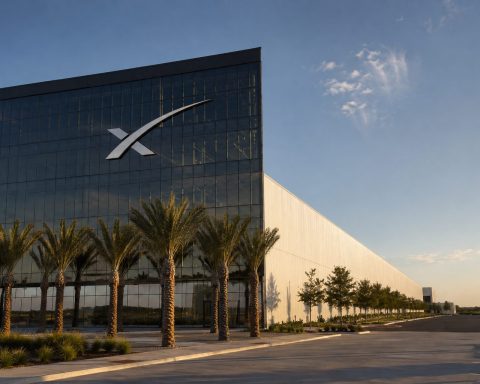
Space Exploration Technologies Corp. NASDAQ:SPCX, known as SpaceX, would need to add about $1.24 trillion in equity value to reach the $230 target set on Tuesday by Evercore Inc. NYSE:EVR’s ISI unit, making Thursday’s Starship flight a near-term check on a valuation already near $1.8 trillion. The shares closed Tuesday at $136.08, just $1.08 above the $135 offer price.
| Reference point | Share price | Implied equity value | Change from Tuesday close |
|---|---|---|---|
| Tuesday close | $136.08 | $1.79 trillion | Baseline |
| IPO price | $135.00 | $1.78 trillion | -0.8% |
| Extra lock-up-release threshold | $175.50 | $2.31 trillion | +29.0%; +$519 billion |
| Evercore target | $230.00 | $3.03 trillion | +69.0%; +$1.24 trillion |
| 2028 illustration cited by the Motley Fool | $250.00 | $3.29 trillion | +83.7%; +$1.50 trillion |
Implied values use 13.159 billion shares after the full over-allotment and exclude future dilution from options or stock awards. The $250 figure is a scenario, not company guidance.
The mission matters because Evercore lists Starship payload delivery in the second half of 2026 as a milestone that still needs validation. Flight 13 is set for a 90-minute window starting at 6:45 p.m. EDT on Thursday from Starbase, Texas. It will attempt to deploy 20 Starlink V3 satellites, which are expected to unfurl their solar arrays and antennas before burning up along a suborbital path, one that does not complete an orbit. A clean run would prove the payload sequence, not commercial service.
The stock faces a separate test: supply. The IPO and full over-allotment issued 638.9 million Class A shares, equal to about 4.9% of the post-offering share count. Under the regular lock-up, a temporary bar on sales by existing holders, eligible investors may sell up to 20% of shares held on the offering date after the second full trading day following the June-quarter results. An extra 10% release requires the stock to close at least 30% above the IPO price, or $175.50, for five of the 10 sessions ending with that release, roughly 29% above Tuesday’s close.
| Regular lock-up release gate | Earliest trigger | Maximum portion eligible |
|---|---|---|
| June-quarter results | Second full trading day after results | 20% |
| Share-price test | Same date, if shares meet the $175.50 test | Additional 10% |
| Time-based releases | 70, 90, 105, 120 and 135 days after the offer | Additional 7% at each gate |
| September-quarter results | Second full trading day after results | Additional 28% |
| Final regular release | 180 days after the offer | All remaining shares |
The schedule applies to holders under the regular lock-up. Extended lock-ups follow different terms, and eligibility does not mean shares will be sold.
At the individual-investor level, the Motley Fool illustrated the $250 case as a $5,000 purchase at the July 8 close of $148.30 growing to $8,427 by January 2028. At the company level, the same share price would require roughly $1.50 trillion of added equity value from Tuesday’s close. Every $10 move in SpaceX stock now changes its implied value by about $132 billion.
That scale explains why a single-sector valuation offers limited help. Barron’s reported that one buy call involved three analysts as Wall Street tried to assess aerospace, telecom and technology operations in one stock. The harder question is how much of several future markets belongs in today’s price.
Evercore analyst Kutgun Maral called SpaceX “an extraordinary company” but said there was “a great deal left to prove out.” His team estimates revenue and EBITDA will compound at 106% and 157%, respectively, through 2028, with margins widening from 35% to 69%. EBITDA is earnings before interest, tax, depreciation and amortization. Those figures are analyst estimates, not company guidance. The report said growth could “accelerate rather than fade as the decade wears on” and excluded Mars operations and the proposed Terafab chip project. TipRanks
Only one part of that valuation timetable is directly in scope on Thursday. Evercore also lists Starlink broadband growth in 2026-27, terrestrial compute through 2028, mobile connectivity in 2027-29 and orbital compute after 2029. Flight 13 can test payload delivery. It cannot validate the rest.
A clean mission would reduce some technical risk from the May 22 flight, when five of 33 Raptor engines failed to relight for the booster return, heat damage followed stage separation and an upper-stage engine did not work. SpaceX identified four corrective actions, and the U.S. Federal Aviation Administration closed its review on Monday. That is useful evidence, but not a revenue print.
SpaceX expects operational V3 launches by year-end and has said each Starship launch could add “more than 20 times the capacity” to the network. Thursday can test deployment and re-entry. It cannot show customer demand or the steady flight rate needed to spread Starship’s costs. SpaceX
Measured against listed space peers, the Evercore target is outsized. Rocket Lab USA Inc. NASDAQ:RKLB and AST SpaceMobile Inc. NASDAQ:ASTS had combined market values of about $67.7 billion on Tuesday. The $1.24 trillion gain implied by Evercore’s target is more than 18 times that total, showing that the valuation treats SpaceX as a multi-industry platform rather than only a launch provider.
But the path can break in several places. A delay or another engine or heat-shield problem could push back V3 deployment, while weaker Starlink demand or margins below Evercore’s estimates would cut the earnings case. Post-results selling and later lock-up releases could also increase the stock available to trade. Eligible holders may keep their shares, however, and a clean flight could draw buyers who stayed out after the IPO.
Flight 13 is therefore a technical checkpoint, not a verdict on $230. The harder proof will come when test payloads turn into paid capacity while the tradable share base expands.
Related articles: NASDAQ:SPCX
![US Stock Market Today 08/25/2026 [UPDATE: 01:08 EDT] [Memory Rally Builds as QQQ Reaches $709 Overnight]](https://ts2.tech/wp-content/uploads/2026/08/US-market-dashboard-2026-08-25-0104-480x384.jpg "US Stock Market Today 08/25/2026 [UPDATE: 01:08 EDT] [Memory Rally Builds as QQQ Reaches $709 Overnight]")