
WASHINGTON, July 12, 2026, 09:11 (EDT)
The U.S. Federal Communications Commission last week authorized Reflect Orbital’s first space-mirror test, but a public price cited by its chief executive points to a premium lighting business before it points to a new source of power. Ben Nowack has said one mirror would cost about $5,000 an hour under an annual contract of at least 1,000 hours, implying a roughly $5 million yearly bill at those terms.
That distinction matters now. The company’s roadmap keeps energy service in testing through 2028 and targets a 1% capacity-factor gain — average output as a share of maximum — in 2030, once the planned fleet is above 5,000 satellites. Near term, the product is light: brief, targeted and costly.
| Measure | 2026 company plan | 2030 company plan | 2035 company plan |
|---|---|---|---|
| Satellite fleet | 2 | 5,000+ | 50,000+ |
| Lighting target | 0.1 lux for 5 minutes | Up to 5,000 lux for minutes | Up to 36,000 lux for hours |
| Energy target | Testing | +1% capacity factor at 50 watts per square metre for 20 minutes | +20% capacity factor at 300 watts per square metre for 3 hours |
U.S. cash equity markets were closed Sunday for the weekend. Regular trading is scheduled to resume Monday at 9:30 a.m. Eastern; July 13 is not on the major exchanges’ 2026 holiday calendars.
| Last week | Week ahead |
|---|---|
| July 9: The FCC authorized the first Reflect Orbital demonstration satellite, not the wider constellation. LinkedIn | Regular U.S. trading resumes. Investors will look for a firm launch slot, named test sites or customers, and any formal challenge to the order. |
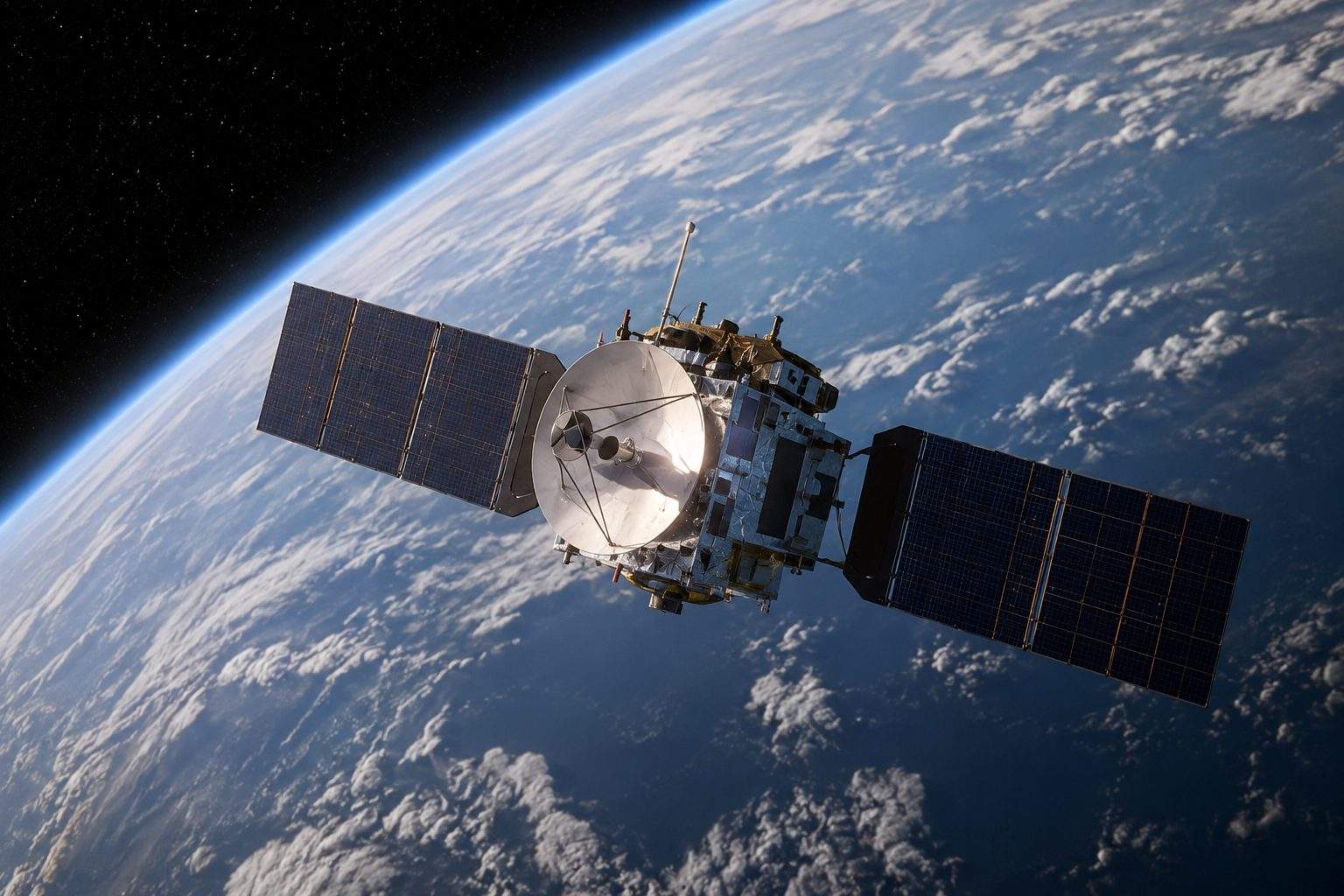
The authorization is narrower than the headlines. It covers one non-geostationary satellite — one that crosses the sky rather than staying fixed over a point — and its command and data radio links at an operating altitude of 625 km. The FCC said it regulates the radio station, spectrum and orbital-debris plan, not the reflector’s wider effects; objections based on a future fleet were set aside when it considered this single test.
The legal timetable is also loose. Reflect must post a surety bond, a financial guarantee, by Aug. 10 but has until July 9, 2032, to launch Earendil-1, put it in the assigned orbit and begin operations. That six-year window removes a regulatory gate without forcing a near-term revenue event.
Taking the reported roughly 60-foot square at face value, Earendil-1 can intercept at most about 0.45 megawatt of incoming solar power. The estimate uses NASA’s figure of 1,361 watts per square metre at the top of the atmosphere and comes before losses from imperfect reflection, the mirror’s angle, the atmosphere and light spreading across the target; it is not electricity delivered to a customer. The closest historical comparison is Russia’s 1993 orbital-mirror test, followed by a failed later mission and the programme’s abandonment.
Commercial proof could matter quickly relative to the capital raised. Reflect has announced a $6.5 million seed round and a $20 million Series A, or $26.5 million across those two financings; one annual lighting contract at the stated minimum would equal about 19% of that sum. Its Series A release said it had received 260,000 applications from 157 countries but gave no signed-customer count or contract value, while lead investor Josh Wolfe of Lux Capital called Reflect “a new category in-space infrastructure.” Reflect Orbital
Nowack called the license “the first step toward rigorously testing our technology’s efficacy and the safeguards we have developed.” Reflect said the mission is expected later in 2026 and that it is commissioning independent research while seeking a coordination agreement with the National Science Foundation. Via Satellite
Opponents see a governance test, not just an engineering one. Roohi Dalal of the American Astronomical Society wrote that Reflect’s activities “will have an impact on the Earth environment,” naming human health, agriculture, wildlife and astronomy. American Astronomical Society
But the downside case is clear. A failed deployment, weak pointing or less ground light than modelled would hurt the engineering case; a successful test that produces more spill or disruption than expected could strengthen calls for tighter rules. Clouds limit any light-based service, and moving from one licensed satellite to thousands would demand far more capital, launch capacity and approvals.
The next investable data point is not the license. It is measured performance in orbit — deployment, pointing accuracy and brightness at ground level — plus evidence that customers will pay the published rate. Until then, the numbers describe a high-priced lighting experiment with a long road to power generation.
Related articles: Innovation