
NEW YORK, July 7, 2026, 05:01 EDT
- Space Exploration Technologies Corp NASDAQ:SPCX will join the Nasdaq-100 before the open Tuesday, 15 trading days after its June 12 launch.
- JPMorgan Chase & Co NYSE:JPM put its estimate for passive inflows at $4.3 billion for the index addition.
- The stock last traded at $160.42, up roughly 19% from its $135 IPO but still down about 29% from its June 16 peak.
- Morgan Stanley NYSE:MS and Goldman Sachs Group Inc NYSE:GS each came out with bullish calls, but their price targets point to very different valuations.
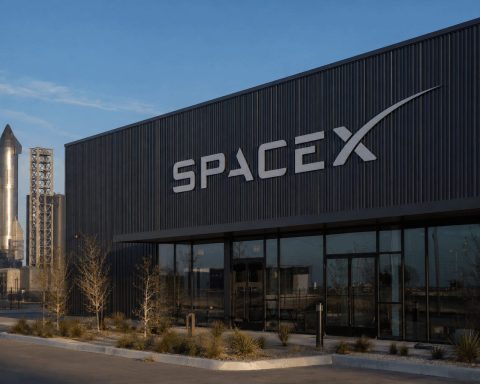
Space Exploration Technologies Corp NASDAQ:SPCX is set to join the Nasdaq-100 on Tuesday, but the usual forced-buying play is looking messy. The stock was at $160.42 in pre-market, off $1.48 from its last close. Regular trading hadn’t started. Nasdaq pre-market hours are 4:00 a.m. to 9:30 a.m. Eastern.
The bigger issue isn’t just the amount of index money. It’s how that stacks up against recent trading. J.P. Morgan figures SpaceX’s Nasdaq-100 inclusion could pull in $4.3 billion from passive trackers, but Reuters said the stock saw more than $26 billion traded on Monday, most of it in the last seconds. That means the projected Nasdaq-100 inflows are about 16.5% of total turnover that day.
The $4.3 billion makes up around 4.3% of the SpaceX shares Reuters said are listed for trading, out of a total near $100 billion, with the rest owned by Elon Musk, insiders and employees. That’s a big chunk for one rebalance. But it’s not enough on its own to show if the $2 trillion-plus market cap sticks after IPO trading slows down.
Nasdaq Inc NASDAQ:NDAQ said SpaceX will join the Nasdaq-100 index before the open on July 7. The exchange said the index is tracked by over 200 products holding more than $800 billion globally. Reuters reports funds tied to the Nasdaq-100, including Invesco QQQ Trust NASDAQ:QQQ and QQQM, benchmark over $587 billion.
Wall Street is split on this second trade. Morgan Stanley, with Adam Jonas in charge, gave a $300 target. Goldman Sachs, led by Eric Sheridan, went with $205, MarketWatch said. Those calls mean an 87% and 28% upside from the last quoted price.
Forecasts are now spread out:
| Source | Forecast or call | Implied move or cash effect from $160.42 | Why investors care |
|---|---|---|---|
| Morgan Stanley | $300 target | +87.0% | Morgan Stanley values SpaceX less as a launch firm, more as an AI infrastructure play |
| Goldman Sachs | $205 target | +27.8% | Bullish too, though Goldman’s call is more modest than Morgan Stanley’s |
| RBC Capital Markets | $225 target | +40.3% | RBC says it comes down to whether Starship can cut costs and unlock new business |
| Wedbush | $190 target | +18.4% | Wedbush uses sum-of-the-parts and puts less weight on short-term results |
| JPMorgan | $4.3 bln passive inflow estimate | 16.5% of Monday turnover | JPMorgan wants to see if index money can move a stock with high existing volume |
Goldman’s Sheridan and his team see SpaceX as “well-positioned” to expand in space, connectivity and AI, Reuters said. Morgan Stanley’s Jonas wrote SpaceX is “AI’s final frontier.” RBC’s Ken Herbert started coverage with an outperform and set a $225 price target. RBC said “Starship is the flywheel that powers SpaceX’s ambitions.” Reuters
SpaceX hasn’t followed the usual pattern for stocks added to the index. On Monday, shares slipped 1%, while the S&P 500 was up 0.72%, the Nasdaq rose 1.12%, and the Dow gained 0.29%. The stock is still about 19% higher than its $135 IPO price. But it’s down around 29% from its June 16 intraday high of $225.64.
That’s an issue for passive funds, which have to pick up a stock where the float is tight compared to its market cap, but there’s still enough turnover in dollar terms for fast trades to unload as benchmarks rebalance. SpaceX jumped 67% to a June 16 intraday peak and then dropped back to $153.23 by June 27, Reuters said.
S&P Global Inc NYSE:SPGI didn’t give SpaceX any special treatment. The company left its S&P 500 rules unchanged in June, sticking with its existing stands on financial viability, seasoning, and investable-weight limits. S&P said it won’t make exceptions just because a firm’s market value is high. Reuters reported SpaceX had a net loss of $4.94 billion in 2025 while revenue jumped 33% to $18.67 billion.
SpaceX will stay in the Nasdaq-100 for now but remains out of the S&P 500. The stock is left stuck between technical buying and questions over its valuation. Morningstar sees SpaceX’s value around $780 billion, Reuters said, much less than the $2.1 trillion market cap.
Related articles: NASDAQ:SPCX
![Australia Stock Market Today 08.22.2026 [UPDATE: 08.22.2026 08:37 AEST] [Weekly Recap and Week Ahead: Healthcare Leads, CPI Looms]](https://ts2.tech/wp-content/uploads/2026/08/AU-market-dashboard-2026-08-22-0837-480x384.jpg "Australia Stock Market Today 08.22.2026 [UPDATE: 08.22.2026 08:37 AEST] [Weekly Recap and Week Ahead: Healthcare Leads, CPI Looms]")