
London, July 13, 2026, 15:08 (BST)
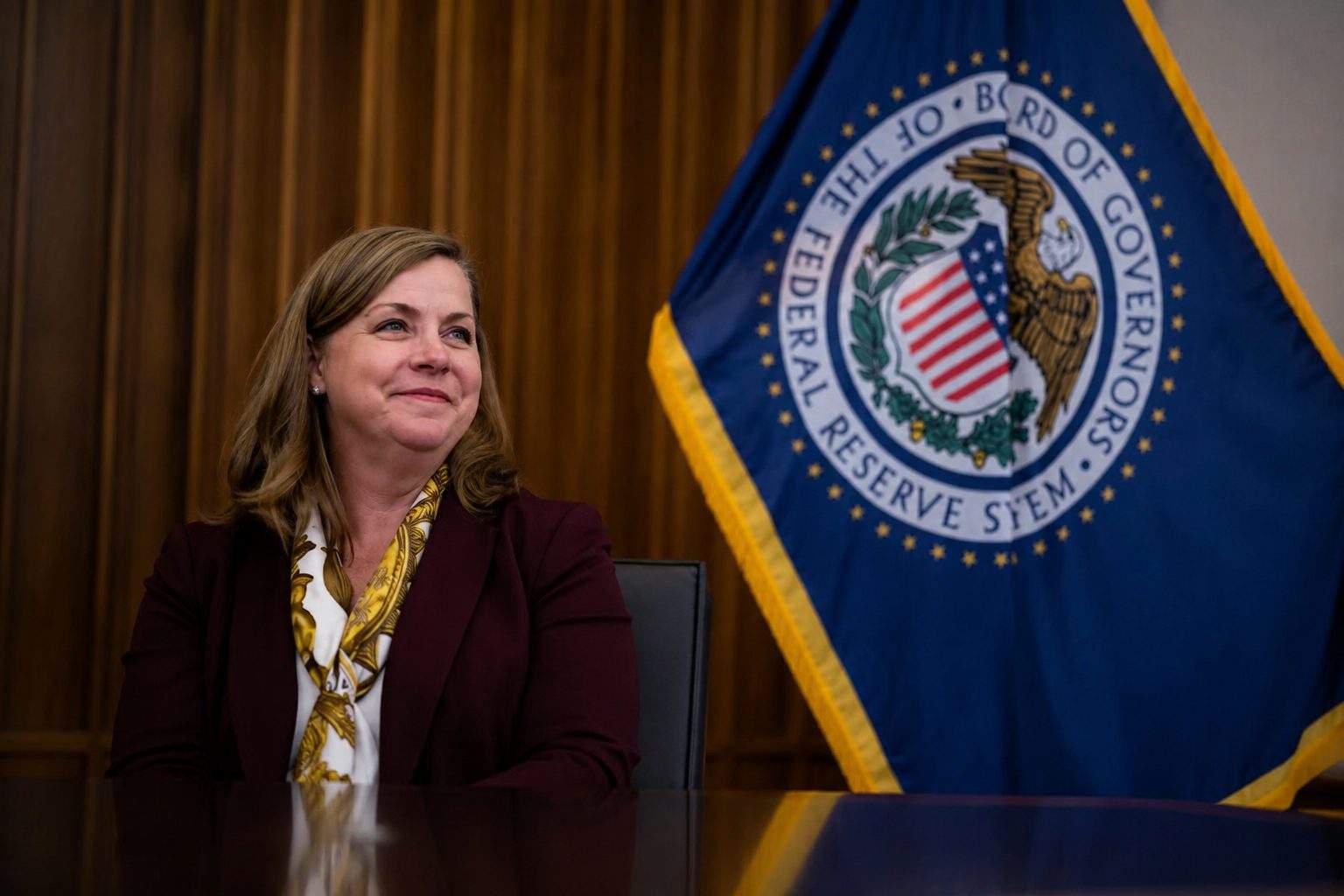
Fed Vice Chair for Supervision Michelle Bowman told the Financial Stability Board on Monday that global rules should be flexible and based on risk, not hard standards. She warned in London that a one-size-fits-all system “erodes the FSB’s effectiveness.” The FSB, which handles coordination of financial regulation for big economies, plans to put out draft modernization principles for consultation this fall before sending a report to the Group of 20. Federal Reserve
Her case is getting new attention as it shapes how Washington is reworking Basel III, the global bank-capital rules set after 2008. According to Fed staff, aggregate Common Equity Tier 1, or CET1—capital that absorbs losses, mostly from common stock and retained earnings—would drop 4.8% for the largest internationally active banks. Other big banks would see a 5.2% fall. Banks with less than $100 billion in assets face a 7.8% CET1 cut, about 1.6 times the top group’s drop.
| U.S. bank group | Estimated change in aggregate CET1 requirement | Main drivers |
|---|---|---|
| Category I-II: biggest, global banks | -4.8% | Systemic surcharge and changes to stress test assumptions outweigh Basel III increases |
| Category III-IV: other big banks | -5.2% | Less capital needed for some assets and new stress test rules, but gains and losses on securities now count in capital |
| Banks with under $100 billion in assets | -7.8% | Lower capital needed for corporate, retail and residential real estate loans |
Analysts at Morgan Stanley NYSE:MS, led by Manan Gosalia, said in April that 36 banks could end up with $320 billion in excess capital if the draft rules go ahead—20% above their earlier estimate of $266 billion under current rules. “Clarity on capital rules is a key catalyst for the banks sector,” they wrote. JPMorgan Chase NYSE:JPM CEO Jamie Dimon said his bank might have around $40 billion ready, but called the draft “flawed.” Reuters
The overall estimate hides big gaps between banks. JPMorgan CFO Jeremy Barnum said the bank’s required capital would go up around 4%, while the average for peers is set to drop 4.8%. He questioned, “how much more should the cost be?” Citigroup NYSE:C CFO Gonzalo Luchetti said the new rules are a “moderate positive” but did not say how much capital could be released. Reuters
Bowman wants more flexibility in how regulators handle artificial intelligence, too. The FSB is floating 12 suggested practices—six tackle how firms build and roll out AI, four track management and governance issues, and two focus on cyber, tech and vendor risk. Bowman said supervisors should take a lighter approach for lower-risk AI, but keep stricter rules in place for riskier uses. The FSB is taking comments until July 22, and expects a final report in October.
| FSB artificial-intelligence control area | Practices | Share of total |
|---|---|---|
| Organization-wide governance | 4 | 33% |
| AI development and deployment | 6 | 50% |
| Cyber, technology and third-party risk | 2 | 17% |
Britain is moving in a similar but not identical direction. The Bank of England wants to cut leverage requirements for big banks by 0.2 percentage point. The leverage ratio here works as a basic capital-to-total-exposure limit. It is not risk-weighted. Right now, it binds three out of the seven largest UK banks. That shows how local rules can hit lending and balance-sheet room.
But more flexibility can chop up the rulebook or start a race for weaker rules. Fed Governor Michael Barr said the planned global systemically important bank surcharge would trim CET1 demands by $33 billion. “I cannot see a justification for such a reduction,” Barr said, calling out a risk for a “race to the bottom.” Big differences between countries might also make global banks run separate compliance systems, while needing less capital to absorb shocks. Federal Reserve
Big banks face a near-term test with earnings. JPMorgan and Citigroup both report Tuesday, July 14, with Morgan Stanley following on Wednesday. Coalition Greenwich’s Angad Chhatwal sees sales-and-trading revenue at the biggest global banks up at least 15% from last year. Investors also want clarity on buybacks, lending firepower, and if management’s payout plans hold up.
Related articles: NYSE:MS