

Mateusz Kaczmarek

Mateusz Kaczmarek

Mateusz Kaczmarek is a financial and technology journalist at TS2.tech, covering stocks, artificial intelligence, semiconductors and global market developments. A graduate of the Poznań University of Economics and Business, he previously worked in financial analysis before moving into business journalism. His reporting focuses on technology companies, market trends and the forces shaping global investment markets. Follow Mateusz Kaczmarek on Google News.

Britain’s Broadband Battle: The Truth About Internet Access Across the UK (and Beyond!)

Britain’s Broadband Battle: The Truth About Internet Access Across the UK (and Beyond!)

Internet connectivity has become as essential as any utility in modern life. From streaming TV and working remotely to accessing public services, reliable broadband is a must-have across the United Kingdom. But how well is Britain actually connected, and how does it stack up against other countries? In this report, we dig into the current state of internet access in the UK – the hard numbers, the technologies in play, the urban–rural digital divide, costs and affordability, government initiatives, and what the future might hold. It’s a story of rapid progress, persistent challenges, and a nation striving to bridge every last broadband gap.
Bridging 5G and Space: Inside France 2030’s End-to-End NTN Pilot With Dual LEO Satellites

Bridging 5G and Space: Inside France 2030’s End-to-End NTN Pilot With Dual LEO Satellites

The push to bridge 5G and space is rapidly becoming a strategic priority for France and Europe. By integrating non-terrestrial networks – essentially satellite communication links – into terrestrial 5G infrastructure, operators hope to achieve truly global connectivity. Under the France 2030 investment plan, an ambitious end-to-end NTN pilot has been launched, leveraging dual low-Earth orbit satellites to extend 5G coverage far beyond the reach of cell towers. Recent demonstrations under this program have showcased how a 5G signal can be beamed from Earth to orbit and back, seamlessly connecting devices in remote areas via satellite reuters.com ericsson.com. This report delves into France’s national objectives for 5G-space convergence, the latest updates on the pilot project, insights from industry experts, and the broader implications for global telecom and space-based internet services.
26 June 2025
China’s AO-MDR Laser Link Delivers 1 Gbps from Geostationary Orbit

China’s AO-MDR Laser Link Delivers 1 Gbps from Geostationary Orbit

Chinese researchers have achieved a record-breaking 1 gigabit-per-second data downlink from a satellite in geostationary orbit using an optical laser link – with a laser device as weak as a “night light” or candle in power scmp.com scmp.com. In a recent demonstration, a 2-watt laser beam transmitted data to a ground station at 1 Gbps, a speed about five times faster than SpaceX’s Starlink network typically delivers to users scmp.com interestingengineering.com. This milestone showcases a new technology dubbed “AO-MDR synergy,” which allowed the laser signal to punch through Earth’s turbulent atmosphere without significant quality loss scmp.com defencepk.com. The achievement, led by Prof. Wu Jian of Peking University of Posts and Telecommunications and Liu Chao of the Chinese Academy of Sciences, opens the door to next-generation satellite communications that rival terrestrial fiber-optic speeds.
26 June 2025
From Orbit to Runway and Back: Lux Aeterna’s Delphi Platform and the Rise of Fully Reusable Satellites

From Orbit to Runway and Back: Lux Aeterna’s Delphi Platform and the Rise of Fully Reusable Satellites

Satellites have long been treated as disposable assets – after completing their missions, they either burn up during reentry or become lifeless space junk in “graveyard” orbits. This paradigm is now being challenged by a new generation of spacecraft designed for multiple missions. Lux Aeterna, a Denver-based startup emerging from stealth mode in mid-2025, has unveiled “Delphi”, a fully reusable satellite platform intended to launch, operate in orbit, and then return to Earth intact for refurbishment and relaunch spacenews.com techcrunch.com. If successful, Delphi could dramatically slash the cost of deploying payloads to space and introduce unprecedented flexibility by allowing satellites to be reconfigured or repurposed between missions techcrunch.com payloadspace.com. This report provides a deep dive into Lux Aeterna’s Delphi platform – its technological innovations, mission architecture, and aircraft-like landing capability – and examines the broader rise of fully reusable satellites. We will compare Delphi to other efforts, review the historical evolution of reusability in spacecraft, and explore the commercial, defense, and scientific implications of this emerging technology.
26 June 2025
Orbiting Eyes: How Space-Based ADS-B Is Revolutionizing Air Traffic Surveillance

Orbiting Eyes: How Space-Based ADS-B Is Revolutionizing Air Traffic Surveillance

Automatic Dependent Surveillance–Broadcast is an aircraft surveillance technology that has transformed how air traffic is monitored. In simple terms, ADS-B equips aircraft with GPS-based transponders that automatically broadcast their precise position, identity, altitude, velocity and other data to anyone with the proper receiver faa.gov aireon.com. The system is dependent on onboard navigation sources for accuracy and broadcasts its information periodically without any pilot or controller input faa.gov. ADS-B emerged in the early 2000s as part of aviation modernization efforts to replace or augment traditional radar. Unlike radar – which sends out radio waves and requires bulky ground antennas to detect reflected signals – ADS-B uses satellite navigation signals and direct broadcasts from aircraft faa.gov faa.gov. In effect, ADS-B leverages satellites for positioning instead of ground-based radar, allowing more precise and frequent updates faa.gov.
Why Luxembourg’s Internet Is Speeding Ahead—But Can It Reach the Stars?

Why Luxembourg’s Internet Is Speeding Ahead—But Can It Reach the Stars?

Luxembourg has emerged as one of Europe’s leaders in internet connectivity, boasting near-universal broadband coverage and world-class speeds. From extensive fiber-optic deployments to cutting-edge mobile networks, the Grand Duchy’s digital infrastructure is speeding ahead. Yet questions remain about how to connect the few remaining gaps and whether the country’s connectivity can truly reach the stars – by embracing satellite internet and future technologies. This report provides an overview of internet access in Luxembourg, covering infrastructure, providers, speeds, 5G rollout, satellite services, government initiatives, urban–rural disparities, and upcoming developments.
Radar Vision Boom: Why High‑Res SAR Imaging is Skyrocketing Toward 2030

Radar Vision Boom: Why High‑Res SAR Imaging is Skyrocketing Toward 2030

High-resolution Synthetic Aperture Radar imaging – the technology that enables “x-ray vision” from space through clouds and darkness – is poised for explosive growth this decade. Governments and industries worldwide are embracing SAR’s unparalleled all-weather, day/night surveillance capabilities for defense, environmental monitoring, precision agriculture, urban planning, and disaster response. The global SAR imaging market was valued around $5 billion in 2023 and is projected to more than double by 2030, reaching $11–14 billion with a robust double-digit CAGR grandviewresearch.com strategicmarketresearch.com. This surge is fueled by rising geopolitical security needs, climate change pressures requiring constant Earth observation, and rapid innovation that is making high-res radar imaging more powerful and accessible than ever.
Eyes in the Sky, Data in the Cloud – Satellite Downlink & Cloud Integration Market Skyrockets by 2032

Eyes in the Sky, Data in the Cloud – Satellite Downlink & Cloud Integration Market Skyrockets by 2032

The Satellite Data Downlink & Cloud Integration market is experiencing a boom, driven by surging demand for geospatial data and real-time insights across sectors. Marrying satellites with cloud computing infrastructure has unlocked unprecedented scalability and accessibility for space-derived data. Key highlights of this market outlook include:
Drone Laws in the Netherlands (2025)

Drone Laws in the Netherlands (2025)

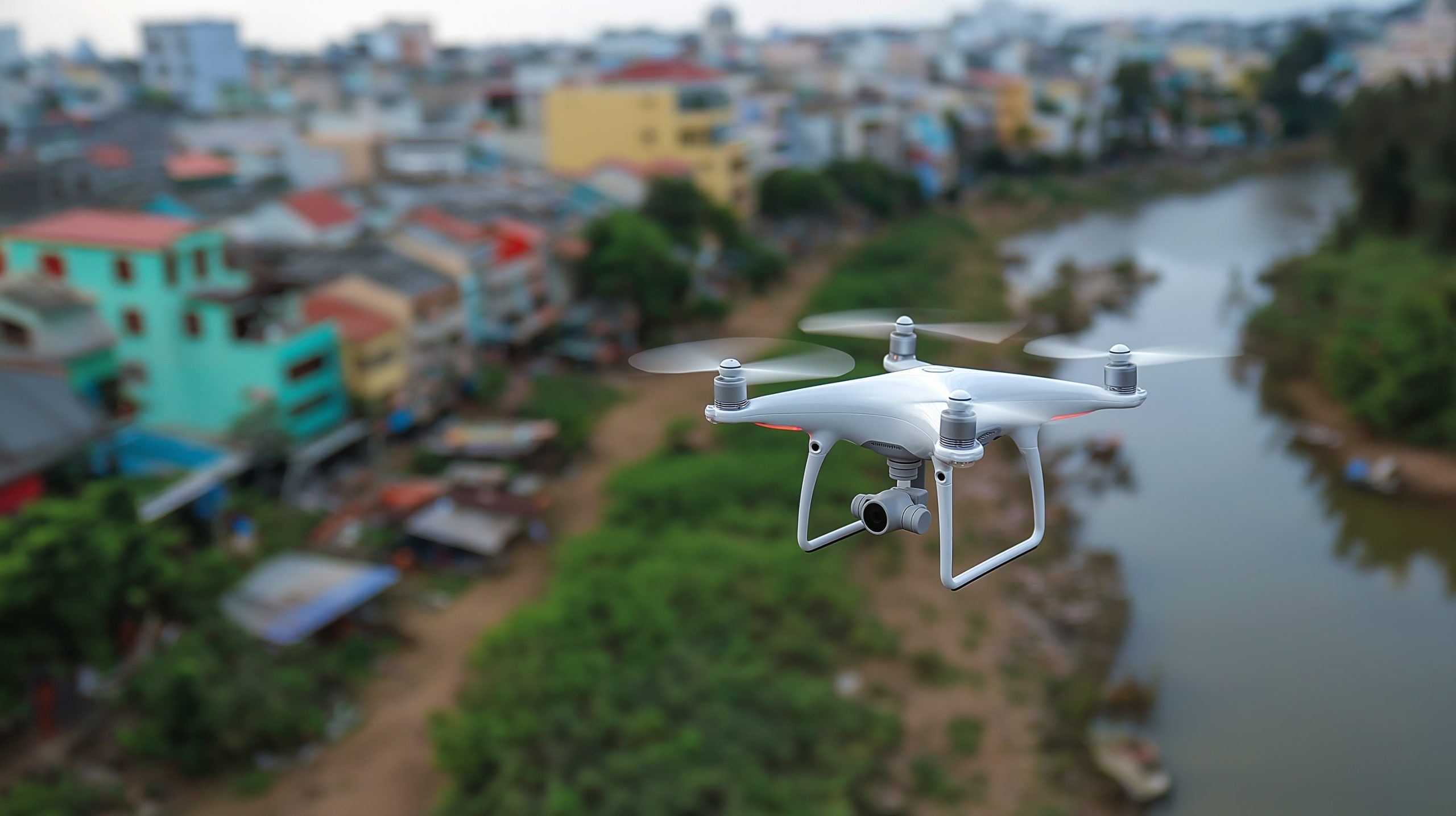
Recreational drone pilots in the Netherlands must follow EU-wide rules designed for safety. These fall under the “open” category of operations and generally include the following key restrictions and best practices business.gov.nl rijksoverheid.nl:
25 June 2025
Uzbekistan’s Internet Makeover: Blazing Speeds, New Satellites, and Lingering Barriers

Uzbekistan’s Internet Makeover: Blazing Speeds, New Satellites, and Lingering Barriers

Uzbekistan’s internet infrastructure has rapidly evolved from slow dial-up and DSL connections to modern fiber-optic and wireless networks. The state-run operator Uztelecom has extended fiber-optic backbones beyond major cities in recent years budde.com.au, boosting fixed broadband capacity off a historically low base. Today, most urban neighborhoods can access fiber-to-the-building or DSL broadband, while rural areas increasingly rely on mobile networks for connectivity. Mobile coverage is extensive – 2G networks blanket 99% of the population, 3G covers about 90%, and 4G LTE reaches roughly two-thirds of residents as of 2022 freedomhouse.org. In 2023, Uzbekistan began rolling out 5G: thousands of base stations have been upgraded or built, with the first phase aiming for full 5G coverage in the capital Tashkent and partial coverage in provincial centers kun.uz kun.uz. As these upgrades continue, even remote villages are gradually coming online via a mix of fiber links, microwave relays, and cellular towers.
Fiber-Optic Odyssey: How Greece’s Internet Is Evolving from DSL to Starlink

Fiber-Optic Odyssey: How Greece’s Internet Is Evolving from DSL to Starlink

Greece’s internet infrastructure is a mix of legacy DSL lines, emerging fiber-optic networks, expansive mobile broadband, and new satellite options. Nearly 85–87% of Greeks use the internet as of 2023 Tradingeconomics, and there are about 4.5 million fixed broadband subscriptions Eett. Household internet access stands around 86.9%, up dramatically over the past decade Tradingeconomics.
Cosmic IoT Revolution: How Optimized Satellite Constellations Are Connecting Every Corner of Earth

Cosmic IoT Revolution: How Optimized Satellite Constellations Are Connecting Every Corner of Earth

The Internet of Things is expanding rapidly, with billions of devices expected to come online in the coming years Researchgate Iotforall. While many IoT sensors connect via terrestrial networks, vast areas of the globe lack coverage – from open oceans and remote rural regions to polar expanses. This is where satellites step in. Low Earth Orbit constellations of satellites can provide affordable, planet-wide IoT connectivity, enabling remote sensors and smart devices to stay connected "anytime, anywhere" Researchgate Iridium. By relaying data from space, satellite networks are bridging the connectivity gap for critical applications in agriculture, energy, logistics, environmental monitoring and more, where ground infrastructure is impractical or cost-prohibitive Researchgate Flolive. In short, global IoT connectivity has become a new space race – and optimizing satellite constellations is the key to winning it.
The High-Speed Secret: How Finland Quietly Built One of the World’s Best Internet Networks

The High-Speed Secret: How Finland Quietly Built One of the World’s Best Internet Networks

Finland is renowned for its quiet efficiency, and nowhere is this more evident than in its internet infrastructure. Over the past two decades, Finland has transformed into a connectivity powerhouse, offering citizens some of the world’s fastest and most accessible internet services. From ubiquitous fiber broadband in cities to 5G mobile networks blanketing the country, Finland’s digital foundation rivals – and in some ways exceeds – better-publicized tech leaders. This report explores how Finland achieved this, examining its national broadband infrastructure, mobile and satellite internet services, urban-rural connectivity, affordability, key industry players, and the forward-thinking policies that made it possible.
24 June 2025
Quantum Leap: Satellite QKD’s Race to Secure the Global Data Economy (2024–2031)

Quantum Leap: Satellite QKD’s Race to Secure the Global Data Economy (2024–2031)

Quantum Key Distribution via satellite is poised to become a cornerstone of cybersecurity in the coming decade, addressing the looming threat that quantum computers pose to today’s encryption. Between 2024 and 2031, this nascent sector is expected to transition from experimental pilots to early commercial services, driven by an urgent need for quantum-safe communications. Governments and industry are investing heavily: the global QKD market is projected to grow from about $480 million in 2024 to $2.6 billion by 2030. Space-based QKD – leveraging satellites to extend quantum-secure links worldwide – is a key subset, anticipated to reach roughly $1.1 billion by 2030. Major powers such as China, Europe, and the US have launched ambitious programs to develop quantum-secure satellite networks, viewing them as strategic assets for national security and data sovereignty. Commercial players, from established tech firms to startups, are also entering the fray with innovative partnerships and planned satellite deployments.
The Digital Desert Awakens: Inside Tunisia’s Expanding Internet Frontier

The Digital Desert Awakens: Inside Tunisia’s Expanding Internet Frontier

Tunisia’s internet infrastructure has grown significantly in recent years, transforming the country from a digital desert into a connected society. Fixed broadband, mobile networks, and an expanding fiber-optic backbone form the pillars of Tunisia’s connectivity. As of early 2024, about 9.96 million Tunisians are internet users – roughly 79.6% of the population freedomhouse.org. Fixed broadband subscriptions reached approximately 1.7 million lines by late 2023 freedomhouse.org, while mobile connectivity is nearly universal. There were 16.73 million active mobile connections in January 2024 – 133.7% of the population datareportal.com. Importantly, 99.9% of the population is covered by mobile network signals, with 4G alone reaching about 94.9% of inhabitants freedomhouse.org. This broad coverage means even remote villages now fall within range of at least a basic mobile internet signal.
Singapore Drone Laws 2025 – Everything You Need to Know (Updated Guide)

Singapore Drone Laws 2025 – Everything You Need to Know (Updated Guide)

Singapore regulates drones under the Civil Aviation Authority of Singapore, primarily through the Air Navigation Act and subsidiary regulations for unmanned aircraft police.gov.sg. CAAS has established a comprehensive framework that differentiates drone operations by purpose – recreational, educational, or business – with specific requirements for each category caas.gov.sg. In general, anyone flying a drone in Singapore must adhere to CAAS rules, and additional permits from other authorities may be required in sensitive scenarios en.wikipedia.org. The overarching goal is to ensure public and aviation safety while accommodating the beneficial use of drones channelnewsasia.com. All operators are expected to know and follow the regulations before taking flight.
24 June 2025
Peering Through Clouds: Microwave Radiometry’s Crucial Role in Weather Prediction

Peering Through Clouds: Microwave Radiometry’s Crucial Role in Weather Prediction

Microwave radiometry is a passive remote sensing technique that measures naturally emitted thermal radiation in the microwave portion of the electromagnetic spectrum. In essence, a microwave radiometer detects weak microwave energy from Earth’s surface and atmosphere and expresses it as a brightness temperature, the equivalent blackbody temperature of the emitting source. Unlike optical or infrared sensors that rely on reflected sunlight or emitted thermal infrared, microwave radiometers sense Earth’s intrinsic microwave emissions day or night, penetrating through clouds, haze, and even light rain or snow. The atmosphere is only semi-opaque at microwave frequencies – even a cloudy sky is not completely opaque in this range. This “all-weather” capability provides a window into atmospheric conditions that visible and infrared sensors often miss.
24 June 2025
State of Internet Access in Palau: From Coral Reefs to Starlink

State of Internet Access in Palau: From Coral Reefs to Starlink

Palau, a Pacific archipelago famed for its coral reefs and remote islands, has been rapidly modernizing its internet connectivity in recent years. As a small nation of about 18,000 people, Palau long faced challenges in digital access due to its isolated geography and limited infrastructure. Until 2017, Palau relied entirely on satellite links for internet, resulting in high costs and sparse usage – only about 25% of the population had internet access at that time pacificnote.com. The deployment of undersea fiber-optic cables marked a turning point, bringing high-speed connectivity to the islands. Today roughly two-thirds of Palauans use the internet datareportal.com, and ongoing initiatives aim to extend fast, affordable access across the country. This report examines the current state of Palau’s internet infrastructure, service providers, accessibility, government policies, the emerging role of satellite services like Starlink, challenges, and future plans for improving connectivity in this remote paradise.
Fueling the Future: Inside the $8 Billion In-Orbit Satellite Servicing Boom by 2034

Fueling the Future: Inside the $8 Billion In-Orbit Satellite Servicing Boom by 2034

The In-Orbit Servicing market – focused on extending satellite life and refueling spacecraft – is poised for explosive growth over the next decade. Valued at roughly $2.7 billion in 2024, this market is projected to triple to around $8 billion by 2034, reflecting a robust CAGR of ~11–12% Gminsights. Driving this boom is the surging demand to prolong the lifespan of costly satellites and to manage the NewSpace surge of thousands of satellites with on-orbit maintenance, refueling, and debris mitigation services. Governments and commercial operators alike are investing heavily: the U.S. Department of Defense and NASA are funding refueling and servicing demos, while companies like Northrop Grumman, Astroscale, and Orbit Fab have proven technologies that literally give satellites a new lease on life Globenewswire. Key industry players have raised hundreds of millions in capital to build “space gas stations” and robotic servicing vehicles, reflecting strong investor confidence Techcrunch. Despite technical and regulatory challenges, in-orbit servicing is rapidly transitioning from experimental missions to a viable sector of the space economy. By 2025–2034, in-orbit life extension and refueling services are expected to move from niche proof-of-concepts to routine operational services, unlocking cost savings, new revenue streams, and improved sustainability for satellite operators.
1 163 164 165 166 167 172
AI PORTFOLIO

Top Stock Picks

Today’s highest-ranked model selections.

#1 STRONG BUY

AerCap

NYSE: AER 95 / 100
#2 BUY

Uber

NYSE: UBER 93 / 100
#3 BUY ON WEAKNESS

Taiwan Semiconductor

NYSE: TSM 91 / 100
#4 TACTICAL BUY

dLocal

NASDAQ: DLO 89 / 100
#5 BUY THE RESET

Tapestry

NYSE: TPR 86 / 100
View full portfolio
Editorial model selection. Not personalised advice.