Browse Category

AMS:SESG 17 March 2025 - 30 July 2025

Inside Tajikistan’s Internet: Connectivity Challenges, Costs, and the Satellite Solution

Inside Tajikistan’s Internet: Connectivity Challenges, Costs, and the Satellite Solution

Tajikistan routes all international internet traffic through a state-controlled gateway, enabling surveillance and censorship. Fixed broadband is nearly absent, with only about 6,000 subscriptions nationwide as of 2025, while mobile connections reached 10.54 million in early 2024. Internet costs remain high, and the government frequently blocks major platforms during unrest. Recent projects aim to expand connectivity via satellite and rural initiatives.

30 July 2025
Connecting the Peaks: Internet Access in Kyrgyzstan’s Digital Landscape

Connecting the Peaks: Internet Access in Kyrgyzstan’s Digital Landscape

As of early 2024, internet penetration in Kyrgyzstan reached 79.8%, or about 5.41 million users. The World Bank–funded Digital CASA project is deploying 2,500 km of fiber and aims to connect 4,000 public facilities. Mobile networks cover 98.8% of inhabited areas, but fixed broadband remains low at 6.5%. Government controls tightened in 2023–24, including a TikTok ban and a foreign agents law.
The GEO Reboot: How 2040 Will Look from 36,000 km Up

The GEO Reboot: How 2040 Will Look from 36,000 km Up

Analysts expect about 200 new GEO satellites to launch between 2024 and 2040, replacing most of today’s 350-satellite fleet at a rate of 10–15 per year. NASA will phase out its TDRS relay satellites by the mid-2030s, shifting to commercial SATCOM services. The U.S. Space Force plans to retire large GEO missile-warning satellites after 2028, moving to lower orbits. Europe and commercial operators are advancing life extension, debris mitigation, and smaller GEO platforms.
In-Flight Wi-Fi Takes Off: The Sky-High Race for Satellite Connectivity 2024–2030

In-Flight Wi-Fi Takes Off: The Sky-High Race for Satellite Connectivity 2024–2030

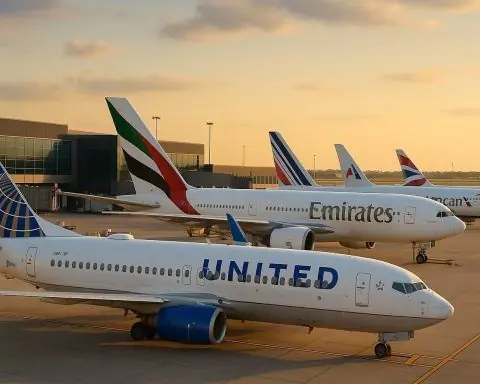
Euroconsult forecasts IFC-equipped aircraft will rise from 9,900 in 2021 to over 21,000 by 2030. SpaceX Starlink, with over 4,000 satellites, has deals to equip 2,000+ planes by early 2025. Spirit Airlines installed Thales FlytLIVE Ka-band Wi-Fi on most A320s in 2023, delivering up to 400 Mbps per aircraft. Hardware and installation costs average $300,000–$500,000 per plane, with annual bandwidth around $100,000.
Sky Is No Limit: Global Satcom Market Set to Soar Through 2035

Sky Is No Limit: Global Satcom Market Set to Soar Through 2035

The global space economy hit $415 billion in 2024, with commercial satellite activities making up $293 billion. Active satellites jumped from 3,300 in 2020 to over 11,500, driven by mega-constellations from firms like SpaceX and OneWeb. Government space spending reached $135 billion, with $73 billion for defense. Regulators are addressing space debris, tracking over 36,000 objects larger than 10 cm.
How Satellite Internet Is Revolutionizing Disaster Response and Humanitarian Relief

How Satellite Internet Is Revolutionizing Disaster Response and Humanitarian Relief

Hurricane Maria in 2017 knocked out 95% of Puerto Rico’s cell towers, cutting phone service across the island. SpaceX Starlink and other LEO satellite networks have since provided emergency internet in disasters, including Ukraine’s war, Tonga’s 2022 tsunami, and Florida after Hurricane Ian. Starlink’s terminals require only power and sky access, delivering up to 200 Mbps per user. Over 70,000 new LEO satellites are planned by 2030.
Go toTop