
Browse Category

Innovation 29 May 2025 - 7 June 2025

Hyperspectral Eyes in the Sky: How Space-Based Imaging Is Revolutionizing Earth Observation

Hyperspectral Eyes in the Sky: How Space-Based Imaging Is Revolutionizing Earth Observation

Imagine a satellite that not only takes pictures of Earth, but can also identify what materials compose each pixel of the image. This is the promise of hyperspectral imaging – a technology giving satellites “super-vision” across hundreds of colors beyond human sight. Hyperspectral sensors capture detailed spectral fingerprints of objects by measuring reflected light in dozens or even hundreds of narrow, contiguous wavelength bands Satellitetoday. In contrast, conventional color cameras or multispectral sensors see only a few broad bands of light Satellitetoday. By recording a contiguous spectrum for each pixel, hyperspectral imaging allows analysts to detect subtle differences in composition – for instance, distinguishing a healthy plant from a diseased one by its chlorophyll signature, or identifying minerals in soil from their unique spectral absorption features Satellitetoday Techbriefs. This richer spectral detail comes at the cost of more complex data and processing requirements, but it enables a host of new insights into Earth’s surface and atmosphere.
7 June 2025
Everything You Never Knew You Needed to Know About Differential and Precise Point Positioning

Everything You Never Knew You Needed to Know About Differential and Precise Point Positioning

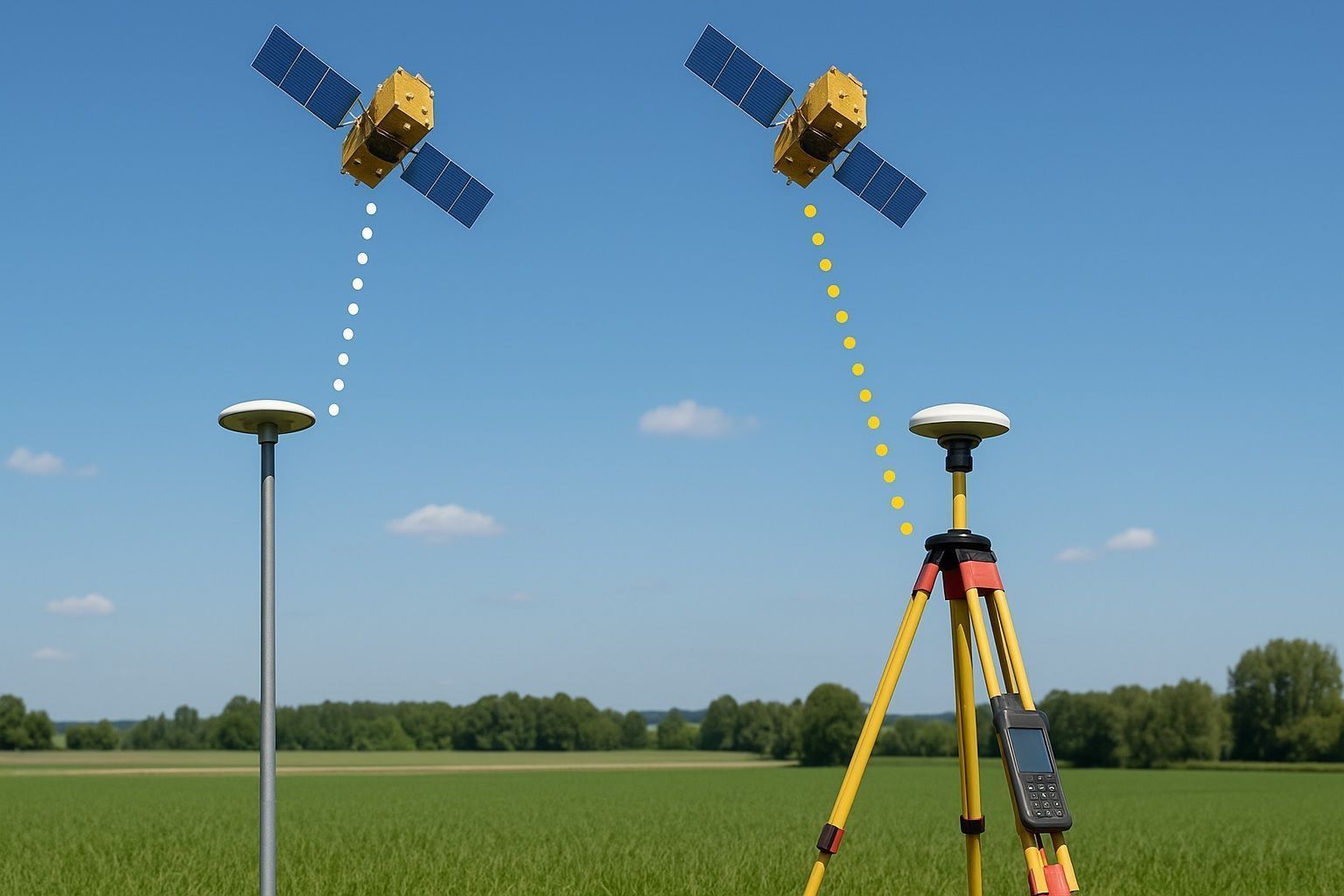
Global Navigation Satellite Systems like GPS have revolutionized how we find our position on Earth. Yet, the standard GPS accuracy often isn’t sufficient for missions like precision farming, engineering surveys, autonomous navigation, or tectonic measurements Esa. To bridge this accuracy gap, two advanced techniques have emerged over the years: Differential GNSS and Precise Point Positioning. These methods take basic GNSS to the next level, achieving sub-meter to centimeter-level accuracy by cleverly handling errors in satellite signals. In this comprehensive report, we’ll dive into what DGNSS and PPP are, how they work, their history and evolution, technical principles, comparisons of performance, real-world applications across industries, benefits and limitations, current technologies, case studies, and future developments. By the end, you’ll have a deep understanding of these high-precision positioning techniques – truly everything you never knew you needed to know about DGNSS and PPP.
Global Navigation Showdown: How GPS III, Galileo, BeiDou & GLONASS Upgrades Will Change How You Navigate

Global Navigation Showdown: How GPS III, Galileo, BeiDou & GLONASS Upgrades Will Change How You Navigate

Have you ever taken GPS for granted on your phone and wondered if other countries have their own “GPS”? It turns out an intense global navigation space race is underway – and the upgrades are astonishing. The U.S., Europe, China, and Russia are modernizing and expanding their Global Navigation Satellite Systems like never before. From America’s next-gen GPS III satellites to Europe’s cutting-edge Galileo, China’s ambitious BeiDou system, and Russia’s resilient GLONASS, each is adding new technology, signals, and services. These upgrades promise higher accuracy, stronger signals, new augmentation services, and even centimeter-level precision, redefining how we navigate and use timing worldwide. In this report, we’ll explore each system’s historical background, technical specs, modernization efforts, augmentation services, strategic goals, and use cases. We’ll also compare the systems and peek into the future of navigation. Buckle up – your understanding of “GPS” is about to expand globally!
The Space Race for the Internet: Inside the Billion-Dollar Satellite Mega-Constellation Boom

The Space Race for the Internet: Inside the Billion-Dollar Satellite Mega-Constellation Boom

Stacks of Starlink satellites awaiting deployment in orbit. A new space race is underway—not for the Moon or Mars, but to blanket Earth in high-speed internet from space. Private companies and governments are launching mega-constellations of satellites by the thousands, aiming to beam broadband connectivity to every corner of the globe. The stakes are enormous: billions of dollars are pouring into these projects, and the outcome could redefine how the world connects and who controls that connectivity. Rocket launches carrying dozens of satellites at a time have become routine, signaling a technological revolution that promises to bridge digital divides and create a truly global internet infrastructure. This report dives into the history, technology, key players, and far-reaching implications of this 21st-century space race.
Mega-Constellations Exposed: How Swarms of Tiny Satellites Are Taking Over Low Earth Orbit

“No Signal? No Problem!” – Next‑Gen Satellite Phones Set to Change Everything

Imagine being able to send a message or make a call from anywhere on Earth, even far outside cellular coverage. That’s the promise driving the development of next-generation handheld satellite phones and advanced antennas. Long seen as bulky gadgets of last resort, satellite phones are now undergoing a revolution. Tech giants, satellite operators, and startups are racing to integrate space-based links into ordinary smartphones and rugged devices alike www2.deloitte.com ts2.tech. The result? Handsets that seamlessly tap satellites when terrestrial networks vanish, miniaturized antennas that fit in pockets, and a wave of innovations that could make “no signal” a thing of the past. This report dives into the latest breakthroughs in satellite phone technology, the key players behind them, technical hurdles being overcome, emerging use cases from disaster response to remote exploration, and what the future holds for truly global connectivity.
How Satellite Internet Is Revolutionizing Disaster Response and Humanitarian Relief

How Satellite Internet Is Revolutionizing Disaster Response and Humanitarian Relief

Disasters – whether natural or man-made – often wreak havoc on local communication infrastructure. Hurricanes, earthquakes, and conflicts can topple cell towers, sever fiber-optic cables, and leave entire regions cut off. For instance, Hurricane Maria in 2017 damaged 95% of cell towers in Puerto Rico, leaving the island largely without phone service freepress.net. In such dire situations, internet connectivity becomes as critical as food or shelter for saving lives. Responders need communications to coordinate evacuations and direct aid, while survivors need to call for help and receive information. As the American Red Cross emphasizes, when all conventional communications are down, setting up emergency satellite links allows a relief headquarters to function – “imagine all communications are down... We can set up a network... Without [this], there would be no way for the Red Cross to stand up a relief operation” mndaksredcross.org. In humanitarian crises, connectivity truly becomes lifesaving for affected people and essential for the aid teams supporting them globalpolicyjournal.com. This report explores how satellite internet is meeting that need and revolutionizing disaster response.
The Sky Connect: How Satellite Internet Is Revolutionizing Rural and Remote Life

The Sky Connect: How Satellite Internet Is Revolutionizing Rural and Remote Life

Imagine a village high in the mountains or deep in the rainforest, once cut off from the online world, suddenly gaining high-speed internet from the sky. This is the promise of satellite internet. By beaming broadband connectivity from orbit, satellite networks are bridging the digital divide and transforming life in far-flung communities. In 2023, an estimated 2.6 billion people remained offline globally – largely in rural areas itu.int twn.my. Satellite internet technology is now poised to change that, bringing education, healthcare, and economic opportunity to places fiber cables and cell towers could never reach.
No Signal? No Problem – Starlink’s Direct-to-Cell Satellites Are Eliminating Dead Zones

No Signal? No Problem – Starlink’s Direct-to-Cell Satellites Are Eliminating Dead Zones

Imagine sending a text from the middle of the ocean or deep in the mountains with no cell tower in sight. That’s the promise of Starlink’s new Direct-to-Cell technology – a “cell tower in space” that lets ordinary phones connect via satellite when terrestrial coverage is absent. In recent trials, SpaceX’s Starlink satellites have successfully relayed SMS texts and even voice/video calls directly to standard smartphones, showcasing a potential game-changer for mobile connectivity. This report dives into what Starlink Direct-to-Cell is, its key milestones, the partners and timelines involved, and what it all means for the telecom industry and consumers around the world.
The Internet Frontier: How Bolivia Is Connecting from the Peaks to the Stars

The Internet Frontier: How Bolivia Is Connecting from the Peaks to the Stars

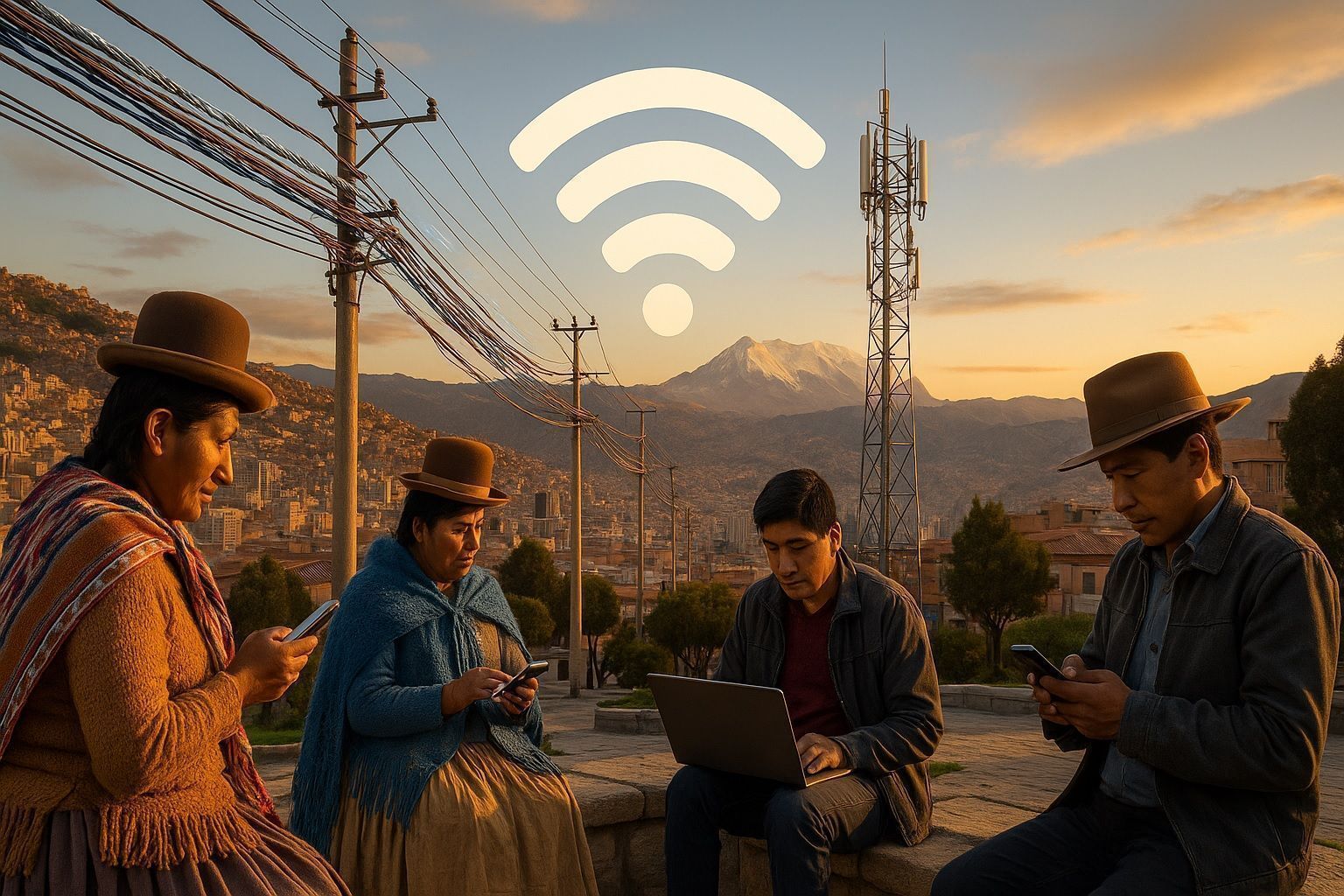
Bolivia’s quest to bridge its digital divide is a story of geography and innovation. This landlocked nation – with sky-high Andean peaks and remote Amazonian villages – faces unique challenges in expanding internet access. The government and telecom providers have had to lay fiber across rugged terrain, beam signals from satellites, and extend mobile towers to connect communities. As of 2025, internet penetration in Bolivia has grown rapidly, yet connectivity remains uneven between bustling cities and isolated rural areas. The following report explores Bolivia’s internet infrastructure, providers, affordability, policies, usage statistics, and recent developments that are shaping how Bolivians connect from the mountaintops to the satellites above.
Benin’s Internet Revolution: How a Small Nation Is Bridging the Digital Divide with Fiber and Starlink

Benin’s Internet Revolution: How a Small Nation Is Bridging the Digital Divide with Fiber and Starlink

Benin has witnessed a quiet but striking internet revolution over the past decade. In the early 2010s, internet use was in the single digits of the population; today roughly one-third of Beninese are online datareportal.com pulse.internetsociety.org. This rapid growth has been driven by improvements in infrastructure and aggressive government initiatives, yet significant challenges remain. The following report examines the state of internet access in Benin across key dimensions – from urban connectivity and pricing to government policy and new satellite services – and compares the country’s progress with its West African neighbors. The picture that emerges is one of surprising advances amid persistent gaps: Benin is expanding fiber optics nationwide and embracing innovations like SpaceX’s Starlink, even as rural communities struggle with access and affordability.
1 June 2025
Sky-Fi Revolution: How Starlink Is Reshaping Global Internet Access

Sky-Fi Revolution: How Starlink Is Reshaping Global Internet Access

High-speed internet access is increasingly seen as essential infrastructure, yet billions worldwide still lack reliable connectivity. Traditional wired broadband and cellular networks often fail to reach remote or underserved areas, leaving a “digital divide.” Enter Starlink, a satellite internet constellation developed by SpaceX. Starlink is deploying thousands of low Earth orbit satellites to deliver broadband internet virtually anywhere on the globe. Since launching its first satellites in 2019, Starlink has rapidly expanded service to cover around 130 countries and territories en.wikipedia.org, amassing millions of users. This report examines how Starlink’s novel approach – dubbed a “Sky-Fi” revolution – is reshaping global internet access through its performance, coverage, and challenges, and how it compares to other satellite internet providers.
29 May 2025
1 18 19 20