
Today: 3 July 2026
Browse Category

NASDAQ:GOOGL 2 August 2025 - 6 August 2025

AI’s Frenzy: Billion-Dollar Bets, Breakthroughs & Backlash – Global AI News Roundup (Aug 5–6, 2025)

AI’s Frenzy: Billion-Dollar Bets, Breakthroughs & Backlash – Global AI News Roundup (Aug 5–6, 2025)

Over the past two days, the AI world saw a whirlwind of major developments across research labs, boardrooms, and government halls. Breakthrough scientific achievements were unveiled, tech giants and startups announced bold moves, regulators ramped up oversight, and debates intensified over AI’s societal impact. Below is a comprehensive roundup of all the major global AI news from August 5–6, 2025, organized by domain for an engaging, quick scan. Sources: This report is compiled from the latest reputable sources and expert commentary, including Reuters news wires reuters.com reuters.com, tech industry publications like TechCrunch ts2.tech, MIT News for academic research updates news.mit.edu, and official statements or press releases where appropriate reuters.com. It reflects developments reported on August 5–6, 2025, providing a comprehensive, connected overview of how AI is evolving – and how the world is responding – in real time. Each fact and quote is linked to its primary source for further reading.
Battle of the Buds: Sennheiser Momentum TW4 vs Pixel Buds Pro 2 vs Technics AZ100 – 2025 Flagship Earbuds Showdown

Battle of the Buds: Sennheiser Momentum TW4 vs Pixel Buds Pro 2 vs Technics AZ100 – 2025 Flagship Earbuds Showdown

Wireless earbuds have come a long way, and 2025’s latest flagships push performance to new heights. In this comprehensive comparison, we pit Sennheiser’s Momentum True Wireless 4, Google’s Pixel Buds Pro 2, and Technics’ EAH-AZ100 against each other across every key aspect: sound quality, noise cancellation, transparency mode, battery life, comfort, connectivity, controls, app support, price, durability, firmware updates, and smart assistant integration. We’ll highlight each product’s strengths and weaknesses, drawing on the latest expert reviews and news as of August 2025. Which premium earbuds come out on top? Read on to find out. Sennheiser Momentum True Wireless 4: Sennheiser has a reputation for audiophile-grade sound, and the Momentum TW4 lives up to it. Reviewers praise its rich, detailed and dynamic sound that’s refined and easy on the ears whathifi.com. The default tuning is warm with controlled bass and slightly soft treble, providing an enjoyable listen for most genres rtings.com. In fact, a What Hi-Fi verdict declares: “Watch out Sony and Bose! The Momentum True Wireless 4 offer a level of sonic refinement… that makes them a serious contender at this level.” whathifi.com These earbuds deliver excellent timbre and immersiveness scores in objective tests, indicating a wide soundstage and faithful
6 August 2025
RISC-V vs ARM vs x86: The 2025 Silicon Architecture Showdown

RISC-V vs ARM vs x86: The 2025 Silicon Architecture Showdown

The battle for computing supremacy is heating up in 2025, as three major CPU architectures – RISC-V, ARM, and x86 – vie for dominance. These instruction set architectures underpin everything from tiny IoT sensors to supercomputers. x86 has ruled PCs and servers for decades, ARM now powers virtually all smartphones, and newcomer RISC-V is exploding in popularity as an open alternative. Each has unique strengths: x86 offers brute-force performance and a vast software legacy, ARM boasts efficiency and a mature mobile/embedded ecosystem, and RISC-V’s open design promises unprecedented flexibility and innovation eetimes.eu eetimes.eu. This report provides an in-depth comparison of the three architectures – covering technical foundations, performance, power efficiency, flexibility, licensing, ecosystem maturity, security, hardware implementations, and the latest trends as of mid-2025. We’ll also highlight expert insights, industry quotes, and upcoming products. The stakes are high: whoever leads in this “silicon architecture showdown” will shape the future of computing across mobile devices, cloud data centers, edge AI, and beyond. At a high level, the x86 architecture is the classic example of a CISC design, while both ARM and RISC-V follow RISC principles. In practice, modern CPUs blur the lines – but the design philosophies still influence each architecture’s
Quantum Showdown: Superconducting vs Trapped Ion vs Photonic – Who Will Rule Quantum Computing?

Quantum Showdown: Superconducting vs Trapped Ion vs Photonic – Who Will Rule Quantum Computing?

Quantum computing is advancing at a breakneck pace, with several rival technologies vying for the crown. In particular, superconducting qubits, trapped-ion qubits, and photonic qubits have emerged as leading platforms. Each uses a very different physical system to create quantum bits, and each comes with its own strengths, challenges, and big-name supporters. Tech giants like IBM and Google are betting on superconducting circuits, IonQ and Quantinuum champion trapped ions, and innovators like PsiQuantum and Xanadu push photonic approaches biforesight.com. This report compares these three quantum hardware platforms – from how their qubits work and perform, to who’s building them and what’s coming next – and examines which might dominate in the near term and long term. Superconducting quantum computers use tiny electrical circuits cooled to nearly absolute zero. In this platform, qubits are made from superconducting materials that carry currents with zero resistance at cryogenic temperatures thequantuminsider.com. Each qubit is essentially a microscopic Josephson junction circuit where quantum information is stored in electromagnetic states controllable by microwave pulses thequantuminsider.com. Because these are electronic devices, they operate extremely fast – gate operations can take only tens of nanoseconds, meaning millions of quantum logic operations per second thequantuminsider.com. This speed is a
Battle of the Smart Home Titans: Matter 1.3 vs Zigbee 3.0 vs Thread 1.3 (2025 Ultimate Showdown)

Battle of the Smart Home Titans: Matter 1.3 vs Zigbee 3.0 vs Thread 1.3 (2025 Ultimate Showdown)

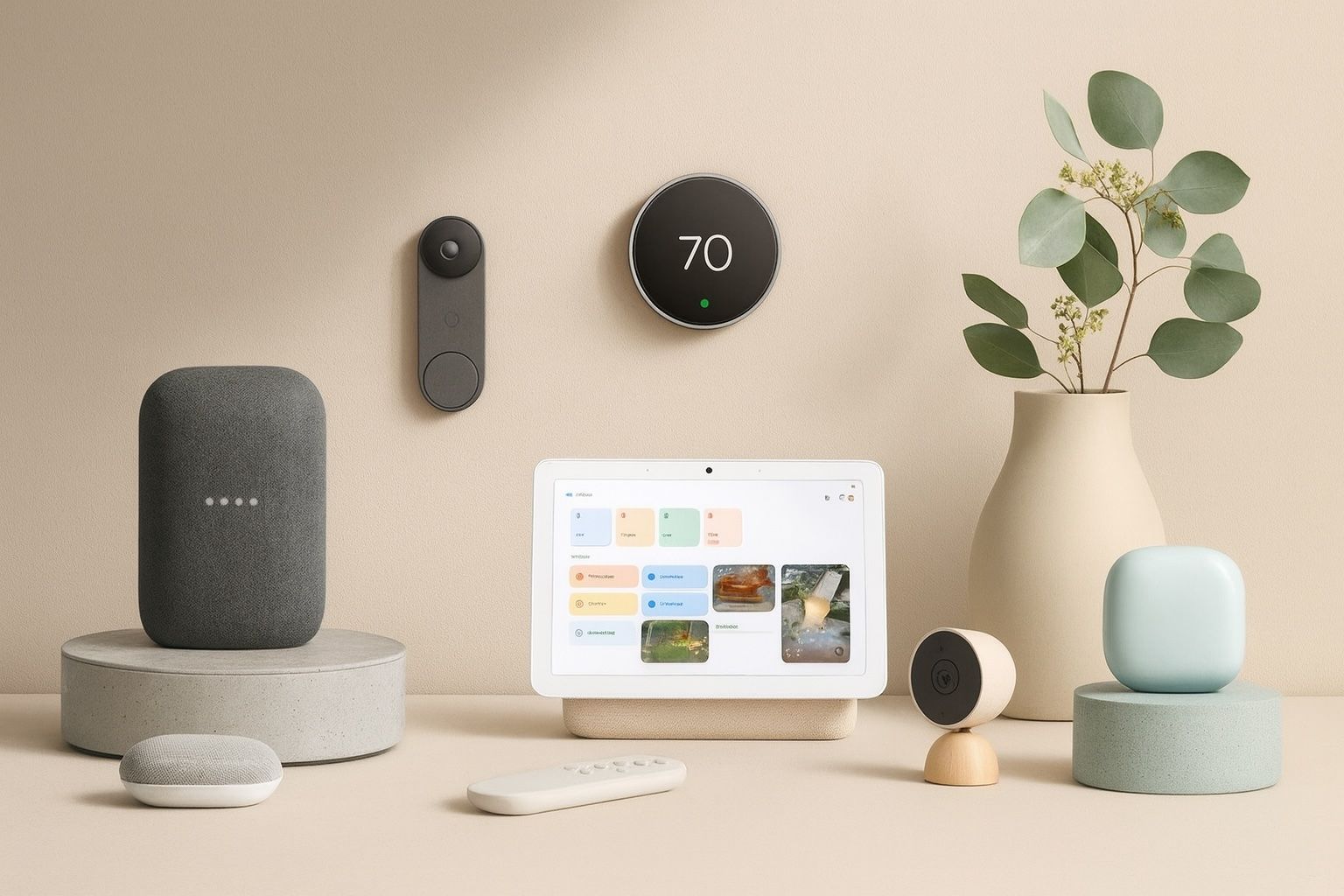
Smart home technology is at a crossroads in mid-2025. Three major standards are vying to connect your lights, locks, thermostats, and more into one seamless ecosystem: Matter 1.3, Zigbee 3.0, and Thread 1.3. Each plays a unique role in how devices talk to each other. Zigbee and Thread are low-power wireless mesh network protocols, while Matter is a newer application-layer standard built on Internet Protocol that rides on networks like Wi-Fi or Thread Seeedstudio. In plain language, Zigbee and Thread handle how devices connect, and Matter defines how devices communicate and interoperate across platforms Seeedstudio. This report will break down each technology in simple terms, then compare them head-to-head on architecture, networking, security, compatibility, industry adoption, performance, developer experience, and their roles in smart home automation. We’ll also cover the latest updates as of 2025 – including new device types, industry shifts, and upcoming releases – with insights from leading experts at the Connectivity Standards Alliance, Google, Apple, Silicon Labs, and more. By the end, you’ll understand the strengths and weaknesses of Matter, Zigbee, and Thread, and get recommendations on what they mean for consumers, developers, and manufacturers. Let’s dive into the ultimate smart home protocol showdown of 2025! Matter
2025 Ultimate Security Camera Showdown: Arlo Pro 6 vs Google Nest Cam vs EufyCam 3

2025 Ultimate Security Camera Showdown: Arlo Pro 6 vs Google Nest Cam vs EufyCam 3

Home security cameras are smarter and more powerful than ever in 2025. In this comprehensive comparison, we pit three heavyweights against each other: Arlo Pro 6, Google Nest Cam, and EufyCam 3. We’ll dissect everything from video quality and battery life to pricing, AI smarts, and privacy features. Which camera delivers the best value and protection for your home? Read on to find out. and Arlo’s Secure 6 platform to anticipate what Pro 6 will offer.)
NVIDIA Blackwell B200 vs AMD MI350 vs Google TPU v6e – 2025’s Ultimate AI Accelerator Showdown

NVIDIA Blackwell B200 vs AMD MI350 vs Google TPU v6e – 2025’s Ultimate AI Accelerator Showdown

The race for AI accelerator supremacy has reached a fever pitch in 2024–2025. NVIDIA, AMD, and Google have each unveiled cutting-edge hardware targeting the exploding demands of generative AI, large language models, and high-performance computing. NVIDIA’s new Blackwell B200 GPU, AMD’s Instinct MI350 series, and Google’s TPU v6e “Trillium” are all touted as game-changing chips, each pushing the envelope in architecture, performance, and efficiency. This report provides an in-depth comparison of these three accelerators – covering their architectures, raw performance, power efficiency, software ecosystems, real-world benchmarks, deployment scenarios, and more. We also highlight expert commentary and recent developments, and peek at the next-generation roadmaps each company is pursuing. In this showdown of AI titans, NVIDIA’s Blackwell GPU promises 3× training and 15× inference performance gains over its predecessor nvidia.com, AMD’s MI350 boasts up to 4× higher AI compute and 35× faster AI inference than its prior generation tomshardware.com smbom.com, and Google’s TPU v6e delivers a 4.7× jump in peak compute along with doubled memory and interconnect bandwidth over its last-gen TPUs cloud.google.com cloud.google.com. Below, we dissect each solution and compare how they stack up in the competitive landscape of AI acceleration.
Sora vs Veo 3 vs Runway Gen-4: Which AI Video Generator Is Taking Over 2025?

Sora vs Veo 3 vs Runway Gen-4: Which AI Video Generator Is Taking Over 2025?

AI video generation has leapt from science fiction to reality in 2025. Three cutting-edge tools are leading this revolution: OpenAI’s Sora, Google’s Veo 3, and Runway’s Gen-4. These text-to-video models can turn simple prompts into moving pictures, allowing creators to produce short films, adverts, and animations without a camera crew. In this in-depth comparison, we’ll explore each model’s technical capabilities, standout features, limitations, and how they stack up against each other. From ultra-realistic visuals to integrated sound and unprecedented creative control, Sora, Veo 3, and Gen-4 are pushing the boundaries of video creation. Which one is poised to dominate 2025? Let’s find out. Each of these AI video generators boasts impressive technical specs and strengths, though they differ in focus:
5 August 2025
AI’s Big Bang: Billion-Dollar Deals, Breakthroughs & Backlash (Aug 4–5, 2025 AI Roundup)

AI’s Big Bang: Billion-Dollar Deals, Breakthroughs & Backlash (Aug 4–5, 2025 AI Roundup)

Over the past two days, the AI landscape has seen massive funding moves, cutting-edge research, new rules, and heated debates across the globe. From multi-billion dollar investments to academic breakthroughs and policy showdowns, here are the major AI developments from August 4–5, 2025. From boardrooms to research labs, parliaments to picket lines, the last 48 hours in AI have showcased breakneck progress accompanied by vigorous oversight and critique. Billion-dollar bets on AI’s future are coinciding with urgent calls to address its pitfalls. As this roundup shows, the global AI narrative in early August 2025 is one of extraordinary promise — tempered by the realization that shaping AI’s impact requires vigilance from all corners of society.
AI Showdown 2025: ChatGPT vs Google Gemini vs Anthropic Claude – Which Model Leads the Pack?

AI Showdown 2025: ChatGPT vs Google Gemini vs Anthropic Claude – Which Model Leads the Pack?

ChatGPT, Google’s Gemini, and Anthropic’s Claude stand as three of the most advanced AI assistants in 2025. These models power everything from creative writing and coding help to virtual assistants in enterprise software. OpenAI’s ChatGPT currently dominates in user adoption Pymnts, but Google and Anthropic have rapidly pushed Gemini and Claude to rival – and in some niches, exceed – ChatGPT’s capabilities. This report provides an up-to-date comparison of capabilities, model versions, user experience, strengths/weaknesses, pricing, safety, and expert benchmarks for these AI titans. We also highlight the latest news and what industry experts are saying about this “AI arms race.” Let’s dive in. Each of these AI systems is extremely powerful, but they have unique strengths in particular domains. Here’s how ChatGPT, Gemini, and Claude stack up in mid-2025 across several core capability areas:
Ultimate 2025 Showdown: iOS vs Android vs HarmonyOS — Which Mobile OS Reigns Supreme?

Ultimate 2025 Showdown: iOS vs Android vs HarmonyOS — Which Mobile OS Reigns Supreme?

In the world of mobile operating systems, 2025 presents a three-way battle among Apple’s iOS, Google’s Android, and Huawei’s HarmonyOS. iOS and Android have dominated globally for over a decade, forming a near duopoly in many markets rcrwireless.com rcrwireless.com. Now HarmonyOS, born in China amid tech sanctions, is emerging as a viable third player – even overtaking iOS in Chinese market share by late 2024 globaltimes.cn. This comprehensive comparison will delve into everything from technical foundations to user experience, ecosystem lock-in, app availability, security, developer support, market share, AI integration, and the latest updates. Which mobile OS reigns supreme depends on what you value – and this report brings you expert analysis and hard data to make sense of the showdown. iOS: Apple’s iOS is built on the Darwin core of macOS, featuring the XNU hybrid kernel that combines a Mach microkernel with BSD Unix components en.wikipedia.org. In practical terms, iOS’s architecture is tightly integrated with Apple’s hardware. This vertical integration allows iOS to be finely tuned for performance and efficiency on a limited range of devices. Apple’s approach favors a stable, closed ecosystem – the core is open-source, but higher-level frameworks are proprietary. The result is a robust, Unix-based
Wi-Fi 7 Mesh Router Showdown: Eero Max 7 vs. Google Nest Wi-Fi Pro 7 vs. TP-Link Deco BE95 – Which Reigns Supreme in 2025?

Wi-Fi 7 Mesh Router Showdown: Eero Max 7 vs. Google Nest Wi-Fi Pro 7 vs. TP-Link Deco BE95 – Which Reigns Supreme in 2025?

Wi-Fi 7 is here, and a new generation of mesh routers promises blazing speeds and better connectivity for our increasingly connected homes. Three standout systems leading the charge are Amazon’s Eero Max 7, Google’s upcoming Nest Wi-Fi Pro, and TP-Link’s flagship Deco BE95. Each targets the cutting edge of home networking, from multi-gigabit wired links to integrated smart home hubs. This report compares these three Wi-Fi 7 mesh routers across all major aspects – wireless performance, coverage, hardware specs, design, mesh capabilities, user experience, smart home integration, security features, pricing, and expert reviews – to see which one might be the best fit for you. Wi-Fi 7 is the latest wireless standard officially certified in early 2024. It introduces the 6 GHz band and technical innovations like extremely wide 320 MHz channels, 4096-QAM modulation, and Multi-Link Operation that allow devices to use multiple bands simultaneously. These enhancements can deliver dramatically higher throughput and lower latency than Wi-Fi 6/6E. All three routers in this comparison support Wi-Fi 7’s capabilities, but they implement them differently – with varying numbers of bands, antenna configurations, and backhaul strategies – leading to some stark differences in real-world performance and user experience. Below, we break down
The Ultimate 2025 Smart Display Showdown: Echo Show 10 vs Nest Hub Max 2 vs Lenovo Smart Display 2

The Ultimate 2025 Smart Display Showdown: Echo Show 10 vs Nest Hub Max 2 vs Lenovo Smart Display 2

Smart displays are smarter than ever in 2025. Amazon’s Echo Show 10, Google’s rumored Nest Hub Max 2, and Lenovo’s anticipated Smart Display 2 are vying for a spot on your countertop. Each combines a voice assistant with a touchscreen to stream videos, control smart homes, show recipes, video call family, and more. In this comprehensive comparison, we’ll cover the latest updates and news on each device and see how they stack up across design, audio quality, smart home integration, privacy, video calling, user experience, ecosystem support, content services, price, and overall pros and cons. Read on to find out which smart display reigns supreme in 2025! Amazon Echo Show 10: The Echo Show 10 features a 10.1-inch HD touchscreen mounted on a cylindrical base that houses its speakers shi.com. Its signature trick is a rotating display that automatically swivels to face you as you move, using camera and audio tracking whathifi.com. This motorized rotation is eerily precise – “the accuracy is almost uncannily good,” one reviewer noted, though they admitted saying “Alexa, follow me” can feel “a little bit creepy” whathifi.com whathifi.com. The screen’s resolution is adequate for casual viewing, if not quite full HD, and it has adaptive
AI Frenzy: Billion-Dollar Deals, Breakthroughs & Backlash (Aug 3–4, 2025)

AI Frenzy: Billion-Dollar Deals, Breakthroughs & Backlash (Aug 3–4, 2025)

Europe Sets the Pace: The European Union’s landmark AI Act hit a new milestone as of August 2, with key provisions on governance standards, general-purpose AI and a sanctions regime coming into force cio.com. This is the Act’s biggest rollout since it took effect one year ago, aiming to categorize AI tools by risk levels and enforce transparency. Companies are scrambling to comply – and to influence the rules. Notably, Alphabet’s Google agreed to sign the EU’s voluntary AI Code of Practice meant to guide compliance, even as rival Meta refused over legal uncertainties reuters.com. Kent Walker, Google’s president of global affairs, said the company joined with hope the code will “promote … secure, first-rate AI tools” for Europeans, though he cautioned that deviations in copyright or trade-secret rules could “chill … model development” and harm Europe’s competitiveness reuters.com reuters.com. European tech experts, meanwhile, warn the regulatory race is still uphill. “The first year has shown that AI is advancing faster than the legislative capacity to regulate it,” observed Arnau Roca, managing partner at AI consultancy Overstand Intelligence, calling the EU law a necessary first step but noting how quickly new AI applications are testing ethical boundaries cio.com. U.S. Federal
Smartwatch Wars 2025: Apple Watch Series 10 vs Galaxy Watch 7 vs Pixel Watch 3 – Which Reigns Supreme?

Smartwatch Wars 2025: Apple Watch Series 10 vs Galaxy Watch 7 vs Pixel Watch 3 – Which Reigns Supreme?

Apple Watch Series 10: Apple’s tenth-generation watch doesn’t stray far from its iconic squarish design, but it does introduce the first significant redesign in years. The Series 10 is thinner and lighter than its predecessors, with Apple essentially re-engineering the internals to achieve the sleek profile theverge.com theverge.com. It comes in 42mm and 46mm sizes, up from 41mm/45mm before, giving it Apple’s largest screen area yet – even slightly bigger than the Ultra models macrumors.com macrumors.com. Apple uses a new wide-angle LTPO OLED display that stays always-on and reaches 2,000 nits peak brightness, with improved off-angle visibility for quick glances apple.com. The bigger screen fits more text and complications, making the UI easier to read. In fact, Apple touts Series 10 as its “thinnest Apple Watch ever, with our biggest display” apple.com. Overall, the look remains familiar – a rectangular watch with rounded corners – so at a glance it “looks basically the same” as recent models theguardian.com theguardian.com, but the 9% larger screen and slimmer bezels are noticeable refinements macrumors.com macrumors.com. Materials have changed: aluminum or polished titanium cases, with a metal back instead of ceramic, giving a more unibody appearance macrumors.com macrumors.com. Apple even introduced a glossy Jet
iPhone 16 Pro Max vs Galaxy S25 Ultra vs Pixel 10 Pro: Shocking Differences You Need to Know

iPhone 16 Pro Max vs Galaxy S25 Ultra vs Pixel 10 Pro: Shocking Differences You Need to Know

The Apple iPhone 16 Pro Max, Samsung Galaxy S25 Ultra, and Google Pixel 10 Pro represent the pinnacle of smartphone technology in 2024–2025. Each is a flagship loaded with cutting-edge features, but they offer surprisingly different experiences. This report provides a comprehensive comparison of these three super-phones across display quality, camera systems, performance, battery life, AI and software smarts, operating systems and ecosystem integration, build materials, and price and availability. We’ll highlight the advantages and disadvantages of each device – from the iPhone’s polished refinements, to Samsung’s spec-stuffed powerhouse, to Google’s AI-centric approach – so you can understand how they differ in user experience, innovation, and overall value. Let’s dive into the shocking differences you need to know. All three phones boast big, beautiful OLED displays with high refresh rates, but there are key differences in size, brightness, and technology that impact the user experience.
How Machine Learning Works and Why It’s Changing Everything in 2025

How Machine Learning Works and Why It’s Changing Everything in 2025

Machine learning is a branch of artificial intelligence that lets computers learn from data instead of being explicitly programmed. In simple terms, an ML system finds patterns in example data and uses those patterns to make predictions or decisions on new data. As AI pioneer Andrew Ng famously put it, “AI is the new electricity,” highlighting how it can transform every industry just as electricity did knowledge.wharton.upenn.edu. ML is behind everyday technologies like voice assistants, face recognition on phones, and recommendation feeds on social media. It powers everything from email spam filters to self-driving cars. The core idea is that with enough relevant data, a machine can “figure out” the relationships on its own and continue improving over time. Machine learning comes in a few flavors depending on how the system learns:
Rocket Launches, Ransomware, and a Solar-Powered Vatican: This Weekend’s Top Tech News (Aug 2–3, 2025)

Rocket Launches, Ransomware, and a Solar-Powered Vatican: This Weekend’s Top Tech News (Aug 2–3, 2025)

In consumer electronics, two industry giants are seeing strong demand. Apple Inc. delivered an upside surprise in its latest earnings, forecasting higher revenue for the upcoming quarter than analysts expected. The company credited an early rush of iPhone purchases by customers trying to beat incoming U.S. import tariffs reuters.com. One analyst noted that Apple’s tariff-driven sales surge shows how eagerly consumers will act to avoid higher prices, underscoring the iPhone’s enduring appeal even in uncertain economic conditions. Apple’s bullish outlook sent a positive signal through tech markets, even as the company faces upcoming challenges like new product launches and evolving trade policies. Meanwhile in gaming, Nintendo revealed that its new Switch 2 console is off to a roaring start. The Kyoto-based firm announced it sold over 6 million Switch 2 units in the first seven weeks after its June debut reuters.com – a figure that handily exceeds initial estimates. “The six million units sold are a testament to the incredible pent-up demand for an update of the first Switch,” said Serkan Toto, a video game industry consultant reuters.com. Blockbuster game titles like Mario Kart World helped fuel early adoption. Nintendo is maintaining its full-year sales forecast of 15 million Switch
AI Revolution in Overdrive – Tech Titans’ Launches, Mega-Deals, New Rules & Warnings (Aug 2–3, 2025)

AI Revolution in Overdrive – Tech Titans’ Launches, Mega-Deals, New Rules & Warnings (Aug 2–3, 2025)

Sources: News and press releases from Aug 1–3, 2025, including Reuters, TechCrunch, ScienceDaily, and official statements reuters.com ts2.tech techcrunch.com ts2.tech ts2.tech ts2.tech ts2.tech ts2.techsciencedaily.com ts2.tech ts2.tech ts2.tech, as well as academic publications and expert interviews. All linked references provide access to the primary source material for each claim.
AI News Roundup: Tech Giants Unveil Next-Gen AI, Billion-Dollar Bets, Regulatory Rush & Warnings (Aug 1–2, 2025)

AI News Roundup: Tech Giants Unveil Next-Gen AI, Billion-Dollar Bets, Regulatory Rush & Warnings (Aug 1–2, 2025)

OpenAI and Google DeepMind Raise the Bar: Early August saw major AI product moves from industry leaders. OpenAI is reportedly gearing up to launch its next-generation model GPT-5 as soon as this month, marking a strategic shift toward an AI that incorporates multiple specialized models rather than a single system reuters.com reuters.com. CEO Sam Altman has hinted the “o3” model will be integrated into GPT-5, aiming to create a versatile AI that can leverage tools and perform a variety of tasks reuters.com. Meanwhile, Google DeepMind officially rolled out Gemini 2.5 “Deep Think”, billed as its most advanced reasoning AI. This multi-agent system tackles questions by spawning multiple AI “agents” to explore ideas in parallel, leading to better answers at the cost of hefty computing power techcrunch.com. Deep Think became available August 1 to subscribers of Google’s $250/month AI Ultra plan via the Gemini app techcrunch.com. Google says the model shows a leap in problem-solving: a variant of Gemini 2.5 Deep Think even achieved a gold-medal score at this year’s International Math Olympiad techcrunch.com. The release also includes the exact math competition model being shared with select academics to spur research on multi-agent AI techcrunch.com. Google claims Deep Think significantly outperforms
1 41 42 43 44 45 54

Stock Market Today

  • Asahi Kasei (TSE:3407) wraps up ¥17.86bn buyback, highlights pharma tech scale-up
    July 3, 2026, 4:32 PM EDT. Asahi Kasei (TSE:3407) finished a ¥17.86 billion buyback, taking in 0.75% of its shares and signaling a focus on returns for shareholders. Peptistar has now launched Asahi Kasei's FO-MD system at the plant level, putting its pharmaceutical concentration tech into real-world production. This push could drive earnings through healthcare and process solutions, adding to its main battery and hydrogen businesses. Some risks remain for executing FO-MD and AK1940 at scale. The stock has moved up, but some see valuation still lagging-with fair value estimates pointing to a possible double from here. The story here is tighter capital discipline and a bigger bet on new technology.
Go toTop