Tech’s Big Week: TikTok’s $14B Sale Twist, Nvidia’s $100B AI Bet & 6G on the Horizon
Artificial intelligence dominated tech headlines this week, as industry leaders forged unprecedented deals to secure their edge. Nvidia’s blockbuster commitment to invest up to $100 billion in OpenAI made waves across Silicon Valley reuters.com. Under the proposed arrangement, Nvidia will pour cash into OpenAI in exchange for OpenAI purchasing Nvidia’s cutting-edge GPUs for its AI data centers reuters.com reuters.com. Essentially, OpenAI gets the state-of-the-art chips it desperately needs to train advanced AI models, and Nvidia gains a stake in AI’s hottest startup. “Everything starts with compute,” OpenAI CEO Sam Altman remarked, emphasizing that massive computing power is the foundation of modern AI breakthroughs reuters.com. The partnership would deploy an astounding 10 gigawatts of Nvidia GPU systems for OpenAI in coming years – roughly the electricity used by 8 million U.S. homes reuters.com. Analysts lauded the deal’s strategic logic for both sides, but also noted concerns that Nvidia is essentially funding a customer to buy its own products, a “circular” setup that could draw regulatory scrutiny reuters.com if it stifles competition. Nonetheless, Nvidia’s shares hit record highs on the announcement, valuing the company at over $1 trillion, as investors bet this tie-up will further cement Nvidia’s dominance in the AI chip
Nvidia (NVDA) Stock Soars on AI Mega-Deals – What’s Driving the Chip Giant in 2025?
Nvidia’s stock has been on a tear in 2025, reaching fresh highs on the back of the AI frenzy. On September 22, 2025, NVDA jumped about 3.9% in a single session to a record intraday high after announcing a massive OpenAI partnership reuters.com. That rally lifted Nvidia to roughly $184 per share – its highest level ever, and more than double its 52-week low stockanalysis.com. The surge crowned a multi-day run that pushed the major indexes to new records, with Nvidia leading the charge amid renewed tech euphoria.
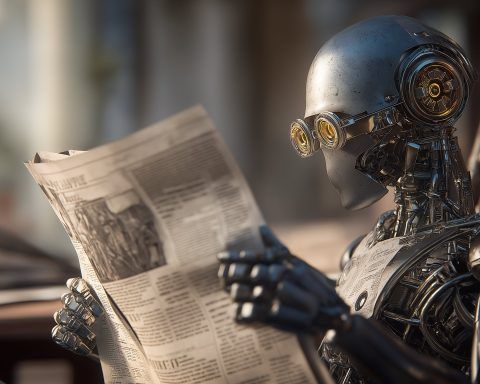
AI Stock Frenzy: Nvidia’s $100B OpenAI Bet and Major Tech AI Moves Send Shares Surging (Sept 24–25, 2025)
US and global indices treaded water after the blistering tech rally. On Sept. 24 the S&P 500 and Nasdaq slipped about 0.3–0.5% investopedia.com, as profit-taking hit “Magnificent 7” stocks and AI names. A key factor was Fed Chair Powell’s commentary on Sept. 23, warning that tech valuations were high. Post Powell, the S&P tech sector dipped and Nasdaq futures fell modestly investopedia.com. Tech giants cooled: Oracle and Nvidia fell 1.7% and 0.8% investopedia.com; Amazon slid 0.2% investopedia.com. Energy stocks bucked the trend amid rising oil. But AI–focused stocks bucked that overall trend: Alibaba jumped 8–10% investopedia.com reuters.com, Baidu climbed ~6% ainvest.com, and GPU/cloud plays like Marvell and Intel also rallied on AI spending news investopedia.com.

Nasdaq Rally Hits Speed Bump as Tech Stocks Wobble – Fed Warning and AI Jitters Shake Markets (Sept 24–25, 2025)
Wall Street’s momentum in tech stocks paused mid-week after an extended rally. On Wednesday, Sept. 24, the Nasdaq Composite index slipped 0.33% – its second straight daily decline investopedia.com. This dip ended a three-session streak of record closing highs. The Nasdaq-100 likewise pulled back from recent peaks. Major indices were relatively flat through Wednesday morning, but turned lower around midday after fresh remarks from the Federal Reserve stirred concerns reuters.com investopedia.com.
Fed Warning and AI ‘Bubble’ Fears Hit Wall Street: NYSE Roundup (Sept 24–25, 2025)
After a blistering summer rally, Wall Street’s momentum hit a speed bump mid-week. On Wednesday, the S&P 500 fell about 0.3%, the Dow Jones Industrial Average lost 0.4%, and the Nasdaq Composite slipped 0.3% smdailyjournal.com. It was the second straight down day after all three indices had notched record highs on Monday. By Thursday, stocks continued to drift in search of direction – trading was choppier and largely flat, as investors digested the week’s events and awaited fresh catalysts. Profit-taking was a major theme: with indexes still near all-time highs, many traders chose to lock in gains, especially in the recent high-flyers. “Equities have trended lower on anxiety over whether or not the Fed cuts rates at each meeting for the balance of this year,” explained Gene Goldman, chief investment officer at Cetera Investment Management reuters.com. In other words, the market was taking a breather to gauge if the Federal Reserve will indeed keep delivering the rate relief that fueled the rally.

From OpenAI’s $500B AI Bet to Instagram’s 3B Users – Inside Tech’s Wild 48 Hours
OpenAI’s $500 Billion Supercomputer Push: In a massive scale-up, OpenAI unveiled plans for five new AI mega–data centers across the U.S., bringing its Stargate infrastructure to 7 GW capacity and over $400 billion invested openai.com. This puts OpenAI ahead of schedule toward a $500 billion, 10 GW goal by end of 2025 openai.com openai.com. “AI can only fulfill its promise if we build the compute to power it,” CEO Sam Altman said, framing compute as the key to future breakthroughs openai.com. Nvidia, which earlier this week agreed to invest up to $100 billion in OpenAI reuters.com reuters.com, saw chip stocks rally on the news. Analysts predict these expansions will enable exascale processing by 2027, fueling advances from drug discovery to climate modeling future.forem.com future.forem.com. Critics, however, warn such concentration of AI power heightens monopoly risks, prompting louder antitrust calls in Washington future.forem.com.
Nasdaq’s 48-Hour Whiplash: AI Mega-Deals, Fed Curveballs & Record Highs
Wall Street began the week in celebration mode – by Monday’s close, the Nasdaq Composite, S&P 500, and Dow had all notched record-high closes, extending a rally fueled by hopes of looser monetary policy and tech sector strength. The Nasdaq ended that session at 22,788.98, its third straight record, as investors piled into big tech nasdaq.com. The spark came from the Federal Reserve’s surprise pivot: on Sept. 17 the Fed delivered its first interest rate cut of the year, a 25 bps trim to 4.00–4.25% nasdaq.com. Hopes for easier borrowing costs – and hints of further cuts likely in 2025 – had injected fresh optimism into equities reuters.com. “The rate cut is expected to add to Wall Street’s recent rally,” noted CFRA strategist Sam Stovall, as lower rates boost the net present value of stocks, especially high-growth tech reuters.com.
Wall Street Roiled: Fed Warning Cools Rally as AI Frenzy Ignites Stocks and Crash Fears
Wall Street’s rally hit a speed bump as the Federal Reserve signaled it won’t rush to ease policy. On Tuesday, Fed Chair Jerome Powell struck a delicate balance: he noted the central bank must “balance inflation concerns with a weakening job market” when considering future rate moves reuters.com. Importantly for investors, Powell offered no clues on the timing or size of the next interest-rate cut reuters.com. His cautious stance – and his remark that equity valuations are “fairly highly valued” – immediately cooled the market’s exuberance reuters.com. The major indexes, which had all notched record highs in the prior three sessions, pulled back modestly on Tuesday reuters.com.
Nasdaq’s Wild 48 Hours: Fed Jitters, Tech Tumbles & Surprise Rallies – Sept 23–24 Roundup
Wall Street’s bull run hit turbulence on Tuesday, Sept. 23, after Fed Chair Jerome Powell struck a balanced but cautious tone in his remarks. Speaking six days after the Fed’s first rate cut of 2025, Powell emphasized the “no risk-free path”forward – the central bank must tame inflation without unduly harming the now-weakening job market. Notably, he warned that equity valuations appeared “fairly highly valued,” a signal that the recent surge in stocks may have outpaced fundamentals. This lack of a clear green light on further rate relief rattled investors who had been banking on more easy money. Powell “left the door open for another rate cut” but gave “really no hint of when and how much” it might be, explained Peter Cardillo of Spartan Capital. That ambiguity “began to sell off” the overheated market, which was “ripe for some sort of a pullback,” Cardillo noted.
NYSE Rollercoaster: Fed Caution Halts Tech Rally, Mega-Deals & Gold Spike in Wild 48 Hours
NYSE News Roundup for September 23–24, 2025 Sources
AI Stocks Skyrocket Globally as $100B Nvidia-OpenAI Deal and Alibaba’s Mega AI Push Ignite Market (Sept 23–24, 2025)
After a red-hot run of AI-driven gains, U.S. markets took a breather on September 23 as investors digested economic signals. The S&P 500 and tech-heavy Nasdaq pulled back after three straight record closes powered by AI enthusiasm reuters.com. Nvidia, fresh off a new record high the day prior, dipped 2.8% as traders took profits reuters.com. Other mega-cap tech names like Amazon, Microsoft, and Apple also ticked lower reuters.com. Fed Chair Jerome Powell’s cautious remarks about interest rates and stock valuations cooled sentiment, prompting some rotation out of richly valued tech shares. “With this being the third year of double-digit returns for the S&P 500, there needs to be another strong catalyst to move stocks materially higher. And right now, it is not clear what that catalyst can be,” observed Oliver Pursche of Wealthspire Advisors, noting signs of an economic slowdown tempering the rally reuters.com.
Nvidia’s $100 Billion OpenAI Power Play Sparks Antitrust Showdown
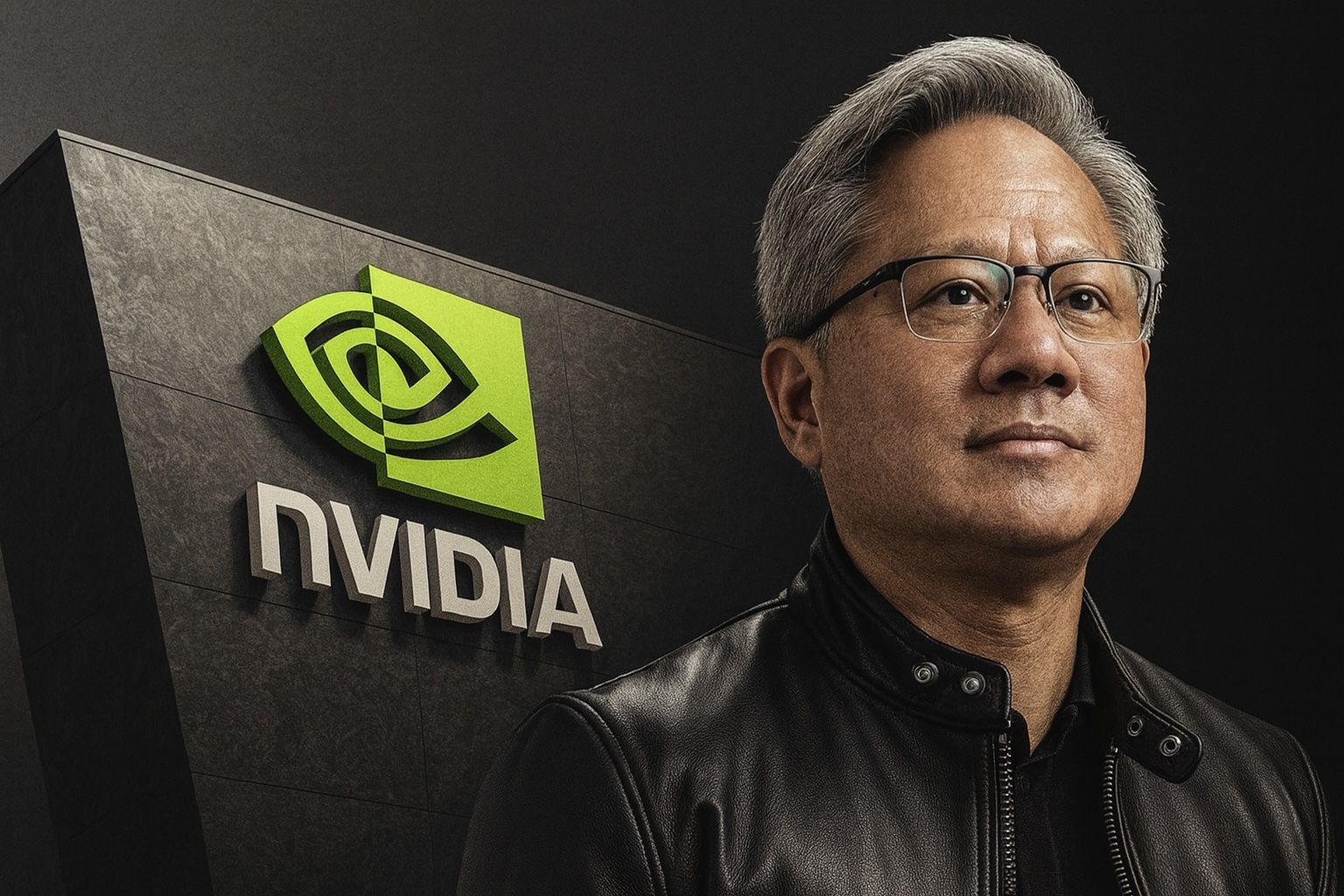
Illustration: Nvidia and OpenAI logos. Observers say the $100 billion Nvidia–OpenAI partnership pairs the world’s top AI chip supplier with the leading AI model developer, sparking concerns about competition.
Nvidia’s $100 Billion Bet on OpenAI: Inside the 10 Gigawatt AI Supercomputer Alliance
On September 22, 2025, OpenAI and Nvidia announced an unprecedented strategic partnership to build out a massive new AI computing infrastructure openai.com. Under a letter of intent, Nvidia will supply OpenAI with at least 10 GW worth of AI systems – powered by its latest GPUs – and invest up to $100 billion in OpenAI as these data centers come online openai.com. The goal is to dramatically expand OpenAI’s capacity to train and deploy advanced AI models, including future iterations of GPT and other AI systems “on the path to deploying superintelligence” openai.com. In practical terms, 10 GW of computing is enormous: on the order of millions of AI chips and equivalent to the output of about ten large power plants techcrunch.com. “Nvidia and OpenAI have pushed each other for a decade… This investment and infrastructure partnership mark the next leap forward – deploying 10 gigawatts to power the next era of intelligence,” said Nvidia CEO Jensen Huang openai.com.
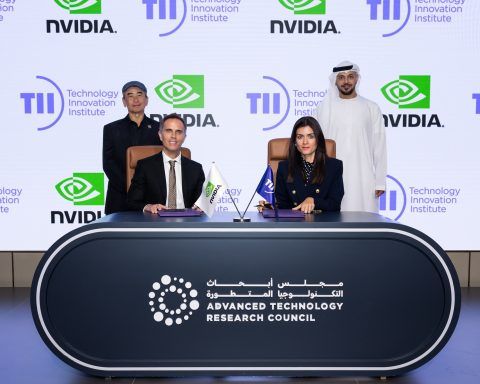
NVIDIA and Abu Dhabi Unite to Launch Middle East’s First AI & Robotics Lab – A New Era for Tech in the UAE
In summary, the NVIDIA-TII partnership establishes a groundbreaking AI and robotics research hub in Abu Dhabi, accelerating the UAE’s bid to be a global AI leader. Below, we delve into the background of this alliance, its significance for the Middle East, strategic goals driving it, key players involved, NVIDIA’s global ambitions, and what this development means for the tech landscape as of September 22, 2025.
Nvidia vs. Intel vs. AMD: Epic AI Chip Stock Showdown 2025 🚀💰
After a turbulent 2024, semiconductor stocks roared back in 2025. Year-to-date, Nvidia and AMD have each gained roughly one-third in value Macrotrends Macrotrends, vastly outperforming the broader market. Intel – which plummeted last year – has surged about 47% in 2025 Macrotrends, leading the pack in percentage terms as it claws its way back from multi-decade lows. These rallies reflect both sector-wide tailwinds and company-specific drivers:
The AI Titans of 2025: Inside the Power Index Rankings and Global Race for AI Dominance
Observer’s 2025 A.I. Power Index is a curated ranking of the 100 most influential individuals steering the future of artificial intelligence. According to the Observer, the list spans “CEOs, researchers, policymakers to investors shaping the future of artificial intelligence” Observer. Unlike lists that focus solely on company metrics or academic citations, the Power Index takes a broad view of “power” in AI, blending technical impact with business and policy influence. Selections were made by the Observer’s editorial team to capture those “shaping the future of AI” in 2025 Observer.
Tech Shockwave: Major Tech Breakthroughs from Sept 18–19, 2025
Meta kicked off its annual Connect conference by introducing the Meta Ray-Ban Display, the company’s first consumer smart glasses that include a tiny digital display in one lens reuters.com. Priced at $799 with an AI-powered wristband controller, the glasses can show notifications and respond to hand gestures, and will hit stores on September 30 reuters.com. CEO Mark Zuckerberg framed the device as a step toward everyday “superintelligence,” arguing that smart glasses let people stay present while seamlessly tapping AI assistance to “improve your memory, improve your senses, and more” reuters.com. Meta also revealed an Oakley “Vanguard” smart sports glasses for athletes at $499, which syncs with fitness apps and offers nine-hour battery life reuters.com. While analysts don’t expect these niche glasses to sell in huge numbers, they view the launch as an important foothold in augmented reality eyewear, paving the way for Meta’s more advanced AR glasses planned for 2027 reuters.com. “It’s great value for the tech you’re getting,” noted one IDC analyst, though he added that mainstream adoption will take better software and use-cases reuters.com.
You Won’t Believe the $300 Billion AI Deal Shaking Silicon Valley 🚀
The Oracle–OpenAI–Nvidia partnership is unprecedented in scale – a $300 billion bet to build next-generation AI supercomputers. It has captivated investors, but also sparked debate over whether the AI industry is entering bubble territory.
AI Gold Rush or Bubble? Tech’s Trillion-Dollar Question
The rise of generative AI has unleashed a wave of innovation and investor euphoria not seen in decades. Breakthroughs like OpenAI’s ChatGPT triggered a stampede of capital and countless startups, as well as ambitious AI initiatives at nearly every major tech company. By 2023–2025, headlines touting AI’s revolutionary potential were everywhere, and any business even tangentially tied to artificial intelligence saw its stock soar. This AI gold rush has drawn comparisons to past tech frenzies – from the dot-com boom of the late 1990s to the cryptocurrency craze of the 2010s – raising the question: are we in the midst of an AI bubble?
TechStock² Updates