Browse Category

Space News 22 June 2025 - 26 June 2025

Global Technology Trends in June-2025: AI, Quantum, EVs, Space & Beyond

Global Technology Trends in June-2025: AI, Quantum, EVs, Space & Beyond

The global AI market is valued around $758 billion in 2025 and is projected to reach $3.68 trillion by 2034. Generative AI and large language models drove a 76% increase in spending in 2025. 78% of companies use AI in at least one function as of mid-2025. At Apple’s June 2025 WWDC, Apple unveiled on-device AI features including Live Translation, a “Personal Voice” assistant, and opened its core on-device AI model to third-party developers. Foldable smartphones are forecast to ship 27.6 million units in 2025, up about 70% CAGR since 2020. Apple’s Vision Pro AR headset, launched in 2024, will
Bridging 5G and Space: Inside France 2030’s End-to-End NTN Pilot With Dual LEO Satellites

Bridging 5G and Space: Inside France 2030’s End-to-End NTN Pilot With Dual LEO Satellites

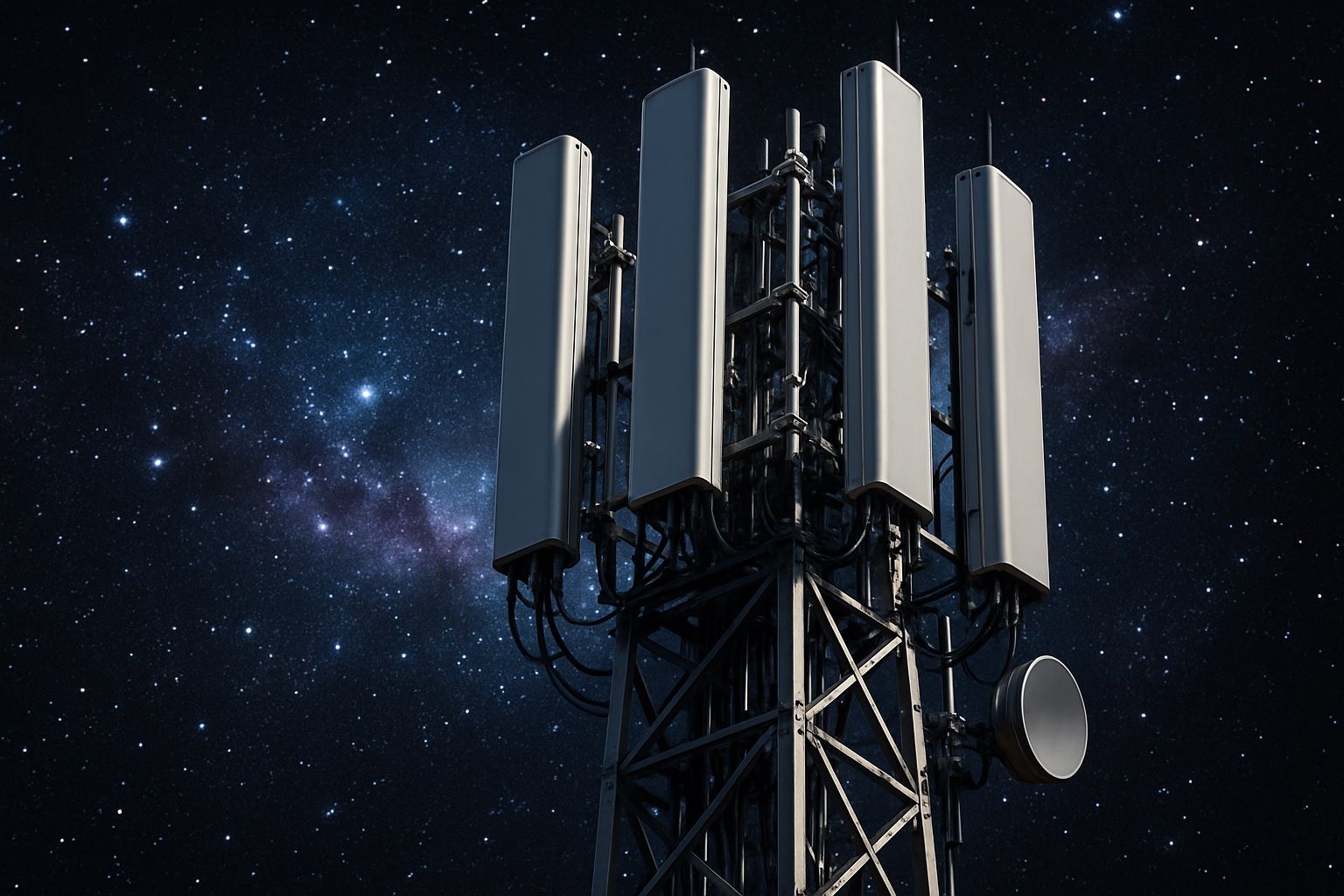
France 2030, launched in 2021 as a €30 billion investment plan, prioritizes converging 5G with space through end-to-end NTN pilots. The European Commission’s IRIS² programme, approved in 2022, will deploy hundreds of satellites (about 270 LEO and 18 MEO) and be fully operational by 2030, with Eutelsat as a prime contractor. In early 2025, Eutelsat announced the world’s first 5G NTN trial using the OneWeb LEO constellation at ~1200 km altitude, linking a standard 5G signal to the core network. The pilot used Airbus-built LEO satellites, a MediaTek 5G-NTN test chipset, an ITRI prototype gNB, and a Sharp phased-array antenna,
26 June 2025
China’s AO-MDR Laser Link Delivers 1 Gbps from Geostationary Orbit

China’s AO-MDR Laser Link Delivers 1 Gbps from Geostationary Orbit

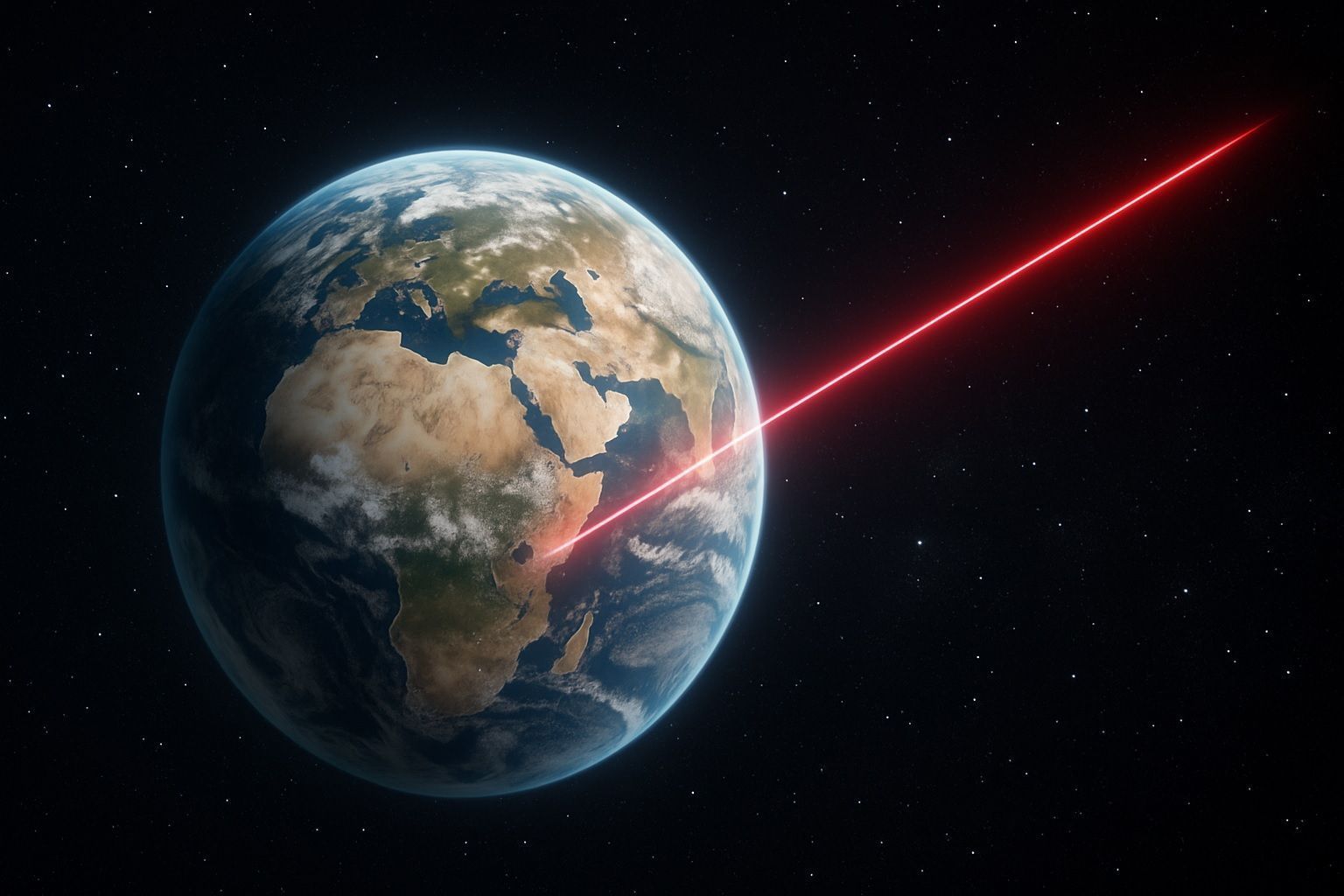
A 2-watt laser on a geostationary satellite delivered a 1 Gbps downlink to Earth from 36,000 km away. The AO-MDR system combines Adaptive Optics and Mode Diversity Reception to overcome atmospheric turbulence. The ground receiver used an 1.8-meter telescope with a 357-actuator deformable mirror to correct wavefront distortions. After AO correction, the beam was split into eight spatial modes by a multi-plane light converter, with a path-picking algorithm selecting the three strongest modes to decode. Usable signal frames increased from about 72% to 91.1%, dramatically improving link reliability. The infrared wavelength was 1.5 micrometers, an eye-safe band common in telecom
26 June 2025
Orbiting Eyes: How Space-Based ADS-B Is Revolutionizing Air Traffic Surveillance

Orbiting Eyes: How Space-Based ADS-B Is Revolutionizing Air Traffic Surveillance

Space-based ADS-B became operational in 2019 with Aireon using Iridium NEXT’s 66 low Earth orbit satellites at about 780 km, each carrying an ADS-B receiver listening at 1090 MHz and delivering data to ground stations with latency under 1.5 seconds and updates often in the 2–5 second range. Before 2019 only about 30% of the globe had ADS-B surveillance and roughly 70% of airspace lacked real-time coverage, whereas space-based ADS-B now provides global coverage including oceans and the poles. On March 27, 2019, NAV CANADA and NATS deployed space-based ADS-B in the North Atlantic, reducing lateral separation from about 40
26 June 2025
Latest Satellite News & Insights 26.06.2025

Latest Satellite News & Insights 26.06.2025

NASA’s James Webb Space Telescope captured images of exoplanet TWA 7b, a Saturn-mass planet orbiting the young star TWA 7, using high-contrast imaging and a coronagraph. Israeli airstrikes on western Iran targeted military satellites, air defense systems, and missile infrastructure, using around 20 fighter jets and over 30 munitions. ESA’s Biomass satellite, launched in April, released its first images mapping global forests using radar to measure the carbon stored in forests. A transient radio signal from NASA’s long-inactive Relay 2 satellite was detected on Earth, likely caused by an electrostatic discharge. The U.S. Space Force’s FY26 budget includes $277 million
26 June 2025
Orbital Quantum Leap: First Photonic Edge-Computing Satellite Set to Transform Space Data Processing

Orbital Quantum Leap: First Photonic Edge-Computing Satellite Set to Transform Space Data Processing

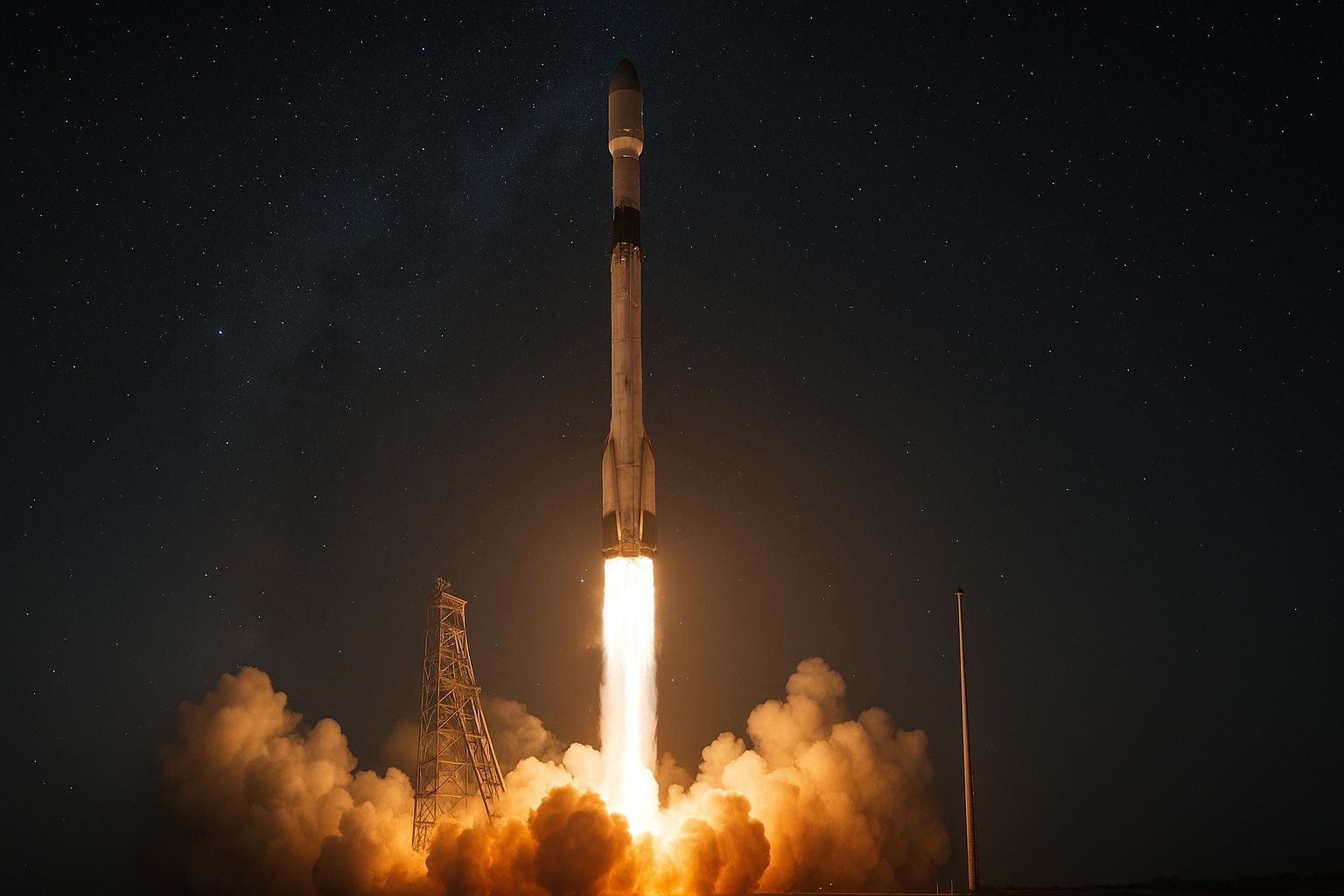
The ROQuET payload, a photonic quantum computer no larger than a shoebox, was developed by Philip Walther’s team at the University of Vienna and measures about 15 × 15 × 45 cm, weighing roughly 9.5 kg with an aluminum frame and a borosilicate glass optical circuit. The device was launched on June 23, 2025, aboard SpaceX’s Transporter-14 mission and hosted on D-Orbit’s ION platform as the SCV004 Upmik payload. The Falcon 9 rocket lifted off from Vandenberg Space Force Base and deployed around 70 satellites into a sun-synchronous orbit at about 550 km altitude. The mission demonstrates edge computing, enabling
China’s “Night‑Light” Laser vs. Starlink: What a 2‑Watt Beam Really Means for the Coming Orbital Arms Race

Laser Leapfrog: Inside China’s Record-Breaking 1 Gbps Geo-Laser Link and the Post-Starlink Future of Space Internet

On June 17, 2025, a team led by Prof. Wu Jian (Peking University of Posts & Telecommunications) and Dr. Liu Chao (Chinese Academy of Sciences) achieved a 1 Gbps downlink from a geostationary satellite using a 2-watt optical laser. The GEO satellite was parked about 36,705 km above Earth and beamed data to a ground station in southwest China. The ground receiver used an 1.8-meter telescope at the Lijiang Observatory with advanced optics to capture the laser signal. The experiment delivered 1 Gbps downlink, five times faster than SpaceX Starlink’s typical 50–200 Mbps consumer speeds (bursts to 300–500 Mbps under
25 June 2025
EU Declares War on Space Junk: A Deep Dive into the New Space Act, the Starlink Dilemma and the Hidden Climate Costs of Orbital Debris

EU Declares War on Space Junk: A Deep Dive into the New Space Act, the Starlink Dilemma and the Hidden Climate Costs of Orbital Debris

The EU Space Act was presented on 25 June 2025 and would impose EU-wide rules on launch licensing, debris-mitigation, end-of-life disposal, cybersecurity and environmental impact, with fines up to 2% of global turnover. If approved, most provisions would apply from 2030, including special traffic-coordination duties for mega (100+) and giga (1,000+) constellations. The debris crisis features about 40,000 tracked objects orbiting Earth and more than 1.2 million pieces larger than 1 cm, with at least 3,000 new debris fragments created in 2024. Starlink has launched 7,578 satellites, of which 7,556 were operational as of 30 May 2025. SpaceX logged over
25 June 2025
Historic Liftoff! Poland’s “Star Scientist” Launches on SpaceX Dragon—All the Inside Details on the Ax-4 Mission, Crew and Experiments

SpaceX’s ‘Grace’ Roars to Orbit: Axiom Mission 4 Sends India, Poland & Hungary Back to Space — and Signals the Dawn of a Truly Global Commercial ISS Era

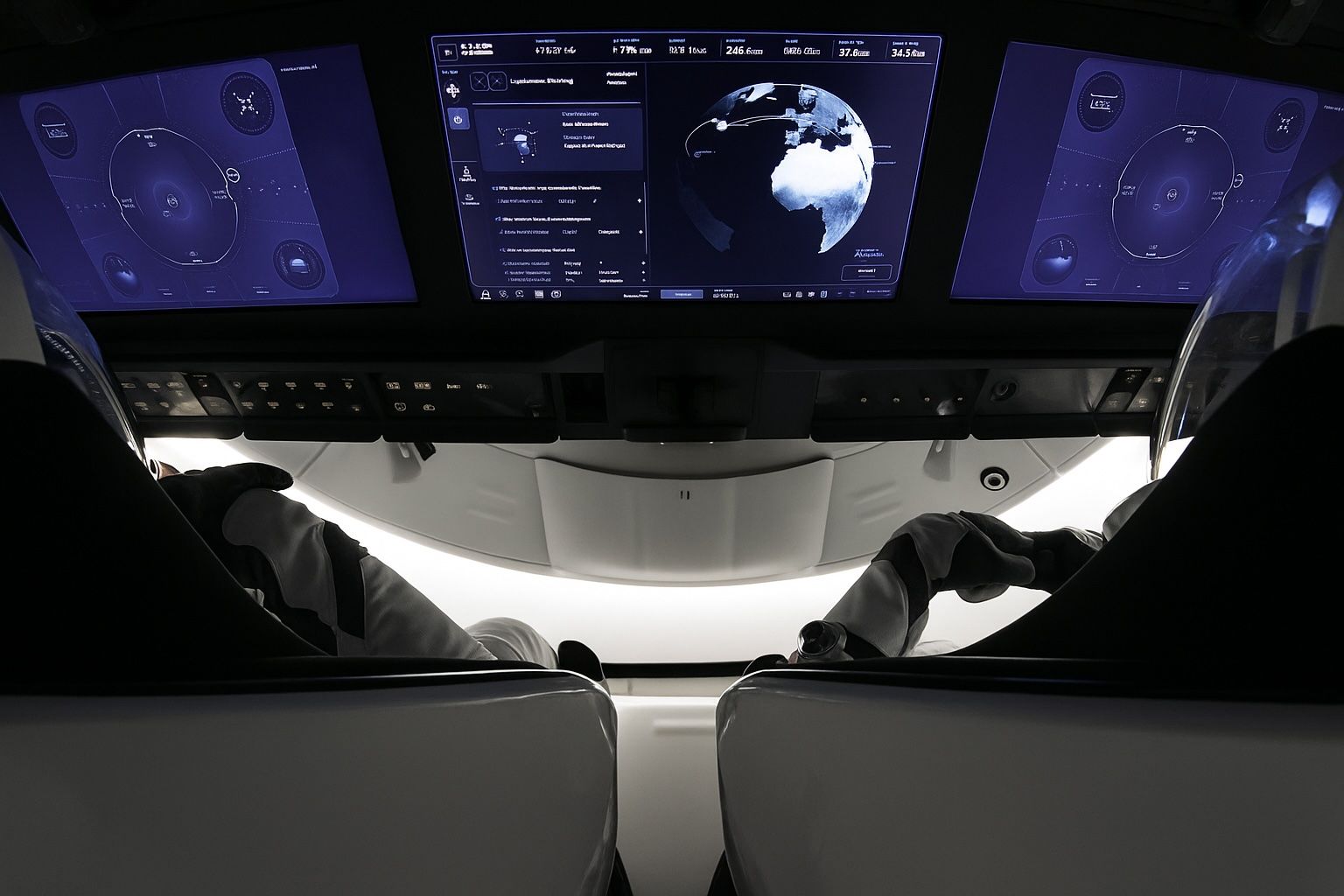
Liftoff occurred at 2:31 a.m. EDT (06:31 UTC) on 25 June 2025 from Launch Complex 39A at Kennedy Space Center, and the Falcon 9 booster landed at LZ-1 eight minutes later. Dragon C213, the fifth and final production Crew Dragon, was named Grace by Commander Peggy Whitson moments after orbital insertion. The two‑week Ax‑4 mission carried about 60 experiments for 31 nations, the largest research manifest of any Axiom flight. The multinational crew included Peggy Whitson (USA), Shubhanshu Shukla (India’s first ISS astronaut), Sławosz Uznański‑Wiśniewski (Poland’s first ISS visitor), and Tibor Kapu (Hungary’s first spacefarer in 45 years). Ax‑4 marked
25 June 2025
Historic Liftoff! Poland’s “Star Scientist” Launches on SpaceX Dragon—All the Inside Details on the Ax-4 Mission, Crew and Experiments

Historic Liftoff! Poland’s “Star Scientist” Launches on SpaceX Dragon—All the Inside Details on the Ax-4 Mission, Crew and Experiments

On June 25 at 08:31 CEST, SpaceX Crew Dragon “Grace” launched from Pad 39A with four astronauts on Axiom Mission 4 (Ax-4). Peggy Whitson (USA) commands Ax-4 and is on her fifth spaceflight, with a U.S. orbital record of 675 days. Shubhanshu Shukla (India) is Pilot for Ax-4, becoming the first Indian in space since 1984. Sławosz Uznański-Wiśniewski (Poland) is the first Polish national on the ISS and the second Pole in space. Tibor Kapu (Hungary) is Ax-4’s Mission Specialist, marking Hungary’s first visitor to the ISS. Poland’s 47-year space drought ends with Ax-4, following Mirosław Hermaszewski’s 1978 Soyuz 30
25 June 2025
Jeff Bezos vs. Elon Musk: How Amazon’s New Kuiper Satellites Could Disrupt a $100 Billion Space‑Internet Gold Rush

Space Race Frenzy: Exploding Starships, Quantum‑Proof Satellites & Europe’s Billion‑Dollar Constellation Shake‑Up — Everything That Hit Orbit TODAY (24 June 2025)

SpaceX’s Transporter-14 rideshare lofted 70 payloads, including memorial capsules, ICEYE and Capella radar sats, and York Space Systems’ Dragoon Tranche-1 12-satellite demo. The first Dragoon craft launched Monday on Transporter-14 is now on orbit, with SDA citing a four-month schedule cut to accelerate capabilities. Shijian-21 rendezvoused with Shijian-25 at about 22,236 miles, rehearsing refueling and capture maneuvers that analysts warn could neutralize adversary satellites in a conflict. T-Mobile’s T-Satellite service will provide full data links on 1 Oct 2025, piggybacking on 657 Starlink satellites, with basic messaging starting 23 July and 911 texting free for all U.S. users. SpaceX targets
Space Race 2.0: A Shoebox‑Sized Quantum Satellite Blasts Off—Can It Make Hackers Obsolete?

Space Race 2.0: A Shoebox‑Sized Quantum Satellite Blasts Off—Can It Make Hackers Obsolete?

QUICK³ is a 3U CubeSat weighing 4 kg, led by Germany’s Technical University of Munich, and it launched on 23 June 2025 aboard SpaceX’s Transporter‑14 from Vandenberg SFB. It carries the first true single-photon source flown, a laser-pumped hexagonal boron nitride chip on a 10 × 10 × 15 cm photonic chip. True single photons are expected to raise secret-key rates 10–100× over weak-laser systems. The pump laser is a 698 nm diode module, 45 × 80 × 20 mm, weighing 200 g. QUICK³ uses a 3U CubeSat bus with a 4 kg mass budget and rideshare compatibility, with launch
Space Superpower Play: How ICEYE’s Radar Satellites Are Turbo-Charging NATO’s ‘Aquila’ Constellation – and Why It Could Change Intelligence Forever

Space Superpower Play: How ICEYE’s Radar Satellites Are Turbo-Charging NATO’s ‘Aquila’ Constellation – and Why It Could Change Intelligence Forever

NATO Allied Command Operations signed a multiyear agreement to receive 24/7 SAR imagery from ICEYE and feed it into the APSS Aquila constellation, announced on 24 June 2025. ICEYE’s 54-satellite Synthetic Aperture Radar fleet can be tasked within eight hours, and in some cases within one hour, for sea- and land-tracking. ICEYE satellites deliver 25 cm ground resolution and have revisit intervals under three hours at mid-latitudes. APSS Aquila pairs ICEYE’s 25 cm SAR with Planet Labs SkySat optical data at 50 cm RGB and supports sub-daily tasking. Contract value was not disclosed, but analysts estimate it is in the
24 June 2025
Jeff Bezos vs. Elon Musk: How Amazon’s New Kuiper Satellites Could Disrupt a $100 Billion Space‑Internet Gold Rush

Jeff Bezos vs. Elon Musk: How Amazon’s New Kuiper Satellites Could Disrupt a $100 Billion Space‑Internet Gold Rush

On 23 June 2025, a United Launch Alliance Atlas V launched 27 Kuiper satellites from Cape Canaveral into a 450 km parking orbit, bringing Amazon’s on‑orbit Kuiper fleet to 54 operational satellites plus two de‑orbiting prototypes. The Atlas V mission is the second of eight Kuiper flights on that rocket, with ULA set to fly 44 Kuiper missions in total (6 more Atlas V plus 38 Vulcan), delivering more than half of the 3,236-satellite constellation. Amazon’s 172,000 ft² Kirkland, WA factory can mass‑produce up to five Kuiper satellites per day, reducing individual test times from months to days. Amazon has
23 June 2025
Space‑Laser Shockwave: Inside China’s 2‑Watt Orbital Beam That Claims to Outgun Starlink and Reshape the Security Balance in Space

China’s ‘Night‑Light’ Laser Satellite Leaves Starlink in the Dust—What It Means for the Future of Space Internet and Warfare

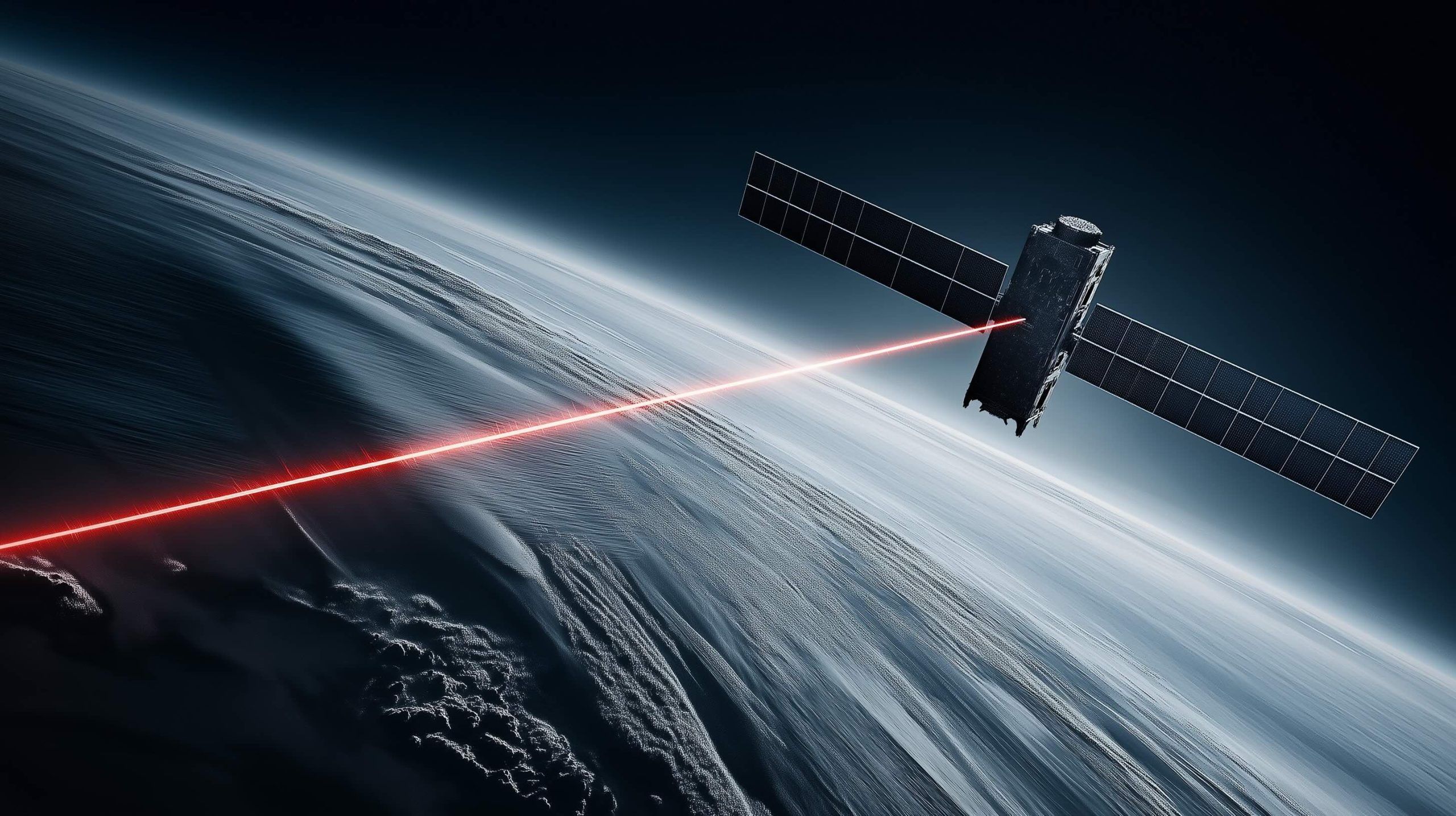
On 17 June 2025, Prof. Wu Jian of Peking University and Dr. Liu Chao of the Chinese Academy of Sciences down-linked 1 Gbps from an unnamed GEO satellite 36,705 km above Earth using a 2-watt laser. The AO‑MDR method combines 357 micro-mirrors on a 1.8 m telescope to reshape the wavefront and eight spatial modes, with a path-picking algorithm selecting the three cleanest channels and boosting usable signal probability from 72% to 91% in heavy turbulence. The Chinese GEO demo delivered 1 Gbps, about five times the throughput of typical Starlink down-links (100–300 Mbps, peaks ~600 Mbps) from 550 km
23 June 2025
Laser vs. Radar: Shocking Secrets of Earth’s Shrinking Ice Revealed from Space

Laser vs. Radar: Shocking Secrets of Earth’s Shrinking Ice Revealed from Space

ICESat-2 (NASA) launched September 15, 2018 on a Delta II rocket and carries the Advanced Topographic Laser Altimeter System (ATLAS), a photon-counting laser that operates from a ~481 km near-polar orbit (92°) with ground tracks repeating every 91 days to map ice sheets, sea-ice freeboard, glacier height, and forest canopy. CryoSat-2 (ESA) launched April 8, 2010 on a Dnepr rocket, in a ~717 km, 92° inclined drifting orbit not sun-synchronous and reaching up to 88° latitude to measure ice thickness on land and sea. ICESat-2 fires about 10,000 laser pulses per second (532 nm green) with six beams, producing an
23 June 2025
Global Space Launch Roundup (June 2025): SpaceX, ULA, Blue Origin, Rocket Lab, Honda, CNSA and More

Global Space Launch Roundup (June 2025): SpaceX, ULA, Blue Origin, Rocket Lab, Honda, CNSA and More

In June 2025, Texas approved a provision granting Starbase authority to close State Highway 4 and Boca Chica Beach during launches, transferring that power from county authorities to SpaceX-aligned Starbase officials. The FAA raised SpaceX’s Starbase launch-permit cap from 5 to 25 launches per year. On June 16, 2025, a Falcon 9 from Vandenberg (VSFB) carried 26 Starlink v2 Mini satellites to orbit and landed its booster on the Pacific drone ship. On June 18, 2025, a Falcon 9 from Cape Canaveral (CCSFS) lofted 28 Starlink v2 Minis on a rare northeast trajectory, with the booster downrange landing in the
23 June 2025
Mauritius Online: How a Paradise Island is Beaming Broadband (Even from Space)

Mauritius Online: How a Paradise Island is Beaming Broadband (Even from Space)

As of early 2025, about 1.01 million Mauritians used the internet, representing roughly 79.5% of the population. By 2024 Mauritius had over 2.2 million internet subscriptions, about 178 per 100 inhabitants, indicating many people hold multiple connections. Mauritius completed 100% fiber‑to‑the‑home coverage in 2017, with 100% of households passed by fiber and fixed broadband speeds around 55 Mbps on average. The island is connected by five major undersea cables—SAFE, LION/LION2, METISS, MARS, and T3—with capacities including ~800 Gbps on SAFE, ~1.28 Tbps on LION, 24 Tbps on METISS, 8 Tbps on MARS, and 18 Tbps (upgradable to 54 Tbps) on
22 June 2025
Space‑Laser Shockwave: Inside China’s 2‑Watt Orbital Beam That Claims to Outgun Starlink and Reshape the Security Balance in Space

Space‑Laser Shockwave: Inside China’s 2‑Watt Orbital Beam That Claims to Outgun Starlink and Reshape the Security Balance in Space

In June 2025, Wu Jian of Peking University of Posts & Telecom and Liu Chao of the Chinese Academy of Sciences directed a 2-watt laser from 36,000 km in geostationary orbit to a ground station, achieving 1 Gbps. The test claimed the 1 Gbps downlink is five times faster than Starlink downlinks, per the South China Morning Post. The AO-MDR scheme combines adaptive optics and mode-diversity, routing eight spatial modes through a 1.8 m telescope and real-time selecting the three cleanest channels. Usable signal quality rose from 72% to 91% despite atmospheric turbulence thanks to AO-MDR. Starlink consumer downlinks typically
Mind‑Blowing Satellite Images Reveal Fordow’s Cavernous Crater: Inside the High‑Resolution Photo Forensics that Exposed the Collapse of Iran’s Underground Nuclear Fortress

Shock From Space: Commercial Satellite Photos Reveal How U.S. Bunker‑Busters Crushed Iran’s Fordow Nuclear Mountain

On 22 June at 02:14 a.m. local time, B-2 bombers released at least a dozen 30,000-lb GBU-57 Massive Ordnance Penetrator bombs targeting Fordow, Natanz and Isfahan. By noon on 22 June, Planet Labs Skysat imagery showed a pale-grey haze over Fordow and two dark impact scars at the vehicle and personnel tunnel portals. Fordow lies 80–90 meters beneath the Kuh-e Daryacheh ridge and housed up to 2,976 IR-1 and IR-6 centrifuges enriching uranium to 60%. Analysts say Israel long sought U.S. MOP capability to neutralize Fordow because the site is too deep for conventional drilling. Image signatures include grey tunnel
22 June 2025

Stock Market Today

Hua Hong Semiconductor Class A stock price: two dates traders can’t ignore after Friday’s drop

Hua Hong Semiconductor Class A stock price: two dates traders can’t ignore after Friday’s drop

8 February 2026
Hua Hong Semiconductor’s Shanghai-listed shares fell 0.6% to 130.26 yuan Friday, down 16% for the week. Shareholders will vote Feb. 10 on an acquisition and share issuance plan, with a board meeting set for Feb. 12 to review unaudited quarterly results. The company aims to buy nearly all of Shanghai Huali Microelectronics for 8.27 billion yuan, funded by new shares and a private placement.
First Solar stock price slides into next week as Tesla ramps solar hiring; earnings due Feb. 24

First Solar stock price slides into next week as Tesla ramps solar hiring; earnings due Feb. 24

8 February 2026
First Solar shares fell 6.7% to $218.73 Friday, trading over double their 50-day average volume as the broader market rallied. Tesla announced hiring tied to Elon Musk’s 100-gigawatt U.S. solar manufacturing goal. First Solar will report Q4 and full-year 2025 results and 2026 guidance on Feb. 24. Policy changes and competitive moves have heightened volatility in the U.S. solar sector.
GlobalFoundries stock jumps nearly 5% ahead of earnings — what could move GFS next week

GlobalFoundries stock jumps nearly 5% ahead of earnings — what could move GFS next week

8 February 2026
GlobalFoundries shares rose 4.7% to $42.91 Friday as chip stocks rebounded, tracking a surge in the PHLX semiconductor index and renewed bets on AI-driven demand. The company reports earnings Feb. 11, with analysts watching for updates on pricing and wafer shipment volumes. The Semiconductor Industry Association forecast global chip sales could hit $1 trillion in 2026.
Go toTop