
Today: 30 June 2026
Browse Category

Starlink 29 May 2025 - 14 June 2025

Broadband Blackouts & Starlink Smugglers: Inside Venezuela’s Fight for Internet Access

Broadband Blackouts & Starlink Smugglers: Inside Venezuela’s Fight for Internet Access

Venezuela’s internet infrastructure has long been in crisis. Years of underinvestment, economic turmoil, and government control left the country with one of Latin America’s poorest connectivity landscapes efectococuyo.com en.wikipedia.org. Until recently, Venezuelans endured some of the slowest internet speeds in the region, frequent nationwide blackouts, and an aging state-run network that could barely handle basic broadband. Now, a tentative turnaround is underway: new fiber-optic providers are emerging in cities, mobile networks are expanding 4G coverage, and even illicit satellite internet kits like Starlink are popping up as desperate workarounds. This report dives deep into Venezuela’s internet access in 2025 – examining the current state of broadband and mobile infrastructure, the key service providers, and the growing intrigue around satellite options such as Starlink and HughesNet. We’ll explore recent developments, compare pricing and performance, highlight the urban–rural digital divide, and assess how government policies and power outages continue to shape the Venezuelan internet experience. Despite some improvements, Venezuela’s core telecom infrastructure remains fragile. Fixed-line internet penetration was under 10% as of 2022 freedomhouse.org, and only about 52% of Venezuelans had mobile broadband subscriptions freedomhouse.org. By 2023, roughly half of households had any form of internet access at home, leaving nearly half
14 June 2025
Mobile & Portable Satellite Internet in 2025: The Ultimate Guide to Starlink Roam, HughesNet, Inmarsat, Viasat & More

Mobile & Portable Satellite Internet in 2025: The Ultimate Guide to Starlink Roam, HughesNet, Inmarsat, Viasat & More

A SpaceX Starlink satellite dish set up outdoors. Portable satellite internet terminals like this bring high-speed connectivity to remote areas in 2025.Mobile and portable satellite internet delivers broadband connectivity from satellites in space directly to users on the move or in remote locations. Instead of relying on traditional ground cables or cell towers, a portable satellite dish or terminal connects to orbiting satellites to provide internet access virtually anywhere on Earth. This technology has rapidly advanced in recent years – SpaceX’s Starlink constellation alone now blankets around 130 countries with low-latency broadband from thousands of low-Earth-orbit satellites en.wikipedia.org. Traditional providers like HughesNet, Viasat, Inmarsat, and Iridium have also expanded and upgraded their satellite networks. In this report, we’ll explore how mobile satellite internet works, the key service providers in 2025, their pros and cons, regional coverage differences, costs, equipment needs, popular use cases, a comparison of major services, and future trends. Whether you’re an RVer, sailor, disaster responder, or remote worker, portable satellite internet is transforming what’s possible for staying connected off the grid. Satellite internet relies on a space-based relay system: user terminals on the ground communicate up to satellites, which then link back down to earth-based gateways connected
Dominican Republic’s Digital Revolution: Fiber, 5G and Starlink Are Connecting Every Corner of Paradise

Dominican Republic’s Digital Revolution: Fiber, 5G and Starlink Are Connecting Every Corner of Paradise

Dominican Republic internet penetration is high, driven mostly by mobile broadband. As of mid-2023 there were 8.94 million mobile‑broadband subscriptions versus only ~1.09 million fixed‑broadband lines Trade. Fixed broadband is available via fiber, cable and DSL in urban/suburban areas, while 4G/LTE mobile covers ~98% of the population Worlddata and 5G networks now cover roughly 54.9% of the country Worlddata. There is a stark digital divide between cities and the countryside. In 2022, about 50.8% of urban households reported having Internet service, versus only 32.7% in rural areas Dominicantoday – an 18-point gap. Connectivity is highest in big cities and lowest in remote provinces: for example, Elías Piña had only ~11.3% of households with Internet, Pedernales 12.5%, Independencia 15.8%, etc. Dominicantoday. This correlates with geography: border and mountainous regions still lack infrastructure.
10 June 2025
Starlink Global Coverage and Availability Report

Starlink Global Coverage and Availability Report

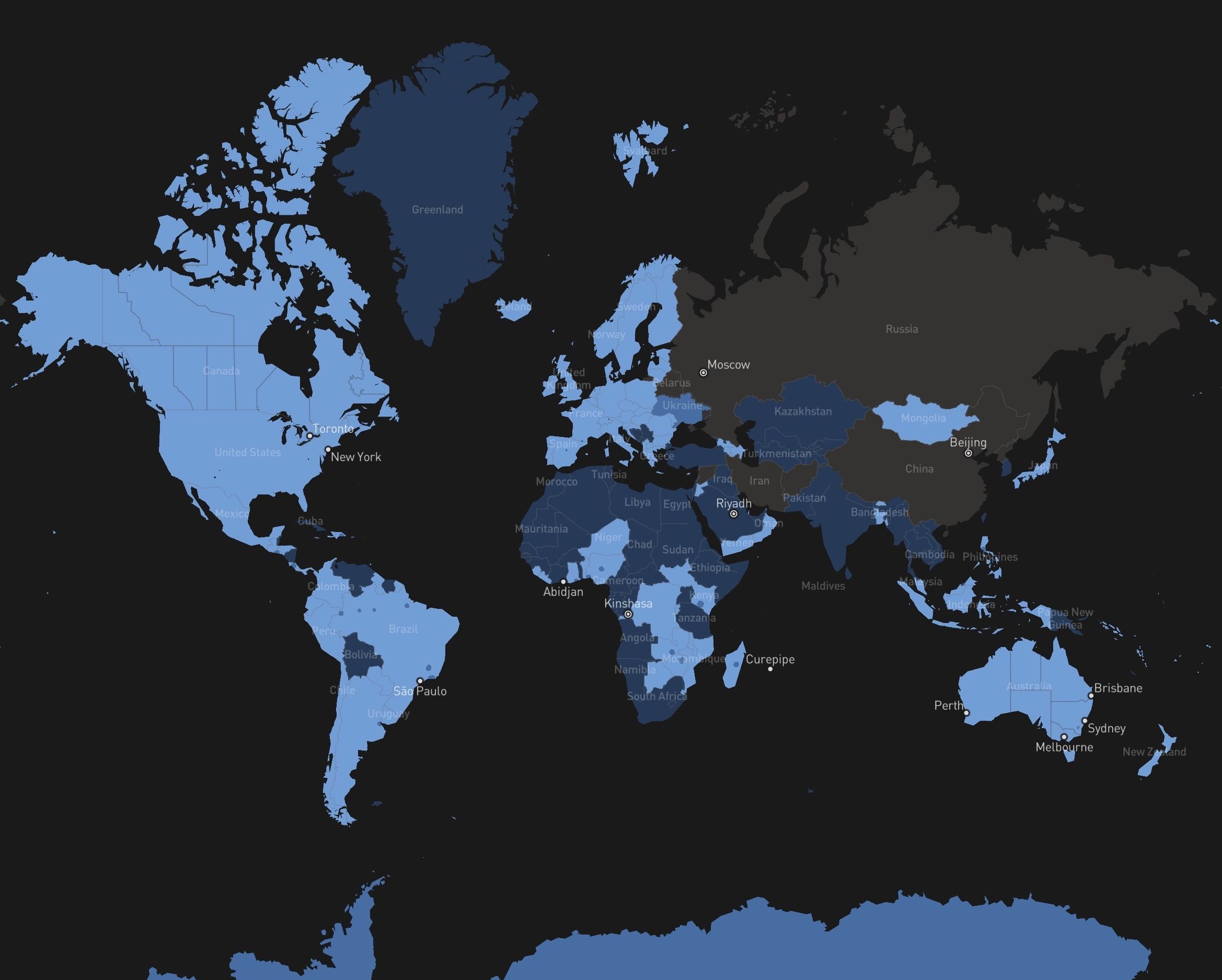
Starlink, SpaceX’s satellite internet network, has rapidly expanded coverage worldwide since its beta launch in 2020. As of mid-2025, Starlink service is available in over 110 countries and territories, with more on the way idemest.com. Below is an up-to-date regional breakdown of Starlink availability – including countries with full commercial service, those in beta or limited trials, and markets expected to launch soon based on official announcements. Each country listing includes a brief note on service status, launch dates, or any notable limitations, with sources from official statements and credible reports. Remaining European countries: As of mid-2025, a few European nations like Serbia, Montenegro, and Bosnia & Herzegovina do not yet have Starlink service or official launch timelines. These holdouts are likely due to either regulatory delays or lack of company focus; no formal announcements have been made for their Starlink availability.
7 June 2025
Starlink Satellite Internet FAQ

Starlink Satellite Internet FAQ

SpaceX has launched thousands of Starlink satellites to form the world's largest satellite constellation and provide global internet coverage phys.org. Q: What is Starlink?A: Starlink is a satellite-based broadband internet service operated by SpaceX. It uses a constellation of small satellites in low Earth orbit to beam internet connectivity down to user terminals on the ground starlink.com. Unlike traditional satellite internet, Starlink’s hundreds of orbiting satellites are much closer to Earth, enabling high-speed, low-latency internet even in remote areas starlink.com tomsguide.com. The goal of Starlink is to deliver reliable broadband access “wherever you live,” especially rural or underserved regions that lack fiber or cable infrastructure. SpaceX began launching Starlink satellites in 2019, and by early 2025 Starlink was serving over 5 million customers worldwide across 125+ countries phys.org meyka.com. In short, Starlink is an ambitious project to blanket the globe in affordable, high-speed internet via a network of orbiting satellites.
7 June 2025
Battle for the Final Frontier: Starlink vs OneWeb vs Kuiper vs Telesat Lightspeed

Battle for the Final Frontier: Starlink vs OneWeb vs Kuiper vs Telesat Lightspeed

Low-Earth orbit satellite internet has become a hotly contested “final frontier” of the telecom industry. Multiple players – notably SpaceX’s Starlink, the UK/India-backed OneWeb, Amazon’s Project Kuiper, and Canada’s Telesat Lightspeed – are racing to blanket the globe in affordable, high-speed internet from space. All seek to deliver broadband to areas poorly served by terrestrial networks, using constellations of hundreds or thousands of satellites in low orbit. This report provides a comprehensive comparison of these major LEO satellite internet projects – from their backgrounds and technical designs to market strategies, pricing, regulatory issues, partnerships, challenges, and future outlook. Visual comparison of major LEO broadband constellations as of 2024. Each project plans a large fleet of satellites in low orbit to provide global internet coverage.
3 June 2025
Why Starlink Keeps Hitting Red Tape Around the World

Why Starlink Keeps Hitting Red Tape Around the World

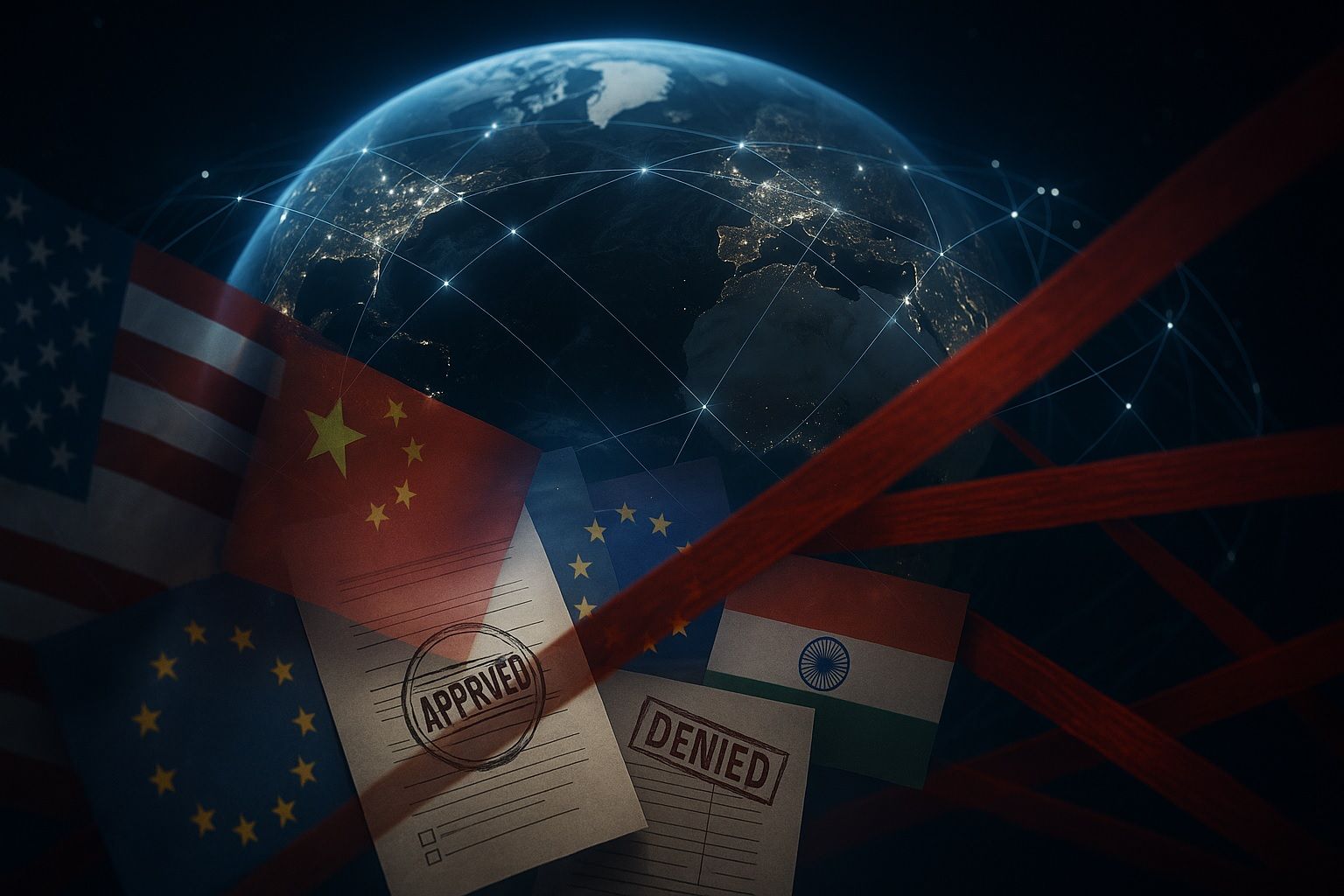
A Starlink user terminal installed on a riverboat in remote Brazil, reflecting the service’s reach into areas underserved by terrestrial internet reuters.com. Despite such promise, Starlink’s global expansion has repeatedly run into regulatory roadblocks in different countries. Starlink, the satellite internet constellation operated by SpaceX, aspires to deliver high-speed broadband worldwide – from megacities to the most remote villages. Its global ambitions to bridge the digital divide come with an inherent challenge: navigating a patchwork of national regulations and red tape. Unlike terrestrial internet services, which operate within national borders, Starlink’s space-based system crosses boundaries, requiring licensing and spectrum approval in each country it serves. Around the world, regulators have responded with varying degrees of caution or enthusiasm. Some nations have eagerly welcomed Starlink to boost connectivity, while others have imposed strict conditions, citing concerns over licensing, spectrum interference, national security, competition, and compliance with local telecom laws. This report provides a country-by-country analysis of the regulatory hurdles Starlink has encountered through 2025, highlighting supportive versus hostile environments, real examples of regulatory actions, and the evolving policy landscape.
No Signal? No Problem – Starlink’s Direct-to-Cell Satellites Are Eliminating Dead Zones

No Signal? No Problem – Starlink’s Direct-to-Cell Satellites Are Eliminating Dead Zones

Imagine sending a text from the middle of the ocean or deep in the mountains with no cell tower in sight. That’s the promise of Starlink’s new Direct-to-Cell technology – a “cell tower in space” that lets ordinary phones connect via satellite when terrestrial coverage is absent. In recent trials, SpaceX’s Starlink satellites have successfully relayed SMS texts and even voice/video calls directly to standard smartphones, showcasing a potential game-changer for mobile connectivity. This report dives into what Starlink Direct-to-Cell is, its key milestones, the partners and timelines involved, and what it all means for the telecom industry and consumers around the world. Starlink Direct-to-Cell is a satellite-based cellular service designed to eliminate mobile dead zones by connecting unmodified 4G LTE phones directly to orbiting satellites starlink.com starlink.com. In essence, each equipped Starlink satellite functions like a floating cell phone tower in space, with an onboard 4G LTE base station that communicates with standard phones on the ground starlink.com. Unlike traditional satellite phones, users do not need any special hardware or apps – any normal smartphone can connect, as long as it supports the frequency band used and has a clear view of the sky starlink.com. The satellites then route
Starlink’s Sky Grab: How SpaceX Is Quietly Rewiring the Global Internet Game

Starlink’s Sky Grab: How SpaceX Is Quietly Rewiring the Global Internet Game

SpaceX’s Starlink has rapidly built a mega-constellation of satellites that is reshaping how the world accesses the internet. Since launching the first batch of 60 satellites in 2019, Starlink has put thousands of satellites into low-Earth orbit to blanket the planet with broadband coverage Telegeography. By late 2024, nearly 7,000 Starlink satellites were in orbit – a constellation dwarfing all others Reuters. This “sky grab” of orbital real estate has enabled Starlink to reach millions of users globally, many in remote areas previously left offline. Starlink’s explosive growth – from 1 million users at end-2022 to over 4.6 million by end-2024 Politico – signals a quiet but profound shift in the global internet game, as satellite broadband emerges as a viable alternative where traditional fiber and cell networks fall short. The following report examines Starlink’s evolution, its expanding coverage and market penetration across regions, competitive and regulatory hurdles, business strategies, and its social-economic impacts on connectivity and the digital divide. Starlink’s journey from concept to global coverage has been remarkably swift. Deployment milestones include the public beta rollout in October 2020, followed by rapid expansion to dozens of countries by 2021-2022 as more satellites launched. SpaceX hit the 1,000-satellite mark
3 June 2025
The Shocking Truth About Internet Access in Burkina Faso – From White Zones to Starlink Dreams

The Shocking Truth About Internet Access in Burkina Faso – From White Zones to Starlink Dreams

Burkina Faso’s digital landscape is marked by low internet penetration and heavy reliance on mobile networks. As of 2023, only about 17–20% of the population are internet users, well below the African average pulse.internetsociety.org and the global average datareportal.com. In raw numbers, that equates to roughly 4.7 million active internet users in a country of ~23 million people digitalmagazine.bf. This means barely one in five Burkinabè have used the internet in the last 3 months, underscoring a significant digital divide. Mobile vs. Fixed Access: Internet access in Burkina Faso is overwhelmingly mobile-centric. By late 2023, there were about 17 million mobile internet subscriptions recorded – roughly a 77% population coverage in terms of access digitalmagazine.bf. However, “subscription” doesn’t always mean active usage. In stark contrast, fixed broadband is extremely limited: only about 84,807 fixed internet subscriptions were active in Q3 2023 digitalmagazine.bf. Fixed connections – primarily new fiber-optic lines in major cities – have grown rapidly digitalmagazine.bf, but still account for a tiny fraction of overall internet access. Essentially, for the vast majority of Burkinabè, the internet means a mobile phone rather than a home broadband line.
Starlink Global Availability and Impact Report

Starlink Global Availability and Impact Report

SpaceX’s Starlink satellite internet service has rapidly expanded worldwide, now available in over 100 countries across North America, Europe, Asia, Africa, Oceania, and parts of South America thenationalnews.com. Since its beta launch in 2020, Starlink has amassed millions of subscribers and deployed thousands of low-Earth orbit satellites en.wikipedia.org. Starlink offers several service types – Residential, Roam, Business, Maritime, and Aviation – aiming to deliver high-speed connectivity even in remote areas without ground infrastructure. This report provides a country-by-country overview of where Starlink is active, the prior state of internet access in each country, and how Starlink’s arrival has impacted speeds, reliability, availability, and cost. We include a summary table of Starlink availability by country and service type, followed by detailed sections for each country. Data from official Starlink releases, national regulators, and Speedtest.net analyses are cited to illustrate Starlink’s performance and effects. In general, Starlink download speeds range from ~50 Mbps up to 150+ Mbps, with most users seeing over 100 Mbps under good conditions thenationalnews.com. Latency is around 20–50 ms. Starlink’s monthly pricing varies by region – around $90–$120 in well-connected markets, but significantly discounted in developing regions to improve affordability techlabari.com spaceinafrica.com. Below, we examine each country’s scenario
2 June 2025
Starlink and the Satellite Internet Market (2025) – Comprehensive Report

Starlink and the Satellite Internet Market (2025) – Comprehensive Report

Business Model: Starlink is SpaceX’s satellite internet venture aiming to deliver broadband globally using a low Earth orbit satellite constellation. Unlike traditional satellite ISPs that often partner with local distributors, Starlink primarily operates a direct-to-consumer model – users order a Starlink kit and subscribe to monthly service. By leveraging SpaceX’s reusable rockets to launch its own satellites, Starlink keeps launch costs relatively low and controls the end-to-end service. The business strategy is high-volume, global coverage: targeting underserved rural and remote consumers who lack fiber or cable options, while also pursuing lucrative enterprise and government contracts spacenews.com forbes.com.au. SpaceX views Starlink as a long-term cash generator and has aggressively reinvested in expanding the network forbes.com.au forbes.com.au. Service Offerings: Starlink began with a Residential plan offering unlimited data at ~$100–120 per month broadbandnow.com. The standard Starlink kit originally cost ~$599, though prices have dropped in some markets to drive adoption broadbandnow.com. Speeds range up to ~50–200 Mbps down and ~10–20 Mbps up, with latency ~20–40 ms – far lower latency than geostationary satellites. In addition to home internet, Starlink has introduced specialized plans: Starlink Roam for portable use, Maritime for ships, and Aviation for aircraft advanced-television.com prostaraviation.com. There are also Business and
Internet Access in Andorra: From Mountain Signals to Starlink Skies

Internet Access in Andorra: From Mountain Signals to Starlink Skies

Andorra is a tiny mountainous principality that has transformed its connectivity from relying on difficult “mountain signals” to embracing modern high-speed networks. Despite challenging terrain and a historically isolated telecom market, Andorra now boasts comprehensive fiber-optic coverage, robust mobile networks, and even access to cutting-edge satellite internet. This report provides an in-depth look at internet access in Andorra – covering the country’s infrastructure, service providers, mobile internet quality, recent developments, the advent of satellite options such as Starlink, government initiatives for digital inclusion, and how Andorra’s internet compares to that of its neighbors, Spain and France. Andorra has built a modern broadband infrastructure that reaches virtually every corner of its rugged terrain. Fixed broadband is delivered almost entirely via Fiber-to-the-Home, with 100% of homes wired with fiber optic cable since the early 2010s Wikipedia Psf. This achievement made Andorra one of the first countries in the world to declare internet over optical fiber a “universal service” – guaranteeing at least 100 Mbps to all populated areas for a basic price Intercomms. The nationwide fiber rollout was completed by 2012, and legacy copper ADSL lines were completely phased out by 2016 Andorrainsiders. Today, every town and village, no matter how remote
30 May 2025
Inside Ethiopia’s Internet Boom: Fiber Optics, 5G Dreams, and Starlink Skies

Inside Ethiopia’s Internet Boom: Fiber Optics, 5G Dreams, and Starlink Skies

Ethiopia is undergoing a quiet internet revolution – transforming from one of the world’s least connected countries into a burgeoning digital hub. In a nation of over 120 million people, internet access was once a rarity, hampered by limited infrastructure and a state telecom monopoly. Today, dramatic changes are afoot: new fiber-optic backbones span the country, shiny 4G and 5G towers rise over city skylines, and satellite internet promises to beam connectivity to the remotest villages. This report dives into Ethiopia’s evolving internet landscape – from urban-rural divides and major telecom players to cutting-edge projects like 5G rollouts and Starlink’s satellite ambitions – painting a comprehensive picture of a country racing to bridge its digital divide. Ethiopia’s internet usage has grown explosively in recent years, yet overall connectivity remains low compared to global standards. As of early 2025, about 28.6 million Ethiopians were internet users – roughly 21.3% of the population datareportal.com. This marks steady progress but is still far below the world average. For perspective, around 67% of the world’s population was online in 2023 while Africa’s continental average stood at ~37% ecofinagency.com. In East Africa specifically, internet penetration hovers around 20–25%, putting Ethiopia slightly behind regional peers. The
29 May 2025
Inside OneWeb’s Global Internet Play: How This Satellite Network Is Quietly Disrupting Starlink’s Orbit

Inside OneWeb’s Global Internet Play: How This Satellite Network Is Quietly Disrupting Starlink’s Orbit

OneWeb is building a global satellite internet constellation that aims to bridge the digital divide by delivering broadband connectivity to remote and underserved regions of the world. Founded in 2012, the company has deployed hundreds of small low-Earth-orbit satellites at ~1,200 km altitude to blanket the Earth in coverage en.wikipedia.org en.wikipedia.org. Unlike SpaceX’s Starlink, OneWeb has “quietly” pursued a different business model – focusing on enterprise, government, and telecommunications partners rather than individual users en.wikipedia.org. Backed by major investors and now merged with Europe’s Eutelsat, OneWeb has overcome bankruptcy and logistical hurdles to complete its first-generation constellation by 2023 nasaspaceflight.com nasaspaceflight.com. This report provides a comprehensive look at OneWeb’s satellite technology, coverage, service plans, target users, deployment timeline, business model, and funding. It also compares OneWeb with other satellite broadband players like Starlink, SES’s O3b system, and Amazon’s upcoming Project Kuiper, highlighting OneWeb’s unique position and challenges in the market. Key Takeaways:
Sky-Fi Revolution: How Starlink Is Reshaping Global Internet Access

Sky-Fi Revolution: How Starlink Is Reshaping Global Internet Access

High-speed internet access is increasingly seen as essential infrastructure, yet billions worldwide still lack reliable connectivity. Traditional wired broadband and cellular networks often fail to reach remote or underserved areas, leaving a “digital divide.” Enter Starlink, a satellite internet constellation developed by SpaceX. Starlink is deploying thousands of low Earth orbit satellites to deliver broadband internet virtually anywhere on the globe. Since launching its first satellites in 2019, Starlink has rapidly expanded service to cover around 130 countries and territories en.wikipedia.org, amassing millions of users. This report examines how Starlink’s novel approach – dubbed a “Sky-Fi” revolution – is reshaping global internet access through its performance, coverage, and challenges, and how it compares to other satellite internet providers. Starlink consists of a massive constellation of small LEO satellites that communicate with ground terminals to provide internet service. As of late 2024, SpaceX had launched over 7,000 Starlink satellites en.wikipedia.org, rapidly approaching its initial FCC authorization of ~12,000 satellites. These satellites orbit at approximately 550 km altitude in multiple orbital “shells,” enabling near-global coverage at much lower latency than traditional geostationary satellites. SpaceX reached 1 million Starlink subscribers by end of 2022 and 4 million by September 2024 en.wikipedia.org – a
29 May 2025
1 3 4 5

Stock Market Today

  • Verizon Drops 5.3% After BT JV Announcement, Yield at 6.4% as Starlink Pressure Grows
    June 30, 2026, 9:53 AM EDT. Verizon Communications (NYSE:VZ) shares slid 5.3% ahead of the open to $44.10, wiping out about $10.4 billion in market cap. That's far above what Verizon is paying BT Group-$625 million-for their new 50-50 international joint venture slated to close in 2027. The JV aims at 3,000-plus clients in 180 countries and is expected to pull in some $4 billion in yearly revenue. Verizon's dividend yield moved up to 6.4%, with payouts covering 55% of the company's $21.5 billion free cash flow target for 2026. The move comes as investors parse the strategy and rising competitive threats from Starlink, SpaceX's satellite internet arm, putting fresh focus on Verizon's wireless outlook.
Go toTop