
New York, July 10, 2026, 14:08 (EDT)
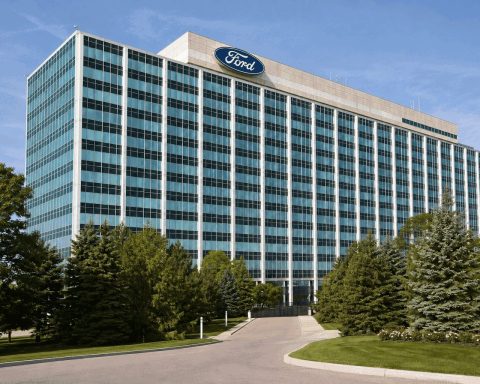
Ford Motor Company NYSE:F climbed 3.1% to $14.04 in Friday afternoon trading, adding about $1.7 billion to its market value. That paper gain was almost as large as the $2 billion Ford has committed to its battery-storage business.
The comparison matters now because the stock is nearing the limits of Wall Street’s published forecasts. The $14.25 median analyst target implies about 1.5% more upside, while the $14.84 average implies 5.7%; the consensus rating remains Hold ahead of Ford’s July 28 second-quarter report. Shares are still roughly 21% below their May 29 high of $17.78.
In London, the High Court rejected most central allegations in the first stage of a diesel-emissions case involving around 1.6 million claimants. Judge Sara Cockerill said she had “rejected most of the principal allegations” against the vehicles tested. The trial covered 20 sample vehicles from five manufacturers, including Ford, and claims that devices made emissions controls behave differently during tests. Reuters
Ford still led a broadly positive session for auto shares. At 2:08 p.m. EDT, General Motors Company NYSE:GM, Tesla NASDAQ:TSLA and the main S&P 500 exchange-traded fund were also higher.
| Security | Price | Intraday move |
|---|---|---|
| Ford Motor Company NYSE:F | $14.04 | +3.1% |
| General Motors Company NYSE:GM | $78.48 | +2.4% |
| Tesla NASDAQ:TSLA | $408.84 | +0.6% |
| SPDR S&P 500 ETF Trust NYSEARCA:SPY | $754.29 | +0.3% |
Ford outperformed GM by about 0.7 percentage point and Tesla by 2.6 points. The pattern suggests the UK ruling helped sentiment but does not provide a clean explanation for the move: investors were buying Detroit auto shares more broadly.
Barclays LON:BARC analyst Dan Levy provided another signal by raising his Ford price target — an estimate of where the shares should trade — to $14 from $13. He kept an Equal Weight rating, broadly meaning performance in line with peers, and said auto-sector second-quarter reports could range from in line to “slight beats,” adding that “auto stocks may outperform.” Ford was already trading just above his revised target on Friday. TipRanks
The operating backdrop is less forgiving. Ford’s second-quarter U.S. sales fell 10.3% to 549,200 vehicles as lower F-150 inventory hit deliveries, leaving investors to judge whether the shortfall was mostly timing or a sign of weaker demand.
Ford’s first-quarter filing showed that its traditional, commercial and financing operations still carry the group. Adjusted EBIT means earnings before interest and taxes after excluding items Ford treats as unusual.
| Q1 2026 business | Adjusted EBIT |
|---|---|
| Ford Blue | $1.94 billion |
| Ford Pro | $1.69 billion |
| Ford Credit | $0.78 billion |
| Ford Model e | -$0.78 billion |
| Ford total | $3.49 billion |
Storage is the bridge between the profitable businesses and the loss-making electric-vehicle unit. Ford’s target of at least 20 gigawatt-hours, or GWh, of annual storage deployments is about 37% of Tesla’s latest pace: Tesla deployed 13.5 GWh in the second quarter, equal to a simple 54 GWh annual rate when multiplied by four. An EDF framework gives the customer access to up to 4 GWh a year, one-fifth of Ford’s target; Ford Energy President Lisa Drake said the agreement “validates the market’s need” for an industrial-scale supplier. Ford From the Road
The $1.7 billion increase is not cash that Ford can spend — market value is the share price multiplied by shares outstanding. Still, the near one-for-one comparison with the planned storage investment shows how quickly investors are placing value on a business whose disclosed EDF framework represents only 20% of intended annual output and does not guarantee purchases at that ceiling.
But the risks remain. Claimants said they were considering an appeal of the UK ruling, so the first-stage decision does not end the litigation. Ford must also convert the EDF framework into firm orders, secure customers for the rest of its planned storage output and begin deliveries on schedule, while Model e continues to lose money. A weak F-150 inventory recovery or slower storage contracting could leave the stock exposed after the recent rise.
The July 28 earnings report is the next hard test. Investors will look for restored pickup supply, a steady or improved full-year profit outlook and storage orders beyond EDF. With Ford already brushing against analyst targets, a merely in-line quarter may not be enough.
Related articles: NYSE:F




![US Stock Market Today 08/24/2026 [UPDATE: 00:06 EDT] [Alibaba Dilution Joins Memory Selloff in Overnight Trade]](https://ts2.tech/wp-content/uploads/2026/08/US-market-dashboard-2026-08-24-0003-480x384.jpg "US Stock Market Today 08/24/2026 [UPDATE: 00:06 EDT] [Alibaba Dilution Joins Memory Selloff in Overnight Trade]")



![Australia Stock Market Today 24/08/2026 [UPDATE: 13:37 AEST] [BHP Extends ASX Rally as Financials Hold Back Breadth]](https://ts2.tech/wp-content/uploads/2026/08/AU-market-dashboard-2026-08-24-1337-480x384.jpg "Australia Stock Market Today 24/08/2026 [UPDATE: 13:37 AEST] [BHP Extends ASX Rally as Financials Hold Back Breadth]")