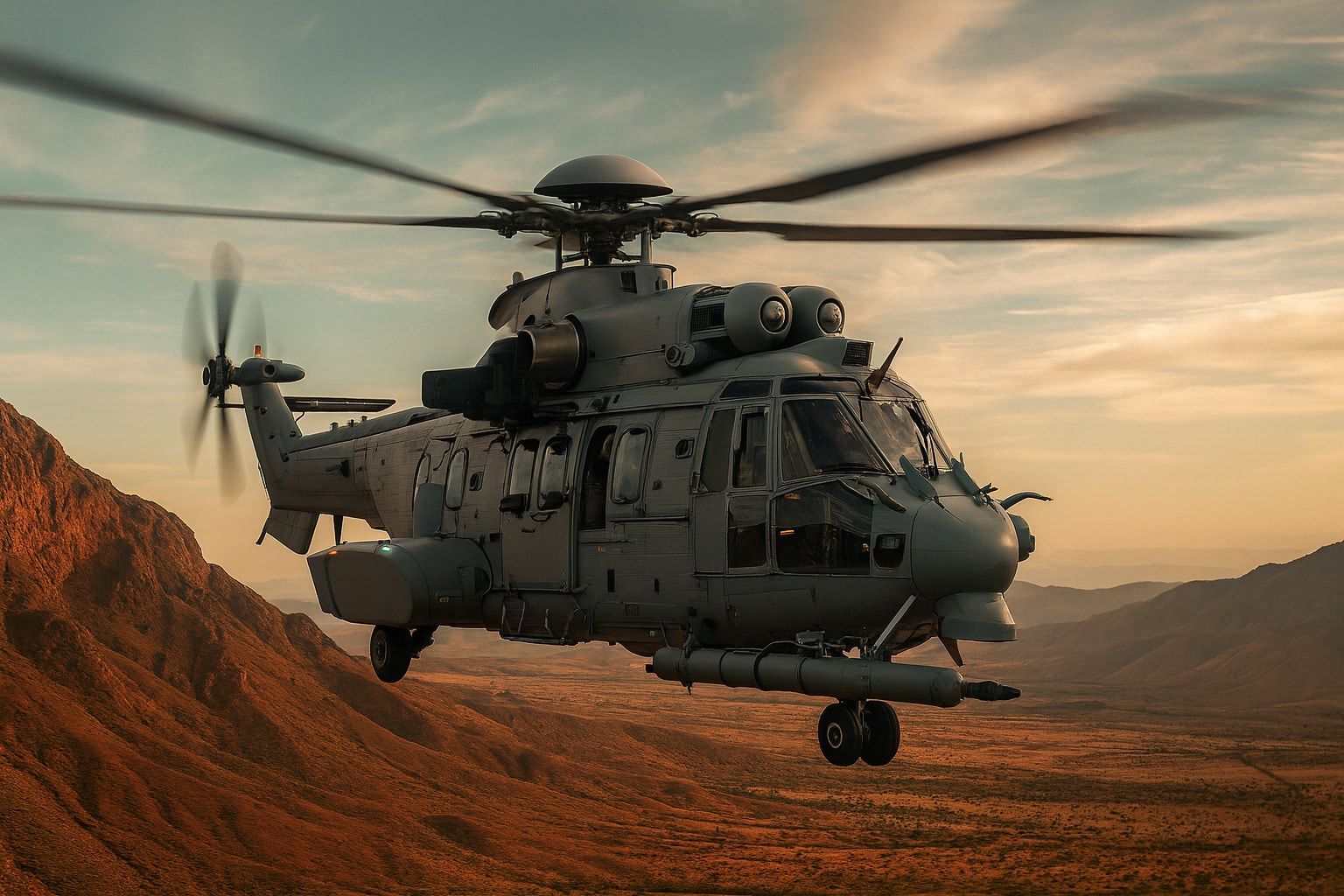
Morocco Orders 10 Airbus H225M Helicopters at Dubai Airshow 2025 to Replace Ageing Puma Fleet
The Royal Moroccan Air Force has signed a landmark contract with Airbus Helicopters for 10 H225M “Caracal” multi-role helicopters, a major step in replacing its ageing SA 330 Puma fleet and modernising the country’s combat search and rescue and special operations capabilities. The deal was announced on the second day of Dubai Airshow 2025. Airbus+2














![Asia Stock Market Today 28/08/2026 [UPDATE: 00:51 SGT] [Salesforce Leads KASE Global Into Final Minutes After Asia’s Split Close]](https://ts2.tech/wp-content/uploads/2026/08/Asia-market-dashboard-2026-08-28-0051-480x384.jpg "Asia Stock Market Today 28/08/2026 [UPDATE: 00:51 SGT] [Salesforce Leads KASE Global Into Final Minutes After Asia’s Split Close]")