Today: 2 July 2026
Browse Category

Internet 20 July 2025 - 15 August 2025

Liberia’s Internet Revolution: How 4G, Fiber and Starlink Are Connecting Every Corner of the Country

Liberia’s Internet Revolution: How 4G, Fiber and Starlink Are Connecting Every Corner of the Country

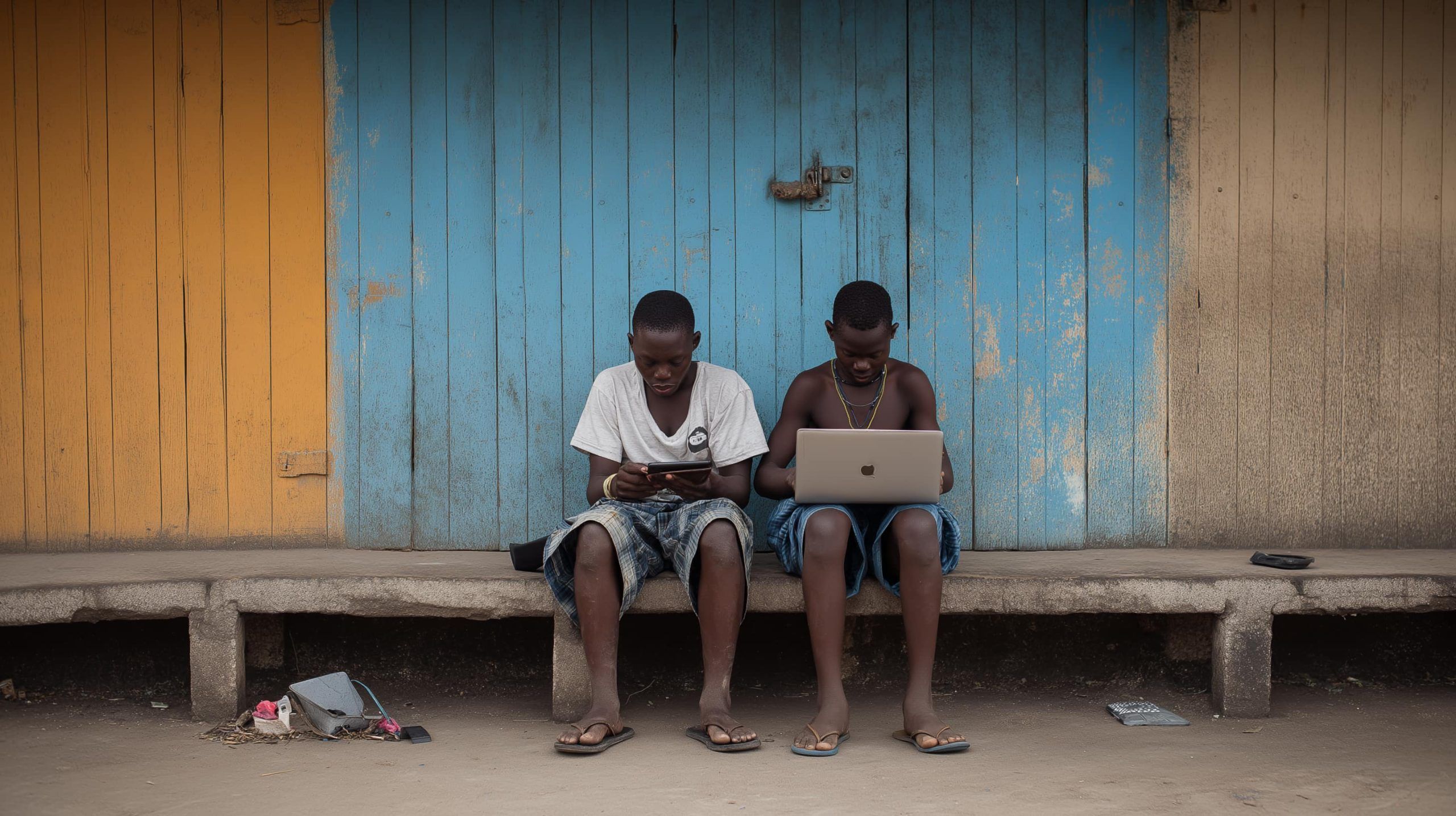
Liberia’s internet landscape is rapidly evolving from near-zero connectivity during the civil war years to a growing digital economy today. As of early 2025, roughly one-third of Liberians use the internet datareportal.com. This marks steady growth from just 19% internet penetration in 2019 a4ai.org. Still, almost 67% of the population remains offline datareportal.com, indicating a significant digital divide. Mobile phones are the primary on-ramp to the internet – Liberia had over 5.11 million mobile connections active in 2025 datareportal.com. By contrast, fixed broadband lines are extremely scarce datahub.itu.int. Internet usage trends: Connectivity is concentrated in cities, while rural Liberia lags behind. Urban residents enjoy far greater access to mobile networks and cybercafés, whereas many remote villages remain unconnected. Nevertheless, internet use is rising across the country as smartphone adoption increases and networks expand. Annual growth in internet users was around 6.5% from 2024 to 2025 datareportal.com. Social media use is also climbing, with about 16.6% of Liberians active on social platforms by 2025 datareportal.com datareportal.com. Compared to neighboring countries, Liberia’s ~30% internet penetration is ahead of Sierra Leone datareportal.com but trails Côte d’Ivoire datareportal.com, highlighting room for improvement.
15 August 2025
Paraguay’s Internet Access in 2025: Shocking Facts about Connectivity, Providers, and the Starlink Effect

Paraguay’s Internet Access in 2025: Shocking Facts about Connectivity, Providers, and the Starlink Effect

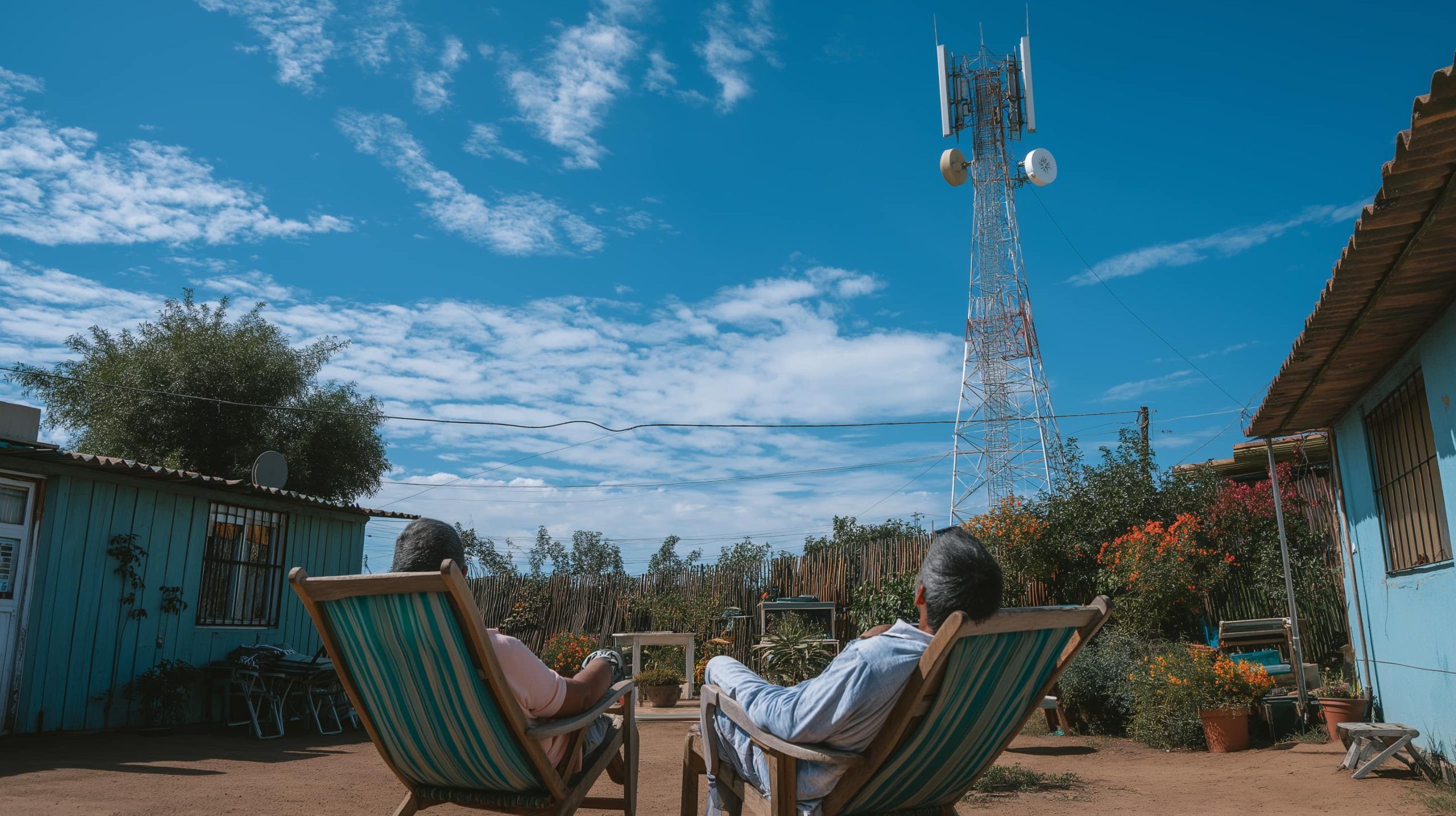
Paraguay’s internet usage has grown rapidly but still lags behind regional peers. Roughly 78% of Paraguay’s population uses the internet, which is below the Latin American average and far behind regional leaders like Chile pulse.internetsociety.org theglobaleconomy.com. This places Paraguay in the middle-to-lower tier for internet penetration in South America. The country’s digital divide is evident in geography – urban areas enjoy much higher connectivity rates while rural areas trail significantly pulse.internetsociety.org. Bridging this gap has become a national priority, as Paraguay seeks to catch up with its neighbors in providing widespread internet access. Several factors have shaped Paraguay’s internet landscape. As a landlocked nation, Paraguay historically depended on neighboring countries for international fiber links to submarine cables, which kept bandwidth costs high and hindered broadband growth developingtelecoms.com. Nevertheless, in recent years mobile networks have flourished and become the primary on-ramp to the internet for most Paraguayans. In the following sections, we delve into Paraguay’s traditional internet infrastructure versus emerging satellite services, covering accessibility, coverage, affordability, major providers, government initiatives, and how it all compares to the rest of Latin America.
13 August 2025
Grenadines Internet Access 2025: Fiber, 4G, and Starlink Connecting Paradise

Grenadines Internet Access 2025: Fiber, 4G, and Starlink Connecting Paradise

The Grenadines – a chain of idyllic islands including Bequia, Mustique, Canouan, Union Island, Mayreau, and more – are rapidly shedding their past reputation of sluggish internet. In 2025, these tropical gems enjoy unprecedented connectivity options: subsea fiber-optic cables now link key islands to high-speed broadband, 4G LTE mobile networks blanket most populated areas, and satellite internet is emerging as a game-changer for remote access. This report provides a comprehensive look at internet access across the Grenadines, covering current infrastructure, providers, service types, coverage and performance, ongoing challenges, and practical insights for residents, tourists, digital nomads, and investors alike. For years, the remote Grenadine islands grappled with limited and unreliable connectivity. Older systems relied on narrowband microwave links beaming signals over long distances from St. Vincent, resulting in slow speeds and frequent outages searchlight.vc searchlight.vc. That began to change in 2019, when a World Bank-funded project helped install a subsea fiber-optic cable network linking St. Vincent to the major Grenadines. This new fiber backbone connected Bequia, Mustique, Canouan, and Union Island, with further links onward to Grenada finance.gov.vc searchlight.vc. By late 2019, over 150 miles of fiber had been laid, bringing a “broadband backbone rivaling Singapore” to even the smaller
10 August 2025
Guinea-Bissau’s Internet Revolution? Inside the 2025 Connectivity Boom and Bust

Guinea-Bissau’s Internet Revolution? Inside the 2025 Connectivity Boom and Bust

Guinea-Bissau is experiencing a digital awakening that few would have predicted a decade ago. Internet usage has exploded from just 2.9% of the population in 2012 to roughly 32% by early 2024 tekedia.com. The arrival of high-speed players like SpaceX’s Starlink promises to further shake up the market techloy.com. Yet behind the headlines of new 4G towers and satellite broadband, the reality is sobering: connectivity remains unreliable, 67.5% of Bissau-Guineans are still offline africa.businessinsider.com, and those online pay some of the world’s highest prices for some of the slowest service. This comprehensive report examines the state of internet access in Guinea-Bissau as of 2025, including infrastructure gains, mobile and satellite networks, government digital initiatives, and the daunting challenges of cost and coverage. Guinea-Bissau’s core internet infrastructure has advanced in recent years but remains very limited. Fixed broadband is almost nonexistent – effectively 0% of residents have a wired high-speed connection like DSL or cable at home worlddata.info. In 2023 the country had only about 0.31 fixed broadband subscriptions per 100 people, meaning just a few thousand fixed lines in total data.worldbank.org. Consequently, nearly all internet access is through wireless mobile networks. There were 686,200 internet users in January 2024 extensia.tech,
9 August 2025
Complete Guide to Internet Access in Sri Lanka: Fiber, 4G, and Satellite Expansion

Complete Guide to Internet Access in Sri Lanka: Fiber, 4G, and Satellite Expansion

Sri Lanka’s internet landscape is a rapidly evolving mix of fixed fiber broadband, widespread mobile networks, and emerging satellite services. As of early 2025, internet usage has reached over 12.4 million individuals themorning.lk freedomhouse.org. Active mobile connections even exceed the population count due to multi-SIM usage themorning.lk. The country has nearly 23 million broadband subscriptions when counting both fixed and mobile internet accounts trc.gov.lk trc.gov.lk. Table 1 summarizes the major internet service providers and their coverage in Sri Lanka. Table 1: Major Internet Providers in Sri Lanka and Their Networks
8 August 2025
Myanmar’s Internet Dilemma: From Blackouts to Starlink Dreams

Myanmar’s Internet Dilemma: From Blackouts to Starlink Dreams

Myanmar’s internet landscape stands at a volatile crossroads. Once celebrated for a rapid digital leap in the 2010s, the country now oscillates between forced blackouts and furtive hopes of satellite-powered connectivity. Following a 2021 military coup, Myanmar’s connectivity has been marred by infrastructure damage, government-imposed shutdowns, skyrocketing costs, and draconian censorship. Yet even as the junta tightens its grip on cyberspace, new projects like expanded fiber networks and illicit Starlink satellite links hint at possible lifelines. This report provides a comprehensive overview of internet access in Myanmar – from the state of its infrastructure and service types to provider dynamics, pricing, urban–rural divides, government controls, shutdown impacts, regional comparisons, and recent developments. Myanmar’s core telecom infrastructure saw dramatic expansion after market liberalization in 2013. Today, about 44% of the population are internet users, though this penetration remains well below the Asian average of 62% pulse.internetsociety.org pulse.internetsociety.org. Mobile networks are the backbone of connectivity: 4G mobile broadband coverage reaches roughly 90% of the population, while 5G coverage is virtually nonexistent pulse.internetsociety.org. The country is linked internationally via three undersea cables and four overland fiber gateways, providing “very good” upstream diversity for global access freedomhouse.org. In theory, Myanmar’s network should be resilient.
5 August 2025
Pakistan’s Internet Access Frontier: Fiber Optics, 5G Delays, and Starlink’s Big Promise

Pakistan’s Internet Access Frontier: Fiber Optics, 5G Delays, and Starlink’s Big Promise

Pakistan’s internet landscape is rapidly evolving, marked by significant growth in users but also stark challenges. As of early 2024, over 111 million Pakistanis were online – about 45.7% of the population datareportal.com datareportal.com. By January 2025 this rose to 116 million internet users datareportal.com. Broadband connections have surged to 142 million by late 2024 app.com.pk app.com.pk. However, roughly half the population remains offline, reflecting a persistent digital divide. This report provides a comprehensive look at Pakistan’s internet connectivity – from the current infrastructure and availability in urban vs. rural areas, to major telecom players, usage statistics, government initiatives, and emerging technologies like satellite internet. We also compare Pakistan’s progress with regional and global benchmarks, and examine future outlook and investment opportunities. The picture that emerges is one of high potential – a young, mobile-savvy population driving digital uptake – tempered by challenges in infrastructure, affordability, and equitable access. Pakistan’s internet infrastructure is a mix of expanding mobile networks and limited fixed broadband. Fiber-optic backbone coverage remains relatively thin: fiber penetration is alarmingly low at ~0.45% brecorder.com. Only about 9–11% of cellular towers are connected to fiber backhaul, far below the ~40% international benchmark brecorder.com. Most telecom towers rely on
3 August 2025
Internet Access in the Micronesian Region: Status, Challenges, and Outlook (2025)

Internet Access in the Micronesian Region: Status, Challenges, and Outlook (2025)

The Micronesian region – encompassing the Federated States of Micronesia, Palau, the Marshall Islands, Nauru, and Kiribati – has made significant strides in improving internet connectivity over the past decade. Once almost entirely reliant on slow, expensive satellite links, these Pacific island nations are now benefiting from new submarine fiber-optic cables, upgraded mobile networks, and emerging low-Earth-orbit satellite services. Broadband and mobile internet availability have expanded notably: all five countries have at least 4G mobile service in population centers, and several have introduced fiber-optic backbones or are on the cusp of their first international cable link. Internet usage is rising rapidly – from roughly 40% of the population online in FSM to over 80% in Nauru – as connectivity becomes more accessible Internetsociety ts2.tech. However, challenges persist. Rural and outer island communities often remain underserved due to geography, leaving a stark urban-rural digital divide in nations like Kiribati and the Marshall Islands ts2.tech ts2.tech. Bandwidth limitations and high costs have historically constrained internet quality; while prices are gradually falling, internet service can still consume a large share of household income in these small economies ts2.tech ts2.tech. Satellite internet providers are now complementing traditional telecom operators, bringing new competition and options
2 August 2025
Inside Madagascar’s Internet Revolution: From Mobile Networks to Starlink Skies

Inside Madagascar’s Internet Revolution: From Mobile Networks to Starlink Skies

Madagascar’s internet landscape is undergoing a dramatic transformation. Once characterized by low connectivity and patchy infrastructure, the island nation is now embracing new technologies and investments to bridge its digital divide. From the expansion of mobile networks across its vast rural countryside to the arrival of cutting-edge satellite services like Starlink, Madagascar is poised for an “internet revolution.” This report provides a comprehensive look at the state of internet access in Madagascar, including infrastructure developments, user demographics, key service providers, government initiatives, satellite internet’s growing role, costs and challenges, comparisons with other African nations, and future outlook. The goal is to paint a clear and engaging picture of how Madagascar is connecting its people – and how far it still has to go. Madagascar’s internet infrastructure rests on a mix of undersea fiber cables, a national fiber backbone, and mobile wireless networks. In recent years, international connectivity has improved significantly. The country is now connected to four major submarine fiber-optic cables: EASSy, LION/LION2, METISS, and the newly landed 2Africa system dig.watch dig.watch. These cables link Madagascar to the global internet, landing at coastal cities like Toamasina, Toliara, and Mahajanga. For example, the Eastern Africa Submarine Cable System runs along Africa’s
Internet Access in Georgia (Country) vs Georgia (U.S. State): Infrastructure, Coverage, Providers & Digital Divide

Internet Access in Georgia (Country) vs Georgia (U.S. State): Infrastructure, Coverage, Providers & Digital Divide

Georgia – a name shared by both a country at the crossroads of Europe and Asia and a state in the southeastern United States – presents two distinct stories of internet access. This report provides a comprehensive look at internet infrastructure, availability, providers, pricing, speeds, adoption, and government initiatives in each region. We also examine the emergence of satellite internet and the challenges faced by underserved communities in rural and low-income areas. Despite their different contexts, both Georgias are striving to expand connectivity and bridge digital divides. Overview: The country of Georgia has made remarkable progress in the last two decades, evolving from its first DSL connections in 2002 to a leader in fiber-optic broadband penetration in its region investor.ge investor.ge. As of 2020, fiber has become the dominant fixed-line technology, and a majority of Georgians are regular internet users investor.ge. However, rural and remote areas still lag behind urban centers, and efforts are ongoing to extend high-speed access nationwide.
31 July 2025
Inside Tajikistan’s Internet: Connectivity Challenges, Costs, and the Satellite Solution

Inside Tajikistan’s Internet: Connectivity Challenges, Costs, and the Satellite Solution

Tajikistan’s internet infrastructure remains underdeveloped, with fixed broadband virtually nonexistent and mobile networks serving as the primary mode of access. Fixed-line broadband penetration is among the lowest in Central Asia – only about 6,000 fixed broadband subscriptions nationwide. In practice, home internet via DSL, cable, or fiber is extremely limited to major urban areas. The national incumbent Tajiktelecom, a state-owned operator, has a modest fixed-line network, but most households still lack any wired connection. Instead, mobile broadband dominates: as of early 2024 Tajikistan had 10.54 million mobile cellular connections, exceeding the population. Four major mobile operators – Tcell, MegaFon Tajikistan, ZET-Mobile, and Babilon-Mobile – provide GSM/3G/4G coverage in populated areas, and all have been rolling out 4G LTE over the past few years. By the end of 2022, 4G network coverage had reached roughly 72%, up from about 60% a year earlier. This still leaves many rural and mountainous regions with only 2G/3G service or no signal at all, highlighting the urban-rural gap. High-speed fiber-optic infrastructure exists primarily in backbone links between cities and international gateways. Tajikistan has cross-border fiber optic cables connecting to Uzbekistan, Kyrgyzstan, and Afghanistan, which form the country’s links to the global internet. However, the domestic
30 July 2025
Connecting São Tomé and Príncipe: Internet Access in 2025 – Infrastructure, Challenges, and Opportunities

Connecting São Tomé and Príncipe: Internet Access in 2025 – Infrastructure, Challenges, and Opportunities

São Tomé and Príncipe – a small island developing state in the Gulf of Guinea – has made notable strides in digital development over the past decade. As of early 2025, about 61.5% of the population are internet users, a significant increase from previous years datareportal.com datareportal.com. This growth is driven largely by mobile connectivity and a major upgrade of international infrastructure. The country’s overall Internet Resilience Index score is low, indicating limited capacity to withstand outages pulse.internetsociety.org pulse.internetsociety.org. However, the government and partners have been actively working to improve digital access and quality. In this report, we explore the current state of internet access in São Tomé and Príncipe, including infrastructure, service types, providers, international links, usage statistics, costs, policies, satellite services, challenges, and the opportunities that better connectivity can unlock. São Tomé and Príncipe’s internet infrastructure has historically been constrained by its small size and isolation. Until 2013, the country relied almost entirely on satellite links for international bandwidth, resulting in expensive, low-quality connectivity that limited business, education, and government applications a4ai.org. Recognizing this bottleneck, the government invested in connecting to the Africa Coast to Europe submarine fiber-optic cable. The ACE cable landing in São Tomé dramatically improved
29 July 2025
Internet Access in Nauru: Infrastructure, Access, and Future Outlook

Internet Access in Nauru: Infrastructure, Access, and Future Outlook

Nauru is a tiny Pacific island nation with a population of about 12,000, yet it boasts one of the highest internet usage rates in the Pacific. Approximately 83% of Nauruans are internet users as of 2023 Internetsociety, a penetration well above the Oceania average. This high uptake is remarkable given Nauru’s remote location and limited physical connectivity – the island lies hundreds of kilometers from any neighbor and until recently had no undersea fiber-optic cable Satellitetoday. Instead, satellite links have been the lifeline of Nauru’s internet, from early geostationary systems to modern low-Earth orbit constellations. Internet access is delivered primarily via wireless networks, with virtually the entire population living in the urbanized districts along the coast. Despite the challenges of isolation, Nauru’s government and partners have aggressively pursued digital improvements, making the country an interesting case of rapid adoption amid constrained infrastructure. The current situation features a mix of satellite broadband, a burgeoning mobile network, and impending fiber-optic connectivity – all of which shape the quality, affordability, and inclusivity of Nauru’s internet services. Internet access in Nauru evolved late but rapidly. Modern telecommunications began in the 1970s when the government established Nauru Telecom as a monopoly operator using Intelsat satellites
Internet Access in Gabon 2025: Fiber, Mobile Networks, and the Satellite Revolution

Internet Access in Gabon 2025: Fiber, Mobile Networks, and the Satellite Revolution

Gabon stands out as one of Central Africa’s most connected countries, with internet usage reaching roughly 72% of the population in early 2025 datareportal.com datareportal.com. According to DataReportal, about 1.84 million people in Gabon were using the internet as of January 2025, out of a population of ~2.57 million datareportal.com datareportal.com. This high penetration rate places Gabon well ahead of many neighboring countries – for instance, Cameroon’s internet penetration is around 42% datareportal.com, and the Democratic Republic of Congo’s is below 30% datareportal.com. Gabon’s achievement is even more notable given that 91% of Gabon’s population is urban datareportal.com, which has facilitated network rollout. Mobile connectivity is a major driver of internet access. In fact, mobile subscriptions exceed the population – ARCEP reported a 169% mobile phone penetration and 120.3% internet subscription rate in early 2023 techpoint.africa. This indicates that many Gabonese maintain more than one internet-enabled SIM card or service plan. In terms of speed, internet users enjoy improving broadband performance. Fixed broadband speeds have a median download of about 42 Mbps as of 2025 datareportal.com, a healthy increase from the previous year. Mobile network speeds are lower but sufficient for common applications; 4G users in urban areas often experience
No Signal? No Problem – T-Mobile’s Starlink Satellite Service Launches to End Dead Zones

No Signal? No Problem – T-Mobile’s Starlink Satellite Service Launches to End Dead Zones

T-Mobile has officially launched its satellite-powered phone service across the United States, aiming to eliminate cellular “dead zones.” CEO Mike Sievert announced that the Starlink-backed network is now out of beta and available to everyone, not just T-Mobile customers theverge.com. The new service – called T-Satellite – piggybacks on SpaceX’s Starlink satellites to provide connectivity where cell towers can’t reach. After six months of beta testing, T-Satellite is now live as a commercial offering open to any U.S. user on any carrier theverge.com lightreading.com. This makes T-Mobile the first major U.S. carrier to integrate direct satellite coverage into its network for ordinary smartphones. Pricing and availability: For a limited time, T-Satellite costs $10 per month, set to rise to $15/month later theverge.com. It’s included at no extra charge for subscribers on T-Mobile’s top-tier plans theverge.com lightreading.com. Notably, even AT&T and Verizon customers can sign up as “non-customers” for the same $10 price during the introductory period lightreading.com. In other words, you don’t need to be a T-Mobile subscriber – anyone with a compatible phone can subscribe to T-Satellite and tap into its coverage. As T-Mobile’s network president Jon Freier puts it, “This technology will save lives. And it’s available starting
Senegal’s Internet Revolution: How Fiber, 5G, and Policy Are Connecting a Nation

Senegal’s Internet Revolution: How Fiber, 5G, and Policy Are Connecting a Nation

Senegal is experiencing a digital transformation as internet access expands rapidly across the country. Over half of Senegal’s population now uses the internet, thanks largely to the boom in mobile broadband and recent investments in fiber optics Datareportal Ecofinagency. The government has prioritized digital development through ambitious strategies and infrastructure projects, aiming to make Senegal a regional tech hub by 2035 Budde Wearetech. However, significant challenges remain – from urban-rural disparities and high costs, to power supply and digital literacy issues. This report provides a detailed overview of the state of internet access in Senegal, covering infrastructure, services, providers, policies, and how the country compares with its West African peers. Senegal’s internet usage has grown impressively in recent years. As of January 2025, about 11.3 million individuals were using the internet in Senegal, representing 60.6% of the population Datareportal. In other words, roughly 4 in 10 Senegalese were still offline at the start of 2025, indicating room for further growth Datareportal. Most Senegalese access the internet through mobile devices – the country had 22.7 million active mobile connections in early 2025 Datareportal. Broadband connectivity is widespread on these networks: about 90% of Senegal’s mobile connections are now on 3G, 4G,
Everything You Need to Know About Internet Access in Italy: From Fiber to Satellite

Everything You Need to Know About Internet Access in Italy: From Fiber to Satellite

Internet connectivity in Italy has evolved rapidly in recent years, with major upgrades to infrastructure and new technologies bridging the digital divide. This comprehensive report covers all aspects of internet access in Italy – from the fiber-optic networks in city centers to the satellite services reaching remote villages. We’ll explore the state of fixed broadband, regional differences between north and south, the rollout of 4G and 5G mobile networks, the emergence of satellite internet, key service providers and their offerings, public Wi-Fi availability, pricing and affordability, the regulatory landscape, and recent developments shaping the future of connectivity in Italy. Italy’s fixed broadband infrastructure relies primarily on telephone-line networks and increasingly on fiber-optic networks, with virtually no cable broadband infrastructure. Unlike some countries, Italy never developed an extensive coaxial cable TV network, so broadband has historically been delivered over Telecom Italia’s copper telephone lines or newer fiber deployments point-topic.com. As of mid-2023, old-generation DSL remained almost universally available point-topic.com. However, DSL offers limited speeds, so Italy has been upgrading to faster technologies:
22 July 2025
You Won’t Believe What Google Did This Month: July 2025’s Biggest Stories

You Won’t Believe What Google Did This Month: July 2025’s Biggest Stories

Google had a blockbuster July 2025, with headlines spanning AI breakthroughs, surprise product updates, big-name partnerships, legal showdowns, and a few controversies. From rolling out cutting-edge AI features across devices to facing regulatory heat in courtrooms, the tech giant kept everyone buzzing. Below is a comprehensive roundup of Google’s most significant July 2025 developments, organized by category for easy reading. Sources: This report drew on a variety of credible sources, including official Google blog announcements, reputable tech news outlets, and global news organizations. Key information on product updates came from Google’s own July blog posts and statements blog.google blog.google, as well as detailed coverage in TechCrunch techcrunch.com techcrunch.com. AI research insights were referenced from Google DeepMind publications and expert analyses like Rohan’s Bytes rohan-paul.com rohan-paul.com. Product and partnership news was reported by outlets such as TechCrunch techcrunch.com techcrunch.com and Reuters reuters.com reuters.com. Developments in legal cases and regulatory actions were covered extensively by Reuters reuters.com reuters.com and summarized here with direct quotes from officials and stakeholders reuters.com reuters.com. Lastly, the publisher traffic controversy was highlighted by TechCrunch’s reporting on Google’s AI summaries techcrunch.com techcrunch.com. All facts and quotes are sourced from these publications to ensure accuracy and credibility. Google’s July
Montenegro’s Internet Access, Byte by Byte: Infrastructure, Providers, Speeds & Trends

Montenegro’s Internet Access, Byte by Byte: Infrastructure, Providers, Speeds & Trends

Montenegro has made significant strides in internet connectivity since becoming independent in 2006. Today, the country boasts widespread broadband access via fiber-optic, DSL, cable, and 4G/5G wireless networks. Internet penetration continues to climb, narrowing the digital gap between urban and rural regions. Average speeds have increased year over year, placing Montenegro mid-pack globally and ahead of some regional peers in fixed broadband performance worldpopulationreview.com operatorwatch.com. Major telecom operators drive competition by investing in infrastructure upgrades, while government initiatives and EU-backed programs aim to extend high-speed internet to every corner of the mountainous nation. This report provides an in-depth look at Montenegro’s internet infrastructure, service providers, penetration rates, speeds, urban–rural disparities, pricing, usage in various sectors, the emergence of satellite options, and supportive policies – comparing key metrics with Southeast European neighbors where relevant. Montenegro’s broadband infrastructure is diverse, encompassing modern fiber networks alongside legacy copper lines and extensive mobile coverage:
21 July 2025
Digital Lifeline: Internet Access in Malta from Fibre to Satellite

Digital Lifeline: Internet Access in Malta from Fibre to Satellite

Malta boasts one of Europe’s most advanced digital infrastructures. The nation has achieved 100% coverage with very high capacity networks – meaning every household can access gigabit-speed broadband via fiber or upgraded cable networks en.wikipedia.org. This far exceeds the EU average of 70% and places Malta as the only EU country with complete gigabit internet availability melita.com. High broadband penetration reflects strong demand, and Maltese internet users enjoy some of the fastest data rates in Europe globenewswire.com. This robust infrastructure is supported by Malta’s geography – the small size and dense population make it easier to deploy fiber across the islands globenewswire.com. Major investments by operators have extended fiber-optic lines throughout Malta and Gozo, supplemented by modern cable systems. Internationally, Malta is linked via submarine fiber optic cables that provide ample bandwidth and redundancy for global connectivity globenewswire.com. The government and regulator have actively fostered this development through strategic plans and a pro-competitive regulatory framework, ensuring that internet access is treated as essential infrastructure. In fact, Malta moved to enshrine internet access as a civil right as early as 2012, coinciding with plans for a nationwide fibre-to-the-home rollout ccmalta.com. All these factors position Malta as a “digital island” leader in
20 July 2025
1 2 3 4 5 9

Stock Market Today

  • SpaceX IPO Sets Record on July 4 as Market Eyes Bubble Risk
    July 2, 2026, 7:01 AM EDT. On America's 250th birthday, July 4, 2026, SpaceX delivered the biggest IPO ever, with the deal drawing lines to the Bank of the United States debut in 1791. Like in 1791, the SpaceX IPO was massively oversubscribed and speculation is running high, with some traders calling back to the old "scriptomania" episode. Alexander Hamilton had backed that early IPO to support the system, while Thomas Jefferson pushed back on what he called a gambling streak. The 1791 action used heavy leverage and shares went out at just a small slice of equity value-a pattern some see now in the run on leveraged ETFs after SpaceX hit the market. The old worry about a "moral certainty of gain" still haunts some investors, with talk turning to whether SpaceX's valuation is running too hot.
Go toTop