Browse Category

Science News News 2 November 2025 - 12 November 2025

‘Lucifer’ Bee with Devil‑Like Horns Discovered in Western Australia — What We Know Today (Nov. 12, 2025)

‘Lucifer’ Bee with Devil‑Like Horns Discovered in Western Australia — What We Know Today (Nov. 12, 2025)

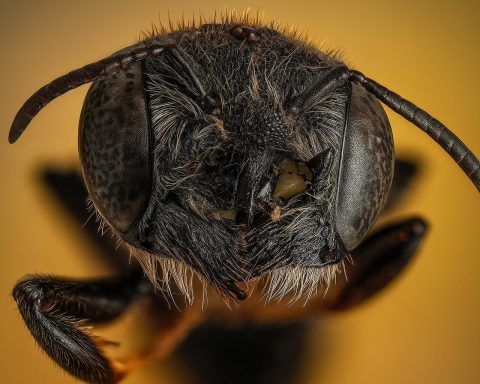
A newly described species of native leafcutter bee sporting tiny, devil‑like facial “horns” has been unveiled by researchers in Western Australia’s Goldfields. The species, formally named Megachile (Hackeriapis) lucifer, was first collected in 2019 during a survey of pollinators around a critically endangered wildflower, Marianthus aquilonaris, and is now detailed in a peer‑reviewed paper in the Journal of Hymenoptera Research. Curtin University+1 Why scientists are buzzing about Megachile lucifer The female bees carry a conspicuous pair of forward‑curving “horns” on the clypeus (the front of the face) — a feature not seen in males. Researchers say the structures are sub‑millimetre

12 November 2025
Severe G4 Solar Storm Lights Up Skies: Northern Lights Visible Across U.S., Southern Lights in Australia — Where to Watch Tonight (Nov. 12, 2025)

Severe G4 Solar Storm Lights Up Skies: Northern Lights Visible Across U.S., Southern Lights in Australia — Where to Watch Tonight (Nov. 12, 2025)

What’s happening The Sun’s recent burst of activity sent a train of CMEs toward Earth. Overnight, the storm escalated to G4 (severe) levels, which NOAA’s Space Weather Prediction Center (SWPC) confirmed at 01:20 UTC on Nov. 12 (8:20 p.m. EST, Nov. 11). Forecasters say geomagnetic storming “is anticipated to continue into the night,” keeping aurora chances elevated. NOAA Space Weather Prediction Center The severe watch was posted ahead of time due to a sequence of CMEs—including one tied to an X5.1‑class solar flare at 10:04 UTC on Nov. 11—with forecasters flagging uncertainty around the exact arrival timing but high confidence
12 November 2025
Alien Probe or Cosmic Relic? Interstellar Comet 3I/ATLAS Baffles Scientists (updated 27.10.2025)

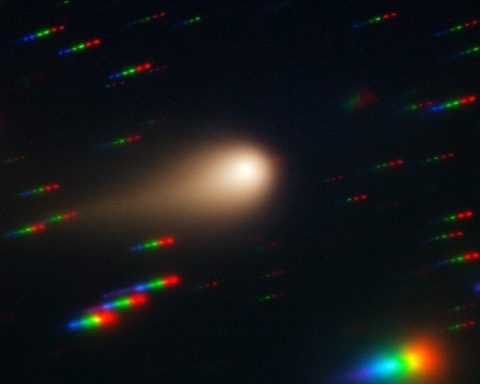
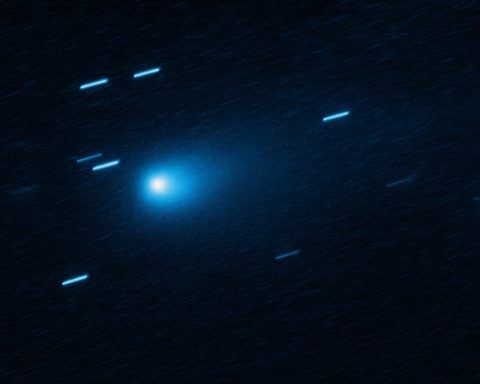
Interstellar Comet 3I/ATLAS on Nov. 9, 2025: Tail Mystery, New Jet Images, and Where to Look This Week

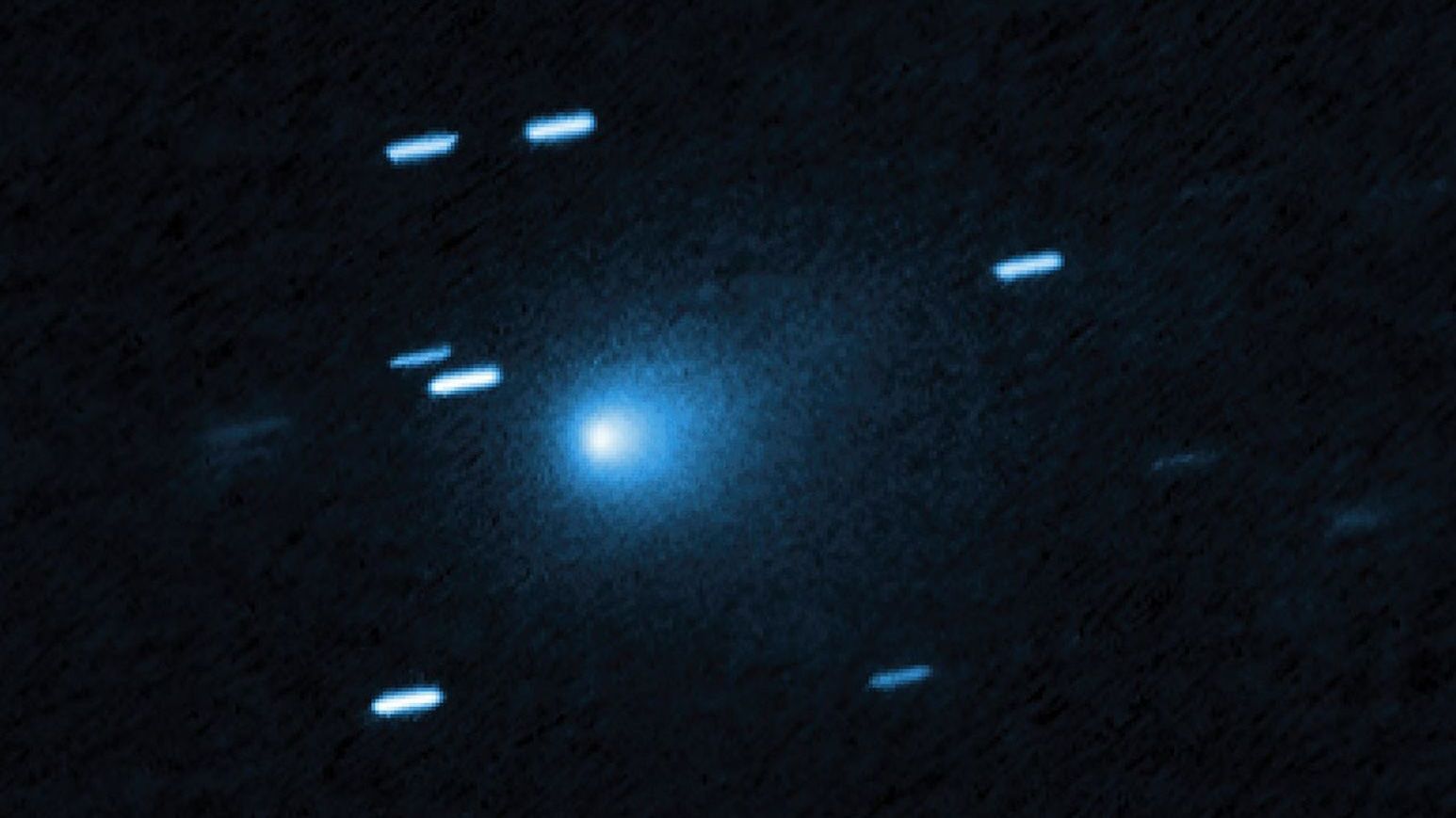
Updated: November 9, 2025 What’s new today Today’s snapshot: why the comet’s look is confusing Some Nov. 5–9 images show a compact coma with little obvious dust tail, which has fueled social-media claims that 3I/ATLAS is behaving “unlike a comet.” But experts caution that viewing geometry matters: a tail can be foreshortened or lost in glare, and gas emissions can dominate the appearance around perihelion. Two days ago Space.com quoted Lowell Observatory’s Qicheng Zhang: there’s no solid evidence the coma “changed color”; instead, the gas coma is simply contributing more to the comet’s brightness. Meanwhile, a fresh deep stack highlighted
Blue Origin’s New Glenn Set to Launch NASA’s ESCAPADE to Mars Today (Nov. 9): Liftoff at 2:45 p.m. ET — How to Watch, Weather, Flight Plan & What’s Onboard

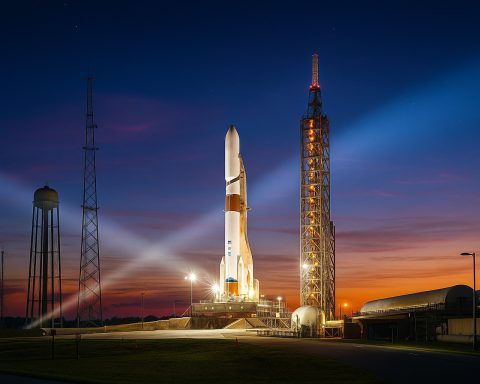
Blue Origin’s New Glenn Set to Launch NASA’s ESCAPADE to Mars Today (Nov. 9): Liftoff at 2:45 p.m. ET — How to Watch, Weather, Flight Plan & What’s Onboard

Blue Origin’s heavy‑lift New Glenn rocket is poised for its second orbital mission this afternoon, carrying NASA’s twin ESCAPADE spacecraft on a path toward Mars along with a Viasat communications demo. The launch window opens at 2:45 p.m. ET (19:45 UTC) from Launch Complex 36 at Cape Canaveral Space Force Station; Blue Origin’s official webcast begins ~45 minutes before liftoff. Blue Origin Key facts at a glance How to watch the New Glenn ESCAPADE launch What’s launching: ESCAPADE, NASA’s twin Mars probes ESCAPADE (Escape and Plasma Acceleration and Dynamics Explorers) is NASA’s first multi‑satellite mission to another planet, led by
9 November 2025
Rare Interstellar Comet 3I/ATLAS – a 10-Billion-Year-Old Time Capsule – Flies Past Mars

Comet 3I/ATLAS Today (Nov. 9, 2025): Post‑Perihelion Status, New Spacecraft Images, Visibility Guide — and What’s Hype vs Fact

Published: November 9, 2025 Comet 3I/ATLAS (C/2025 N1) — only the third confirmed interstellar object to sweep through our solar system — has reemerged from behind the sun and is sliding into the predawn sky this week. Fresh spacecraft imagery, a flurry of social media claims about its “missing tail,” and ongoing questions about color changes have made it the most watched rock‑ice visitor of the season. Here’s what’s new today, what’s reliable, and how to see it yourself. Space Key updates on Nov. 9 What astronomers agree on Fact‑check: today’s most shared claims “It has no tail — must
Hidden Heat at Enceladus’ North Pole Bolsters Case for Life: Cassini Data Show Stable Ocean in New Study (Nov. 7, 2025)

Hidden Heat at Enceladus’ North Pole Bolsters Case for Life: Cassini Data Show Stable Ocean in New Study (Nov. 7, 2025)

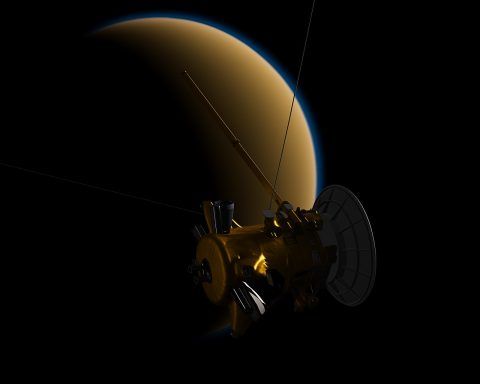
A new analysis of NASA’s Cassini data finds excess heat at Enceladus’ north pole, balancing previously known heat loss in the south. The results, published Nov. 7, 2025 in Science Advances, suggest the icy moon’s global ocean has remained stable over geologic time—strengthening its habitability. Science+3SciTechDaily+3Space+3 Publish date: November 7, 2025 What’s new A peer‑reviewed study released today in Science Advances reports the first clear evidence of endogenic (internal) heat flow at Enceladus’ north pole. Until now, direct heat loss had only been measured at the south pole, where Cassini discovered dramatic plumes in 2005. The new result indicates heat
8 November 2025
Interstellar Comet 3I/ATLAS: A Visitor from Beyond the Solar System

Comet 3I/ATLAS Today (Nov 7, 2025): New Mars‑orbiter images, how to see it before dawn, and what scientists are learning about this interstellar visitor

Updated: November 7, 2025 — Interstellar comet 3I/ATLAS (also cataloged as C/2025 N1 [ATLAS]) has re-emerged from behind the Sun and is back on astronomers’ morning watch lists. Fresh coverage today highlights new imagery from Mars orbit, public tools to follow its path, and why agencies are mobilizing to study only the third confirmed interstellar object ever seen. Space+2WIRED+2 What’s new today (Nov 7) Quick facts at a glance Back in our skies: where and how to see 3I/ATLAS The comet is again observable from Earth in the pre‑dawn sky, very low toward the eastern horizon. It remains a small‑telescope
Sky on Fire Tonight: Giant ‘Solar Canyon’ Aims 800‑km/s Wind at Earth—Northern Lights Could Ignite 15 U.S. States & Test Global Tech

Northern Lights Tonight (Nov. 7, 2025): NOAA Issues G3 Geomagnetic Storm Watch—Where and When to See the Aurora Across the U.S.

Published: November 7, 2025 The Space Weather Prediction Center (SWPC) at NOAA says a coronal mass ejection (CME) is arriving and has a G3 (Strong) geomagnetic storm watch in effect through Nov. 6–7 (UTC), with another, slower CME likely to bring G2 (Moderate) conditions on Nov. 8. Translation: the aurora borealis could dip unusually far south tonight, with the best odds across the northern tier of the United States and parts of the Midwest and Northeast. NOAA Space Weather Prediction Center+1 Overnight into Thursday, a first wave already pushed Earth to G3 storm levels—a strong event on the 1–5 scale—setting
7 November 2025
Alien Probe or Cosmic Relic? Interstellar Comet 3I/ATLAS Baffles Scientists (updated 27.10.2025)

NASA’s Interstellar Visitor 3I/ATLAS on Nov. 5: Fresh Post‑Sun Images, JWST Chemistry—and How to See It Next

Key points What’s new today (Nov. 5) After weeks hidden in the Sun’s glare, 3I/ATLAS is being picked up again by ground telescopes. The Virtual Telescope Project published a clean, post‑conjunction image captured this morning (UTC), marking the start of a new observing window as the comet climbs into darker, pre‑dawn skies. The team plans additional public sessions as conditions improve. The Virtual Telescope Project 2.0 At the same time, science teams are digesting a flurry of perihelion‑time findings. Analysts note the object’s distinct blue hue reported in recent imagery—its third apparent color shift since discovery—and are comparing that trend
5 November 2025
Interstellar Visitor 3I/ATLAS Just Turned Blue and “Accelerated”—Here’s What Really Happened This Week

Interstellar Visitor 3I/ATLAS Just Turned Blue and “Accelerated”—Here’s What Really Happened This Week

Key facts (updated Nov 5, 2025): The story so far: what changed in the last few days While 3I/ATLAS was hidden in the Sun’s glare in late October, it slipped into the fields of view of several solar‑monitoring cameras: STEREO‑A (SECCHI), SOHO/LASCO C3 and NOAA’s GOES‑19 CCOR‑1 coronagraph. A new analysis by Qicheng Zhang (Lowell Observatory) and Karl Battams (U.S. Naval Research Lab) reports an extra‑steep brightening as perihelion approached (scaling approximately as r^‑7.5), and color photometry showing the comet was bluer than the Sun, signaling that glowing gas (not just dust) dominated the visible output near perihelion. This is
5 November 2025
Today’s Moon Is a Record Supermoon: See 2025’s Biggest, Brightest Full Moon (Nov 5) — What to Know, When to Look, and Why It Matters

Today’s Moon Is a Record Supermoon: See 2025’s Biggest, Brightest Full Moon (Nov 5) — What to Know, When to Look, and Why It Matters

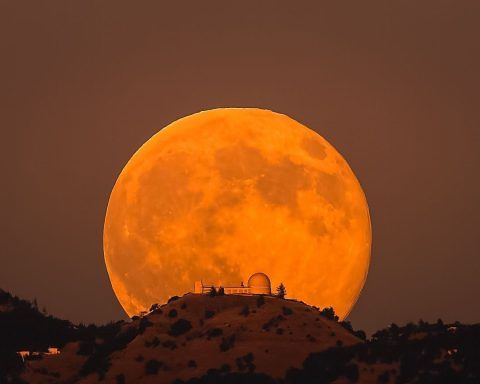
Today’s Moon, explained At 13:19 UTC (08:19 ET) the Moon reached the exact Full Moon moment — the point when Sun, Earth and Moon line up with Earth in the middle. Timeanddate summarizes it neatly: “Full Moon is the only phase where the Moon is up all night.” Time and Date Later today, around 22:30 UTC, the Moon hits perigee (its closest point this month), tightening the geometry into what popular usage calls a supermoon. NASA’s definition: “A ‘supermoon’ occurs when a full Moon coincides with the Moon’s closest approach to Earth in its elliptical orbit, [perigee].” The result is
5 November 2025
Interstellar Comet 3I/ATLAS: A Visitor from Beyond the Solar System

Ancient Alien Messenger or Cosmic Time Capsule? Interstellar Comet 3I/ATLAS Stuns Scientists with Secrets

Meet the Interstellar Comet 3I/ATLAS – A Visitor From Beyond When astronomers spotted a faint new comet on July 1, 2025, they quickly realized it was no ordinary comet. Its official designation, 3I/ATLAS, tells the tale: “3I” means it’s the third interstellar object ever recorded, and “ATLAS” credits the Asteroid Terrestrial-Impact Last Alert System survey telescope (in Río Hurtado, Chile) that discovered itscientificamerican.com. In the days following discovery, observatories around the world rushed to calculate its orbit – and the results were stunning. Unlike normal comets bound in elliptical orbits around the Sun, 3I/ATLAS was on a one-way hyperbolic trajectory,
1 2 3 4 5 6 13

Stock Market Today

GSK share price set for Monday watch after EU clears Nucala COPD use

GSK share price set for Monday watch after EU clears Nucala COPD use

7 February 2026
GSK shares closed Friday up 0.83% at a 52-week high after the EU approved Nucala for certain uncontrolled COPD patients. Insider filings showed chairman Jonathan Symonds bought 2,500 shares while executive David Redfern sold 100,000. The FTSE 100 rose 0.6%. Broker ratings on GSK remained mixed.
Aye Finance IPO: Rs 454-crore anchor haul follows valuation cut below last round

Aye Finance IPO: Rs 454-crore anchor haul follows valuation cut below last round

7 February 2026
Aye Finance raised Rs 454.5 crore from 19 anchor investors ahead of its Feb 9 IPO, pricing shares at the top of a Rs 122–129 range. The company’s profit fell 40% to Rs 64.3 crore in the six months to September as bad loans rose to 4.85%. The IPO values Aye at about Rs 3,200 crore, below its last private round. Major investors include Nippon Life India and Goldman Sachs funds.
BAT share price closes near 52-week high as buyback rolls on ahead of results week

BAT share price closes near 52-week high as buyback rolls on ahead of results week

7 February 2026
British American Tobacco shares closed up 1.2% at 4,609 pence Friday, near a 52-week high. The company disclosed further share buybacks and management share purchases ahead of its Feb. 12 full-year results. BAT bought 121,668 shares for cancellation on Feb. 5. Investors await updates on nicotine alternatives and cash returns.
Go toTop