
New York, July 13, 2026, 14:09 EDT
Nvidia NASDAQ:NVDA, Advanced Micro Devices NASDAQ:AMD, Dell Technologies NYSE:DELL and Cisco Systems NASDAQ:CSCO lost about $232 billion in combined market value during Monday’s regular U.S. session. Meanwhile, Alphabet NASDAQ:GOOGL, Microsoft NASDAQ:MSFT and Meta Platforms NASDAQ:META picked up a net $6 billion. That left a valuation gap of roughly $238 billion as of 1:52 p.m. EDT.
This comes as weekend investor columns pitched a bunch of these names as one retail AI theme. Investor’s Business Daily listed Robinhood Markets NASDAQ:HOOD, Dell and Cisco close to tech “buy points”—key chart spots traders watch for entry. A Yahoo/Fool column also put Space Exploration Technologies NASDAQ:SPCX, or SpaceX, Nvidia, Alphabet, Microsoft and Meta as some of Robinhood’s most popular AI stocks. Another Fool piece called out AMD. Investor’s Business Daily
Two trades stood out on Monday. An equal-weight basket of the four hardware and infrastructure stocks dropped 3.02%. The three platform operators were flat, off just 0.03%. That’s a 2.98-point difference. The median trailing price-to-earnings ratio was 36.7 for hardware and infrastructure, while platform firms traded at 24.0.
| Company | Main AI exposure | Price | Monday move | Trailing P/E |
|---|---|---|---|---|
| Nvidia | AI accelerators | $203.59 | fell 3.49% | 31.0x |
| AMD | CPUs and GPUs | $535.63 | lost 3.99% | 175.6x |
| Dell | AI servers | $420.00 | down 3.44% | 33.5x |
| Cisco | Data-centre networking | $119.92 | slipped 1.15% | 39.8x |
| Alphabet | Cloud and custom chips | $355.59 | edged down 0.45% | 27.1x |
| Microsoft | Cloud and AI software | $391.66 | added 1.70% | 23.3x |
| Meta | Models, ads and data centres | $660.13 | fell 1.36% | 24.0x |
| Measure | Hardware and infrastructure | Platforms | Difference |
|---|---|---|---|
| Equal-weight move | Fell 3.02% | Off 0.03% | 2.98 pts |
| Net market-value change | Lost $231.8 billion | Up $6.3 billion | $238.1 billion gap |
| Median trailing P/E | 36.7x | 24.0x | Spread is 12.7x |
Latest prices as of around 1:52 p.m. EDT. Market-value changes are based on quoted capitalizations and intraday swings.
Robinhood’s popularity numbers don’t equal actual live trading, the company says. Its investor index gives every customer the same weight, looking at the share of their stock holdings in each name. It updates monthly and leaves out ETFs, options and crypto. Robinhood warns investors not to use this number to guess coming trade volumes, calling that a key point for anyone using top holdings as a read on revenue.
The broader market drove most of Monday’s volatility. The Philadelphia Semiconductor Index dropped 3.7%, now down over 14% from its late-June high. Crude futures jumped around 5% on new U.S.-Iran tensions. “That kind of move is not normal,” said Dakota Wealth’s Robert Pavlik, talking about the year’s surge in memory stocks. Traders are waiting for Tuesday’s inflation data and Federal Reserve Chair Kevin Warsh’s first testimony in Congress. Reuters
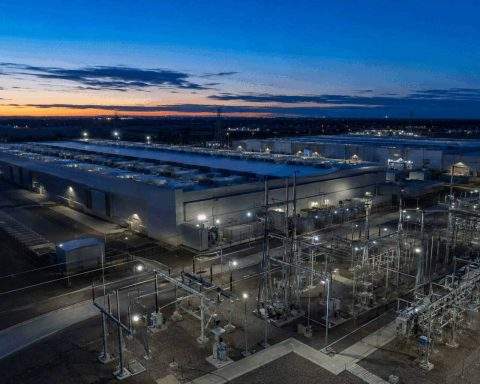
Meta said Monday it will scale up its Hyperion data center in Louisiana to five gigawatts and invest over $50 billion in the site. That’s a boost for chip, server, and networking suppliers who could benefit from bigger orders as the project grows. But investors stuck with a lighter touch on the companies buying AI infrastructure, while sellers didn’t see the same support.
Dell’s chart got weaker. The stock traded at $420, down 10.5% from the $469.47 buy point flagged last week. This comes even as Evercore ISI’s Amit Daryanani lifted his target to $500, saying “demand remains well ahead of supply.” AMD posted 57% data-center sales growth for Q1. Hot demand is meeting a sharp valuation reset. Investor’s Business Daily
Robinhood shares slipped 2.42%. SpaceX fell 5.26% at the same time. Robinhood had 27.7 million funded customers and $377 billion in platform assets as of the end of May. Equity notional volume jumped 75% on the year to $315 billion. More volatility can drive activity, though lower stock prices mean less platform assets.
Monday’s split is just one trading session, not a sign of a new trend. Bernstein’s Mark Newman said memory-stock multiples stay low because of worries about how long earnings can last, while D.A. Davidson’s Gil Luria said “memory is how AI happens.” Stronger supplier earnings might close the gap, but if margins slip, platform spending slows, or pricey stocks get squeezed, the gap could grow. Axios
Forget about which AI stock tops Robinhood. The bigger question now is whether suppliers can lift earnings forecasts enough to back up a 36.7x median multiple, while the infrastructure players are trading closer to 24x. For now, investors aren’t treating the platform’s AI picks as a single group. It’s more about which company will grab the next chunk of capex.
Related articles: NASDAQ:META





![US Stock Market Today 08/23/2026 [UPDATE: 08:13 EDT] [Nvidia and PCE Face a Bond-Stressed Market: Weekly Recap and Week Ahead]](https://ts2.tech/wp-content/uploads/2026/08/US-market-dashboard-2026-08-23-0810-480x384.jpg "US Stock Market Today 08/23/2026 [UPDATE: 08:13 EDT] [Nvidia and PCE Face a Bond-Stressed Market: Weekly Recap and Week Ahead]")