NEW YORK, July 28, 2026, 10:59 EDT
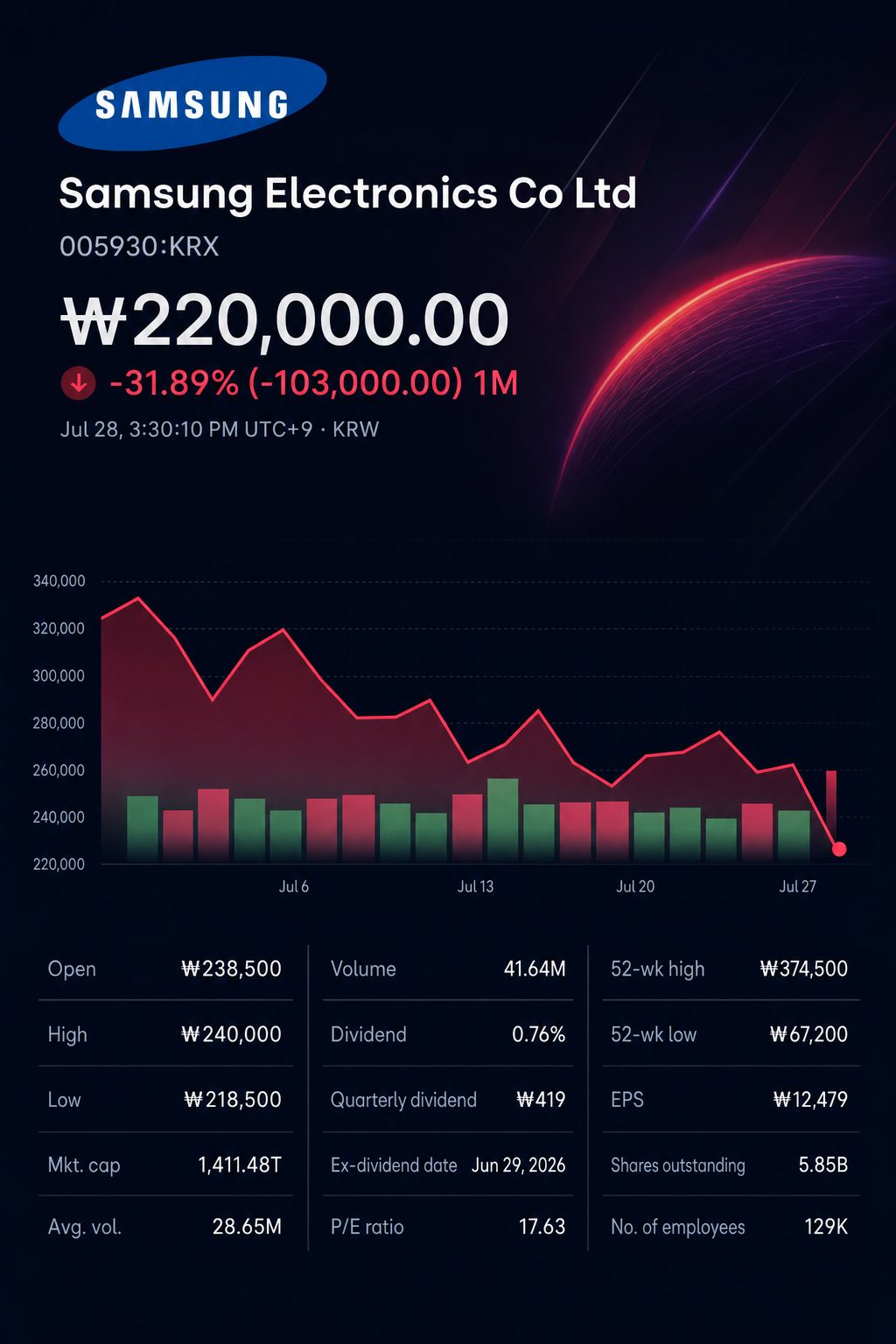
- Seoul had closed. Samsung ended 13.4% lower at 220,000 won, its worst session in almost two decades.
- New York remained open. Broadcom traded 1.6% lower at $377.02 at 10:43 a.m. EDT.
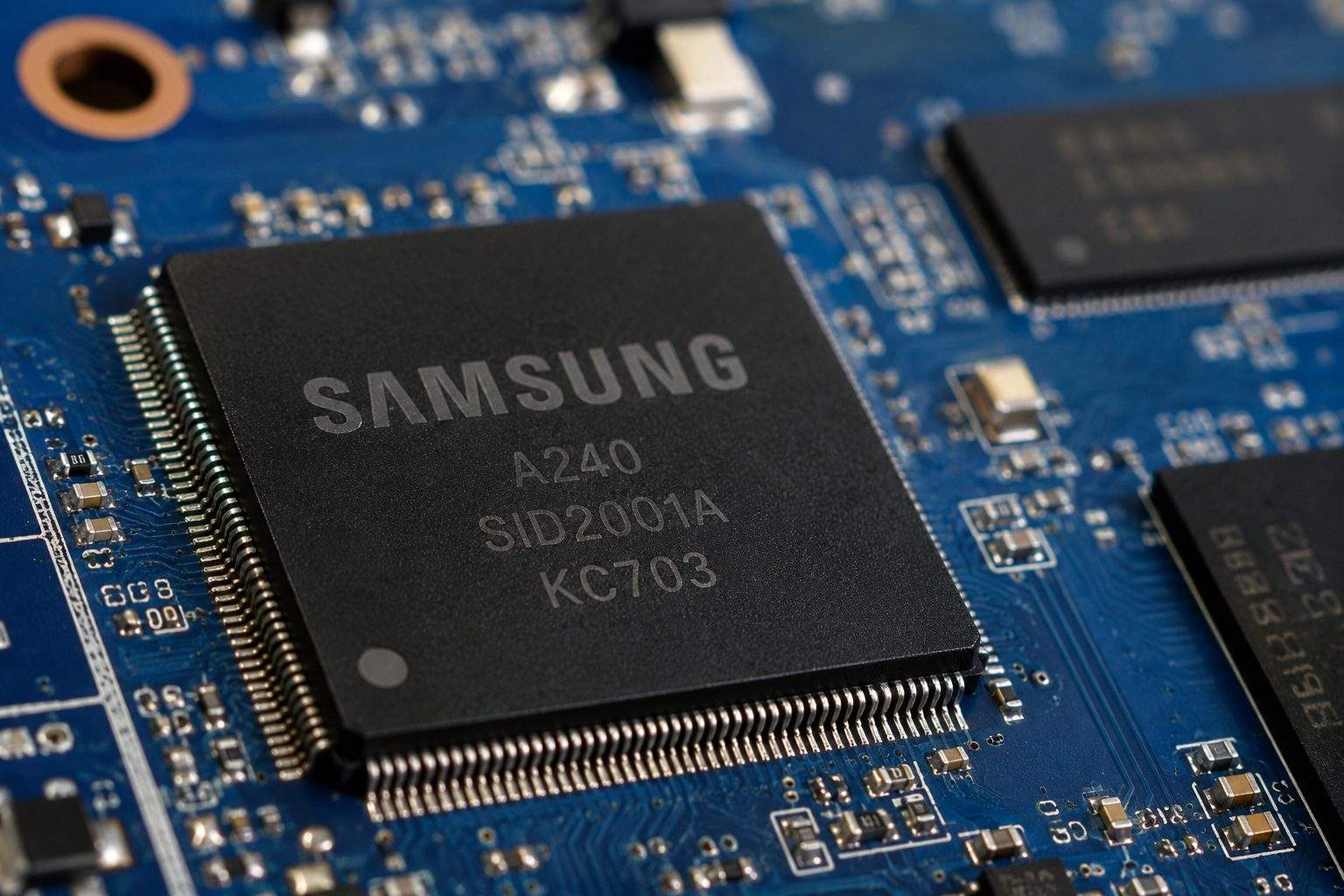
Samsung shares closed 13.4% lower on Tuesday. The decline overwhelmed the initial promise of its $200 billion Broadcom partnership. The stock recorded its worst one-day fall in almost two decades.
The central investor issue is the deal’s mix. JPMorgan Chase NYSE:JPM analyst Harlan Sur estimates memory will represent 90% to 95% of Broadcom’s purchases. Foundry wafers would account for only 5% to 10%.
That changes the headline economics. At a $200 billion base, foundry work would total roughly $10 billion to $20 billion. Spread across five years, that implies $2 billion to $4 billion annually.
The larger prize is memory.
Samsung’s release described the arrangement as a memorandum of understanding. The companies estimated collaboration above $200 billion through 2030. They did not disclose annual volumes, pricing or minimum purchase commitments.
The scope includes high-bandwidth memory, or HBM, used beside AI processors. It also covers contract chip manufacturing on Samsung’s two-nanometre and smaller processes. Advanced packaging would connect memory and logic more closely.
| Measure | Disclosed or estimated basis | Preliminary investor calculation |
|---|---|---|
| Total collaboration | More than $200 billion through 2030 | At least $40 billion yearly; roughly $10 billion quarterly |
| Memory purchases | Sur estimate: 90%-95% | About $180-$190 billion at a $200 billion base |
| Foundry wafers | Sur estimate: 5%-10% | About $10-$20 billion total; $2-$4 billion yearly |
| Broadcom’s latest quarterly AI revenue | $10.8 billion in fiscal Q2 | Implied quarterly collaboration value equals about 93% |
| Samsung’s Tesla NASDAQ:TSLA chip contract | $16.5 billion | Implied Broadcom foundry slice equals about 0.6-1.2 times that contract |
The calculations are preliminary and illustrative. They use the $200 billion floor, a straight five-year spread and JPMorgan’s estimated mix. Actual purchases could be higher, unevenly timed or priced differently.
The comparison suggests Samsung secured a memory supply agreement first. The foundry element remains material. However, it is closer in scale to Samsung’s $16.5 billion Tesla contract than the full headline value.
That distinction matters in Samsung’s contest with Taiwan Semiconductor Manufacturing NYSE:TSM. The Broadcom work can support factory utilisation and customer qualification. It does not yet show a $200 billion transfer of advanced foundry demand from TSMC. TSMC’s U.S. shares were down 3.9% during Tuesday trading.
For Broadcom, the scale is still large. It reported $10.8 billion of AI semiconductor revenue in fiscal Q2. Total quarterly revenue reached $22.2 billion. A straight-line $10 billion collaboration value would equal 93% of AI revenue and 45% of total revenue. The figures are not directly comparable, but they show the supply requirement’s size.
“AI is driving unprecedented demand for tightly integrated semiconductor technologies,” Samsung chip chief Young Hyun Jun said. He cited memory, logic and advanced packaging as linked parts of future AI systems. Samsung Global Newsroom
Tuesday’s market move reflected a wider concern. SK Hynix KRX:000660 fell 14.7%, while the KOSPI lost 10.8%. Investors focused on AI financing risks and faster Chinese memory expansion. The selloff showed that long-term supply deals cannot offset falling sector valuations.
Samsung will publish detailed second-quarter results at 10:00 a.m. KST on July 30. Its preliminary guidance showed sales near 171 trillion won. Preliminary operating profit was estimated at 89.4 trillion won. Investors will seek foundry losses, HBM shipment details and any Broadcom purchase timetable.
Risks: The $200 billion figure remains an estimated MOU value, not a disclosed shipment schedule. Pricing and minimum volumes remain unknown. Weaker AI spending or faster Chinese capacity growth could also reduce memory margins.
For now, the cleaner investment read-through is Samsung’s memory franchise. A broader foundry re-rating requires firm wafer volumes, stable yields and evidence of profitable two-nanometre production.
Related articles: NYSE:JPM

![Opendoor (OPEN) Q3 2025 Earnings Today: Robinhood Livestream Debut, What to Watch [Nov 6, 2025]](https://ts2.tech/wp-content/uploads/2025/10/Opendoor-Technologies-Inc.-OPEN-1-480x384.jpg "Opendoor (OPEN) Q3 2025 Earnings Today: Robinhood Livestream Debut, What to Watch [Nov 6, 2025]")