NEW YORK, July 30, 2026, 04:22 EDT
- SpaceX’s Falcon 9 deployed the NROL-95 payload at 3:10 a.m. EDT. The booster, which had flown previously, completed a successful landing.
- An updated contract, valued at $1.6 billion, includes 18 launches scheduled through the end of 2027.
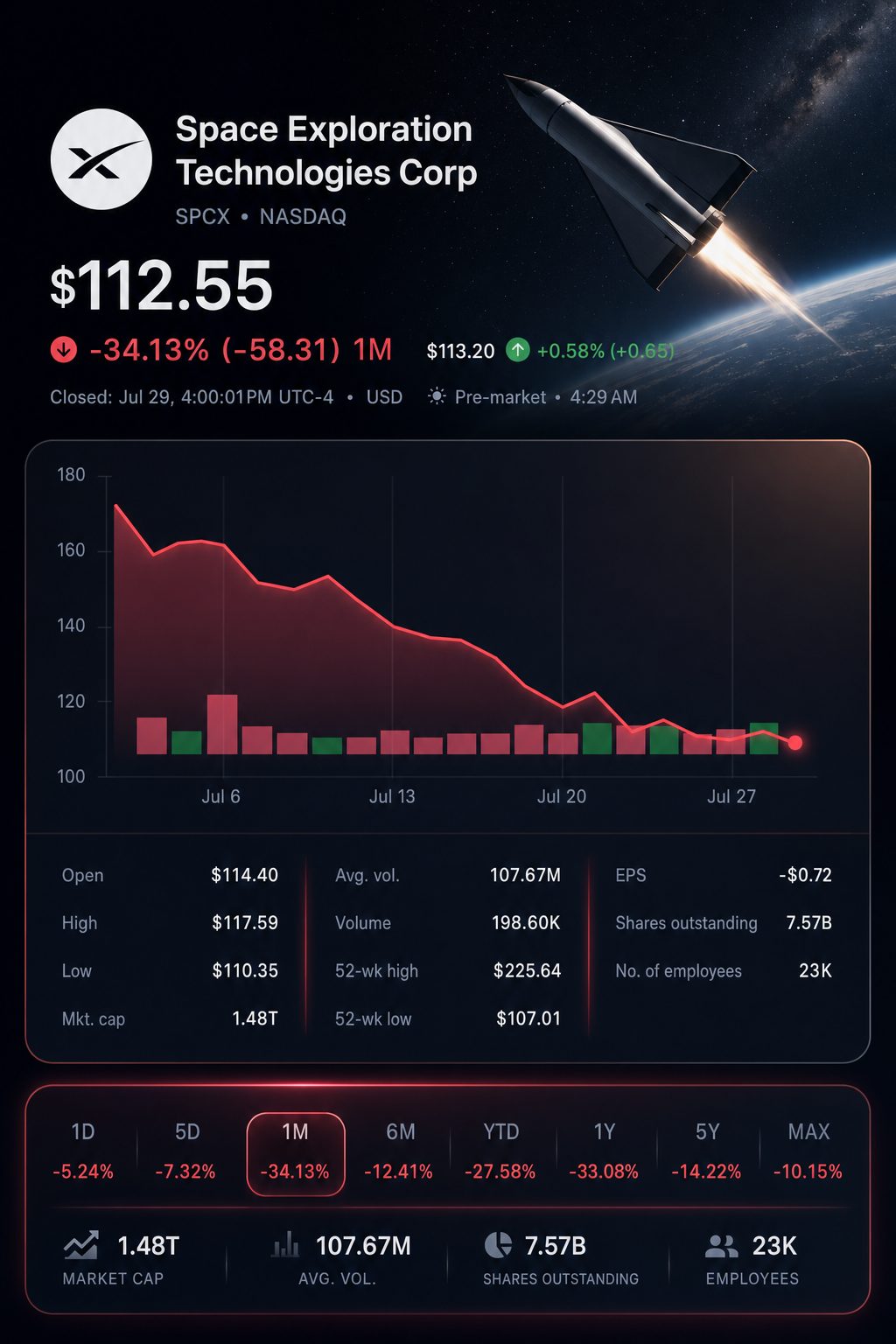
- SpaceX shares gained 0.5% in premarket trade following a 3.3% drop on Wednesday.
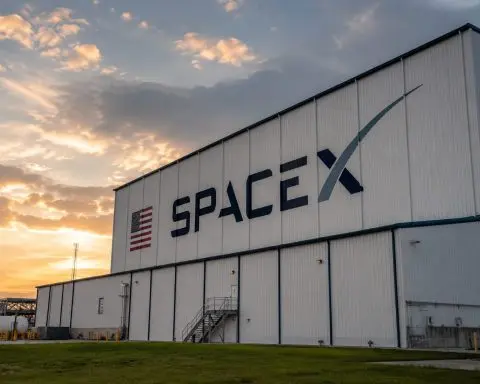
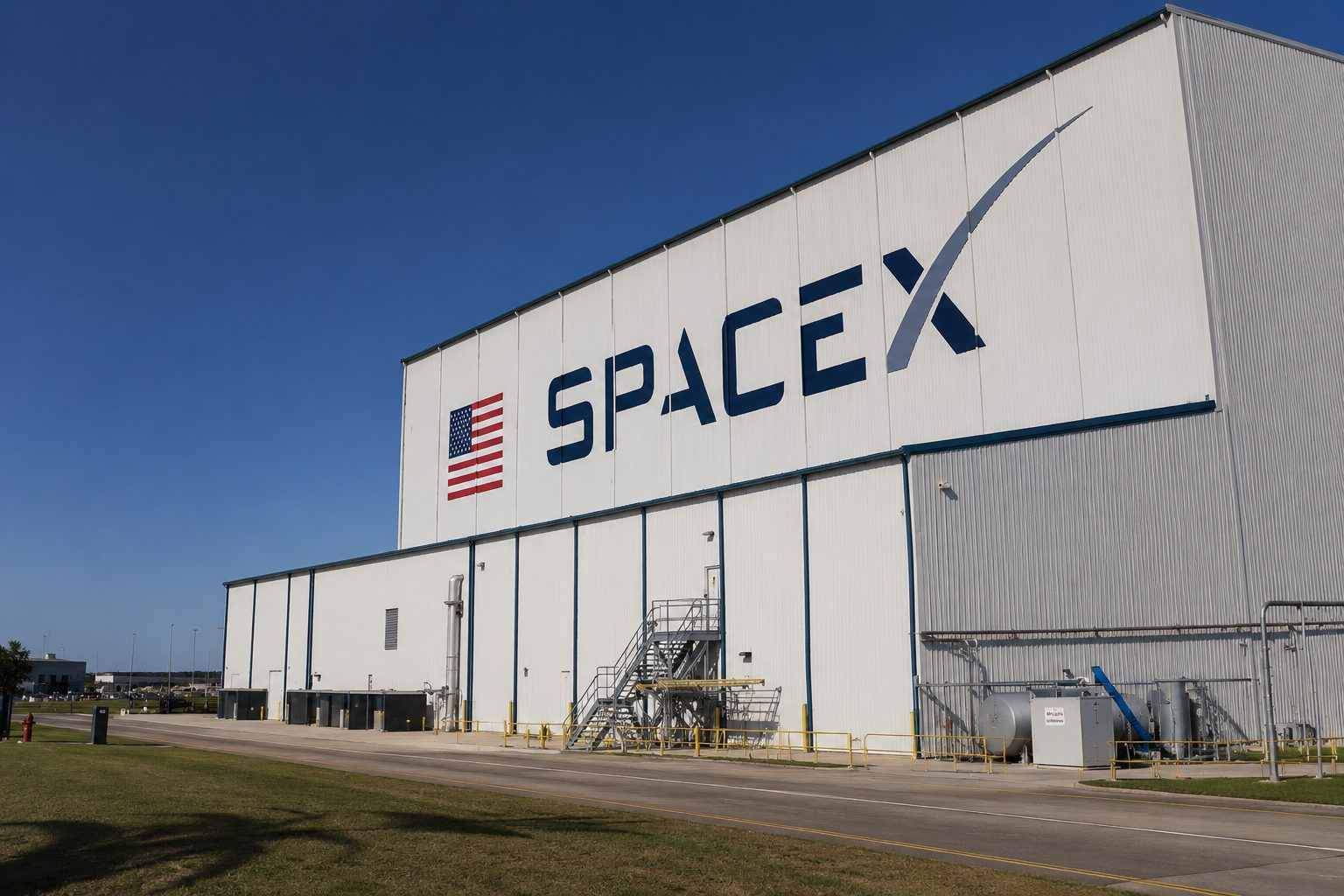
SpaceX NASDAQ:SPCX sent the secretive NROL-95 mission into orbit early on Thursday, just hours after securing a $1.6 billion contract from the Space Force.
The broader impact for investors outweighs the launch event. Three publicly revealed Space Force contracts for 2026 amount to $8.05 billion, representing 197% of SpaceX’s entire revenue from Space segment projected for 2025.
The three awards include satellite systems as well as launch services.
| Announced 2026 contract | Value of contract | Relative to 2025 Space revenue | Relative to 2025 overall revenue |
|---|---|---|---|
| Airborne-targeting satellite system | $4.16 billion | 101.8% | 22.3% |
| Space Data Network | $2.29 billion | 56.0% | 12.3% |
| 18 Falcon 9 missions | $1.60 billion | 39.2% | 8.6% |
| Total | $8.05 billion | 197.0% | 43.1% |
The percentages are based on SpaceX’s disclosed $4.086 billion in Space revenue and $18.674 billion in total consolidated revenue projected for 2025. Contract amounts do not represent recognized revenue.
The launch sequence is scheduled through December 2027, with the data-network prototype also expected by that deadline. Specifics on revenue recognition and payment milestones were not made public.
Nasdaq’s premarket trading was underway. SpaceX shares were at $113.15, rising 0.5%. The main session will start at 9:30 a.m. EDT.
| Share-price reference | Price | Change or gap |
|---|---|---|
| July 29 close | $112.55 | Dropped 3.32% |
| Thursday premarket | $113.15 | Rose 0.53% |
| June IPO price | $135.00 | Closed 16.6% below |
| 52-week high | $225.64 | Closed 50.1% lower |
Wednesday’s closing price is used for IPO and historical comparisons. SpaceX started trading at $135 per share on June 12.
The premarket rise recouped only a small portion of Wednesday’s decline. Market participants remain concentrated on how awards translate into revenue and profit.
Falcon 9 launched from Space Launch Complex 40 at Cape Canaveral. Booster B1096 completed landing after its seventh mission. The NRO did not release video of the second-stage or payload deployment.
SpaceX completed its 88th Falcon launch of the year with this mission, marking the company’s 12th launch in July. The current launch frequency indicates that the new order is unlikely to push existing capacity limits.
| Operational measure | Value | Capacity comparison |
|---|---|---|
| Falcon missions in July | 12 | Actual |
| Falcon launches in 2026 | 88 | Up to NROL-95 |
| Missions newly contracted | 18 | To be completed by end-2027 |
| Initial monthly target | 1.1 | Assuming even distribution starting August 2026 |
| Initial workload vs July rate | 8.8% | Measured by monthly launches |
Initial projections are based on a consistent schedule through December 2027. Details of the confirmed mission lineup have not been made public.
Colonel Eric Zarybnisky of the Space Force described the process as “an unprecedented two-month acquisition timeline.” Each of the 18 launches is set to take place at Vandenberg Space Force Base. SSC
Profitability is still a challenge. SpaceX’s Space division posted an operating loss of $657 million in 2025. Adjusted EBITDA reached a positive $653 million.
Space posted $619 million in revenue for the first quarter. The division reported an operating loss of $662 million and allocated $930 million to Starship research.
The range of contracts highlights a wider defensive advantage. SpaceX is providing both satellite systems and the launch vehicles that carry them. The pair of network contracts are valued at four times the amount of the recent launch deal.
Competitive conditions continue to be imbalanced. United Launch Alliance, which is jointly owned by Boeing NYSE:BA and Lockheed Martin NYSE:LMT, is probing a separation issue with its Vulcan rocket. Blue Origin, a private company, has halted New Glenn flights after an explosion in May.
| Launch provider | Current position | Near-term constraint |
|---|---|---|
| SpaceX | Falcon 9 flying frequent missions | Space-segment margins |
| United Launch Alliance | Vulcan cleared for Pentagon launches | Probe into booster separation |
| Blue Origin | New Glenn part of active launch roster | Paused through at least year-end |
The comparison is based on public information as of July 30. It does not account for prospective launch pricing or the distribution of missions.
Risks: Revenue and cash collection follow contract awards. Disclosure is restricted by classified missions. Losses in the space segment are still significant, and rivals may recover launch capabilities.
NROL-95 is less significant as an individual classified payload. The launch highlights Falcon 9’s capacity to take on more defense contracts. The real return will be measured by whether this growing backlog translates to sustained profit from the Space segment.
Related articles: NASDAQ:SPCX