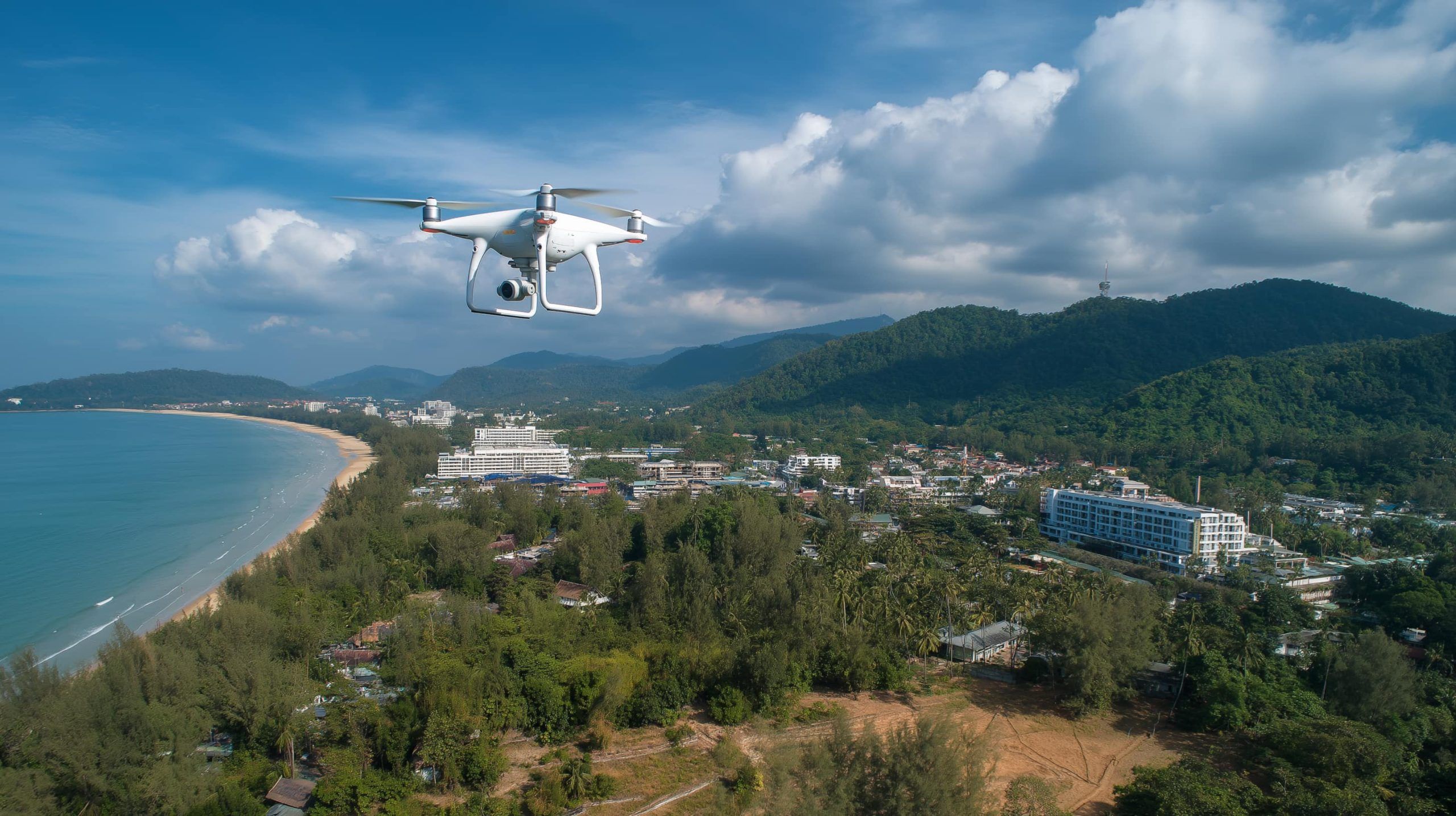


Today: 4 July 2026

Mateusz Kaczmarek

Mateusz Kaczmarek is a financial and technology journalist at TS2.tech, covering stocks, artificial intelligence, semiconductors and global market developments. A graduate of the Poznań University of Economics and Business, he previously worked in financial analysis before moving into business journalism. His reporting focuses on technology companies, market trends and the forces shaping global investment markets.

Flying High or Facing Fines? The Ultimate Guide to Canada’s Drone Laws (2025)

Flying High or Facing Fines? The Ultimate Guide to Canada’s Drone Laws (2025)

Canada has some of the strictest drone regulations in the world, designed to keep the skies safe osler.com. Under Canadian law, drones are considered “aircraft,” so drone pilots must follow many of the same safety rules that apply to manned aviation tc.canada.ca. Whether you fly a drone recreationally or for business, it’s crucial to understand these laws to avoid hefty penalties and ensure public safety. This comprehensive report breaks down Canada’s drone laws – covering the regulatory framework, rules for hobbyists and commercial operators, licensing and registration, safety guidelines, penalties for violations, recent updates, and how federal rules interact with provincial or local restrictions. Canada’s drone operations are regulated federally by Transport Canada under the Aeronautics Act and the Canadian Aviation Regulations. In 2019, Transport Canada introduced Part IX of the CARs, which set nationwide rules for drones tc.canada.ca. These rules apply to all drones between 250 g and 25 kg, regardless of whether they’re flown for fun or commercial purposes tc.canada.ca tc.canada.ca. Drones under 250 g are largely exempt from licensing and registration, though pilots must still fly them safely and not endanger people or aircraft tc.canada.ca tc.canada.ca.
15 June 2025
Inside Saint Lucia’s Digital Revolution: The Untold Story of Internet and Satellite Access

Inside Saint Lucia’s Digital Revolution: The Untold Story of Internet and Satellite Access

Saint Lucia is experiencing a quiet digital revolution. Once limited by slow connections and spotty coverage, the island now boasts fiber-optic broadband, ubiquitous mobile internet, and even satellite links beaming connectivity from space. This report explores every facet of internet access in Saint Lucia – from the major service providers and infrastructure, to government initiatives and emerging technologies – painting a comprehensive picture of how this Caribbean nation is bridging the digital divide. Saint Lucia’s internet market is dominated by two main ISPs: Flow and Digicel+. These companies offer a range of home broadband plans, alongside island-wide mobile data services. In late 2024, a new player entered the scene in the form of Starlink satellite internet, expanding options for remote and rural users ts2.tech. Below is a comparison of the major providers, their technologies, and offerings:
Laser Wars in Orbit: The 2024-2030 Boom in Optical Inter-Satellite Links

Laser Wars in Orbit: The 2024-2030 Boom in Optical Inter-Satellite Links

The global market for Optical Inter-Satellite Links – laser-based communication links between satellites – is experiencing explosive growth as space networks transition from radio frequencies to optical connectivity. In 2024, the OISL-related market was estimated around US$402 million, but it is projected to soar to roughly US$2.0 billion by 2030 researchandmarkets.com. This represents a stunning ~30% compound annual growth rate, reflecting how rapidly satellite operators and governments are adopting laser links to meet surging data demands. Second-generation satellite constellations in low Earth orbit are increasingly equipped with laser crosslinks, enabling direct high-speed data transfer between satellites and creating mesh networks in space globenewswire.com. Major LEO “mega-constellations” – such as SpaceX’s Starlink, Amazon’s Project Kuiper, and the planned OneWeb Phase 2 – are integrating optical inter-satellite links from the outset to boost network capacity and reduce latency globenewswire.com. These deployments, alongside advances in photonics and satellite technology, are driving a global boom in OISL adoption. Government and commercial investments in space-based laser communication are accelerating, with the technology poised to revolutionize space-to-space and space-to-ground communications over the next decade researchandmarkets.com globenewswire.com. In short, laser links in orbit are rapidly moving from experimental demos to a critical pillar of satellite infrastructure worldwide.
The Digital Lifeline: Inside Ghana’s Internet Revolution from Fiber to Satellite

The Digital Lifeline: Inside Ghana’s Internet Revolution from Fiber to Satellite

Ghana has seen a rapid rise in internet usage over the past decade, evolving from single-digit penetration in 2010 to nearly 70% of the population online today. As of early 2025, approximately 24.3 million Ghanaians were internet users, representing an internet penetration rate of 69.9% datareportal.com. This is a dramatic increase from just 8% in 2010, thanks to expanding mobile networks and cheaper devices blogs.worldbank.org. The country had 38.3 million active mobile connections by 2025, indicating many people use multiple SIM cards datareportal.com. Most of these connections are now data-capable – over 93% of mobile connections are on 3G, 4G, or 5G networks datareportal.com – underscoring the dominance of mobile broadband in Ghana’s connectivity landscape. Internet Use by Demographics: Internet adoption is widespread across age groups and genders, but disparities exist. Young people are the most connected – about 80% of youth were internet users in 2021 blogs.worldbank.org – while usage among older adults was lower blogs.worldbank.org. Men are slightly more likely to be online than women blogs.worldbank.org, reflecting a persistent gender gap. Urban residents also have greater access: roughly 80% of urban Ghanaians used the internet in 2021, compared to 54% in rural areas blogs.worldbank.org. This urban–rural divide is
Australian Drone Laws 2025: Complete Guide to Rules, Registration & No-Fly Zones

Australian Drone Laws 2025: Complete Guide to Rules, Registration & No-Fly Zones

Australia maintains a comprehensive framework for drone operations, with national rules set by the Civil Aviation Safety Authority under Part 101 of the Civil Aviation Safety Regulations. These rules distinguish between recreational use and commercial or business use of drones. At the national level, CASA’s regulations apply uniformly across all states and territories drones.gov.au. However, additional state, territory, or local bylaws can impose further restrictions in specific locations drones.gov.au. All drone users must adhere to CASA’s safety rules, and violations can result in substantial penalties casa.gov.au. Recent years have seen new requirements like mandatory drone registration for commercial users and pilot accreditation, reflecting Australia’s evolving approach to drone safety and accountability help.propelleraero.com drone-laws.com. Below we provide a detailed breakdown of Australia’s drone laws as of 2025, including the rules for recreational versus commercial flying, national CASA regulations, any regional variations, registration and licensing requirements, operational restrictions, penalties for non-compliance, recent updates, and guidance for foreign visitors bringing drones into Australia.
15 June 2025
Lightning-Fast Latvia: Inside Europe’s Undercover Internet Powerhouse

Lightning-Fast Latvia: Inside Europe’s Undercover Internet Powerhouse

Latvia, a small Baltic nation of 1.9 million, has quietly become a global leader in internet connectivity. With over 92% of its people online and surfing at blistering speeds, Latvia enjoys near-universal internet access datareportal.com pulse.internetsociety.org. Whether it’s gigabit fiber in the capital or 5G signal in the countryside, Latvians are reaping the benefits of decades of tech investment and forward-thinking policy. From fiber-optic networks that blanket the country to 5G mobile broadband and even satellite internet for remote areas, Latvia’s digital infrastructure punches far above its weight. This report dives into all aspects of internet access in Latvia – fixed broadband, mobile networks, satellite options, usage trends, urban–rural gaps, major providers, costs, government initiatives, and how Latvia stacks up in the EU – to see how this “undercover” internet powerhouse came to be. Latvia’s fixed-line broadband is dominated by modern, high-speed networks, with legacy technologies rapidly fading. Fiber-optic broadband is king: Latvia ranks among Europe’s top countries for fiber deployment and adoption budde.com.au. In fact, over 50% of Latvian households use fiber connections – one of only seven European countries to achieve such a high fiber penetration budde.com.au. Crucially, fiber isn’t just an urban luxury; Latvia boasts the second-highest
15 June 2025
UK Drone Laws Explained: What Every Pilot Must Know in 2025

UK Drone Laws Explained: What Every Pilot Must Know in 2025

Drone regulations in the United Kingdom have evolved rapidly in recent years, especially with the adoption of new frameworks post-2020. Whether you fly for fun or for commercial work, it’s crucial to understand the current laws to stay safe and legal. This comprehensive guide breaks down UK drone laws as of mid-2025 – including how drones are classified, what licenses or registrations you need, where you can fly, privacy considerations, and the penalties for breaking the rules. We also cover recent updates and upcoming changes that every UK drone pilot should know. The UK sorts drone operations into three categories based on risk: Open, Specific, and Certified arpas.uk arpas.uk. Each flight you conduct will fall into one of these categories:
14 June 2025
Why San Marino’s Tiny Size Might Be Its Biggest Internet Advantage

Why San Marino’s Tiny Size Might Be Its Biggest Internet Advantage

San Marino’s compact territory has enabled nearly universal internet coverage. The country’s telecom network features widespread fiber-optic broadband alongside legacy DSL copper lines. Over 50% of subscribers are already on fiber, and the main provider has pledged to migrate entirely off copper by 2027 sanmarinofixing.com. In practice, this means all households will use Fiber-to-the-Home or Fiber-to-the-Cabinet within two years sanmarinofixing.com. Even today, broadband reaches virtually 100% of Sammarinese residents, thanks to past projects like “Project Socrate” that started cabling the whole territory ahead of its time. The mobile network is equally strong: 4G LTE service blankets the republic, and remarkably San Marino achieved full 5G coverage by the end of 2018 as part of an early pilot with Telecom Italia en.wikipedia.org. This made it Europe’s first country with nationwide 5G. The combination of advanced fiber and cutting-edge mobile infrastructure means residents enjoy modern, high-capacity internet access almost everywhere in the country. San Marino’s internet market is tiny but highly concentrated. The former telecom monopoly, Telecom Italia San Marino – a branch of Telecom Italia – still controls the lion’s share of services. In fact, TISM commands about 93% of the internet subscriptions, making it by far the dominant ISP pulse.internetsociety.org.
D2D Gold Rush: The Race to Own the Sky-to-Phone Future (2025–2033)

D2D Gold Rush: The Race to Own the Sky-to-Phone Future (2025–2033)

Direct-to-Device satellite-cellular convergence refers to the emerging capability for ordinary consumer devices – like smartphones, IoT gadgets, even cars – to connect directly with satellites for voice, messaging, and data, without specialized satellite phones or ground infrastructure viasat.com telecom.economictimes.indiatimes.com. In essence, low Earth orbit satellites function as “cell towers in the sky,” communicating with standard mobile chipsets via advanced antennas and beamforming spacecapital.com. Early demonstrations have proven basic connectivity: for example, AST SpaceMobile’s BlueWalker 3 satellite facilitated the first-ever two-way voice calls using an off-the-shelf smartphone in April 2023 ast-science.com. Similarly, Lynk Global has shown that unmodified phones can exchange text messages via a small LEO satellite, leading to the first FCC license for a commercial satellite-to-phone service in 2022 fierce-network.com fierce-network.com. Apple’s iPhone 14 introduced Emergency SOS messaging via satellite in late 2022, bringing direct satellite texting to millions of consumers in the US, Canada, and Europe apple.com apple.com. These early capabilities are relatively narrow, but they validate the core concept of seamless satellite-to-phone links on everyday devices. How It Works: Most D2D implementations rely on LEO satellite constellations that stay in low orbits to reduce latency and path loss. The satellites carry cellular-compatible payloads that emit standard wireless
State of Internet Access in Jordan: From Fiber Optics to Starlink

State of Internet Access in Jordan: From Fiber Optics to Starlink

Jordan has emerged as one of the Middle East’s more connected nations, with over 90% of its population now online freedomhouse.org. Driven by ambitious digital strategies and telecom sector investments, the country’s internet infrastructure spans modern fiber-optic networks, widespread mobile broadband, and new satellite services like Starlink. This report provides a comprehensive overview of internet access in Jordan as of 2025 – from the dominance of fiber in fixed broadband to the rollout of 5G and the arrival of LEO satellite internet. It examines the major service providers and market share, the affordability and accessibility of services for consumers, government policies shaping the sector, urban-rural coverage gaps, network performance and user experience, comparisons with regional peers, and the future outlook for Jordan’s digital connectivity. Key statistics and recent trends are highlighted to illustrate the state of internet access in Jordan in 2025. Jordan’s internet infrastructure is a mix of robust fiber-optic backbones, legacy copper lines, extensive mobile broadband networks, and increasingly, satellite links. The government and operators have invested heavily in upgrading networks over the past decade, achieving nationwide 4G coverage and accelerating fiber deployment freedomhouse.org. Below is a summary of key connectivity modes in Jordan:
14 June 2025
Broadband Blackouts & Starlink Smugglers: Inside Venezuela’s Fight for Internet Access

Broadband Blackouts & Starlink Smugglers: Inside Venezuela’s Fight for Internet Access

Venezuela’s internet infrastructure has long been in crisis. Years of underinvestment, economic turmoil, and government control left the country with one of Latin America’s poorest connectivity landscapes efectococuyo.com en.wikipedia.org. Until recently, Venezuelans endured some of the slowest internet speeds in the region, frequent nationwide blackouts, and an aging state-run network that could barely handle basic broadband. Now, a tentative turnaround is underway: new fiber-optic providers are emerging in cities, mobile networks are expanding 4G coverage, and even illicit satellite internet kits like Starlink are popping up as desperate workarounds. This report dives deep into Venezuela’s internet access in 2025 – examining the current state of broadband and mobile infrastructure, the key service providers, and the growing intrigue around satellite options such as Starlink and HughesNet. We’ll explore recent developments, compare pricing and performance, highlight the urban–rural digital divide, and assess how government policies and power outages continue to shape the Venezuelan internet experience. Despite some improvements, Venezuela’s core telecom infrastructure remains fragile. Fixed-line internet penetration was under 10% as of 2022 freedomhouse.org, and only about 52% of Venezuelans had mobile broadband subscriptions freedomhouse.org. By 2023, roughly half of households had any form of internet access at home, leaving nearly half
14 June 2025
Drone Laws Exposed (2025): The Ultimate Guide to U.S. FAA Rules, No-Fly Zones, and State Regulations

Drone Laws Exposed (2025): The Ultimate Guide to U.S. FAA Rules, No-Fly Zones, and State Regulations

Drones have exploded in popularity across the United States, used for everything from aerial photography to public safety and recreation. With over 1.1 million recreational drones registered with the FAA as of 2025 ncsl.org, lawmakers have scrambled to craft rules to keep the skies safe. The result is a complex web of federal, state, and local drone laws that every pilot must navigate. This comprehensive report breaks down all aspects of U.S. drone law – from the Federal Aviation Administration’s nationwide regulations to patchwork state rules, no-fly zones, privacy protections, enforcement, and the latest 2024–2025 updates. Keep reading to learn the critical requirements for flying your drone legally in the U.S. airspace. Federal law – enforced by the FAA – is the primary authority governing where and how drones can operate in U.S. airspace faa.gov faa.gov. The FAA’s rules distinguish between recreational drone flyers and commercial operators. Below we outline the FAA’s requirements for each category, including the Small UAS Rule for commercial use and the statutory Exception for Limited Recreational Operations for hobbyists. We also explain the universal rules on registration, Remote ID, and airspace usage that apply to both groups.
14 June 2025
Everything You Need to Know About Internet Access in Sweden—Even from Space

Everything You Need to Know About Internet Access in Sweden—Even from Space

Sweden is renowned for its advanced internet infrastructure and near-universal connectivity. The country boasts one of the highest internet penetration rates in the world – as of 2022, about 96% of Swedes use the internet, well above the EU average of 89% en.wikipedia.org. Sweden’s digital network infrastructure is highly developed, with almost 99% of households having access to the internet, thanks to widespread broadband networks trade.gov. Both urban and rural areas benefit from extensive connectivity, and Sweden consistently ranks among the top countries in global digital development indices. Not only are Swedes widely connected, but they are also digitally skilled: 67% of the population has at least basic digital skills en.wikipedia.org, reflecting the country’s strong emphasis on digital literacy. In short, virtually everyone in Sweden is online and able to fully participate in the digital economy. Connectivity from Fiber to 5G: Sweden’s internet access spans a range of technologies – from ultra-fast fiber-optic broadband on the ground to cutting-edge mobile 5G networks and even satellites in space. High-speed fixed broadband is widely available across the country, and mobile broadband coverage is excellent, with 4G LTE reaching almost the entire population and 5G networks expanding quickly. In fact, Sweden’s commitment to
Hungary’s Digital Lifeline: How Fiber, 5G, and Satellites Are Rewiring the Nation

Hungary’s Digital Lifeline: How Fiber, 5G, and Satellites Are Rewiring the Nation

Hungary’s internet landscape has transformed dramatically in recent years. Once defined by slow DSL connections and patchy rural coverage, the country is now pushing the boundaries with nationwide fiber-optic networks, expansive 4G/5G mobile broadband, and even satellite internet options. This report provides a comprehensive overview of internet access in Hungary – spanning fixed broadband, mobile internet developments, emerging satellite services, key providers and market dynamics, pricing trends, rural connectivity challenges, user speed experiences, government initiatives, and how Hungary compares with its European peers. With digital infrastructure recognized as a “digital lifeline” for economic growth and social inclusion, Hungary’s journey offers insight into both its achievements and the remaining gaps to bridge. Fixed broadband in Hungary is widely available and increasingly dominated by high-speed technologies. As of late 2023, over 97% of Hungarian households have access to state-of-the-art wired broadband networks Budapesttimes. This includes extensive fiber-to-the-home coverage and upgraded cable systems, reflecting a successful push to modernize the country’s internet infrastructure. The government’s “Superfast Internet Programme” – backed by EU funds – was instrumental in extending broadband to underserved areas. Thanks to this program, by 2020 at least 30 Mbps service reached over 95% of households, fulfilling an EU Digital Agenda
The GEO Reboot: How 2040 Will Look from 36,000 km Up

The GEO Reboot: How 2040 Will Look from 36,000 km Up

Geostationary satellites – perched 36,000 km above Earth in the coveted orbit where they match Earth’s rotation – are entering a new era of renewal and reinvention. After decades of steady service, many of the world’s GEO satellites are aging beyond their planned lifespans, and a wave of replacements and upgrades is on the horizon. Between now and 2040, both government space agencies and commercial operators are preparing for a “GEO reboot” that will transform the orbital lineup. This report dives into global trends driving the geostationary replacement cycle, from the typical 15-year satellite lifespan and what ends a mission, to the technological leaps extending or shortening those cycles. We’ll look at historical patterns up to 2024 and use industry forecasts to predict how the GEO belt will evolve through 2040. Along the way, data visualizations – launch timelines, fleet age distributions, replacement forecasts – will illuminate the coming changes. Finally, we examine the key forces at play: policy shifts, cost pressures, debris mitigation, and surging demand for services. By the end, one thing will be clear – the geostationary orbit of 2040 will be a very different, more dynamic place than it is today, as a new generation of
Inside Morocco’s Internet Revolution: From Fiber Optics to Satellite Access

Inside Morocco’s Internet Revolution: From Fiber Optics to Satellite Access

Morocco has experienced a dramatic expansion in internet connectivity over the past decade. As of early 2024, there were 34.47 million internet users in the country, representing an internet penetration rate of about 90.7% of the population datareportal.com datareportal.com. The vast majority of Moroccans online access the internet via mobile networks, reflecting the country’s strong mobile market. In fact, mobile phone subscriptions exceed the population size – with 51.36 million cellular connections as of 2024 datareportal.com. This high penetration is due to many users owning multiple SIMs and the ubiquity of mobile service. The mobile market is served by three major telecom operators: Maroc Telecom, Orange Maroc, and Inwi, which together dominate both mobile and fixed internet services trade.gov. Maroc Telecom is the former state incumbent and the largest provider, while Orange and Inwi are the other key players. According to recent figures, Maroc Telecom holds about 42.9% of the mobile market, Orange 33.2%, and Inwi 23.9% trade.gov. These three companies also offer fixed-line internet and effectively account for almost all internet subscriptions in Morocco trade.gov trade.gov. Infrastructure: Morocco’s internet infrastructure is a mix of robust backbone networks and last-mile connectivity that is still evolving. Fiber-optic cables form the core
Inside Estonia’s Internet Revolution: How the Baltic Tech Star is Pioneering Connectivity (Even from Space)

Inside Estonia’s Internet Revolution: How the Baltic Tech Star is Pioneering Connectivity (Even from Space)

Estonia, often dubbed a Baltic tech star, has transformed itself into one of the most digitally advanced societies. From nearly universal internet access on the ground to new connectivity options beaming down from satellites, Estonia’s internet revolution touches every corner – even rural farms and outer space. This report explores the state of Estonia’s internet infrastructure, service providers and pricing, rural inclusion, speed and coverage stats, satellite internet, government digital policies, future plans, and how Estonia stacks up against Europe and the world. Fixed Broadband: Estonia has aggressively built out high-speed fixed networks, with fiber-optic infrastructure playing a dominant role. As of 2022, about 94.9% of Estonian households could access fixed broadband, and 78.9% had access to gigabit-speed fiber-to-the-premises networks Expert Intelligence. Notably, Estonia has virtually no modern cable systems Expert Intelligence – instead, fiber-optics are the backbone, with legacy DSL filling some gaps. The country’s FTTP coverage exceeds the EU average】 Wikipedia, reflecting Estonia’s leapfrogging of older cable technology in favor of fiber. National broadband plans target full gigabit coverage by 2030 Oecd.
Satellites, Sensors, and the Next $4 Billion Boom: Inside the 2025–2031 IoT Space Race

Satellites, Sensors, and the Next $4 Billion Boom: Inside the 2025–2031 IoT Space Race

The Satellite IoT revolution is kicking into high gear, promising to connect millions of devices in the most remote corners of the globe. By leveraging satellite networks for machine-to-machine communication, this burgeoning sector is extending the internet’s reach far beyond terrestrial cell towers. Analysts forecast explosive growth in the coming years – with projections of over 26 million satellite-connected IoT devices and a market value around $4 billion by 2030 abiresearch.com. This represents a dramatic leap from today, signaling that satellite-enabled IoT could be one of the next big tech booms. The push is driven by a perfect storm of factors: rising demand for connectivity in remote areas, plummeting launch costs for satellites, and rapid innovation in low-power networking technology. This report dives deep into the market trends, forecasts, technological advances, industry applications, key players, regional hotspots, policies, challenges, and investment opportunities shaping Satellite IoT from 2025 through 2031. Satellite IoT is on a fast-track growth trajectory, underpinned by powerful market trends and drivers. At its core is the soaring demand for device interconnectivity in remote and underserved areas, from open oceans to rural heartlands. Traditional terrestrial networks often leave these areas dark; satellite IoT steps in to provide coverage
Eritrea’s Digital Desert: Inside the World’s Most Isolated Internet – and the Satellite Lifeline on the Horizon

Eritrea’s Digital Desert: Inside the World’s Most Isolated Internet – and the Satellite Lifeline on the Horizon

Eritrea is notorious for its exceptionally limited internet connectivity – often likened to a “digital desert” or even called the “North Korea of Africa” in terms of information isolation. Despite being a coastal nation in the Horn of Africa, Eritrea has eschewed modern internet infrastructure and access for decades. Fewer than 1 in 4 Eritreans use the internet, and until very recently it was the only country on the continent without any public mobile data network mereja.forum. Those who do get online face sluggish speeds, exorbitant costs, and heavy government censorship. Meanwhile, new technologies like satellite internet offer a tantalizing hope of bridging the connectivity gap – but only if Eritrea’s authoritarian regime permits it. This report provides a comprehensive, up-to-date look at internet access in Eritrea, covering the infrastructure, availability to ordinary people, the regulatory and censorship environment, comparisons with neighboring countries, and how satellite broadband could upend the status quo. State Monopoly and Minimal Infrastructure: Eritrea’s telecom sector is entirely state-owned and monopolized by Eritrean Telecommunication Services Corporation frequencycheck.com. EriTel is the sole provider of fixed telephone lines, mobile services, and internet in the country, effectively controlling the only gateway to the global internet cpj.org. Unlike most countries,
12 June 2025
Flat-Panel Frenzy: Phased-Array Antennas Set to Boom Across Global Industries by 2029

Flat-Panel Frenzy: Phased-Array Antennas Set to Boom Across Global Industries by 2029

Flat-panel and phased-array antennas – once niche technologies reserved for defense and aerospace – are now at the forefront of a global connectivity revolution. From satellite broadband dishes to 5G base stations and radar sensors in self-driving cars, these advanced antennas are rapidly gaining commercial traction. The period from 2024 to 2029 is poised to witness explosive growth in their adoption across industries, driven by surging demand for high-speed data, ubiquitous coverage, and smarter sensing. The global market for phased-array and flat-panel antennas is already worth several billions of dollars, with double-digit annual growth forecast as technology advancements make these systems more affordable and capable businessresearchinsights.com blog.tbrc.info. In short, a “flat-panel frenzy” is underway, promising to disrupt communications and sensing in every corner of the world. The global market for flat-panel and phased-array antennas is expanding rapidly, underpinned by investments in next-generation satellite networks, 5G/6G wireless rollouts, and advanced military systems. Industry research indicates that the overall phased-array antenna market was valued around $5.05 billion in 2024 and is on track to surpass $13 billion by the early 2030s, growing at roughly 11–12% CAGR businessresearchinsights.com. A particularly fast-growing segment is flat-panel antennas for satellite communications and mobility, which are expected
1 149 150 151 152 153 155

Stock Market Today

  • Take-Two (TTWO) jumps 6.9% as GTA VI preorders seen adding $240M-$360M in revenue
    July 4, 2026, 1:11 PM EDT. Shares of Take-Two Interactive (NASDAQ:TTWO) climbed 6.9% during the holiday-shortened week, outpacing both the Nasdaq Composite and S&P 500. BTIG said Grand Theft Auto VI preorders could mean $240 million to $360 million more in gross player spending, assuming 12 million to 18 million buy the $99.99 Ultimate Edition instead of the standard $79.99 version. The early numbers help back Take-Two's fiscal 2027 forecast for $8.0-$8.2 billion in net bookings, an increase of around 20% from the previous year, with much of that driven by GTA VI. The $240M-$360M forecast is before any cuts from platforms or retailers. Actual sales numbers haven't been released, so the share move is based on some channel checks.
Go toTop