

Mateusz Kaczmarek

Mateusz Kaczmarek

Mateusz Kaczmarek is a financial and technology journalist at TS2.tech. His coverage ranges from stocks and artificial intelligence to semiconductors and developments across global markets. He graduated from the Poznań University of Economics and Business and worked in financial analysis before becoming a business journalist. Follow Mateusz Kaczmarek on Google News.

How Satellite Internet Is Revolutionizing Disaster Response and Humanitarian Relief

How Satellite Internet Is Revolutionizing Disaster Response and Humanitarian Relief

Disasters – whether natural or man-made – often wreak havoc on local communication infrastructure. Hurricanes, earthquakes, and conflicts can topple cell towers, sever fiber-optic cables, and leave entire regions cut off. For instance, Hurricane Maria in 2017 damaged 95% of cell towers in Puerto Rico, leaving the island largely without phone service freepress.net. In such dire situations, internet connectivity becomes as critical as food or shelter for saving lives. Responders need communications to coordinate evacuations and direct aid, while survivors need to call for help and receive information. As the American Red Cross emphasizes, when all conventional communications are down, setting up emergency satellite links allows a relief headquarters to function – “imagine all communications are down... We can set up a network... Without [this], there would be no way for the Red Cross to stand up a relief operation” mndaksredcross.org. In humanitarian crises, connectivity truly becomes lifesaving for affected people and essential for the aid teams supporting them globalpolicyjournal.com. This report explores how satellite internet is meeting that need and revolutionizing disaster response.

Internet Access in Cameroon: The Race to Connect a Nation

Internet Access in Cameroon: The Race to Connect a Nation

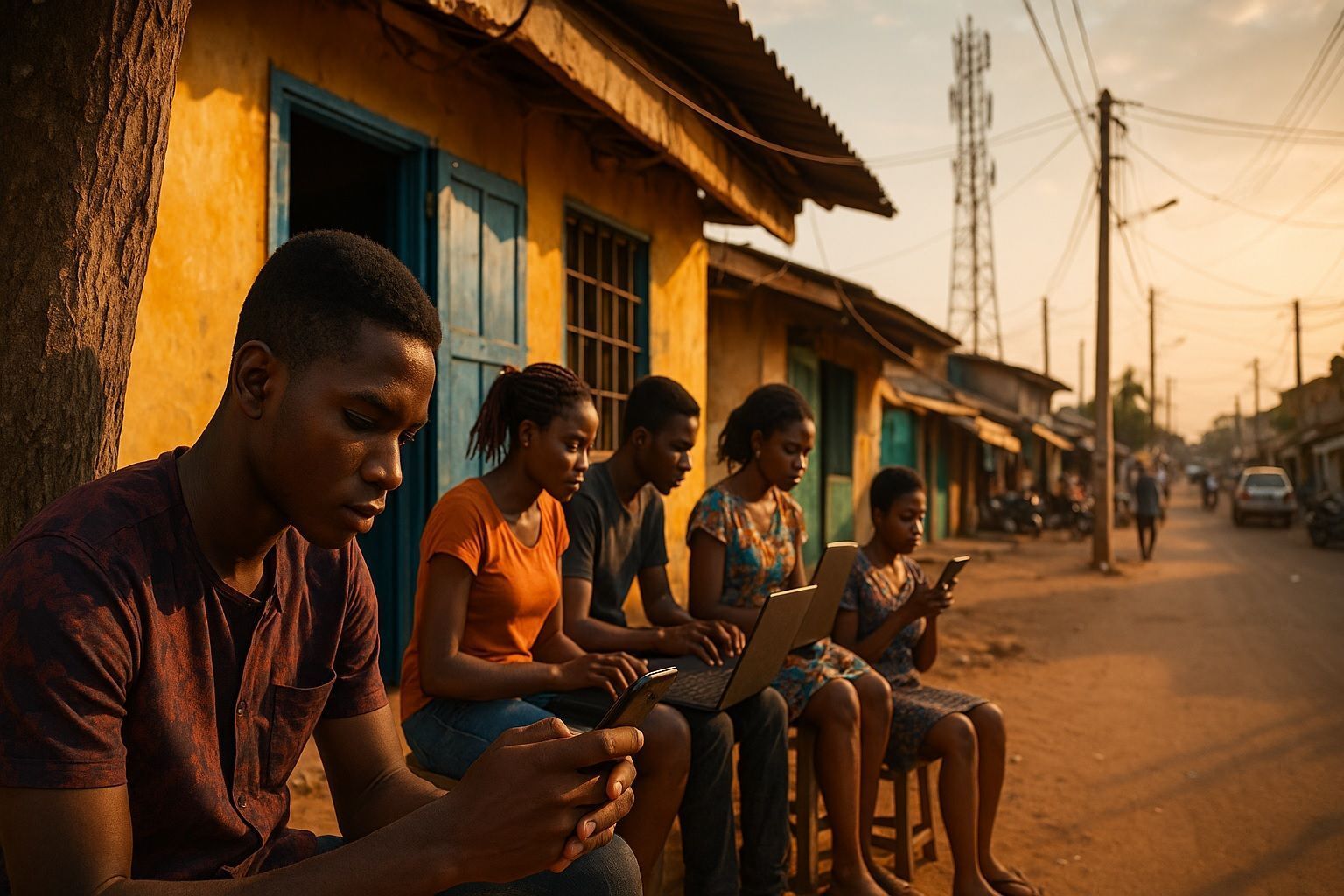
Cameroon, a Central African nation of about 29.5 million people, is racing to improve internet connectivity for its citizens. As of early 2025, roughly 41.9% of the population uses the internet, leaving the majority still offline datareportal.com bmz-digital.global. Internet access has grown rapidly over the past decade, yet it remains unevenly distributed and faces many challenges. Urban centers enjoy far more connectivity than rural villages, creating a significant digital divide. This report provides a comprehensive overview of internet access in Cameroon – from current penetration levels and infrastructure, to service providers and costs, to the challenges and initiatives shaping the country’s digital future. Key comparisons with other African nations are included to contextualize Cameroon’s progress. The goal is to shed light on Cameroon’s connectivity landscape and the “race” to get the nation online, examining both achievements to date and the road ahead.
When the Grid Goes Dark: How Satellite Phones Keep Us Connected in Emergencies

When the Grid Goes Dark: How Satellite Phones Keep Us Connected in Emergencies

When hurricanes flatten cell towers and earthquakes sever landlines, staying connected becomes a lifeline. In such dire scenarios, satellite phones emerge as critical tools to maintain communication when the grid goes dark. Unlike regular cell phones tied to terrestrial networks, satellite phones link directly to satellites orbiting above, enabling calls and messages from virtually anywhere on Earth. This report explores how satellite communication technology works and why it’s invaluable during emergencies. We’ll compare satellite phones with other emergency comms, profile the major satellite phone providers, and examine real-world case studies – from natural disasters to conflict zones and remote expeditions. We’ll also consider the advantages and limitations of satellite phones in crisis settings, the regulatory hurdles in some regions, their role in government and humanitarian operations, and emerging innovations that are shaping the future of emergency connectivity.
Satellite vs Fiber Internet: The 2025 Latency & Bandwidth Showdown

Satellite vs Fiber Internet: The 2025 Latency & Bandwidth Showdown

In the race for high-speed internet, satellite and fiber-optic broadband represent two very different approaches. Fiber-optic is often considered the gold standard – delivering data at nearly the speed of light through glass cables buried underground or strung on poles mcsnet.ca. Satellite internet, by contrast, beams data to orbiting satellites and back to Earth, enabling connectivity virtually anywhere on the planet. Each technology has unique strengths and weaknesses, especially when it comes to latency and bandwidth. This report provides an up-to-date comparison of satellite vs. fiber internet as of mid-2025, examining how they work, their typical performance, real-world use cases, coverage differences, infrastructure challenges, costs, and recent advancements like SpaceX’s Starlink and 5G broadband.
4 June 2025
The Sky Connect: How Satellite Internet Is Revolutionizing Rural and Remote Life

The Sky Connect: How Satellite Internet Is Revolutionizing Rural and Remote Life

Imagine a village high in the mountains or deep in the rainforest, once cut off from the online world, suddenly gaining high-speed internet from the sky. This is the promise of satellite internet. By beaming broadband connectivity from orbit, satellite networks are bridging the digital divide and transforming life in far-flung communities. In 2023, an estimated 2.6 billion people remained offline globally – largely in rural areas itu.int twn.my. Satellite internet technology is now poised to change that, bringing education, healthcare, and economic opportunity to places fiber cables and cell towers could never reach.
Battle for the Final Frontier: Starlink vs OneWeb vs Kuiper vs Telesat Lightspeed

Battle for the Final Frontier: Starlink vs OneWeb vs Kuiper vs Telesat Lightspeed

Low-Earth orbit satellite internet has become a hotly contested “final frontier” of the telecom industry. Multiple players – notably SpaceX’s Starlink, the UK/India-backed OneWeb, Amazon’s Project Kuiper, and Canada’s Telesat Lightspeed – are racing to blanket the globe in affordable, high-speed internet from space. All seek to deliver broadband to areas poorly served by terrestrial networks, using constellations of hundreds or thousands of satellites in low orbit. This report provides a comprehensive comparison of these major LEO satellite internet projects – from their backgrounds and technical designs to market strategies, pricing, regulatory issues, partnerships, challenges, and future outlook.
Cambodia’s Internet Boom or Digital Doom? Inside the Kingdom’s Connected Revolution

Cambodia’s Internet Boom or Digital Doom? Inside the Kingdom’s Connected Revolution

Cambodia’s internet landscape has transformed rapidly over the past decade, heavily favoring wireless over wired connectivity. Mobile broadband is the primary backbone of internet access, with over 22 million cellular subscriptions in a country of ~17 million people datareportal.com – a penetration of 131.5%. Major cities are blanketed by 3G/4G networks, and even 4G LTE service now reaches most districts. In contrast, fixed broadband remains limited mainly to urban centers. As of early 2023, there were only about 310,000 fixed internet subscriptions nationwide developingtelecoms.com, reflecting the still-nascent fiber-optic rollout compared to mobile. Cambodia’s fiber-optic backbone is growing – with domestic trunk lines laid along highways and new submarine cable projects underway – but last-mile fiber-to-the-home is available to relatively few.
No Signal? No Problem – Starlink’s Direct-to-Cell Satellites Are Eliminating Dead Zones

No Signal? No Problem – Starlink’s Direct-to-Cell Satellites Are Eliminating Dead Zones

Imagine sending a text from the middle of the ocean or deep in the mountains with no cell tower in sight. That’s the promise of Starlink’s new Direct-to-Cell technology – a “cell tower in space” that lets ordinary phones connect via satellite when terrestrial coverage is absent. In recent trials, SpaceX’s Starlink satellites have successfully relayed SMS texts and even voice/video calls directly to standard smartphones, showcasing a potential game-changer for mobile connectivity. This report dives into what Starlink Direct-to-Cell is, its key milestones, the partners and timelines involved, and what it all means for the telecom industry and consumers around the world.
Starlink’s Sky Grab: How SpaceX Is Quietly Rewiring the Global Internet Game

Starlink’s Sky Grab: How SpaceX Is Quietly Rewiring the Global Internet Game

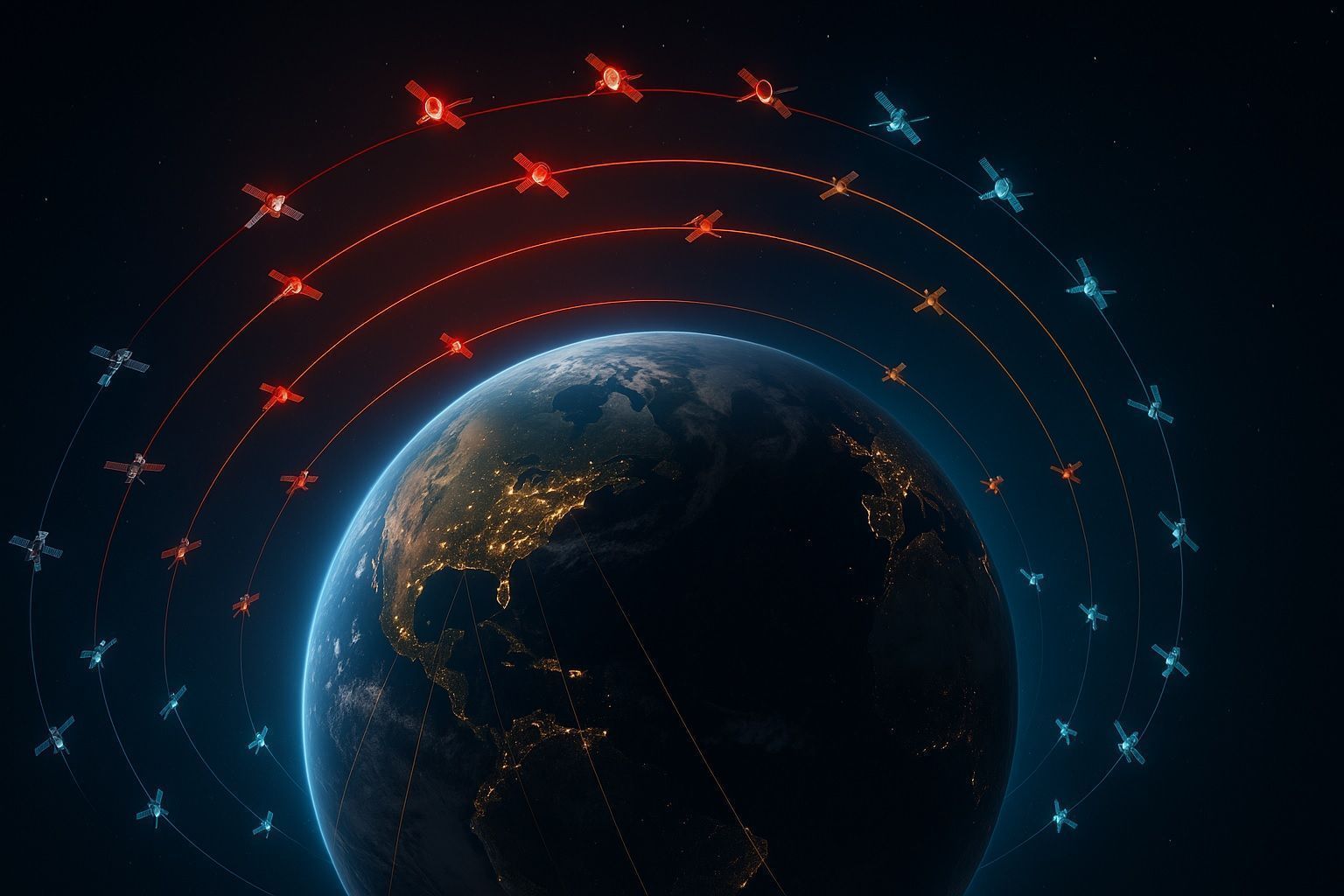
SpaceX’s Starlink has rapidly built a mega-constellation of satellites that is reshaping how the world accesses the internet. Since launching the first batch of 60 satellites in 2019, Starlink has put thousands of satellites into low-Earth orbit to blanket the planet with broadband coverage Telegeography. By late 2024, nearly 7,000 Starlink satellites were in orbit – a constellation dwarfing all others Reuters. This “sky grab” of orbital real estate has enabled Starlink to reach millions of users globally, many in remote areas previously left offline. Starlink’s explosive growth – from 1 million users at end-2022 to over 4.6 million by end-2024 Politico – signals a quiet but profound shift in the global internet game, as satellite broadband emerges as a viable alternative where traditional fiber and cell networks fall short. The following report examines Starlink’s evolution, its expanding coverage and market penetration across regions, competitive and regulatory hurdles, business strategies, and its social-economic impacts on connectivity and the digital divide.
Inside Burundi’s Digital Struggle: The Truth About Internet Access and the Satellite Solution

Inside Burundi’s Digital Struggle: The Truth About Internet Access and the Satellite Solution

Burundi, a small landlocked nation in East Africa, faces a digital connectivity crisis. Despite modest improvements in recent years, it remains one of the world’s least-connected countries, with only about 11–12% of Burundians using the internet as of 2023–2024 ecofinagency.com datareportal.com. This report dives deep into the current state of internet access in Burundi – from the reach of mobile and broadband networks to the emergence of satellite internet – and examines the players, policies, challenges, and opportunities shaping the country’s digital future. In a region where neighbors like Rwanda and Tanzania are rapidly advancing, Burundi’s struggle to bridge the digital divide is both urgent and instructive. Below, we explore the facts behind the headlines and what solutions might finally connect Burundi’s underserved millions.
The Shocking Truth About Internet Access in Burkina Faso – From White Zones to Starlink Dreams

The Shocking Truth About Internet Access in Burkina Faso – From White Zones to Starlink Dreams

Burkina Faso’s digital landscape is marked by low internet penetration and heavy reliance on mobile networks. As of 2023, only about 17–20% of the population are internet users, well below the African average pulse.internetsociety.org and the global average datareportal.com. In raw numbers, that equates to roughly 4.7 million active internet users in a country of ~23 million people digitalmagazine.bf. This means barely one in five Burkinabè have used the internet in the last 3 months, underscoring a significant digital divide.
Everything You Need to Know About Internet Access in Bulgaria (Even the Satellites!)

Everything You Need to Know About Internet Access in Bulgaria (Even the Satellites!)

Bulgaria has a well-developed internet infrastructure for a country of its size. In recent years, the nation has invested heavily in high-speed broadband networks, especially fiber-optic lines in urban areas Budde. This has led to excellent cross-platform competition in fixed broadband – customers can access the internet via digital subscriber line, cable, and increasingly fiber-to-the-home networks Budde. By early 2021, about 65% of fixed broadband subscribers were already on fiber connections, as users migrated off older DSL lines Budde. Mobile network infrastructure is also robust: 4G LTE services became widely available in the mid-2010s, and 5G was launched commercially in 2020 Budde. Two of the country’s largest operators turned on 5G networks in 2020, and by the end of 2022 around 70% of the population was expected to be under 5G coverage Budde. International internet connectivity is maintained via high-capacity fiber links to European internet hubs, and there are local internet exchange points that help keep domestic traffic efficient. Overall, Bulgaria’s internet landscape has transformed significantly over the past decade, evolving from legacy copper networks to modern fiber and 5G systems.
2 June 2025
You Won’t Believe Brunei’s Internet: 5G Everywhere, 100 Mbps for All – Even Satellites Are Joining

You Won’t Believe Brunei’s Internet: 5G Everywhere, 100 Mbps for All – Even Satellites Are Joining

Brunei Darussalam, a small but wealthy nation on Borneo, is undergoing an internet revolution that defies its size. With nearly 99% of its people online datareportal.com and a nationwide rollout of 5G mobile and fiber broadband, Brunei’s digital landscape has leapt ahead in recent years. This report dives into Brunei’s surprisingly advanced internet infrastructure, the key players driving connectivity, the mix of technologies keeping everyone connected, and what the future holds – including the prospect of SpaceX’s Starlink beaming internet to remote corners of the Sultanate. Below, we explore Brunei’s internet access story, from urban centers to rural jungles, highlighting speeds, coverage, government initiatives, challenges, and upcoming trends in an engaging, easy-to-scan format.
2 June 2025
Botswana’s Digital Leap: How Satellites and Smartphones Are Redefining Internet Access in the Kalahari

Botswana’s Digital Leap: How Satellites and Smartphones Are Redefining Internet Access in the Kalahari

Botswana is undergoing a digital transformation, dramatically expanding internet connectivity across its population. In the past decade, internet use in Botswana surged from roughly 30% of the population in 2013 to over three-quarters by 2024 en.wikipedia.org techcabal.com. This is notably higher than Africa’s overall internet usage and even above the global average en.wikipedia.org. Driving this “digital leap” are two pivotal technologies – widespread mobile smartphone networks and new satellite broadband services – which together are bridging the connectivity gap even in remote areas of the Kalahari Desert. However, despite these advances, Botswana faces challenges in ensuring reliable, affordable internet for all. This report examines the state of internet access in Botswana: penetration rates and urban–rural divides, key service providers and technologies, the growing role of satellite internet, infrastructure hurdles and recent initiatives, affordability and access issues, and the policy landscape. Regional comparisons are also provided to put Botswana’s progress in context.
Bosnia’s Internet in 2025: Surprising Growth Amid Shocking Gaps in Connectivity

Bosnia’s Internet in 2025: Surprising Growth Amid Shocking Gaps in Connectivity

Bosnia and Herzegovina’s internet landscape in 2025 is full of contradictions. On one hand, more people than ever are online – roughly 83% of the population uses the internet pulse.internetsociety.org – and mobile broadband coverage reaches almost the entire country. On the other hand, the fixed broadband infrastructure still lags behind regional standards, with fiber availability shockingly low and next-generation mobile technology yet to arrive. This comprehensive report breaks down the current state of internet access in Bosnia and Herzegovina across all major dimensions: infrastructure, key service providers and their market shares, pricing and affordability, speed and performance metrics, urban vs. rural access, the emerging role of satellite internet, government policies, and recent connectivity trends.
2 June 2025
The Internet Frontier: How Bolivia Is Connecting from the Peaks to the Stars

The Internet Frontier: How Bolivia Is Connecting from the Peaks to the Stars

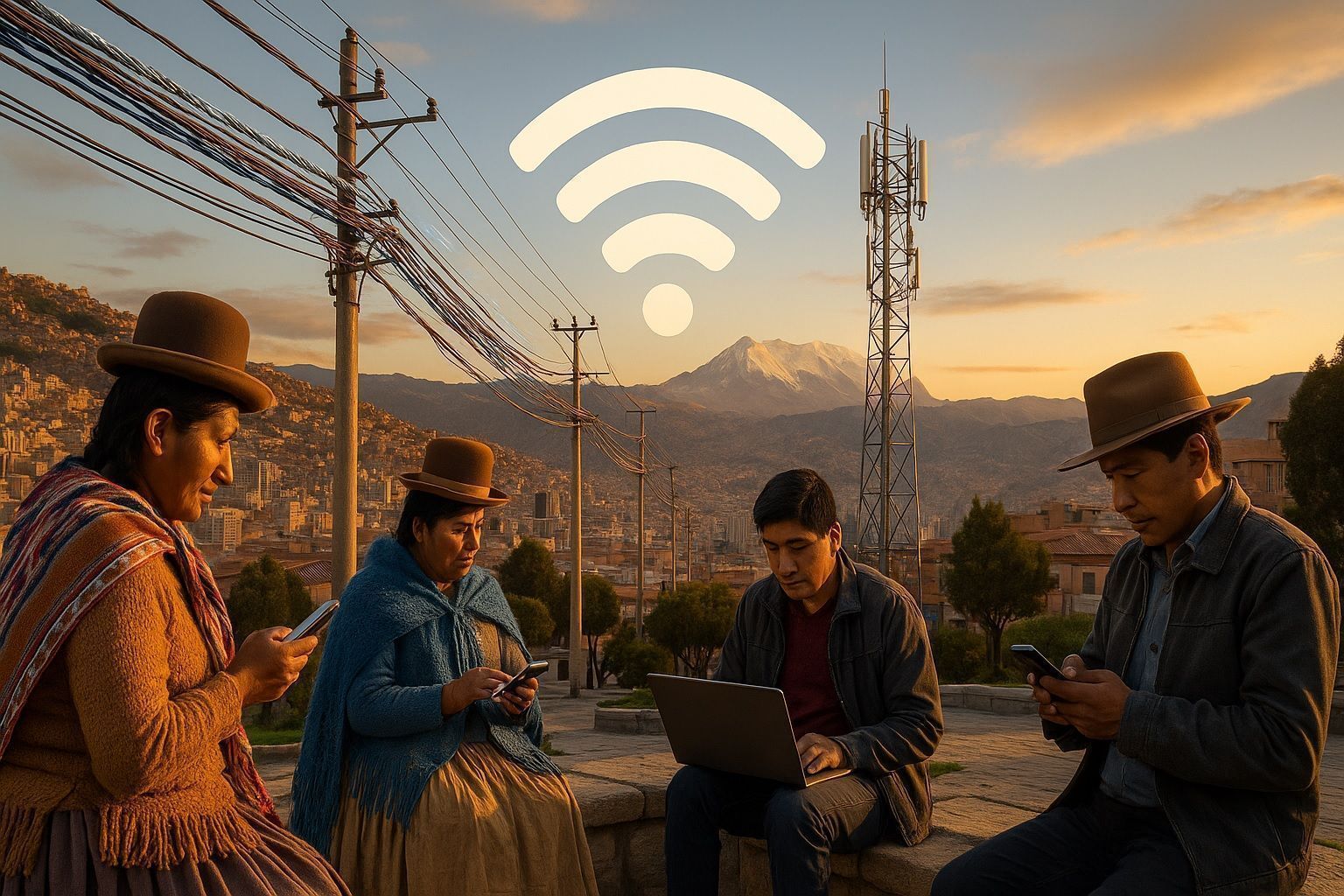
Bolivia’s quest to bridge its digital divide is a story of geography and innovation. This landlocked nation – with sky-high Andean peaks and remote Amazonian villages – faces unique challenges in expanding internet access. The government and telecom providers have had to lay fiber across rugged terrain, beam signals from satellites, and extend mobile towers to connect communities. As of 2025, internet penetration in Bolivia has grown rapidly, yet connectivity remains uneven between bustling cities and isolated rural areas. The following report explores Bolivia’s internet infrastructure, providers, affordability, policies, usage statistics, and recent developments that are shaping how Bolivians connect from the mountaintops to the satellites above.
Internet Access in Bhutan: Current Status, Challenges, and Future Outlook

Internet Access in Bhutan: Current Status, Challenges, and Future Outlook

Bhutan – a small Himalayan kingdom known for its Gross National Happiness philosophy – was a late adopter of modern communications, introducing television and the internet only in 1999 freiheit.org. In the two decades since, Bhutan has rapidly embraced the digital age. Today, internet connectivity reaches all 20 districts and even every school in the country, with 87% of the population online – surpassing global averages un-dco.org. This report provides a comprehensive overview of internet access in Bhutan, covering the current infrastructure for broadband and mobile networks, the government’s policies and regulatory framework, the role of satellite internet, disparities between urban and rural connectivity, internet affordability and speeds, key challenges, digital literacy and adoption, notable initiatives to improve connectivity, and the trends shaping the future of Bhutan’s internet landscape. Key insights are drawn from Bhutanese government agencies, telecom providers, international development partners, and satellite service companies to ensure an up-to-date and in-depth analysis.
Benin’s Internet Revolution: How a Small Nation Is Bridging the Digital Divide with Fiber and Starlink

Benin’s Internet Revolution: How a Small Nation Is Bridging the Digital Divide with Fiber and Starlink

Benin has witnessed a quiet but striking internet revolution over the past decade. In the early 2010s, internet use was in the single digits of the population; today roughly one-third of Beninese are online datareportal.com pulse.internetsociety.org. This rapid growth has been driven by improvements in infrastructure and aggressive government initiatives, yet significant challenges remain. The following report examines the state of internet access in Benin across key dimensions – from urban connectivity and pricing to government policy and new satellite services – and compares the country’s progress with its West African neighbors. The picture that emerges is one of surprising advances amid persistent gaps: Benin is expanding fiber optics nationwide and embracing innovations like SpaceX’s Starlink, even as rural communities struggle with access and affordability.