Browse Category

Meteor Showers News 9 October 2025 - 29 December 2025

Look up tonight: New England fireball reports roll in as Quadrantid meteors switch on

Look up tonight: New England fireball reports roll in as Quadrantid meteors switch on

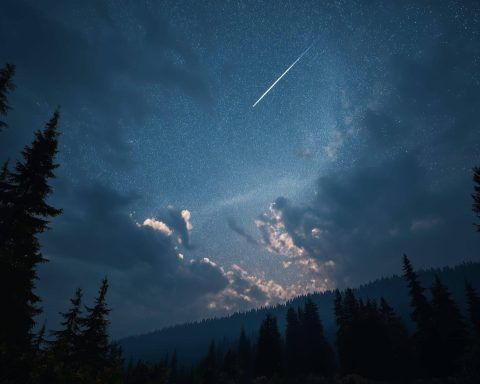
NEW YORK, December 29, 2025, 06:42 ET Dozens of skywatchers across New England filed reports of a bright “fireball” on Saturday evening, according to the American Meteor Society’s public log of sightings. The entries, clustered around 5:59 p.m. ET, came as the Quadrantid meteor shower’s active period begins, giving stargazers another reason to look up this week. (https://fireball.amsmeteors.org/members/imo_view/browse_reports?event=PENDING&page=7) The timing matters now because the Quadrantids are one of the year’s more intense meteor showers when they peak, but the best activity typically concentrates into a narrow window. That makes planning — and timing — more important than for longer, drawn-out
29 December 2025
Night Sky Tonight (December 28, 2025): Waxing Gibbous Moon, Brilliant Jupiter, and the Quadrantids Begin

Night Sky Tonight (December 28, 2025): Waxing Gibbous Moon, Brilliant Jupiter, and the Quadrantids Begin

Sunday night, December 28, 2025, brings a classic late-December sky: a bright, growing Moon that lights up the landscape, Jupiter stealing the show for evening stargazers, and the Quadrantid meteor shower officially kicking off its annual run as we head toward the New Year. Moongiant+2Sky & Telescope+2 Below is a complete, publication-ready roundup of what matters most in the sky tonight (28.12.2025)—including the latest space-weather and asteroid-flyby updates that are making the rounds in astronomy reporting and official monitoring dashboards. services.swpc.noaa.gov+2NASA Jet Propulsion Laboratory (JPL)+2 Tonight’s biggest skywatching headlines If you only have 5 minutes outside, make it these: Moon phase tonight: bright waxing gibbous (and why
28 December 2025
Night Sky Today (Dec. 25, 2025): Crescent Moon and Saturn at Dusk, Brilliant Jupiter Later, Ursid Meteors, and a Christmas ISS Flyby

Night Sky Today (Dec. 25, 2025): Crescent Moon and Saturn at Dusk, Brilliant Jupiter Later, Ursid Meteors, and a Christmas ISS Flyby

Christmas night has a delightfully “classic winter sky” vibe in the Northern Hemisphere: a fat waxing crescent Moon glowing in the southwest as twilight fades, Saturn parked nearby like a steady golden bead, and Jupiter muscling its way up in the east-northeast to dominate the late-evening and overnight sky. StarDate Online Add in the last few nights of the Ursid meteor shower (still active through Dec. 26), plus a widely timed International Space Station pass before sunrise in many parts of North America and Europe, and Night Sky Today is doing its best to be a holiday encore. AP News
25 December 2025
Night Sky Tonight (Dec. 23, 2025): Crescent Moon Earthshine, Northern Lights Alert, and the Ursids’ Final ActNight Sky TonightNight Sky Tonight (Dec. 23, 2025): Crescent Moon Earthshine, Northern Lights Alert, and the Ursids’ Final Act

Night Sky Tonight (Dec. 23, 2025): Crescent Moon Earthshine, Northern Lights Alert, and the Ursids’ Final ActNight Sky TonightNight Sky Tonight (Dec. 23, 2025): Crescent Moon Earthshine, Northern Lights Alert, and the Ursids’ Final Act

Dec. 23, 2025 — Tonight’s sky is doing that classic winter trick: it gets dark early, stays dark long, and then quietly hands you a few genuinely photogenic targets as a reward for being a warm-blooded mammal who chose to go outside anyway. The main storylines in Night Sky Today (December 23, 2025) are straightforward and very worth your time: a thin waxing crescent Moon with “earthshine” shortly after sunset, a NOAA-backed aurora chance that could push the northern lights into parts of the U.S., and the Ursid meteor shower still ticking through its final nights of the year. American
23 December 2025
Night Sky Today (22.12.2025): Ursid Meteor Shower Peak, Aurora Alert, and the Best Planets to Spot Tonight

Night Sky Today (22.12.2025): Ursid Meteor Shower Peak, Aurora Alert, and the Best Planets to Spot Tonight

The “Night Sky Today” headline for 22.12.2025 is basically a gift-wrapped astronomy combo: the Ursid meteor shower is peaking on the darkest nights of the month, the Moon is only a slim waxing crescent (so it won’t wash out faint meteors), and bright Jupiter is dominating the late-evening sky. Add in a NOAA space-weather forecast calling for minor geomagnetic storming (the kind that can boost aurora chances), and you’ve got one of the most watchable late-December skies in years—assuming clouds don’t crash the party. NOAA SWPC+3TIME+3American Meteor Society+3 Below is a detailed, news-focused guide to what’s happening in the sky
22 December 2025
Night Sky Tonight (Dec. 21, 2025): Winter Solstice Stargazing, Ursid Meteor Shower Peak, Jupiter’s Glow — and Interstellar Comet 3I/ATLAS

Night Sky Tonight (Dec. 21, 2025): Winter Solstice Stargazing, Ursid Meteor Shower Peak, Jupiter’s Glow — and Interstellar Comet 3I/ATLAS

If you’ve been waiting for a “big” skywatching night, Sunday, December 21, 2025 delivers one of the most atmospheric setups of the year: it’s the December solstice, bringing the longest night and shortest day for the Northern Hemisphere—precisely when a thin crescent Moon keeps skies dark for the Ursid meteor shower. And while Jupiter dominates the late evening, skywatchers with the right telescope may still have a shot at a once-in-a-lifetime target: interstellar comet 3I/ATLAS, which made its closest pass by Earth just two nights ago. NASA Science+3Time and Date+3EarthSky+3 Below is a practical, publication-ready guide to Night Sky Today—built
21 December 2025
Night Sky Today (Dec. 20, 2025): New Moon Darkness, Jupiter All Night, Ursid Meteors Next, and Interstellar Comet 3I/ATLAS

Night Sky Today (Dec. 20, 2025): New Moon Darkness, Jupiter All Night, Ursid Meteors Next, and Interstellar Comet 3I/ATLAS

Saturday, December 20, 2025 brings one of the most skywatcher-friendly setups of the year: a New Moon has wiped out moonlight, Jupiter is blazing in the evening sky and staying up late, the Ursid meteor shower is building toward its peak, and an interstellar comet—3I/ATLAS—is still within reach of backyard telescopes just after its closest pass by Earth. AP News+4EarthSky+4Scientific American+4 If you’ve been waiting for a “go night” to step outside, let your eyes adjust, and simply follow bright signposts across the sky, tonight is it. New Moon Night: The Dark-Sky Advantage Peaks Now The Moon reaches New Moon
20 December 2025
Night Sky Tonight (December 19, 2025): How to See Interstellar Comet 3I/ATLAS, Catch New Moon Darkness, and Get Ready for the Ursid Meteor Shower

Night Sky Tonight (December 19, 2025): How to See Interstellar Comet 3I/ATLAS, Catch New Moon Darkness, and Get Ready for the Ursid Meteor Shower

Friday, December 19, 2025 brings a rare “headline night” for skywatchers: an interstellar comet is making its closest pass by Earth, the Moon is slipping into (or extremely near) a New Moon phase that darkens the sky, and the year’s final major meteor shower is ramping up ahead of its peak just before Christmas. If you only step outside once this week, tonight is a strong candidate—especially if you have access to binoculars or a telescope and a spot away from city lights. The big sky story today: Interstellar comet 3I/ATLAS makes its closest approach The most talked-about celestial visitor
19 December 2025
Night Sky Tonight (December 16, 2025): What to See After Dark — Meteors, Planets, an Interstellar Comet, and Aurora Updates

Night Sky Tonight (December 16, 2025): What to See After Dark — Meteors, Planets, an Interstellar Comet, and Aurora Updates

December 16, 2025 is shaping up as a strong night for stargazing—especially if you’ve been waiting for darker skies. The Moon is now a slim waning crescent (about 12% illuminated), which means less moonlight glare and better contrast for meteor-watching, star clusters, and faint deep-sky targets. Time and Date But tonight isn’t just about “pretty stars.” Several space-and-sky stories are driving headlines today, from a rare interstellar comet nearing its best observing window, to a predawn rocket launch that lit up skies along Florida’s Space Coast, to fresh talk of micrometeorites (the tiny dust-sized leftovers of meteor showers) quietly piling up on rooftops. AP News+2Spaceflight Now+2 Below is an up-to-the-minute, reader-friendly guide
Geminids Meteor Shower 2025: The Asteroid Behind Today’s Shooting Stars (Dec. 15 Updates)

Geminids Meteor Shower 2025: The Asteroid Behind Today’s Shooting Stars (Dec. 15 Updates)

On December 15, 2025, the Geminids — often called the year’s most reliable “shooting star” show — are still making headlines around the world. While peak activity has largely passed, late-season Geminid meteors are continuing to streak across dark skies, and today’s coverage has put renewed focus on the shower’s strangest detail: the Geminids come from an asteroid, not a comet. NASA Science+1 If you’re searching for “Geminids asteroid today,” you’re almost certainly looking for the story of asteroid 3200 Phaethon — a rocky object that behaves like a comet at times, leaving behind the debris Earth plows into each December. NASA Science+1 Geminids meteor shower
15 December 2025
Night Sky Tonight (Dec. 15, 2025): Geminids Encore, Orion Nebula Peak, and a Rare Interstellar Comet Turns Green

Night Sky Tonight (Dec. 15, 2025): Geminids Encore, Orion Nebula Peak, and a Rare Interstellar Comet Turns Green

December 15, 2025 brings a near-perfect recipe for skywatchers: long winter nights, a slim waning Moon, and a sky full of headline-worthy targets—plus a rare interstellar visitor that’s suddenly glowing green in new images. With the winter solstice now just days away, the Northern Hemisphere is sliding toward the longest night of the year, while the Southern Hemisphere moves toward summer’s shorter nights. Either way, tonight’s sky has something for everyone, from casual stargazers stepping outside for five minutes to telescope owners planning a pre-dawn session. The Guardian Below is a news-style roundup of what’s trending today (15.12.2025)—followed by a practical “what to see tonight” guide you can use anywhere
15 December 2025
Moon in December 2025: Waning Crescent Tonight, New Moon Date, Geminids Peak, and NASA’s Latest Lunar Push

Moon in December 2025: Waning Crescent Tonight, New Moon Date, Geminids Peak, and NASA’s Latest Lunar Push

December 14, 2025 is shaping up as one of the most “Moon-centric” nights of the month—not because the Moon is bright and dominating the sky, but because it isn’t. With the Moon now a waning crescent and shrinking toward the New Moon on December 19, skywatchers are getting darker skies right as the Geminid meteor shower reaches its peak window. WUSF+2Space+2 At the same time, December’s Moon story isn’t only about stargazing. NASA’s lunar program is also in the headlines this month, from new Artemis lunar surface science instruments to “blast-in-a-vacuum-sphere” tests designed to understand how rocket exhaust will kick up abrasive lunar dust during future Moon landings. NASA Science+1 Below
14 December 2025
Night Sky December 2025: Geminid Meteor Shower Peak Tonight, Interstellar Comet 3I/ATLAS, and the Best Stargazing Dates

Night Sky December 2025: Geminid Meteor Shower Peak Tonight, Interstellar Comet 3I/ATLAS, and the Best Stargazing Dates

Updated: December 14, 2025 December’s night sky is delivering exactly what skywatchers hope for: long hours of darkness, bright planets, and two headline-grabbing celestial events arriving back-to-back. First, the Geminid meteor shower—often called the year’s most reliable “shooting star” show—peaks across the night of December 13–14 with minimal moonlight for much of the prime viewing window. NASA Science+2EarthSky+2 Then, as the month heads toward the December solstice, attention shifts to a rarer visitor: interstellar comet 3I/ATLAS, which makes its closest approach to Earth on December 19, 2025—still very far away, but scientifically thrilling and a legitimate observing target for telescopes. NASA Science+2NASA Science+2 Below is a detailed,
14 December 2025
Sky‑Spectacle Alert: Rare Northern Lights Could Paint U.S. Skies Tonight—Here’s the Science, the Map and the Expert Warnings You Need

Night Sky Tonight, November 12, 2025: Severe Auroras Possible, Taurid ‘Fireballs,’ and a Close Mercury–Mars Pairing

Updated: Wednesday, November 12, 2025 TL;DR (What to watch tonight) Breaking: Severe geomagnetic storm could supercharge tonight’s auroras The U.S. Space Weather Prediction Center reports G4 (Severe) geomagnetic storm levels were reached at 01:20 UTC on Nov. 12, with storming expected to continue into the night. In practical terms, that greatly boosts the odds of seeing the northern lights unusually far south (or the southern lights farther north in Australia/New Zealand) when local skies are dark and clear. Keep watch after dusk, around local midnight, and toward dawn; auroras can surge in waves. NOAA Space Weather Prediction Center NOAA also
12 November 2025
Don’t Miss October 2025’s Super Hunter’s Moon – A Dazzling Full Moon Spectacle

Nov. 7, 2025: Beaver Supermoon Meets Taurid Fireballs — What to See Tonight and Why California’s Coasts Are on Alert

Date: November 7, 2025 Key points What’s happening now (Nov. 7) The Beaver Moon—November’s traditional full moon—was not only full on Wednesday but occurred within hours of perigee, making it the largest supermoon of 2025. That timing boosted apparent size and brightness compared with a typical full moon. While the precise moment of fullness has passed, the Moon remains strikingly bright tonight, an easy target for the naked eye. Space Photographers and stargazers worldwide have already shared images from this week’s show, underscoring how prominent the Moon looked at moonrise and moonset. Expect a similarly photogenic, near‑full disk this evening.
8 November 2025
Night Sky in November 2025: Biggest Supermoon of the Year, Leonids Meteor Shower, Uranus at Opposition & More

Night Sky in November 2025: Biggest Supermoon of the Year, Leonids Meteor Shower, Uranus at Opposition & More

November 2025 is packed with sky shows: the year’s largest supermoon, a dark‑sky Leonids peak, a potential Taurid “swarm” of bright fireballs, Uranus glowing at opposition, plus photogenic Moon pairings and two star occultations. All dates below are given in UTC; convert to your local time. Key dates at a glance The month’s headliner: the year’s biggest supermoon (Nov 5) November’s full Moon reaches peak phase at 13:19 UTC on Nov 5, the same day it reaches perigee, making this the closest (largest and brightest) full Moon of 2025. Many outlets are calling it the year’s biggest supermoon; expect it
5 November 2025
Sky Spectacles of September 2025: Blood Moon Eclipse, Double Eclipses & Planetary Pairings

Night Sky Tomorrow (November 6, 2025): Supermoon Glow, Taurid Fireballs, and a Fresh Aurora Watch

Short version: Tomorrow evening brings a nearly full supermoon gliding through Taurus near the Pleiades, lingering Taurid fireballs after midnight, bright Saturn in early evening, late‑night Jupiter, and—thanks to a new G3 (Strong) geomagnetic storm watch—a real chance of northern lights at mid‑latitudes. EarthSky+2In-The-Sky.org+2 What’s new as of November 5, 2025 Sky timetable for Thursday, Nov. 6 (local times) The supermoon, explained (and what it’s called this year) Photo target: The Moon + Pleiades (M45) conjunction on Nov. 6 is a great binocular view. With a telephoto (85–200 mm), frame the bright lunar disk with the tiny, dipper‑shaped Pleiades off to
5 November 2025
Don’t Miss October 2025’s Super Hunter’s Moon – A Dazzling Full Moon Spectacle

Biggest Supermoon of 2025, Beaver Moon & Taurid ‘Fireball’ Show Collide This Week

What Is the Beaver Moon and Why Does It Matter? Each month’s full moon carries a traditional name tied to seasonal rhythms. November’s full moon is widely known as the “Beaver Moon.” According to the Old Farmer’s Almanac, this name harkens back to a time when beavers finish preparations for winter – gathering food and retreating to their lodges once ponds start to freezeeconomictimes.indiatimes.com. It was also the prime season for trappers in North America to catch beavers for their thick winter pelts during the fur trade eraeconomictimes.indiatimes.com. In other words, the Beaver Moon signaled an important period of pre-winter
5 November 2025
Double Meteor Shower Spectacle: Draconid and Orionid Displays Will Light Up October’s Night Sky

Meteor Mania Incoming: Supermoon, Fireballs and Aurora Alerts in Early November 2025

Major Meteor Showers Lighting Up Early November Early November’s sky features long-running meteor showers rather than any single dramatic outburst. The Southern Taurids (active late Sept–Nov 12, peak ~Nov 5) and Northern Taurids (Oct 13–Dec 2, peak ~Nov 9) are joined by the annual Leonid stream (active Nov 3–Dec 2, peak Nov 17). AMS notes that these two Taurid sources and the Leonids “keep the skies active” in November, making it one of the better months for northern observersamsmeteors.org. In practice, the Taurids each produce only a handful of meteors per hour under dark skies, but many are fireballs. AccuWeather meteorologist Brian Lada explains that the Taurids will
2 November 2025
Double Meteor Shower Spectacle: Draconid and Orionid Displays Will Light Up October’s Night Sky

Meteor Storm or Moonlit Fizzle? Draconid ‘Dragon’ Meteor Shower Peaks Tonight with Skywatchers on Alert

The Draconids: A “Dragon” in the Night Sky Every October, the Draconid meteor shower gives skywatchers a chance – however slim – to see fireballs from the Dragon. The Draconids occur when Earth passes through dust debris shed by Comet 21P/Giacobini–Zinner, a small periodic comet that orbits the sun every 6.6 yearsts2.tech. As these cometary bits hit Earth’s atmosphere at a relatively languid pace, they burn up and streak across the sky as meteors (often called “shooting stars”)ts2.tech. The Draconids take their name from the constellation Draco, from which the meteors appear to radiate. Because Draco is a northern constellation (its “head” near the dragon’s
1 2 3 4

Stock Market Today

Walmart stock jumps 3% to $131 as Dow clears 50,000 — what to watch before Monday

Walmart stock jumps 3% to $131 as Dow clears 50,000 — what to watch before Monday

7 February 2026
Walmart shares climbed 3.34% to $131.18 Friday, pushing its market value to about $1.05 trillion as the Dow closed above 50,000 for the first time. Retail stocks mostly gained, with Target up 4.24% and Costco up 1.20%, while Amazon dropped 5.55%. Investors await Walmart’s fiscal Q4 results on Feb. 19 and key U.S. economic data next week.
Go toTop