Browse Category

NASA News 8 June 2025 - 30 July 2025

Space Race 2.0 Heats Up: Starlink Mega-Launch, Moon Deals & NASA-Russia Reunion Rock the Space World

Space Race 2.0 Heats Up: Starlink Mega-Launch, Moon Deals & NASA-Russia Reunion Rock the Space World

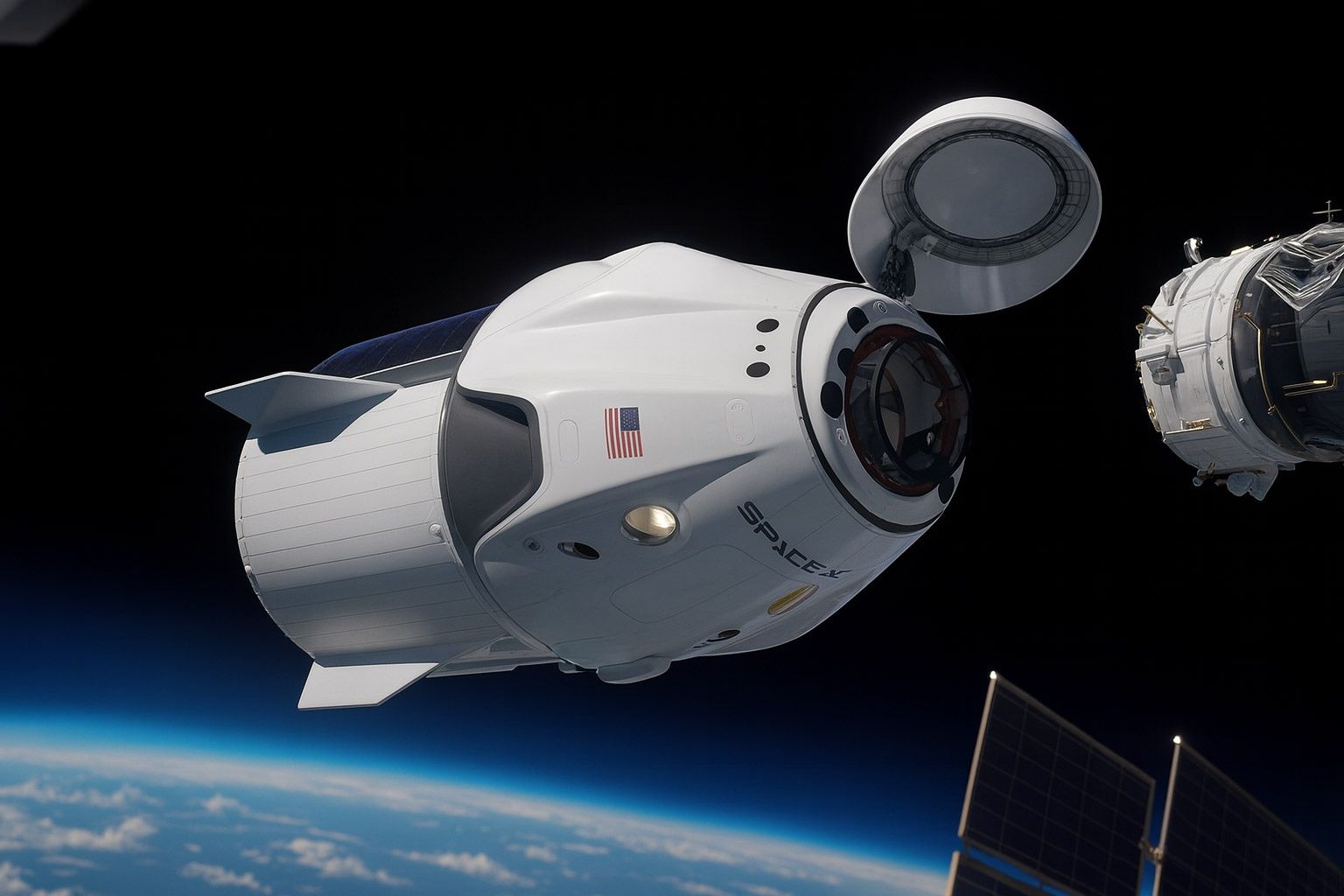
SpaceX launched 28 Starlink satellites from Cape Canaveral, Florida at 11:37 p.m. EDT on July 29, 2025, and the Falcon 9 first stage landed on the drone ship “Just Read the Instructions,” marking the booster’s 26th flight and pushing Starlink to over 8,000 active satellites. SpaceX marked its 96th launch of 2025 on July 29, 2025, underscoring a near-daily cadence for the year. NASA’s Crew-11 mission to the International Space Station is targeted for liftoff on July 31, 2025 at 12:09 p.m. EDT from the Kennedy Space Center, with four astronauts including Mike Fincke and a multinational crew, and NASA’s
30 July 2025
 ·  ·  ·  · 
Starlink Doubleheader, NASA Upheaval & Space Race Showdowns – Global Space News Roundup (July 26–27, 2025)

Starlink Doubleheader, NASA Upheaval & Space Race Showdowns – Global Space News Roundup (July 26–27, 2025)

SpaceX launched back-to-back Falcon 9 missions for Starlink within 24 hours: on July 26 at 5:01 a.m. EDT from Cape Canaveral with 28 Starlink satellites and on July 27 at 12:31 a.m. EDT from Vandenberg with 24 Starlinks, with first-stage boosters landing on droneships on their 22nd and 19th flights respectively and the company pushing its 2025 launch total to 95 flights and the Starlink fleet above 8,000 satellites. Europe’s Vega-C VV27 launched July 25 at 10:03 p.m. ET from Kourou carrying five Earth-observation satellites including MicroCarb (180 kg, 1 ppm CO2 accuracy) and four CO3D satellites built by Airbus
27 July 2025
Space News Shockers: Satellite Wars, NASA Upheaval, and the Next Celestial Wonders Revealed / Updated: 2025, July 11th, 12:01 CET

Space News Shockers: Satellite Wars, NASA Upheaval, and the Next Celestial Wonders Revealed / Updated: 2025, July 11th, 12:01 CET

Over 2,000 senior NASA employees have resigned amid budget cuts, with a potential 25% funding reduction threatening missions, while Sean Duffy, a former congressman and reality TV star, was named interim NASA administrator and serves as both NASA administrator and Secretary of Transportation. An alleged Iranian missile strike destroyed a $15 million U.S. communications radome at Al Udeid Air Base in Qatar, which housed the Modernization Enterprise Terminal (MET) for secure military communications. Russia’s secret Nivelir project drew attention after Cosmos 2558 released a small object in orbit, a move interpreted as a possible anti-satellite test signaling space-arms concerns. The
11 July 2025
Space in Crisis and Glory: NASA Shakeup, Starlink Expansion & Buck Moon Spectacle! / Updated: 2025, July 10th, 12:01 CET

Space in Crisis and Glory: NASA Shakeup, Starlink Expansion & Buck Moon Spectacle! / Updated: 2025, July 10th, 12:01 CET

The Buck Moon on July 10, 2025 will reach peak illumination at 4:37 p.m. UTC and appear as a micromoon due to its distance, coinciding with Earth’s aphelion and a Major Lunar Standstill. President Trump appointed Sean Duffy as interim NASA Administrator in July 2025, replacing Jared Isaacman amid a backdrop of budget cuts that could eliminate more than 2,000 senior NASA jobs, including 279 at Marshall Space Flight Center. NASA’s DART mission altered Dimorphos’ orbit and ejected more than 100 boulders, adding momentum almost as large as the spacecraft itself. China’s Chang’e-6 mission returned Moon far-side rocks, including 2.8-billion-year-old
10 July 2025
Zombie Satellite! Defunct NASA Orbiter Emits Blazing Radio Burst After 60 Years

Zombie Satellite Awakens: Defunct 1960s NASA Orbiter Blasts Earth with Mysterious Radio Pulse

Relay 2 was a NASA experimental communications satellite built by RCA, launched January 21, 1964, atop a Delta B rocket from Cape Canaveral, designed to relay television signals and study Earth’s radiation belts. Ground support for Relay 2 ended by September 1965, and its transmitters began failing, with the first transponder dying on November 20, 1966. The second transponder failed on June 9, 1967, leaving Relay 2 officially defunct and transmitting for less than three years. Relay 2 weighed about 78 kg (172 lb) at launch and orbited in an elliptical medium Earth orbit roughly 1,870 km by 7,600 km.
21 June 2025
 ·  ·  ·  · 
Zombie Satellite! Defunct NASA Orbiter Emits Blazing Radio Burst After 60 Years

Zombie Satellite! Defunct NASA Orbiter Emits Blazing Radio Burst After 60 Years

Relay-2 launched January 21, 1964 from Cape Canaveral as part of NASA’s Relay program to relay television and telemetry signals and study the Van Allen belts. Relay-2 operated 1964–1967, with the first transponder failing on November 20, 1966 and the second on June 9, 1967, after which it was retired. After deactivation, Relay-2 drifted in a medium Earth orbit of roughly 1,870 by 7,600 km. On June 13, 2024, ASKAP detected a radio burst lasting less than 30 nanoseconds, peaking at roughly 300,000–350,000 Jy, spanning 695–1,032 MHz. The event was traced to Relay-2 in near-Earth space using ASKAP’s near-field timing,
21 June 2025
Unlocking the Sun: Inside NASA and ESA’s Daring Missions to Touch the Solar Inferno

Unlocking the Sun: Inside NASA and ESA’s Daring Missions to Touch the Solar Inferno

Parker Solar Probe, launched August 12, 2018 on a Delta IV Heavy, became NASA’s first mission to fly through the Sun’s corona and “touch the Sun” in April 2021 when it crossed the Alfvén critical boundary during its 8th orbit. At its closest approaches Parker reaches about 3.8–4 million miles (6.2 million km) from the Sun, roughly 9 solar radii, traveling faster than 430,000 mph (700,000 km/h). The probe’s heat shield is a 4.5-inch-thick carbon-composite foam sandwich that keeps instruments near room temperature while the shield surface heats to about 2,500°F (1,377°C). Parker carries four instrument suites—FIELDS, SWEAP, IS☉IS, and
8 June 2025
Go toTop