Today: 1 July 2026
Browse Category

Space 20 September 2025 - 25 September 2025

Space Showdown: 48 Hours of Epic Launches, Cosmic Breakthroughs, and a New Moonship Name

Space Showdown: 48 Hours of Epic Launches, Cosmic Breakthroughs, and a New Moonship Name

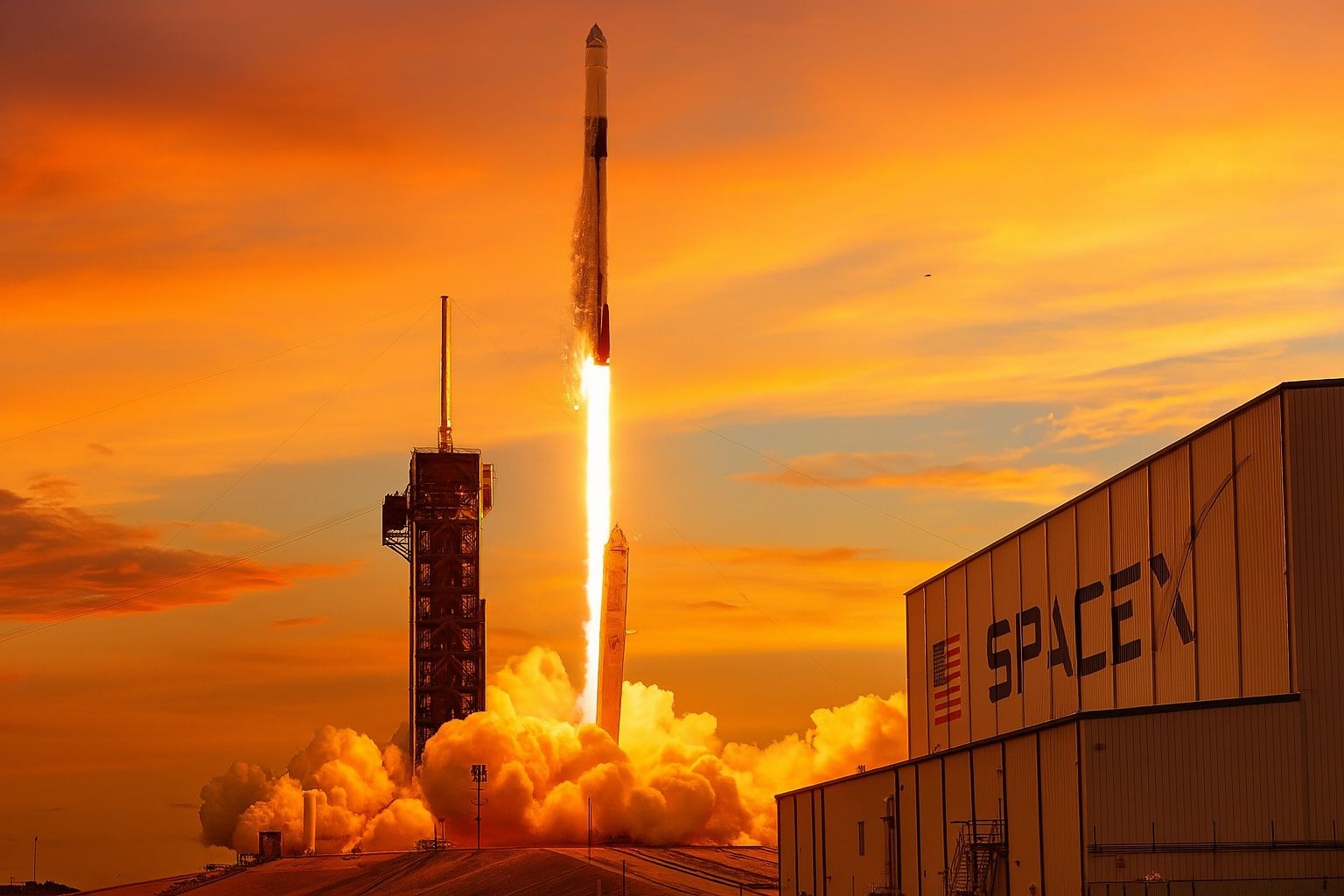
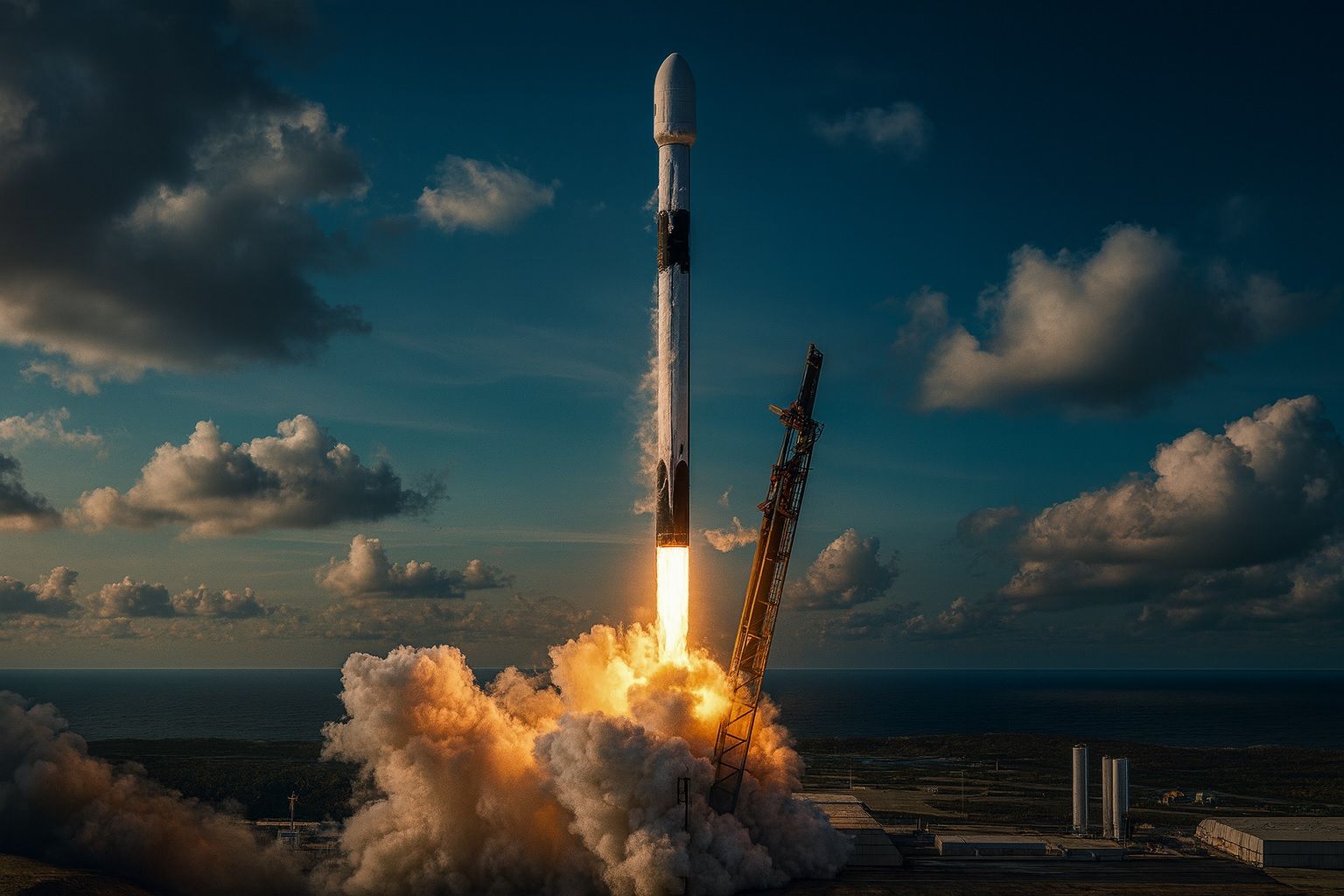
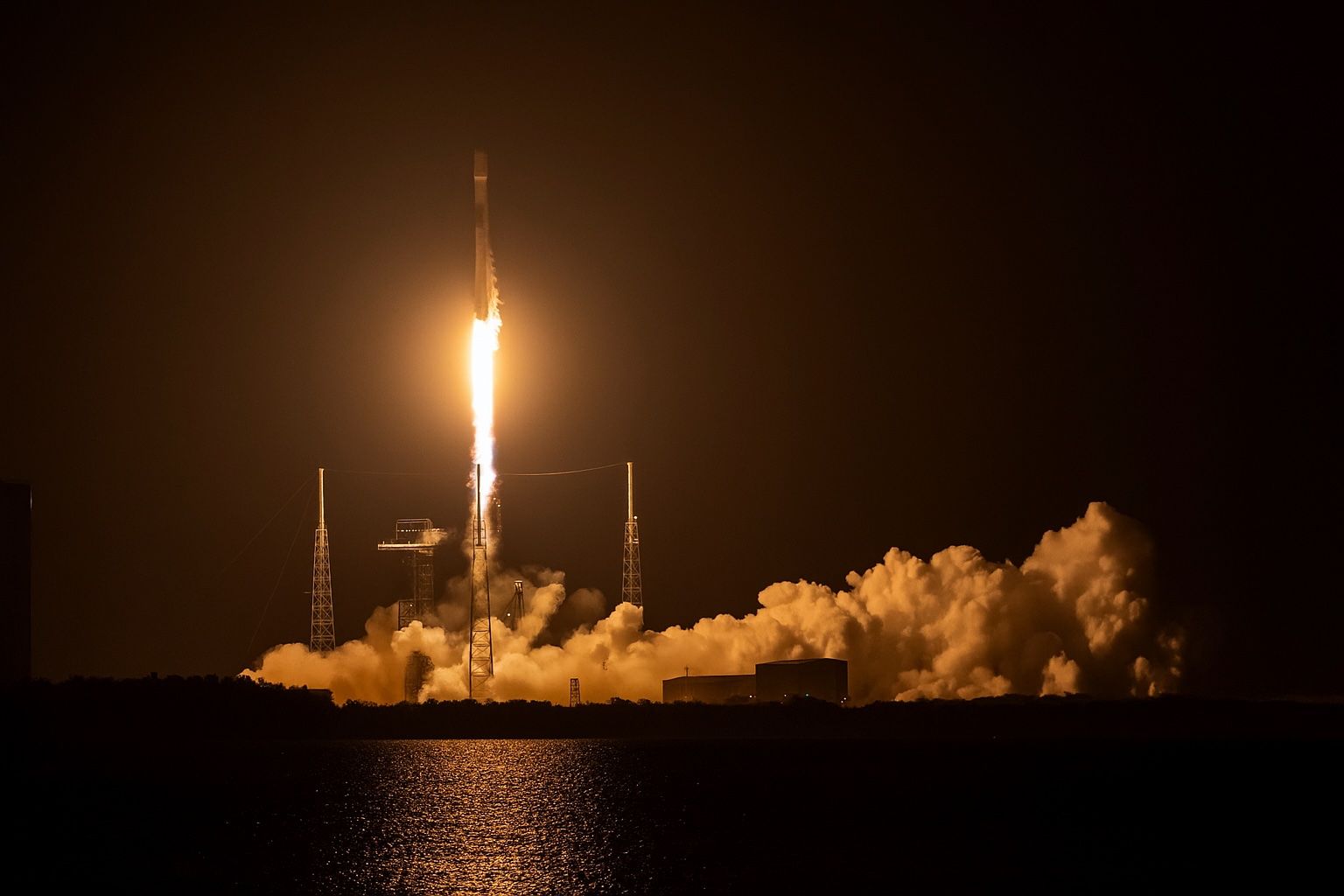
Solar sentinel liftoff: The week’s biggest blast-off came early on Sept. 24, when a SpaceX Falcon 9 rocket roared off Launch Complex 39A at Kennedy Space Center carrying a trio of spacecraft devoted to space weather research nasa.gov. In a single launch at 7:30 a.m. EDT, NASA and NOAA deployed the Interstellar Mapping and Acceleration Probe, the Carruthers Geocorona Observatory, and NOAA’s Space Weather Follow-On L1 satellite toward the Sun-Earth Lagrange point nasa.gov nasaspaceflight.com. This “fleet” will probe how the Sun’s charged particles and solar wind affect Earth and the broader solar system. “This successful launch advances the space weather readiness of our nation to better protect our satellites, interplanetary missions, and space-faring astronauts from the dangers of space weather,” said acting NASA Administrator Sean Duffy nasa.gov. The new missions will provide early warning of solar storms and help safeguard power grids, communications, GPS, and astronauts by monitoring the Sun’s outbursts nasa.gov nasa.gov. NASA’s heliophysics chief Joe Westlake noted that understanding the Sun’s influence is “critical because the Sun’s activity directly impacts our daily lives… from power grids to GPS” nasa.gov. With the Sun approaching a peak in its 11-year cycle, these probes promise timely insights to protect technology and
25 September 2025
Virgin Galactic Rockets 15% on Space Tourism Buzz – Can SPCE Defy Gravity or Crash Back to Earth?

Virgin Galactic Rockets 15% on Space Tourism Buzz – Can SPCE Defy Gravity or Crash Back to Earth?

Galactic Stock Skyrockets: Virgin Galactic’s stock made headlines this week after a sudden double-digit surge. On Tuesday, Sept. 23, SPCE jumped over 14% in a single session stockstotrade.com – an eye-catching move for a stock that had been languishing in the low-$3 range. Trading volume spiked well above average as speculation swirled about upcoming catalysts. Some observers pointed to a recent SEC Form 8-K filing and hints of “major strategic developments” that could “influence future trajectories,” which stoked renewed investor interest stockstotrade.com. By mid-day Sept. 23, SPCE was trending on social media and financial forums as one of the market’s top gainers. Follow-Through into Sept. 24: As of Wednesday morning, Virgin Galactic shares have held most of those gains, trading around $3.75 investing.com. The stock’s day-range on the 23rd was $3.39 to $4.00 investing.com, indicating significant intraday volatility. Traders note that SPCE broke above short-term technical levels with this rally, possibly squeezing some short sellers. The momentum in SPCE has given it a bullish near-term technical signal, though whether this is a true trend reversal or a brief pop remains to be seen.
24 September 2025
Turkey’s Space and Satellite Industry: 2025 Market Report and 2030 Outlook

Turkey’s Space and Satellite Industry: 2025 Market Report and 2030 Outlook

Turkey’s foray into space began with modest steps in the late 20th century and has since picked up remarkable speed. The country’s early efforts were focused on satellite communications as Turkey sought to improve telecommunications and broadcast infrastructure for its growing economy. 1994 – First Turkish Satellite: After joining the international Intelsat consortium in the 1980s uydu.turksat.com.tr, Turkey launched its first communications satellite, Türksat 1B, in August 1994 on an Ariane rocket uydu.turksat.com.tr. Türksat 1B’s successful deployment to geostationary orbit at 42°E marked Turkey’s debut in space uydu.turksat.com.tr. A second satellite, Türksat 1C, followed in 1996 to expand coverage uydu.turksat.com.tr. These satellites were built in collaboration with French company Aerospatiale uydu.turksat.com.tr, reflecting Turkey’s initial reliance on foreign technology.
24 September 2025
Moon Mission Milestone, Autism Risk Shock & Europe’s Climate Alarm – Science News Roundup (23–24 Sept 2025)

Moon Mission Milestone, Autism Risk Shock & Europe’s Climate Alarm – Science News Roundup (23–24 Sept 2025)

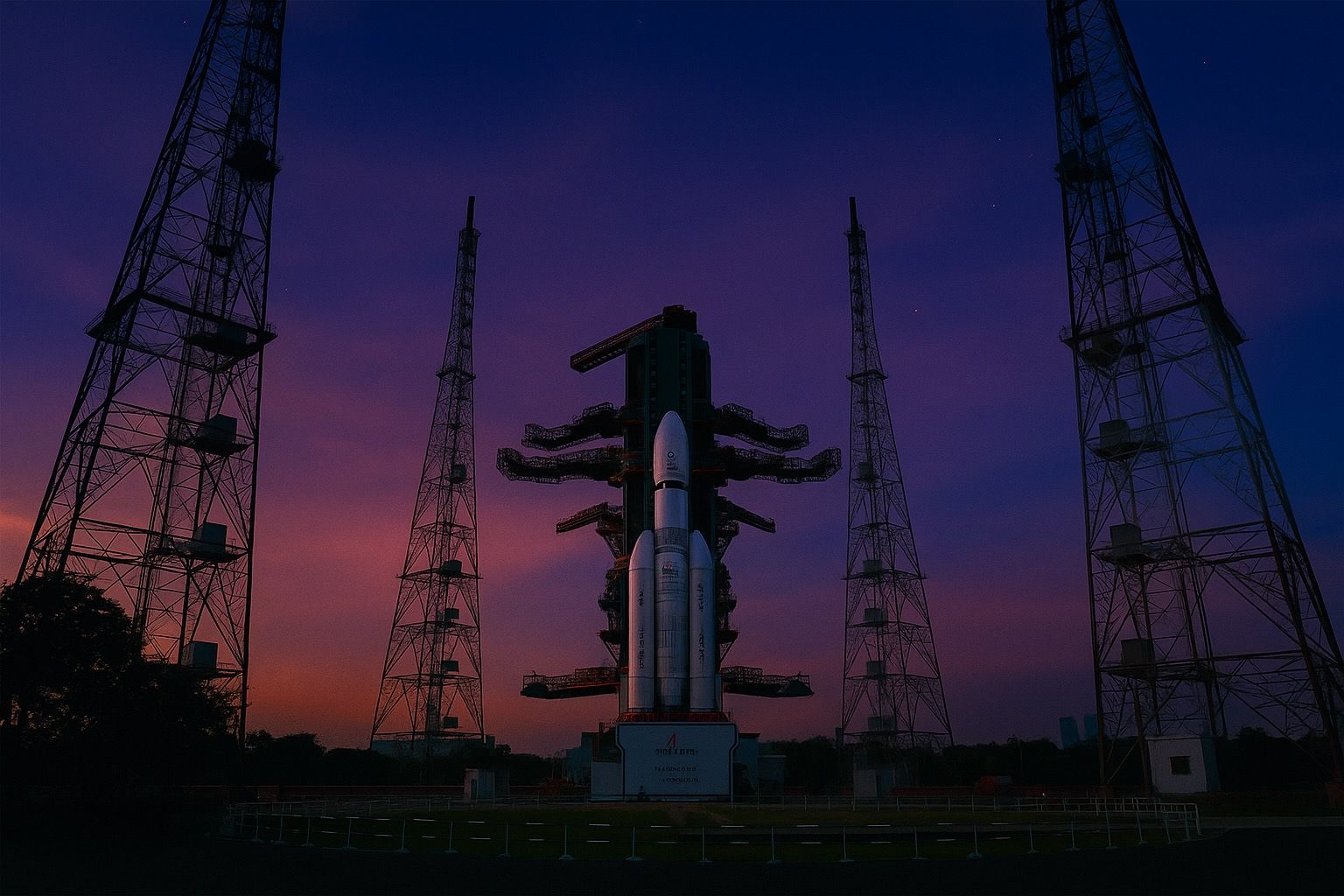
Artemis II Moon Mission – Countdown to History: In a major update from NASA’s Johnson Space Center on Sept 23, officials confirmed that Artemis 2 – the first crewed mission in NASA’s lunar return program – remains on schedule for no later than April 2026, with an earliest launch target of Feb 5, 2026 space.com. The 10-day mission will send four astronauts around the Moon, the first humans to venture beyond low-Earth orbit in over half a century. “We together have a front-row seat to history: we’re returning to the Moon after over 50 years,” exclaimed Lakiesha Hawkins, a senior NASA exploration manager space.com. The Artemis team emphasized that crew safety comes first, but if all goes smoothly with final testing and rocket stacking, Artemis 2 could lift off under the winter night sky to pave the way for a lunar landing on Artemis 3. The mission’s Orion spacecraft and SLS megarocket are nearly fully assembled, and excitement is building as NASA prepares to show off the completed vehicle this fall space.com. Cosmic “Noah’s Ark” Completes Its Voyage: A rather unusual spacecraft returned to Earth in mid-September carrying some very special passengers. On Sept 19, Russia’s Bion-M No. 2 research
24 September 2025
Space Race in 48 Hours: Starship Roars, Moon Mission Nears & Space Tourism Soars

Space Race in 48 Hours: Starship Roars, Moon Mission Nears & Space Tourism Soars

Solar Probes Take Flight: On Sept. 24, SpaceX’s Falcon 9 thundered off pad 39A in Florida carrying three solar science spacecraft: NASA’s Interstellar Mapping and Acceleration Probe, a small Carruthers Geocorona Observatory, and NOAA’s SWFO-L1 space-weather monitor science.nasa.gov science.nasa.gov. Liftoff was targeted for 7:30 a.m. EDT, with the booster aiming to hurl the payloads toward the Sun-Earth L1 point, about a million miles out nasa.gov nasa.gov. This mission inaugurates a new era in heliophysics – IMAP will map the boundaries of the heliosphere to better understand cosmic radiation and solar storms nasa.gov. It’s a ride-share trio: alongside IMAP, NASA’s Carruthers Observatory will image Earth’s outermost atmosphere and NOAA’s SWFO-L1 will serve as an early warning beacon for solar eruptions that could disrupt power grids and GPS nasa.gov nasa.gov. The Falcon 9 launch, managed by NASA’s Launch Services Program, was eagerly awaited after a one-day weather delay science.nasa.gov, and live coverage streamed on NASA’s new NASA+ platform. Artemis Moonship Nears Completion: At a Sept. 23 press event in Houston, NASA leaders gave an encouraging update on Artemis II, the crewed mission set to loop around the Moon. “We together have a front-row seat to history: We’re returning to the moon after
Tech Shockwaves: Cyber Attacks, Electric Skies & Space Launches Rock September 23-24, 2025

Tech Shockwaves: Cyber Attacks, Electric Skies & Space Launches Rock September 23-24, 2025

Apple’s latest flagships made waves as the iPhone 17 Pro and Pro Max hit the market. Unveiled with a laser-welded aluminum unibody and Apple’s new A19 Pro chip, the iPhone 17 Pro series delivers the “most powerful” performance and an “enormous leap in battery life,” according to Apple’s marketing chief Greg Joswiak apple.com. The phones pack three 48 MP “Fusion” cameras and a tougher Ceramic Shield 2 glass for greater durability apple.com apple.com. Apple also rolled out iOS 26 with new features. On the wearable side, Apple’s September event introduced the Apple Watch Series 11 with added health metrics and 24-hour battery life. In the Android arena, Samsung expanded its lineup by launching the Galaxy S25 FE, a more affordable spin on its flagship. The S25 FE sports a 6.7-inch 120 Hz AMOLED display, a triple-camera setup, and a hefty 4,900 mAh battery with 45 W fast charging english.mathrubhumi.com. Samsung also released several mid-range 5G models – Galaxy F17, M17, A17 and others – targeting budget-conscious consumers with competitive specs english.mathrubhumi.com. Meanwhile, Motorola tried blending luxury and tech with a limited Razr 60 “Swarovski Edition” foldable phone encrusted with crystals for the fashion-forward english.mathrubhumi.com english.mathrubhumi.com. These September device launches highlight
AST SpaceMobile Stock Skyrockets on Satellite Breakthroughs and Big-Name Backing

AST SpaceMobile Stock Skyrockets on Satellite Breakthroughs and Big-Name Backing

AST SpaceMobile’s stock has been on a meteoric rise in 2025, turning heads on Wall Street. On September 23, 2025, ASTS jumped about 10% during the trading day, hovering in the mid-$50s per share investing.com. This spike brought the stock near its all-time highs and represented a dramatic climb from roughly $18 a year ago. By comparison, the S&P 500’s performance over the same period has been far more subdued, underlining ASTS’s outsized gains. Year-to-date, ASTS has more than doubled in value amid a wave of optimistic news investing.com. Such explosive growth has propelled AST SpaceMobile’s market capitalization to roughly $20 billion investing.com, a hefty valuation for a pre-revenue company. However, the rapid ascent hasn’t been a smooth straight line. ASTS has experienced major swings – including a nearly 9–10% plunge on September 8–9 after competitive fears spooked investors gurufocus.com. In that episode, ASTS sank when SpaceX announced new spectrum plans and UBS issued a downgrade. These oscillations reflect AST SpaceMobile’s status as a high-volatility, sentiment-driven stock. Traders have piled in on bullish catalysts but have just as quickly cashed out on any perceived setbacks. The stock’s 52-week low of about $17.50 and high near $61 illustrate the wide trading
23 September 2025
‘God of Chaos’ Asteroid Apophis to Skim Earth in 2029 – Inside the Historic Flyby and the 3 Probes Racing to Study It

Astronomers Propose Blowing Up a Potentially Hazardous Asteroid

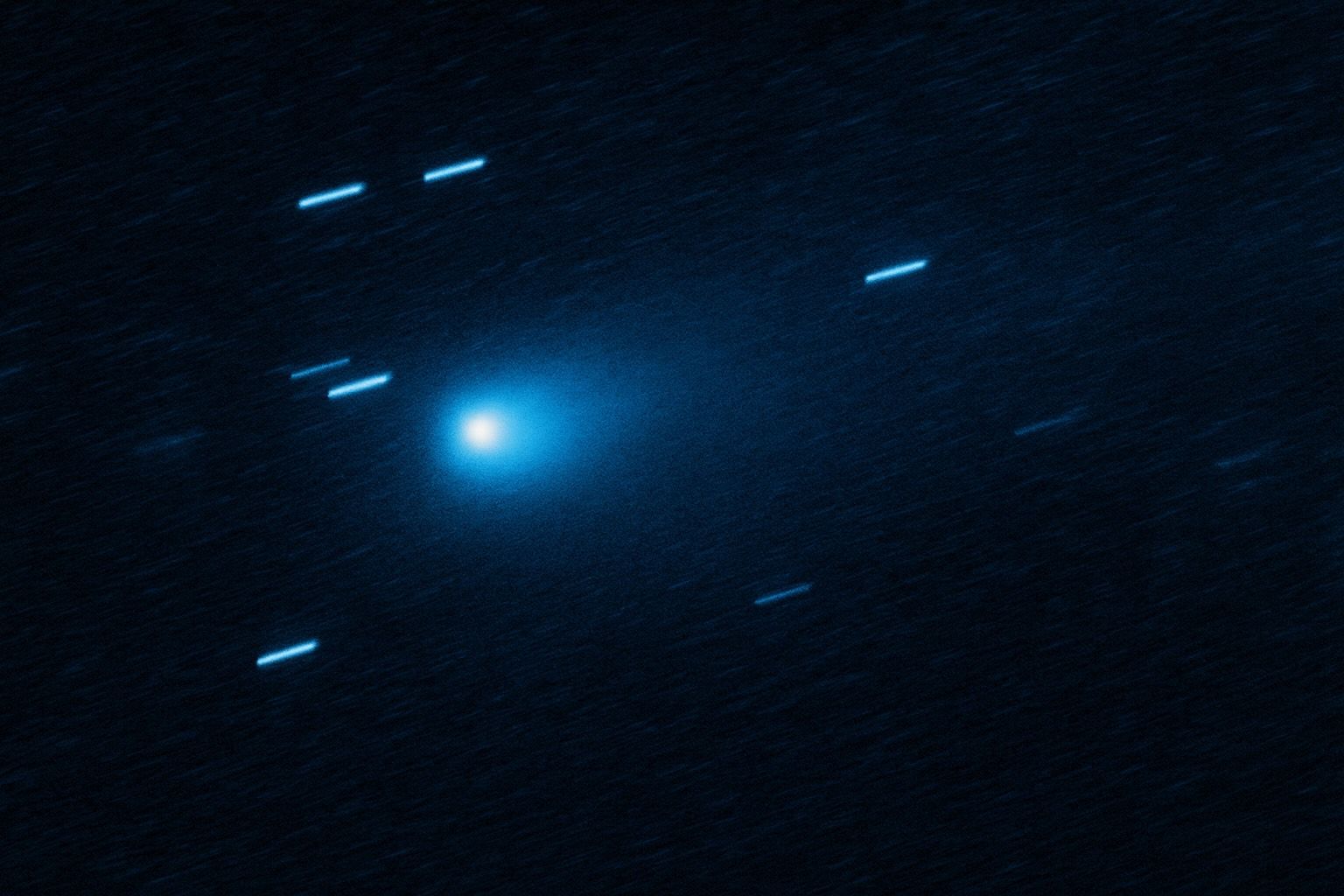
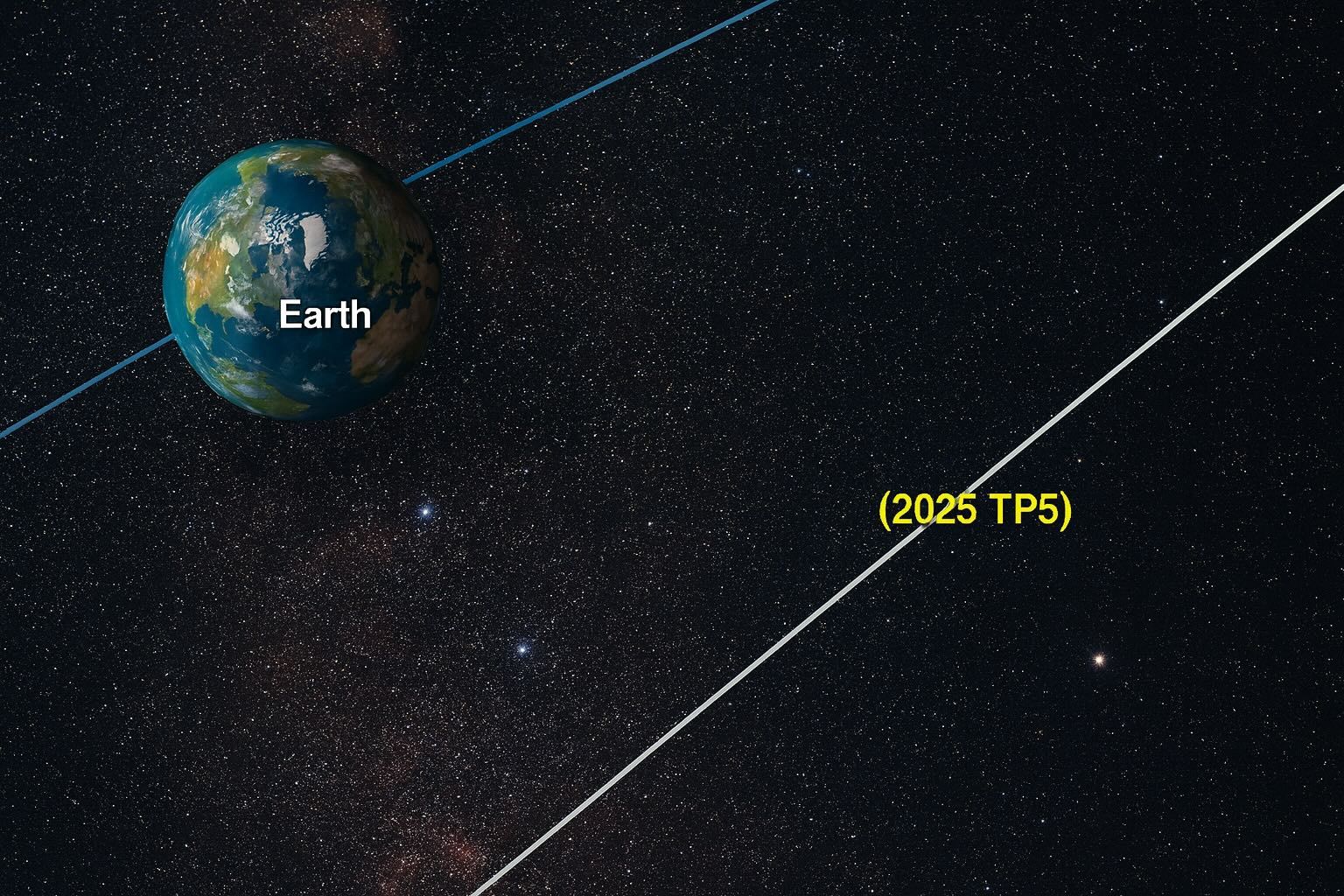
2024 YR4 is a recently discovered asteroid that has drawn intense attention from astronomers and space agencies. Detected on 27 December 2024 by the ATLAS survey telescope in Chile, it initially appeared on a worrisome trajectory esa.int. In early 2025, automated orbit calculations raised the alarm that this ~60-meter “city-killer” asteroid had a roughly 3% chance of impacting Earth on December 22, 2032 esa.int universetoday.com. A few percent might sound small, but by asteroid risk standards it’s huge – for context, NASA’s risk list almost never has objects above 1% chance of impact. Indeed, YR4 “shot to the top” of risk charts worldwide and became the first asteroid ever to trigger a coordinated international planetary defense response due to its initially high probability esa.int. Over the next several weeks, astronomers around the globe tracked YR4 to refine its orbit. By late February 2025, new observations – including precise measurements by the James Webb Space Telescope – allowed scientists to rule out any collision with Earth esa.int esa.int. The scare passed for our planet. However, YR4’s story took a twist: even as Earth was cleared from danger, calculations showed a possible lunar impact. When YR4 disappeared from telescopes’ view in mid-2025,
23 September 2025
Mexico’s Space Industry Is Taking Off: 2025 Market Report & Future Outlook

Mexico’s Space Industry Is Taking Off: 2025 Market Report & Future Outlook

Overall, Mexico’s space and satellite industry in 2025 is at an inflection point. After decades of gradual groundwork – from the first experimental rockets in the 1950s room.eu.com, to launching communications satellites in the 1980s, to establishing AEM in 2010 – the country is now leaping forward with a coordinated national strategy. Government programs are aligning with private innovation and academic talent, creating an ecosystem primed for takeoff. The historical constraints are giving way to new momentum fueled by ambitious policies and global partnerships. Challenges remain – funding needs to scale up from the modest ~$3 million AEM annual budget of the early 2020s en.wikipedia.org, and the country must continue building technical infrastructure and a regulatory framework that encourages investment. But the trajectory is unmistakably upward. As one industry leader put it, Mexico has a five-year window to join the top tier of the space industry, and the nation is determined not to miss this opportunity mexicobusiness.news mexicobusiness.news. If current trends continue, by the early 2030s Mexico will be not just a consumer of space services, but a significant regional provider – launching its own satellites, training a new generation of aerospace engineers, and contributing to humanity’s ventures in space.
Spy Satellite Launch, New Astronauts & a Lunar Lander Deal – Space News Roundup (Sept 22–23, 2025)

Spy Satellite Launch, New Astronauts & a Lunar Lander Deal – Space News Roundup (Sept 22–23, 2025)

Spy sats on the West Coast: SpaceX lofted another batch of classified U.S. spy satellites on Sept. 22, with a Falcon 9 roaring off Vandenberg Space Force Base at 1:38 p.m. EDT space.com. The NROL-48 mission – SpaceX’s 11th dedicated launch for the National Reconnaissance Office’s new “proliferated architecture” – carried a cluster of undisclosed reconnaissance payloads. The NRO is pivoting to large numbers of smaller satellites instead of a few big ones, aiming to deliver “an order of magnitude more signals and images” with faster revisit times and resilience space.com. SpaceX’s webcast cut off early at the NRO’s request, but the Falcon 9’s first stage landed safely back at Vandenberg space.com. “To stay ahead… the NRO is modernizing its architecture… delivering more capability faster with increased resilience,” officials said of the shift to many mini-satellites space.com. Starlink surge continues: Barely a day later, SpaceX notched yet another Falcon 9 launch from Florida’s Cape Canaveral. In an early-morning liftoff, a Falcon 9 deployed 28 new Starlink broadband satellites into low Earth orbit, marking SpaceX’s 119th mission of the year keeptrack.space. This flight took off at 6:53 a.m. EDT and further grew the Starlink constellation, which now numbers well over 5,000
23 September 2025
Tech Shockwaves: Space Spies, TikTok’s Lifeline & Cyber Chaos – Global Tech Roundup (Sept 22–23, 2025)

Tech Shockwaves: Space Spies, TikTok’s Lifeline & Cyber Chaos – Global Tech Roundup (Sept 22–23, 2025)

A high-stakes TikTok divestment deal is coming to fruition in Washington, staving off a looming ban. President Donald Trump will sign an order declaring that TikTok’s U.S. operations have a buyer that meets legal requirements, a White House official said reuters.com. Under the plan, China’s ByteDance will retain less than 20% of TikTok, with the U.S. entity controlled by existing American stakeholders and new heavyweight investors reuters.com. Oracle and private equity firm Silver Lake are confirmed participants, and the full roster “is going to be real household names,” the official hinted reuters.com. As part of the agreement, all American user data must reside on U.S. servers run by Oracle reuters.com, addressing long-standing national security fears about Chinese data access. Trump’s order will also pause enforcement of a congressionally mandated TikTok ban for 120 days to let the deal close reuters.com. The breakthrough – apparently blessed by Beijing reuters.com – marks a rare easing of U.S.-China tech tensions and a relief for TikTok’s 170 million American users and creators reuters.com. Google is squaring off with U.S. antitrust enforcers in an Alexandria, VA courtroom, seeking to prevent a forced breakup of its lucrative online advertising business reuters.com. The Department of Justice, joined
Jeff Bezos’ Free-Flying Space Camera Wows the World – With a Mysterious Spinning Twist

Jeff Bezos’ Free-Flying Space Camera Wows the World – With a Mysterious Spinning Twist

A frame from Blue Origin’s New Shepard NS-35 flight footage, captured by the free-flying 360° camera after it detached in space. The camera’s perspective shows the booster and capsule above Earth’s horizon, offering a dramatic “third-person” view of the rocket. Jeff Bezos took to social media to reveal an “amazing” free-flying space camera that was deployed during Blue Origin’s latest suborbital flight. The camera was released on the New Shepard NS-35 mission to independently float alongside the rocket and capsule techeblog.com. In the short clip Bezos shared, the camera’s eye provides a spectator’s view of the booster coasting in the blackness of space with Earth’s blue curve below. The Amazon founder exulted in the footage, tweeting “What a view. From our new free flying camera – deployed on yesterday’s New Shepard mission.” He then preemptively explained the strange visual artifact in the video, noting that “the ‘bubble’ is the seam between two 180 degree lenses.” petapixel.com
22 September 2025
Fly Through the Milky Way: ESA’s Stunning New 3D Galaxy Map Lets You Tour Our Galaxy

Fly Through the Milky Way: ESA’s Stunning New 3D Galaxy Map Lets You Tour Our Galaxy

Launching on 19 December 2013, the ESA’s Gaia spacecraft set out to chart our Milky Way in unprecedented detail ucl.ac.uk. Stationed at the stable L2 point about 1.5 million km from Earth – the same deep-space neighborhood as NASA’s James Webb Space Telescope – Gaia had a very different mission: to survey our own galaxy rather than peering at the distant universe earthsky.org. Over more than a decade, Gaia repeatedly scanned the sky with a billion-pixel camera, measuring the position, brightness, and motion of billions of stars multiple times earthsky.org earthsky.org. This technique allows astronomers to triangulate distances via parallax and track how stars move over time earthsky.org earthsky.org. The result is the most precise stellar catalog ever assembled – a foundation for a true 3D map of the Milky Way. Gaia’s data have been released in stages, each unlocking new discoveries. The first data release in 2016 and DR2 in 2018 provided distances and motions for millions of stars, already revolutionizing our view of the galaxy earthsky.org earthsky.org. In June 2022, Gaia Data Release 3 expanded the catalog to nearly 2 billion stars, adding measurements of stellar temperatures, chemical compositions, ages, and even “starquakes” – tiny oscillations in stars
22 September 2025
Argentina’s Space Industry Is Taking Off: Inside the Satellite Boom and What’s Next

Argentina’s Space Industry Is Taking Off: Inside the Satellite Boom and What’s Next

Argentina’s journey into space began remarkably early. In the 1940s, visionary engineer Teófilo Tabanera formed the Sociedad Argentina Interplanetaria, making Argentina the first Latin American country with a spaceflight organization en.wikipedia.org. By 1960 – nearly a year before humans reached space – Argentina established the National Commission for Space Research with Tabanera at the helm en.wikipedia.org. Throughout the 1960s, CNIE and the Air Force’s research institute launched a series of indigenous multistage high-altitude rockets, successfully sending scientific payloads to the upper atmosphere en.wikipedia.org. In fact, Argentina became the first country in Latin America to send an object into space on a homegrown rocket, a point of immense national pride en.wikipedia.org. However, the early space efforts intersected with military ambitions. In the 1980s, Argentina developed the Condor medium-range ballistic missile program. Under international pressure, the Condor missile was canceled in 1991 en.wikipedia.org. That same year proved a turning point: President Carlos Menem’s administration dissolved CNIE and created a new civil National Space Activities Commission to refocus all space activities on peaceful, scientific, and commercial goals en.wikipedia.org. CONAE inherited the infrastructure and some personnel from the Condor program, repurposing rocket labs for civilian use and marking a clear demilitarization of Argentina’s space
Space Spectacle: NASA Unveils New Astronauts, SpaceX Launch Blitz & Cosmic Breakthroughs (21–22 Sep 2025)

Space Spectacle: NASA Unveils New Astronauts, SpaceX Launch Blitz & Cosmic Breakthroughs (21–22 Sep 2025)

NASA’s Space Weather Trio Set for Launch: At Kennedy Space Center, NASA and NOAA are on the cusp of launching three spacecraft that promise new insight into solar storms and the Solar System’s boundary. On Sept. 21, officials declared the IMAP mission and its two co-manifested satellites “go” for launch science.nasa.gov. IMAP will travel ~1.5 million km sunward to the Sun–Earth L1 point to map the heliosphere – the magnetic bubble shielding our Solar System – and study how solar wind particles and cosmic rays interact at that frontier nasa.gov science.nasa.gov. Riding along is NOAA’s Space Weather Follow-On, designed to give Earth ~30 minutes advance warning of solar eruptions, and NASA’s Carruthers Geocorona Observatory, a smallsat that will image Earth’s outermost atmosphere in ultraviolet light nasa.gov nasa.gov. Liftoff is scheduled for Sept. 23 at 7:32 a.m. EDT on a SpaceX Falcon 9 from Launch Complex 39A, with coverage on NASA TV and the new NASA+ streaming service nasa.gov science.nasa.gov. “These three missions will map our Sun’s influence across the solar system in new ways,” NASA officials said of IMAP, SWFO-L1 and Carruthers, noting that all will operate continuously at L1 to help safeguard Earth from space weather and probe cosmic
Norway’s Space Industry Is Skyrocketing – Inside the High North’s Satellite Boom

Norway’s Space Industry Is Skyrocketing – Inside the High North’s Satellite Boom

In conclusion, Norway’s space and satellite industry has quietly grown into a dynamic, multi-faceted sector that touches many aspects of modern life – from the TV we stream, to the ships monitored off the coast, to scientific discoveries in the aurora. Long overshadowed by bigger spacefaring nations, Norway is now stepping into the limelight with new infrastructure and bold projects. “Our commercial space activities will put Norway on the map as a strategic, European asset in the space sector,” says NOSA Director Christian Hauglie-Hanssen businessnorway.com. The recent flurry of activity – a new spaceport, new satellites, new partnerships – suggests this once “best-kept secret” is out. As Norway harnesses its geographic advantages and high-tech expertise, it is carving out a crucial niche in the burgeoning global space economy. In the next 5–10 years, when rockets are launching from Arctic Norway and twice as many Norwegian satellites orbit above, no one will be surprised to hear that this Nordic nation has become a key space powerhouse in its own right. Sources: Norwegian Space Agency spaceagency.no spaceagency.no; Business Norway/Innovation Norway businessnorway.com businessnorway.com; High North News highnorthnews.com; Spaceflight Now spaceflightnow.com; Broadband TV News broadbandtvnews.com; Regjeringen.no regjeringen.no highnorthnews.com; Space Norway AS spacenorway.com; ESA esa.int;
Weekend Science Bonanza: Breakthroughs From Space to Superbugs

Weekend Science Bonanza: Breakthroughs From Space to Superbugs

Humanity’s search for cosmic neighbors hit a celebratory peak. NASA announced it has confirmed over 6,000 exoplanets – planets orbiting other stars – just three decades after finding the very first such world entechonline.com. This tally reflects an explosion of discoveries by telescopes like Kepler and TESS. “Each of the different types of planets we discover gives us information about… how common planets like Earth might be,” explained Dr. Dawn Gelino, who leads NASA’s exoplanet program, noting that every discovery helps us inch closer to answering the ultimate question of whether we’re alone sciencealert.com. The 6,000-planet milestone isn’t just a number – it highlights the diversity of alien worlds, from hot Jupiters to likely ocean planets, and guides scientists on where to hunt for habitable “Goldilocks” planets next sciencealert.com. Another cosmic first came from violent black hole mergers. For the first time, astronomers managed to measure the full recoil of a newly merged black hole – essentially catching nature’s most extreme cannonball in the act. Gravitational wave detectors had observed a 2019 black hole collision, and now a team led from Galicia, Spain analyzed the signal’s subtleties to reconstruct the merged black hole’s 3D motion phys.org phys.org. The result: the
Space Weekend Shockers: Starlink Blitz, Moon Rover Revival & Mars Life Clues (Sept 20–21, 2025)

Space Weekend Shockers: Starlink Blitz, Moon Rover Revival & Mars Life Clues (Sept 20–21, 2025)

SpaceX’s Starlink Surge: SpaceX capped a busy week with back-to-back Starlink launches. On Sept. 19, a Falcon 9 from foggy Vandenberg SFB deployed 24 Starlink satellites into low Earth orbit space.com, using a veteran booster on its 10th flight space.com. This boosted the Starlink constellation to around 8,400 active satellites, the largest ever space.com. Just hours later, SpaceX rolled out another Falcon 9 in Florida for a near-sunrise launch on Sept. 21 carrying 28 more Starlink V2 Mini satellites spaceflightnow.com. Liftoff from Cape Canaveral at 6:53 a.m. EDT Sunday went off smoothly, with the booster landing at sea and the batch heading to join the network. These missions underscore SpaceX’s relentless cadence – 117 Falcon 9 flights in 2025 so far space.com – as it pushes toward global broadband coverage. ISS Cargo Arrival: Earlier in the week, Northrop Grumman’s Cygnus XL cargo craft successfully docked to the ISS after a slight delay spaceflightnow.com. The craft launched on a Falcon 9 on Sept. 15, delivering fresh supplies and treats for astronauts space.com. NASA reported a brief propulsion issue en route spaceflightnow.com, but mission controllers resolved it, allowing the “S.S. Dr. Janice Voss” Cygnus to berth on Sept. 18. This first flight
21 September 2025
Space Missions, Smartphone Frenzy & Cyber Chaos: Tech’s Wild Weekend (Sept 20–21, 2025)

Space Missions, Smartphone Frenzy & Cyber Chaos: Tech’s Wild Weekend (Sept 20–21, 2025)

Russian tech retailers rolled out Apple’s iPhone 17 in Moscow on Saturday, drawing surprisingly strong consumer demand. Major reseller Restore: reported a 66% jump in pre-orders compared to the last iPhone release reuters.com reuters.com. “This year we have 66% more preorders than last year,” confirmed Lyudmila Semushina, PR director for the retail group, who noted a “huge fan base that will never exchange iPhone for anything else” despite high prices reuters.com. Shoppers in Moscow cited the upgraded cameras and features as compelling reasons to upgrade. One early customer remarked the iPhone 17 was “a major update,” adding that many Russians increasingly rely on FaceTime as domestic calling apps face restrictions reuters.com. The robust sales come even as Russia’s economy slows, indicating that consumer appetite for premium gadgets remains resilient reuters.com. Analysts say the launch underscores Apple’s enduring brand loyalty – even in markets where the company no longer officially operates due to geopolitical tensions, gray-market retailers are successfully catering to eager iPhone fans. In a policy jolt to the global tech workforce, the United States imposed a $100,000 fee on new H-1B visa petitions effective Sept 21. The steep fee – part of an executive order signed by President Trump
SpaceX: Comprehensive Overview of History, Technologies, Missions, and Future Plans

SpaceX Falcon 9 Starlink Launch Set for Sept. 21, 2025 – Mission Details, Viewing Tips & More

The sections below delve deeper into the mission details, rocket background, viewing opportunities, expert insights, recent developments, and how this launch fits into the broader spaceflight landscape. SpaceX is set to launch a Falcon 9 rocket before dawn on Sunday from Florida’s Cape Canaveral, carrying another batch of Starlink internet satellites to orbit. Liftoff is scheduled for 5:20 a.m. Eastern Daylight Time on Sept. 21 spaceflightnow.com, though the launch window remains open until 9:20 a.m. in case of minor delays mynews13.com. The mission, designated Starlink Group 10-27, will see the Falcon 9 travel on a northeasterly trajectory after liftoff nasaspaceflight.com, hugging the U.S. East Coast as it heads to the targeted orbit. This trajectory, inclined about 53° to Earth’s equator, is typical for Starlink missions launched from Florida, allowing the satellites to join one of Starlink’s mid-inclination orbital shells nasaspaceflight.com.
20 September 2025
1 3 4 5 6 7 21

Stock Market Today

  • Mobility Global (NYSE: MBGL) Starts Trading After Spinoff From S&P Global
    July 1, 2026, 10:10 AM EDT. Mobility Global (NYSE: MBGL) started trading as its own public company after splitting from S&P Global (NYSE: SPGI). The NYSE gave a pre-market update from the trading floor July 1, 2026, with Ashley Mastronardi reporting. Market watchers are looking at today's start to the second half of 2026 trading. Evernorth also rolled out its new 'Pharmacy Forward' platform. The U.S. Secret Service's New York Field Office rang the NYSE Closing Bell as part of the day's ceremonial events. For live updates and IPO info, investors can use the NYSE TV app at TV.NYSE.com.
Go toTop