Today: 1 July 2026
Browse Category

Space 18 September 2025 - 20 September 2025

SpaceX’s Next California Rocket Blast: Falcon 9 Spy-Sat Launch – When and How to Watch

SpaceX’s Next California Rocket Blast: Falcon 9 Spy-Sat Launch – When and How to Watch

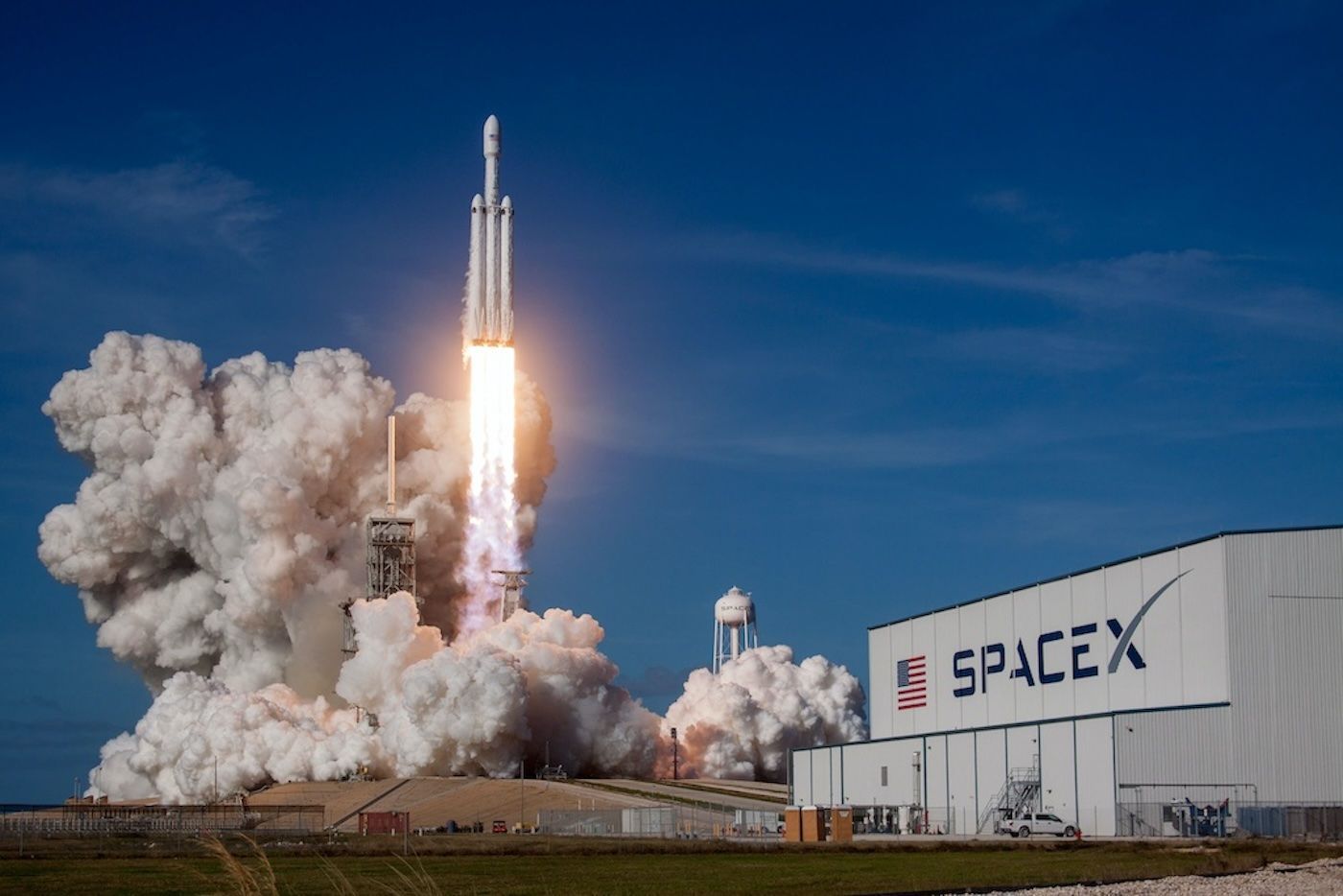
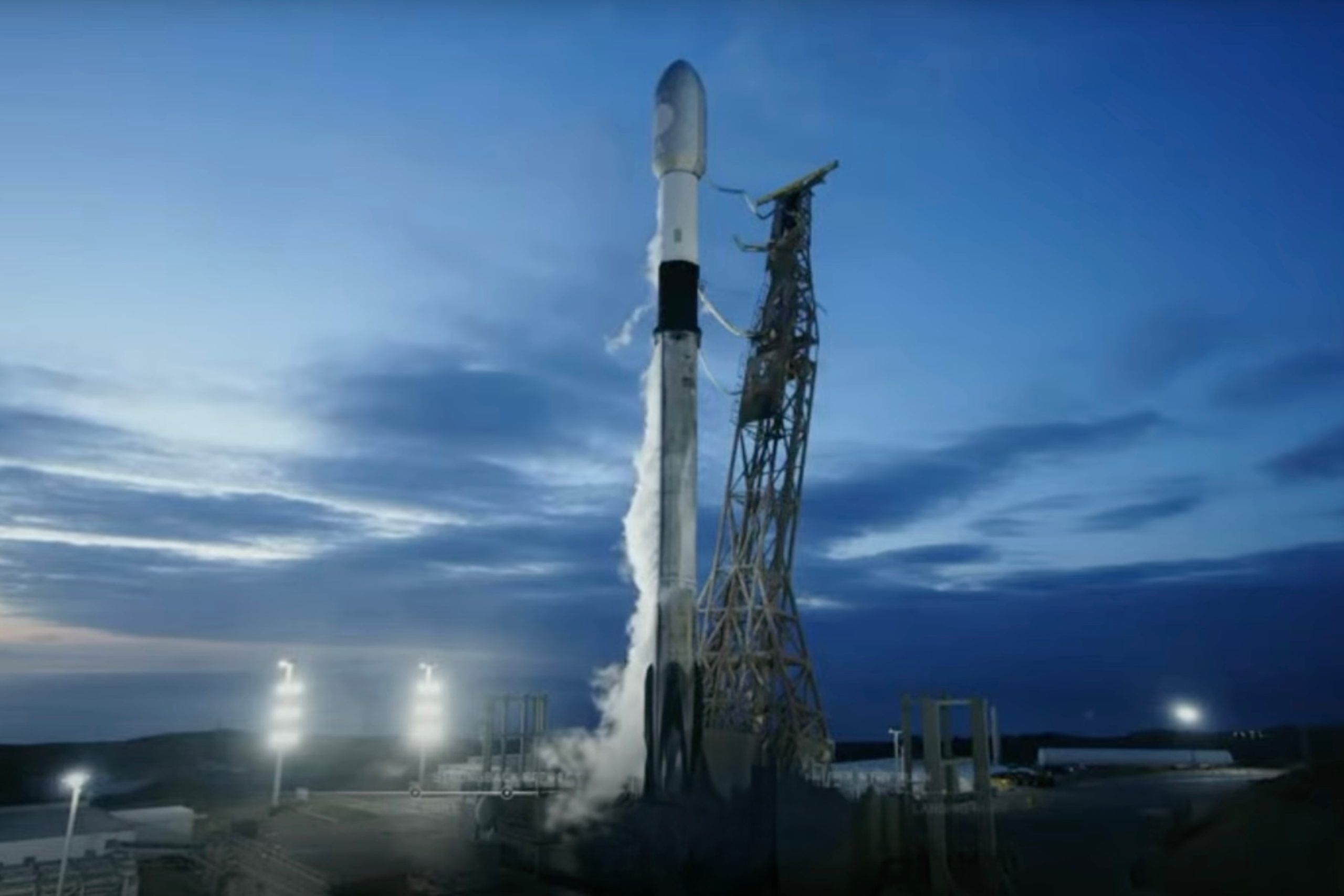
September 2025 has been especially busy for SpaceX in California. Earlier in the month, a Falcon 9 from Vandenberg successfully lofted 21 military satellites for the Space Development Agency – part of a new Pentagon communications network in low orbit spaceflightnow.com spaceflightnow.com. Just days later, another Falcon 9 from Vandenberg carried a batch of Starlink internet satellites to orbit spaceflightnow.com. Now SpaceX is turning around for yet another mission from Vandenberg: the NROL-48 reconnaissance satellite launch for the NRO. For casual spectators, the rapid cadence might blur the differences between missions. Whether the payload is commercial, civil, or military, the sight for onlookers is the same – a bright Falcon 9 roaring to life and slicing into the sky. “I always find it amazing that this cadence has become somewhat normal,” said Anne Mason, SpaceX’s director of National Security Space Launch space.com. Just five years ago, SpaceX launched about 25 times a year, “and now [we’re] launching on average every two to three days,” Mason noted, crediting Falcon 9’s reusability and reliability for making such a tempo possible space.com. In fact, SpaceX is on pace for a record-breaking launch year – aiming for up to 170 orbital missions in 2025,
20 September 2025
The Netherlands’ Space Industry Is Booming: Inside the Dutch Satellite Sector and 2030 Outlook

The Netherlands’ Space Industry Is Booming: Inside the Dutch Satellite Sector and 2030 Outlook

The Netherlands has a rich space heritage dating back to the dawn of the space age. It was an early participant in European space efforts – by 1968, ESA’s ESTEC technical center was established in Noordwijk, inaugurated by Dutch royalty to spearhead Europe’s space research esa.int. The country joined the newly formed European Space Agency in 1975 as a founding member, embedding itself in collaborative programs from the start. The Netherlands launched its first satellite in 1974: the Astronomical Netherlands Satellite was built in partnership with NASA and marked the country’s first independent satellite mission heasarc.gsfc.nasa.gov. This was followed by the Infrared Astronomical Satellite in 1983 – the world’s first infrared space telescope, a joint venture with the US and UK nlr.org. Dutch engineers and scientists contributed key instruments, laying groundwork for expertise in satellite technology.
Space Race Heats Up: Major Launches, Moon Missions & Policy Showdowns (Sept. 19–20, 2025)

Space Race Heats Up: Major Launches, Moon Missions & Policy Showdowns (Sept. 19–20, 2025)

SpaceX continued its rapid launch cadence with yet another Starlink deployment on Sept. 19. After two days of bad weather delays, a Falcon 9 rocket roared off the pad at Vandenberg Space Force Base at 9:31 a.m. local time, carrying 24 Starlink V2 Mini satellites into polar orbit spaceflightnow.com. This mission – dubbed Starlink 17-12 – was SpaceX’s 84th Starlink launch of the year, underscoring the company’s breakneck pace in 2025 spaceflightnow.com. It also brings the total Starlink satellites launched in 2025 to over 2,000 as SpaceX builds out its massive internet constellation spaceflightnow.com. Notably, the booster reuse milestone reached double digits: the first-stage booster was flying its 10th mission spaceflightnow.com. About 8½ minutes after liftoff, it nailed the landing on the droneship Of Course I Still Love You stationed off California’s coast spaceflightnow.com. That marks SpaceX’s 507th successful booster recovery overall spaceflightnow.com – a routine feat now, but one that has dramatically lowered launch costs. SpaceX’s ability to refly rockets is fueling this year’s record launch rate.
Brazen Baltic Sky Showdown: Estonia Accuses Russia of Reckless Airspace Violation, Triggers NATO Alarm

Brazen Baltic Sky Showdown: Estonia Accuses Russia of Reckless Airspace Violation, Triggers NATO Alarm

Estonia is accusing Russia of a deliberate and unprecedented breach of its sovereign airspace in a flare-up that has heightened tensions in the Baltics. On September 19, Estonian radars detected three Russian MiG-31 Foxhound interceptor jets crossing into Estonian territory near Vaindloo Island, a small islet in the Gulf of Finland near the Russian border. According to Estonia’s military, the high-speed jets penetrated about 5 nautical miles into Estonian airspace and remained inside for around 12 minutes before turning back reuters.com reuters.com. During the incursion, the Russian planes had no flight plans filed, their transponders turned off, and no contact with air traffic control, violating international aviation norms theguardian.com. NATO’s Baltic Air Policing mission sprang into action immediately. Italian Air Force F-35 fighters on rotation in Estonia were scrambled from Ämari Air Base and intercepted the intruders within minutes theguardian.com. Estonian Prime Minister Kristen Michal said the NATO jets confronted the MiGs and “forced [them] to flee” back toward Russia theguardian.com. “Such violation is totally unacceptable,” Michal declared on social media, announcing that Estonia would invoke Article 4 of the NATO treaty to consult allies on the security threat theguardian.com.
20 September 2025
‘God of Chaos’ Asteroid Apophis to Skim Earth in 2029 – Inside the Historic Flyby and the 3 Probes Racing to Study It

‘God of Chaos’ Asteroid Apophis to Skim Earth in 2029 – Inside the Historic Flyby and the 3 Probes Racing to Study It

99942 Apophis is a near-Earth asteroid that shot to notoriety soon after its discovery in 2004. On June 19, 2004, astronomers Roy Tucker, David Tholen, and Fabrizio Bernardi at Kitt Peak Observatory first spotted this 340-meter space rock science.nasa.gov. Early orbit calculations startled scientists – there appeared to be a 2.7% chance that Apophis could hit Earth on April 13, 2029, an unprecedented level of risk that briefly ranked Level 4 on the Torino impact hazard scale, the highest rating ever assigned to a near-Earth object livescience.com. In light of this potential danger, the asteroid was given the formal name Apophis after an ancient Egyptian deity of chaos and darkness, earning it the popular nickname “God of Chaos” livescience.com space.com. Despite the ominous moniker, Apophis is now understood to be far more friend than foe. Years of observations, including precise radar ranging, steadily refined Apophis’s orbit and erased the early uncertainty. By 2021, NASA was “confident that there is no risk of Apophis impacting our planet for at least 100 years.” science.nasa.gov livescience.com. The asteroid was formally removed from risk watchlists after astronomers narrowed its trajectory down to within just a few miles of uncertainty. Today Apophis is classified as
20 September 2025
SpaceX Falcon 9 to Launch Triple “Space Weather” Mission Guarding Earth

SpaceX Falcon 9 to Launch Triple “Space Weather” Mission Guarding Earth

In a single launch, SpaceX’s Falcon 9 will boost a trio of missions that promise to illuminate how the Sun influences our cosmic neighborhood – and help protect Earth from the Sun’s outbursts. NASA’s IMAP, NOAA’s SWFO-L1, and NASA’s Carruthers Geocorona Observatory will all ride into space together, bound for a point about one million miles from Earth in the direction of the Sun science.nasa.gov. There, at the Sun-Earth L1 Lagrange point, the three spacecraft can maintain a stable position and continuously face the Sun, an ideal vantage to monitor solar emissions and their impact on the space around Earth science.nasa.gov. This launch marks one of the most multifaceted science missions yet on a single Falcon 9, combining pure research with operational forecasting to guard our planet nasa.gov sciencesprings.wordpress.com. Space weather refers to the variable conditions on the Sun and in the space environment that can impact Earth and human technologies. Sudden eruptions like solar flares or coronal mass ejections can hurl intense radiation and charged particles toward Earth, potentially knocking out satellites, disrupting communications and navigation, damaging power grids, and endangering astronauts outside Earth’s protective magnetic field sciencesprings.wordpress.com nesdis.noaa.gov. “Space weather is one of the largest threats to modern
19 September 2025
SpaceX Rocket to Launch NASA’s Triple Solar Mission to L1 – Unveiling Sun Secrets from Earth’s “Halo” to the Solar System’s Edge

SpaceX Rocket to Launch NASA’s Triple Solar Mission to L1 – Unveiling Sun Secrets from Earth’s “Halo” to the Solar System’s Edge

NASA and NOAA are launching three complementary missions on one rocket – a rare rideshare that underscores how interconnected Sun-Earth science has become nasa.gov space.com. Liftoff is scheduled for 7:32 a.m. EDT on Sept. 23, 2025, from Launch Complex 39A at Kennedy Space Center nasa.gov. SpaceX’s Falcon 9 will boost the trio into an Earth-escape trajectory toward the L1 Lagrange point, about 1.5 million km from Earth toward the Sun space.com. At L1, the gravitational pull of Earth and Sun balances enough to let a spacecraft “hover” relative to Earth science.nasa.gov. It’s a prized spot for solar observatories – satellites there enjoy continuous sunlight and an uninterrupted view of the Sun, without Earth ever eclipsing their sight science.nasa.gov. For decades, L1 has hosted solar monitoring probes and observatories. What’s new on Sept. 23 is that three spacecraft will arrive at L1 together, each focusing on a different piece of the Sun-Earth puzzle space.com science.nasa.gov:
19 September 2025
Arctic Radar Revolution: Space Norway & SSTL Join Forces on Game-Changing Satellite Program

Arctic Radar Revolution: Space Norway & SSTL Join Forces on Game-Changing Satellite Program

Space Norway AS is Norway’s national satellite operator, tasked with developing strategic space infrastructure for governmental and societal needs sstl.co.uk. Wholly owned by the Norwegian Ministry of Trade, Industry and Fisheries, Space Norway focuses on “critical connectivity” and Arctic coverage – operating telecommunication satellites, managing fiber links to Svalbard, and overseeing small satellites for maritime tracking sstl.co.uk. In 2019, it formed Space Norway HEOSAT to field two highly-elliptical broadband satellites for the Arctic sstl.co.uk. The new radar initiative marks Space Norway’s expansion into Earth observation, aligning with its mandate to enhance national security and serve remote areas. Surrey Satellite Technology Ltd, based in Guildford, UK, is a world-leading small-satellite manufacturer owned by Airbus. Since 1981 SSTL has built over 70 satellites for international customers sstl.co.uk, pioneering microsatellite technology. SSTL is renowned for innovative Earth observation missions – from early microsats developed at the University of Surrey to modern platforms like NovaSAR-1, an S-band SAR satellite launched in 2018 sstl.co.uk. NovaSAR-1 proved SSTL’s radar expertise, demonstrating maritime imaging capabilities and serving multiple customers worldwide sstl.co.uk. This heritage in small SAR missions made SSTL an ideal partner for Space Norway’s new program. SSTL will supply the satellite platform and integration know-how, leveraging
19 September 2025
Sky Is No Limit: Global Satcom Market Set to Soar Through 2035

Satellite IoT Boom: Space Networks Poised to Connect the Unconnected by 2029

Just a few years ago, satellite IoT was a niche segment – but not for long. Analysts project exponential growth through the decade. Berg Insight’s latest report pegs satellite IoT connectivity revenues at €1.58 billion by 2029 techafricanews.com. The subscriber count is expected to quintuple, reaching 32.5 million IoT devices on satellite networks by 2029 techafricanews.com. Another analysis by IoT Analytics finds 7.5 million active satellite IoT connections in 2024, with total market climbing 26% annually to $4.7 billion by 2030 iot-analytics.com. In short, space-based IoT is transitioning from early adopter phase to mainstream deployment. This surge is occurring despite falling ARPU – a sign of pricing becoming more affordable. The monthly IoT connectivity cost via satellite is forecast to drop to around €4 per device by 2029 techafricanews.com. For comparison, satellite IoT still commands a premium – legacy satellite plans often ran $40–70 per device/month, nearly 15× the ARPU of cellular IoT iot-analytics.com – but that gap is closing fast. With new low-cost constellations, some services are pushing costs down into the single-digit dollars range. offered global IoT connectivity for ~$5 per month per device techcrunch.com, using palm-sized “SpaceBEE” satellites. SpaceX is now folding Swarm’s tech into its larger
19 September 2025
Wi-Fi From Space: Kazakhstan’s Bold Pilot Brings Satellite Internet Aboard Trains

Wi-Fi From Space: Kazakhstan’s Bold Pilot Brings Satellite Internet Aboard Trains

Not long ago, the idea of full internet access on Kazakhstani trains felt like science fiction. Today it’s becoming reality, as a new pilot program beams satellite internet to moving trains across Kazakhstan. In an interview with The Times of Central Asia, Anuar Akhmetzhanov – Chairman of the Board of JSC “Passenger Transport,” a division of national railway company Kazakhstan Temir Zholy – explained that onboard Wi-Fi is now a key priority in modernizing passenger transport timesca.com. Starting this year, KTZ teamed up with the official distributor of OneWeb to bring high-speed connectivity to select long-distance routes timesca.com. The first test came on the popular Astana–Almaty line, quickly followed by the Astana–Oskemen route in the spring timesca.com. Riders on these trains can now video chat, stream movies, and browse the web from their seats – a dramatic change for rail journeys that often last 17+ hours across the steppe astanatimes.com. This railway internet initiative leverages low-orbit satellite networks orbiting a few hundred kilometers above the Earth, which can deliver broadband to remote locations that lack cell coverage. OneWeb’s network is central to the pilot: antenna equipment on the train connects to OneWeb satellites, with Jusan Mobile acting as the local
19 September 2025
SpaceX Starship’s Epic Test Flight Stuns the World – What It Means for Moon, Mars, and Beyond

SpaceX Starship’s Epic Test Flight Stuns the World – What It Means for Moon, Mars, and Beyond

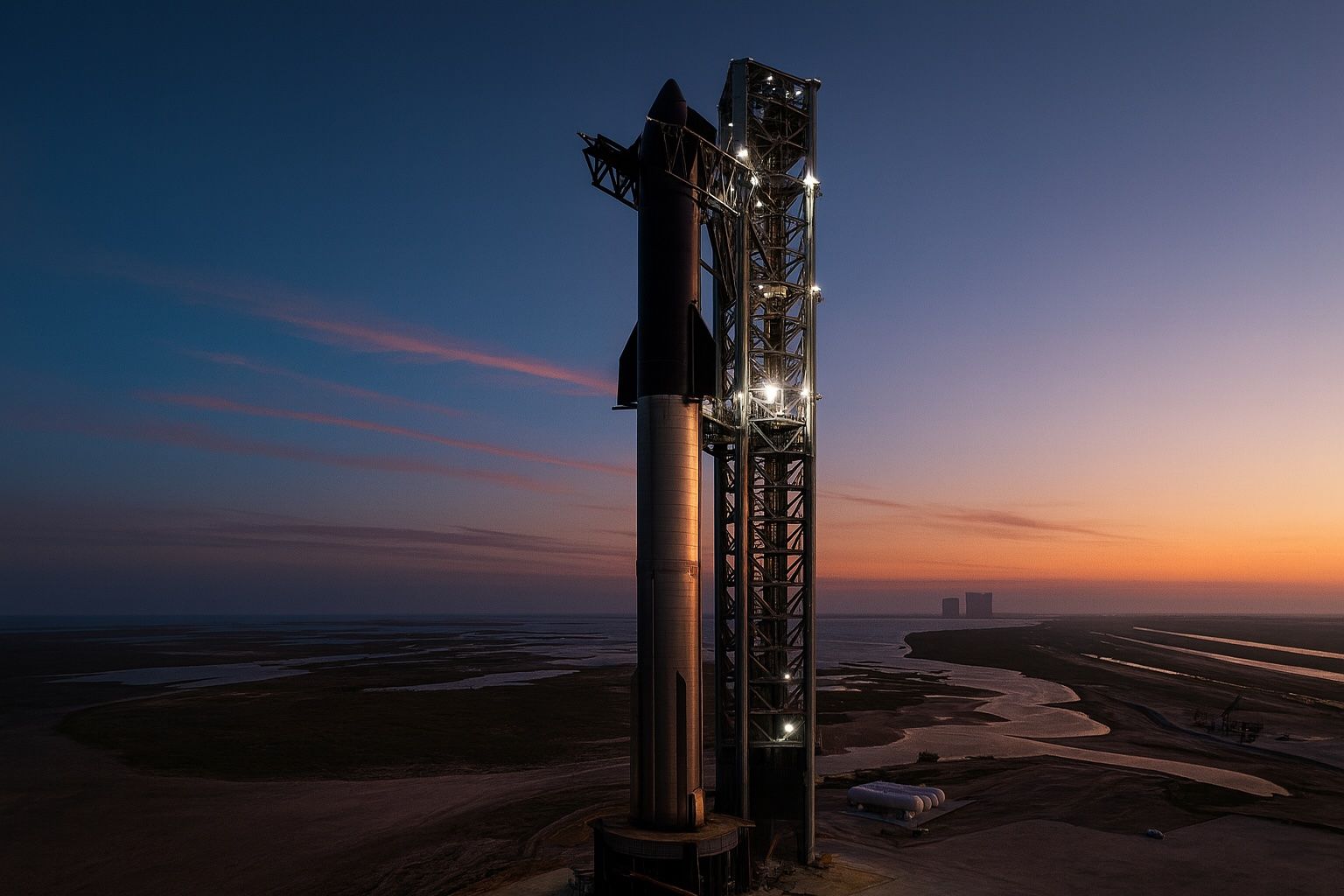
SpaceX’s Starship program notched a dramatic success on August 26, 2025, when the giant Starship rocket aced its 10th flight test from the company’s Starbase facility in Boca Chica, Texas Space. At 7:30 p.m. ET that day, the 40-story vehicle thundered off the pad on 33 Raptor engines, delivering a ground-shaking 16 million pounds of thrust – more than twice the power of NASA’s Saturn V or SLS moon rockets Spaceflightnow. SpaceX employees cheered as the booster propelled the Starship upper stage toward space, marking the first time in over a year of testing that every major objective was met Space. “Splashdown confirmed! Congratulations to the entire SpaceX team on an exciting tenth flight test of Starship!” the company announced moments after both stages had completed their missions Spaceflightnow. During the flight – dubbed Starship Flight 10 – the Super Heavy first stage executed a flawless ascent and separated from the Ship in mid-air. In a first for SpaceX, the vehicle performed a “hot staging” separation, igniting the Starship’s upper-stage engines while still attached to the booster to improve efficiency Space. The 230-foot booster then flipped and descended tail-first. SpaceX even intentionally shut down one of the booster’s landing engines
19 September 2025
SpaceX Launches 28 Starlink Satellites at Dawn – Boosts World’s Largest Satellite Fleet Toward Global Internet

SpaceX Launches 28 Starlink Satellites at Dawn – Boosts World’s Largest Satellite Fleet Toward Global Internet

SpaceX notched another predawn launch on Florida’s Space Coast, sending 28 fresh Starlink satellites into orbit as part of its ongoing mission to blanket the globe in internet coverage. The Falcon 9 rocket lit up the early morning sky at approximately 5:30 a.m. Eastern Time on Sept. 18, 2025, lifting off from Cape Canaveral’s SLC-40 pad space.com. The mission – designated Starlink Group 10-61 – marked yet another routine flight for SpaceX but one that continues to build an unprecedented satellite network overhead. According to SpaceX, the launch window opened at 5:20 a.m. EDT and extended to 9:20 a.m. that morning clickorlando.com, giving the team flexibility to find an optimal launch moment amid weather considerations. In the end, liftoff occurred near the opening of the window, with mostly favorable conditions spaceflightnow.com. The Falcon 9 ascended on a southeasterly trajectory, targeting a low Earth orbit for deployment of the Starlink batch roughly one hour after launch space.com space.com.
Inside the Ukraine–Russia Drone War: $500 FPVs vs. Multi‑Million Dollar UAVs

Russian Drones Breach Polish Airspace, NATO Scrambles Jets Amid Article 5 Jitters

Polish security forces inspect debris of a downed Russian drone in eastern Poland’s Lublin province after multiple UAVs violated Polish airspace on September 10, 2025. Overnight Drone Swarm: On the night of September 10, 2025, waves of Russian drones penetrated Polish airspace during a broader Russian barrage against Ukraine apnews.com. The incursions stretched roughly 11:30 PM to 6:30 AM, with Poland’s military later confirming 19 drone violations across a wide area apnews.com apnews.com. Polish air defenses, aided by NATO aircraft, scrambled repeatedly to track and destroy the unmanned intruders. In an unprecedented development, NATO fighter jets were deployed alongside Polish F‑16s, engaging and neutralizing the drones within Polish territory apnews.com apnews.com. A NATO spokesman confirmed this was “the first time NATO planes have engaged potential threats in Allied airspace” since the war began apnews.com. Downed Drones and Damage: Wreckage from the drones was found at nine sites deep inside Poland – a clear indicator that several UAVs flew far beyond border areas apnews.com. One drone crash-landed in the village of Wyryki in Lublin province, tearing the roof off a house apnews.com. Fortunately no casualties were reported, and local officials said residents were unharmed. Polish Prime Minister Donald Tusk noted the
19 September 2025
Sweden’s Space Odyssey: From Arctic Rockets to Europe’s Satellite Powerhouse

Sweden’s Space Odyssey: From Arctic Rockets to Europe’s Satellite Powerhouse

Sweden’s involvement in space stretches back over six decades. In 1961, Swedish engineers launched the country’s first sounding rocket from a remote site in northern Sweden Sscspace. This pioneering step was followed by the construction of Esrange Space Center above the Arctic Circle, which saw its first rocket launch in November 1966 Sscspace. Operated initially by the European Space Research Organisation and transferred to Swedish ownership in 1972, Esrange became the heart of Sweden’s early space activities Sscspace Sscspace. Throughout the 1970s and 1980s, Sweden built expertise in suborbital rockets and balloon flights for scientific research, carving out a reputation in high-latitude atmospheric and auroral studies. By the 1980s, Sweden moved from sounding rockets to satellites. The country’s first satellite, Viking, was launched in 1986 as a scientific mission to study the magnetosphere Irf. Viking was developed with Swedish industry under the management of SSC, demonstrating Sweden’s growing capabilities in spacecraft engineering Irf. This success kicked off a series of Swedish satellites over the next decade: Freja examined Earth’s aurora, Astrid-1 and Astrid-2 were microsatellites for space physics, and Odin became a trailblazing astronomy and atmospheric research satellite Wikipedia. Notably, Sweden also contributed to ESA missions – for example, Swedish
19 September 2025
Space Race Heats Up: Starlink Soars, New Shepard Returns & Mars Plans Unveiled – Sept 18–19, 2025 Space News

Space Race Heats Up: Starlink Soars, New Shepard Returns & Mars Plans Unveiled – Sept 18–19, 2025 Space News

SpaceX notched yet another Starlink mission on Sept. 18, flying 28 more Starlink satellites into orbit atop a Falcon 9 rocket from Cape Canaveral at 5:30 a.m. EDT space.com. The veteran first-stage booster – on its seventh flight – successfully landed on the droneship Just Read the Instructions downrange in the Atlantic, marking SpaceX’s 117th Falcon 9 launch of 2025 space.com. This cadence sets a blistering pace; over 70% of SpaceX’s flights this year have been dedicated to their Starlink internet constellation space.com. The mission highlights SpaceX’s routine of rapid reusability and high launch frequency, as the company continues to grow its broadband network in orbit. space.com space.com After a prolonged pause in suborbital launches, Blue Origin resumed New Shepard flights on Sept. 18 with a flawless morning liftoff from Launch Site One in West Texas space.com. Dubbed NS-35, this mission was uncrewed – instead of space tourists, the capsule was packed with over 40 research payloads ranging from student science experiments to technology demos space.com. Launching at 9:01 a.m. EDT, the booster propelled the capsule past the Kármán line, giving the experiments a few minutes of microgravity exposure space.com space.com. About 7½ minutes after liftoff, the reusable booster nailed
Samsung’s “Project Moohan” XR Headset: A Cheaper Vision Pro Rival Set to Disrupt AR/VR in 2025

Meta’s Hyperscape Unveiled: Transforming Real Spaces into Virtual Worlds (Is This the Next XR Revolution?)

Hyperscape is Meta’s latest leap in VR technology – it turns real-world places into explorable VR spaces. Think of it like capturing a 3D “photograph” of a room or location, except you can then step inside that photo with a VR headset. Meta first demoed Hyperscape at the 2024 Connect conference as a tech showcase, and in September 2025 they finally launched it to users techcrunch.com. The system allows developers and everyday creators to build photorealistic virtual environments by simply scanning real ones techcrunch.com. In essence, your physical room becomes a VR world, rendered with astonishing realism. What sets Hyperscape apart is its fidelity and ease of use. We’ve seen 3D scanning and photogrammetry before, but Hyperscape integrates it seamlessly into a VR headset workflow and achieves near-photoreal quality. Meta’s early demos included extremely detailed VR replicas of various environments – from a celebrity chef’s kitchen to a Las Vegas UFC arena – to show that Hyperscape can handle cluttered, complex real scenes and still produce life-like virtual spaces techcrunch.com. According to TechCrunch’s coverage, the goal is to make the captured VR world “like a digital replica of a real-world space” that you can immerse yourself in techcrunch.com. This is
6,000 Exoplanets and Counting: NASA’s Cosmic Milestone in Planet Discovery

6,000 Exoplanets and Counting: NASA’s Cosmic Milestone in Planet Discovery

Exoplanets are planets that orbit a star other than our Sun – in other words, worlds beyond our own solar system. Some even drift freely in space without a parent star science.nasa.gov. Ever since the first exoplanets were confirmed in the 1990s, they have reshaped our understanding of the universe. We now know planets are abundant: over 6,000 have been confirmed so far, and astronomers estimate billions more likely exist in our galaxy alone nasa.gov. Reaching 6,000 confirmed exoplanets is more than just a number – it’s a testament to how far planetary science has come in a short time. In the early 1990s we didn’t know for sure if other stars even had planets. Today, not only do we know they’re out there, we’ve found thousands, including a staggering variety of alien worlds. Each discovery is another data point helping scientists piece together the story of how planets form and evolve. The 6,000-planet milestone also highlights an accelerating trend: just a few years ago, in March 2022, NASA celebrated reaching 5,000 confirmed exoplanets, and already that number has grown by another thousand space.com. This rapid progress is “completely changing the way humanity views the night sky,” says Dr. Shawn
18 September 2025
Swiss Space Industry Soars: Inside Switzerland’s Satellite & NewSpace Revolution

Swiss Space Industry Soars: Inside Switzerland’s Satellite & NewSpace Revolution

Switzerland may be known for its precision watches and banks, but it’s also quietly becoming a powerhouse in the space and satellite industry. With a dynamic ecosystem that blends academic excellence, deep-tech entrepreneurship, and strong public support, the Alpine nation is making its mark beyond Earth’s atmosphere. Renato Krpoun, head of the Swiss Space Office, attributes this success to Switzerland’s unique environment: “Switzerland’s stable political environment, neutrality and high standard of living are fundamental pillars for the success of the Swiss space ecosystem.” globalairspaceradar.com. In recent years, the Swiss space sector has seen record investments, pioneering start-ups, and major international partnerships, all accelerating its growth. This report provides an in-depth look at Switzerland’s space and satellite industry – from its early historical milestones to the current landscape across public agencies, private companies, research institutions, and emerging niches. We’ll also examine how Switzerland compares with other European space players and what’s on the horizon through 2030 and beyond. Switzerland’s engagement with space dates back to the dawn of the space age. In July 1969, as Neil Armstrong took that one small step, Buzz Aldrin unfurled a Swiss experiment on the Moon – a solar wind collector developed by the University of
18 September 2025
Cosmic Revelations: Space Launch Frenzy, Mars Life Hints & Asteroid Near-Miss – This Week’s Space Highlights

Cosmic Revelations: Space Launch Frenzy, Mars Life Hints & Asteroid Near-Miss – This Week’s Space Highlights

First “Cygnus XL” arrives after scare: A tense 48 hours at the ISS ended in relief as Northrop Grumman’s upsized Cygnus XL freighter resolved its in-orbit propulsion glitch and received a “go” for final approach nasa.gov. The cargo ship’s main engine had shut off early during two orbit-raising burns on Sept. 16, delaying an arrival originally set for Sept. 17 space.com. Engineers quickly developed alternate maneuvers, and NASA astronaut Jonny Kim captured Cygnus with Canadarm2 early on Sept. 18, allowing the spacecraft to be installed on the station as planned nasa.gov. NASA noted all other systems performed normally and emphasized the mission’s significance – NG-23 is the first flight of the larger-capacity Cygnus XL, designed to deliver more science payloads per trip space.com. Station managers hailed the recovery as a testament to robust safety software: “data confirmed…an early warning system initiated a shutdown…as a conservative safeguard,” NASA reported nasa.gov. The Cygnus XL will remain attached to ISS until March 2026, supporting Expedition 73 research before disposal. Russia and international partners: While U.S. commercial resupply took center stage, Russia’s space program quietly stayed on track. Just prior to these events, a Soyuz-2.1a rocket launched the Progress 93 cargo ship on Sept.
18 September 2025
Tech Shockwaves: Gadgets, Breaches, and a New Space Race Unfold

Tech Shockwaves: Gadgets, Breaches, and a New Space Race Unfold

Apple’s iPhone 17 Launch: Apple’s latest iPhones officially hit shelves on Friday, and the tech giant is smoothing out last-minute wrinkles. Reviewers discovered a camera flaw in the iPhone 17 Pro and new iPhone Air – in rare cases, photos taken under intense LED concert lighting showed black boxes and squiggly artifacts macrumors.com macrumors.com. Apple acknowledged the issue and confirmed it has a fix underway in an upcoming iOS update macrumors.com macrumors.com. Despite this quirk, early reception of the iPhone 17 lineup has been positive: CNN’s Henry Casey praised the 17 Pro’s extended battery life and vibrant new colors, while highlighting the iPhone Air’s impressively slim design appleinsider.com appleinsider.com. With pre-orders strong, Apple is likely to push a day-one software patch so that buyers never encounter the glitch – demonstrating its commitment to a smooth rollout as these models begin shipping worldwide. Meta’s AR Glasses Aim for Mainstream: Meta Platforms made waves by launching its first consumer smart glasses with an integrated display, part of CEO Mark Zuckerberg’s bet on wearable AR. Priced around $799, the Meta Ray-Ban “Display” glasses build on Meta’s earlier camera-equipped eyewear, but now can visually overlay info in the user’s field of view reuters.com reuters.com.
1 4 5 6 7 8 21

Stock Market Today

  • SAIN enters closed period before H1 2026 numbers
    July 1, 2026, 11:15 AM EDT. The Scottish American Investment Company PLC (SAIN) said it is now in its closed period ahead of its results for the half year to June 30, 2026. Directors said all key inside information has already been put out through a Regulatory Information Service. Baillie Gifford & Co Limited, the company secretary, released the notice on July 1, 2026.
Go toTop