
Browse Category

Space 15 September 2025 - 19 September 2025

Firefly Aerospace Stock (FLY) Stalls as $106 Million Cash Burn Tests Record Revenue
Sweden’s Space Odyssey: From Arctic Rockets to Europe’s Satellite Powerhouse

Sweden’s Space Odyssey: From Arctic Rockets to Europe’s Satellite Powerhouse

Sweden’s involvement in space stretches back over six decades. In 1961, Swedish engineers launched the country’s first sounding rocket from a remote site in northern Sweden Sscspace. This pioneering step was followed by the construction of Esrange Space Center above the Arctic Circle, which saw its first rocket launch in November 1966 Sscspace. Operated initially by the European Space Research Organisation and transferred to Swedish ownership in 1972, Esrange became the heart of Sweden’s early space activities Sscspace Sscspace. Throughout the 1970s and 1980s, Sweden built expertise in suborbital rockets and balloon flights for scientific research, carving out a reputation in high-latitude atmospheric and auroral studies.
19 September 2025
Space Race Heats Up: Starlink Soars, New Shepard Returns & Mars Plans Unveiled – Sept 18–19, 2025 Space News

Space Race Heats Up: Starlink Soars, New Shepard Returns & Mars Plans Unveiled – Sept 18–19, 2025 Space News

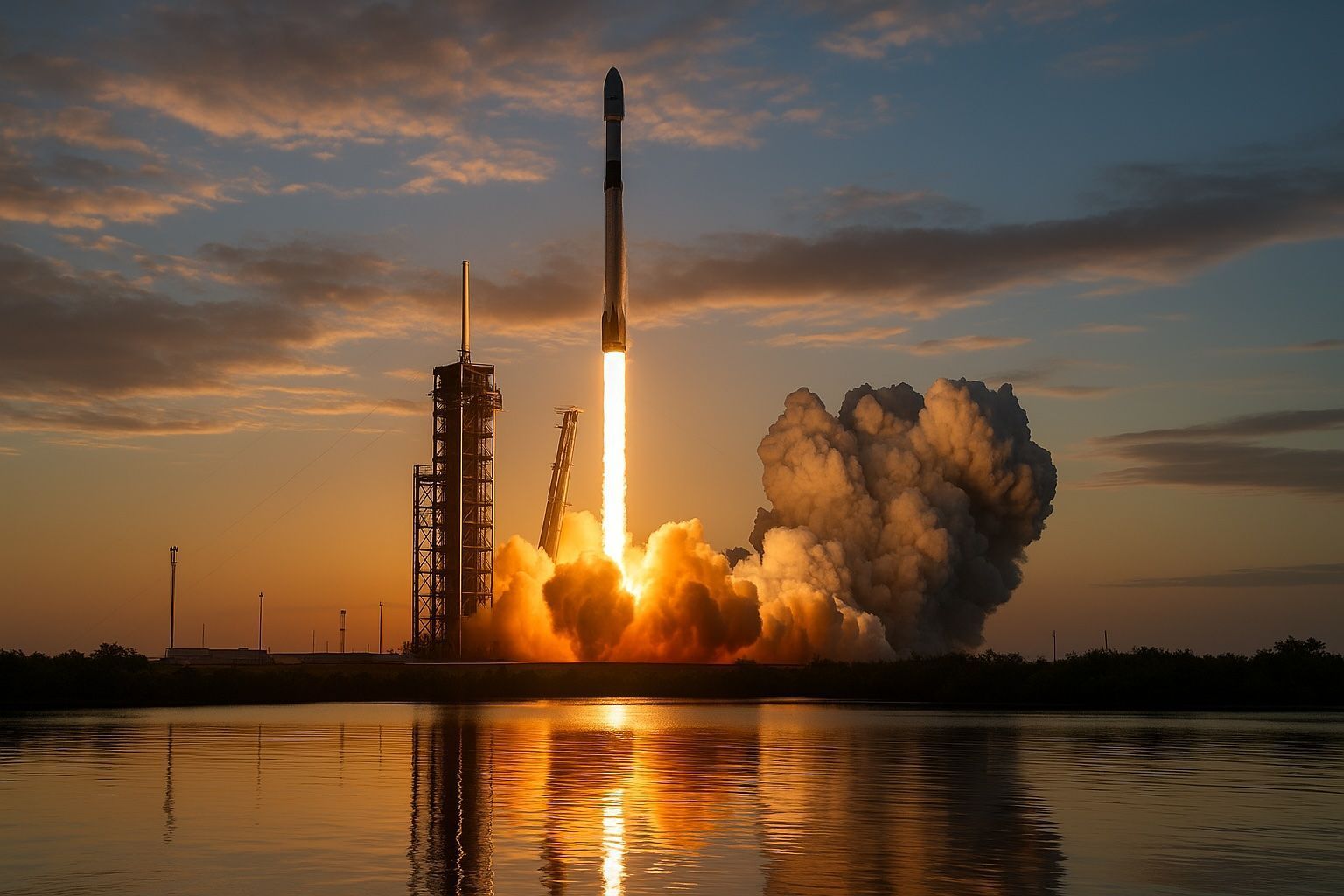
SpaceX notched yet another Starlink mission on Sept. 18, flying 28 more Starlink satellites into orbit atop a Falcon 9 rocket from Cape Canaveral at 5:30 a.m. EDT space.com. The veteran first-stage booster – on its seventh flight – successfully landed on the droneship Just Read the Instructions downrange in the Atlantic, marking SpaceX’s 117th Falcon 9 launch of 2025 space.com. This cadence sets a blistering pace; over 70% of SpaceX’s flights this year have been dedicated to their Starlink internet constellation space.com. The mission highlights SpaceX’s routine of rapid reusability and high launch frequency, as the company continues to grow its broadband network in orbit. space.com space.com
Meta’s Hyperscape Unveiled: Transforming Real Spaces into Virtual Worlds (Is This the Next XR Revolution?)

Meta’s Hyperscape Unveiled: Transforming Real Spaces into Virtual Worlds (Is This the Next XR Revolution?)

Hyperscape is Meta’s latest leap in VR technology – it turns real-world places into explorable VR spaces. Think of it like capturing a 3D “photograph” of a room or location, except you can then step inside that photo with a VR headset. Meta first demoed Hyperscape at the 2024 Connect conference as a tech showcase, and in September 2025 they finally launched it to users techcrunch.com. The system allows developers and everyday creators to build photorealistic virtual environments by simply scanning real ones techcrunch.com. In essence, your physical room becomes a VR world, rendered with astonishing realism.
6,000 Exoplanets and Counting: NASA’s Cosmic Milestone in Planet Discovery

6,000 Exoplanets and Counting: NASA’s Cosmic Milestone in Planet Discovery

Exoplanets are planets that orbit a star other than our Sun – in other words, worlds beyond our own solar system. Some even drift freely in space without a parent star science.nasa.gov. Ever since the first exoplanets were confirmed in the 1990s, they have reshaped our understanding of the universe. We now know planets are abundant: over 6,000 have been confirmed so far, and astronomers estimate billions more likely exist in our galaxy alone nasa.gov.
18 September 2025
Swiss Space Industry Soars: Inside Switzerland’s Satellite & NewSpace Revolution

Swiss Space Industry Soars: Inside Switzerland’s Satellite & NewSpace Revolution

Switzerland may be known for its precision watches and banks, but it’s also quietly becoming a powerhouse in the space and satellite industry. With a dynamic ecosystem that blends academic excellence, deep-tech entrepreneurship, and strong public support, the Alpine nation is making its mark beyond Earth’s atmosphere. Renato Krpoun, head of the Swiss Space Office, attributes this success to Switzerland’s unique environment: “Switzerland’s stable political environment, neutrality and high standard of living are fundamental pillars for the success of the Swiss space ecosystem.” globalairspaceradar.com. In recent years, the Swiss space sector has seen record investments, pioneering start-ups, and major international partnerships, all accelerating its growth. This report provides an in-depth look at Switzerland’s space and satellite industry – from its early historical milestones to the current landscape across public agencies, private companies, research institutions, and emerging niches. We’ll also examine how Switzerland compares with other European space players and what’s on the horizon through 2030 and beyond.
Cosmic Revelations: Space Launch Frenzy, Mars Life Hints & Asteroid Near-Miss – This Week’s Space Highlights

Cosmic Revelations: Space Launch Frenzy, Mars Life Hints & Asteroid Near-Miss – This Week’s Space Highlights

First “Cygnus XL” arrives after scare: A tense 48 hours at the ISS ended in relief as Northrop Grumman’s upsized Cygnus XL freighter resolved its in-orbit propulsion glitch and received a “go” for final approach nasa.gov. The cargo ship’s main engine had shut off early during two orbit-raising burns on Sept. 16, delaying an arrival originally set for Sept. 17 space.com. Engineers quickly developed alternate maneuvers, and NASA astronaut Jonny Kim captured Cygnus with Canadarm2 early on Sept. 18, allowing the spacecraft to be installed on the station as planned nasa.gov. NASA noted all other systems performed normally and emphasized the mission’s significance – NG-23 is the first flight of the larger-capacity Cygnus XL, designed to deliver more science payloads per trip space.com. Station managers hailed the recovery as a testament to robust safety software: “data confirmed…an early warning system initiated a shutdown…as a conservative safeguard,” NASA reported nasa.gov. The Cygnus XL will remain attached to ISS until March 2026, supporting Expedition 73 research before disposal.
18 September 2025
Tech Shockwaves: Gadgets, Breaches, and a New Space Race Unfold

Tech Shockwaves: Gadgets, Breaches, and a New Space Race Unfold

Apple’s iPhone 17 Launch: Apple’s latest iPhones officially hit shelves on Friday, and the tech giant is smoothing out last-minute wrinkles. Reviewers discovered a camera flaw in the iPhone 17 Pro and new iPhone Air – in rare cases, photos taken under intense LED concert lighting showed black boxes and squiggly artifacts macrumors.com macrumors.com. Apple acknowledged the issue and confirmed it has a fix underway in an upcoming iOS update macrumors.com macrumors.com. Despite this quirk, early reception of the iPhone 17 lineup has been positive: CNN’s Henry Casey praised the 17 Pro’s extended battery life and vibrant new colors, while highlighting the iPhone Air’s impressively slim design appleinsider.com appleinsider.com. With pre-orders strong, Apple is likely to push a day-one software patch so that buyers never encounter the glitch – demonstrating its commitment to a smooth rollout as these models begin shipping worldwide.
Belgium’s Space Boom: From Small Nation to Satellite Powerhouse

Belgium’s Space Boom: From Small Nation to Satellite Powerhouse

Belgium’s journey in space began in the 1960s, making it one of the earliest European nations involved in space endeavors Belgium. In 1962 the government formed Belgospace, an industry-academia forum to coordinate Belgium’s participation in Europe’s first space organizations Switchtospace. Belgium became a founding member of ESA in 1975 and embraced a multilateral approach – recognizing that pooling resources was the way for a small country to achieve big goals in space Belgium. Over decades, Belgium honed specific strengths rather than trying to do everything. Early on, Belgian firms contributed equipment to ESA’s first satellites and launchers. By the 1980s and 90s, Belgium was a key player in Ariane rocket development and in European science missions.
Rocket Launch Frenzy, Solar Surprises & Space Race Showdowns: 48 Hours of Space News (Sept 16–17, 2025)

Rocket Launch Frenzy, Solar Surprises & Space Race Showdowns: 48 Hours of Space News (Sept 16–17, 2025)

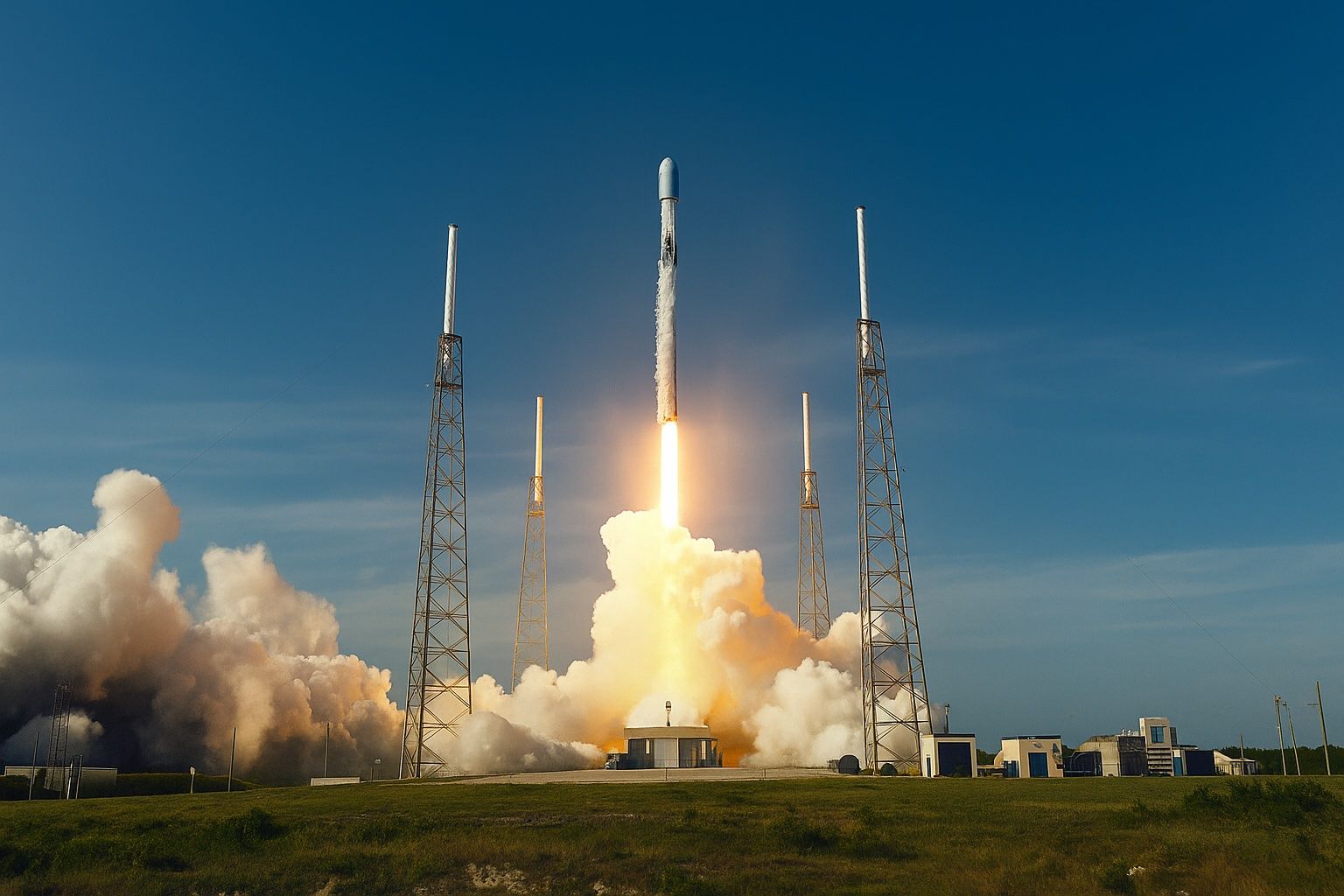
SpaceX’s Starlink blitz: SpaceX continued its high-frequency launch campaign, highlighting how routine orbital deployment has become. On Wednesday, Sept. 17, a Falcon 9 rocket lifted 24 Starlink V2 Mini satellites into a polar low-Earth orbit from Vandenberg Space Force Base in California spaceflightnow.com. Liftoff occurred at 8:43 am PDT, and about eight minutes later the veteran booster landed on the drone ship Of Course I Still Love You spaceflightnow.com spaceflightnow.com. This “Starlink Group 17-12” mission was SpaceX’s 83rd Starlink launch of 2025, pushing the year’s Starlink satellite tally above 2,000 deployed so far spaceflightnow.com spaceflightnow.com. SpaceX has been averaging an orbital launch every 4–5 days, an unprecedented cadence largely driven by its Starlink megaconstellation. The company also hinted that even larger Starlink V3 satellites will start launching in 2026 once its next-generation Starship rocket is operational spaceflightnow.com.
17 September 2025
Tech Shockwaves: Slimmest iPhone, TikTok’s Lifeline & Space Glitches – Major Tech News (Sept 16–17, 2025)

Tech Shockwaves: Slimmest iPhone, TikTok’s Lifeline & Space Glitches – Major Tech News (Sept 16–17, 2025)

Apple’s Thinnest iPhone Yet: Apple’s fall product event introduced the iPhone Air, a dramatically slimmed-down iPhone that Apple billed as its biggest design shake-up in eight years reuters.com reuters.com. At just 5.6 mm thick, the iPhone Air is thinner than even its rival Samsung’s 5.8 mm Galaxy S25 Edge reuters.com. Inside the razor-thin chassis, Apple managed to fit its latest A19 Pro processor and claimed “all-day” battery life reuters.com reuters.com. The device carries a single rear camera and uses an eSIM-only approach – something analysts warned could hurt adoption in markets like China that restrict eSIMs reuters.com reuters.com. Apple priced the Air to be “competitively positioned”, aiming to spark faster upgrade cycles amid stagnant smartphone sales. Analyst Reactions: Pre-event expectations were muted, but the Air earned cautious praise. “We were more impressed with the look and capabilities of the Air than we expected… this could help improve iPhone upgrade rates over the next 12 months,” wrote Morgan Stanley’s team in a note, though they added the eSIM-only feature may limit its appeal in China reuters.com. Still, Apple’s stock dipped after the unveiling, as investors noted the event offered few signs of new AI features or other breakthrough innovations to catch
Space Junk Cleanup Breakthrough: Ion Engine Exhaust Could Blast Debris Out of Orbit

Space Junk Cleanup Breakthrough: Ion Engine Exhaust Could Blast Debris Out of Orbit

In this novel concept, a cleanup satellite approaches a piece of orbital debris and fires a stream of plasma from an ion thruster to gradually slow the object’s orbital speed space.com. Slowing an object causes its orbit to decay; eventually it reenters the atmosphere and burns up harmlessly. The key innovation by Kazunori Takahashi of Tohoku University is a bi-directional plasma thruster that solves a fundamental problem: when you shoot an ion beam one way, Newton’s third law pushes your spacecraft the opposite way space.com. Takahashi’s design mounts two ion thrusters back-to-back, firing plasma in opposite directions. The rear thrust balances out the front thrust, so the satellite remains in place while the forward beam strikes the debris space.com.
16 September 2025
Baby Black Hole Booted Across Space: First-Ever Measurement of a Cosmic “Natal Kick”

Baby Black Hole Booted Across Space: First-Ever Measurement of a Cosmic “Natal Kick”

On April 12, 2019, two black holes collided 2.4 billion light-years away – an event detected as gravitational-wave signal GW190412. What happened next was extraordinary: the newly merged black hole was launched across space by a “natal kick,” like a cosmic cannonball. Now in 2025, scientists have measured the speed and direction of this recoiling black hole for the first time ever livescience.com igfae.usc.es. The remnant black hole blasted off at over 50 kilometers per second, likely fast enough to escape the cluster of stars it came from igfae.usc.es. In other words, this “black hole baby” didn’t stick around its birth site – it took off on a runaway journey through the cosmos.
16 September 2025
Skyscraper-Size Asteroid Once Feared to Hit Earth Zooms Past This Week – How to Watch Live

Skyscraper-Size Asteroid Once Feared to Hit Earth Zooms Past This Week – How to Watch Live

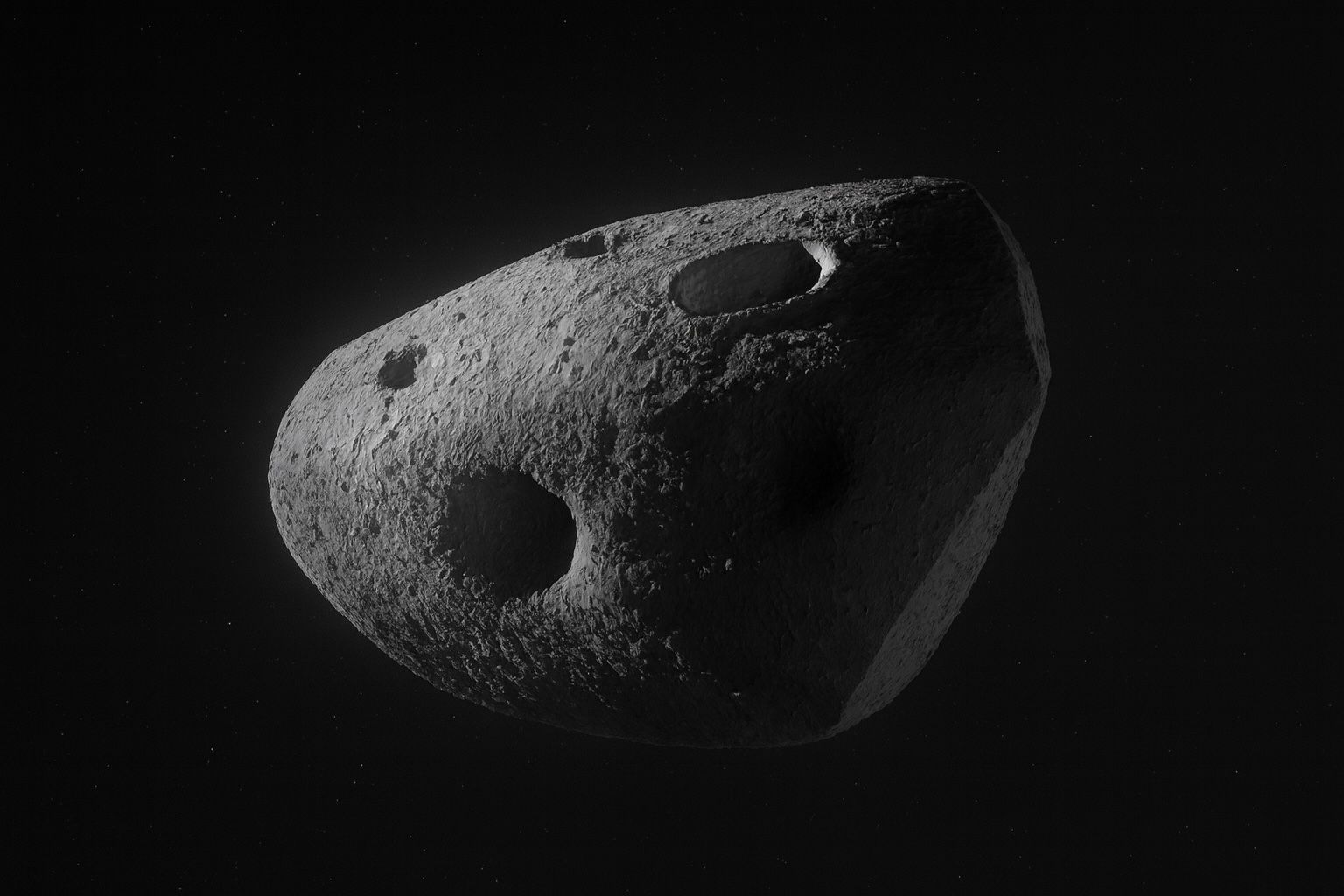
An asteroid the size of a skyscraper, once briefly feared to pose an impact risk decades from now, is about to make a close flyby of Earth on Thursday, September 18, 2025. This near-Earth asteroid, officially designated 2025 FA22, will whiz by at ~24,000 mph in the early hours of Thursday, coming within about 520,000 miles of our planet – roughly 2.2 times the distance of the Moon livescience.com. Discovered only in March 2025, the giant space rock made headlines when initial calculations suggested a slim chance of an Earth impact in the year 2089, briefly vaulting it to the top of the European Space Agency’s asteroid risk list livescience.com esa.int. Thankfully, further observations ruled out any collision, and 2025 FA22 is now confirmed no threat – but it’s still generating excitement among astronomers and the public. Here’s everything you need to know about this dramatic flyby, from the asteroid’s key facts and history to how scientists are watching it and how you can see it live.
16 September 2025
The Universe Is Expanding Even Faster Than We Thought – New Study Sparks Cosmic ‘Crisis’

The Universe Is Expanding Even Faster Than We Thought – New Study Sparks Cosmic ‘Crisis’

Recent observations have delivered a startling message: the universe appears to be expanding even faster than our standard cosmological model predicts phys.org. In a new high-precision study, a team led by Dan Scolnic of Duke University used the cosmic distance ladder method to measure how quickly space is stretching. They focused on the Coma Cluster of galaxies and analyzed 12 Type Ia supernovae within it—exploding stars that serve as reliable “standard candles” because their true brightness is known phys.org. By comparing their known luminosity to how dim they appear from Earth, the team calculated the cluster’s distance with unprecedented accuracy: about 320–321 million light-years away phys.org space.com. That’s roughly 38 million light-years closer than what the reigning theory would predict for Coma’s distance space.com space.com. In practical terms, galaxies in Coma are receding faster than expected—clear evidence that the local universe’s expansion rate is higher than theory anticipates.
16 September 2025
Northrop’s New “Chonker” Spacecraft Debuts – Cygnus XL Takes on SpaceX & Boeing

Northrop’s New “Chonker” Spacecraft Debuts – Cygnus XL Takes on SpaceX & Boeing

Northrop Grumman’s Cygnus XL is an enlarged version of the company’s proven Cygnus cargo spacecraft, engineered to carry significantly more supplies to orbit. Design-wise, the Cygnus XL consists of two main parts: a cylindrical pressurized cargo module where goods are stored, and a service module with propulsion, power, and avionics. The XL variant’s pressurized module has been stretched by 5.2 feet compared to earlier models cbsnews.com. This extension boosts the internal volume by about one-third, allowing Cygnus XL to accommodate bulkier and heavier cargo loads than before. Northrop reports the new craft is roughly “the size of two Apollo capsules put together,” underscoring its increased girth spaceflightnow.com.
16 September 2025
Brazil’s Space Industry Is Taking Off: New Players, Big Plans, and a Sky-High 2040 Outlook

Brazil’s Space Industry Is Taking Off: New Players, Big Plans, and a Sky-High 2040 Outlook

Brazil’s space journey began in the early 1960s amid the space race era. In 1961, the government formed its first space research group and by 1964 started launching home-grown Sonda sounding rockets for high-atmosphere research en.wikipedia.org. Over the next two decades, Brazil methodically built up expertise in rocketry and satellite technology, albeit under military oversight during the Cold War. A milestone plan, the Missão Espacial Completa Brasileira launched in 1980, aimed to make Brazil self-sufficient in space tech – including developing launch vehicles, a launch site, and a series of indigenous satellites en.wikipedia.org.


Space Race Showdown, Mars Surprises & a New ‘Mini-Moon’ – Global Space News (Sept 15–16, 2025)

Space Race Showdown, Mars Surprises & a New ‘Mini-Moon’ – Global Space News (Sept 15–16, 2025)

China’s latest launch: On Sept. 16, China launched a test satellite for its planned satellite-internet network, using a Long March 2C rocket with a Yuanzheng-1S upper stage english.news.cn. Liftoff from Jiuquan at 9:06 a.m. Beijing time was successful, inserting the tech demo satellite into orbit to advance China’s broadband megaconstellation plans. This marked the 595th flight of China’s Long March rocket family english.news.cn, underscoring China’s rapid launch cadence. The mission highlights Beijing’s push into satellite internet – an area of growing strategic importance as China races to build its own Starlink-like network.
Space Races, Chip Wars & Cyber Shocks: Global Tech Roundup (Sept 15–16, 2025)

Space Races, Chip Wars & Cyber Shocks: Global Tech Roundup (Sept 15–16, 2025)

Meta’s $800 Smart Glasses: Meta Platforms is doubling down on augmented reality hardware. At its upcoming Connect event, CEO Mark Zuckerberg will debut Meta’s first consumer smart glasses with an integrated display reuters.com. Codenamed “Hypernova”, the high-tech specs feature a mini display in the right lens for basic notifications reuters.com. Analysts expect a steep ~$800 price tag, reflecting Meta’s push to stay relevant in AR even as it lags rivals in AI software reuters.com. The glasses underscore Meta’s strategy to fuse AI and AR – offering voice-assistant features and visual prompts – but the hefty cost could limit mainstream uptake reuters.com. All eyes will be on whether Zuckerberg can spark consumer interest in wearable displays where Google Glass and others stumbled.
16 September 2025
Australia’s Final Frontier: Inside the Rapid Rise of its Space & Satellite Industry

Australia’s Final Frontier: Inside the Rapid Rise of its Space & Satellite Industry

Just over a decade ago, Australia’s space efforts were scattered across academia, defense, and niche industries. Unlike other nations, Australia had no central space agency until recently. In the 2010s, momentum built to coordinate and grow this sector. A 2017 expert review recommended forming a national agency to capitalize on booming global opportunities newspaceeconomy.ca. Consequently, the Australian Space Agency was established on 1 July 2018, marking the nation’s return to space leadership after decades on the sidelines wa.gov.au. This followed high-profile moments like hosting the International Astronautical Congress in Adelaide in 2017, which showcased Australia’s potential.
15 September 2025
1 6 7 8 9 10 22
AI PORTFOLIO

Top Stock Picks

Today’s highest-ranked model selections.

#1 STRONG BUY

Taiwan Semiconductor

NYSE: TSM 96 / 100
#2 BUY

AerCap

NYSE: AER 95 / 100
#3 BUY ON PULLBACK

Constellation Energy

NASDAQ: CEG 93 / 100
#4 BUY

Walt Disney

NYSE: DIS 90 / 100
#5 ACCUMULATE

American International Group

NYSE: AIG 87 / 100
View full portfolio
Editorial model selection. Not personalised advice.