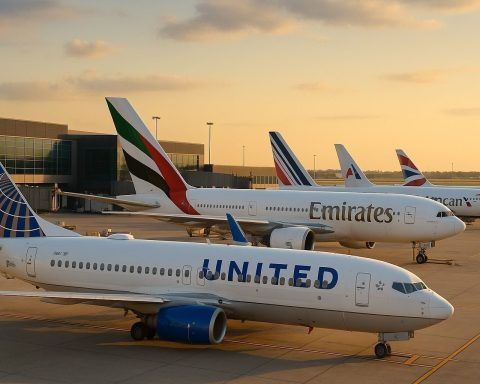
In-Flight Wi-Fi Takes Off: The Sky-High Race for Satellite Connectivity 2024–2030
In-flight connectivity via satellite has shifted from a luxury novelty to an expected amenity in air travel. As airlines emerge from the pandemic, they are accelerating investments in high-speed Wi-Fi to meet passenger demand and gain competitive edge. Recent surveys show that 83% of passengers are more likely to rebook with an airline that offers quality onboard Wi-Fi, and free connectivity is now the most influential factor when choosing an airline Inmarsat Inmarsat. This report provides a comprehensive roadmap of IFC adoption from 2024 through 2030, examining global and regional trends, airline strategies, and the evolving satellite technologies enabling the next generation of in-flight Wi-Fi. It also explores market dynamics driving IFC expansion, including passenger expectations for home-like internet speeds aloft, competitive differentiation through free Wi-Fi offerings, and new revenue streams for airlines. Key technical and regulatory considerations – from antenna innovations and bandwidth scalability to spectrum policy and cybersecurity – are analyzed. A year-by-year deployment timeline is outlined, and a comparative table of major IFC providers highlights their coverage, technology, partnerships, bandwidth, and airline clients. In short, in-flight Wi-Fi is truly taking off in the latter 2020s. By 2030, connectivity is expected to be ubiquitous on commercial flights worldwide,