Today: 25 June 2026

Global Navigation Showdown: How GPS III, Galileo, BeiDou & GLONASS Upgrades Will Change How You Navigate

Global Navigation Showdown: How GPS III, Galileo, BeiDou & GLONASS Upgrades Will Change How You Navigate

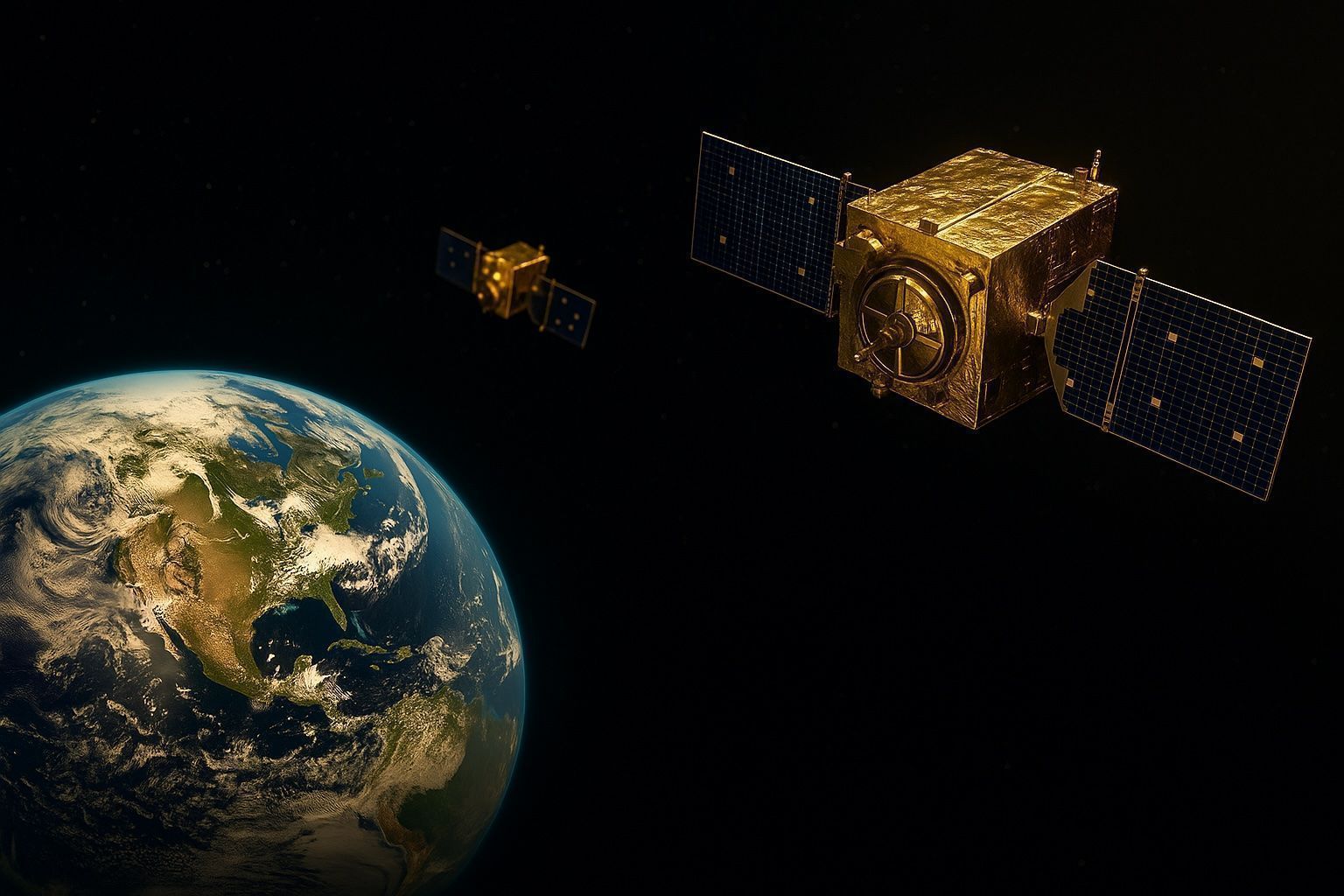
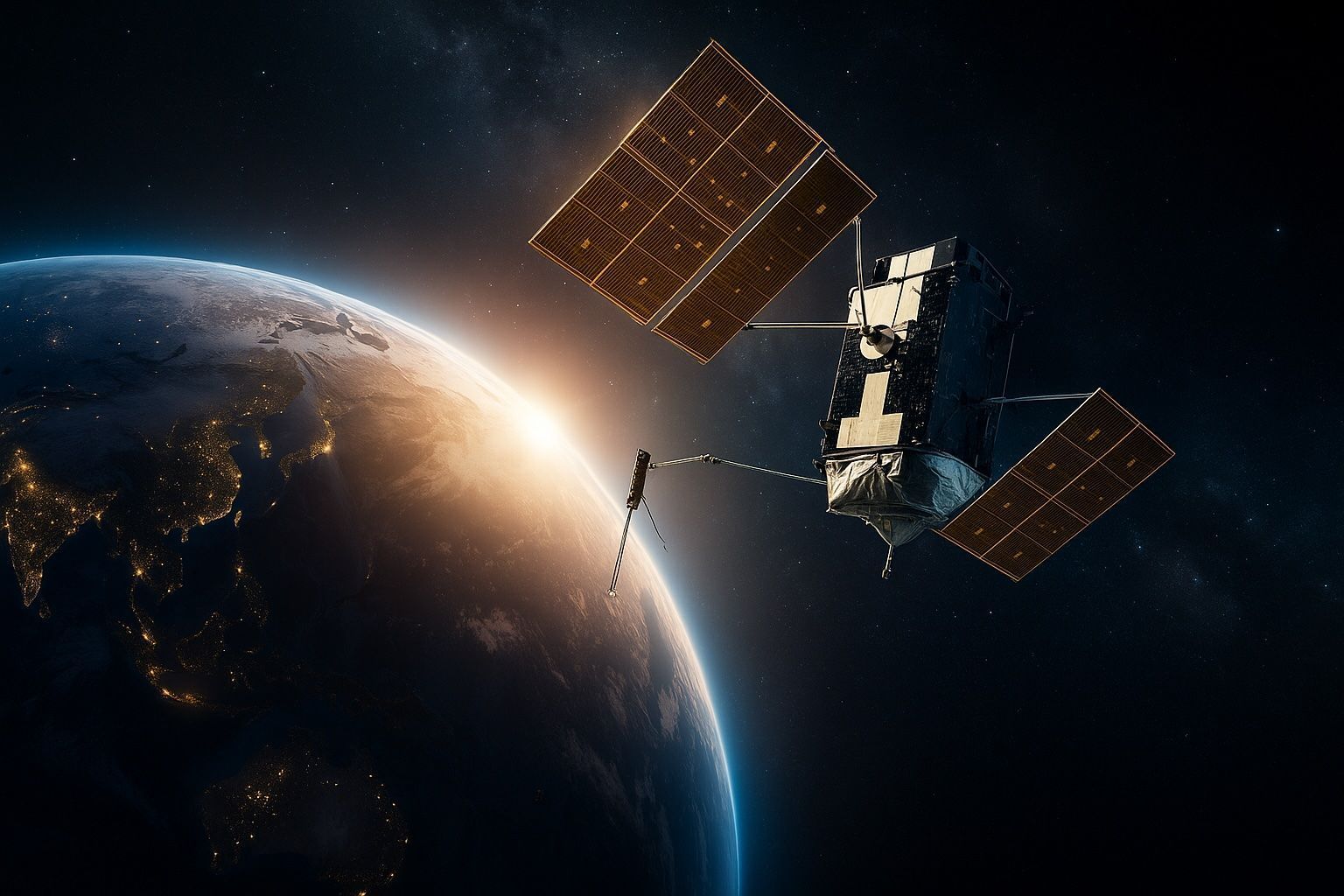
SpaceX launched the GPS III satellite Katherine Johnson in 2025, part of a modernization delivering triple the accuracy and stronger anti-jamming. Galileo reached 27 satellites by late 2024, targeting 30 by end-2025, with its HAS service offering 20 cm horizontal accuracy since 2023. BeiDou-3 provides real-time positioning with 16 cm horizontal accuracy. Russia’s GLONASS-K2, set for 2025, aims for 0.3 m accuracy by 2030.

The Space Race for the Internet: Inside the Billion-Dollar Satellite Mega-Constellation Boom

The Space Race for the Internet: Inside the Billion-Dollar Satellite Mega-Constellation Boom

Starlink operates about 7,500 active satellites as of mid-2025, over 60% of all in orbit, with new v2 models weighing 800 kg and featuring laser links. Amazon’s Project Kuiper launched its first 27 satellites in April 2025, aiming for 3,236 total. OneWeb merged with Eutelsat after completing its Gen1 constellation. China’s Guowang and Qianfan each plan 13,000 satellites, with tests starting late 2024.
DJI Matrice 4E and Matrice 4T Series Drones: Comprehensive Report

DJI Matrice 4E and Matrice 4T Series Drones: Comprehensive Report

DJI launched the Matrice 4 Series in January 2025, featuring the Matrice 4T with a radiometric thermal camera and NIR spotlight, and the Matrice 4E with a 20 MP wide camera, RTK module, and up to 112× hybrid zoom. Both drones use O4 Enterprise transmission for 25 km range and 1080p video. Omnidirectional obstacle sensing and hot-swappable payloads are included. The 4E supports advanced mapping and centimeter-level positioning.
5 June 2025
Inside America’s Silent Sentinels: The Untold Story of GSSAP in Space Surveillance

Inside America’s Silent Sentinels: The Untold Story of GSSAP in Space Surveillance

GSSAP-1 and GSSAP-2 launched July 28, 2014, from Cape Canaveral, with GSSAP-3 and GSSAP-4 following in 2016 and GSSAP-5 and GSSAP-6 in 2022, expanding the U.S. surveillance constellation in geosynchronous orbit. The satellites have drawn international scrutiny for close approaches to Russian and Chinese GEO satellites. GSSAP-2 was retired to graveyard orbit in August 2023. GSSAP-7 and 8 are planned for launch by 2027.
5 June 2025
Mega-Constellations Exposed: How Swarms of Tiny Satellites Are Taking Over Low Earth Orbit

“No Signal? No Problem!” – Next‑Gen Satellite Phones Set to Change Everything

Apple’s iPhone 14 debuted Emergency SOS via satellite in 2022, expanding to satellite texting in the iPhone 15. SpaceX’s Starlink plans to launch basic satellite text messaging in the U.S. by 2024 with T-Mobile. Huawei’s Mate 60 Pro became the first phone to support direct satellite voice calls in 2023. Deloitte expects over 200 million satellite-capable smartphones to be sold in 2024.
Orbiting at Zero Speed: How Geostationary Satellites Rule Global Communications

Orbiting at Zero Speed: How Geostationary Satellites Rule Global Communications

Intelsat I (Early Bird), launched in April 1965, was the first commercial satellite in geostationary orbit, enabling regular telecommunications between Europe and North America. GEO satellites orbit 35,786 km above the equator and appear fixed from the ground, allowing stationary antennas. The Clarke Belt, named after Arthur C. Clarke, hosts these satellites. End-of-life GEO satellites are moved to a graveyard orbit about 300 km higher.
5 June 2025
Connected Canada: A Comprehensive Look at Internet Access in 2025

Connected Canada: A Comprehensive Look at Internet Access in 2025

By early 2025, 93.5% of Canadian households have access to high-speed internet, up from 79% in 2014. Rogers became the largest broadband provider after acquiring Shaw in 2023, serving about 7 million customers. The Universal Broadband Fund targets 98% coverage by 2026. In November 2023, the CRTC ordered large carriers to open fiber networks to third-party providers in Ontario and Quebec.
5 June 2025
Mega-Constellations Exposed: How Swarms of Tiny Satellites Are Taking Over Low Earth Orbit

Mega-Constellations Exposed: How Swarms of Tiny Satellites Are Taking Over Low Earth Orbit

Small satellites made up over 95% of all satellites launched in 2024. SpaceX’s Starlink led with more than 7,000 active satellites, aiming for up to 42,000 with FCC approval for 12,000. The FCC now requires satellites to deorbit within five years of retirement. Amazon’s Kuiper, OneWeb, and Iridium also expanded networks, targeting global coverage with hundreds to thousands of satellites in low Earth orbit.
Military Satellite Services: Complete Guide to Secure Communications

Military Satellite Services: Complete Guide to Secure Communications

The U.S. operates AEHF for secure military communications, Navstar GPS for global navigation, DSP and SBIRS for missile warning, and KH-11 satellites for reconnaissance. Russia fields the Liana ELINT constellation, while China’s BeiDou navigation system offers global PNT and military messaging. China’s 2007 and Russia’s 2021 ASAT tests produced major debris clouds. The U.S. Space Development Agency plans 160 new satellites by 2025.
Aviation Satellite Services: Benefits, Providers, and New Technologies

Aviation Satellite Services: Benefits, Providers, and New Technologies

By late 2022, over 10,000 aircraft had in-flight connectivity, and 65% of airlines planned further investment. Aireon’s space-based ADS-B on Iridium NEXT has enabled global real-time tracking since 2019. Inmarsat, Iridium, Starlink, and OneWeb operate satellite networks supporting aviation data, with the satcom market projected to grow from $4.5 billion in 2024 to $8 billion by 2033.
Maritime Satellite Services: Complete Guide to Ship Connectivity & Communications

Maritime Satellite Services: Complete Guide to Ship Connectivity & Communications

SpaceX Starlink signed nearly 300 cruise ships and many commercial vessels by mid-2025, intensifying competition in maritime satellite communications. The global market reached $3.0 billion in 2023, with over 46,000 vessels using L-band services and 186,500 active VSAT terminals. Iridium gained GMDSS recognition in 2020, ending Inmarsat’s decades-long exclusivity. APAC leads growth with a projected 12% CAGR through 2029.
How Satellite Internet Is Revolutionizing Disaster Response and Humanitarian Relief

How Satellite Internet Is Revolutionizing Disaster Response and Humanitarian Relief

Hurricane Maria in 2017 knocked out 95% of Puerto Rico’s cell towers, cutting phone service across the island. SpaceX Starlink and other LEO satellite networks have since provided emergency internet in disasters, including Ukraine’s war, Tonga’s 2022 tsunami, and Florida after Hurricane Ian. Starlink’s terminals require only power and sky access, delivering up to 200 Mbps per user. Over 70,000 new LEO satellites are planned by 2030.
Internet Access in Cameroon: The Race to Connect a Nation

Internet Access in Cameroon: The Race to Connect a Nation

About 12.4 million Cameroonians, or 41.9% of the population, used the internet in early 2025, with access concentrated in cities. Cameroon’s fiber backbone spans over 12,000 km and connects to five undersea cables, with plans to add 4,000 km. Mobile connections reached 25.4 million in 2024, but fixed broadband remains below 2%. Starlink is not licensed; imports were banned in 2024.
Inside the Sky Shield: How Secure Is Your Satellite Internet?

Inside the Sky Shield: How Secure Is Your Satellite Internet?

On February 24, 2022, a cyberattack on Viasat’s KA-SAT network in Europe disabled about 40,000 modems by targeting a ground VPN appliance and pushing malicious firmware. Starlink’s low Earth orbit system offers latency of 20–40 ms, compared to 500–700 ms for traditional GEO satellites. Unencrypted satellite downlinks can be intercepted with $300 in equipment. Ground stations remain a key vulnerability for network-wide attacks.
Satellite vs Fiber Internet: The 2025 Latency & Bandwidth Showdown

Satellite vs Fiber Internet: The 2025 Latency & Bandwidth Showdown

Fiber-optic broadband offers latency of 10–30 ms and gigabit speeds, with over 76 million U.S. homes reached by end-2024. Starlink’s low-Earth orbit satellites deliver 20–50 ms latency, 50–150 Mbps download speeds, and covered 1.4 million U.S. subscribers by mid-2025. Starlink hardware costs about $599, with monthly service at $110–$120. Gigabit fiber plans typically cost $70–$90 per month.
4 June 2025
The Sky Connect: How Satellite Internet Is Revolutionizing Rural and Remote Life

The Sky Connect: How Satellite Internet Is Revolutionizing Rural and Remote Life

SpaceX Starlink has launched over 7,000 LEO satellites since 2019, reaching 4 million subscribers and 130 countries by late 2024, with user speeds of 50–200 Mbps. OneWeb achieved global coverage in early 2023 with 618 satellites, now focusing on enterprise and government. ViaSat-3’s three GEO satellites launched in 2023–2024 offer near-global coverage at up to 100 Mbps. Amazon’s Project Kuiper targets late 2025 service.
Battle for the Final Frontier: Starlink vs OneWeb vs Kuiper vs Telesat Lightspeed

Battle for the Final Frontier: Starlink vs OneWeb vs Kuiper vs Telesat Lightspeed

Starlink reached its 250th dedicated launch by April 2025, operating over 8,000 satellites in 125 countries. OneWeb merged with Eutelsat in 2023 after a UK/India bailout, with 618 satellites deployed. Amazon’s Kuiper began launches in April 2025, aiming for 3,236 satellites. Telesat Lightspeed secured $2.54 billion in Canadian funding in 2024, targeting first launches in 2026.
3 June 2025
Cambodia’s Internet Boom or Digital Doom? Inside the Kingdom’s Connected Revolution

Cambodia’s Internet Boom or Digital Doom? Inside the Kingdom’s Connected Revolution

Cambodia reported over 22 million cellular subscriptions in 2023, far exceeding its population of 17 million, as multiple SIM use drives mobile penetration to 131.5%. Fixed internet subscriptions stood at about 310,000. Metfone led the market with around 10 million users. A new Hong Kong–Sihanoukville submarine cable is set to add 640 km of undersea fiber in 2024.
Why Starlink Keeps Hitting Red Tape Around the World

Why Starlink Keeps Hitting Red Tape Around the World

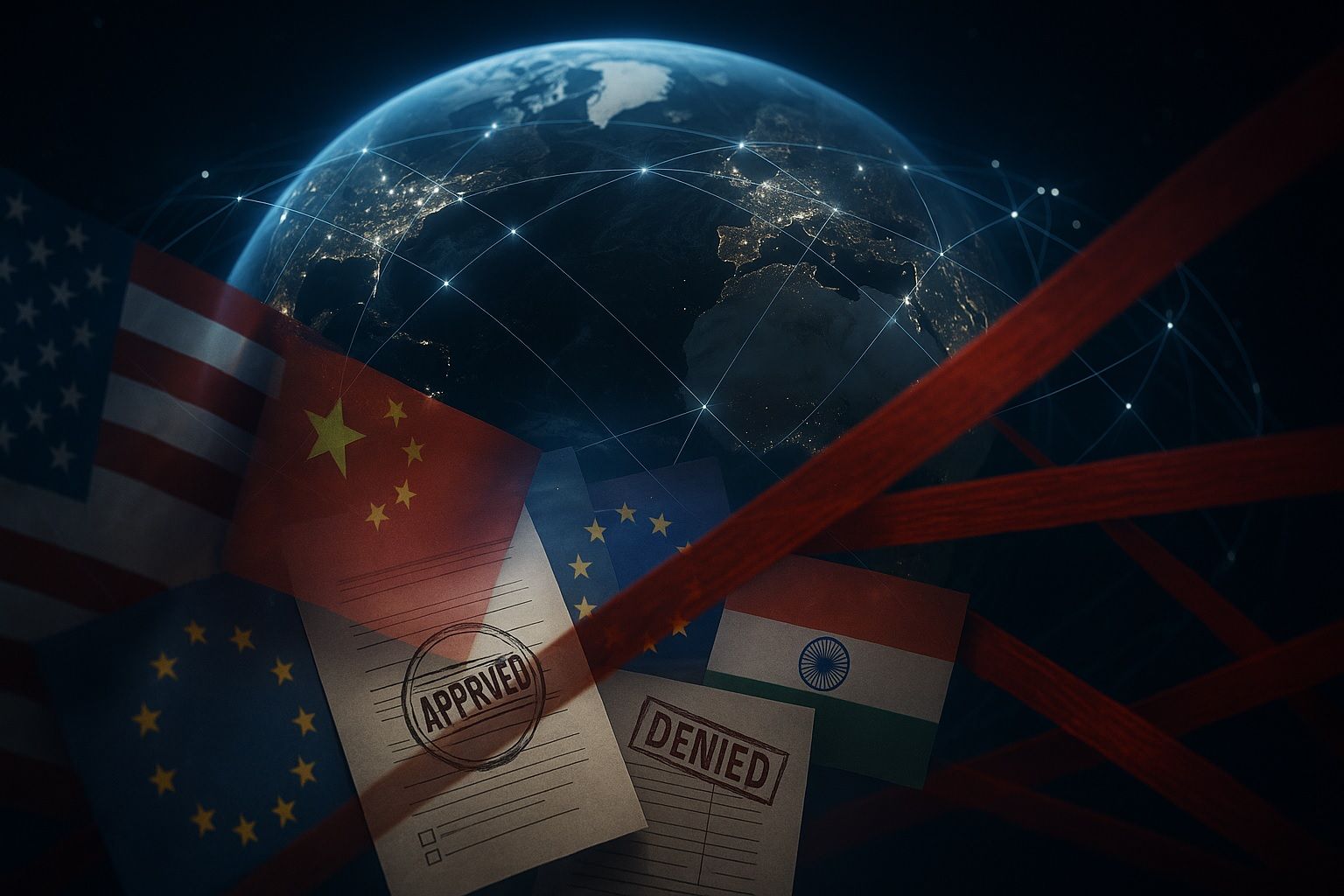
By late 2024, Starlink operated about 7,000 satellites, controlling nearly two-thirds of all active satellites. In May 2025, India granted Starlink a Letter of Intent with strict security and compliance conditions. Russia barred Starlink in February 2024, while China has not licensed the service and is drafting censorship rules. In September 2024, Brazil’s Supreme Court ordered Starlink to block access to X, with license threats enforced within a day.

Stock Market Updates

SanDisk rally faces AI memory test after Micron earnings

SanDisk rally faces AI memory test after Micron earnings

25 June 2026
SanDisk (NASDAQ:SNDK) soared 9.5% after hours to $2,097 following Micron’s strong Q4 outlook, as investors weigh whether SanDisk’s data-center revenue—just 25% of last quarter’s total—can grow fast enough to justify its $291 billion valuation, with Q4 guidance calling for a 34% sequential revenue jump.
Go toTop